
Politics
When being mentioned for a White House job is almost as good as getting the job itself


When Kevin McCarthy’s name circulated for months as a “dark horse candidate” to be Donald Trump’s chief of staff, the former House speaker didn’t embrace the possibility — but he didn’t deny his interest, either.
His noncommittal posture was part of a time-honored Washington tradition that’s gone into overdrive in the leadup to Trump’s second inauguration: People in the private sector who reap the benefits of being name-checked for high-level administration jobs, even if the idea they would be chosen for or accept a role amounts to little more than speculation.
In short: If the buzz doesn’t result in a new job, the appearance of proximity to power can result in new business. Getting mentioned for an administration job is almost as good as getting the job itself.
The phenomenon is a quintessential part of the launch of a new administration, though few if any are willing to admit it’s a tactic they themselves have employed. A new cast of characters is jockeying around town to be seen as close to the incoming White House so that they can collect hefty sums from those seeking to influence policy-making. McCarthy isn’t lobbying, but being floated for a powerful White House job can’t hurt his new paid-speeches gig.
Lobbyists and business consultants in particular are looking to sell any connection they can to the president’s inner circle. Jeff Forbes, a political operative who founded the lobbying firm Forbes Tate Partners, said the practice is a common P.R. strategy for those looking to grow their business downtown.
“This is one of the oldest games in Washington,” said the lobbyist. “Best-case scenario you’re picked, and worst-case scenario you end up looking pretty attractive to potential clients.”
There’s no better time than the present for people with legitimate knowledge of the Trump orbit. Ivan Adler, a recruiter dubbed the “Lobbyist Hunter,” said there was lots of hunger for people with connections to the incoming president. In fact, business was so good for K Street during Trump’s last administration that lobbyists close to him were able to set up successful and enduring shops in Washington. Among them were Brian Ballard and Jeff Miller, who have since become two of the biggest figures on K Street.
Another twist: If a lobbyist’s colleague is selected for a prominent post in the administration, that lobbyist’s stock also rises — an inside connection in the White House is an enormous asset to present to prospective clients. And so personnel decisions can have a big ripple effect on who’s up and who’s down on K Street.
“Everyone’s got a different approach to marketing, but that’s just what it is: marketing,” said one longtime Republican lobbyist granted anonymity to speak freely. “It’s a tale as old as time.”
Some names often seem to make the rounds in the lead-up to a Republican Inauguration Day. Among them is Wayne Berman, who leads Blackstone’s government affairs team and whose name was most recently raised for deputy Treasury secretary. Former Trump Interior Secretary David Bernhardt, who has been working as a policy adviser at the lobbying giant Brownstein Hyatt Farber Schreck, was floated as a sleeper candidate for chief of staff (even though Trump’s de facto campaign manager Susie Wiles was widely seen as the frontrunner), attorney general, or Interior secretary.
“Being perceived as being plugged in with a new in-crowd is good for business and social invitations,” said Bruce Mehlman, a Republican lobbyist who runs his own shop and emphasized this was not a tactic he used. “That’s just a truism that we know.”
The D.C. strategy of name-floating in the press has a long history. But it can be a risky play, especially in Trump’s orbit, where getting ahead of the president or putting one’s own ambitions before his is among the gravest sins.
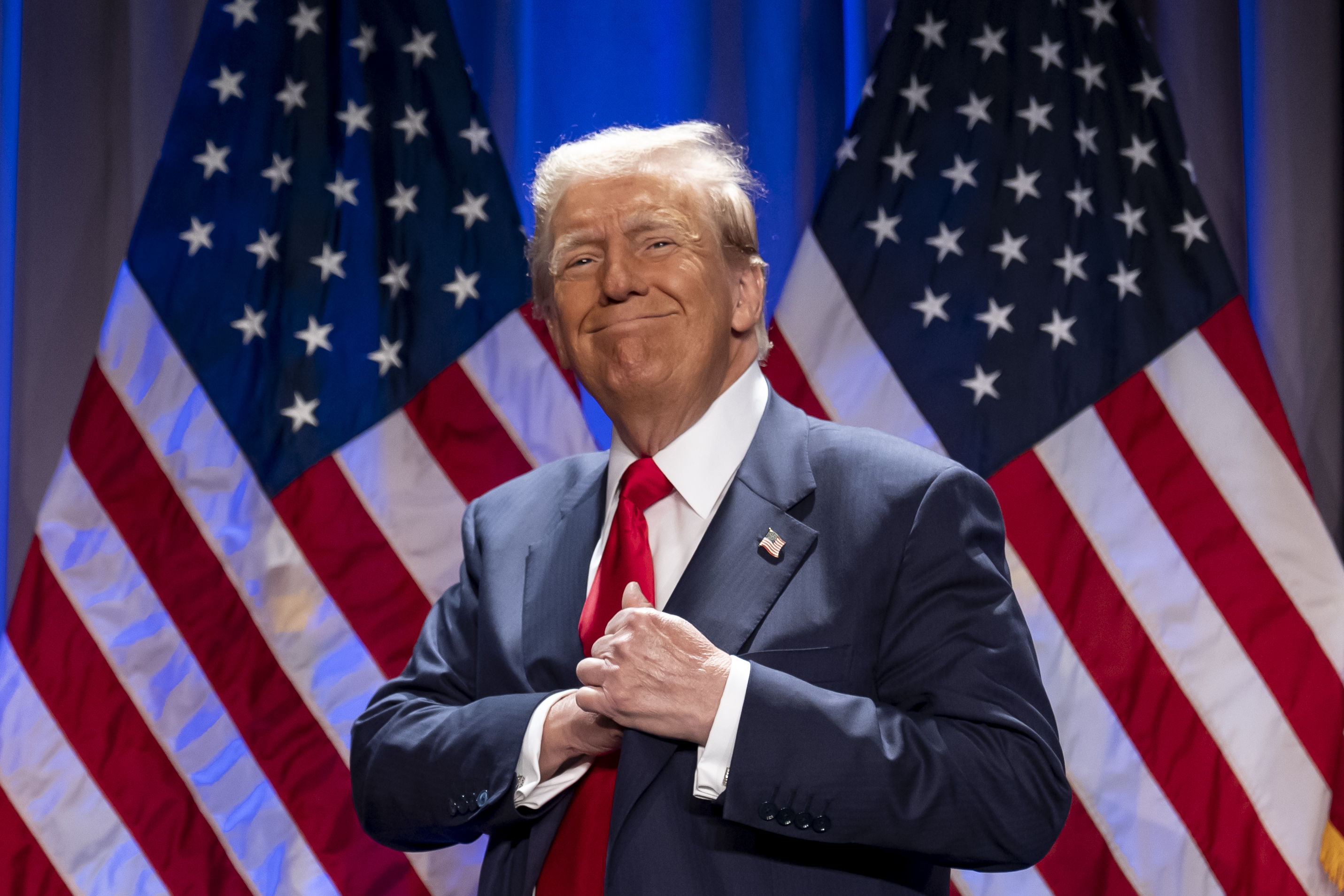
Trump is notoriously hostile to those who are believed to have leaked to the media, and Trump allies expressed deep skepticism of those who tipped off the press to their own names. Although it is a powerful marketing strategy, it does not speak to their real influence, the Trump allies said.
“People use [the] transition to gin up their profile knowing full well that they have no opportunity to join this transition,” said one former campaign official. “I think people need to be skeptical when they read names.”
There are other benefits to getting one’s name in the press beyond an immediate payday. Invitations to exclusive parties can pick up, and bragging rights among colleagues can be secured. A group of Trump allies recently received a message about Rep. Thomas Massie’s (R-Ky.) name circulating for Agriculture Secretary and laughed at the suggestion, added the former campaign official, who was granted anonymity to speak freely. Massie had backed Florida Gov. Ron DeSantis in the Republican primary and was looking to rehabilitate his image, the person suggested. (A spokesperson for Massie did not return a request for comment.)
“People who float their names out are not in the mix,” said one former Trump administration staffer who’s now a lobbyist. Typically those people “aren’t as close to the center” as they would have others believe. “I think you’ll have a lot of those types in this administration.”
Even before the election, a person close to McCarthy suggested that the former Speaker was satisfied with his new post outside government, while his name was still circulating for various positions.
“I still think he’s pretty happy,” said the person close to McCarthy.
There could still be a payoff for McCarthy after trading his gavel to be a different kind of speaker. The former California congressman enlisted an agency to help him land speaking engagements. Among his clients: the American Hospital Association, the French bank BNP Paribas, and snack industry trade association SNAC International.
McCarthy has spent years working his way back into Trump’s good graces, following the fraying of their relationship after McCarthy publicly said that Trump was at least partly to blame for the riot at the Capitol on Jan. 6. And after the former speaker’s ouster, his juice in Washington had significantly dried up.
But more recently, McCarthy has repaired his bond with the incoming president. And having his name in the running for chief of staff has offered a renewed kind of relevancy.


Democratic Sen. Jon Ossoff said Tuesday he will not run for president in 2028 and committed to serving a full six-year Senate term if reelected.
“I have zero interest in running for president. I’m not running for president. I’m running for reelection to the Senate,” Ossoff said during a Georgia Senate debate against Republican Rep. Mike Collins.
Asked by Greg Bluestein of The Atlanta Journal-Constitution whether he would serve his full term if he wins in November, Ossoff replied: “Yes, I will.”
The remarks are Ossoff’s most forceful rejection yet of a potential 2028 presidential bid even as his name has repeatedly surfaced in national Democrats’ conversations about possible contenders for the party’s nomination. His public commitment to a full Senate term on Tuesday is the latest of his campaign’s many efforts to tamp down that speculation.
Ossoff gained national attention this year given his strong fundraising numbers, his consistent lead in public polling against Collins and his ability to generate viral moments on the campaign trail, particularly through his attacks on President Donald Trump. Democrats are bullish about Ossoff’s ability to hold onto his Senate seat — so much so that the Democratic-aligned Senate Majority PAC said Tuesday it was removing its ad spending in Georgia for the week.
He’s also taken steps to boost the state Democratic party in Georgia, a perennial battleground that has been and will be key to winning the presidency. If November brings historic wins up and down the ballot, Ossoff will get some of the credit — and he’ll have confirmed his status as a leader in the swing state.
Democrats may be discovering the political power of calling something rigged.
They’re leaning hard into anti-corruption messaging in the final weeks of the campaign as new research suggests that linking corruption to Americans’ economic struggles can boost Democrats into the home stretch.
Messaging from Democrats that tied corruption to housing, health care and the cost of living increased voter support for Democratic congressional candidates by about 3 percentage points, according to a national survey last month conducted by Blue Rose Research and Democratic-aligned Winning Jobs Narrative Action, which was obtained by POLITICO.
The findings align with a shift in how Democrats are talking about corruption — and help explain why that message has exploded on the campaign trail. From Sen. Jon Ossoff in Georgia to James Talarico in Texas and Abdul El-Sayed in Michigan, Democrats have zeroed in on a common argument: Washington is rigged to benefit the wealthy at the expense of everyday Americans.
“We have a corruption crisis in this country, and it is leading to an affordability crisis,” Iowa Democratic state Rep. Josh Turek said during his Senate debate against Rep. Ashley Hinson last week.
It’s a message that is reverberating across campaigns. In a recent presentation delivered to Democratic groups on Capitol Hill, longtime Democratic strategist Jesse Ferguson offered a succinct playbook: “Corruption is why your costs are high,” according to the presentation viewed by Blue Light News.
His presentation also encouraged Democrats to lead with the acknowledgement that costs are high and then go into corruption, acknowledge that it happens across parties and avoid making President Donald Trump the sole focus of their attacks. “Trump works as an example of corruption that raises costs, not as the whole case,” the presentation said.
Since April, Democratic candidates and outside groups in House and Senate races have spent roughly $104 million on advertising mentioning corruption, according to ad tracking firm AdImpact. Republicans, meanwhile, have spent $36 million across House and Senate campaigns over the same period.
“It’s not just like, ‘oh, look at what’s happening with the ballroom,’ or ‘boy, Donald Trump’s made a lot of money on crypto,’” Democratic strategist Chris Meagher said. “You have to be able to tie it to the impact on people’s lives.”
“The narrative works best when it’s an outsider candidate who is linking a rigged economy to a rigged political system,” longtime Democratic pollster Celinda Lake said of the anti-corruption messaging.
Running against corruption is not new. But as Democrats looked for a way out of the political wilderness after 2024, they began turning a familiar attack — anti-corruption — into a broader message tied to voters’ economic pain. What once was an attack largely focused on Trump has become a more expansive argument for candidates trying to connect it to why Americans are struggling financially, potentially providing a blueprint for the party beyond November.
“Democrats used to talk about corruption as a crime. Now corruption is the explanation for costs,” Ferguson, the Democratic strategist, said.
The issue — and messaging around it — is also coming to the fore in a cycle when anger over the suppression of Epstein files hit a fever pitch and public pressure to ban Congress from trading stocks continues to mount.
And it’s not just the research by Blue Rose that shows the potential potency of that message.
In another recent survey from the Democratic group Navigator Research, obtained by Blue Light News, the vast majority of Americans — both Democrats and Republicans — say corruption is driving up their costs. That same survey of registered voters, conducted in August, found majorities, including roughly a quarter of Republicans, say Trump is bringing more corruption to Washington than fixing it.
And new results from the nonpartisan Center Square’s Voter Voice Poll, conducted this month by Noble Predictive Insights and shared first with Blue Light News, show 10% of voters ranking government corruption as the second most important issue facing Americans, tied with the economy and jobs, and only behind inflation and price increases.
In some instances, Democrats have wrested the word “rigged” away from Trump who has used it in the context of unproven election fraud and turned it into a mobilizing political talking point. That’s a departure from March 2024 when Democrats criticized then Rep. Katie Porter for accusing special interests of spending money to “rig” the California Senate race after she lost in the state’s primary. But now some Democrats are embracing that language as a way to rail against what they see as a corrupt system.
“They’re rigging the rules to benefit their wealthy donors and corporate special interests,” former Ohio Democratic Sen. Sherrod Brown said in a message to supporters announcing the launch of his campaign to return to office.
But the corruption resonates across parties. Republicans who spoke with Blue Light News said Democrats do not own the issue — voters everywhere are animated by it. While polling shows that voters in both major parties believe the government is corrupt, Republicans accuse Democrats of lacking credibility on the issue.
“Americans have been disgusted by the level of self-serving corruption that spread like herpes through the slimy politicians who run the Democrat Party, and now they’re suddenly changing their tune because it’s an election year,” National Republican Congressional Committee spokesperson Mike Marinella said in a statement. “Voters see through the facade, and they know Republicans are cleaning up the rot left behind by Democrat leaders.”
On the Senate side, National Republican Senatorial Committee spokesperson Bernadette Breslin pointed Blue Light News to a poll in Minnesota — a rare offensive opportunity for Senate Republicans this cycle — that shows there are just about as many voters who blame Democratic Gov. Tim Walz for widespread fraud of federally-funded government programs in the state as there are who blame the criminals. Walz’s lieutenant governor, Peggy Flanagan, is running for Senate against Republican Michele Tafoya, and corruption under Democratic rule is a key theme for Republicans in the race.
“The overwhelming majority of Minnesotans blame the Walz-Flanagan administration — and the criminals it aided and abetted — for plundering their hard-earned taxpayer dollars,” Breslin said. “They’ll vote for Michele Tafoya to right the ship this November.”
Steve Pierce, executive director at Winning Jobs Narrative Action, said one of the biggest shifts for Democrats this cycle on corruption has been a move away from a message largely rooted in concerns over democratic norms, which have struggled to break through in a way that moves voters in past cycles.
“You’ve seen Democrats, rather than connecting corruption to democracy, connecting it to affordability, connecting it to the top concern that voters have,” said Pierce. “It’s connecting it in a way that’s meaningful to voters around the things that they are thinking about every day.”
The anti-corruption message has played out across the country, and as an explanation for frustration against different economic pain points, including rising electric bills and local data center projects.
A recent memo on data centers from House Majority PAC, the main super PAC working to elect House Democrats, noted the “message environment in the 2026 election cycle has been dominated by costs, with an important secondary theme around corruption that began to emerge last year.” The group’s spokesperson, CJ Warnke, told Blue Light News that “every single poll and every single focus group shows affordability to be voters’ number one issue, and they specifically point to corrupt politicians as being responsible for driving up prices.”
Next month’s midterms will offer the clearest test yet of whether Democrats can turn this message into votes. But Democratic operatives increasingly see anti-corruption messaging as more than just a short-term political weapon — as long as they try to do something about it if they win control next year.
“I think the thing for Democrats, if they do want to keep it on the radar heading into 2028, and I think they should because I think it is a really potent issue for them, they are going to have to also deliver on it,” said Pierce.
“They have to be able to show up to get caught trying,” he said.
MAGA Inc. is planning to trim the map in a homestretch bid to cling to power in November.
The President Donald Trump-aligned super PAC, with several hundred million dollars still in the bank, is planning a series of major money moves coordinated with other leading GOP super PACs in the final three weeks before Election Day. The push includes cutting off spending to a group of less attainable House races, piling in money to shore up others and training its focus on key Senate seats to salvage Republicans’ Senate majority.
Ohio, Alaska and Iowa are the Senate races that Trump officials view as increasingly critical to keep their majority in the chamber, according to three GOP officials familiar with MAGA Inc.’s strategy, granted anonymity to candidly assess the midterms.
One of the people said MAGA Inc. and a leading House GOP super PAC would pull spending out of Michigan’s 8th District by the middle of this week. The move effectively acknowledges Democratic Rep. Kristen McDonald Rivet’s strength over GOP challenger Tom Smith. They have similar plans for a group of other House races in the coming days that are trending away from Republicans.
The official stressed the tacking would amount to “re-allocating, not cutting” the total planned spend.
MAGA Inc. and its affiliates are still competing in all of the Senate battlegrounds, including Texas, where they expected to add at least $5 million and potentially more in the coming days, according to the official.
For the Senate, winning two out of those three states of Ohio, Alaska and Iowa would make it “hard” for Democrats to take the Senate, one of the senior GOP officials projected, adding that a three-state sweep would decisively put it out of reach for Democrats. That, however, would require Republicans to win Texas and a handful of other at-risk red states, while also flipping Michigan or another blue state. The same senior Republican official said there’s confidence GOP Rep. Ashley Hinson “probably pulls through” in the Iowa Senate race.
Texas, however, remains a massive headache for Republicans — and the GOP official is pointing to Ken Paxton as the problem.
The senior Republican official said MAGA Inc. would do what it can to help candidates and vowed to “unload the tank” — a promise the group has been making for months even as it’s only spent more than half of the half-a-billion-dollar war chest with three weeks to go.
But the onus for standing up a winning campaign is shifting. Ultimately, the official said, “it’s up to the candidates, not the outside groups” to “bring it home and have a reason to get a few more points of swing voters their way.” They also need to maximize their votes with Republicans, this person said.
“Over the next week to 10 days you will see a lot of moves — a lot of coordinated moves — that are around trimming the map for the home stretch,” the senior GOP official familiar with MAGA Inc.’s plans said. “It’ll be all over the place. It’ll just just be moving on from districts that we don’t think it’s the right time for, and piling in further on ones we think it is the right time for.”
That would force top House GOP groups to decide whether to shift their own cash to take over key spending from MAGA Inc. as they work to defend a host of once-safely red House seats Trump won by more than 10 points in 2024 that are now at risk. That includes key districts across the Midwest, North Carolina, Nevada, along with a seat in Kentucky, which Trump won by 15 points.
In Ohio, where Trump is traveling for a rally on Monday, Republicans have privately worried about GOP Sen. Jon Husted for months. The former lieutenant governor, who was appointed to serve out Vice President JD Vance’s Senate term, has been trailing former Democratic Sen. Sherrod Brown in public and private polling for months. The top Senate GOP super PAC, Senate Leadership Fund, has unloaded close to $100 million in Ohio and a slew of outside groups have joined, making it one of the most expensive Senate contests in the country. Just in the last week, Husted notched his first narrow lead over Brown in one recent poll.
“We want a maximum spend,” Ohio GOP Chair Alex Triantafilou, who played host to Vance on Friday in Lima and will reprise that role as the president lands in Youngstown, said in an interview. “We want as much attention. I mean, the president’s coming, the vice president. Look, I’m the chair of the Republican Party — I want full resources in this state. We welcome it very much.”
And while Texas has emerged as an unexpectedly expensive headache for Republicans, another GOP operative familiar with MAGA Inc.’s thinking suggested Ohio could end up costing Republicans more spending from all sides, despite its smaller size.
Democrats see the same final battlefield taking shape. Senate Majority PAC, the top Democratic-aliied PAC, is injecting $2.5 million in Iowa and $7 million in Ohio for television ads, according to plans shared first with Blue Light News, “injecting new resources to help close the gap in those battleground states,” a spokesperson said. They’ll also continue to back aggressive digital campaigns in each state. This comes on the heels of SMP dropping $5 million in Kansas.
Beyond Ohio, other senior Republicans are busy trying to staunch the bleeding in red states across the map.
Top Senate GOP groups have already cut off spending in North Carolina, where Republicans are struggling to defend a GOP-held seat. They have also pulled some money back in Georgia but are still planning to unload millions more in the Peach State.
Senate Leadership Fund expects to keep spending broadly across the map in the final weeks. The group plans to pour even more money into Texas as a potential lifeline to Paxton, hitting a total of nearly $200 million. They’re also dropping dough in Kansas to defend Sen. Roger Marshall, whose tough race against Democrat Adam Hamilton blindsided top Republicans in the final weeks, along with a crop of other endangered GOP incumbents, according to two Republicans with direct knowledge of the plans. And, SLF is expected to keep unloading money into the Michigan Senate race, which Senate Republicans view as their top flip opportunity.
The senior GOP official familiar with MAGA Inc.’s strategy defended the group’s spending decisions, despite waves of criticism from some Republicans who wanted it to unleash all its $400-million-plus war chest, and sooner. So far, MAGA Inc. and its affiliates have spent just over $200 million this cycle, including future ad reservations, according to data from AdImpact.
The cash the wider MAGA Inc. operation deployed last month, which was close to $100 million, shielded candidates from further losses as the environment worsened for Republicans, the official argued.
“The money’s working,” the official said. “The money stopped everybody from getting killed in September when the environment rapidly deteriorated further. The money held the line.”
The campaigns that received the September spending were able to “stay afloat,” one of the other officials said. “There are more candidates in a position that they can still win their race today that wouldn’t have been had that not happened.”
Many of those GOP candidates, however, privately argue it was Trump’s poor approval rating and his decisions around the ongoing war with Iran, tariffs and sky-high fuel prices that are sparking voter backlash.
It was during that September panic that GOP officials became increasingly worried about the growing map.
At one point, Trump officials believed they may need to start intervening to boost even Sen. Ashley Moody in ruby-red Florida as warning signs shot up across the Sunshine State, according to two Trump officials with direct knowledge of the matter.
But recent internal polling for Moody has turned a corner, alleviating many of those concerns and prompting Trump officials to stand by plans for the president to visit the state — but more as a way to boost Rep. Byron Donalds, who is running for governor, and several key House races that Republicans are worried about, according to the people.
Jessica Piper contributed to this report.
-

 Politics2 years ago
Former ‘Squad’ members launching ‘Bowman and Bush’ YouTube show
-
Uncategorized2 years ago
Bob Good to step down as Freedom Caucus chair this week
-

 The Josh Fourrier Show2 years ago
DOOMSDAY: Trump won, now what?
-

 The Dictatorship2 years ago
Pete Hegseth’s tenure at the Pentagon goes from bad to worse
-

 Politics2 years ago
Former Kentucky AG Daniel Cameron launches Senate bid
-

 The Dictatorship2 years ago
Luigi Mangione acknowledges public support in first official statement since arrest
-

 Politics2 years ago
Blue Light News’s Editorial Director Ryan Hutchins speaks at Blue Light News’s 2025 Governors Summit
-

 The Dictatorship1 year ago
Mike Johnson sums up the GOP’s arrogant position on military occupation with two words