
Politics
How SNAP could crunch the midterms

Under the political radar, the country’s food stamps program is undergoing a slow-motion transformation. The ramifications could bubble up into the midterms.
Changes to the Supplemental Nutrition Assistance Program from Republicans’ One Big Beautiful Bill Act are rolling out in phases, from tougher work requirements to restrictions on non-citizens. Food stamp rolls already shrank by more than 5 million people nationwide as of this summer, as the hardest-hit state, Arizona, saw an outright majority of its food stamp recipients lose benefits.
The latest alteration clicked into place Oct. 1, when the share of administrative costs states and counties have to pay rose to 75% from 50%. An even bigger financial shift looms in a year, when states with high payment error rates will have to assume some benefit costs for the first time, a scenario that’s already rippling through state and local budget planning.
It all adds up to a new era in federal-state relations — and in the size and nature of the welfare state.
In a year when affordability worries top voters’ priority lists and grocery prices strain their wallets, Democrats think the SNAP shift gives them an opening to make Republicans pay politically after the GOP used social safety net cuts to food aid and Medicaid to help pay for last year’s tax cuts.
“People are getting kicked off these programs at the very moment they’re going to the polls to vote,” House Agriculture ranking member Angie Craig (D-Minn.) said. “I sure wouldn’t want to be a Republican headed into the November ballot.”
But Republicans think they have a compelling story to tell voters, trying to right-size a program that spends millions of dollars on erroneous payments. The SNAP changes align with the Trump administration’s broader push to crack down on fraud and make the government smaller or more efficient. Implementing stricter work requirements for welfare often polls well, and trying to move people toward work gets at the root causes of poverty, they argue.
“The premise is simple: Let’s make sure that this program is preserved for those truly in need, and that we aren’t squandering taxpayer dollars,” a senior USDA official told Playbook in an interview. “And let’s make sure that if folks are able-bodied, they are work training or volunteering for 20 hours per week.”
That doesn’t mean Republicans in competitive races are putting SNAP and Medicaid cuts front and center on the campaign trail. When they tout last year’s megalaw, new tax breaks typically lead the messaging. And 10 frontline GOP House campaigns didn’t respond to requests for interviews about how they can win on SNAP.
At the state and county level, some governments are scrambling to prepare for a massive cost shift, hitting at the same time as significant Medicaid changes. The resulting bureaucratic jumble has contributed to some of the SNAP losses this year, as recipients struggled to get through overtaxed call centers, some states cut staff, and others tightened their processes.
“It really sets up a change in the federal responsibility, and I view it as a slippery slope,” warned Barbara Guinn, New York’s commissioner of the Office of Temporary and Disability Assistance. Her state is staring down a possible $1 billion added burden next year, though they’re advocating for a repeal of the benefits change. “Once they implement any kind of cost shift, I think it will be easier for them to take similar actions in the future.”
Whether to delay next year’s cost shift has already generated tensions over the farm bill in the Senate, where Democrats are demanding a longer postponement than Republicans’ offer of one year. Some Minnesota counties are considering significant property tax increases to pay for the extra costs, Craig said: “We’re going to be pushing hard for a two-year delay — at the request of, frankly, many of my Republican county commissioners, not just Democrats.”
Conservatives see the new calculus as a long overdue change to improve efficiency and incentivize program integrity. Improper payment rates are high in many states (though they comprise both over-payments and under-payments, and error rates are different from fraud). Those that reduce errors enough won’t have to take on paying the benefits. And even opponents of the changes think lower error rates are a worthy goal. SNAP rolls often ebb and flow with the economy, and the recent drop could reflect the job market pulling people out of need — or the removal of people who shouldn’t have been getting food stamps in the first place.
“There needs to be some level of accountability,” the USDA official said. States with high error rates “need to start to have skin in the game.”
But at a time when many households are already squeezed by inflation, the SNAP changes have correlated with higher numbers of Americans turning to charities to ward off hunger. The surge in people losing food aid came more quickly than expected. The unemployment rate hasn’t meaningfully changed. And the vast majority of large food banks in a recent NBC survey said they were grappling with higher demand, in part due to food stamp changes. Another rule kicking in the day after the midterms could lead to many retailers being bumped out of SNAP as places where low-income people can use their benefits.
For state governments, a set of sweeping operational changes are now underway to conform to new policy demands, often requiring more money or staffing at already under-resourced offices. And the budgetary stakes to get error rates lower are sky-high.
“It’s a really complicated, nuanced and confusing time for states who are trying to administer SNAP,” said Lauren Kallins, a senior legislative director at the nonpartisan National Conference of State Legislatures, which has advocated for a delay in the benefits costs shift.


Abdul El-Sayed ran well behind other Michigan Democrats in places with more Jewish voters, according to a detailed Blue Light News analysis of precinct-level results.
Statewide, the progressive senator-elect only ran two points behind Democratic Gov.-elect Jocelyn Benson, getting 52.5% of the vote compared to her 54.5%. But the gap was much larger in heavily Jewish communities: In Huntington Woods, a Detroit suburb that is roughly two-thirds Jewish, El-Sayed ran nearly 15 points behind Benson, getting 65.3% of the vote compared to Benson’s 80%.
In West Bloomfield, the site of the March synagogue attack that shook the Senate primary and a town where roughly a quarter of residents are Jewish, El-Sayed ran 8.8 points behind Benson.
El-Sayed faced blowback from some Jewish Democrats during his campaign, particularly over his calls to end U.S. military support to Israel and his remarks after the synagogue attack that “hurt people hurt people,” for which he later apologized.
El-Sayed, who will be the first Muslim senator in U.S. history, told Blue Light News on Wednesday that he hoped he could “earn support” from Jewish voters who hadn’t backed him in this election.
“One of the big issues of disagreement that kept showing up when it came to the Jewish community was my position on Israel,” El-Sayed said. “I’m not going to change my position, but …I intend to lead on all the issues that we agree on — whether it’s the right to a union or the right to health care, clean air, clean water, or religious pluralism, and respect for the Constitution — and I hope that over time I can earn [their] support on those issues.”
El-Sayed had worked to make inroads with Jewish voters over the course of his campaign, pledging to stand up to antisemitism and for Jewish safety. Still, some Jewish leaders and activists in the state urged voters to blank their ballots in the Senate race, or back Republican former Rep. Mike Rogers.
His former Democratic primary rival, Rep. Haley Stevens, also switched her endorsement from El-Sayed to Rogers days before the election, citing concerns over antisemitism and the Democrat and his allies’ views and rhetoric around Israel. She pointed to an ad put out by a prominent El-Sayed supporter tying high grocery prices to U.S. aid to Israel, which El-Sayed and his campaign distanced themselves from.
Jewish voters, who make up roughly 1.4% of the Michigan electorate, have historically backed Democrats by large margins. But disagreements over support for Israel and how the party should respond to rising antisemitism are testing that voting bloc — both in Michigan and across the country.
A poll of Jewish early voters in the state found that a majority still backed El-Sayed, but roughly one in four who had supported Sen. Elissa Slotkin in 2024 switched to back Rogers.
With Michigan in Democrats’ early primary window for 2028, El-Sayed said his statewide win showed voters were aligned with his positioning on Israel — and that he hopes the next presidential nominee takes note.
“If you want to be where the voters are, if you want to be on the side of peace and on the side of justice and transparency, I believe that that is around holding Israel accountable to its war crimes and on making sure our tax dollars get used to do good things here rather than bad things somewhere else,” he said.
In a post-election memo, El-Sayed’s campaign touted an outside analysis finding that he only ran slightly behind Slotkin’s 2024 performance in predominantly Jewish precincts. The memo also noted he was outspent heavily in both the primary and general elections, including by “MAGA billionaires, AIPAC, Elon Musk, and corporate interests determined to elect candidates who would defend the status quo.”
But he won in a blue wave while Slotkin, who is Jewish, overcame a tough year. El-Sayed’s margins were far better than Slotkin’s numbers across nearly all of the state, suggesting Jewish voters moved in the opposite direction of most Michiganders.
On the other hand, El-Sayed particularly surged in areas with more Muslim voters, who make up roughly 2.4% of Michigan’s electorate. In Dearborn, for example, he won 82.5% of the vote compared to 78.7% for Benson. Two years ago, Slotkin won 41.4% in the city while former Vice President Kamala Harris received just 36.3% of the vote.
Lansing Mayor Andy Schor, a Jewish Democrat who supported Stevens in the primary and did not endorse El-Sayed, said he was unsurprised by that split screen. He expressed hope about El-Sayed’s relationship with the Jewish community going forward, but also said Jewish leaders should continue to raise their concerns to the incoming senator.
“Everybody has to keep talking to him. His views aren’t going to change, and we know what they are,” Schor said. But, “I hope he’s open to hearing the concerns of some of his constituents.”
Nonnegotiable Michigan, a group of Jewish activists that pushed El-Sayed on issues of Jewish safety and Israel, also said in a postelection statement that it was “prepared to work with” El-Sayed “even as we continue to hold elected leaders accountable when antisemitism enters our politics or political discourse.”
El-Sayed made clear he has no plans to change his views on Israel, but said he will be straight with voters — and that he’ll “show up for you when you need me” regardless of their differences.
“With me, what you see is what you get. And I’ve never once gone and told somebody that I was anything but what I am,” El-Sayed said Wednesday. “We’re going to disagree. I’m going to be honest, specific and direct. And over time, I hope that I can earn support for leading on the issues on which I hope to lead and [by] serving everybody.”
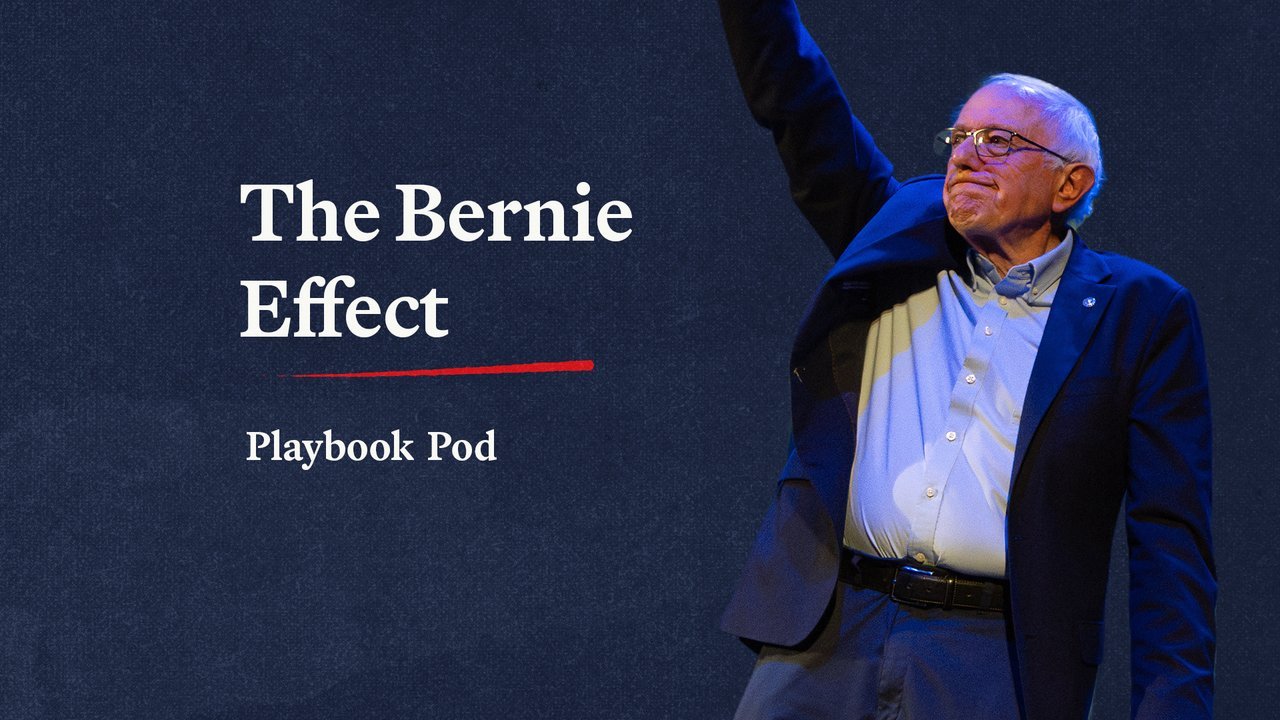
In 2016, two populist revolutions threatened to remake American politics. Donald Trump’s conquered the Republican Party and delivered him the presidency. Bernie Sanders’ fell short against Hillary Clinton, but introduced a populist economic vision that, at the time, much of the Democratic establishment dismissed as politically impractical.
Ten years later, Trump and MAGA were hit with a devastating midterm repudiation, as candidates across the country in blue and red states echoing versions of Sanders’ message broke through in places that once seemed beyond Democrats’ reach.
Sanders, as cantankerous as ever, isn’t surprised.
“If you’re asking me, am I shocked by that? That the argument about economic justice and taking on oligarchs and fighting for the working class is working in Texas, is working in Ohio, is working in Montana, is working in Florida, is working all over the country — no, I am not shocked,” Sanders said in an interview Wednesday, fresh off over 20 rallies in October alone. “That is what I’ve always believed.”
Sanders’ laser focus on economic populism in 2016 faced criticism from his own party during his contentious primary against Clinton for being too dismissive of identity politics — often couched as his lack of support among Black voters. Now, his brand of relentless focus on corporate and billionaire election interventions and income inequality proved a winning formula not only for Abdul El-Sayed in Michigan, but for James Talarico in Texas, Sam Forstag in Montana and Rebecca Cooke in Wisconsin.
“Bernie normalized the kind of campaigning that really is about making a direct appeal to working people,” El Sayed told Blue Light News. “Wherever I went in Michigan, there are people who remember Bernie 2016 and Bernie 2020 — we stand on the shoulders of giants.”
Given the booming results on Tuesday and the breadth of wins for the left, Democrats will test whether they can avoid the same pitfalls that ultimately dogged them following their last major win in 2020 with Joe Biden’s blue-collar charm at the top of the ticket, after which the party gradually slipped back down the culture war slope.
To avoid that, Sanders said the party can do both, but that Democrats need to have the “courage” to focus on the day-to-day needs of working families, no matter what the billionaires funding the Democratic Party say.
“It’s not either or. You can fight against bigotry and discrimination, but you have got to have the courage,” he said. “The courage now to say to the billionaires who are funding the Democratic Party: ‘Thank you very much for your help, but right now we are going to focus on the needs of the working families of this country, whether you like it or not.’”
Sanders’ reach is perhaps nowhere more evident than in New York City, which has emerged as the mecca of American progressivism, where Mayor Zohran Mamdani — once a Sanders-endorsed local official — is now perhaps the heir-apparent to Sanders’ progressive mantle.
The man behind Mamdani’s seismic rise, progressive wunderkind Morris Katz, had more than most on the line this week. After his top client Graham Platner dropped out of the Senate race in Maine earlier this year amid scandal, Katz worked this cycle for Gina Hinojosa in Texas, Randy Villegas in California and Brian Poindexter in Ohio, while his firm, Fight Agency, worked with El-Sayed and Pennsylvania’s Bob Brooks.
The day before the election, The Atlantic published a 3,500-word piece that put “Katz’s theory of politics” on the ballot.
“A lot of people wanted to know what I’d say if we lost,” Katz said, referencing an infamous Kanye West quote on Wednesday and running on 45 minutes of sleep. “I guess we’ll never know. That’s about how I feel today.”
Like Sanders, Katz sees a progressive future laser-focused on economics as the clear way forward — and nowhere is that more clear than in Texas.
“Hundreds of millions were spent against James and Gina trying to tag them on a trans issue,” he said. “It failed in epic fashion because there was no room for misunderstanding or ambiguity over what they stood for, because they had grounded themselves in such affirmative and positive economic messaging.”
“Those attacks have succeeded in the absence of an affirmative message,” he added. “Once you’re able to define yourself and provide a message, it’s just a lot harder for that to work.”
It’s the same formula Mamdani rode to Gracie Mansion — and, Katz argues, the lesson Democrats finally absorbed. “For a long time, politicians accepted the realities of how people felt about the economy but refused responsibility for having to take an active role in changing it,” he said. “There’s no room for that anymore.”
Katz sees his and Sanders’ theory of politics as having won out across the Democratic spectrum — not just on the left flank, but among the moderates who once resisted it.
“The more moderate wing of the party has changed the definition of what a moderate is. I think that’s great,” he said. “We should be a big tent party, but you are seeing a big tent that is unified in opposition to the oligarchy, that is unified in opposition to corruption, and that is united in a pursuit of fundamental and structural change. And that’s going to be really encouraging if that can carry over to 2028.”
For Sanders, it’s vindication of an argument he’s made for years and that Democrats have ignored — despite what he says is its simplicity.
“Focusing on the needs of the vast majority of American people who are struggling in the richest country on earth, while the very rich are getting richer, man, you don’t need a Ph.D. in economics or political science to figure that out,” he said. “That is the issue. How do we create a decent standard of living for all of our people? How do we end the corrupt campaign finance system? That is exactly what Democrats have got to do.”
At 85, Sanders campaigned this cycle like a man running out of time.
In the wake of Trump’s historic return to power in 2024, Sanders launched the “Fighting Oligarchy” tour, which came when many democrats were on the sidelines but provided a lot of the arguments, and even helped discover actual candidates, who a year later would swamp races earlier this week. Since the tour, Sanders has held 58 rallies during the midterms, endorsed more than 150 candidates across the primaries and general election, spent north of $16 million on organizing and deployed staff and volunteers into key Senate states including Michigan, Minnesota and Florida, an adviser to Sanders told Blue Light News.
“People say, ‘you know, Bernie, you’re not 21 years of age. What keeps you going?’” Sanders said. “What keeps me going is you look at the people who we have just elected yesterday, and look at the hundreds of other people who we have elected in school board and city council. You have wonderful people, black and white and Latino, coming from rural areas, urban areas.”
“I hope the Democratic leadership has seen what’s happening around the country,” he added.
Looking ahead to 2028, progressives see Tuesday as evidence the left’s economic politics can win anywhere — and that any doubt from moderates that a progressive should run for president should be laid to rest.
“I think we’ve got to rethink politics,” Sanders said. “We can win over millions of Republicans and independents who are struggling economically if we focus on the issues that are important,” he added, pointing to Villegas in Bakersfield, “a Republican town,” along with Forstag, Cooke and others who flipped Republican-held seats.
“These are people who ran on a progressive agenda, taking on a Republican district, and they won,” he said.
Katz said Tuesday was proof that heading into 2028, voters want candidates who look nothing like Washington — the kind he’s helped elect from Texas to California.
“You saw a hunger for a different kind of candidate — on congressional [level], teachers and waitresses and firefighters and iron workers and smokejumpers. And on the Senate level, pastors and doctors and teachers,” he said. “This hunger for expanding who is in Congress, who’s in the positions of power, feels real.”
What progressive candidate can pick up the left’s momentum heading into 2028 remains a question, but Katz said he viewed Tuesday’s results as more evidence that New York Rep. Alexandria Ocasio-Cortez — who closed out Villegas’ campaign in California a week before the election and stumped in Michigan, Montana and Pennsylvania — should consider running for president.
“You’d be hard pressed to look at the results of the election and say they’re anything other than encouraging in the context of her ability to win nationwide,” Katz said.
Lisa Kashinsky contributed to this report.
Bernie’s populist moment
lead image
-

 Politics1 year ago
John Legend advises Trump to drop the ‘dictator s‑‑‑’ if he wants Nobel Peace Prize
-

 Politics2 years ago
Former ‘Squad’ members launching ‘Bowman and Bush’ YouTube show
-
Uncategorized2 years ago
Bob Good to step down as Freedom Caucus chair this week
-

 The Josh Fourrier Show2 years ago
DOOMSDAY: Trump won, now what?
-

 The Dictatorship2 years ago
Pete Hegseth’s tenure at the Pentagon goes from bad to worse
-

 Politics2 years ago
Former Kentucky AG Daniel Cameron launches Senate bid
-

 The Dictatorship2 years ago
Luigi Mangione acknowledges public support in first official statement since arrest
-

 Politics2 years ago
Blue Light News’s Editorial Director Ryan Hutchins speaks at Blue Light News’s 2025 Governors Summit