
Congress
The national make-or-break issue of the year’: Redistricting fight gets reset after Trump’s Supreme Court win

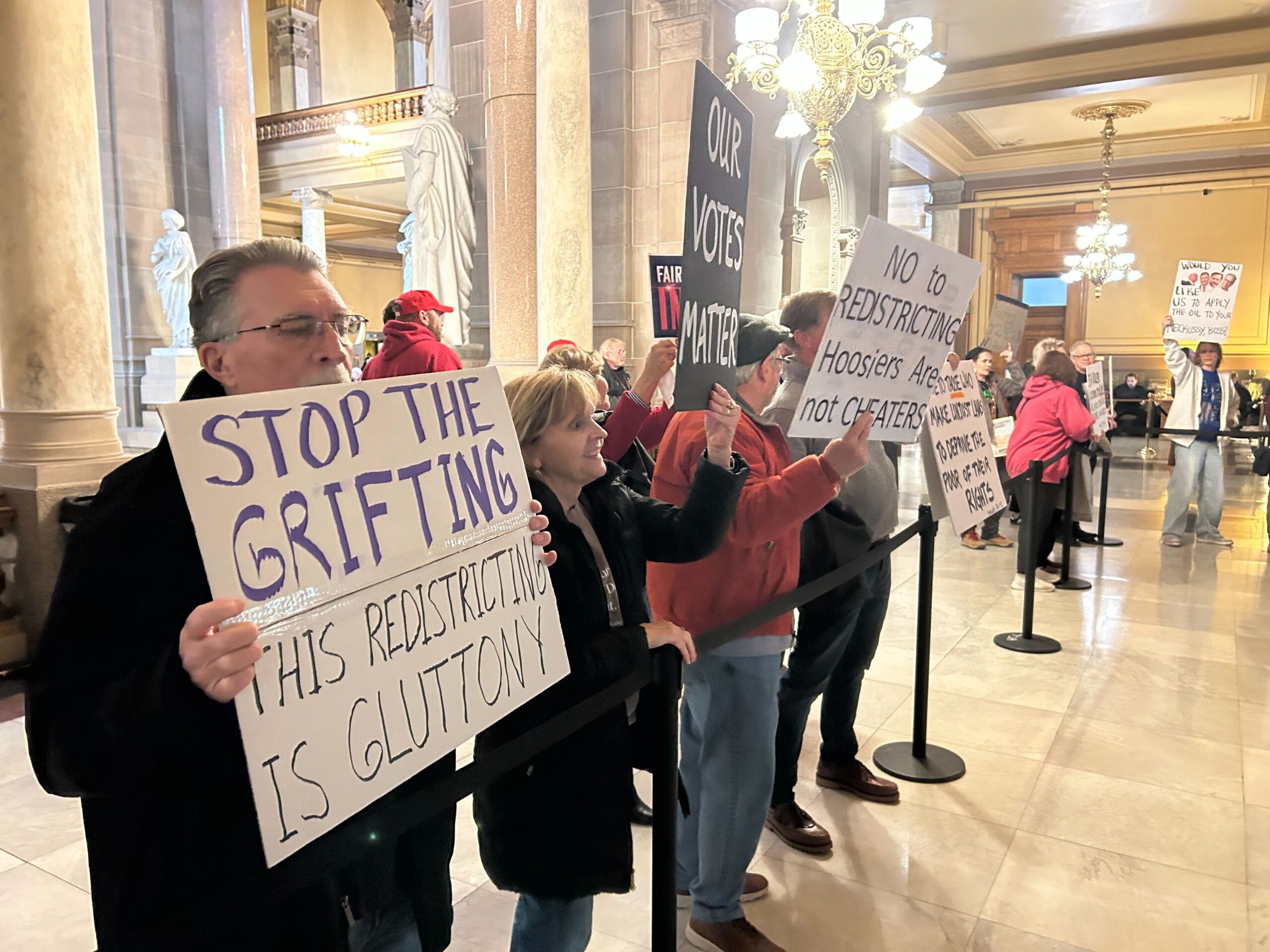
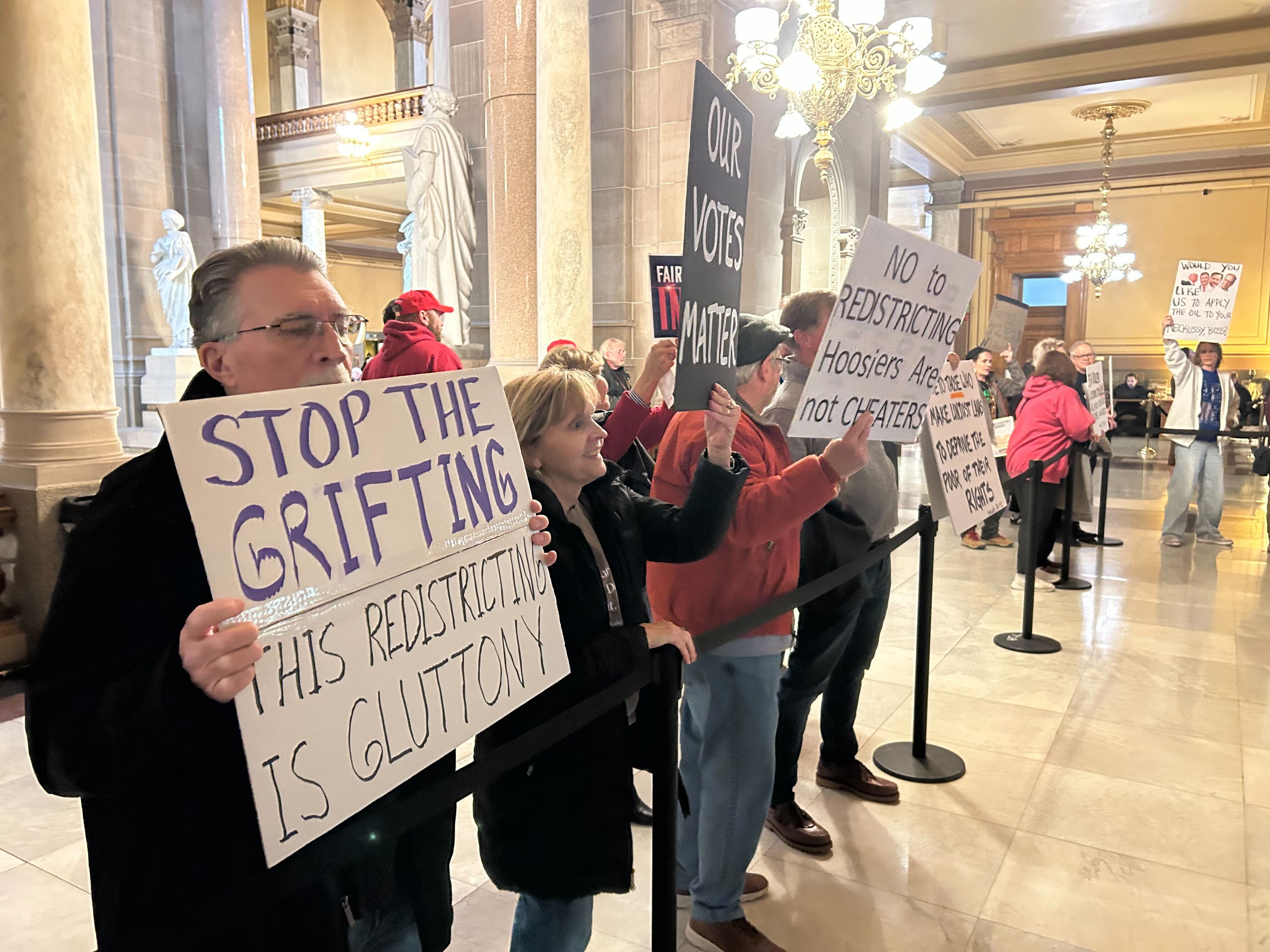
INDIANAPOLIS — Republicans scored a major win in the redistricting fight when the Supreme Court reinstated Texas’ newly drawn congressional map on Thursday. But President Donald Trump and his allies are staring down a brewing rebellion in the Indiana Statehouse that could derail their momentum.
The high court decided in an apparent 6-3 vote to block a lower court ruling that deemed the Texas map a likely illegal race-based gerrymander. In doing so, the court’s conservative majority helped Republicans avert a nightmare scenario in which Trump’s redistricting push ultimately cost the party seats leading into the 2026 midterms.
The focus now shifts to Indianapolis, where the president’s allies are heaping pressure on GOP holdouts in the state Senate who are resisting Trump’s demands to draw new lines there that could net Republicans additional congressional seats.
In the state Capitol, as members of the state House debated final passage of a map supporters argue would all but guarantee an entirely Republican congressional delegation — from the current 7-2 split favoring the GOP — Turning Point USA held a sparsely attended rally to pressure Indiana Senate Republicans to do the same, over chants of “9-0.”
“This is now the national make-or-break issue of the year,” said Brett Galaszewski of Turning Point Action, adding that Indiana “is the center of the political universe.” Gov. Mike Braun and Lt. Gov. Micah Beckwith both addressed the crowd as they faced cheers, boos and shouts of “cheaters” from counterprotesters.
Earlier Friday, Turning Point Action announced that it, along with Trump-aligned super PACs, would spend in excess of eight figures to primary Indiana Republicans through 2028 if they opposed the new map. And Club for Growth President David McIntosh issued a “FINAL WARNING” to Indiana Senate President Pro Tem Rodric Bray, writing, “failure to get this done means you and any other opposition will be defeated and removed from office in your next election.”
All of it was designed to amp up pressure on reluctant Indiana Senate Republicans, who are expected to convene Monday to consider the new map. It’s unclear whether pro-redistricting allies have flipped any senators since they stalemated 19-19last month on a vote that was a close proxy for gerrymandering. The map passed the state House easily on Friday.
For now, Republicans have an edge across the six states that have seen a redraw. The GOP has nine more favorable seats across four states — Texas, Ohio, Missouri and North Carolina — while Democrats have five more blue-leaning seats in California, and an additional court-ordered likely pickup in Utah.
The fight over the new lines across the country is expected to carry into the new year. Privately, Democrats were not shocked by the Texas ruling, long assuming the conservative Supreme Court was going to allow the Texas map to stand. With the Texas maps in place, Democrats involved in the nationwide battle anticipate they’ll ultimately start the midterm cycle down a handful of seats, but the exact number isn’t clear.
Republicans see another key pickup opportunity in Florida, where party redistricting proponents think they could extract another three to five seats ahead of the midterm elections.
But while the state Legislature officially kicked off the mid-decade battle in the state on Thursday, Gov. Ron DeSantis and the Florida House lawmaker in charge of redistricting are at odds over how quickly to do it. And the state’s prospective redraw faces another roadblock: Florida’s anti-gerrymandering standards, which hold that a new district cannot be drawn for partisan gain.
Democrats, meanwhile, are homing in on Virginia. Five of the state’s 11 House seats are held by Republicans, who were trounced in a November election that bestowed on Virginia a Democratic governor, attorney general and a big Statehouse majority. Democrats there already kicked off a surprise redraw process right before the election. Now, Virginia House of Delegates Speaker Don Scott is teasing a major redraw early next year.
“10-1 is not out of the realm to be able to draw the maps in a succinct and community-based way,” he said this week. “We’re gonna take a look at it. We have to.”
In Missouri, Democrats are looking to challenge a map the GOP-controlled Legislature passed in September, leaving the state with just one blue district. They face a Thursday deadline to submit over 100,000 signatures that could trigger a referendum and temporarily block the new lines from being implemented, along with a complicated web of legal battles around the referendum process.
The Department of Justice, meanwhile, is going ahead with its lawsuit to challenge California’s new congressional map, even after Attorney General Pam Bondi celebrated the Supreme Court’s decision to greenlight Texas’ newly gerrymandered House map.
But the high court’s blessing of Texas’ Republican-friendly redrawn map came with a few Easter eggs that suggested how some of the other percolating redistricting battles are likely to play out. Most notably, three of the court’s conservative justices — Samuel Alito, Clarence Thomas and Neil Gorsuch — concluded that California’s redrawn districts were “indisputably” crafted for partisan advantage.
It’s unclear precisely how the justices’ decision will influence the broader national clash over mid-decade redistricting for 2026. Had the justices struck down Texas’ map, it may have increased pressure on other GOP-led states like Indiana and Florida to redraw their own boundaries to help give the party a better chance at retaining the House. On the other hand, the ruling’s clear blessing of mid-decade redistricting for partisan gain could ensure that it becomes a routine weapon in the arsenal of political warfare.
But conservative justices’ signaling on California’s map bodes poorly for the Trump administration, with the DOJ and California Gov. Gavin Newsom trading barbs following the decision.
“So you gonna drop your lawsuit against us right, Pam?” Newsom’s office asked on X Thursday night.
“Not a chance, Gavin — we will stop your DEI districts for 2026,” the Justice Department wrote back.
Adam Wren reported from Indianapolis, and Gregory Svirnovskiy and Kyle Cheney reported from Washington. Andrew Howard contributed to this report.


Rep. Max Miller issued a subpoena to his former father-in-law and fellow Ohio Republican, Sen. Bernie Moreno, in the latest escalation of a long-running family legal drama.
Pamela MacAdams, an attorney for Miller, reported to the Cuyahoga County Domestic Relations Court Monday that three subpoenas were served in Miller’s divorce case, according to court records. A person with knowledge of the subpoenas granted anonymity to comment on them said that two were sent to Moreno and his wife, Bridget.
Their daughter, Emily Moreno, was married to Miller, and the two remain embroiled in a nasty legal battle.
Spokespeople for Miller, Emily Moreno and Bernie Moreno did not immediately return requests for comment. TMZ first reported on the subpoenas.
Miller is seeking reelection in a competitive district, and his campaign has been marred by accusations of domestic abuse against Emily Moreno and their daughter. Miller has repeatedly denied the allegations and chose to remain in the race despite other Republican lawmakers pressuring him to withdraw his campaign.
The House Ethics Committee, which began an inquiry into Miller after Miller asked to be investigated, is currently in a preelection blackout period. During that period, which will continue through the midterms, the Ethics Committee doesn’t take any action against sitting members who could return next Congress.
Congress
Trump declares $1B canceled in ‘pocket rescission’ in another affront to Congress’ funding power
President Donald Trump informed congressional leaders Friday that he has unilaterally canceled almost $1 billion without Congress’ consent — employing a budget maneuver many lawmakers consider illegal.
In a move that will almost certainly set up an ugly government funding battle after the midterms, Trump has again claimed the power to execute a so-called “pocket rescission” to nix money Congress has already enacted. The money his administration will claw back is for for immigration services, support to foreign countries, education programs, health research efforts and assistance for businesses owned by minorities.
By law, the president is allowed to send Congress a request to rescind federal funding, then withhold that money for 45 days while lawmakers consider whether to approve, reject or ignore it. Trump administration officials also argue they have the power to cancel funding without any congressional action by sending Congress a rescission request with less than 45 days left in the fiscal year. The argument is that the money automatically gets canceled on Sept. 30, when funding lapses at the end of the fiscal year.
Last year, Trump canceled $4.9 billion in foreign aid.
The Senate’s top Republican appropriator, Sen. Susan Collins of Maine, immediately blasted the move as illegal, saying in a statement Friday night that “any effort to rescind appropriated funds without congressional approval is a clear violation of the law.”
“This move shows that OMB intentionally withheld these funds for months to execute this unlawful cancellation of appropriations that were approved on a bipartisan basis and signed into law,” Collins added, pledging to work with other lawmakers “to address these illegal actions.”
Collins and other appropriators have already been on high alert in recent days, pressing multiple agencies about funding officials have yet to spend ahead of the expiration date.
Democrats are finally catching on to how to talk to young male voters in the lead-up to the midterms, but the party can still up its game, one battleground senator and potential 2028er said Friday.
Sen. Ruben Gallego (D-Ariz.) has been one of his party’s most outspoken critics on its handling of outreach to young men, who swung right and helped deliver the White House and both chambers of Congress to Republicans in 2024.
The party is now “definitely moving in the right direction,” Gallego said Friday.
“Like back in the day, I was like the only one,” putting out positions on men, Gallego said at a Washington event on young American men. “Now, like, it seems like everyone every week is coming out with a new position, new idea, which is great.”
Gallego has criticized Democrat’s failure to highlight mens’ struggles and their tendency to over-police mens’ ideas. But there are signs the political winds have shifted in his party’s favor.
A new Cygnal poll released with the event of men ages 18-30 who say they’re the most determined to vote revealed Democrats’ generic ballot lead over Republicans at 57%-40%, Blue Light News reported. The poll also said nearly 40 percent of respondents said they feel their lives are off track.
“We need to take the opportunity to invest in that portion of this country, to say that we care about them and actually try to change the trajectory of what’s happening with men in this country,” Gallego said at the symposium.
Still, the path for specific legislation targeting the needs of this demographic faces an incredibly tight calendar this Congress and is uncertain in the political landscape of next year.
A proposal from Gallego and Sen. Roger Marshall (R-Kan.) to establish a men’s health office within the Department of Health and Human Services, for example, has not advanced. Nor has bipartisan legislation from Sen. Bill Cassidy (R-La.), who also spoke at the event, targeting education outcomes, college investment transparency and dyslexic student support.
-

 Politics2 years ago
Former ‘Squad’ members launching ‘Bowman and Bush’ YouTube show
-
Uncategorized2 years ago
Bob Good to step down as Freedom Caucus chair this week
-

 The Josh Fourrier Show2 years ago
DOOMSDAY: Trump won, now what?
-

 Politics2 years ago
Former Kentucky AG Daniel Cameron launches Senate bid
-

 The Dictatorship2 years ago
Luigi Mangione acknowledges public support in first official statement since arrest
-

 The Dictatorship2 years ago
Pete Hegseth’s tenure at the Pentagon goes from bad to worse
-

 Politics2 years ago
Blue Light News’s Editorial Director Ryan Hutchins speaks at Blue Light News’s 2025 Governors Summit
-

 The Dictatorship1 year ago
Mike Johnson sums up the GOP’s arrogant position on military occupation with two words