
Congress
House Ethics panel issues rare statement committing to helping secure a sexual harassment-free workplace

The bipartisan House Ethics Committee released a statement Monday calling for victims of sexual misconduct to report their accusations to congressional authorities — and affirming its commitment to “maintaining a congressional workplace free from” sexual harassment, abuse and assault.
“There should be zero tolerance for sexual misconduct, harassment, or discrimination in the halls of Congress, or in any employment setting,” the committee members said.
It’s an unusual public-facing step from a panel that operates overwhelmingly behind closed doors, but comes amid renewed scrutiny over how Congress polices its own members for impropriety: Just under one week ago, then-Reps. Tony Gonzales (R-Texas) and Eric Swalwell (D-Calif.) resigned following allegations of inappropriate sexual relationships with, or sexual assault of, former staffers.
In the wake of the Gonzales allegations that emerged earlier this year, the House was poised to vote on a measure from Rep. Nancy Mace (R-S.C.) that would have forced the release of sexual harassment claims against lawmakers. The House Ethics Committee’s bipartisan leadership took the unusual step of releasing a statement condemning the resolution, with Chair Michael Guest (R-Miss.) and ranking member Mark DeSaulnier (D-Calif.) arguing it would have a chilling effect for victims.
The full chamber voted to refer the resolution to the House Ethics Committee, which would effectively kill the effort.
“The greatest hurdle the Committee faces in evaluating allegations of sexual misconduct is in convincing the most vulnerable witnesses to share their stories,” the members said in their statement Monday. “Accordingly, the Committee’s practice has been to release only the information that is necessary to hold Members accountable for misconduct and address public reporting that impacts the integrity of the House.”
Members of the committee noted that their panel does not have the authority to handle lawsuits related to sexual misconduct allegations.
“Anyone who may have experienced sexual misconduct by a House member or staffer, or who has knowledge of such conduct” should contact not only the Ethics panel, members said Monday, but also the Office of Congressional Workplace Rights — which handles claims from legislative branch staffers who may have experienced misconduct — or the Office of Employee Advocacy — which provides legal services to House staffers who may be bringing those claims.
The panel also on Monday released a listof 28 instanceswhere the panel investigated members for allegations of sexual misconduct, going all the way back to 1976.
In about a dozen of these cases, the investigations ended when there was a “loss of jurisdiction,” meaning the lawmaker departed Congress and the committee no longer had standing to conclude its work.
The list includes just one ongoing probe: one relating to Rep. Cory Mills (R-Fla.), who has been accused of various improprieties, including illicitly engaging in federal contracts while in federal office. The Ethics list noted that the inquiry involves allegations of “Sexual misconduct and/or dating violence.” He also has been accused by a former girlfriend of threatening to release her nude videos; Mills has denied the allegations.
“Over the last decade, the Committee has adopted a more aggressive and robust approach to allegations of sexual misconduct,” the Ethics Committee said. “Since 2017, the Committee has initiated investigations in 20 matters involving allegations of sexual misconduct by a Member. The Committee has also investigated several Members for their handling of allegations of sexual misconduct by their senior staff.”


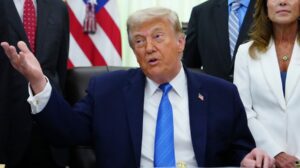
President Donald Trump is touting a deal that would end the monthslong war with Iran — and potentially ease some of the political headwinds bearing down on Republicans.
GOP lawmakers still have lots of questions.
The absence of publicly released text for the “memorandum of understanding” Vice President JD Vance reportedly signed with Iranian officials Sunday left an information vacuum on Capitol Hill, where senators of both parties were left airing concerns about what the deal might entail.
Even most Republicans agreed: More information needs to come to Congress soon, and any agreement touching on the future of the Iranian nuclear program would have to eventually be subject to a congressional vote.
“If you want a deal to last, it can’t be an executive agreement,” said Sen. James Lankford (R-Okla.). “We’ve got to have a vote of Congress to be able to solidify [it] long term.”
The bipartisan scrutiny of the long-brewing agreement is a legacy of the last Iran nuclear deal, consummated more than a decade ago by then-President Barack Obama amid a bipartisan uproar over trading sanctions relief and cash concessions to the Iranian regime in return for curbs on its nuclear ambitions.
Trump withdrew from the deal in his first term, and now he is back with an agreement that — pending release of the text and final negotiations yet to come — could end up looking like Obama’s deal. That has raised the hackles of both defense hawks who despised the original agreement, known as the Joint Comprehensive Plan of Action (JCPOA), and Democrats who believe Trump never should have left it in the first place.
Sen. Lindsey Graham (R-S.C.), one of those defense hawks, told reporters that he was “pulling for a deal,” while also making note of serious discrepancies in the terms that have emerged thus far.
“The MOU being described by us sounds really very good; the MOU being described by Iran sounds awful,” Graham said.
“If they can enrich [uranium] anywhere at all, then it’s the same as JCPOA. If they can’t enrich, then that makes it a good deal,” he continued, adding in a separate conversation that he was “skeptical that Iran will ever go there” to cease enrichment.
The Trump administration said it expects release of the memorandum of understanding no later than Friday.
The possibility that Congress would take any kind of vote on the agreement is also a legacy of the 2015 deal. Amid bipartisan concern about the Obama administration’s pursuit of nuclear talks, the GOP-controlled House and Senate that year passed legislation allowing for congressional review of any agreement dealing with the Iranian nuclear program.
That law, however, does not require Congress to approve a deal — it rather gives it the ability to kill a deal via a disapproval resolution that could be subject to presidential veto. That means each chamber would have to effectively muster a two-thirds majority to block Trump, something it did not come close to doing in 2015.
Senate Majority Leader John Thune said Monday there is “probably some expectation” that his chamber would ultimately vote on the agreement while declining to weigh in on the particulars.
“I just don’t know enough about it yet, and I don’t think even the people who follow this stuff closely up here know that much about it,” he said, adding that he expected Vance or other administration officials to brief members on the deal at some point.
The lack of specificity was par for the course on Capitol Hill Monday, with many senators expressing exasperation that text of the signed agreement has not yet been released.
“If it’s a secret deal, then how can I take it seriously?” Sen. Thom Tillis (R-N.C.) told reporters.
The agreement reportedly includes reopening the Strait of Hormuz to commercial shipping, but it’s not clear to what degree Iran will be required to abandon its nuclear program. Vance indicated in a series of interviews that the administration will attempt to ensure Iran does not develop or obtain a nuclear weapon but left details regarding civilian nuclear facilities and potential uranium enrichment unaddressed.
The White House circulated talking points to Hill Republicans Monday touting the deal including that “Iran will never have a nuclear weapon” and “energy prices … are coming down,” according to a copy of the document reviewed by Blue Light News. The administration also argued in the memo that the agreement “beats” the Obama-era agreement.
In the absence of further details, senators mainly agreed that they wanted a chance to formally review and vote on the deal — even as some Republicans predicted the administration would find a way to avoid that happening.
“I don’t expect that to happen,” Sen. John Cornyn (R-Texas) said about a vote. “They’ll try to write it around the treaty requirements, so I don’t expect we’ll vote on it.”
Sen. Mike Rounds (R-S.D.) said the administration should send the deal to Congress “if they want it to be something other than a political agreement, like the JCPOA was.”
Most congressional Republicans have been eager for Trump to find a way out of the nearly four-month war, which has driven up energy prices ahead of the November elections. Thune predicted Monday that a deal would “have a very positive impact on the economic situation in the country and that obviously will translate into the political situation in the country.”
Some of Trump’s most vocal allies on Capitol Hill praised the agreement Monday.
Sen. Eric Schmitt (R-Mo.) said has had conversations with senior White House officials and he was “very hopeful.” Sen. Bernie Moreno (R-Ohio), who is likely the next Senate GOP campaign chair, added on X: “President Trump deserves our trust and support as he works to bring peace to the Middle East.”
Democrats were largely keeping their powder dry Monday on how they would handle a vote on the agreement. Some could find it hard to oppose a deal that ends hostilities on negotiated terms roughly similar to what was secured under a Democratic president in 2015.
But plenty of Democrats questioned what was gained by the conflict.
“We still don’t know the details,” Minority Leader Chuck Schumer said on the Senate floor. “The American people need to know exactly what’s in the deal. … We know this for certain: We are worse off than before Trump began his foolish war of choice.”
Meredith Lee Hill contributed to this report.
Senate Majority Leader John Thune said Monday he hopes his predecessor as top Republican, Mitch McConnell, returns this week from a hospitalization.
Thune said he had not yet spoken directly with the 84-year-old Kentuckian but is getting “readouts from his staff.”
Asked about McConnell’s condition or if he knew if he would be back this week, Thune told reporters, “I’m hopeful that he’ll be back this week.”
A McConnell spokesperson said Sunday that he had been admitted to the hospital but did not provide details on his condition or why he was hospitalized — a break from recent prior instances where the seven-term senator was hospitalized.
A former McConnell staffer who spoke on the condition of anonymity was told the senator was doing much better Monday without any further details on what put him in the hospital.
Daniel Desrochers contributed to this report.
The Senate could vote as soon as Thursday on Jay Clayton’s nomination to serve as director of national intelligence — a lightning speed pace that will necessitate buy-in from all 100 senators.
Confirming Clayton could help shore up enough votes from Democrats to extend a government surveillance program that expired last Friday over opposition to Trump’s pick for acting director, Bill Pulte.
“He will come out of the committee Thursday, at least hopefully, and then if we get consent, we can move,” Senate Majority Leader John Thune said in an interview Monday about Clayton, who Trump only nominated for the job late last week.
Democrats “ought to be happy with Clayton,” said Thune, adding that he’s a “good” and “solid” pick.
Sen. Mark Warner of Virginia, the top Democrat on the Senate Intelligence Committee, floated Sunday to CBS News that Clayton could be confirmed this week if every senator cooperates.
Senate Intelligence will hold a hearing Wednesday on Clayton’s nomination. If every member of the panel agrees, he could then get a committee vote Thursday. Confirming Clayton on the Senate floor hours later would require getting agreement from every senator to speed up the process. Opposition from a single member will punt Clayton’s confirmation to next week.
Confirming Clayton Thursday would, crucially, limit — and potentially circumvent — Pulte from becoming acting director of national intelligence, which Trump has slated to take place Friday, June 19.
The president’s decision to put Pulte in charge after Tulsi Gabbard’s departure at the helm of the Office of National Intelligence sparked bipartisan pushback, with Democrats saying they will withhold support for extending Section 702 of the Foreign Intelligence Surveillance Act while Pulte is in the acting role. Congress allowed the key government spy authority lapse last Friday without a deal.
Trump threw another curveball into a FISA extension over the weekend when he posted on social media that he was against reauthorizing Section 702 unless a GOP elections bill is attached. That bill, known as the SAVE America Act, does not have the votes to get through Congress.
Thune threw cold water Monday on tying the two issues together.
“Yeah, he’s, as you know, passionate about getting that done and wants to use every opportunity to take a shot at it,” Thune said of Trump and his desire to enact the elections bill.
But, Thune said, “we can’t get FISA done” if the policies are linked.
- We’re about to find out how powerful Brian Kemp really is with Georgia Republicans
- Supreme Court declines to hear gun industry challenge to NY law

- Lawmakers caution Burgum, NPS they have ‘no power to build’ Trump’s arch

- Trump says $300B fund to rebuild Iran is ‘Fake News’
- Green algae return to reflecting pool days into Trump’s renovation

- They’ll call everyone else a Nazi, but the media aren’t sure about the Nazi tattoo guy

- Michelle Obama’s womanhood isn’t a question. Josh Hokit’s idea of manhood is.
- What I witnessed at Delaney Hall should concern every American
- Monday’s Mini-Report, 6.15.26

- Gov. Gavin Newsom says Justice Department is investigating him and his wife

-

 Politics1 year ago
Former ‘Squad’ members launching ‘Bowman and Bush’ YouTube show
-

 The Dictatorship1 year ago
Luigi Mangione acknowledges public support in first official statement since arrest
-

 Politics1 year ago
Former Kentucky AG Daniel Cameron launches Senate bid
-
Uncategorized2 years ago
Bob Good to step down as Freedom Caucus chair this week
-

 The Dictatorship1 year ago
Pete Hegseth’s tenure at the Pentagon goes from bad to worse
-

 The Josh Fourrier Show2 years ago
DOOMSDAY: Trump won, now what?
-

 Politics1 year ago
Blue Light News’s Editorial Director Ryan Hutchins speaks at Blue Light News’s 2025 Governors Summit
-

 The Dictatorship9 months ago
Mike Johnson sums up the GOP’s arrogant position on military occupation with two words