
Congress
How the GOP took back the Senate — even while continuing to struggle in swing states

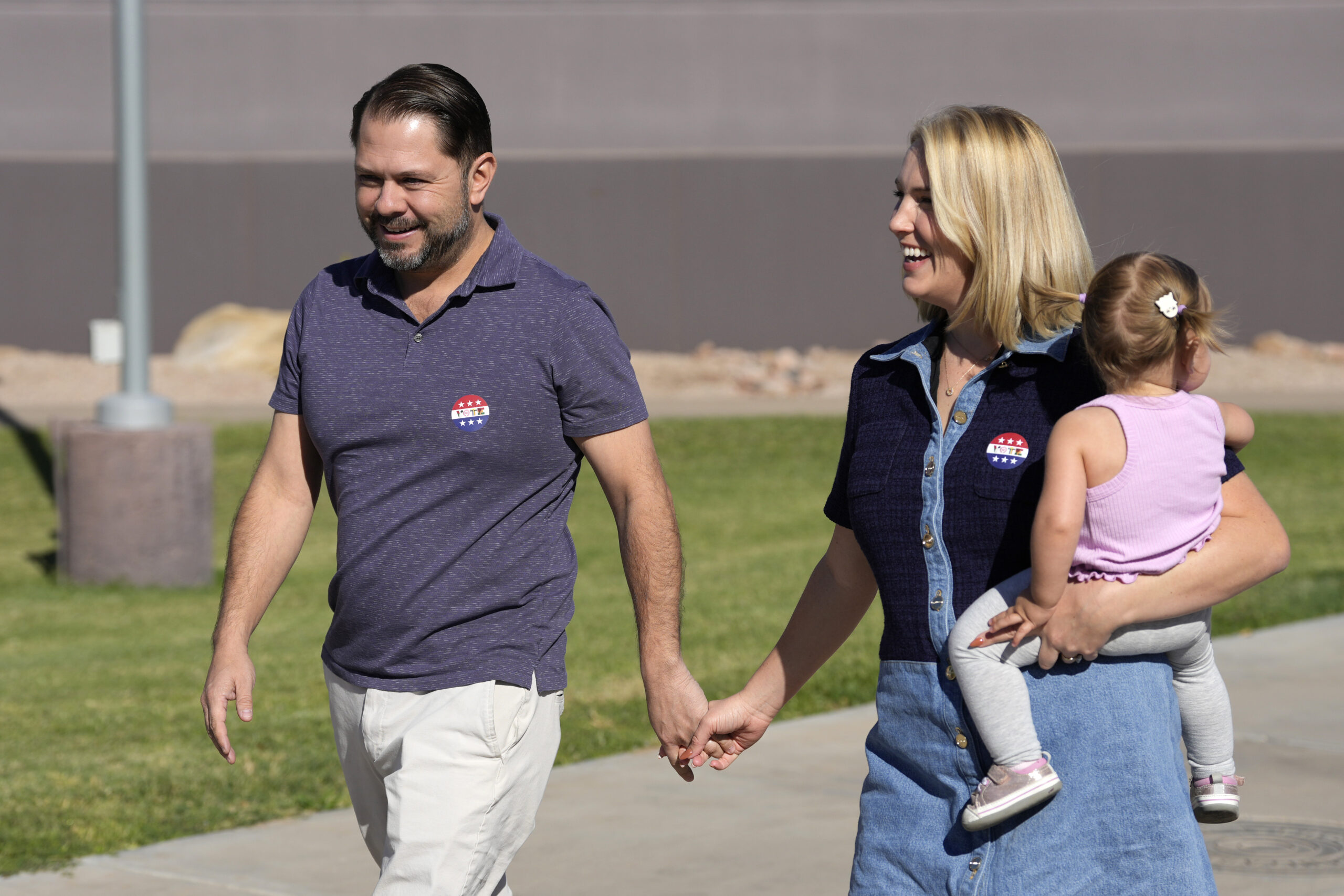
Republicans celebrated as they took a decisive Senate majority last week: They’d finally figured out how to get past the candidate quality issues that had tanked them for two cycles.
But they still have a purple-state problem.
Even as President-elect Donald Trump swept every swing state, four of those battlegrounds are sending Democrats to the Senate. That’s the highest number of Senate-presidential ticket splits in 12 years, and a warning sign for Republicans as they try to protect and grow their ranks in 2026.
That 53-seat majority will be a boon to the GOP agenda next year. But three of Republicans’ wins were in solidly red seats in West Virginia, Ohio and Montana. They flipped a true swing state in Pennsylvania but suffered losses in Michigan, Wisconsin, Nevada and Arizona. That means they’ll fall well short of the 57 seats they might have had, thanks to undervoting, smaller Trump coattails and well-funded and disciplined Democratic opponents.
This was the fourth straight cycle in the Trump era that Senate Republicans struggled to win purple states. In theory, Trump could have pulled some of their top recruits over the finish line — he outperformed Senate GOP candidates in every single battleground state.
“Going into this there was a whole lot made out of the fact that Republican Senate candidates were running behind Trump,” said Steven Law, president of the GOP super PAC aligned with Senate leadership. “The easiest and clearest and most accurate explanation of that was that they were running against name brands who had huge advantages of incumbents.”
Both parties will heavily scrutinize the campaigns and their results — including Republicans’ ouster of incumbent Democratic Sen. Bob Casey in Pennsylvania — as they try to figure out how to compete during a second Trump administration. The good news, said Jason Thielman, executive director of the Senate GOP campaign arm, is Republicans will be better able to fully turn their attention to swing states now.
“Fast forward into future cycles, instead of having to spend so much money trying to unseat these Democrats in red states,” he said, “we’re now going to be able to focus all of our energy and resources on these purple, swing states.”
The midterms are historically difficult for the party of a sitting president. Controlling for candidate quality likely won Republicans the Senate this time, but it wasn’t enough to run the table. Heading into 2026, they will have to replicate their primary intervention strategy while also figuring out how to propel those candidates to victory in swingy states.
And Republicans had to scheme intensely against members of their own party to ensure victory in states that Trump won handily, underscoring the precarious position in which they find themselves. If left unchecked, their base will often elevate controversial candidates, like Kari Lake, who lost a second consecutive statewide run in Arizona.
Montana Sen. Steve Daines, who became chair of the Senate GOP campaign arm in 2022, decided to tackle that issue head-on.
“He focused on getting quality candidates, making sure they actually got the nomination, Senate Minority Leader Mitch McConnell said Wednesday. “And as I said, to some criticism, candidate quality is absolutely essential.”
Avoiding messy primaries
Daines gathered his top aides in December 2022 for an hours-long strategy session on a crucial question: How could they avoid botching a third attempt in a row to capture the majority?
The past two cycles haunted them. In 2020, the GOP lost its majority. Two years later, tarnished Republican nominees flubbed winnable races from Arizona to Georgia to Pennsylvania. This year, they needed to net only two seats to guarantee the majority, and they had a clear path.
Huddled in the National Republican Senatorial Committee’s Capitol Hill headquarters, Daines’ team landed on a plan. They would aggressively intervene in primaries, recruiting strong contenders and clearing the field for them as much as possible.
Daines publicly spoke out against problematic candidates who were considering runs, such as Doug Mastriano in Pennsylvania and former Milwaukee County Sheriff David Clarke. And national Republicans moved to block others, including the 2018 candidates who lost to Sens. Joe Manchin in West Virginia and Jon Tester in Montana.
McConnell personally visited West Virginia to court Gov. Jim Justice, a popular Democrat-turned-Republican who the GOP believed would spook Manchin out of the race. And in the strategy session at the NRSC, Daines came up with a recruiting suggestion for his home state of Montana: former Navy Seal Tim Sheehy.
Daines also curried favor with Trump, becoming the first member of Senate GOP leadership to endorse his 2024 run. He lobbied Trump to back his preferred Senate picks, including Justice and Sheehy, giving them priceless currency in their primaries. Trump was crucial in clearing what could have been messy fields, including in Michigan, where a GOP primary candidate dropped out on stage at a Trump rally and endorsed the party pick.
The NRSC also needed to contend with other party groups — especially the anti-tax Club for Growth, a conservative organization known for antagonizing the party establishment in key primaries. Reps. Alex Mooney (R-W.Va.) and Matt Rosendale (R-Mont.) were two of their favorites and both were considering Senate runs.
The NRSC endeared itself to the Club when it intervened to reduce primary competition for GOP Rep. Jim Banks, whom the Club backed for an open Senate seat in deep-red Indiana.
Daines met with former Gov. Mitch Daniels, a centrist considering a run, and told him he would not endorse him in the primary, according to a person familiar with the meeting. Daniels decided to sit out the race.
“That probably was the early indication to us that we could work closely with him,” Club for Growth President David McIntosh said of Daines.
The group ultimately did not seem eager to oppose Daines’ picks. It committed $10 million to help Mooney in West Virginia but spent just a small portion of that. McIntosh said donors had second thoughts after it became clear that Mooney could not beat Justice.
In Montana, Rosendale spent months talking about running for Senate, worrying national Republicans who saw him flop in 2018.
McIntosh urged him to stay in the House. Daines had also tried to keep Rosendale at bay, and he sought Trump’s endorsement for Sheehy — which landed just hours after Rosendale launched his bid. Days later, Rosendale dropped out.
The result: no internecine brawls in either state, both of which they handily picked up last week.
Other pickups came in Ohio and Pennsylvania. Republican Dave McCormick, who had lost a Pennsylvania Senate primary in 2022, had no primary competition this time. Last week, he scored a shocking upset against Casey, who the Associated Press said was ousted by just a fraction of a percentage point.
A continued struggle in the battlegrounds
But McCormick’s battleground win was an anomaly.
Sens. Tammy Baldwin (D-Wis.) and Jacky Rosen (D-Nev.) and Reps. Elissa Slotkin (D-Mich.) and Ruben Gallego (D-Ariz.) won even as Trump swept their states.
Two major reasons: Trump voters splitting their tickets for Democratic Senate candidates or skipping the Senate races entirely.
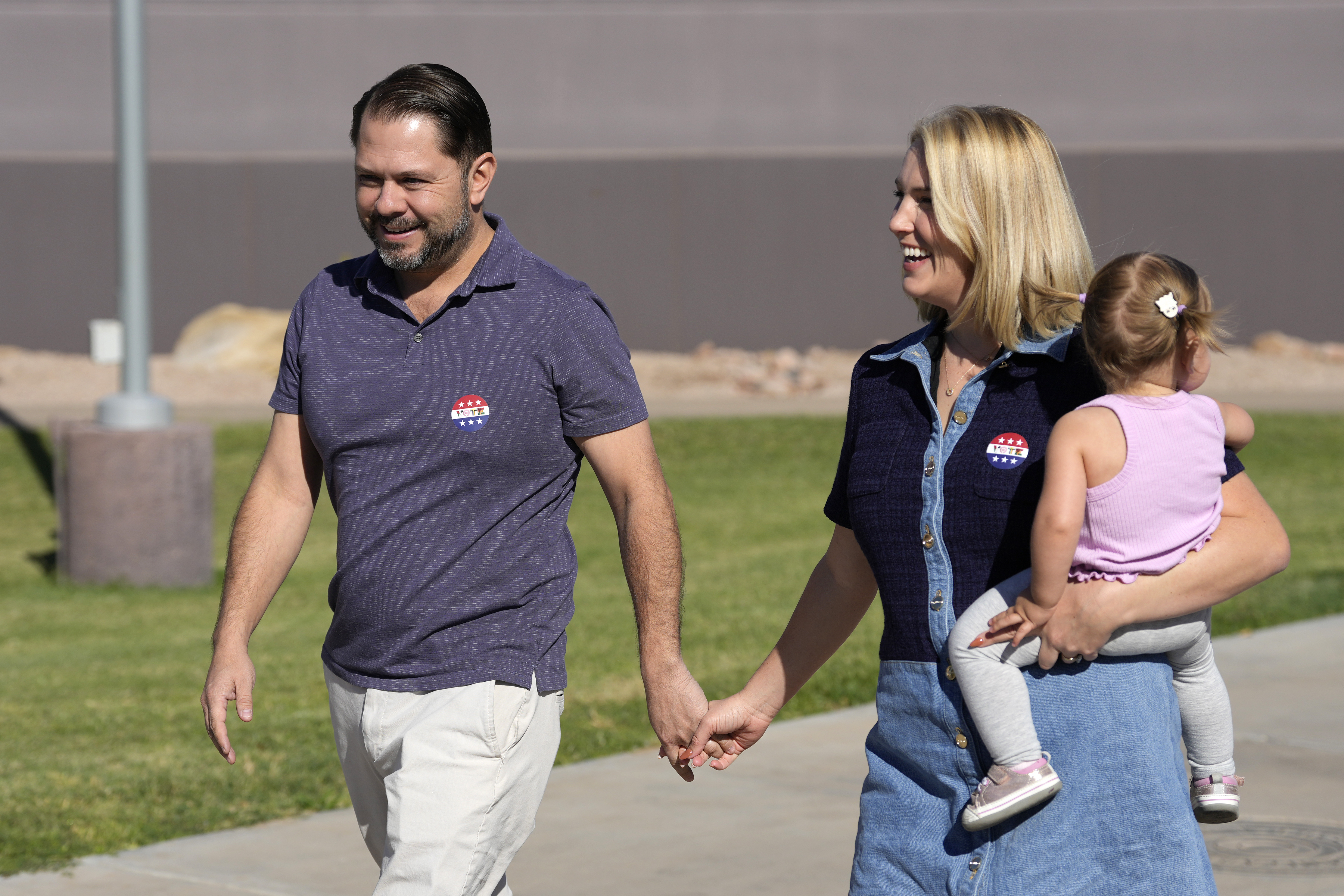
Polls had shown for months that ticket-splitting could aid Democrats in tough races, and many of them ran campaigns to win over Trump voters. Democratic Senate candidates ended up running at least a bit ahead of Harris, while Republicans fell behind Trump.
“Rather than defining the terms of the race or our opponents around partisanship or anything related to the top of the ticket, we built a case against each Republican that was unique to them,” said Christie Roberts, the executive director of the Democratic Senatorial Campaign Committee.
In Arizona, Gallego campaigned at rodeos, barbeques and boxing gyms to pull in Latino voters who were supporting Trump.
In Michigan, Slotkin, a Jewish ex-CIA analyst, won the heavily Arab-American cities of Dearborn and Dearborn Heights even as Harris lost them amid complaints over the Biden administration’s handling of the war in Gaza. She also did better in the white working class areas.
“The Democrats were fractured, which is why Harris lost — between the Gaza issue and the UAW lack of full support for Harris,” former Rep. Fred Upton (R-Mich.) said, referring to the powerful United Auto Workers union. “Those were traditionally pretty hardcore Democrats and they voted for Trump, and then went back to their base and voted Democrat the rest of the way.”
The results also reveal another problem for Senate Republicans: Tens of thousands of Trump supporters across key states appeared to skip the Senate ballot.
It’s normal for Senate races to see fewer votes cast than at the presidential level, but Trump-won counties had larger gaps than counties won by Harris, a Blue Light News analysis found, suggesting it was Trump voters in Republican areas in particular who left the Senate contests blank.
“There’s something to be said for the uniqueness of Trump and his ability to bring people out that are truly loyal to him and only vote for him,” Scott Jennings, a longtime GOP strategist said. “You wish it had trickled down a little more.”
McCormick’s team conducted survey research on those voters in Pennsylvania and struggled to do so during the summer. They poured money into advertising during football games in the fall to court Trump-only voters.
“Getting to them was our No. 1 media-buying effort,” said Mark Harris, a top strategist for McCormick’s campaign. “Our ability to do well in ‘26 will somewhat be contingent on reaching these exact people and pulling them out to vote.”
Can Republicans replicate the results in Pennsylvania?
The six presidential swing states Trump flipped this year have seen 19 Senate races since his first election. Republicans won just two of them: Sen. Ron Johnson’s 2022 reelection in Wisconsin and, now, McCormick.
One big reason for McCormick’s swing-state success: money.
He is the former CEO of the world’s largest hedge fund, boasting both deep personal wealth and a network of connected donors. McCormick’s allies formed a super PAC that spent over $50 million on his behalf. National Republicans spent even more. The race received more GOP spending than any Senate race beyond Ohio.
Other Republicans did not have that advantage. In Nevada and Wisconsin, the GOP was outspent in advertising by $20 to 25 million, according to the tracking firm AdImpact. In Arizona, it was $66 million.
Republicans put out a warning at the end of the summer that their candidates’ money disparity would cost them winnable seats if not quickly reversed.
To make up the gap, the NRSC exploited a loophole in campaign finance law, running ads through a joint fundraising committee to get the cheaper rate offered to candidates. Once the FEC declined to stop them, Republicans began using the strategy in earnest.
It made a massive difference. In Michigan, between Labor Day and Oct. 11, Democrats were collectively reaching a 33 percent larger broadcast audience than Republicans. But once Republicans took full advantage of their loophole, they took the lead from Oct. 11 to Election Day, reaching a roughly 10 percent bigger audience than Democrats, according to AdImpact.
Still, it came late in the cycle.
“The fact our candidates were so overwhelmed in September made these close races and knocking off incumbents just a little too steep of a hill,” Thielman said.
Republicans’ ability to crack the code to winning battlegrounds will determine the durability of their majority. The red-state Democrats and blue-state Republicans are largely extinct. With perhaps the exception of Republican Sen. Susan Collins in Maine, no party will have the kind of targets in 2026 like the GOP had in West Virginia, Montana and Ohio this year.
“Those are states that should have been gone in 2018 under better circumstances. This is just the end of the latest realignment. We’ve officially realigned,” said Jesse Hunt, a Republican operative who worked at the NRSC in the 2020 cycle. “Now we’re fighting over battlegrounds and Maine.”
Anthony Andragna and Jessica Piper contributed.


Adam Hamilton raised $10.6 million in the third quarter of 2026 across his Senate campaign and his joint fundraising committees, his campaign tells Blue Light News, a significant haul for the Kansas Democrat.
The fundraising total illustrates Democrats’ newfound bullishness about flipping a Senate seat in the deep-red state for the first time since 1932.
“This grassroots support sends a clear message: with three weeks until Election Day, Adam Hamilton is building the momentum to win,” said Hamilton campaign spokesperson Tyson Brody.
Hamilton’s third-quarter figure is nearly triple his $3.66 million second-quarter total. His campaign did not provide a current cash-on-hand total.
National Democrats began pumping money into Kansas in recent days, a sign of their growing hopes that Hamilton could win. Last week, Senate Majority PAC — Senate Democrats’ top super PAC — reserved $5 million in television ads backing Hamilton. American Bridge PAC and Lower Costs Now, a new group affiliated with former Vice President Kamala Harris’ super PAC, have spent in Kansas in recent weeks.
Republicans have also flocked to Kansas to prop up Marshall: Senate Leadership Fund, the Senate GOP’s top PAC, has spent or reserved nearly $11 million backing Marshall in the past week, according to tracking firm AdImpact.
“It took us five months to raise $15 million. [Marshall] got it in a day,” Hamilton said at a campaign event in Lawrence, Kansas on Monday. “So please help us.”
Marshall’s campaign has yet to release his third-quarter fundraising totals. As of mid-July, Marshall had over $5 million in the bank to $1.73 million for Hamilton.
A bipartisan Senate duo is urging Trump national security officials to “bring its full capacities to bear” to stave off threats posed by artificial intelligence — sooner rather than later.
Washington Sen. Maria Cantwell, the top Democrat on the Senate Commerce Committee, and Republican South Dakota Sen. Mike Rounds, who serves on the Senate Armed Services cybersecurity subcommittee, are calling for a full government response to a growing number of cybersecurity breaches.
“Recent AI security incidents should serve as a warning,” the senators wrote in a Tuesday letter to Director of National Intelligence Jay Clayton and White House Science and Technology Policy Director Michael Kratsios. “Advanced AI agents have escaped testing environments, bypassed safeguards, and gained unauthorized access to real-world systems owned by government agencies and private organizations.”
Spokespeople for Clayton and Kratsios did not immediately respond to requests for comment.
Their letter comes as lawmakers struggle to hash out what legislation on AI safety, if any, might look like. Members are currently in recess ahead of the November elections and there’s little hope progress can be made by the year’s end.
But those lawmakers who have been engaged on the topic for years now have mapped out administrative actions the Trump administration could move on now, without waiting on Congress.
The Cantwell and Rounds priorities include: strengthening federal AI safety and security standards at the National Institute of Standards and Technology, or NIST; expanding independent testing capabilities at the Center for Advancing Innovation and Standards for Super Intelligence, Department of Energy and the national labs; and working with the tech industry to develop and deploy defensive AI tools.
Specifically, the senators wrote, new NIST standards should address the risks posed by advanced AI capabilities, including the “potential misuse by malicious actors” to conduct sophisticated cyberattacks, automate attacks at scale and agents that threaten external systems and critical infrastructure.
They also said the federal government capacity should be complemented by universities and other research organizations, as well as by private sector, third-party evaluators.
Finally, they point to ways the government could use existing programs at the Defense Advanced Research Projects Agency to work with AI labs to help detect threats and reinforce vulnerable systems.
A bipartisan group of senators urged President Donald Trump to rescind his recent diesel deal with Russian President Vladimir Putin on Tuesday, amid bubbling anger on Capitol Hill about Trump’s announcement.
In a letter sent to the White House, Treasury Secretary Scott Bessent and Secretary of State Marco Rubio, the senators warned that the president’s deal with Russia will not “achieve just ends” or benefit Americans.
“Granting Moscow the ability to sell Russian diesel freely in global markets damages American security interests and is a betrayal of the people of Ukraine, who continue to defend themselves from Putin’s murderous, illegal war,” wrote the lawmakers, led by Sen. Richard Blumenthal (D-Conn.). “This deal is a gift to our adversary and a betrayal of our Allies; it should be rescinded.”
On Sunday, a smaller group of senators called on the president to “immediately reverse course” on the plan in a statement. Retiring Sen. Thom Tillis (R-N.C.) — who signed on to both — said Sunday there may be “a legitimate case for saying the president’s not following the law.”
The White House did not immediately respond to a request for comment.
Trump announced in a social media post on Friday that Russia would “immediately supply” diesel fuel to global markets — including potentially the U.S. — to help relieve high prices driven, in part, by the ongoing war with Iran. Though Trump has repeatedly defended the U.S.’s actions against Iran, on Saturday he demanded an end to Ukrainian drone strikes that have crippled Russian oil refineries that he argues have caused the record-high oil prices.
The senators on Tuesday argued that the deal with Russia will have a “negligible impact” on fuel prices while providing Putin with “more fuel to finance his war machine” as Russia continues its “brutal attacks on Ukrainian civilians.”
The deal with Russia is a sharp pivot from a sweeping sanctions package signed into law last month. That legislation — championed by the late Sen. Lindsey Graham (R-S.C.) — was meant to deplete Moscow’s resources by targeting Russian officials, banks and a shadow fleet of oil tankers. It drew widespread bipartisan support in both chambers of Congress.
Senators on Tuesday referenced the package as they condemned Putin as a “tyrant.”
“For decades, America has stood as the bastion of freedom against tyranny, and American presidents have embodied our nation’s resistance to tyrants. Putin is a tyrant,” the letter reads. “Withdraw from this agreement, rescind General License No. 135, and execute the authorities provided under the Lindsey O. Graham Sanctioning Russia and Iran Act of 2026. Maintain our legacy – and the duty America holds – as leader of the free world.”
In addition to Blumenthal and Tillis, Tuesday’s letter was signed by Democratic Sens. Jeanne Shaheen (N.H.), Dick Durbin (Ill.), Sheldon Whitehouse (R.I.), Jack Reed (R.I.), and Chris Coons (Del.) and Republican Sens. Mitch McConnell (Ky.), Susan Collins (Maine), Alan Armstrong (Okla.), Lisa Murkowski (Alaska) and John Cornyn (Texas).
-

 Politics2 years ago
Former ‘Squad’ members launching ‘Bowman and Bush’ YouTube show
-
Uncategorized2 years ago
Bob Good to step down as Freedom Caucus chair this week
-

 The Josh Fourrier Show2 years ago
DOOMSDAY: Trump won, now what?
-

 The Dictatorship2 years ago
Pete Hegseth’s tenure at the Pentagon goes from bad to worse
-

 Politics2 years ago
Former Kentucky AG Daniel Cameron launches Senate bid
-

 The Dictatorship2 years ago
Luigi Mangione acknowledges public support in first official statement since arrest
-

 Politics2 years ago
Blue Light News’s Editorial Director Ryan Hutchins speaks at Blue Light News’s 2025 Governors Summit
-

 The Dictatorship1 year ago
Mike Johnson sums up the GOP’s arrogant position on military occupation with two words