
Congress
What does Josh Gottheimer want now?


Josh Gottheimer didn’t raise tens of millions of dollars, carefully cultivate home-state political allies and spend more than a decade burnishing a bipartisan “problem solver” reputation to be sending out news releases about his choices for the annual congressional student art competition.
Yet that’s where the 51-year-old New Jersey Democrat finds himself, 166th in House seniority and suddenly plotting his next act in politics.
Losing last year’s Democratic primary for governor was just the start of it. He’s also no longer atop the high-profile caucus of centrist lawmakers he co-founded, and his brand of pro-business, pro-Israel politics is decidedly on the outs inside his own party.
And yet: Gottheimer is showing no sign of letting go of his political career — or his relevance on Capitol Hill — anytime soon.
Since losing the gubernatorial nomination to former colleague Mikie Sherrill, he has thrown himself into crash bipartisan efforts to extend expiring Obamacare tax credits, end the Department of Homeland Security shutdown and limit the Trump administration’s authority in Iran.
He is leading a coalition to shape House Democrats’ stance on artificial intelligence policy, meeting with OpenAI CEO Sam Altman last week. He has positioned himself as a leading voice in the caucus against antisemitism and against the party’s leftward turn — leading a recent media crusade against progressive influencer Hasan Piker, for instance. He’s also known to have the ear of Minority Leader — and potential speaker — Hakeem Jeffries.
“When you’ve tried to move out of the House and then come back to it, sometimes I think the best path forward is to say, ‘This is where I’m a good fit, and I need to be a leader here, and I can have a long career here,’” said former White House chief of staff John Podesta, a friend of Gottheimer’s dating back to their days together in President Bill Clinton’s administration.

Longtime observers of his ladder-climbing ways — including many of his House colleagues — may have a hard time buying it, but Gottheimer insisted in a series of interviews he’s interested in making the most of the perch he has.
“I’m very concerned with parts of the direction of the party, and to make sure that we keep the party from going off a cliff — I take that part seriously,” he said. “I know my colleagues won’t agree with me on everything, and I’m seen as one of the more centrist, commonsense members. I think it’s a very important part of the party to hold on to and to make sure we don’t get captured by Democratic socialists.”
Gottheimer does not have a high-level leadership position from which to espouse that view. But he has never lacked for a platform, and he said he’s ready to play Whac-A-Mole to beat back forces who would pull the party hard left.
“Who the hell knows?” he said of what, or who, he might push back on next. “These things just pop up.”
“But I know that I can have a lot of influence in making sure that we legislate the right way,” he added, “and stopping things from going the wrong way.”
For evidence of Gottheimer’s political savvy, look no further than the fact that in a year where scores of old-school, dealmaking Democrats are facing progressive primary challenges, he ran unopposed for renomination and is set to easily win a sixth term representing New Jersey’s affluent northern tip.
Likely intimidating potential challengers is Gottheimer’s massive campaign war chest: He has over $11 million in his coffers, even after spending $9 million on his run for governor. But he also knows what animates his constituents, many of whom have direct or indirect ties to the financial industry or are otherwise pro-business.
“The more progressive voices in our district are not always enchanted with Josh,” Loretta Weinberg, a former majority leader of the New Jersey Senate who lives in Gottheimer’s district, said in an interview. “But the mainstream Democrats here, I think, are pretty satisfied with his representation.”
Gottheimer’s ability to keep his ear to the ground and make unlikely allies has also served him well on Capitol Hill. He’s part of an increasing rare breed of Democrats who maintains serious friendships and working relationships across the aisle.
Those include Homeland Security Secretary Markwayne Mullin, who served six years in the House with Gottheimer and whose families have grown close enough that their teenage daughters are co-authoring a book together about bipartisanship.
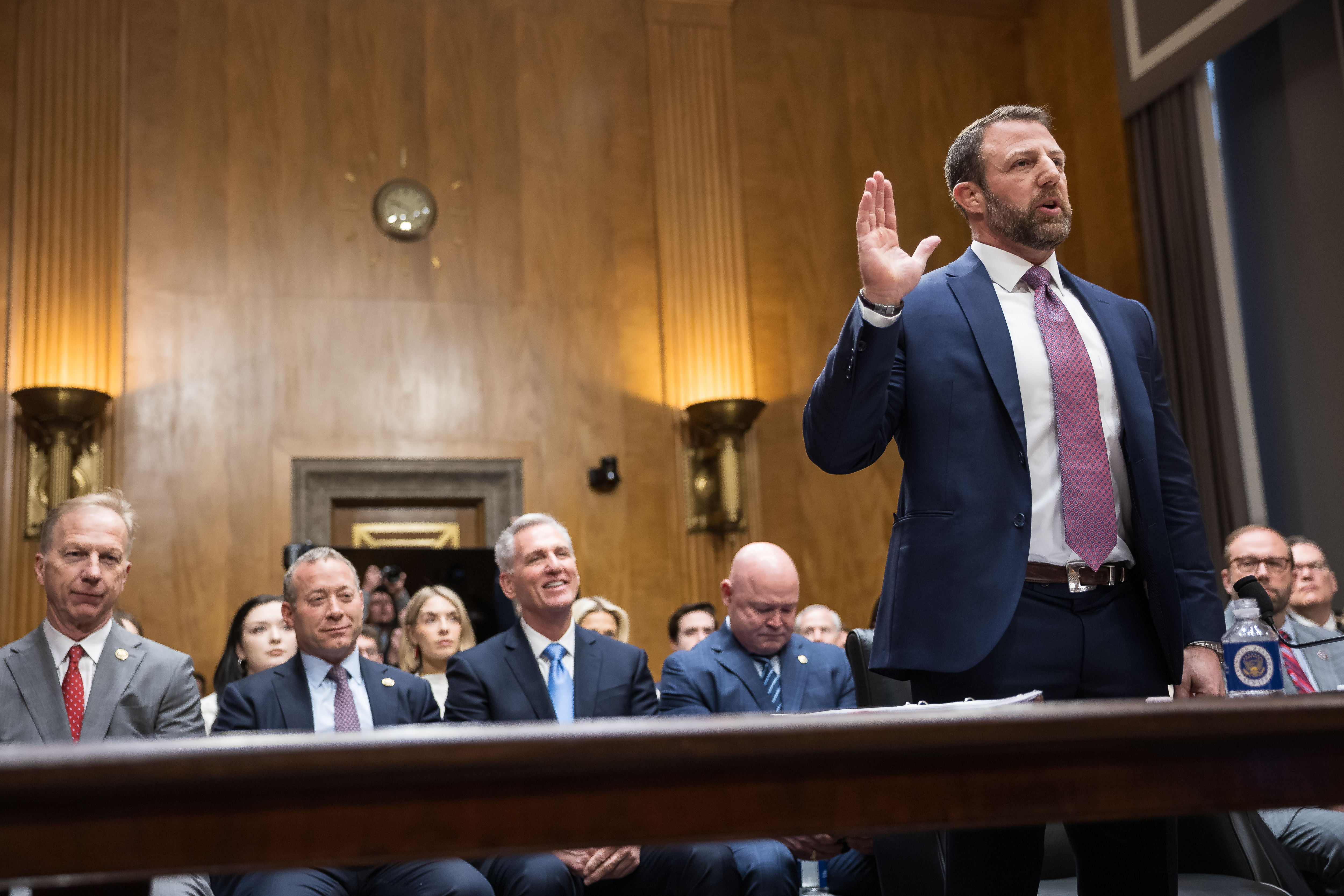
“Josh and I might not agree on every issue, but he’s a friend,” Mullin said during his confirmation hearing, at which Gottheimer sat in the front row.
And while progressives have often bristled at Gottheimer’s unapologetic moderation and abrasive style, key leaders on the left give him credit for being an honest and accessible sparring partner.
Rep. Greg Casar (D-Texas), chair of the Congressional Progressive Caucus, publicly confronted Gottheimer in 2023 during a closed-door meeting where Hamas’ attack on Israel was discussed. But Casar struck a more diplomatic tone in an interview, noting Gottheimer attended a recent CPC meeting to update members on the AI commission’s work.
“Josh and I have our differences, but we have a good rapport,” Casar said.
Gottheimer’s most important alliance, however, is with Jeffries — one that has its origin in their work together to advance the 2018 First Step Act, a criminal justice reform bill led by Jeffries that passed with bipartisan support. The pair later teamed up on a controversial PAC aimed at defending incumbent Democrats from left-wing primary challengers; they both also maintain friendly ties with AIPAC, the pro-Israel lobby group that is increasingly toxic to Democratic voters.
Jeffries described Gottheimer as a “friend” in an interview, said the two speak “regularly” and predicted he would remain a leading voice on AI matters in a Democratic majority. Jeffries has also appointed him to a coveted spot on the House Intelligence Committee, and his GOP relationships could come in handy should Democrats win the majority and Jeffries seizes the speaker’s gavel.
“Josh is a get-stuff-done force of nature who can strongly agree to disagree with a whole host of folks, while still maintaining an excellent interpersonal relationship,” Jeffries said. “That’s a very valuable trait to have in an institution like the House.”

Gottheimer’s relationship to his longtime power center — the Problem Solvers Caucus, which he launched in 2017 with then-Rep. Tom Reed (R-N.Y.) — is more complicated. The group helped nudge along bipartisan bills in the Trump and Biden administration — notably delivering the decisive votes on a $1.2 trillion infrastructure bill — but has since been racked with internal tensions.
A particularly explosive moment came during the 2023 GOP fight over the speaker’s gavel. Rep. Brian Fitzpatrick (R-Pa.), the Problem Solvers co-chair, wanted Democrats to join most Republicans and save Kevin McCarthy from being ousted. They did not, and Fitzpatrick fumed over the split.
More recently, Rep. Nicole Malliotakis (R-N.Y.) quit as a vice chair of the group after Democrats abandoned her bill to advance the Smithsonian National Women’s History Museum when anti-transgender language and other controversial provisions were attached.
She said she personally gets along well with Gottheimer and other caucus members, but that “when we need their vote, they’re nowhere to be found.”
Gottheimer insists that the “gang is back together” now and there “is still a need” for the caucus to broker deals in the House, even as redistricting threatens its core set of bipartisan dealmakers. New York Rep. Tom Suozzi, the current Democratic co-chair, said he expected Gottheimer to be an “influential” voice in the group on issues such as affordability, AI and antisemitism.
“I think that I’m focused on getting things done, and I think that Josh is really focused on getting things done,” he said.
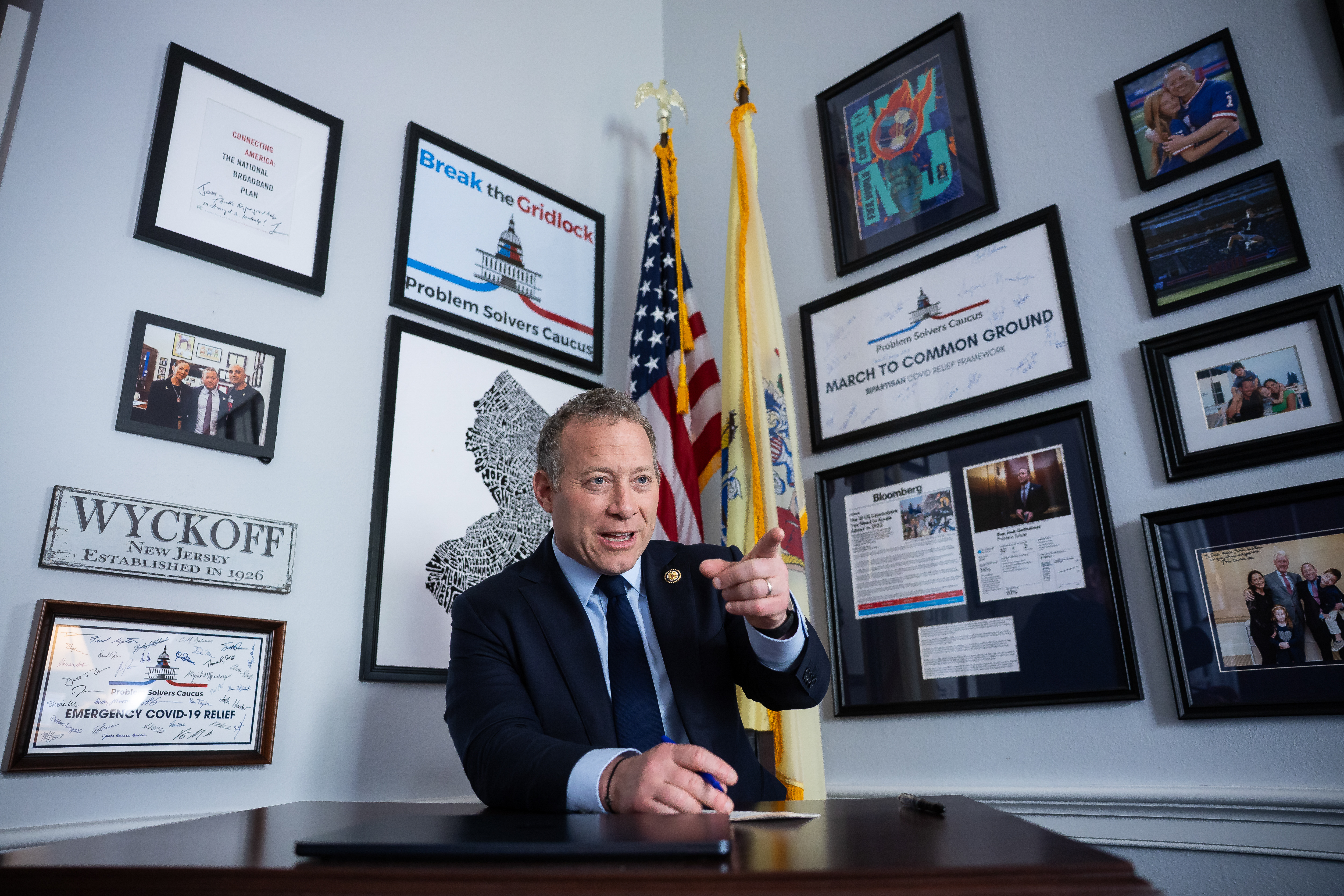
That kind of verbiage is common inside the Problem Solvers group, and especially with Gottheimer, who sat in his office recently and expounded on his pragmatic post-gubernatorial-campaign approach to the House.
“I mean, for now, I just want to be positioned to get shit done and to be helpful that way,” he said.
“Get shit done” also happens to be the trademark of another early-50s Democratic politician with a remarkably similar background: Pennsylvania Gov. Josh Shapiro shares Jewish heritage and a moderate ideological bent with Gottheimer in addition to a first name.
With Shapiro occupying top-tier status in the developing 2028 Democratic presidential race, there’s speculation that Gottheimer could find a new outlet for his considerable ambitions somewhere in the executive branch. Podesta said he has a “combination of skills” that would make him valuable to any Democratic administration.
But Gottheimer insisted in an interview his focus is squarely on the House — where he sees himself as uniquely positioned as a bulwark against the party’s leftward impulses.
“I know I would have been a governor who got shit done, and my name would be Josh,” he said on the Shapiro comparison. “Listen, I think that I learned a lot from that race, and I’m taking what I learned that race and putting it to work right now. … I came back really refocused and re-energized in Congress.”


House Democrats’ campaign arm is launching its first ad buy against seven-term GOP Rep. Mike Turner in his western Ohio district as they seek to turn up the pressure on Republicans in once-safe red seats.
The DCCC is dropping separate six-figure buys on two coordinated television ads boosting challenger Kristina Knickerbocker, spokesperson Riya Vashi said — a remarkable investment considering Turner won in 2024 by over 18 percentage points, overperforming President Donald Trump.
Ohio adopted a new redistricted congressional map last year that was expected to favor Republicans. Turner’s 10th District voted for Trump by 6 points in 2024; under the new lines it would have been closer to 8 points.
The first ad airing this week opens with a woman saying, “It’s time we had someone in Congress who actually stands up for us” as Knickerbocker jogs through a neighborhood.
Democrats are eyeing Turner’s Dayton-area seat as a reach opportunity. A new internal DCCC poll of 535 likely general election voters reviewed by Blue Light News shows Knickerbocker running three percentage points ahead of Turner. Polling from this summer showed Turner leading the race.
Another Democratic group, House Majority PAC, has already poured more than a million dollars into the race against Turner and has reservations planned through Nov. 3. Knickerbocker is not on the DCCC’s “Red to Blue” roster of candidates who get the bulk of its resources.
“Alarm bells should be ringing for Mike Turner,” Vashi said in a statement. “Kristina Knickerbocker has the momentum in this race, and the DCCC will make sure every voter in this district knows exactly how Turner has betrayed them.”
But the NRCC has been spending in the district for several weeks to boost Turner. House Republican campaign operatives are so far dismissing efforts to flip the seat.
NRCC spokesperson Zach Bannon called Turner “a life-long Ohioan who has a record of cutting taxes, lowering costs, and making Ohio streets safer.”
“While Congressman Turner delivers commonsense conservative wins, out of touch Democrat Kristina Knickerbocker supports a radical far-left agenda,” Bannon said. “This November, Ohioans will reject liberal Knickerbocker and send Congressman Mike Turner back to Congress.”
Elon Musk is facing a gauntlet of Democratic oversight.
Democrats have long eyed investigating the world’s richest man and the GOP’s top donor. They may get their chance if they win back congressional power in November, and senior members are mulling how a range of panels could target Musk and a huge swath of his businesses.
Their list of potential probes is growing.
Some members are eager to dig into Musk’s possible role last week in throttling crucial internet access to the Ukrainian military as President Donald Trump seeks to pressure the country into cutting a peace deal with Russia.
“What happens when one guy gets a giant contract from the government and then uses it to do something that shuts down communication in a war that has been extremely important to the United States to support Ukraine?” Rep. Pramila Jayapal said in an interview.
The incident is one of a glut of alleged conflicts of interests members cited as ripe for oversight, as Musk’s companies like SpaceX and Tesla rake in multi-billion dollar federal contracts and subsidies.
“The sheer number of conflicts of interest are astounding,” top Space, Science and Technology Democrat Rep. Zoe Lofgren said.
Spokespeople for Musk did not respond to multiple requests for comment.
Members of House Oversight and other panels also want to examine Musk’s role in eliminating over 250,000 federal jobs during his time at DOGE, withholding congressionally appropriated money and accessing sensitive government data.
“Congress must demand a full accounting of the damage Mr. Musk and DOGE caused, and we will not let anyone obstruct our oversight,” House Foreign Affairs ranking member Rep. Greg Meeks said in a statement Monday, referring to the so-called Department of Government Efficiency Musk headed last year.
Meeks named Musk’s part in “the cruel dismantling of USAID” as a prime target for his panel next year.
Some Democrats are not waiting for gavels: House Homeland Security Democrats demanded last month Musk testify under oath about a watchdog report claiming DOGE overstated its savings. And Ways and Means Democrats called for an investigation into the group’s alleged data theft from Social Security records.
But even members on panels with less obvious ties to the tech mogul are eyeing targets. Rep. Maxine Dexter, who sits on Natural Resources and Veterans Affairs, said she sees Musk among “the well-connected billionaire, trillionaires who have seen government contracts as a way to subsidize their own company’s research, development, and bottom line.”
“We need to shut that down,” she said.
What else we’re watching:
— MEET TRUMP’S HILL LIAISON: Katie Bailey is poised to run point between the White House and a chaotic Congress — especially if Democrats prevail in the midterms. Trump’s pick for the new director of the Office of Legislative Affairs is a longtime former congressional aide with wide-ranging experience in oversight and investigations. Her first task will be helping navigate a fast-moving, high-stakes “lame duck” legislative session, where lawmakers rush to pass outstanding bills and avoid a government shutdown. James Braid, who previously held the role before announcing his departure in August, said in an interview that Bailey is up for that task.
— GOP TRIES TO SPARE UKRAINE FROM TRUMP: Republican lawmakers are scrambling to find a way to stop Trump from cozying up to Russia and dismissing Ukraine — but they’re running low on options. All of it comes in response to the president’s decisions to purchase Russian diesel, waive sanctions on Moscow and potentially stop sharing intelligence with Ukraine. Lawmakers are also frustrated with days of unexplained disruptions in Kyiv’s U.S.-controlled satellite defenses. The disparate responses reflect an undercurrent of Republican angst about an administration that has largely ignored Congress on Ukraine and foreign policy more broadly — and the lack of a coordinated response from the legislative branch. They underscore just how little power Trump’s own party has had in reining in his attacks on longstanding allied relationships.
Riley Rogerson, Chris Marquette, Adam Wren, Mia McCarthy, Mark Satter and Leo Shane III contributed to this report.
Democrats are eyeing many targets as they make plans to probe corruption in and around President Donald Trump’s administration should they win control of the House next month.
Few loom larger than Elon Musk.
The world’s richest man and nine-figure Republican donor has emerged as a man of intense interest to several potential committee chairs — not to mention scores of rank-and-file Democratic lawmakers — who see multiple fronts for investigations.
Those include Musk’s whirlwind stint as head of the Department of Government Efficiency, his companies’ multibillion dollar contracts with the federal government and — most recently — his possible role in throttling crucial internet access to the Ukrainian military as the White House seeks to pressure President Volodymyr Zelenskyy into cutting a peace deal with Russia.
“What happens when one guy gets a giant contract from the government and then uses it to do something that shuts down communication in a war that has been extremely important to the United States to support Ukraine?” Democratic Rep. Pramila Jayapal of Washington, a member of the Foreign Affairs Committee, said in an interview. “There’s a lot of different parts of the corruption around Musk.”
Multiple committees are now gaming out how they will take on Musk next term if Democrats win back gavels, with senior members and aides considering how he fits into the various panels’ jurisdiction. Any number of committees in both chambers could stake a claim to probing a piece of Musk’s dealings with the federal government.
“We definitely have a lot of questions about Elon Musk’s role in DOGE and it is something we plan to investigate,” said Sara Guerrero, a spokesperson for top Oversight Committee Democrat Rep. Robert Garcia of California.
Spokespeople for Musk did not respond to multiple requests for comment.
Some members are not waiting for election results to get started. Democrats on the House Homeland Security Committee demanded last month that Musk testify under oath about a Government Accountability Office report claiming that DOGE overstated its savings, while the House Ways and Means Committee has already called to investigate alleged DOGE-related data theft from Social Security.
Huge parts of Musk’s dealings with the federal government could come under congressional scrutiny, including the billions of dollars in spaceflight contracts SpaceX holds with NASA as well as the clean-energy subsidies Tesla has reaped.
But leading Democrats of multiple committees remain fixed on Musk’s five-month rampage through the federal bureaucracy as DOGE leader, in which an estimated 250,000 federal jobs were cut amid allegations of data breaches and illegally withheld congressional spending.
Rep. Zoe Lofgren of California, the top Democrat on the Space, Science and Technology Committee, which oversees NASA, said her panel has more “to learn about the damage that DOGE inflicted on our science agencies.”
“Elon Musk and his DOGE cronies stirred up chaos, ruined careers, and played a large role in illegal grant cancellations and firings of civil servants,” she said in a Monday statement.
“He helped orchestrate the systematic destruction of government programs and services over the last nearly two years,” Lofgren added. “The sheer number of conflicts of interest are astounding.”
Rep. Greg Meeks of New York, the top Foreign Affairs Committee Democrat, said much the same — calling in a Monday statement for “a full accounting of the damage Mr. Musk and DOGE caused.”
“The cruel dismantling of USAID, championed by Elon Musk and carried out by Secretary Rubio, saved no taxpayer money, balanced no budget, and made America no safer,” Meeks said, adding that the panel “will not let anyone obstruct our oversight.”
The House Oversight Committee, considered to have the most robust investigative staff of any congressional panel, could also get involved in probing Musk’s dealings.
“I think DOGE was the original sin,” said one Democratic member of the panel granted anonymity to describe internal discussions about its agenda. “A third of the committee is lawyers and we see the lawlessness, the intentional violations of the law.”
“I certainly hope that Elon Musk and DOGE get brought in,” the member added. “No one should be above the law.”
Minority Leader Hakeem Jeffries has not named Musk as a preeminent target as tries to keep the Democratic midterm message trained on affordability, but he has spoken out about the need to crack down on the “wealthy, the well-off and the well-connected.”
Garcia also spoke at length in an August interview about targeting corruption within Trump’s inner circle, and others have emphasized the need to take a broad view of potential oversight subjects. Many top Democrats, for instance, want an early focus on Defense Secretary Pete Hegseth.
“I don’t think that there is a single like, ‘You are the one,’” Rep. Emilia Sykes (D-Ohio), a member of the Science panel, said in an interview. “I think it is across the board — we need answers.”
But plenty of rank-and-file Democrats want Musk personally held to account — including some on panels with less obvious ties to the tech mogul.
Rep. Maxine Dexter (D-Ore.), for instance, sits on the Natural Resources and Veterans Affairs Committees. She said she sees Musk among “the well-connected billionaire, trillionaires who have seen government contracts as a way to subsidize their own company’s research, development, and bottom line.”
“We need to shut that down,” she added.
Rep. Sydney Kamlager-Dove (D-Calif.), a Foreign Affairs member, was succinct in describing the need to probe Musk’s dealings and haul him before that committee: “Bring it all on.”
Musk has made no secret of his preference for House control next term as the GOP’s single biggest known midterm donor, with $276 million and counting going to Republican committees and candidates.
Rep. Greg Casar (D-Texas), an Oversight Committee member and the chair of the Congressional Progressive Caucus, said delving into the allegedly transactional nature of Musk’s influence is the whole point.
“Our committees need to be doing oversight both into the Trump administration, but I think even more importantly or equally importantly, into the corporations and ultrarich people who have tried to corrupt our government,” he said. “And, of course, Elon Musk is on that list because it takes two to tango.”
Kelsey Brugger and Ari Hawkins contributed to this report.
- Poll: Voters see Republicans as the party of Big Tech tax breaks
- Two Dans, four choices, one big headache for GOP in Alaska Senate race
- Democrats’ Musk-ask questions

- DCCC launches ads against Mike Turner in red Ohio district
- Capitol agenda: Dem gavels are coming for Elon Musk
- Pritzker’s big spending for Black and Hispanic candidates is drawing notice
- The ‘Congress addict’ serving as Trump’s fixer on Capitol Hill
- Elon Musk is in Democrats’ oversight crosshairs
- GOP lawmakers scramble to spare Ukraine from Trump
- Medicaid cuts haunt Republicans in battleground states
-

 Politics2 years ago
Former ‘Squad’ members launching ‘Bowman and Bush’ YouTube show
-
Uncategorized2 years ago
Bob Good to step down as Freedom Caucus chair this week
-

 The Josh Fourrier Show2 years ago
DOOMSDAY: Trump won, now what?
-

 The Dictatorship2 years ago
Pete Hegseth’s tenure at the Pentagon goes from bad to worse
-

 Politics2 years ago
Former Kentucky AG Daniel Cameron launches Senate bid
-

 The Dictatorship2 years ago
Luigi Mangione acknowledges public support in first official statement since arrest
-

 Politics2 years ago
Blue Light News’s Editorial Director Ryan Hutchins speaks at Blue Light News’s 2025 Governors Summit
-

 Politics1 year ago
John Legend advises Trump to drop the ‘dictator s‑‑‑’ if he wants Nobel Peace Prize