
Politics
To resist Trump or work with him? This governor says you can do both.

Few things are more authentically Washington than a fly-in. As in, the great capital tradition of getting people from all 50 states into town and unleashing them on the halls of Congress for a few days of lobbying.
This week, the group showing up to have their voices heard isn’t local farm bureaus, chambers of commerce or realtors associations. It’s the governors who are here for the National Governors Association’s winter meeting. And the Republicans and Democrats attending have a lot to talk about.
The man in charge of the NGA is Colorado Governor Jared Polis, who has taken more than a few unconventional stances on the issues in his two terms as governor, and during his Congressional career before that.
But Polis has some big fish to fry this week. He and his fellow governors are in the tough position of responding to the fast pace of policymaking coming from Trump, where issues like tariffs and immigration enforcement are about to have tangible effects on their constituents, and possible funding cuts from reconciliation may be around the corner.
Playbook’s Eugene Daniels taped an episode of the Deep Dive podcast with Polis at Blue Light News’s Governor’s Summit on Thursday. They discussed Polis’ thoughts on all of these controversial issues as well as how he thinks Democrats should walk the line when it comes to working with Trump versus opposing him; how Polis thinks Trump is hurting himself; and what the first thing Elon Musk and DOGE should cut is.


Rhode Island Democratic Gov. Dan McKee became the first governor in eight years in the U.S. to lose a primary, falling on Wednesday to former CVS executive Helena Foulkes and becoming the latest victim of a rough year for incumbents.
McKee’s campaign was bogged down by the botched handling of a years-long project to rebuild the Washington Bridge, which transports more than 70,000 drivers through Providence each day. The project has suffered from delays, cost overruns and disputes between state officials and former contractors that have raised questions about transparency and accountability for the project.
Foulkes spent much of the primary hammering McKee over his handling of the bridge project — a strategy that ultimately proved successful.
McKee had partially closed the bridge in 2023, and estimated at the time that it would fully reopen this summer. But last year, he said the bridge likely won’t be completed until 2028. Construction began in June.
Throughout his campaign, McKee continued to insist that the bridge project was handled well. He told The New York Times in August that “people are going to realize we did the right thing.”
The last incumbent governor to lose a primary was Kansas Gov. Jeff Colyer in 2018. McKee’s loss Wednesday adds to the substantial list of Democratic incumbents ousted in primary challenges, though this race didn’t feature the same generational and ideological contrasts as other primaries that have felled Democrats this cycle. Foulkes and McKee, both baby boomers, both ran center-left campaigns.
Foulkes’ victory adds a chapter to her family’s long political lineage. Her grandfather, Thomas J. Dodd, and her uncle, Chris Dodd, were both senators from Connecticut. She worked as an executive at CVS for over 25 years before launching a 2022 run for governor.
McKee won that round, but she got the final word on Wednesday.
DALLAS — Republicans are panicking that President Donald Trump’s policies are drowning out their cost-of-living message — and that it may be too close to the election to fix it.
GOP lawmakers and candidates woke up in Texas on Wednesday to an alarming reality: Trump deepening his trade war with Canada as oil hit $100 per barrel, following new military strikes against Iran.
Publicly, Republicans plan to downplay their latest woes — or blame the Democrats. But several of them at the midterm convention this week are privately strategizing with GOP leaders and Trump administration officials to shore up vulnerable candidates in battlegrounds and in states the president won by double digits in 2024.
Vice President JD Vance is scheduled to address a breakfast Thursday with the delegations from Pennsylvania, Ohio, Michigan and Wisconsin, where Republicans are eager to hear how he will navigate the party’s economic woes, according to three people with direct knowledge of the matter, granted anonymity to share private plans. Others are pushing to use the convention to reclaim the cost of living issue that’s haunting Republicans after it buoyed them two years ago, planning to argue in their speeches that their party can still be trusted to bring down prices.
In a closed-door meeting Wednesday, a group of top senators and candidates in tough races — including Sen. Jon Husted (R-Ohio), North Carolina Senate nominee Michael Whatley and Georgia Republican Senate nominee Rep. Mike Collins — huddled with leaders from the Senate GOP-aligned super PAC met to discuss a battleground map increasingly under pressure as the party tries to fend off voters’ ire around the economy.
“You can’t hide the fact of what the price of gasoline is, we know that,” Collins told Blue Light News in an interview after the closed-door meeting, as he reiterated his support for Trump’s efforts to neutralize Iran as a nuclear threat, arguing that the U.S. has long been at war with Iran but “we’re putting an end to it with this president.”
Many Republicans didn’t want to talk about economic concerns amid the party at the American Airlines Center in Dallas, where MAGA hats cost $47 (a discount from the $55 online) and water went for $8 a bottle.
“We are going the wrong direction,” said one GOP lawmaker attending the convention granted anonymity, like others in this story, to speak candidly of the spiraling economic indicators and the challenges they were creating. “We don’t have a lot of time left.”
Senior Republicans are quietly dismayed about the pileup of Trump economic moves that have rattled voters and key industries in their states — including the worsening trade war with Canada that threatens the auto and farm sectors in the Midwest, his step to import more foreign beef ahead of the midterms that’s infuriated ranchers and farmers from Texas to Iowa, along with spiking oil prices amid the war in Iran that are cutting across the map.
“We’re putting Iowa in play,” one frustrated senior House Republican said on the sidelines of the convention of the Senate map. “We’re putting Texas in play. They shouldn’t be.”
The one advantage they have: money. Battleground Republicans and GOP leaders have been itching for Trump to unleash his massive war chest to help them fend off Democratic attacks over voters’ concerns about gas and everyday costs among the ongoing war. Trump’s orbit started to make good on its promises Wednesday morning, doling out millions in spending for key Senate races through an affiliated Super PAC known as No Going Back PAC Inc., two people with direct knowledge of the matter confirmed.
But Republicans know that campaign funds can’t solve everything.
“We got to talk about the issues that people are dealing with. Families can’t afford their house, they can’t afford the food, they can’t afford health care, they can’t afford child care,” Sen. Rick Scott (R-Fla.) said in an interview in the convention hall.
He placed most of the onus on Congress to tackle those issues and cut spending, but admitted Trump’s war with Iran had economic consequences.
“We have higher gas prices now as a result of the president trying to keep us safe as a result of what Iran wants to do,” Scott said. “So that’s hopefully a short-term problem that he’s going to deal with by destroying the regime.”
In a statement, White House spokesperson Olivia Wales argued that Democrats “created the affordability crisis.”
“President Trump has spent every day in office working to undo their mess and lower costs for working families by signing the largest middle class tax cuts in history, lowering the cost of prescription drugs, permanently expanding the child tax credit, fueling wage growth, and reshoring American manufacturing to create more high paying jobs,” Wales said.
Natalie Baldassarre, a spokesperson for the RNC, similarly blamed Democrats for surging prices, adding that “Republicans are cutting taxes, lowering drug prices, and putting money back in families’ pockets.”
Several Republicans plan to use their convention addresses to blame their Democratic opponents for voters’ price pains and argue it’s Republicans who are putting more money in Americans’ pockets — like Mike LiPetri, who’s running to unseat Democratic Rep. Tom Suozzi in New York. Others plan to paint a rosier picture of the economy than many voters say is the case right now.
That’s been a hard message for Republicans to sell. An August Blue Light News Poll shows that a 34% plurality of Americans hold Trump fully responsible for the state of the current U.S. economy, compared with just 17% who say the same for former President Joe Biden.
And the very real time crunch — with less than two months until the November election — was a tangible pressure throughout the day in Dallas, as Republican lawmakers, battleground candidates and party officials gathered for what was planned to be a grand event to celebrate GOP accomplishments and drive turnout.
“Look, I think obviously we want to continue to drive down costs, whether it’s energy, whether it is housing, whether it is groceries,” Rep. Mike Lawler (R-N.Y.), one of the most at-risk House Republicans in November, said in an interview. “We’re seeing, you know, obviously continued volatility in the oil markets, and we want to bring that down.”
Lawler, who is speaking at the convention Thursday night, touted Trump’s deal over Venezuela oil and largely blamed policy moves by New York Democrats for his state’s higher energy costs.
Trump told reporters Wednesday that oil prices are set to drop amid the ongoing U.S. conflict with Iran — but not until after the midterms, which is much later than those anxious Republicans would hope.
Some GOP hopefuls point to the overall goal to dismantle Iran’s nuclear capabilities as a necessary national security posture. The uptick in oil prices, therefore, is a short-term consequence for a greater long-term foreign policy success.
“We [have] to be patient with the fluctuations, especially with oil and what’s happening in the Gulf now,” said Marty O’Donnell, the Republican looking to unseat Democratic Rep. Susie Lee from her Las Vegas seat.
And the Republicans assembled in Dallas were the ones most likely to support the president — plenty of other lawmakers, including members running in tough races, stayed away, as did some rank-and-file Republicans.
“We have to hope that in six weeks the price per barrel goes down because it’s a big deal,” said one Georgia-based Republican strategist who is not attending the Dallas convention. “The Dems have been beating the daylights out of us on that for a while now.”
A GOP county chair in a region with House races that have been made more competitive by Trump’s unpopularity echoed those concerns.
“There’s no other commodity that when you drive down the street, you see the price,” said the county chair who also wasn’t in Dallas. “I know what gas costs because it’s on a fucking billboard on every intersection, and I’m forced to see it. It’s the most visible indicator of the economy, where we stand.”
And while Republicans are hoping that Trump can get his party’s economic messaging on track in his convention keynote address Thursday, some aren’t holding their breath for a major breakthrough.
“Maybe, maybe, maybe, maybe, maybe the president delivers a coherent speech that is clear, that is direct, that is policy oriented, that is forward-looking, and they can cut that up in social media and post that up all over the place,” said the GOP county chair. “Will he do that? Absolutely not.”
Mia McCarthy contributed to this report.
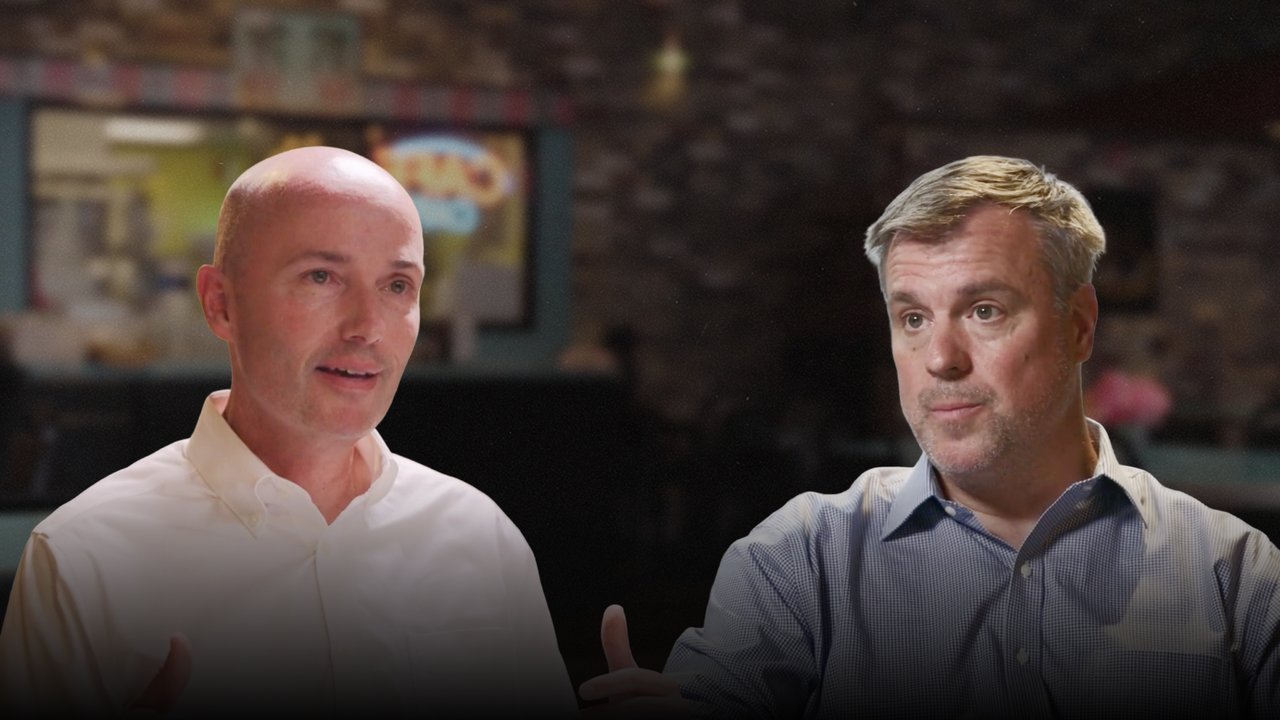
Spencer Cox: America’s political divide is destroying families and friendships
lead image
-

 Politics2 years ago
Former ‘Squad’ members launching ‘Bowman and Bush’ YouTube show
-
Uncategorized2 years ago
Bob Good to step down as Freedom Caucus chair this week
-

 Politics2 years ago
Former Kentucky AG Daniel Cameron launches Senate bid
-

 The Josh Fourrier Show2 years ago
DOOMSDAY: Trump won, now what?
-

 The Dictatorship2 years ago
Luigi Mangione acknowledges public support in first official statement since arrest
-

 The Dictatorship2 years ago
Pete Hegseth’s tenure at the Pentagon goes from bad to worse
-

 Politics2 years ago
Blue Light News’s Editorial Director Ryan Hutchins speaks at Blue Light News’s 2025 Governors Summit
-

 The Dictatorship12 months ago
Mike Johnson sums up the GOP’s arrogant position on military occupation with two words