
Politics
The problem with Trump’s pitch to Muslim and Arab American voters

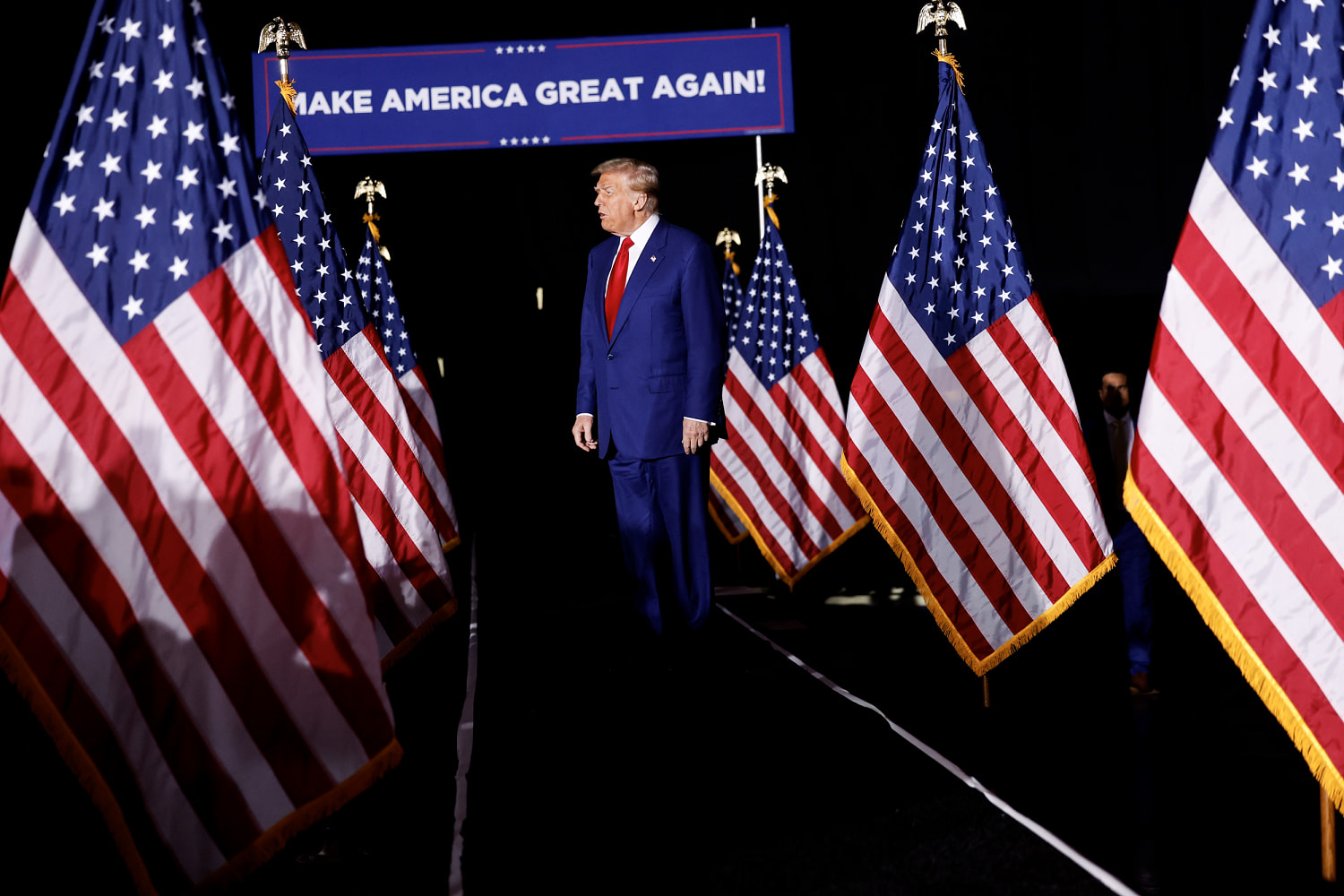

Donald Trump wants to win an election, which means he’s reaching out to voters who might be skeptical of him, his record and his vision. It’s an enormous challenge: The Republican president effectively has to target communities by saying, “Vote for me despite everything you already know about me.”
With this in mind, Trump is targeting Black voters, hoping they overlook his lengthy history of racism. He’s targeting Latino voters, hoping they overlook the dehumanizing language he has used to condemn Latino immigrants, as well as his plans for militarized mass deportations and detention camps in a possible second term.
The GOP candidate’s outreach to Muslim and Arab American voters is every bit as difficult. The New York Times reported:
[I]n a tight election, Mr. Trump and his campaign have been trying to win the support of Arab American and Muslim voters who may be disaffected with Democrats over President Biden’s handling of the war in Gaza and the party’s positions on social issues. Their support is seen as especially important in Michigan, a key battleground state with many Arab American and Muslim voters.
A day before the Times’ report was published, The Washington Post published a related article, noting that Trump has “expressed support for Israel’s offensives against Hamas and Hezbollah in a recent call with the country’s prime minister — a position that could complicate his campaign’s outreach to Arab Americans claiming he opposes the war.”
“Complicate” probably understates matters.
It is no secret that many Muslim and Arab American voters reject the Biden administration’s position toward Israel and Prime Minister Benjamin Netanyahu’s ongoing military offensive. Common sense suggests that many of those same voters might be willing to give the GOP ticket a second look.
But while no community ever finds it satisfying to be told, “Well, the other guys are worse,” the fact remains that from the perspective of many Muslim and Arab American voters, Trump isn’t exactly closer to their views when it comes to developments in the Middle East.
On the contrary, according to the Post’s report, which cited six sources, Trump told Netanyahu in one call this month, “Do what you have to do.” In public, the Republican has gone even further, suggesting that Biden is making a mistake by “trying to hold him [Netanyahu] back.”
In other words, while many Muslim and Arab American voters want to see the White House take steps to curtail Netanyahu, Trump wants the opposite.
Meanwhile, the Republican candidate has also begun using “Palestinian” as a slur; he has condemned pro-Palestinian protests; and he has rejected the idea of bringing Gaza residents to the United States as refugees.
In case that weren’t quite enough, Trump hasn’t just bragged about his Muslim ban, he has announced plans to expand it.
Given all of this, is it realistic to think the GOP nominee can make inroads with Muslim and Arab American voters? We’ll find out next week.
Steve Benen is a producer for “The Rachel Maddow Show,” the editor of MaddowBlog and an BLN political contributor. He’s also the bestselling author of “Ministry of Truth: Democracy, Reality, and the Republicans’ War on the Recent Past.”



Leading Republicans are pulling back from the North Carolina Senate race, sending a clear message: What was a top-tier battleground at the start of the cycle is no longer worth the money.
The foremost Senate GOP super PAC, Senate Leadership Fund, is pausing its future spending in North Carolina and instead launching a seven-figure ad buy in deep-red Kansas, according to one person familiar with the move. The news was first reported by Semafor.
The dramatic change in strategy — less than four weeks before the midterms — comes after SLF previously spent more than $30 million to boost GOP nominee Michael Whatley. It also comes as public polling has continued to show Whatley unable to close the gap against popular former Gov. Roy Cooper, the Democratic candidate.
Republicans are now deprioritizing a state that President Donald Trump carried in all three presidential runs, and that Democrats haven’t won in the Senate since 2008.
“We are all clear-eyed about where North Carolina stands,” said one national GOP operative working on Senate races, who like others in this article was granted anonymity to speak candidly.
SLF isn’t the only major GOP group shifting away from North Carolina as Republicans focus on other must-win seats and deep-red states, amid the Iran war, high fuel prices and other economic fallout of the war in Iran.
Earlier Friday, the Koch-aligned Americans for Prosperity Action left North Carolina off its $22 million list of future spending across key Senate contests, as POLITICO reported. Another major Republican group focused specifically on boosting Whatley — Old North Action — removed $6.5 million in ad reservations from North Carolina’s Senate race last month.
“Michael Whatley is a good man who took one for the team — but with states like Alaska, Kansas, and Texas requiring continued resource commitments, there is only so much,” said another national GOP operative working on midterm races. “Especially against a very popular former Governor in Roy Cooper.”
The National Republican Senatorial Committee is currently running coordinated ad reservations with six of its battleground candidates. Whatley in North Carolina is not one of them, according to data from advertising tracking service AdImpact.
NRSC regional press secretary Nick Puglia said in a statement that “Whatley will put North Carolina families first by cutting taxes and keeping criminals locked up.”
Whatley for months has struggled to boost his name ID against the much better-known Cooper. Some recent public polls show Cooper leading Whatley by double-digit margins. Private polling has also hardly budged, despite the recent influx of spending, according to a person working on the race.
In a statement, Whatley spokesperson DJ Griffin said the team feels “confident we have the resources” to win in November.
“Roy Cooper recently said about federal elections in North Carolina, ‘Democrats are often ahead until they are not,’” Griffin said. “Undecided Voters who break late decide the election in North Carolina and the majority of those Late-Breakers typically go Republican.”
AFP Action and Old North Action did not immediately respond to a request for comment about North Carolina. SLF declined to comment.
SLF’s decision came as a shock to some, but not all, North Carolina Republicans — mostly because Senate Majority Leader John Thune has been scheduled to be in North Carolina for an event with Whatley on Thursday night. Thune ended up joining the event virtually, according to two people with direct knowledge of the matter.
For weeks, top Republicans acknowledged North Carolina may be slipping away. One Republican who attended a donor meeting with Senate Majority Leader John Thune and SLF during the Dallas convention told POLITICO that holding the state would be “tough.”
“The map has shifted a little bit, and to be fair, we knew that was going to be a tough one from the beginning,” said one GOP operative working on Senate races, granted anonymity to speak candidly about the landscape.
Democrats are not letting up, recognizing that the contest in the purple state could still be close.
“A Democrat has not won statewide federal office here in nearly two decades, and North Carolina is a 50-50 state,” Cooper campaign manager Jeff Allen said in a statement.
“We’re building a campaign to earn every vote and make sure North Carolinians know that Roy Cooper will fight for them, while Michael Whatley will continue to enrich himself at their expense,” Allen said.
One North Carolina GOP strategist said that while Whatley has been a “fine” candidate, the current political climate coupled with Cooper’s long record in the state may be too much to overcome. And while Republicans have repeatedly hammered Cooper on crime, he still has strong favorability ratings from his time as governor.
“He’s really kind of hard to paint as a radical, ’cause, you know, he’s like Aunt Martha. She’s just been there forever. And so it’s just very difficult to get any traction on that, because, you know, people say, ‘well, Roy’s okay,’” they said.
When told that SLF was moving money from North Carolina to Kansas, the strategist responded: “$6.50 diesel fuel will kick your ass.”
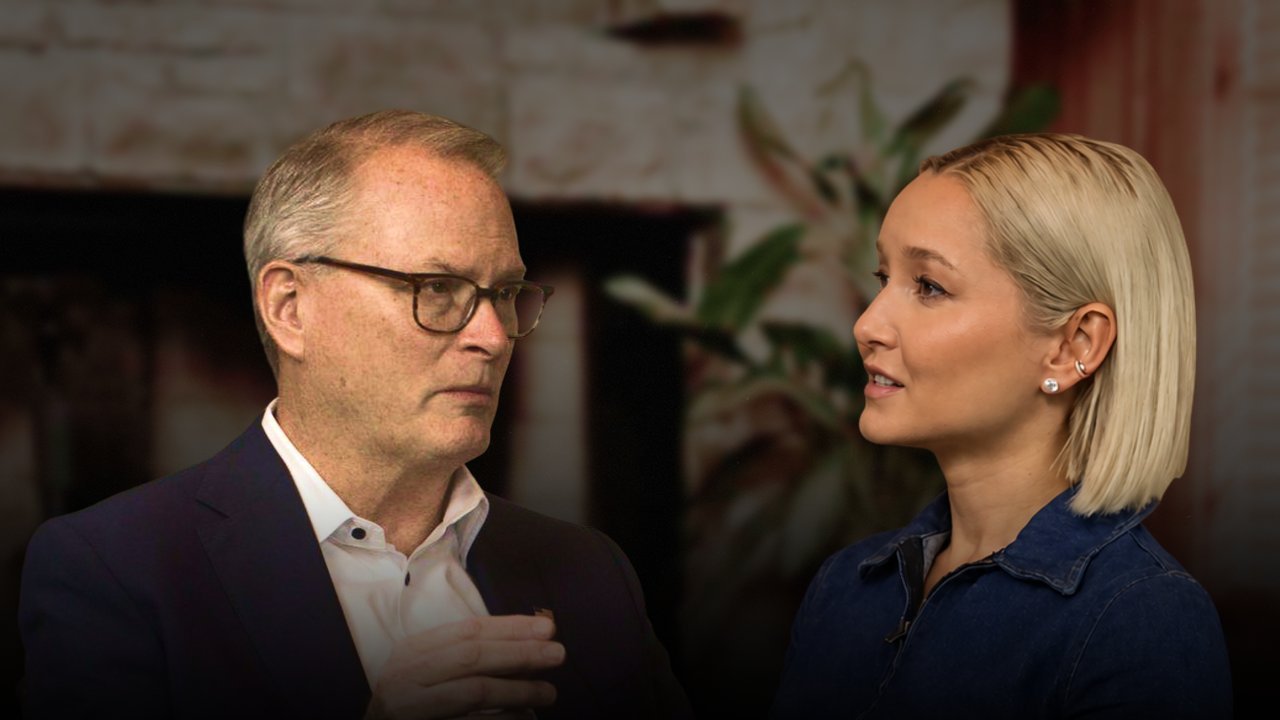
Adam Hamilton on faith, Trump and the fight for Kansas
lead image
- Top GOP groups scale back North Carolina spending
- October
- Sanders, AOC, Merkley propose bill to ban Flock cameras
- Capitol agenda: Dems spend big to help Hakeem’s dream
- The low-profile Democrat helping shape her party’s AI agenda
- ‘A game-changer’: House Dems aim for a big majority that could ease Hakeem Jeffries’ headaches
- Adam Hamilton on faith, Trump and the fight for Kansas
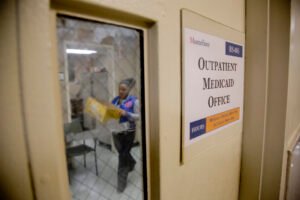
- New York grapples with kinks in $1B Medicaid system
- Top Democratic appropriator wants White House to pay for airing ‘propaganda’
- Barrage of lawsuits targets Trump’s funding cancellation
-

 Politics2 years ago
Former ‘Squad’ members launching ‘Bowman and Bush’ YouTube show
-
Uncategorized2 years ago
Bob Good to step down as Freedom Caucus chair this week
-

 The Josh Fourrier Show2 years ago
DOOMSDAY: Trump won, now what?
-

 Politics2 years ago
Former Kentucky AG Daniel Cameron launches Senate bid
-

 The Dictatorship2 years ago
Pete Hegseth’s tenure at the Pentagon goes from bad to worse
-

 The Dictatorship2 years ago
Luigi Mangione acknowledges public support in first official statement since arrest
-

 Politics2 years ago
Blue Light News’s Editorial Director Ryan Hutchins speaks at Blue Light News’s 2025 Governors Summit
-

 The Dictatorship1 year ago
Mike Johnson sums up the GOP’s arrogant position on military occupation with two words