
Politics
New York grapples with kinks in $1B Medicaid system

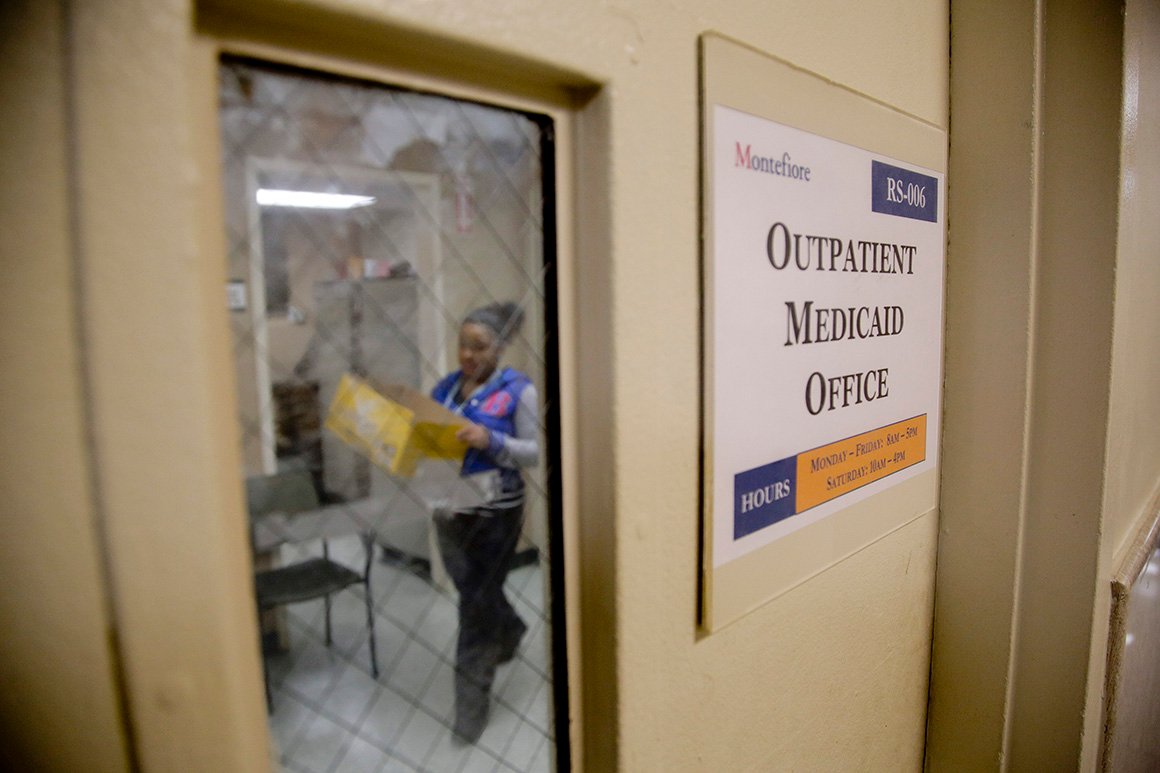
WORKING OUT THE KINKS: New York’s Department of Health began transitioning more than 147,000 Medicaid and Medicare Savings Program enrollees to an upgraded case management system about a year ago.
Since then, state officials say only a third of them have been able to automatically renew their coverage without assistance.
The shift is part of a $1.1 billion contract aimed at creating an automated system for Medicaid enrollees to receive real-time determinations on their eligibility for the two programs. While the new system is intended to create a seamless enrollment process, for many consumers it’s been riddled with challenges.
The initiative is part of a broader effort to move the Medicaid program away from local social services departments that still rely on paper applications and an outdated system in desperate need of overhaul. The state wants to transition the program to one centralized system run through its public health insurance marketplace, New York State of Health, according to officials.
Lindsay Heckler, managing attorney for policy at the nonprofit Center for Elder Law & Justice, said her firm has seen a surge in inappropriate denials.
“I’m not saying the new system shouldn’t be in place,” Heckler said. “But the concern is that the training and processes that are in place are preventing people from becoming eligible. My concern is that in the coming year they are moving more people into a system that doesn’t have the kinks worked out for the people that are in the system right now.”
The state began rolling out the new Medicaid Eligibility and Client Management system in September 2025. A second wave of more complex cases is expected to migrate to the new system between November 2027 and February 2028. And while state officials say the system — which was created by Deloitte Consulting through a $1.1 billion contract — was thoroughly tested by both the Health Department and the company, they concede that problems remain and are being addressed as they’re flagged.
Advocates describe the situation in starker terms. They say errors have put health care coverage in jeopardy for people who are 65 years and older, blind or disabled. They also told Blue Light News they’ve discovered inaccurate information being transferred, a flawed automated asset verification tool and state workers’ inability to manually override inappropriate denials.
Deloitte did not respond to a request for comment.
New York entered into a $177 million contract with Deloitte in August 2023. But that projected outlay has grown to $1.18 billion after the state quietly filed four amendments to the initial deal, which ended on March 31, 2025. The latest amendment included an $866 million extension along with a work plan modification, according to details of the contract listed in the Open Book New York database.
The Health Department said the contract extension will complete the migration of Medicaid enrollees to the new system, which includes more complex cases in the next wave, such as long-term care and nursing home patients. The contract also includes additional funding for Deloitte to conduct testing and ensure compliance with new federal requirements.
“This multi-year transition to a centrally administered model will replace the outdated, expensive, error-prone and inefficient paper-based system with a streamlined, user-friendly platform that better supports the health coverage needs of New Yorkers while reducing the potential for waste, fraud, and abuse,” Health Department spokesperson Cadence Acquaviva said in a statement. “At every step of the way, this transition and contract were subject to extensive federal review and approval by the Centers for Medicare and Medicaid Services.”
Read more in Blue Light News Pro from Katelyn Cordero.
MARK YOUR CALENDAR: Join Blue Light News’s New York Outlook: Affordability, Industry & The Economy on Oct. 14 for live conversations about the business and policy decisions being made today — from City Hall to the State Capitol — that will shape the city’s economic future. The lineup includes New York City Council Speaker Julie Menin, New York City Economic Development Corp. CEO Anthony Shorris, Partnership for NYC CEO Steven Fulop, Citizens Budget Commission President Andrew Rein, Charles H. Revson Foundation President Maria Torres-Springer, and more. Register now to attend in person or watch the livestream.
From the Capitol
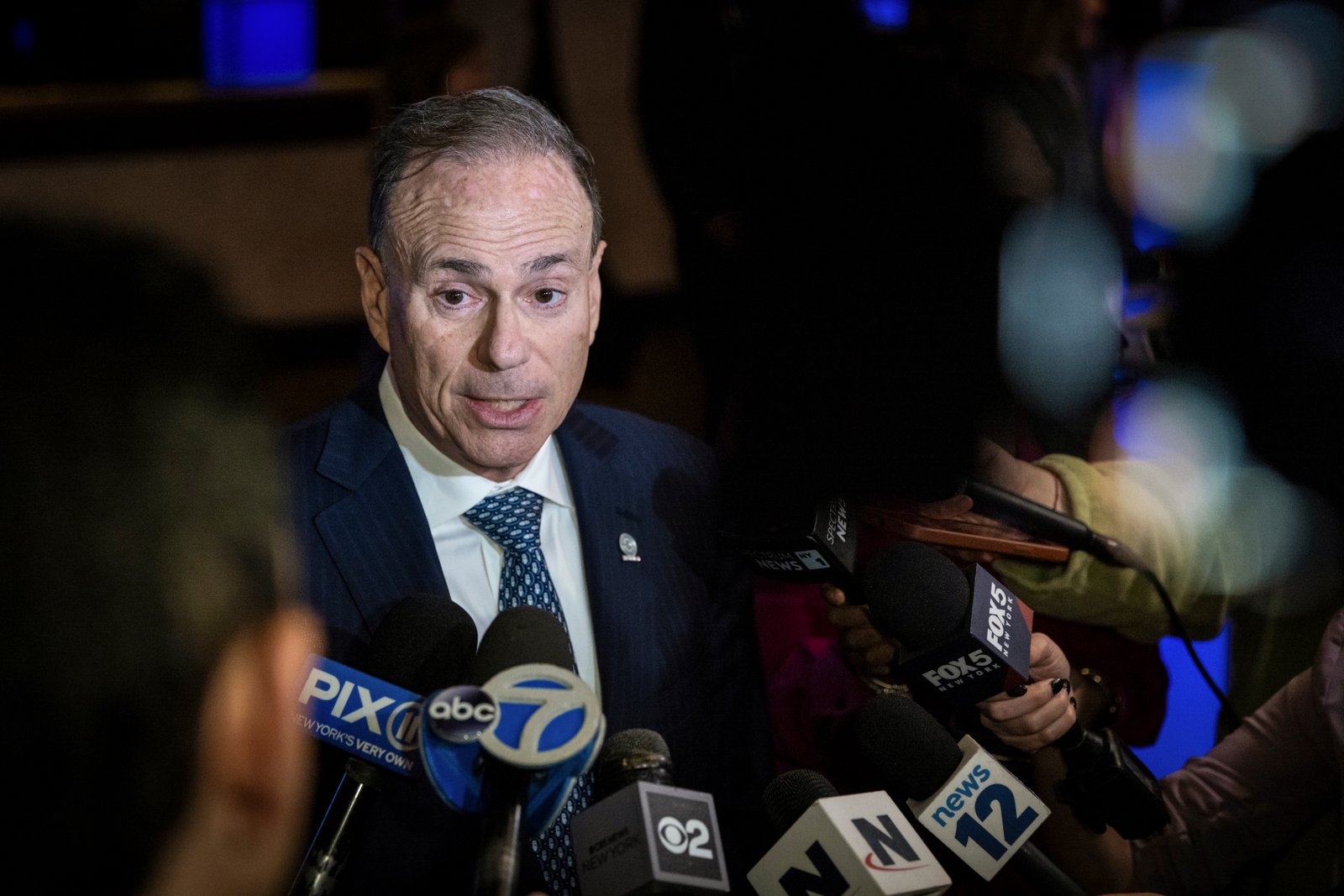
JACOBS WINS: State Democratic Committee Chair Jay Jacobs handily won a new two-year term on the job, receiving 82 percent of the weighted vote at a party gathering in Westchester today.
Jacobs — who angered the left last year by declining to endorse then-Democratic mayoral nominee Zohran Mamdani in the general election — faced a challenge from Otsego County chair Caitlin Ogden. He preached unity as his victory message, inviting Ogden to join his leadership team in a “substantive” role.
“This party has got to come to an understanding that our first priority is electing Democrats in whatever districts they’re in, and speak the language of the people in those districts,” Jacobs said. “All sides of our party need to learn to listen, to understand, to respect each other. There should be no vitriol inside the Democratic Party tent.”
Party members have traditionally supported the governor’s choice for chair. Gov. Kathy Hochul never publicly wavered in her support for Jacobs, making clear in recent weeks he was still her pick.
“I want to thank him for accepting the weight, the responsibilities,” she told party officials today. “Not the easiest job in the state. But he has done it in a way that has brought us together.”
Jacobs, who also heads the Nassau County Democratic Committee, has chaired the state party under the past three governors, serving from 2009-2012 and since 2019. If he completes his new two-year stint, he’d be just one term away from surpassing FDR kingmaker James Farley as the longest-tenured chair in the history of the New York Democrats. — Bill Mahoney
FROM THE CAMPAIGN TRAIL
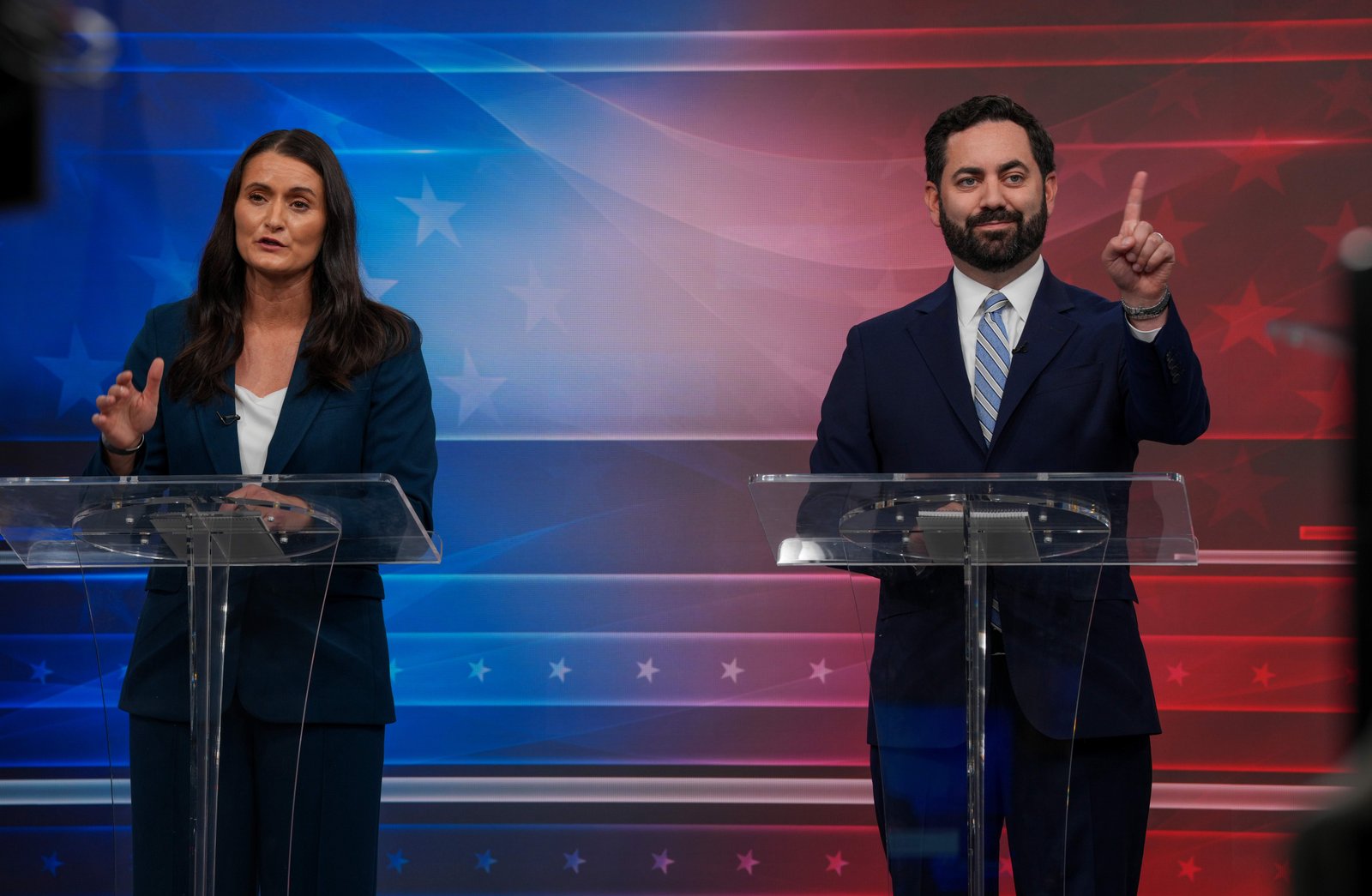
POLL POSITION: Republican Rep. Mike Lawler and Democratic challenger Cait Conley are locked in a tight race, per a new Emerson College/PIX11 poll.
Conley earned 48% of support to Lawler’s 46%, with 7% of respondents undecided.
Lawler has more crossover support than Conley does, and independents break for him. But the pollsters note the percentage of Democratic backing for him fell from an Emerson survey in October 2024, while Conley’s GOP support increased compared to Lawler’s 2024 opponent, former Rep. Mondaire Jones.
Hochul’s favorability is underwater in the district — 40% of respondents approve and 49% disapprove — though the pollsters acknowledge she’s on better footing than she was in 2024. President Donald Trump is also unpopular, with 43% approving his performance and 53% disapproving. The poll did not ask about Mamdani, a favorite foil of Lawler’s on the trail.
The survey was conducted among 400 likely voters from Sept. 27-29. It has a margin of error of plus-or-minus 4.9 percentage points. — Madison Fernandez
TRUMP TO CNY: Trump is considering a trip to upstate New York on Oct. 9 to appear alongside Republican gubernatorial candidate Bruce Blakeman, according to three people with knowledge of the discussions.
The event is being considered for central New York, but has not been finalized, said a fourth person. The people were granted anonymity to disclose the private conversations about the potential trip.
Blakeman’s campaign did not comment and the White House did not immediately return messages seeking comment.
Trump previously appeared on Long Island this summer to rally with Blakeman and Republican House candidates.
Read more from Blue Light News’s Nick Reisman.
FROM CITY HALL

BILLIONAIRE’S ZO: Mamdani hosted fifteen business leaders — several of them billionaires — at Gracie Mansion yesterday for the inaugural meeting of his Business Advisory Council.
The council brings together business executives across industries to help guide the city’s economic policy and shepherd growth and innovation. Despite decrying the ultra wealthy, Mamdani welcomed input from billionaires such as Chobani founder and CEO Hamdi Ulukaya and Jefferson River Capital Chairman Tony James on how to address the affordability crisis, which has inhibited their ability to recruit top talent.
The council also discussed potential plans to convert unused office space across the city into arts and research hubs, according to a spokesperson for the mayor.
While he was welcoming other business execs to his home, one of the mayor’s biggest billionaire foes, Ken Griffin, was announcing his $3 billion donation to Carnegie Mellon University, the largest single donation in the history of American higher education.
Most of that money is earmarked to build the university a new campus in Miami — months after Griffin said the mayor’s rhetoric prompted him to “double down” on investments in Florida, rather than New York.
The Mamdani-Griffin beef swelled this spring when the mayor posed in front of Griffin’s $238 million penthouse in a social media video promoting his pied-à-terre tax. In the post, Mamdani framed the billionaire as a prime target of his tax-the-rich agenda.
Griffin responded by calling the video “creepy and weird,” saying his plans to further invest outside of New York were “an immediate and direct consequence of the mayor’s poor decision.”
“We will welcome anyone’s support, anyone’s involvement, and we will always do so because this is a city that belongs to all who live here,” Mamdani said when asked about Griffin’s historic donation. — Molly Reinmann
IN OTHER NEWS
— RETREAT: NYC first lady Rama Duwaji reportedly sojourned at an Islamic wellness retreat with a history of calling for the destruction of Israel, as her husband was rolling out his blueprint to combat antisemitism. (Washington Free Beacon)
— CHATBOT GOVERNANCE: The Mamdani administration is planning to unroll new AI safeguards, including cracking down on chatbots used in customer service and launching a formal study of AI assistants. (POLITICO Pro)
— SPEEDING THINGS UP: Mamdani’s administration unveiled 12 districts where housing will be fast-tracked. (POLITICO Pro)
Missed this morning’s New York Playbook? We forgive you. Read it here.


President Donald Trump’s decision to name hard-line loyalist Stephen Miller as his top aide cemented what many Republicans were already privately fearing: There will be no party-wide GOP reckoning with this week’s midterm bloodbath.
Instead, with Trump still in office for another two years, most have grown resigned to the reality that the president is going to lean in on a confrontational approach with Congress — and is not willing to change course.
Republicans on Capitol Hill and inside the Trump administration are questioning how and whether they can break with the president now after having green-lit much of his agenda, according to more than a dozen GOP lawmakers, senior aides and Trump officials interviewed for this story, some of whom were granted anonymity to speak candidly about the party’s future.
Trump’s decision Friday to elevate Miller, the architect of his unpopular mass deportation policy and an advocate of fierce partisan confrontation, crystallized the frustration.
“There needs to be some self-reflection for Republicans,” Rep. Marlin Stutzman (R-Ind.) said in an interview about the midterm losses Friday morning. “There should be some heads rolling at the White House because we lost badly.”
Hours later, heads did roll. Trump announced Miller would replace Susie Wiles as his new chief of staff.
“Horrible decision,” Stutzman said in response.
One House Republican, when informed that Trump had named Miller his chief of staff, replied: “Please tell me you’re lying to me right now, just to get a reaction.”
The immediate aftermath of the election has sharpened the GOP’s core issue for the past decade: They are struggling to navigate the man who they reshaped their entire identity around, and whose record low approval with voters helped to fuel generational losses within the party.
The Iran war is another area where some Republicans are having regrets. Vice President JD Vance identified it as the main reason for the party’s defeat in his election post-mortem.
The problem with Vance’s assessment, one senior Hill Republican said, is, “we’ve been fucking voting for the war since March — because they told us to.”
Republicans and Trump advisers expect the president to wield massive influence in the 2028 GOP primaries, another reason many are staying quiet.
“Everyone is staring at each other and wondering who will speak up and blame Trump first,” said one GOP operative who worked on a battleground race Democrats won. They, like others in this article, were granted anonymity to speak candidly. “But we’ve been here before. I’m not holding my breath. He still controls the party and its primaries, at least for now.”
The White House responded to Blue Light News’s request for comment by referring to Trump’s praise for Miller on Friday. The RNC declined to comment.
Miller wrote on social media that he is “honored beyond words to serve as [Trump’s] White House Chief of Staff” and “the mission now is more clear than ever: Fight with all of our soul to support our President.”
How much lawmakers will distance themselves will be put to the test quickly: House Republicans will have an immediate opportunity to break with Trump and the war next week, when Rep. Thomas Massie said in an interview with Blue Light News he will trigger his articles of impeachment against Secretary Pete Hegseth. “There are a lot of questions about Hegseth,” House Oversight Chair James Comer (R-Ky.) said Friday.
Some senior Republicans are privately nudging Trump officials to ditch Hegseth before the vote, according to two people with direct knowledge of the conversations. The White House is sticking by Hegseth so far, however.
House Republicans will also have a chance to elect new leadership next week, including a new chair of the National Republican Congressional Committee. But in a sign of what’s to come, none of the candidates — including Reps. Brian Jack (R-Ga.) and Rudy Yakym (R-Ind.) — nor any other GOP leadership candidates have publicly suggested doing more to break with Trump.
A small group of Republicans on Capitol Hill have privately declared, as of Tuesday night, that “MAGA is over,” and it’s time for a “reset,” as one House GOP aide put it — and yet it’s a sentiment no prominent Republican is willing to say publicly.
Rep. Chris Smith (R-N.J.), one of the longest-serving members of the House, said he wasn’t going to “blame” others for Tuesday’s losses, which left him as the sole GOP incumbent survivor in his home state. Asked if Republicans were dragged down by the president, Smith replied: “I don’t want to answer that.”
Rep. Warren Davidson (R-Ohio) went a step further. He declined to name Trump, but he said in an interview that he was tired of GOP leaders “ignoring” voters — a remarkable position for a party that Trump transformed into a working-class coalition.
“We had a lot of Republican leaders out there saying ‘everything’s fine.’ And you kind of had the boomer generation saying, ‘Well, yeah, back in my day, interest rates were 15%, so everything’s good,’” said Davidson, a 56-year-old former Army Ranger. “Well, you had a lot of hardworking young people who felt really ignored, and they they went to the polls and said, ‘Stop ignoring us.'”
Davidson said Republicans need to start discussing their problems quickly, or suffer the electoral consequences again.
“Bad news doesn’t get better with time. So avoiding talking about something doesn’t solve the problem,” he said. He said Vance “walked a pretty good line” by being “candid” in his election post-mortem Wednesday.
Vance and other potential 2028 presidential contenders like Sen. Ted Cruz don’t have much time to waste if they want to chart a new path away from Trump. Cruz issued his own post-mortem that included a call to focus more on voters’ economic concerns. Florida Gov. Ron DeSantis said “this midterm was a rebuke of the president and Congress.”
French Hill, the powerful Financial Services Committee Chair who narrowly survived a strong Democratic challenge in his own deep-red Arkansas seat Tuesday night, pointed to “President Trump’s unfavorability” which hit “races across the country.” Hill added: “He will be considered a lame duck, and that often has members of both political parties looking out at who will be the standard-bearers in the 2028 presidential election.”
Most others have remained silent in public.
One thing is certain: The utter devastation in deep-red seats is stirring deep anger among many Hill Republicans, who believe something needs to change.
It’s fueling private recriminations at Trump’s political operation that his advisers didn’t take early warnings seriously about the extent of the damage in states like North Carolina. Trump’s now-former chief of staff Susie Wiles will join his political operation, the president announced Friday.
Trump’s team has blamed “candidate quality” for the losses, instead of the president himself.
“Candidate quality matters. Unless you’re running for the U.S. Senate. They apparently don’t care if you would lose to a pinecone,” said a House Republican, referring to Trump’s hand-picked North Carolina Senate nominee Michael Whatley.
The National Republican Senatorial Committee declined to comment.
Sen. Tim Scott (R-S.C.), who leads the Senate campaign arm and saw Democrats flip a Senate seat in his own state, did not answer reporters’ questions on Thursday. The South Carolina Republican has a policy of not talking to reporters in the halls — and he didn’t start when Blue Light News and others asked why Republicans lost so badly.
Back in August, some Republicans in seats Trump won by double digits were already telling the White House to keep the president away from their districts. Others publicly broke from the White House on mass deportations and the Iran war.
NRCC Chair Richard Hudson had largely dismissed those concerns when Blue Light News asked him in a hallway interview on Sept. 1.
“Based on our polling, the president’s a net positive in every district. And I’ve been encouraging him to get out and do events and do rallies. I’m going to continue to do that,” Hudson said. “I think the more he talks about his record and incredible achievements he’s made over the last Congress, I think the better.”
Then, Hudson lost his own reelection bid. He is the first ever NRCC chair in history to be defeated in a general election.
Mia McCarthy, Andrew Howard and Samuel Benson contributed reporting.
Even the head of House Democrats’ top super PAC didn’t fully anticipate the size of their massive midterm wave.
Heading into Election Day, House Majority PAC president Mike Smith told Blue Light News Tuesday’s results, which have netted them a whopping 252 House seats with more yet to be called, was “on the very high end” of the group’s expectations.
The group spent at least $283 million on ads this cycle, per ad-tracking firm AdImpact, making them the largest Democratic spender in House races this cycle and a significant force behind the party’s big night.
As Democrats turn their attention to 2028, Smith remains optimistic the party can hold on to its majority.
His confidence stems in part from a projection that Democrats will respond to the affordability concerns that were the core of the party’s promise to voters.
If Democrats don’t make efforts to address the rising cost of living, “then it’s a totally different story,” Smith said.
Q: How were you feeling in the final days before Tuesday?
Obviously this would have been on the very high end of what we expected. Over the last three months, overall our polling has been pretty consistent. Our whole thought was, with the right environment, if we have the right message and the right types of candidates in, not just the 50-50 districts, but like deeper in the map, that we could put those seats in play and we could potentially win.
Going into Election Day, our whole feeling was there’s a clear path to like 235-plus [seats]. We were playing in districts that, if you were to rank them from like one to 435, some of those districts were like 250, 255, right? And I would throw IN-05, CO-03, KY-06, SC-01, some of the Florida races. SC-01 wasn’t ever going to be seat 225. That was always in the 240s and maybe even 250s. But we took a chance because we saw what the national environment looked like. We saw what the data was coming back in within these individual races. So I think we were optimistic. But to be totally honest, in our heads, you have to play in seat 255 to get to seat 240. You have to spread out the map. You have to force Republicans on their heels, and then you start piecing together how you get to the 240-245 range. Once the numbers started coming back, that was the best case scenario for us. Everything came together.
You guys cut reservations in some reach districts, only to go back up in the final few days. On the outside, it appeared like cutting spending in those reach districts was a bad sign. What went into those last-minute spending decisions?
A lot of the places we made reservations back in April, and then continued to add on to that over the course of the summer. Partners and allies in a bunch of different places took over our reservations. We tried to be smart by locking in the lowest possible rates in very expensive markets, [so that] even if HMP wasn’t the entity spending, we still had partners and allies that were taking over their reservations. In doing all that we saved about $130 million that we could reinvest.
The challenge with some of the races was by a week out, our money was spent. And in some of those districts, there weren’t any partners willing to step up and do it. Florida is a good example of that.
That’s where we just had to make a decision that there weren’t the resources there, and we had to leave the reservations on the table. Around that time, Mayor Bloomberg was like, “We can’t let these races get away from us. We need to do everything we can,” and that’s where we went back into some of those places.
Did you feel the need to adjust your messaging at all once MAGA Inc. and Elon Musk’s PAC joined CLF on the airwaves?
The short answer is no. The messaging was fairly consistent. Early on, our whole feeling was we need to reframe how voters perceive Democrats. When voters think about what Democrats are fighting for, the first thing we want them to think about is cost of living, the economy. At the same time, bringing to light Republican policies that are increasing the cost of living, or focus on things that are anything but that.
Over several months, we did a bunch of battleground research looking at ‘how does corruption tie into that,’ which culminated in what we would describe as the cost of Republican corruption, and how that is impacting your day to day and your cost of living. That’s what we went into Election Day with.
Overall, we ran, I don’t know, 1300 different types of ads, whether TV, digital, direct mail, or whatnot. 76% of those ads talked about the economy. 60% of those ads focused on corruption, because in so many of them, those two things were interlinked in voters’ minds.
Republicans continued to focus on the same thing. It was trying to paint Democrats as out of touch or extremists. And again, the theory of the case from the beginning was us focusing on economic concerns, especially when we figured out we could tie that corruption lens into it. That’s going to be more important to voters than folks talking about socialism or anything else.
Democrats were able to prevent Republicans from capitalizing on their redistricting gains. Are you worried about those gains bearing fruit in a less favorable environment, maybe as soon as 2028?
In a different environment, these races are going to come together in a much different way. So I do think it’s something that we need to be hyper-focused on. That said, I don’t think redistricting is going to go away.
I’m actually pretty hopeful that these huge shifts across every demographic group that we just saw, as long as Democrats continue to focus on the issue that matters most to voters.
If we don’t, then it’s a totally different story.
Are you saying the fate of Democrats’ House chances in 2028 to keep these seats is predicated on Congress passing something, even with the current president still in the White House, that addresses affordability issues?
I wouldn’t say passing. Soon-to-be Speaker Hakeem Jeffries, since we won, his message is that Democrats are focused on three things: costs, care and corruption.
When we come into power, we are going to be hyper-focused on fighting to bring down the cost of living for voters. I think Donald Trump is still this outsized X-factor in everything. He’s still the sitting president in the White House. So I wouldn’t say it’s like, “Oh we have to pass 300 bills. That’s the only way we’re going to be successful.” I think we just need to show voters that we are willing to get stuff done, and in instances where we need to, work across the aisle to pass stuff that’s going to be helpful to voters. I think if we do that, then I think we’re setting ourselves up for success going into ‘28, both with the White House and the House and the Senate. Donald Trump is still going to be this huge factor in all of this, and I don’t think voters are going to be like, “Democrats weren’t able to accomplish this,” and think that that was us. They’re going to continue blaming Donald Trump going into Election Day 2028.
To go back to redistricting, do you want Democrats in these states where they have newly-won trifectas to take up redistricting even if Republicans don’t push for it again?
I think Democrats need to do everything that it will take to win, and if that means that in states where we control the state house, the state senate, a governor’s race, we have an opportunity to redraw the map, I think we need to do it.
What were the seats Democrats flipped that surprised you the most?
I would say NJ-02 [Rep. Jeff Van Drew’s seat], It was a district where we had looked at it — we did not think that it was credibly possible, to be totally honest.
I’d say North Carolina as a whole, probably. We felt good about NC-01, NC-11 for a while…. [NRCC Chair and North Carolina Rep.] Richard Hudson, we looked at that district. There was a clear path to winning it. There just wasn’t money, at the end of the day. NC-13, NC-14, same thing. The makeup of the districts, they’re not bad targets for Democrats. It was just, how much can we spread resources out? But the total implosion in North Carolina by Republicans at the federal level, at the state level — that was probably one of the biggest surprises.
A version of this article first appeared in Blue Light News Pro’s Morning Score. Want to receive the newsletter every weekday? Subscribe to Blue Light News Pro. You’ll also receive daily policy news and other intelligence you need to act on the day’s biggest stories.
The Clyburn test
lead image
-

 Politics1 year ago
John Legend advises Trump to drop the ‘dictator s‑‑‑’ if he wants Nobel Peace Prize
-

 Politics2 years ago
Former ‘Squad’ members launching ‘Bowman and Bush’ YouTube show
-
Uncategorized2 years ago
Bob Good to step down as Freedom Caucus chair this week
-

 The Josh Fourrier Show2 years ago
DOOMSDAY: Trump won, now what?
-

 The Dictatorship2 years ago
Pete Hegseth’s tenure at the Pentagon goes from bad to worse
-

 Politics2 years ago
Former Kentucky AG Daniel Cameron launches Senate bid
-

 The Dictatorship2 years ago
Luigi Mangione acknowledges public support in first official statement since arrest
-

 Politics2 years ago
Blue Light News’s Editorial Director Ryan Hutchins speaks at Blue Light News’s 2025 Governors Summit