
Politics
The lines Bill Ferguson won’t cross


When Wes Moore and Bill Ferguson stood together in a Baltimore bar on a sweltering Saturday afternoon in the summer of 2022, the two political figures projected a promising vision of power for Democrats in a blue-leaning state where they stood on the cusp of fully controlling government.
Moore was a former Rhodes Scholar and decorated combat veteran who was running for governor with Oprah Winfrey’s blessing but no experience in public office. Ferguson was a tactful consensus-builder who arrived in Annapolis with the moniker of “baby senator” before rising to become the chamber president a decade later.
“I’m a Baltimorean,” Moore told the campaign volunteers gathered in the Federal Hill neighborhood that Ferguson had represented since first being elected in 2010 at the age of 27. “Who’s making these decisions matters.”
Three years later, Maryland’s two top Democrats find themselves unable to agree on a big one. Moore has become a champion of redrawing his state’s U.S. congressional lines to generate an additional seat for his party in next year’s midterm elections. Ferguson, scarred by an earlier experience in which he helped deliver such an extreme map only to see it struck down by courts, is refusing to commit to even allowing a vote on a new redistricting measure.

The new rupture highlights a fault line emerging within both parties as Democrats and Republicans scour the national map for opportunities to improve their congressional positions via gerrymandering — between the short-term priorities of their respective national parties and the often longer-range yet parochial concerns of state legislative leaders.
For Democrats, the most immediate obstacle to further gains is Ferguson, whose defiance has made him a villain to party officials nationwide. House Minority Leader Hakeem Jeffries spoke with Ferguson in October ensuring he “understands the assignment,” as Jeffries put it. “We need the state of Maryland,” California Gov. Gavin Newsom said upon redrawing his state’s maps via passage of Proposition 50 to give his party five Democrat-leaning seats in the state. “Grow a pair” and stand up to President Donald Trump, a top Virginia lawmaker bluntly instructed Ferguson the next day.
The stand-off will likely come to a head in the coming weeks, as Moore faces an imminent choice: Call a special session and rely on Ferguson to deliver a majority for a gerrymandered map, or wait for the General Assembly to return in January for a regular session to allow more time for negotiations. Either way, the governor will have to convince 24 of the 34 Democratic senators to buck a respected leader whose control of campaign funds could help determine the fate of their reelection bids.
The view from outside Maryland may have Moore, a likely 2028 presidential contender, towering over Ferguson. But in Annapolis, many think it is the Senate president who has made the better case for how Democrats should move forward.
Ferguson “holds the cards” on redistricting, says former state Sen. Jill Carter, who served under both men. “Moore is very popular and charismatic, but Bill is very politically savvy.”
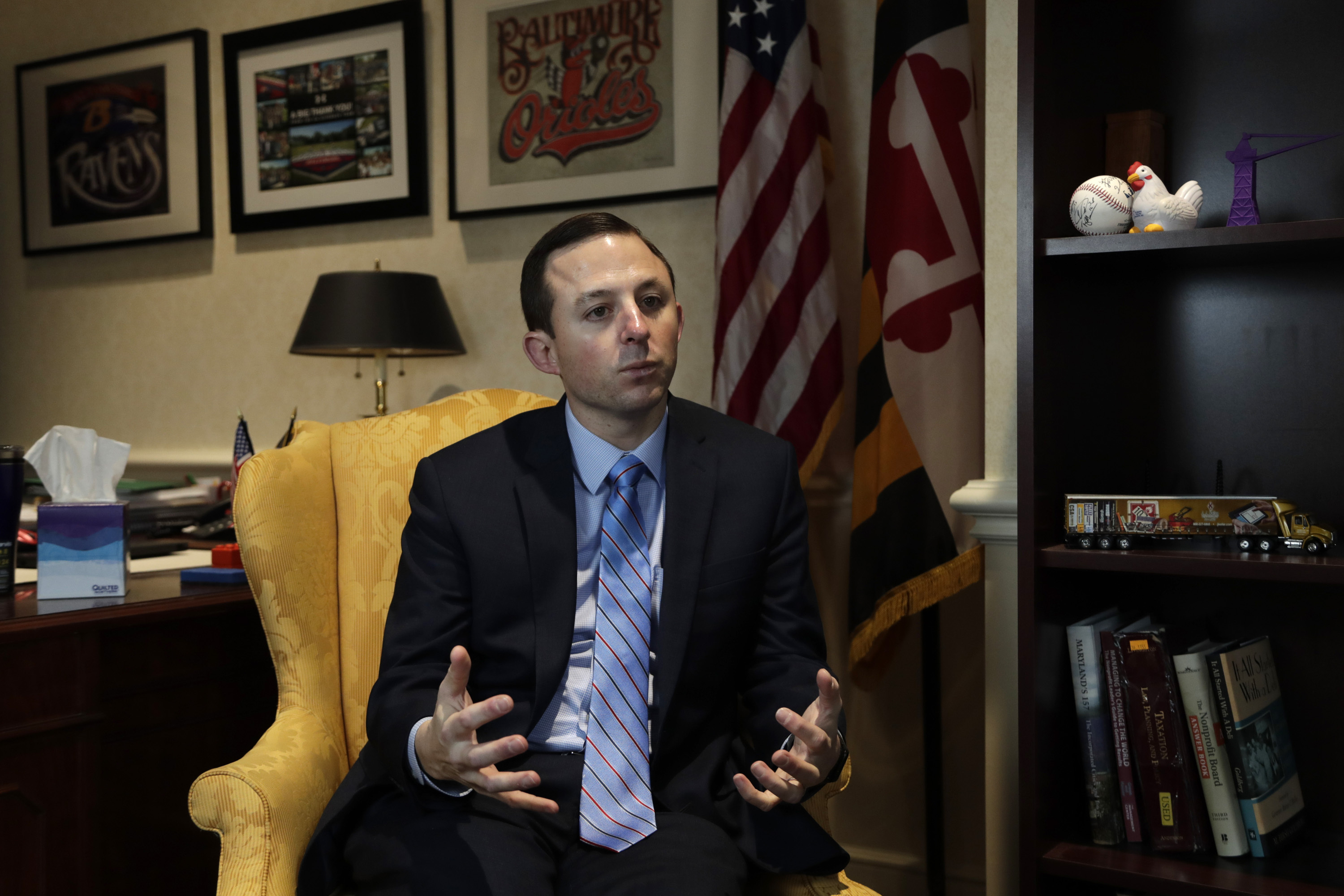
William Claiborne Ferguson IV was born in Silver Spring, just outside of Washington, to a conservative-leaning father who worked in commercial real estate and a labor union-supporting mother who adored former President Bill Clinton. Ferguson attended Georgetown Preparatory School — the elite, all-boys Jesuit academy that also produced conservative Supreme Court Justices Neil Gorsuch and Brett Kavanaugh — and Davidson College in North Carolina, where he studied politics and economics with sights on a business career.
But a post-collegiate stint with Teach for America at one of Baltimore’s toughest schools veered Ferguson away from his father’s career and towards one in left-leaning politics. While serving as an aide to local-government officials, Ferguson pursued a law degree at the University of Maryland and prepared to seek office. In 2010 he challenged Democratic state Sen. George W. Della Jr., who had been first elected in the year before Ferguson was born. As the primary devolved into mudslinging, Ferguson tried to keep the choice simple for voters: stick with the status quo or march with him into the future.
Ferguson came to a chamber dominated by Maryland Senate President Mike Miller, known for deploying hardball tactics to keep his caucus in line over what became a 33-year tenure in the role. As the chamber’s youngest senator, Ferguson won a reputation as a mild-mannered nerd who mastered education policy and the state budget while being teased by his staff for not knowing classic rock tunes.
When Miller prepared to retire in 2020, senate Democrats turned to the then-36-year-old Ferguson, unanimously voting him the next senate president. Many in the party cheered his ascension as a generational and philosophical pivot to a new progressive era in the state capital.
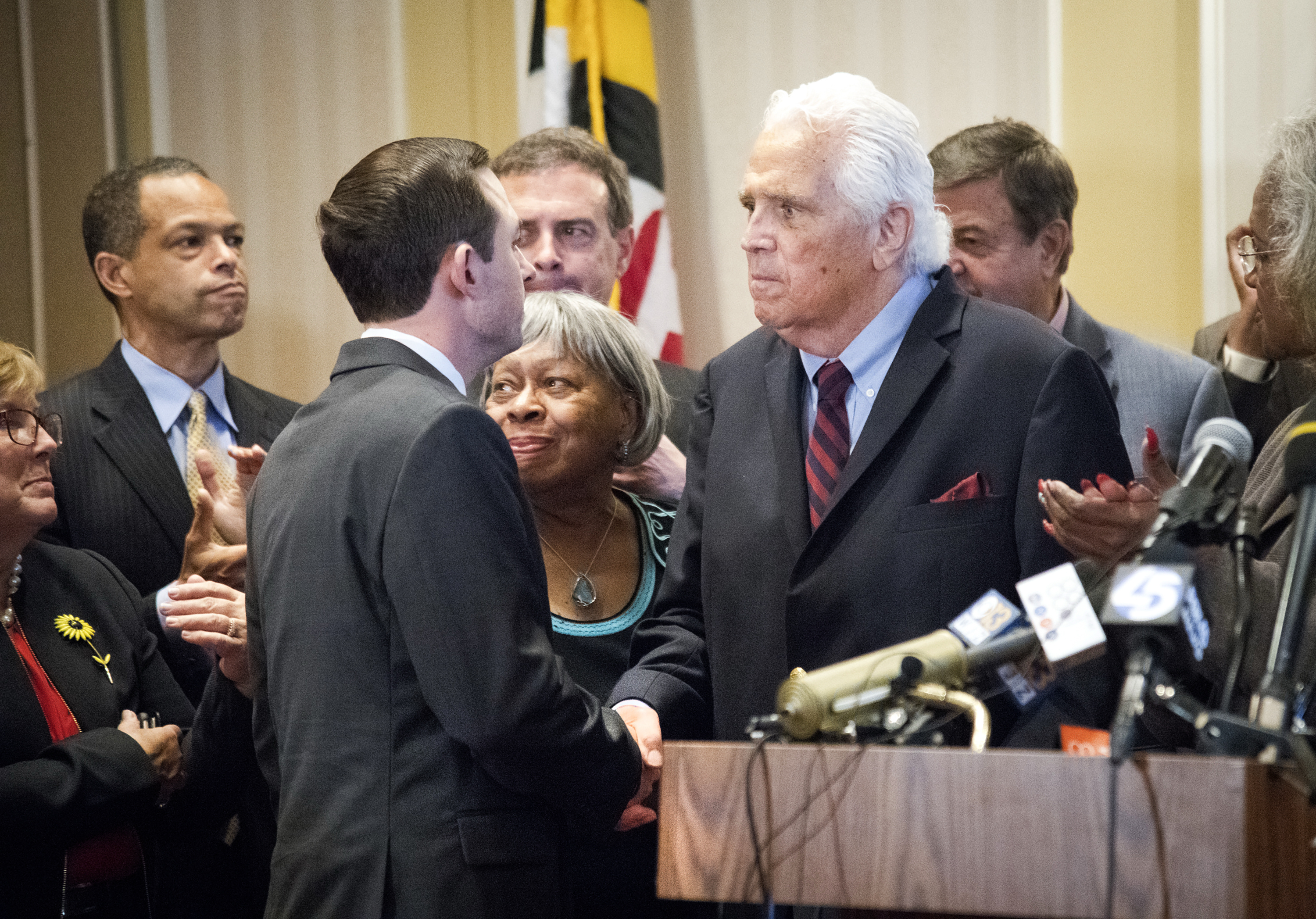
“Bill Ferguson is more collaborative. He listens. He is open to changing his mind when … arguments are effectively made,” said state Sen. Cheryl Kagan, a Democrat who served under both Miller and Ferguson. “He’s less of a king and more of a leader among equals.”
Ferguson, now 42, spent much of his first few sessions as the Senate’s top Democrat in trying to reel in then-Gov. Larry Hogan’s Republican agenda. In the final two years of Hogan’s second term, Maryland Democrats overrode the governor’s vetoes more than two dozen times. Ferguson also scored some bipartisan wins, too, helping Hogan deliver on a campaign promise by passing the largest tax cut in state history.
But it was a standoff with Hogan following the 2020 Census that left an indelible mark on Ferguson.
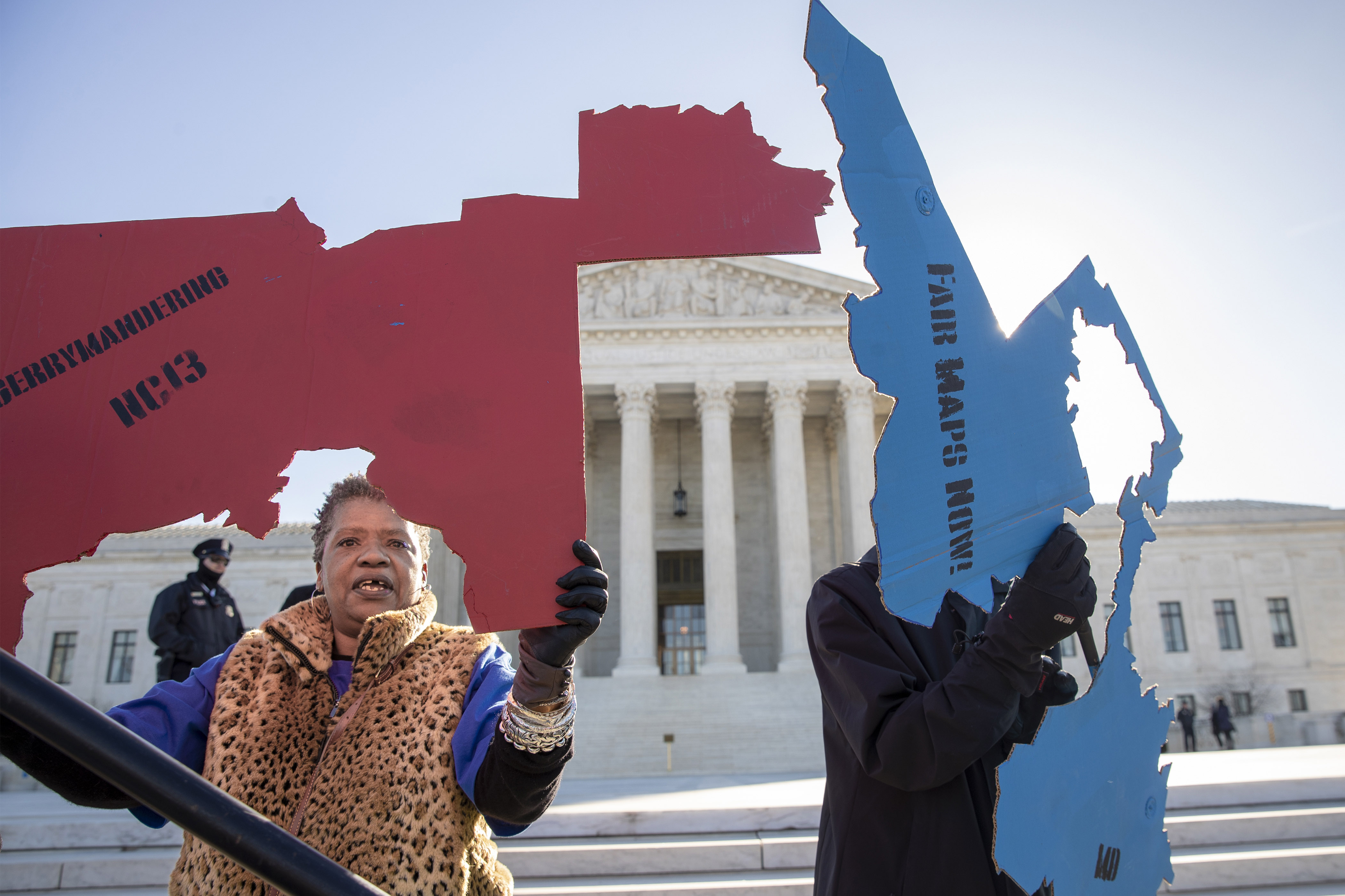
Maryland had gained a half-million people over the previous decade, even as its largest city, Baltimore, suffered a steep population drop. Hogan saw the churn as an opening to target a Democrat-held congressional district — the 6th, stretching north from the Washington, D.C. suburbs to the Pennsylvania border and west to the West Virginia line — often described as one of the nation’s most gerrymandered. Hogan established a nonpartisan redistricting commission, which returned a map that had two of Maryland’s eight seats leaning Republican.
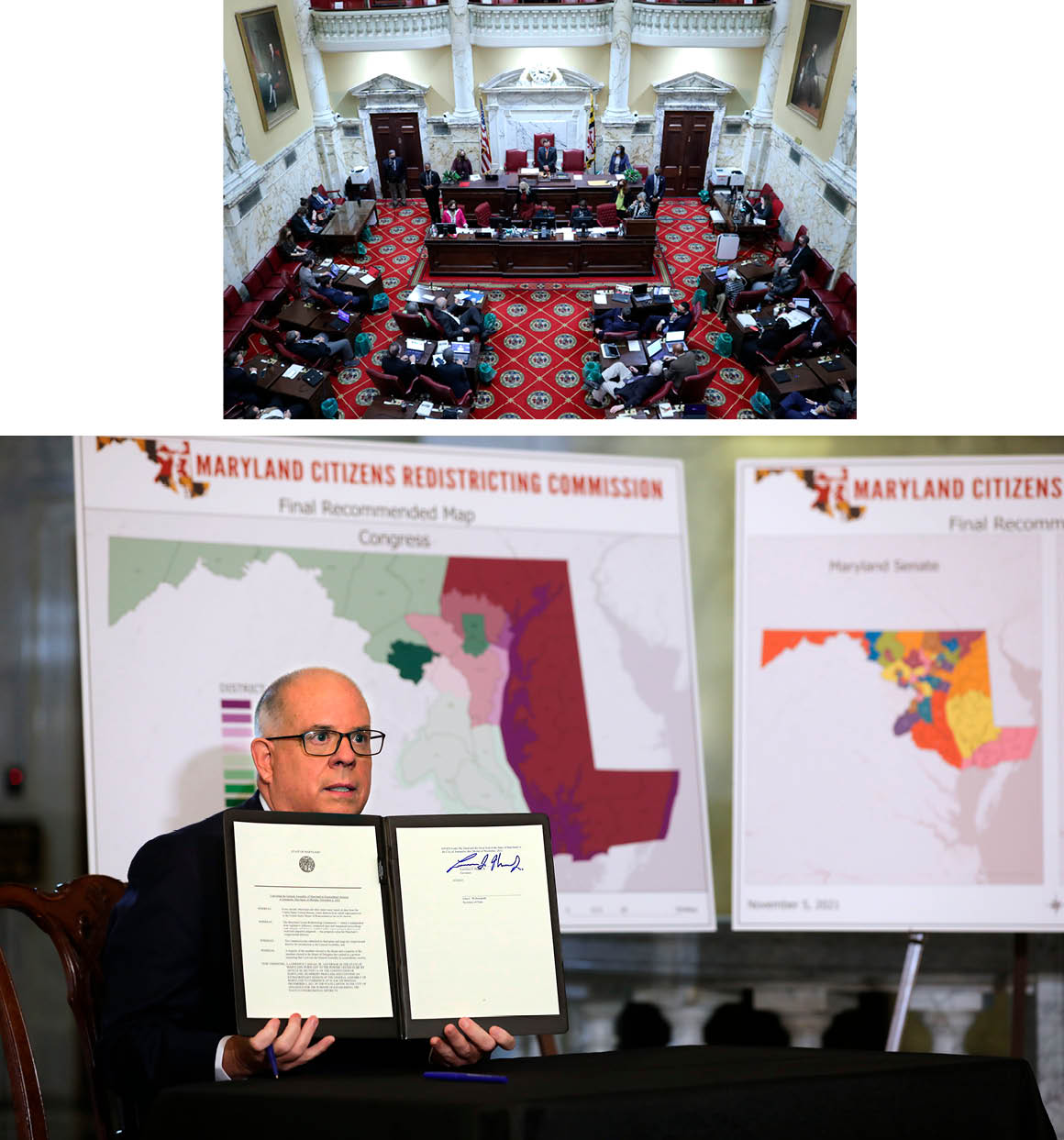
When Hogan called a special legislative session in December 2021 to approve the map, Democrats rebelled. With supermajorities in both chambers, they instead passed their own over Hogan’s opposition, turning seven districts into safe Democratic seats and the long Republican-dominated 1st district — represented by House Freedom Caucus chair Andy Harris — into toss-up territory.
“I felt a little bit uncomfortable, I’ll be totally candid, with the first map we passed,” Ferguson recalled recently to The Bulwark. “I thought, I’m willing to help facilitate this process.”
After Republicans sued, astate court ruled in March 2022 that the Democrats’ map amounted to an “extreme partisan gerrymander” that violated the state Constitution. Already well into an election year, senior Judge Lynne Battaglia gave lawmakers just days to pass a new map. Democratic lawmakers had little choice but to pass a revised map that would win Hogan’s signature. Republicans kept their hold on the 1st district and Democrats have not since mounted a serious challenge to Harris there.
Ferguson, who declined repeated requests to be interviewed for this article, now says he made a misjudgment in acquiescing to more seasoned leaders who convinced him a maximalist strategy would stand up to legal scrutiny. Seeing it shot down by the courts gives him a “different calculus of the risk,” as he told the Bulwark, about any attempt at a nakedly partisan gerrymander.
“Experience does matter. What you’ve seen and gone through in the past does matter,” said Malcolm Augustine, the second-highest ranking Democrat in the Maryland Senate. “That’s the bottom line. He was there.”
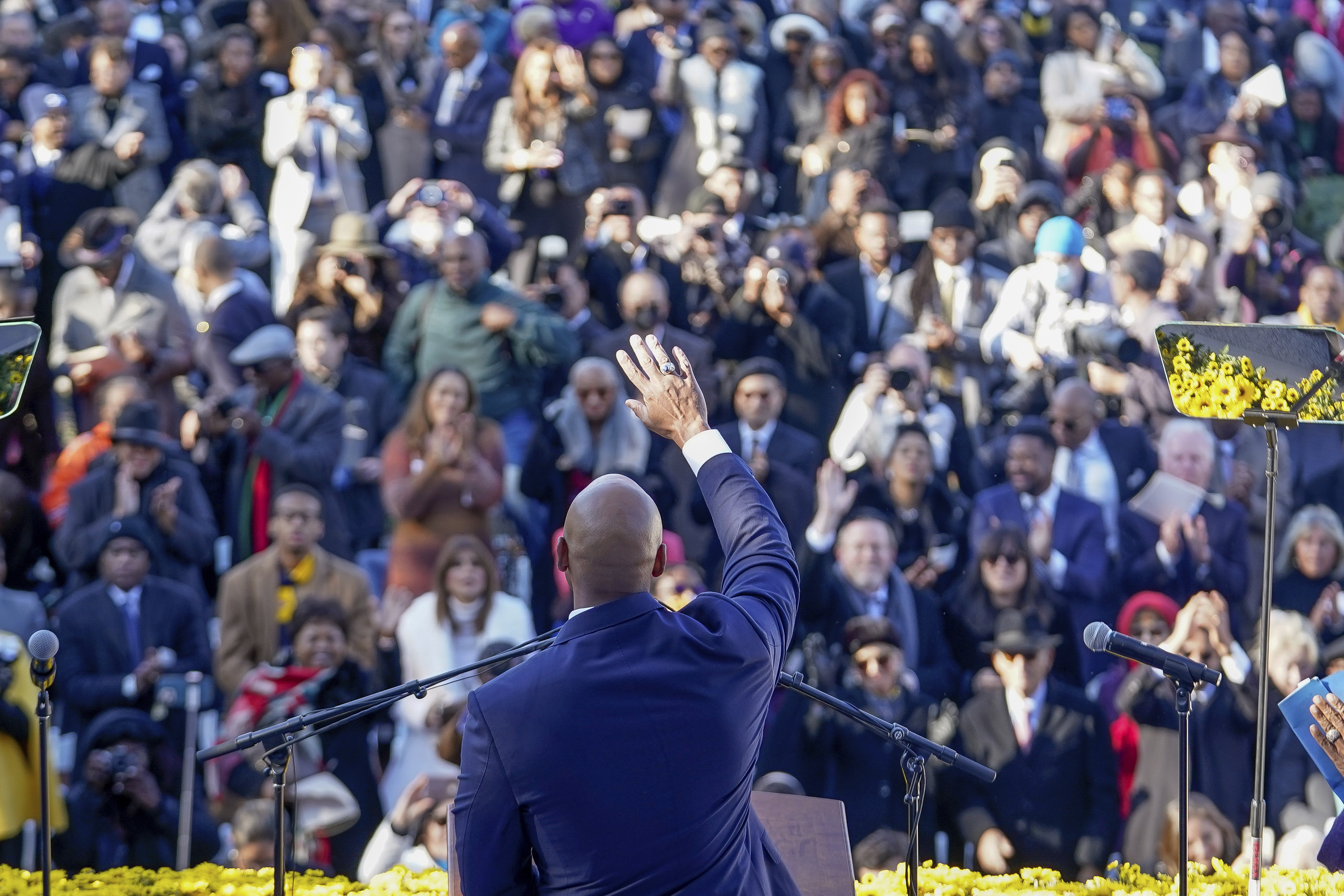
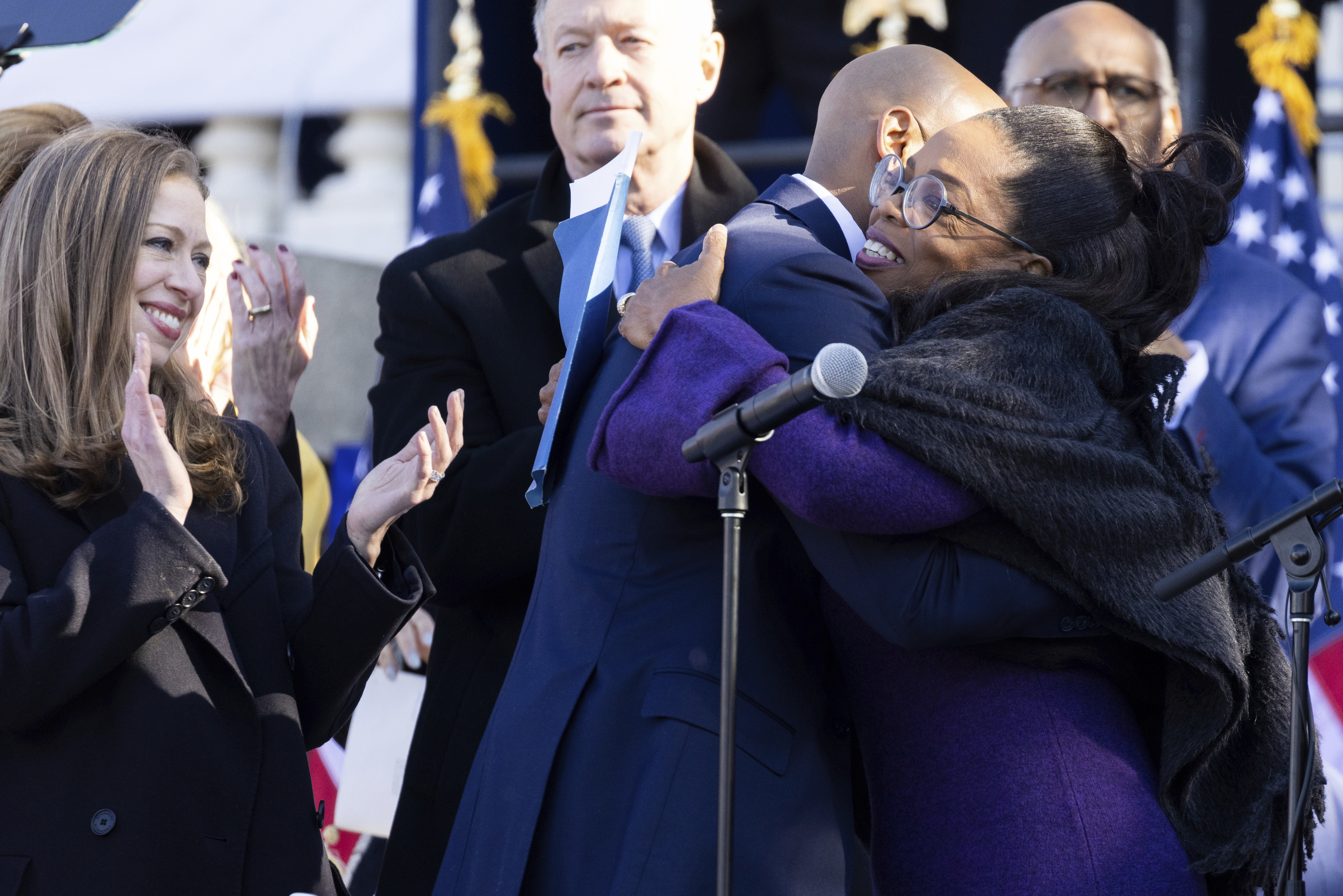
On an unseasonably warm afternoon in January 2023, Ferguson stood at the state house to welcome Moore — a well-reviewed author and former college football player, Army officer, investment banker and nonprofit executive — to Annapolis. The ceremony dripped with nods to Moore’s status as Maryland’s first African-American governor. Ferguson, who is white, stood less than three feet away as Moore placed his hand on a Bible belonging to abolitionist Fredrick Douglass during the swearing-in, which was held in a private event in the Senate chamber.
Moments later, at the public outdoor ceremony before a crowd that included actor Chris Tucker and presidential daughter Chelsea Clinton, the new governor name-checked Ferguson in the second line of his inaugural address. “It’s an honor to be your partner,” Moore said.
After years of playing defense against a Republican executive, Ferguson now had an ally who could allow legislative Democrats to define a proactive agenda. Many wanted to use the state’s structural surplus to fund mortgage assistance programs for first-time homebuyers and cancel parole debt for long-serving inmates.
Early optimism about what the state’s Democratic trifecta could deliver evaporated. Economic downturns ballooned the state deficit, as the Trump’s administration’s dismantling of the federal workforce and government contracts hit Maryland especially hard. Earlier this year, legislators resorted to raising taxes and fees by $1.6 billion — and have braced for lingering effects from the longest federal government shutdown in U.S. history. The Francis Scott Key Bridge collapse in Baltimore last year that left six people dead has become an unending catastrophe: A state agency last month estimated bridge-repair costs have doubled while the expected reopening has been delayed by years.
This year, Maryland’s two top Democrats have found themselves frequently at odds. In April, Moore was unable to pass a bill expanding the state’s reliance on nuclear power, reclassifying it to count towards clean-energy goals. Ferguson’s critics haveaccused the Senate president of killing the bill to benefit the Baltimore solar-panel company where he works as an executive. (Officials in Maryland’s part-time legislature are permitted to maintain outside employment.)
When Ferguson the next month helped deliver a bill forming a commission to study reparations for descendants of slavery, Moore vetoed it. The surprising rebuff was viewed by many Senate Democrats, including those in the General Assembly’s Black Caucus, as motivated by Moore’s desire to demonstrate to a national audience that he was willing to buck his own party. “I strongly believe now is not the time for another study,” Moore wrote to Ferguson in a May 16 veto letter.

But it was a national movement on redistricting that did most to fracture Ferguson and Moore’s relationship. In June, Republicans in Texas — under public pressure from the White House — first entertained the possibility of redrawing their U.S. House maps to produce more Republican-friendly seats. Democrats looked for states where they could offset Texas’s moves with partisan gerrymanders of their own.
Maryland appeared a natural candidate to join the growing Democratic counteroffensive. While California, Colorado and Virginia would have to amend their state constitutions for politicians to redraw lines mid-decade — and in New York a lawsuit to upend the status quo — pulling off such a move in Maryland would require only simple legislation. In August, Democratic state Sen. Clarence Lam introduced a bill that would place more liberal-leaning voters in the Republican-held 1st district.
Moore soon embraced the idea of moving forward with such plans. In September, he accused Trump of “attempting to gerrymander Black leaders out of office” and called the actions of Republican legislatures akin to “political redlining” in a speech at a Congressional Black Caucus dinner.
“It’s time for Maryland to have a conversation about whether we have a fair map or not,” he told reporters then.
Ferguson, too, expressed openness to the redistricting idea, telling Blue Light News earlier that month that a mid-decade gerrymander was “the last possible option that we should explore, but we won’t sit by idly and watch democracy get undermined.”
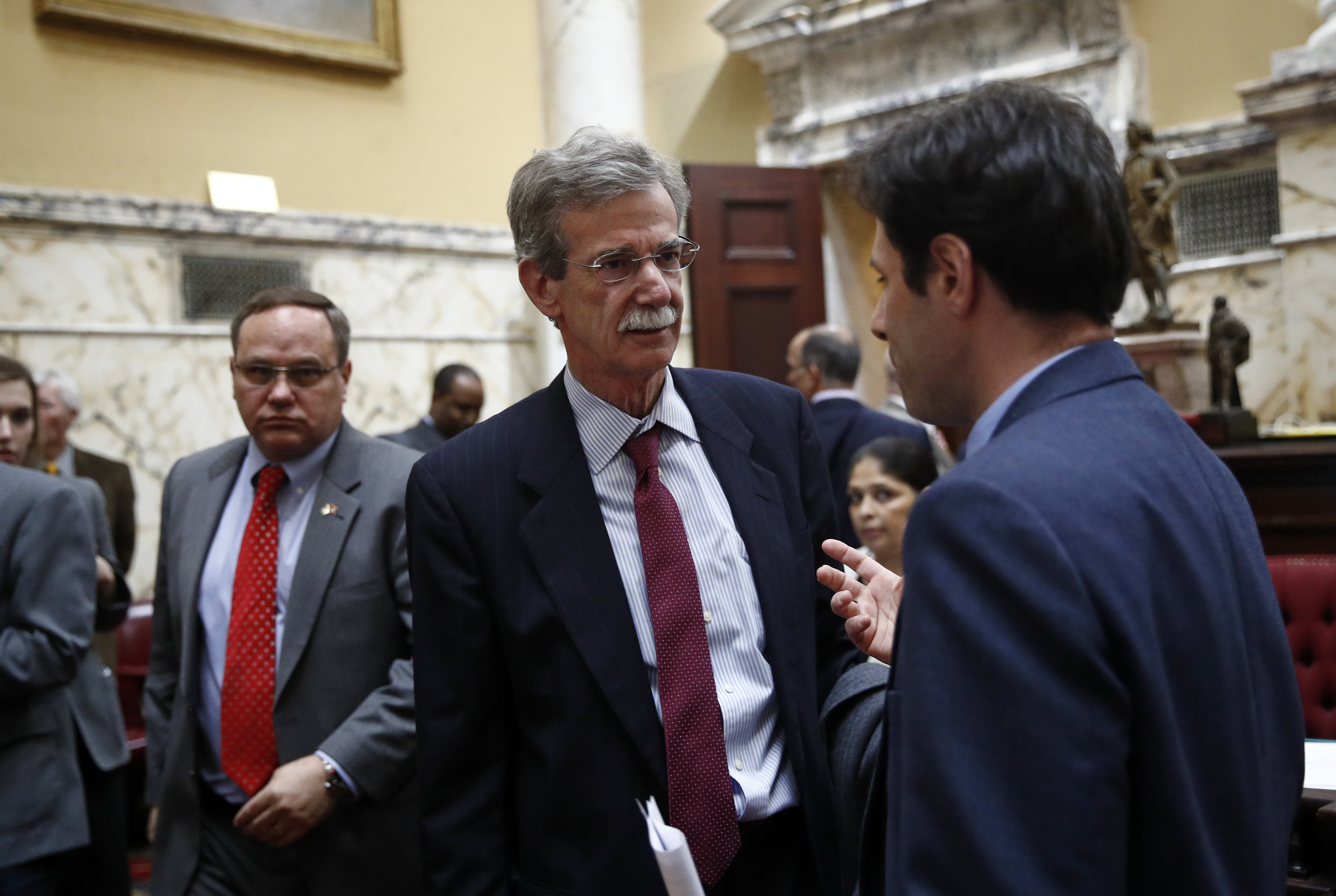
But as the pressure nationally ramped up, the more his ambivalence began to surface. He reminded colleagues of a 2002 state-court decision in which judges redrew Baltimore-area state senate districts upon ruling that a map drawn by Democrats violated constitutional requirements for Maryland’s districts to be “compact in form” around county lines and bodies of water. Ferguson also likes to point out that since the more recent smackdown of the 2021 gerrymander, Maryland’s Supreme Court still does not favor Democrats: five of the seven judges now on the court were appointed by Hogan.
That make-up, Ferguson suggests, could mean if the courts throw out any newly passed map, reverting to congressional boundaries with the current 7-1 advantage is not a foregone conclusion — and a replacement could end up a lot worse for Democrats.
Other Democrats who participated in the 2021 redistricting case see the legal issues differently. “There’s no binding precedent in Maryland that would impact congressional redistricting in the way that I think Senator Ferguson fears,” former Attorney General Brian Frosh said in an interview last month.
Amid the uproar, congressional Democrats set their sights on Ferguson. Jeffries, who would become speaker if his party retakes the House, called Ferguson multiple times to make the case that the time was right for a partisan gerrymander. Days later, the Democratic Congressional Campaign Committee released a poll showing a majority of Maryland voters did not just support redistricting, but “are likely to support primary candidates that support Maryland redistricting by wide margins,” according to an accompanying memo from Change Research. Former Majority Leader Rep. Steny Hoyer and Judiciary Committee ranking member Rep. Jamie Raskin — a former state senator who served alongside Ferguson for six years — issued a public letter on Nov. 10 calling it an “ethical moral and political imperative” that state lawmakers break with the Senate president.
Moore, too, began ramping up pressure on Ferguson. He formed a Governor’s Redistricting Advisory Commission that holds virtual meetings with residents to solicit recommendations to the governor and the General Assembly on whether to move forward with redistricting. At the first meeting, Ferguson — the only member of the panel who has publicly opposed Moore’s plan — was seen nodding in solidarity with members of the public imploring the commission to stand down on redrawing lines.
Moore also launched a “Leave No One Behind” legislative slate, something akin to a political action committee that those around the governor suggest he may use to launch primary challenges to incumbent Democratic lawmakers. (Moore’s office declined a request to interview him for this article.)
If anything, the public pressure seems to be hardening Ferguson’s hesitation about redistricting into full-blown resistance. In late October, a week after speaking with Jeffries, Ferguson issued a memo to his Senate caucus laying out his biggest fear about moving forward: that his party could end up losing up to two seats if more aggressive maps were struck down and ordered redrawn by the courts. The “certainty” of the current map, he wrote, “evaporates the moment we start down the path or redistricting mid-cycle.”
“The legal risks are too high, the timeline for action is dangerous and the downside risk to Democrats is catastrophic,” Ferguson wrote.
Some of the Democrats in Ferguson’s caucus have begun to internalize his arguments. Nick Charles, whose senate district covers Prince George’s County, a wealthy majority Black suburb outside of Washington, said his constituents want lawmakers to join the national fight, but soften when they learn of the potential risks.
“What happens if we take that position?” asked Charles. “On the surface, it looks good, like ‘Man, we look like we’re fighting.’ But it’s like bringing a knife to a gunfight.”
Still other Democrats are growing more confident in their depictions of Ferguson as timid and naïve.
“I think President Ferguson … is an awesome public servant, very thoughtful guy, and certainly intends well,” said Baltimore city Councilman Mark Conway, who last month announced he would challenge Rep. Kweisi Mfume for not doing enough to confront Trump. Conway sides with Moore on redistricting and is disappointed by Ferguson for not jumping into the brawl. “I just think we’re looking at a new day and maybe some of the toughest times we’ve ever had as a country in light of the willingness of Republicans to do whatever it takes to secure power.”
Ferguson has already drawn his own primary challenge from social-media influencer Bobby LaPin — a charter-boat captain and political novice known to 90,000 followers on Instagram as the “Sail Local Guy” — who has said the Senate president’s resistance to redrawing maps pushed him to run.
Those close to Ferguson say he knows the intricacies of keeping his caucus together and brushes off the outside pressure campaign as political distractions. Ferguson had closely watched developments in Indiana, where Republican legislative leaders for weeks held off pressure from the White House and the state’s governor to take up redistricting, and had taken solace in their successful defiance. But those leaders reversed course and will begin a special session this week.

Maryland’s commission will end its work in December, which Moore could use as a basis to call a special session to take on the redistricting question. Otherwise, Moore could hold off until mid-January, when lawmakers return for their regular 90-day session. That would leave little wiggle room to move maps through the legislature, and limited time to survive likely legal challenges before the state’s all-important June primaries.
Each option carries political risks for Moore. Ferguson has the power to essentially ignore the governor’s desires by convening a special session and then quickly adjourning before a vote on redistricting. If Moore waits to focus his pressure campaign in January, Ferguson could respond by otherwise working to stymie the governor’s agenda at a moment he is hoping to elevate his national profile, including by overriding Moore’s veto of the reparations bill.
“It’s not going to be a good session for him, at least not starting,” a legislative aide, granted anonymity to speak candidly of Ferguson’s calculations, said of the governor. “He’s not going to get shit through — not a confirmation, not a thing.”
While Moore may feel urgency to join Democrats’ redistricting bonanza in time to shape the midterm elections, that time crunch is of little relevance to Ferguson. The Senate president is half a decade into his role leading the Maryland Senate — a blip compared to a predecessor who held it for more than three decades — and Ferguson expects to be still toiling away in Annapolis well beyond 2028.
Moore’s “only way out of the box that he’s built for himself is to either change Bill’s mind, which doesn’t seem likely … or it’s doing something that Wes has never done before in his life, and literally take out another politician — a sitting Maryland Senate president,” said Doug Mayer, a Republican strategist who worked for Hogan. “Bill Ferguson lives here, Wes Moore is just staying here. That’s why Bill Ferguson is saying no to this.”


Donald Trump is facing one of his biggest tests of the midterms — and it’s of his own making.
The president has spent a significant amount of time and money trying to help Sen. Darline Graham defeat Rep. Ralph Norman in Tuesday’s snap GOP Senate primary. He’s done more for Graham than he has for the battleground Republicans whose general election fights will determine control of Congress: Not only did he push her to run for a full term, he also held a rare in-person rally for her and tapped into his MAGA Inc. warchest during the final days of the race.
If, after lending all that support, Graham fails, it would be Trump’s most embarrassing loss of the cycle. A win, however, would let him flex his ability to power an unknown political figure to office.
“If Darline does come up short, it would be just a massive, massive embarrassment to the White House and to the president. Just an utter rejection,” said Matthew Bartlett, a Republican strategist and former Trump State Department appointee during his first term.
Tuesday’s runoff to replace the late Sen. Lindsey Graham on the November ballot won’t meaningfully affect the balance of power in Washington. What it will do is reveal the extent of Trump’s clout, because of just how much personal political capital he has expended in the race to convince voters to elect a virtual stranger.
“The fact that he came to the state on short notice to do a rally, and we haven’t seen that in a lot of endorsements, I think that sends a very strong message that he’s all in,” said Andrew Boucher, a GOP strategist and chair of South Carolina’s Charleston County Republican Party, who is neutral in the race.
Trump has framed the race as nothing less than a referendum on himself. Rallying with Graham in Myrtle Beach last week, the president told voters to “pretend, please, that I’m on the ballot.”
On Monday, a Federal Election Commission report revealed that Trump’s super PAC had spent $827,000 on text messages and phone calls for Graham. It’s one of the largest expenditures this cycle from MAGA Inc., and cash that Republicans in battlegrounds are anxiously awaiting for themselves.
One national Republican operative, who was granted anonymity to candidly discuss the president’s influence on the race, noted just how far Trump’s support has gotten Graham: “She wouldn’t even be in this place if she didn’t have [his support]. The outside help she’s had has kind of made this competitive.”
Before GOP Gov. Henry McMaster appointed her to serve out the remainder of her late brother’s term in July, Graham was a complete political novice. Graham has worked for the South Carolina Vocational Rehabilitation Department and has led the Commission for the Blind since 2019, but she had never held or even sought public office — a fact that her opponents have attacked her for repeatedly on the campaign trail, especially after she stumbled over a key foreign policy question on the debate stage earlier this month. Her clearest connection to electoral politics lay solely in being the late senator’s younger sister.
Trump’s past mistakes in South Carolina loom over the race. The Senate primary has echoes of the state’s governor’s contest earlier this summer, in which Lt. Gov. Pamela Evette, a little-known Trump-backed candidate, fell to the more well-known Attorney General Alan Wilson. As public polling began to show Evette trailing significantly in the first days of that runoff, Trump issued a rare dual endorsement to include Wilson.
Evette’s defeat, coupled with a batch of uncharacteristic losses by Trump endorsees in GOP primaries in Georgia, Iowa, Minnesota, Wyoming and Michigan, has put all the more attention on Graham.
The power of his endorsement is on the president’s own mind, too. In a Sunday night post on Truth Social, Trump mused that his “Endorsements are stronger than ever,” pointing to splashy charts comparing his wins to his comparatively few defeats.
But in the same breath, he acknowledged that his power is not always absolute: “The few that lost were done out of loyalty. It was almost impossible for them to win but, I felt obligated to go with them because they were, in my opinion, good people!”
When asked for comment, a White House spokesperson pointed to specific remarks from Trump’s speech at Friday’s rally with Graham, including his acknowledgement that he urged her to jump in the primary.
“She’s never done it before, but she knows politics well,” Trump told supporters on Myrtle Beach. “She loves our military. She loves things that have to do with greatness for America.”
Graham’s foreign policy debate flub — in which she said “national security is not my thing” in response to a question of U.S. interests in Taiwan — revealed the pitfalls of running for office with no prior experience. Norman has taken advantage of that stumble by hammering her inexperience.
The closing stretch of the race has been characterized by Graham trying to tie herself to Trump and burnish her conservative credentials across the state. Norman has tried to shore up support in his Upstate stronghold and expand into the Low Country where former Gov. Mark Sanford — who endorsed his campaign late last week — dominated in the first round. Norman’s also taken to Fox News to bash Graham as an “unknown” and “propped-up candidate.”
Graham’s campaign hopes to consolidate support from Rep. Russell Fry’s (R-S.C.) district after he endorsed her campaign a few days into the runoff. Her closing ad of the race claims Norman “turned his back on Trump’s agenda” and is interspersed with footage of her on the rally stage alongside the president.
The GOP party establishment in South Carolina has fallen in line behind Graham.
Sen. Tim Scott (R-S.C.) publicly backed her bid on the first day of the runoff, Evette got in line shortly thereafter and McMaster followed several days later.
Graham’s campaign has itself spent just over $1 million in ads since the outset of the race, but that spending is bolstered by at least three other outside groups — including Security is Strength PAC, Palmetto Action PAC, and American Mission PAC — who also supported her late brother’s primary bid earlier this year. Their spending has topped $6 million, according to AdImpact.
Norman has had his own outside help from a notable figure and longtime ally: Former U.N. Ambassador Nikki Haley and her aligned groups have spent more than $700,000 for Norman, including $200,000 on a supportive ad from her issue advocacy group, Stand for America.
But that’s still much lower compared with what Graham has received.
“Sen. Scott engaging in the race, the congressional delegation, all these portions of it. Congressman Fry engaging in the race is a big deal. You could almost say that’s the opposite of what you had in the governor’s race,” said a South Carolina-based Republican operative, who was granted anonymity to speak candidly and is staying neutral in the race.
Spokespeople for Graham and Norman did not respond to requests for comment.
Graham is still somewhat dogged by her high-profile debate stage mistake, though she’s tried to redirect the attention in interviews.
“You know what I’ve done in the last week? I’ve gone around this entire state talking to as many people as I possibly can. And you know how many of them brought up Taiwan and national security? Not one!” she said at a press conference in Columbia on Monday.
The late August runoff date could prove unpredictable for both candidates as they seek to drive out their supporters across the state. The twilight of South Carolina’s sticky, slow summer is in full effect: Most kids have returned to school, families across the state are packing their beach gear for one final getaway and the doldrums of summer are still in full force.
Several Republicans said that could mean a lower turnout — which could be a boon for a known-quantity candidate with a long history in local office, like Norman.
“A lot of the candidates that have defeated Trump-endorsed folks across the map this cycle, they’re well-known entities,” said the national GOP operative. “It’s hard to overcome some of the basics of politics, where name ID goes a long way. Familiarity with the candidate matters. Having a favorable view and someone who aligns with your values more matters, even if there’s a Trump endorsement.”
Samuel Benson contributed to this report.
Michigan Senate nominee Abdul El-Sayed put some distance between himself and his ally, progressive Twitch streamer Hasan Piker, after the latter faced intense criticism for suggesting that American Jewish support for Israel could lead someone to “take action” against Jews in the U.S.
“My commitment to Jewish safety is the same as my commitment to the safety of my own daughters. Antisemitism is a scourge, and we need to address it in all its forms. And I stand against any rhetoric that puts the community at risk,” El-Sayed said in a statement. “But I want to be crystal clear, nobody speaks for this campaign besides me and my campaign spokespeople. And while politicians and pundits try to make this race about a Twitch streamer, we’re going to be talking about gas, groceries, good schools, and healthcare.”
The statement marks El-Sayed’s clearest attempt to disentangle his campaign from Piker, whom he embraced during the primary despite the streamer’s contentious rhetoric. And it reflects his efforts to win back Jewish Democrats and moderates in the state after a primary campaign that alienated many of those voters in the key Senate race.
During a Thursday livestream, Piker called “the idea that Jews are monolithic” in their support of Israel “a very dangerous mode of propaganda.”“If Jews in America keep putting this — this idea out there that they are singularly invested in Israel, eventually someone’s going to come around and take action, not against the state of Israel, mind you, but against American Jews,” he continued. “We’re teaching people the wrong lesson. At the end of the day, American Jews do not prioritize Israel, but they do prioritize antisemitism.” During Piker’s remarks, the stream displayed a social media post showing Michigan Democratic congressional nominee and state Sen. Jeremy Moss, who is Jewish and a supporter of Israel. The post originated from the group Track AIPAC, and featured an image from Moss’ Instagram account of him in Tel Aviv next to the group’s signature red graphic noting contributions from “pro-Israel donors” to Moss’ campaign.
Moss’ support for Israel has made him a lightning rod among progressives opposed to pro-Israel Democrats. An audio clip alleged to be a recording of Moss claiming the purpose of his campaign is to maintain U.S. support for Israel went viral online over the weekend. Moss told The Detroit News that it was a fake, and that “I would never say these things.”
In a statement Monday evening, Moss said he’s been “in continual dialogue” with El-Sayed, including about “Jewish and Arab safety and security, both here at home in Michigan and in the Middle East.”
Moss also denounced Piker’s comments as an attempt to “create further divisions.”
“I will not be lectured by a California podcaster about what Oakland County, Michigan’s Jewish community should and shouldn’t believe,” he said.
El-Sayed has struggled to unify Michigan Democrats since edging out a victory in a bitter primary that was marked by accusations of antisemitism — partly due to his own views on Israel, and partly due his embrace of Piker, who has risen to prominence through controversial and vocal attacks on Israel. El-Sayed also drew criticisms from the Jewish community for his response after a man attacked a Michigan synagogue in March. El-Sayed condemned the attack but pointed out the Israeli military killed some of the attacker’s family in Lebanon, saying “hurt people hurt people.”. He also received blowback for declining repeatedly to answer whether Israel has a right to exist during a BLN interview in June.
His primary campaign made Stevens’ acceptance of contributions from the American Israel Public Affairs Committee a central issue, accusing the group of unfairly influencing the race and steering the party towards stronger U.S. relations with Israel, which he opposes. AIPAC spent $30 million in the race, a record for the group.
El-Sayed has repeatedly condemned antisemitism throughout his campaign.
His failure to corral support from many Jewish voters in Michigan threatens to undermine Democrats’ chances of winning the Senate. The state’s significant Muslim and Arab-American population and its prominent Jewish population pose unique challenges for Democrats’ messaging around Israel — a problem then-Vice President Kamala Harris struggled to navigate in the 2024 presidential election.
Piker’s comments drew a forceful rebuke from Rep. Hillary Scholten (D-Mich.), who endorsed El-Sayed’s opponent Rep. Haley Stevens in the primary and has so far declined to endorse El-Sayed, excoriating Piker’s comments as “dangerous” and “unacceptable.”
“Piker is a hack who thrives on hate, shock and awe because he lacks substance,” she said. “We should all be calling out this disgusting rhetoric so it loses it’s [sic] grip on our politics once and for all. It has no place in Michigan, and no place in our country.”
Piker fired back at Scholten on social media, telling her not to “spend so much time vying for the spotlight by actively defaming a prominent antizionist voice to harm the dem senate majority chances over a 90/10 issue.”
Scholten’s statement accused Piker of “targeting” Moss after Piker displayed images of Moss while making the inflammatory comments. Moss, who is running to succeed El-Sayed’s primary opponent Rep. Haley Stevens, backed Stevens in the primary and has yet to endorse El-Sayed in the general election.
Republican Mike Rogers jumped on the controversy, describing Piker as El-Sayed’s “running mate.”
“Hasan Piker’s call for violence against the Jewish Community, specifically against Jeremy Moss, must be condemned by every single Michigan Democrat. But Conman Abdul El-Sayed doesn’t have the guts to disavow his running mate,” Rogers said in a statement. “Abdul’s attempt at distancing himself from this violent and hateful rhetoric now that he and Hasan won the primary is the epitome of what a conman does — says one thing when it serves him and another when it doesn’t.”
Since winning the nomination earlier this month, El-Sayed has taken steps to keep Piker at arm’s length. In an August interview, El-Sayed disavowed Piker’s comments that “America deserved 9/11” during a 2019 livestream, a comment Piker has since walked back.
Democrats have gone to great lengths to reunify the party after the primary, including with a party unity rally featuring remarks from prominent Michigan Democrats, including unity breakfast Sen. Elissa Slotkin and a rally featuring remarks from former Transportation Secretary Pete Buttigieg. Former President Barack Obama spoke with El-Sayed after his victory and offered a rare readout of the conversation to reporters to signal that El-Sayed has the party’s backing.
This article has been updated with Moss’ response to Piker’s comments.
President Donald Trump is using a bit of his mostly untapped $400 million MAGA Inc. warchest to boost Sen. Darline Graham in South Carolina — the first significant expenditure his team has made this year for one of his chosen candidates, according to campaign finance reports.
The super PAC has funneled more than $827,000 on voter phone calls and text messages for Graham ahead of her tough GOP runoff battle with Rep. Ralph Norman on Tuesday, according to a Federal Election Commission report made public on Monday.
It’s yet another sign that Trump is focusing his efforts on propelling Graham — a political newcomer — to victory, after holding a rare in-person political rally with her on Friday. And it’s a notable spend given MAGA Inc.’s ongoing absence from other battleground races this cycle, even as Republicans have been pushing the president and his team to spend heavily this fall to help counter Democrats’ massive fundraising advantage.
As of last week, the super PAC had reported over $403 million in fundraising.
The money for Graham is just the second time MAGA Inc. has spent on a race this year. The group in March shelled out nearly $18,000 for now-Rep. Clay Fuller (R-Ga.), who was running in the special election to replace former Rep. Marjorie Taylor Greene.
And in late 2025, MAGA Inc. threw roughly $1.7 million into phone calls for Tennessee Republican Matt Van Epps, who won the special election to replace retired Rep. Mark Green (R-Tenn.).
Spokespeople for MAGA Inc. and the White House did immediately respond to requests for comment.
Should Graham become the Republican nominee in South Carolina on Tuesday, it will be in large part thanks to Trump, who expended serious political and financial capital to help her win. Her victory would also help reaffirm Trump’s influence in Republican primaries after a string of losses for his preferred candidates in states like Michigan, Minnesota, and Iowa.
Jessica Piper contributed to this report.
-

 The Josh Fourrier Show2 years ago
DOOMSDAY: Trump won, now what?
-

 Politics2 years ago
Former ‘Squad’ members launching ‘Bowman and Bush’ YouTube show
-

 The Dictatorship2 years ago
Luigi Mangione acknowledges public support in first official statement since arrest
-
Uncategorized2 years ago
Bob Good to step down as Freedom Caucus chair this week
-

 Politics2 years ago
Former Kentucky AG Daniel Cameron launches Senate bid
-

 The Dictatorship2 years ago
Pete Hegseth’s tenure at the Pentagon goes from bad to worse
-

 Politics2 years ago
Blue Light News’s Editorial Director Ryan Hutchins speaks at Blue Light News’s 2025 Governors Summit
-

 The Dictatorship12 months ago
Mike Johnson sums up the GOP’s arrogant position on military occupation with two words