
The Dictatorship
The Latest: Markets sink as Trump’s tariffs roil global trading system

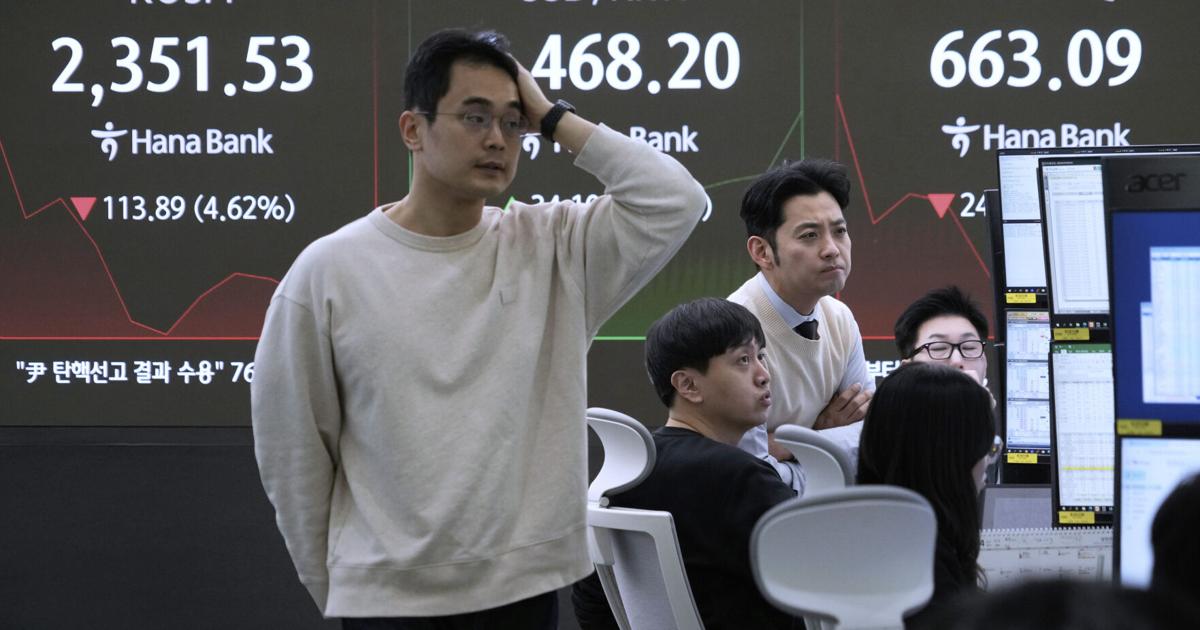
Today’s live updates have ended. Find more coverage at APNews.com.
U.S. stocks ended another tumultuous day lower as markets reel from President Donald Trump’s latest threats to crank his tariffs higher.
The S&P 500 sank 0.2%. The Dow Jones Industrial Average fell 349 points, or 0.9%, and the Nasdaq composite rose 0.1%.
What to know:
- Stocks spiked after false report of a tariff pause: Stocks briefly soared Monday morning after social media users claimed that Kevin Hassett, a top White House economic adviser, said the president was considering a 90-day pause on tariffs. A White House account quickly weighed in on X, calling the report “fake news.”
- Trump is threatening more tariffs on China: “If China does not withdraw its 34% increase above their already long term trading abuses by tomorrow, April 8th, 2025, the United States will impose ADDITIONAL Tariffs on China of 50%, effective April 9th,” Trump wrote on Truth Social. The threat came after China said it would retaliate against U.S. tariffs Trump announced last week.
- Globally, economic bellwethers are flagging: Stocks in Hong Kong plunged 13.2% for their worst day since 1997. A barrel of benchmark U.S. crude oil dipped below $60 during the morning for the first time since 2021, hurt by worries that a global economy weakened by trade barriers will burn less fuel. Bitcoin sank below $79,000, down from its record above $100,000 set in January, after holding steadier than other markets last week.
▶ Follow live updates on President Donald Trump and his administration
Mixed finish for ‘Magnificent Seven’
Shares in Amazon, Nvidia and most of the other dominant U.S. stocks known as the “Magnificent Seven” closed higher Monday following a roller-coaster day on Wall Street.
Nvidia gained 3.5%, Meta Platforms added 2.3%, Amazon rose 2.5% and Google parent Alphabet finished 0.8% higher.
The other three stocks lost ground: Apple fell 3.7%, Microsoft slid 0.6% and Tesla dropped 2.6%.
The “Magnificent Seven” are so massive in size that their movements carry more weight on the S&P 500 and other indexes than other stocks.
Even with some notching gains Monday, the stocks are all still down following the major market sell-off last Wednesday. They have since shed a combined market value of $1.81 trillion.
Market volatility shows that investors are still hoping for tariff negotiations
Trump has given several reasons for his stiff tariffs, including bringing manufacturing jobs back to the United States, which is a process that could take years. Trump on Sunday said he wanted to bring down the numbers for how much more the United States imports from other countries versus how much it sends to them.
Indexes nevertheless kept swinging between losses and gains Monday, in part because markets still hope that negotiations may still come.
“We’re not calling the all-clear at all, but when you have this type of volatility in the market, of course you’re going to have back and forth” in markets ranging from day to day and hour to hour, said Nate Thooft, a senior portfolio manager at Manulife Investment Management.
“We’re all waiting for the next bit of information,” he said. “Literally a Truth Social tweet or an announcement of some sort about real negotiations could dramatically move this market. This is the world we live in right now.”
Monday’s market spike shows just how closely investors are watching for news on tariffs
A sudden rise Monday morning followed a false rumor that Trump was considering a 90-day pause on his tariffs, one that a White House account on X quickly labeled as “fake news.”
That a rumor could move trillions of dollars’ worth of investments shows how much investors are hoping to see signs that Trump may let up on tariffs.Stocks quickly turned back down, and shortly afterward, Trump dug in further and said he may raise tariffs more against China after the world’s second-largest economy retaliated last week with its own set of tariffs on U.S. products.
It’s a slap in the face to Wall Street, not just because of the sharp losses it’s taken, but because it suggests Trump may not be moved by its pain.
Many professional investors had long thought that a president who used to crow about records reached under his watch would pull back on policies if they sent the Dow reeling.
How major US stock indexes fared Monday
On Monday:
- The S&P 500 fell 11.83 points, or 0.2%, to 5,062.25.The Dow Jones Industrial Average fell 349.26 points, or 0.9%, to 37,965.60.
- The Nasdaq composite rose 15.48 points, or 0.1%, to 15,603.26.
- The Russell 2000 index of smaller companies fell 16.89 points, or 0.9%, to 1,810.14.
For the year:
- The S&P 500 is down 819.38 points, or 13.9%.
- The Dow is down 4,578.62 points, or 10.8%.
- The Nasdaq is down 3,707.53 points, or 19.2%.
- The Russell 2000 is down 420.01 points, or 18.8%.
US stocks end modestly lower after reeling from Trump’s threats to escalate his tariff fight

A screen shows stock prices at the Nasdaq MarketSite, Monday, April 7, 2025, in New York. (AP Photo/Yuki Iwamura)
A screen shows stock prices at the Nasdaq MarketSite, Monday, April 7, 2025, in New York. (AP Photo/Yuki Iwamura)
Stocks ended another tumultuous day lower as markets reel from President Trump’s latest threats to escalate his tariff fight.
The S&P 500 sank 0.2% Monday. The Dow Jones Industrial Average fell 349 points, or 0.9%, and the Nasdaq composite rose 0.1%. The Dow was earlier down as many as 1,700 points following even worse losses worldwide on worries that Trump’s tariffs could torpedo the global economy.
It then surged to a gain after a rumor circulated that Trump may pause his tariffs. But the White House quickly called that fake news, and Trump then threatened to raise tariffs further on China.
JUST IN: US stocks end modestly lower after another rocky day caused by Trump’s latest threats to escalate his tariff fight
Sell, baby, sell

The Marathon Garyville Oil Refinery in Reserve, La., is seen Monday, April 7, 2025. (AP Photo/Gerald Herbert)
The Marathon Garyville Oil Refinery in Reserve, La., is seen Monday, April 7, 2025. (AP Photo/Gerald Herbert)
President’s Trump promise to “drill, baby, drill”,” was expected to usher in happy days for fossil fuel companies. But it hasn’t worked out that way so far.
Oil and gas companies have been among the biggest decliners over the past few days as an escalating trade war raises fears of an economic downturn and a drop in demand for energy products.
Over the past three trading sessions, Devon Energy, Diamondback Energy and Halliburton have all declined by more than 20%. APA Corp., which operates in the U.S., Egypt and the U.K., has dropped more than 30%. The price of oil has declined from around $71 in the middle of last week to $61 Monday.
Trump says he won’t pause tariff plan
Despite hopes that he’ll back off his trade policies, the president said he’s not going to pause plans for tariffs.
“We’re not looking at that,” he said in the Oval Office. However, he also said foreign leaders were looking to cut new trade deals with the U.S.
“We have many, many countries that are coming to negotiate with us,” he said.
Trump said there was no contradiction between implementing tariffs and holding talks.”
They can both be true,” he said.
Trump has lost more than a billion dollars in stock value
Trump’s stake in his social media company that runs Truth Social has fallen to $2.4 billion, a 40% plunge from when the stock market began tumbling on tariff fears on February 19. The drop in percentage terms is twice that of the S&P 500.
The president’s heavy exposure to stocks through his Trump Media & Technology stake contrasts sharply from when he was last president and boasted regularly about stock market records.
Back then, before he took his social media public, he had just 0.1% of his wealth in stocks.
Just how much a backlash from Trump’s tariffs will hurt his overseas golf club and hotel and residential tower businesses is unclear because they are privately held.
Before Trump’s “Liberation Day” tariff announcement, Forbes valued his holdings, including his Trump Media stake, at about $5 billion.
Experts worry of a possible bear market
Wall Street could soon be in the claws of another bear market as the Trump administration’s tariff blitz fuels fears that the added taxes on imported goods from around the world will sink the global economy.

An electronic display shows financial information on the floor at the New York Stock Exchange in New York, Monday, April 7, 2025. (AP Photo/Seth Wenig)
An electronic display shows financial information on the floor at the New York Stock Exchange in New York, Monday, April 7, 2025. (AP Photo/Seth Wenig)
A bear market is a term used by Wall Street when an index such as the S&P 500 or the Dow Jones Industrial Average has fallen 20% or more from a recent high for a sustained period of time.
The last bear market happened from Jan. 3 to Oct. 12 in 2022. But this decline feels more like the sudden, turbulent bear market of 2020, when the benchmark S&P 500 index tumbled 34% in a one-month period, the shortest bear market ever.
The S&P 500, Wall Street’s main barometer of health, was down 1.2% in Monday afternoon trading. It’s now 18.4% below the all-time high it set on Feb. 19.
The Dow industrials fell 1.8%, and the tech-heavy Nasdaq composite, which already was in a bear market, dropped 0.9%.
▶Read more about the possible shift to a bear market
UK and Singapore prime ministers agree to strengthen collaboration amid US tariffs
U.K. Prime Minister Keir Starmer discussed U.S. tariffs with his Singapore counterpart and they agreed there can be no winners in a trade war, his office said.
Starmer updated Singapore Prime Minister Lawrence Wong on his calls with other leaders over the weekend and both agreed to work to maintain global economic stability, according to a readout of the call.
The two agreed to strengthen collaboration through bilateral agreements and trading blocs such as the Comprehensive and Progressive Trans-Pacific Partnership.
“On the wider bilateral relationship, the leaders committed to further collaboration on areas including technology, security and defense in the 60th year of bilateral relations,” Starmer’s office said.
Apple, Starbucks, Caterpillar among declining stocks
An Apple logo adorns the facade of the downtown Brooklyn Apple store on March 14, 2020, in New York. (AP Photo/Kathy Willens, File)
An Apple logo adorns the facade of the downtown Brooklyn Apple store on March 14, 2020, in New York. (AP Photo/Kathy Willens, File)
Apple tumbled again on Monday after President Donald Trump threatened more tariffs against China.
China is the iPhone maker’s second-biggest market and home to the vast majority of its production and assembly.
In afternoon trading, Apple fell 3.2%, to $182.34 per share. That follows a combined decline of more than 16% on Thursday and Friday. Its shares are down more than 25% this year.
Other notable decliners Monday included Starbucks (-2.8%); Tesla (-1.6%); Levi Strauss (-1.7%); and Caterpillar (-2.4%).
Much like the major stock indexes, many companies whipsawed back-and-forth between gains and losses.
Nvidia was down as much as 7% early before rebounding to a 5% gain in the afternoon, for instance.
US Secretary of State speaks with Pakistan’s deputy PM about economic cooperation
U.S. Secretary of State Marco Rubio has spoken to Pakistan’s deputy Prime Minister Ishaq Dar, days after President Trump imposed 29% tariffs on exports to his country from Pakistan.
In a statement, the Ministry of Foreign Affairs said on Monday that the two sides “discussed bilateral relations, regional security, and economic cooperation.”
The statement quoted Rubio as saying that the cooperation in economy and trade would be the hallmark of future relations between the two countries.
The latest development came hours after the Pakistan Stock Exchange fell rapidly, with Islamabad facing 29% tariffs from the U.S.
WATCH: Japan PM says he told Trump to rethink tariff policies
Japanese Prime Minister Shigeru Ishiba said he held telephone talks on Monday with President Donald Trump and told him he is “strongly concerned” that U.S. tariffs would discourage investment from Japan, which has been the world’s biggest investor in the United States in the past five years.
Beijing cites President Reagan to blast Trump’s tariffs and protectionism
Beijing has issued several strongly-worded rebukes to Trump’s tariffs, including one entirely in the words of late-President Ronald Reagan.
“High tariffs inevitably lead to retaliation by foreign countries and the triggering of fierce trade wars,” the Republican president said in a video clip dated 1987, as posted on the X social media site Monday by the Chinese Embassy in the U.S. The embassy wrote that the decades-old speech “finds new relevance in 2025.”
“The result is more and more tariffs, higher and higher trader barriers, and less and less competition,” Reagan said in the speech, in which he warned of the worst from tariff wars: markets should collapse, businesses shut down, and millions of people lose jobs.
Experts don’t think China will back down in the face of Trump’s latest tariff threat
Experts say Beijing is unlikely to back down, after President Donald Trump threatened to raise tariffs on China if Beijing does not withdraw its retaliatory tariffs.
“At this point, it is extremely unlikely for China to back down,” said Yun Sun, director of the China program at the Washington-based think tank Stimson Center, adding any leadership summit between Trump and Chinese President Xi Jinping “doesn’t appear likely in the near future.”
“China is increasingly convinced that the tariff is not negotiable because Trump’s eventual goal is to bring manufacturing jobs back to the U.S.,” Sun said.
Craig Singleton, senior China fellow at another Washington-based think tank Foundation for Defense of Democracies, called Trump’s threat from today “a blunt ultimatum to Beijing that sharply raises the takes in the U.S.-China tariff war.” He said Beijing’s rigid system and fear of looking weak prevent Xi from opening back channels with the Trump administration that could offer relief.
“This is not a contest of endurance so much as a collision course, where neither side intends to swerve,” Singleton said. “In other words, Trump and Xi are locked into escalation-as-strategy, and the risk now is a slow-motion spiral with no clear ceiling.”
Think twice before bailing out of the stock market, financial advisers say
Federal Reserve Chairman Jerome Powell is framed by a trader’s screens on the floor of the New York Stock Exchange, Wednesday, June 12, 2024. (AP Photo/Richard Drew)
Federal Reserve Chairman Jerome Powell is framed by a trader’s screens on the floor of the New York Stock Exchange, Wednesday, June 12, 2024. (AP Photo/Richard Drew)
The huge swings rocking Wall Street and the global economy may feel far from normal. But, for investing at least, drops of this size have happened throughout history.
Any kind of uncertainty around the economy will give Wall Street pause, but the trade war is making it more difficult for companies, households and others to feel confident enough to invest, spend and make long-term plans.
Anytime an investor sees they’re losing money, it feels bad. This recent run feels particularly unnerving because of how incredibly calm the market had previously been. The S&P 500 is coming off a second straight year where it shot up by more than 20%.
Selling may offer some feeling of relief. But it also locks in losses and prevents the chance of making the money back over time. Historically, the S&P 500 has come back from every one of its downturns to eventually make investors whole again. That includes after the Great Depression, the dot-com bust and the 2020 COVID crash.
▶Read more about what experts advise you do with your money in the stock market
Markets in Europe sink for a third day
European markets continued their recent descent Monday, logging a third straight day of major losses.
Germany’s DAX index, which briefly fell more than 10% at th e open on the Frankfurt exchange, recovered some ground and closed down 4.1%. In Paris, the CAC 40 shed 4.8%, while Britain’s FTSE 100 tumbled 4.4%.
Prior to last week, most indexes in Europe had enjoyed a resurgence after underperforming U.S. markets last year.
The EUs executive commission — which handles trade issues for the 27-country bloc — is set to impose tariffs on jeans, whiskey and motorcycles Wednesday in response to Trump’s increase in steel and aluminum tariffs.
EU commissioners haven’t cemented a response to Trump’s “reciprocal” tariff of 20% on European goods and a 25% tariff imposed on autos.
Betting on a Fed rate cut
Federal Reserve Chairman Jerome Powell speaks at the SABEW Annual Conference Society for Advancing Business Editing and Writing Annual Conference in Arlington, Va., Friday, April 4, 2025. (AP Photo/Manuel Balce Ceneta)
Federal Reserve Chairman Jerome Powell speaks at the SABEW Annual Conference Society for Advancing Business Editing and Writing Annual Conference in Arlington, Va., Friday, April 4, 2025. (AP Photo/Manuel Balce Ceneta)
Wall Street is increasingly betting that the Federal Reserve will cut its main interest rate at least four times this year.
That expectation has increased since the White House unleashed its sweeping tariffs on imported goods.
As of Monday, traders are betting on a 61.6% chance that the Fed will leave its rate unchanged at its next meeting of policymakers in May, according to data from CME Group. That’d down from 63.1% a month ago.
However, traders’ odds of rate cut announcements at Fed meetings in June, July, September and December are all up versus a month ago.
The Fed has been holding interest rates steady this year, after cutting them sharply through the end of last year.
Copper prices fall further
Benches line the Cobre Panamá copper mine during a press tour of the mine in Donoso, Panama, Friday, March 21, 2025. (AP Photo/Matias Delacroix)
Benches line the Cobre Panamá copper mine during a press tour of the mine in Donoso, Panama, Friday, March 21, 2025. (AP Photo/Matias Delacroix)
The price of copper fell nearly 4% Monday following sharp drops late last week. Copper prices were up as much as 30% for the year as of late March and nearly all of those gains have been erased.
Copper prices had hit record levels because of growing demand amid developments for artificial intelligence technology and a global shift to cleaner energy. A prolonged trade war threatens economies around the world. That makes investments in technology and energy infrastructure more difficult.
Much of the world’s technology wouldn’t work without copper. It goes into cords for electrical devices, transmission lines, batteries, LED lights and other electronics.
Gas price increase is likely short-lived
The average price for a gallon of gas is up for the third straight week in the U.S., but that’s likely to reverse course soon with oil prices in rapid retreat.
The average price for a gallon of gas hit $3.21 this week, up more than 10 cents, according to GasBuddy. That’s still more than 35 cents lower that last year at this time.

The per-gallon price is illuminated on the pump at a Costco warehouse gasoline station Tuesday, April 1, 2025, in Thornton, Colo. (AP Photo/David Zalubowski)
The per-gallon price is illuminated on the pump at a Costco warehouse gasoline station Tuesday, April 1, 2025, in Thornton, Colo. (AP Photo/David Zalubowski)
Oil prices on Monday briefly dipped below $60 for the first time since 2021 as a global trade war escalates.
Patrick De Haan, head of petroleum analysis at GasBuddy, said that if tariffs aren’t scaled back soon, the national average could fall below $3 per gallon in the coming weeks.
Heavy weights lead market shifts

An electronic display shows financial information on the floor at the New York Stock Exchange in New York, Monday, April 7, 2025. (AP Photo/Seth Wenig)
An electronic display shows financial information on the floor at the New York Stock Exchange in New York, Monday, April 7, 2025. (AP Photo/Seth Wenig)
Wall Street’s big swings are being led by the technology sector, which has an outsized impact on the broader market.
The sector is full of companies with pricey stock valuations, such as Nvidia, which tend to push and pull the market with greater force than less valuable stocks. Their heft means a big shift either way for a just handful of companies can sink or lift the S&P 500.
Technology companies, including chipmakers, have seen their values skyrocket over hopes for artificial intelligence advancements. Higher costs for chips and other technologies pose a risk to that development and the earnings growth prospects for companies like Nvidia, Apple and Microsoft.
Trump threatens additional tariffs on China
“If China does not withdraw its 34% increase above their already long term trading abuses by tomorrow, April 8th, 2025, the United States will impose ADDITIONAL Tariffs on China of 50%, effective April 9th,” the president wrote on Truth Social. “Additionally, all talks with China concerning their requested meetings with us will be terminated!
Trump’s threat comes after China said it would retaliate against U.S. tariffs announced last week.
British prime minister says tariffs are a ‘huge challenge’ for the UK
British Prime Minister Keir Starmer on Monday said President Trump’s tariffs were a “huge challenge” for the U.K. and could have “profound” consequences for the global economy.
Britain’s Labour Party Prime Minister Keir Starmer makes speech outside 10 Downing Street in London, Friday, July 5, 2024. Labour leader Keir Starmer won the general election on July 4, and was appointed Prime Minster by King Charles III at Buckingham Palace, after the party won a landslide victory. (AP Photo/Kin Cheung)
Britain’s Labour Party Prime Minister Keir Starmer makes speech outside 10 Downing Street in London, Friday, July 5, 2024. Labour leader Keir Starmer won the general election on July 4, and was appointed Prime Minster by King Charles III at Buckingham Palace, after the party won a landslide victory. (AP Photo/Kin Cheung)
“But this moment has also made something very clear — that this is not a passing phase,” he said. “And just as we’ve seen with our national security, particularly over recent months in relation to the war in Ukraine, now with our commerce and trade, this is … a completely new world, an era where old assumptions, which we’ve long taken for granted, simply don’t apply any longer.”
Speaking to workers at a plant in the West Midlands that makes Jaguar and Land Rover vehicles for the export market, Starmer said his government would continue to try to negotiate a trade deal with the United States while championing free trade around the world.
Jaguar Land Rover on Saturday announced that it was pausing shipments to the U.S. for the month of April as it works out how to respond to the 25% tax on imported cars that took effect last week.
Starmer announced some help for the British car industry, providing additional flexibility in meeting the government’s 2030 deadline for phasing out gasoline- and diesel-power cars, extending the deadline for hybrids to 2035 and offering tax breaks for buyers of electric vehicles.
JUST IN: Trump threatens more tariffs on China if Beijing does not withdraw retaliatory measures
Slide in oil prices deepens
FILE – A sign at a Sinclair gas station is seen next to an Arco gas station advertising gasoline prices, June 10, 2024, in Long Beach, Calif. (AP Photo/Ryan Sun, File)
FILE – A sign at a Sinclair gas station is seen next to an Arco gas station advertising gasoline prices, June 10, 2024, in Long Beach, Calif. (AP Photo/Ryan Sun, File)
Oil prices are falling Monday, extending their slide from last week, as investors anticipate that a trade war will chill global economic growth.
The price of benchmark U.S. crude oil is down 1.1% to $61.32 a barrel. Earlier in the day, it briefly dipped below $60 a barrel for the first time since 2021.
U.S. crude is down 14.2% so far this month.
Brent crude, the international standard, is down 1% to $64.88 a barrel.
Bitcoin and other cryptos see large price drops
After holding relatively stable during last week’s global market turmoil, cryptocurrencies have joined the sell-off.
Bitcoin, the world’s most popular cryptocurrency dipped below $75,000 Monday morning before seeing a slight rebound.
Bitcoin’s prices haven’t been this low since just after President Donald Trump’s Election Day victory last year launched a bull run in crypto prices.
Bitcoin’s backers say it is a type of digital gold that can act as a hedge against volatility. But Garrick Hileman, an independent cryptocurrency analyst, said bitcoin’s price slide shows that thesis still hasn’t proven to be true.
“It’s just not there today,” he said. “[Bitcoin] trades like a risky tech stock.”
Other major digital assets, like ether, XRP and solana, saw even bigger one-day percentage drops on Monday morning.
Bond yields are mixed after brief rally
Treasury yields are mixed in Monday morning trading on the bond market after briefly rallying in the early going.
The yield on the 10-year Treasury rose to 4.09% from 4.01% late Friday. It had fallen as low as 3.88% overnight.
The yield, which influences interest rates on mortgages and other consumer loans, was nearing 4.8% in mid-January.
The two-year yield, which closely tracks expectations for action by the Federal Reserve, was steady at 3.68%.
A White House account on X says it was ‘fake news’ that Trump was considering a tariff pause
The account, @RapidResponse47, weighed in shortly after the market spiked, then dropped again.
Stock market spikes in reaction to White House report that president may pause tariffs
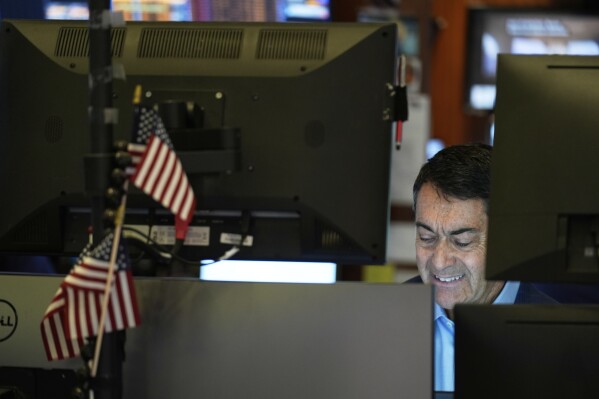
Mark Mueller works on the floor at the New York Stock Exchange in New York, Monday, April 7, 2025. (AP Photo/Seth Wenig)
Mark Mueller works on the floor at the New York Stock Exchange in New York, Monday, April 7, 2025. (AP Photo/Seth Wenig)
The stock market briefly spiked on a report that Kevin Hassett, a top White House economic adviser, said the president was considering a 90-day pause on tariffs.
The supposed remark from Hassett circulated on social media, but no one could pinpoint where it came from even as the market flashed from red to green.
Hassett had spoken to Fox News earlier in the morning, when he was asked about a potential pause. However, he was noncommittal.
“I think the president is going to decide what the president is going to decide,” he said.
The episode showed that traders were operating on a hair trigger and eager for any sign of encouraging news for the market.
Stocks are sharply swinging down, up, then down again on Wall Street
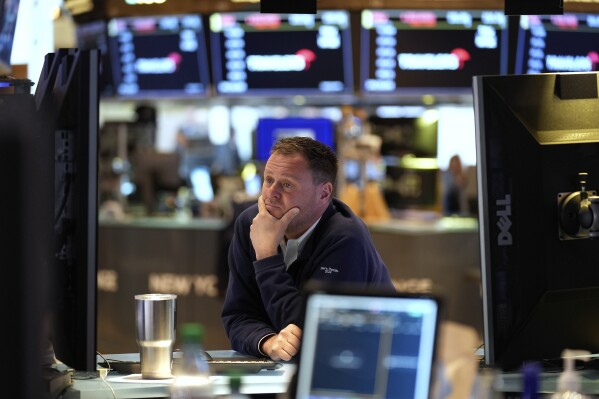
Traders work on the floor at the New York Stock Exchange in New York, Monday, April 7, 2025. (AP Photo/Seth Wenig)
Traders work on the floor at the New York Stock Exchange in New York, Monday, April 7, 2025. (AP Photo/Seth Wenig)
The Dow Jones Industrial Average briefly erased a morning loss of 1,700 points, shot up more than 800 points, then went back to a loss of 629 points.
The S&P 500 likewise made sudden up-and-down lurching movements and was down 0.7% in the first hour of trading. The Nasdaq composite was up 0.2% That followed sharp drops around the world as worries rise about whether Trump’s trade war will torpedo the global economy.
A big Tesla bull slams Musk, slashes stock price target
The Tesla logo is displayed at a Tesla dealership Thursday, Mar. 13, 2025, in Miami. (AP Photo/Lynne Sladky)
The Tesla logo is displayed at a Tesla dealership Thursday, Mar. 13, 2025, in Miami. (AP Photo/Lynne Sladky)
Wedbush analyst Dan Ives says Elon Musk’s association with President Trump and his tariffs will turn off potential Tesla buyers in China, the company’s second largest market. Ives writes that Musk’s embrace of right-wing politics is destroying demand for his electric vehicles in the U.S. and Europe, too.
“This could be a brutal year ahead if Musk does not exit stage left or take a step back on DOGE in the coming month,” Ives writes, referring to the Tesla CEO’s leadership of the government cost-cutting group. “With major protests erupting globally at Tesla dealerships, Tesla cars being keyed, and a full brand crisis tornado turning into a life of its own, this has cast a dark black cloud over Tesla’s stock.”
Even before Trump’s tariffs, Tesla stock had plunged more than 40% from its mid-December high.
Ives’ new price target of $315 still assumes big gains. Tesla was trading Monday morning at $229, down more than 4%.
JUST IN: Stocks turn positive on Wall Street in a sudden reversal and the Dow jumps 300 points erasing a loss of 1,700
Japan’s prime minister told Trump he is concerned the tariffs will discourage investment from Japan
Japanese Prime Minister Shigeru Ishiba said he spoke on the telephone with Trump on Monday night and told him he is “strongly concerned” that U.S. tariffs would discourage investment from Japan, which has been the world’s biggest investor in the United States in the past five years.
Ishiba said he urged Trump to seek a more mutually beneficial bilateral cooperation, and that Japan will keep negotiating to get the U.S. government reconsider the measures.
The two leaders reaffirmed their efforts to resolve the issue, and agreed to appoint a team of representatives on each side for further negotiations.
Shigeru Ishiba, member of House of Representatives of Liberal Democratic Party (LDP) and one of candidates for LDP leadership election speaks during his press conference Friday, Sept. 11, 2020, in Tokyo. In response to Japan’s Prime Minister Shinzo Abe’s suggestion Japan should change its defense policy, Ishiba explained that Japan does not have a capability, and it would take a lot of time and cost to be able to acquire such a capability, and Japan would have to rely on the U.S. for surveillance. (AP Photo/Eugene Hoshiko)
Shigeru Ishiba, member of House of Representatives of Liberal Democratic Party (LDP) and one of candidates for LDP leadership election speaks during his press conference Friday, Sept. 11, 2020, in Tokyo. In response to Japan’s Prime Minister Shinzo Abe’s suggestion Japan should change its defense policy, Ishiba explained that Japan does not have a capability, and it would take a lot of time and cost to be able to acquire such a capability, and Japan would have to rely on the U.S. for surveillance. (AP Photo/Eugene Hoshiko)
Ishiba said his government will hold a first ministerial taskforce meeting to tackle what he called “a national crisis.”
The prime minister told a parliamentary session earlier Monday that he doesn’t think the problem can be resolved unless Japan makes a counter proposal and that Japan needs to propose how the two countries can make a new relationship as a package. Ishiba, however, said he is not considering a retaliatory measure because it only makes things worse.
Ishiba said the government will do everything it can to help the industries affected, especially small and medium sized business owners.
European Union will focus on global trade beyond the US
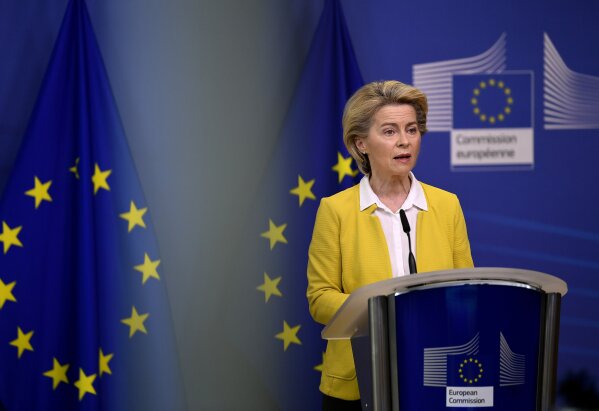
European Commission President Ursula von der Leyen delivers a statement after a meeting of the college of commissioners at EU headquarters in Brussels, Wednesday, April 14, 2021. EU Commission chief Ursula von der Leyen announced plans Wednesday for a major contract extension for COVID-19 vaccines with Pfizer stretching to 2023. (John Thys, Pool via AP)
European Commission President Ursula von der Leyen delivers a statement after a meeting of the college of commissioners at EU headquarters in Brussels, Wednesday, April 14, 2021. EU Commission chief Ursula von der Leyen announced plans Wednesday for a major contract extension for COVID-19 vaccines with Pfizer stretching to 2023. (John Thys, Pool via AP)
European Commission President Ursula von der Leyen says the European Union is looking to do more business elsewhere in the world as President Trump’s tariffs hit international trade.
She said Monday that the EU is also is setting up a taskforce to monitor any dumping on its markets that might happen as trade patterns change.
“We will focus like a laser beam on the 83% of global trade that is beyond the United States. Vast opportunities,” von der Leyen said. After deals already done with Mexico and Switzerland, she said, “we’re working on India, Thailand, Malaysia, Indonesia and many others.”
Von der Leyen says the taskforce will help to monitor any unexpected surges in imports and “protect ourselves against indirect effects through trade diversion.”
The European Commission negotiates trade deals and disputes on behalf of the 27 EU member countries.
Von der Leyen insists the EU still wants a deal with the Trump administration, but that “we are preparing a potential list for retaliation, and other measures for retaliation, if this is necessary.”
JPMorgan CEO says tariffs will slow economy
JPMorgan Chase CEO Jamie Dimon says the Trump administration’s trade policies will likely result in higher prices for both imported and domestic goods and services, weighing on an already slowing U.S. economy.

FILE – In this April 4, 2017 file photo, Jamie Dimon, Chairman and CEO of JPMorgan Chase, discusses his Annual Letter to Shareholders at the Chamber of Commerce of the United States of America in Washington. (Paul Morigi/AP Images for JPMorgan Chase)
FILE – In this April 4, 2017 file photo, Jamie Dimon, Chairman and CEO of JPMorgan Chase, discusses his Annual Letter to Shareholders at the Chamber of Commerce of the United States of America in Washington. (Paul Morigi/AP Images for JPMorgan Chase)
In his annual letter to shareholders, released Monday, Dimon said the U.S. economy already faced a number of challenges: sticky inflation, geopolitical tensions, Federal Reserve policy including still-high interest rates and high fiscal deficits. Dimon also said that many stocks in the market have been priced too high.
The outspoken and influential CEO often comments on both domestic and international issues.
“Whether or not the menu of tariffs causes a recession remains in question, but it will slow down growth,” Dimon wrote, while also saying “I still have an abiding faith in America.”
JUST IN: Dow drops 1,200 as worries deepen about economic impact of Trump’s trade war
Goldman Sachs says tariff announcement may have caused irreversible damage
FILE – The logo for Goldman Sachs appears above a trading post on the floor of the New York Stock Exchange, Tuesday, July 13, 2021. Goldman Sachs saw its third quarter earnings fall 33%, with the investment bank seeing muted market conditions that allowed fewer deals and market making opportunities for the firm, Tuesday, Oct. 17, 2023. (AP Photo/Richard Drew, File)
FILE – The logo for Goldman Sachs appears above a trading post on the floor of the New York Stock Exchange, Tuesday, July 13, 2021. Goldman Sachs saw its third quarter earnings fall 33%, with the investment bank seeing muted market conditions that allowed fewer deals and market making opportunities for the firm, Tuesday, Oct. 17, 2023. (AP Photo/Richard Drew, File)
The financial firm said a recession has become more likely even if Trump retreats from his trade policies.
Goldman Sachs also reduced its expectations for economic growth “following a sharp tightening in financial conditions, foreign consumer boycotts, and a continued spike in policy uncertainty that is likely to depress capital spending by more than we had previously assumed.”
But even meeting those expectations “would now require a large reduction in the tariffs scheduled to take effect on April 9.”
Trump digs his heels in
In a Truth Social post Monday morning, the president showed no interest in changing course despite turmoil in global markets.
He said other countries had been “taking advantage of the Good OL’ USA” on international trade.
“Our past ‘leaders’ are to blame for allowing this, and so much else, to happen to our Country,” he wrote. “MAKE AMERICA GREAT AGAIN!”
Trump criticized China for increasing its own tariffs and “not acknowledging my warning for abusing countries not to retaliate.”
Netanyahu will be the first foreign leader to meet with Trump since the tariff announcement
Israel’s Prime Minister Benjamin Netanyahu attends his trial on corruption charges at the district court in Tel Aviv, Israel, Wednesday, March 12, 2025. (Yair Sagi/Pool Photo via AP)
Israel’s Prime Minister Benjamin Netanyahu attends his trial on corruption charges at the district court in Tel Aviv, Israel, Wednesday, March 12, 2025. (Yair Sagi/Pool Photo via AP)
Israeli Prime Minister Benjamin Netanyahu will meet U.S. President Donald Trump in Washington Monday. Whether his visit succeeds in bringing down or eliminating Israel’s 17% tariff remains to be seen, but how it plays out could set the stage for how other world leaders try to address the new tariffs.
Netanyahu’s office has put the focus of his hastily organized Washington visit on the tariffs, while stressing that the two leaders will discuss major geopolitical issues including the war in Gaza, tensions with Iran, Israel-Turkey ties and the International Criminal Court.
In a preemptive move last week, Israel announced that it was removing all tariffs on goods from the U.S., mostly on imported food and agricultural products.
A snapshot of global markets
- Tokyo’s Nikkei 225 index lost nearly 8% shortly after the market opened and futures trading for the benchmark was briefly suspended. It closed down 7.8% at 31,136.58.
- Germany’s DAX index briefly fell more than 10% at the open on the Frankfurt exchange, but recovered some ground to move down 5.8% in morning trading.
- France’s CAC 40 shed 5.8% in morning trading.
- Britain’s FTSE 100 lost 4.9% in morning trading.
- Hong Kong’s Hang Seng dropped 13.2% to 19,828.30.
- Shanghei’s Composite index lost 7.3% to 3,096.58.
- Taiwan’s Taiex plummeted 9.7%.
- South Korea’s Kospi lost 5.6% to 2,328.20.
- Australia’s S&P/ASX 200 lost 4.2% to 7,343.30, recovering from a loss of more than 6%.
- India’s benchmark BSE Sensex and the Nifty 50 index both dropped about 5% after trading opened but then recovered slightly.
- Dubai’s Financial Market exchange fell 5% as it opened for the week.
- Abu Dhabi’s Securities Exchange fell 4%.
- Saudi Arabia’s Tadawul stock exchangewhich opened Sunday, fell over 6% in trading. The giant of the exchange, Saudi Arabia’s state-owned oil company Aramco, fell over 5% on its own, wiping away billions in market capitalization for the world’s sixth-most-valuable company.
- Pakistan’s stock exchange suspended trading for an hour after a 5% drop in its main KSE-30 index.
Trump called tariffs ‘medicine’ as he promised not to back down
President Donald Trump said Sunday that he won’t back down on his sweeping tariffs on imports from most of the world unless countries even out their trade with the U.S., digging in on his plans to implement the taxes that have sent financial markets reeling.
Speaking to reporters aboard Air Force One late Sunday, President Donald Trump said he didn’t want global markets to fall, but also that he wasn’t concerned about the massive sell-off either, adding, “sometimes you have to take medicine to fix something.”
“I spoke to a lot of leaders, European, Asian, from all over the world,” Trump said. “They’re dying to make a deal. And I said, we’re not going to have deficits with your country. We’re not going to do that, because to me a deficit is a loss. We’re going to have surpluses or at worst, going to be breaking even.”
Panic Monday: World stock markets plunge again
By ELAINE KURTENBACH, DAVID MCHUGH
Global stock markets extended a severe plunge Monday, fueled by fears that U.S. tariffs would lead to a global economic slowdown. European and Asian shares saw dramatic losses, the leading U.S. index flirted with bear market territory in pre-market trading, and oil prices sagged.
The massive sell-off in riskier assets at the start of the trading week follows President Donald Trump’s announcement of sharply higher U.S. import taxes and retaliation from China that saw mar kets fall sharply Thursday and Friday.
▶ Read more on what’s happening with global markets


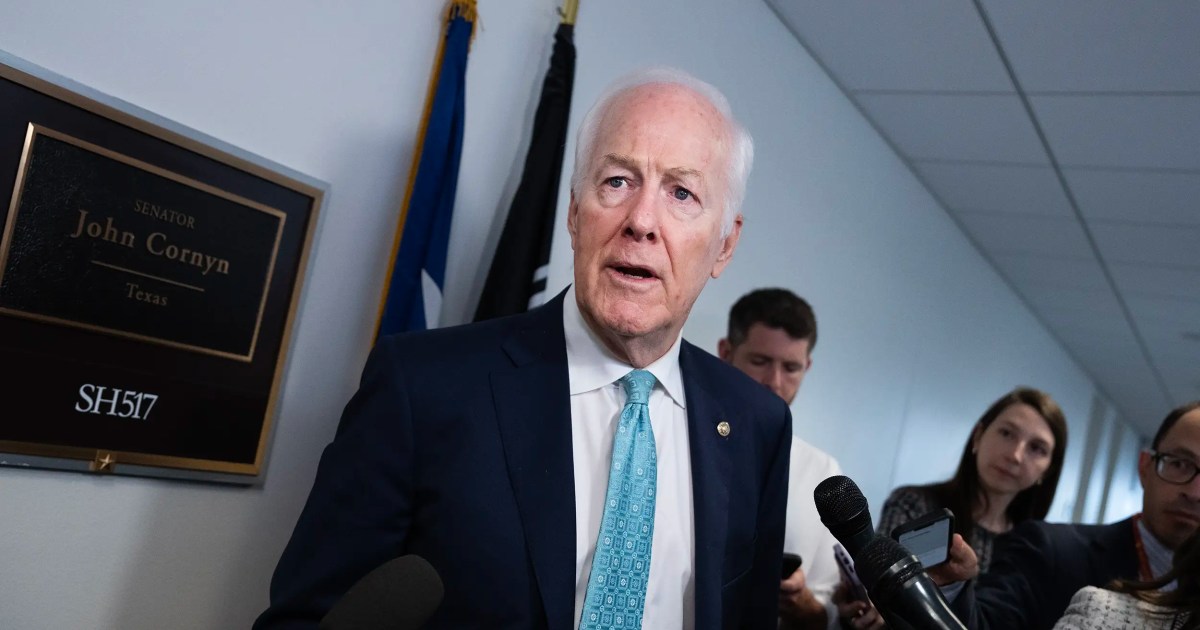
The Senate Judiciary Committee postponed a vote on acting Attorney General Todd Blanche’s nomination, a spokesperson said late Wednesday, as two retiring Republicans on the panel dug in over President Donald Trump’s personal “anti-weaponization” deal with the government he runs.
Sen. Chuck Grassley’s decision to delay the committee vote that had been set for Thursday marks a setback for one of Trump’s highest-profile Cabinet nominees, at the hands of Texas Sen. John Cornyn and Sen. Thom Tillis of North Carolina, a pair of Republicans set to leave the chamber next year.
“Chairman Grassley works to set President Trump’s nominees up for success in committee, not failure. Senators Cornyn and Tillis want written assurances from the Department of Justice regarding the Trump-IRS settlement,” the committee spokesperson said.
Blanche’s nomination to permanently head the Department of Justice needs the support of either Cornyn or Tillis to make it out of the committee to a vote by the full Senate, assuming all Democrats remain opposed.
“Why don’t you call over the Department of Justice and tell them they have one hour and 50 minutes to get me what I asked for,” Cornyn told reporters Wednesday afternoon amid the hardening standoff over his demand that Blanche and the DOJ put in writing a commitment never to pursue the president’s prized “anti-weaponization” fund, and to clarify the terms of Trump’s personal deal with the Internal Revenue Service.
Tillis told MS NOW that the conversations were complicated by the need for the Justice Department to get “several parties” to agree on the language of the statement Cornyn and Tillis are seeking.
“What I’ve advised the chair, and I would assume Senator Cornyn said something similar, is that we’re not prepared to vote yes yet,” he added.
“The Department has been in regular communication with Committee members for weeks, and we look forward to continuing to work productively with Senators to address any concerns,” a Justice Department spokesperson said in response to the decision to postpone the committee vote.
Cornyn was set to meet with Blanche on Wednesday morning, but the meeting was called off after Blanche failed to meet the senator’s demand for written proposals to modify the controversial settlement agreement he brokered between Trump and the IRS. The Republican senator is set to leave Congress when his term ends in January after a bruising May primary loss to Texas Attorney General Ken Paxton, Trump’s chosen candidate.
“Maybe John Cornyn’s upset with me because I didn’t endorse him,” Trump told reporters Wednesday afternoon in the Oval Office. “I don’t know what it is, but I haven’t heard that there’s a problem. I heard (Blanche) is going through quite nicely.”
Cornyn made clear to Blanche during his confirmation hearing that he will not get his support until he agrees to reopen and modify the settlement. Due to the committee’s narrow Republican majority, one GOP “no” vote is enough to sink Blanche’s nomination.
The senator has asked Blanche to provide proof that the proposed nearly $1.8 billion “anti-weaponization” fund established as part of the deal between Trump and the IRS is formally dead, and he has also demanded Blanche narrow the tax audit immunity provisions the settlement afforded to Trump and his family.
Blanche has publicly stated that his department has dropped the fund, but he and the DOJ have dodged requests from Cornyn and a federal judge to put that in writing.
After announcing his meeting with Blanche would not take place Wednesday morning, Cornyn told reporters that changes from Blanche “in a modified release form” would be acceptable, but that “for some reason … they simply refuse to do it,” referring to the DOJ.
Shortly after the meeting was called off, a Justice Department official told MS NOW that the department “provided a written proposal to Senator Cornyn’s staff yesterday following ongoing discussion with both the Committee and the Senator’s office.”
Cornyn said that proposal was “not responsive” to his demands because it did not address the tax audit immunity provisions in the settlement, one of his key demands.
In May, Blanche signed an addendum as part of the deal that granted Trump, his family and his businesses immunity from pending IRS tax audits. That agreement, which has been decried by former IRS officials and legal experts as unlawful self-dealing, is being contested in federal court.
Cornyn noted that Blanche testified under oath that he could meet the request during his confirmation hearing.
“Maybe they think I’m just going to give up or you know, go along, but they’re mistaken,” Cornyn said when asked why he thinks the DOJ could be slow-walking his request.
Kevin Frey contributed to this report.
Sydney Carruth is a breaking news reporter covering national politics and policy for MS NOW. You can send her tips from a non-work device on Signal at SydneyCarruth.46 or follow her work on X and Bluesky.
Mychael Schnell is a reporter for MS NOW.
Ebony Davis is a breaking news reporter for MS NOW based in Washington, D.C. She previously worked at BLN as a campaign reporter covering elections and politics.
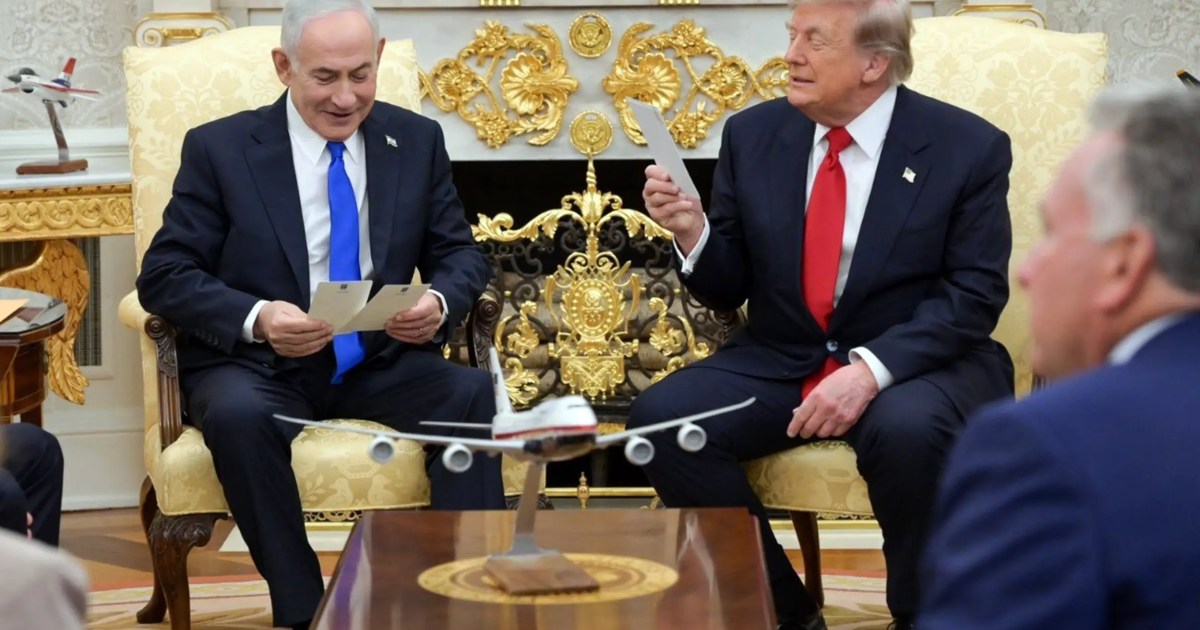
When Israeli Prime Minister Benjamin Netanyahu arrived this week for his tour of Washington, he may have had a mission in mind.
Netanyahu needed to overcome his newly diminished stature and waning influence over his once close friend President Donald Trump as both leaders grapple with the unpopularity of a war they started together and is escaping their control.
His meeting at the White House with Trump on Tuesday, which was closed to the press, was the first face-to-face encounter between the two allies since the U.S. and Israel launched a joint attack against Iran on Feb. 28.
Trump gave him a muted welcome and afterwards simply described the meeting as “very good.” “Obviously, many important subjects were discussed,” the president wrote on Truth Social.
Rather than an intimate one-on-one setting, the Oval Office was full of top U.S. officials — Vice President JD Vance, Secretary of State Marco Rubio, Treasury Secretary Scott Bessent, Secretary of Defense Pete Hegseth, Chairman of the Joint Chiefs of Staff Gen. Dan Caine, and special envoy Steve Witkoff.
But Netanyahu continued the full court press on the Trump administration.
Over the course of two days, in addition to seeing Trump and attending Sen. Lindsey Graham’s funeral at the Capitol, Netanyahu also met separately with Vance, Hegseth, and Rubio, White House and Israeli officials confirmed to MS NOW.
The Israeli prime minister’s slate of meetings with key U.S. national security officials comes at a pivotal moment in the Iran conflict as tensions escalate in the region and Americans increasingly sour on the war. A recent Quinnipiac poll shows 60% of American voters opposing U.S. military action against Iran and 74% against sending U.S. ground troops into Iran.
Not only does Trump face pressure as Republicans face an uphill battle to retain congressional control in this fall’s midterms, Netanyahu’s fate as prime minister is at stake in Israel’s upcoming September elections – and he can’t afford to lose Trump’s favor.
The talks largely focused on what to do next as Iran continues to menace shipping in the Strait of Hormuz and retaliate against American bases in the region and launch attacks on Gulf allies.
According to a senior Israeli official who was granted anonymity to describe the closed-door meeting, President Trump and Israeli Prime Minister Netanyahu did not come to a final decision after discussing three paths forward: get a “good deal” focused on Iran’s nuclear program and enriched material, have no deal and instead continue the blockade and economic pressure, or take escalated military action.
But Netanyahu did not tell Trump what he should do – nor did he express a preference.
The senior Israeli official noted Netanyahu has not ruled out diplomacy – as long as it is coupled with “very strong pressures,” calling the push to dismantle Iran’s nuclear program “a contest of will and a contest of force.”
“There are ways of squeezing them and squeezing them and squeezing them and negotiating at the same time,” the official said.
Netanyahu did not present President Trump with new intelligence regarding the underground Iranian nuclear facility Pickaxe Mountain, per the senior Israeli official, noting the U.S. and Israel already are constantly sharing intelligence – and know where Iran’s highly enriched material is. “We don’t think it’s moved, and I think we have a pretty good grasp on that,” the official said.
During their meeting on Tuesday, Trump and Netanyahu discussed ways Israel and the U.S. can work together to stop Iran’s nuclear program and get the Strait of Hormuz open to maritime trade, the senior Israeli official said.
The two leaders also discussed a third goal: to continue to undermine the Iranian regime and “possibly create future conditions for a change in that area.” U.S. officials have backed away from pursuing paths that would overthrow the current leadership, but Netanyahu still believes that could happen.
“The chasm that has been created between the people and the regime is not about to be closed,” the senior Israeli official said of Netanyahu’s thinking.
Netanyahu advised Trump in February that Israeli intelligence indicated launching strikes against Iran would lead to the toppling of the Islamic Republic’s regime – and five months later, the slain ayatollah’s son retains power with a close circle of hardliners, calling into question the accuracy of Israel’s intelligence apparatus.
But the senior Israeli official said at the time, Netanyahu did not promise the Iranian people would take fate into their own hands following a coordinated attack. Rather, he chose his words carefully and said that an attack could create conditions to “advance the probability or the possibility that that would happen.”
The conditions needed for the Iranian regime to fall, “did not materialize,” the official told MS NOW, adding, “not for lack of insight, but for either operational failure or decisions that were made.”
Despite Netanyahu insisting Israel and the U.S. are on the same page, differences still remain: the sale of F-35 fighter jets to Turkey and the Saudi nuclear arrangement did not come up during Wednesday’s White House meeting, according to a second Israeli official granted anonymity to describe sensitive discussions.
Meanwhile, the conflict continues to spread, with an Iranian drone attacking a U.S. gas storage tanker off the coast of Egypt on Wednesday.
Trump indicated he would not let Iran’s latest action slide, telling reporters on Wednesday that the U.S. would retaliate against Iran even as he leaves room for diplomatic talks to resume.
“It’s our turn, and we’ll see if we get there with an agreement at some point,” Trump said. “But we’re going to hit them very hard.”
As for what it would take for Israel to join the U.S. strikes, the senior Israeli official said that if Israel is attacked by Iran, “We will respond very, very forcefully and very quickly. And I think Iran would make a great mistake.”
Julia Jester covers politics for MS NOW and is based in Washington, D.C.
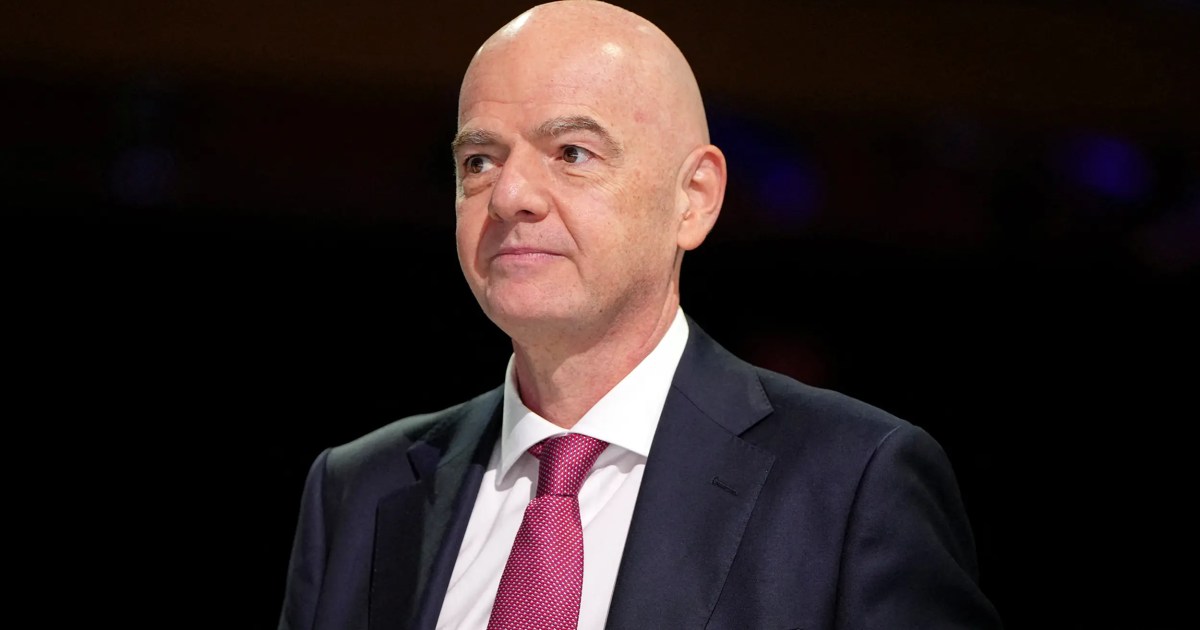
International rage over FIFA’s close ties to President Donald Trump has reached a fever pitch after soccer’s governing body announced a plan to sell a significant stake to an investor group led by Joshua Kushner, the brother of Trump’s son-in-law.
The president and his family have all but turned the White House into their personal piggy bank. And FIFA — which has its own sordid history of corruption — seems to have made itself a party to Trump’s self-enrichment under Gianni Infantino’s leadership, such as by paying for space inside Trump Tower in New York. (The organization has defended the office rental as a World Cup outpost.)
Soccer is seen by many as a unifying game. But Trump’s incorporation of FIFA into his political dynasty is threatening that idea.
FIFA has announced plans to sell a large minority stake in a new company that will run its main events, including the World Cup and Club World Cup, as part of a plan to triple the amount of development money it dishes out to its 211 member associations.
Under the proposals — which are subject to approval by a majority of those national associations and FIFA’s 37-member council — a new entity called FIFA Forward Enterprises (FFE) will take over all commercial operations, while FIFA remains the game’s global governing body and retains a majority stake in FFE.
A press release from FIFA confirmed the plans and said Thrive Eternal, which was launched by Joshua Kushner, is expected to lead the investment group that would control FIFA Forward Enterprise. FIFA did not clarify why Thrive Eternal was selected, and Kushner was already dabbling in sports.
But Trump basically has already given son-in-law Jared Kushner carte blanche to dictate U.S. foreign policy in the Middle East while simultaneously hatching business plans in the region. (Jared Kushner has denied any conflicts of interest.)
Joshua Kushner reportedly has been a major donor to Democrats. But, predictably, the idea of another Kushner becoming financially entwined with the World Cup — the world’s most popular sporting event — and basically being dropped into a position of global significance isn’t going over well. Several other soccer governing bodies have expressed concerns, including Europe’s UEFA.
“This crosses a line that football’s governing institutions should never cross,” UEFA said in a statement about The Athletic’s report, adding: “The soul and governance of football are not assets to trade — especially with zero transparency as to who gains financially. None of us are the owners of football. It is not FIFA’s to sell.”
Democrats on the House Judiciary Committee also rebuked the plan, writing on X: “Apparently the fake Peace Prize and giant lease with Trump Tower weren’t enough — now Infantino performs a kickback hat trick by pursuing a multibillion-dollar deal with Jared Kushner’s brother to sell ownership stakes in the World Cup to private investors.”
FIFA, Donald Trump’s favorite corrupt racketeering enterprise in world sports, is now going directly into business with the Trump family!
Apparently the fake Peace Prize and giant lease with Trump Tower weren’t enough—now Infantino performs a kickback hat trick by pursuing a… https://t.co/knSZibuMea
— House Judiciary Dems (@HouseJudiciary) July 28, 2026
Rep. Jamie Raskin, D-Md., has already launched an investigation into the FIFA leader’s relationship with the Trump administration, while dozens of European lawmakers — citing concerns about “potential breaches of political neutrality” — have called for the FIFA Ethics Committee to investigate Infantino. This new proposal seems unlikely to assuage those concerns.
But what it does seem likely to do is fuel global anger toward the U.S. — the kind that has been growing since Trump retook office.
And when you consider that, it’s truly remarkable how the same MAGA movement whose members whined for years about politics mixing with sports is now in lockstep with a president who seems dead-set on casting his shadow over every sports event he can.
This post on X basically sums up the foul stench around FIFA’s latest proposal.
Sepp Blatter was Infantino’s predecessor as FIFA president and oversaw the organization amid some of its many scandals. When heof all people, is warning about how Trump and Infantino’s relationship is “deeply damaging” soccer, it’s a sign of how far FIFA has descended into the gutter.
Ja’han Jones is an MS NOW opinion blogger. He previously wrote The ReidOut Blog.
- Iowa’s Ashley Hinson slams the savings habits of millennials
- Trump approved Ohio disaster aid ahead of rally
- Clean energy group sets its sights on a new GOP target: Lauren Boebert
- Blakeman’s campaign finance mess
- HASC Dems weigh reviving Pentagon oversight subcommittee
- Trahan unveils AI liability discussion draft
- Vance to sit for CBS town hall in Michigan ahead of midterms
- Michigan’s Mike Rogers says trade war with Canada needs to end
- ‘He is welcome to raise his own money’: GOP confronts its Paxton woes
- The top House sleeper races to watch, according to the pros
-

 Politics2 years ago
Former ‘Squad’ members launching ‘Bowman and Bush’ YouTube show
-
Uncategorized2 years ago
Bob Good to step down as Freedom Caucus chair this week
-

 The Josh Fourrier Show2 years ago
DOOMSDAY: Trump won, now what?
-

 The Dictatorship2 years ago
Pete Hegseth’s tenure at the Pentagon goes from bad to worse
-

 Politics2 years ago
Former Kentucky AG Daniel Cameron launches Senate bid
-

 The Dictatorship2 years ago
Luigi Mangione acknowledges public support in first official statement since arrest
-

 Politics2 years ago
Blue Light News’s Editorial Director Ryan Hutchins speaks at Blue Light News’s 2025 Governors Summit
-

 The Dictatorship1 year ago
Mike Johnson sums up the GOP’s arrogant position on military occupation with two words