
Politics
The debate made the contrast between Trump and Harris crystal clear. Will it matter to voters?

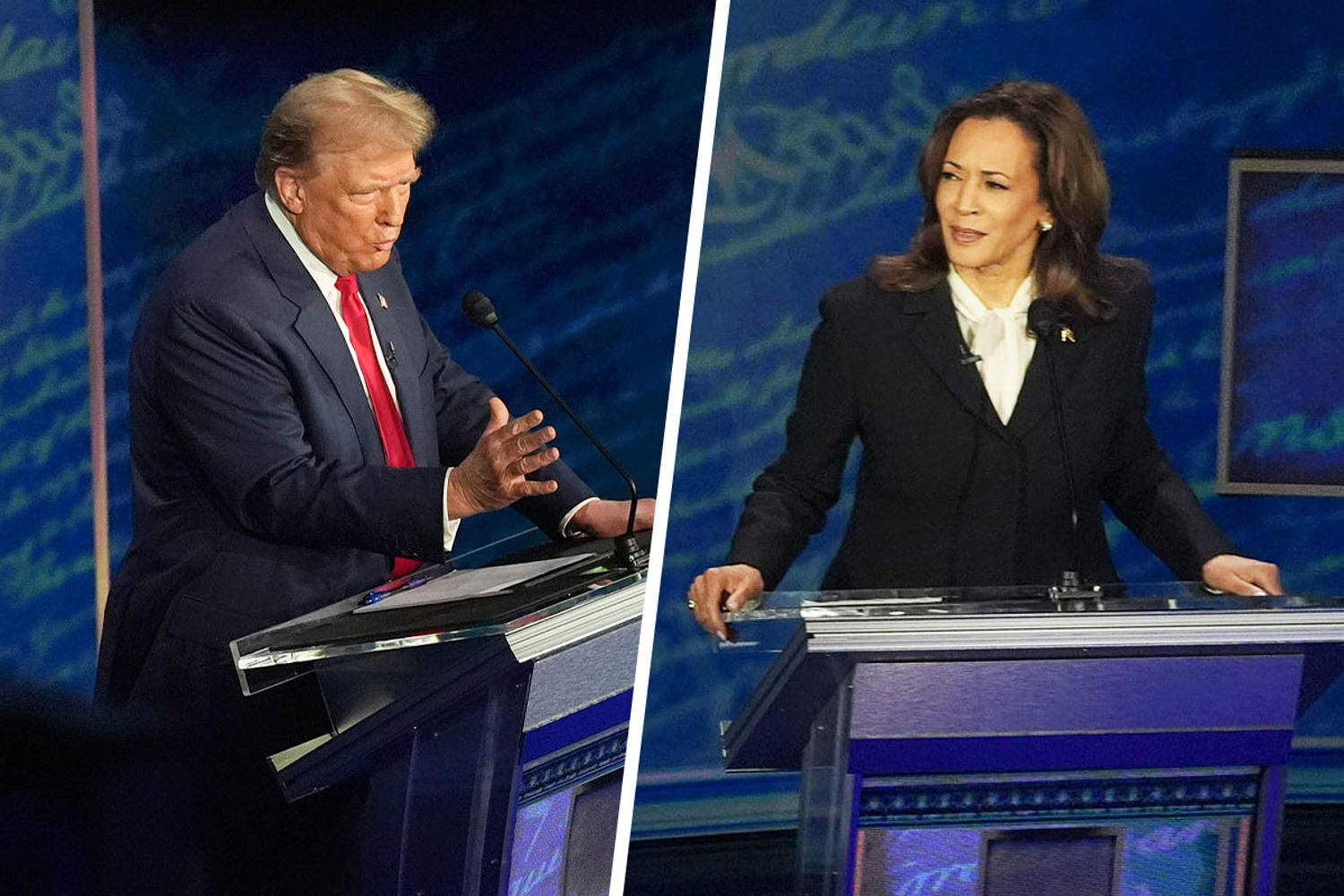
The choice has now been laid out, and it is stark. Tuesday’s presidential debate between Vice President Kamala Harris and former President Donald Trump likely won’t be among history’s most remembered, but it delivered what we needed in 2024, showcasing the very real differences between the two candidates.
And yet, I’m left to wonder whether it was enough to dramatically change the race. After nearly a decade of this same Trump in our politics, it’s difficult to have real confidence that an objectively poor performance will cost him the White House. As disorienting as his comments can be, it feels exactly like what we’ve seen from him for years.
After nearly a decade of this same Trump in our politics, it’s difficult to have real confidence that an objectively poor performance will cost him the White House.
The question remains: How many voters are willing to overlook his obvious flaws and bizarre rhetoric out of gauzy nostalgia for pre-pandemic days or a frustration with the current administration’s handling of the economy?
In style and substance, Harris looked the part of a president, the awkwardness of her early stumbles on the national stage gone. She spoke to her plans but more so to the values, principles and priorities that motivate her. She was firm and forward-looking. Harris was speaking directly to the American people.
Trump, by contrast, reprised his familiar role as America’s dark and self-obsessed loudmouth. He did little to appeal to swing voters, diving immediately into conservative culture issues and conspiracy theories. The Trump campaign had hoped to present Harris as a lightweight and a radical. But once again it was undermined by its candidate. The former president leveled many attacks, to be sure, but he got so lost in his own rambles that Harris was rarely put on the defensive.
At times she was able to toy with him, tossing out bait on topics like crowd sizes, Trump’s criminal conviction and his role on Jan. 6. He eagerly took it each time, wasting precious time on self-indulgent rants that serve only to highlight his narcissism. Perhaps the worst moment for the former president was an extended argument that he, in fact, did not lose the 2020 election. None of this does him any good with the undecided voters who will determine this election.
Harris, meanwhile, understood the assignment. She pressed her advantage on issues like abortion while presenting herself as a mainstream Democrat, saying she would be tough on illegal border crossers, promoting the need for a mighty military force and even announcing herself as a gun owner. She had no knockout blows, but in contrast to the brooding, unfocused performance of her opponent she was the clear better candidate onstage.
Tuesday’s debate was much bigger than the differences in their policy proposals. It was a contrast in the character, ideals and seriousness that we should expect from a president.
It’s confounding that the race is so close, making this debate supposedly so crucial, because the choice should not be hard. There is a serious candidate working to earn your vote, running in the traditions of American democracy and offering a vision for moving America forward. And there is another who remains deeply unstable and wants to scare people into going backward.

Brendan Buck is an NBC News and BLN political analyst. He was previously counselor to former House Speaker Paul Ryan and press secretary to former House Speaker John Boehner.


Gas prices are high. Americans think they’re even higher.
Three in five Americans believe gas prices in their area have risen by more than they actually have, according to an analysis of new results from The Blue Light News Poll. It’s those perceptions that candidates will be running against this fall.
Voters’ anxieties about fuel prices could give Democrats a boost ahead of the midterms, further strengthening the Democratic voting base and putting strains on the MAGA coalition as the increasingly unpopular war in Iran drags on. A plurality of Americans — 46 percent — say the change in gas prices will impact how they plan to vote come November.
Most voters overestimated the change in gas prices in their area, according to the analysis of polling and granular pricing data provided by OPIS, a Dow Jones company that tracks gas prices. That includes majorities of voters who supported President Donald Trump and also those who supported former Vice President Kamala Harris.
Roughly one in four Americans say gas in their local area has risen by $3.00 or more. But no zip code has actually seen that degree of change on average in the year and a half since Trump took office, as of early July.
Frustrations over cost of living could be reinforcing existing negative views of the Trump administration: Harris voters are far more likely to overshoot the cost jumps than Trump voters, making it harder for Republicans to peel off Democratic voters.
And the analysis shows a fracture among Trump voters. Self-identified MAGA Republicans were more likely to underestimate cost increases than non-MAGA Republicans — another crack in the president’s winning coalition as Republicans scramble to hold it together for the midterms.
“It is a particularly tough dance that many Republican candidates will have to endure for the next three months,” said Arizona GOP strategist Barrett Marson. “How do you feel the pain of your voters without feeling the wrath of Donald Trump?”
What’s more, American’s perceptions do not quickly change even when prices do. The Blue Light News Poll asked about gas prices in both May, when they were near their peak, and July, when they had dipped.
The results were the same in both.
“President Trump and his energy team anticipated these temporary market disruptions, communicated them openly to the American people, and implemented an aggressive plan to mitigate any impacts,” said White House spokesperson Taylor Rogers. “As the U.S. military degrades the terrorist Iranian regime’s ability to attack commercial vessels and disrupt the free flow of energy through the Strait of Hormuz, oil and gas prices will plummet back to pre-conflict levels.”
Gas prices could swing votes
Americans’ frustrations with prices and the economy overall are changing how they say they will vote in the fall.
Of the 46 percent of Americans who said gas prices will have an impact on their vote, just under 40 percent said they are considering voting for a different party than they normally would, including 49 percent of MAGA Republicans and 57 percent of non-MAGA Republicans.
“Three quarters of the country is confronting higher gas prices and feeling it,” said longtime Democratic strategist Jesse Ferguson. “That leaves them … very vulnerable to the economic pain and very vulnerable to the economic argument the Democrats are going to make.”
To better understand public perception of gas prices, The Blue Light News Poll asked Americans how the price of gas in their area had changed since Trump took office. Respondents could choose between buckets like “$1 to $2 higher per gallon,” “$1 to $2 lower per gallon,” or say prices had stayed roughly the same.
More than three-fourths said gas prices in their area have gone up.
Using OPIS data, Blue Light News compared each respondent’s answer against the actual average cost of regular gas in their zip code during the first week Trump was in office and the week prior to the July poll, which was conducted by the independent polling organization Public First from July 12 to July 15.
That comparison revealed the difference between the pain the American public is feeling and where actual gas prices stand — and, in particular, how that pain is expressed differently among Democrats and Republicans. Roughly 70 percent of Harris voters and 54 percent of Trump voters overestimated the increase in gas prices in their area, according to Blue Light News’s analysis.
“Democrats are highly motivated,” as a voting base, Marson said. “The longer the war goes on, probably the less motivated Republicans will be.”
The perception of higher gas prices is linked to how people see the economy — and who they blame for it.
Across the country, 57 percent of Americans say the cost of living is worse than they “can ever remember it being.” Those who overestimate gas price increases had more than twice the odds of agreeing with that statement, even after controlling for demographics and their 2024 vote.
Similarly, a plurality of Americans — 43 percent — blame Trump more than former President Joe Biden for the state of the economy overall. Those who overestimated their local increase in gas prices had nearly twice the odds of saying the same, compared with those who perceived the change in gas prices correctly or who underestimated the change.
It’s already affecting the battlegrounds
In the country’s most competitive races, Republicans will have to answer for the perceived cost pressures of rising gas prices more often than Democrats.
Thirteen of the most competitive districts have experienced gas price increases higher than the national average, according to Blue Light News’s analysis. Of those, nine are currently represented by Republicans.
In California’s 22nd District, where Republican incumbent Rep. David Valadao will face off against progressive political newcomer Randy Villegas, average prices across the district had gone up $1.17 by early July — the third highest increase of any district, according to Blue Light News’s analysis.
Villegas said in an interview that he thought frustration over gas prices would mobilize turnout in the fall, driven by how the cost of gas is “tied to every other thing.”
“It’s the cost of gas when you’re driving to the grocery store, when you’re driving to, you know, see a doctor,” he said. Or, the cost of gas when driving 7 to 8 hours away to “go get cheaper health care.”
Valadao did not respond to requests for comment.
In Colorado’s 8th District, where gas prices have risen by $0.73 on average since Trump took office, Republican incumbent Rep. Gabe Evans blamed local Democratic policies for increased costs more than the Iran war.
While “what’s happening halfway around the globe has some impact on global energy prices,” Evans said, high gas prices in the district are “a direct result of the local economic policies — the anti-energy policies — of the state Democrats who run the state of Colorado.”
But The Blue Light News Poll results from this month show voters don’t necessarily feel the same. Roughly 63 percent of Americans selected “the war with Iran” as the primary reason why gas prices have increased since Trump took office, including 59 percent of Trump voters and 70 percent of Harris voters.
By the middle of May, the average price of gas across the country reached its highest point of the Trump administration to date: $4.50 per gallon, according to the U.S. Energy Information Administration. In July, average prices dipped to $3.78 per gallon, the lowest average price since March.
Still, in both months, more than 75 percent of Americans said gas prices had gone up, Blue Light News’s polls show. And in both months, roughly 23 percent said prices had gone up by $3.00 or more.
This week, Trump said the upcoming midterms would not impact how he goes about fighting the war with Iran. “I can’t think about that having to do with this,” he said, referring to the elections. “I think people are very impressed.”
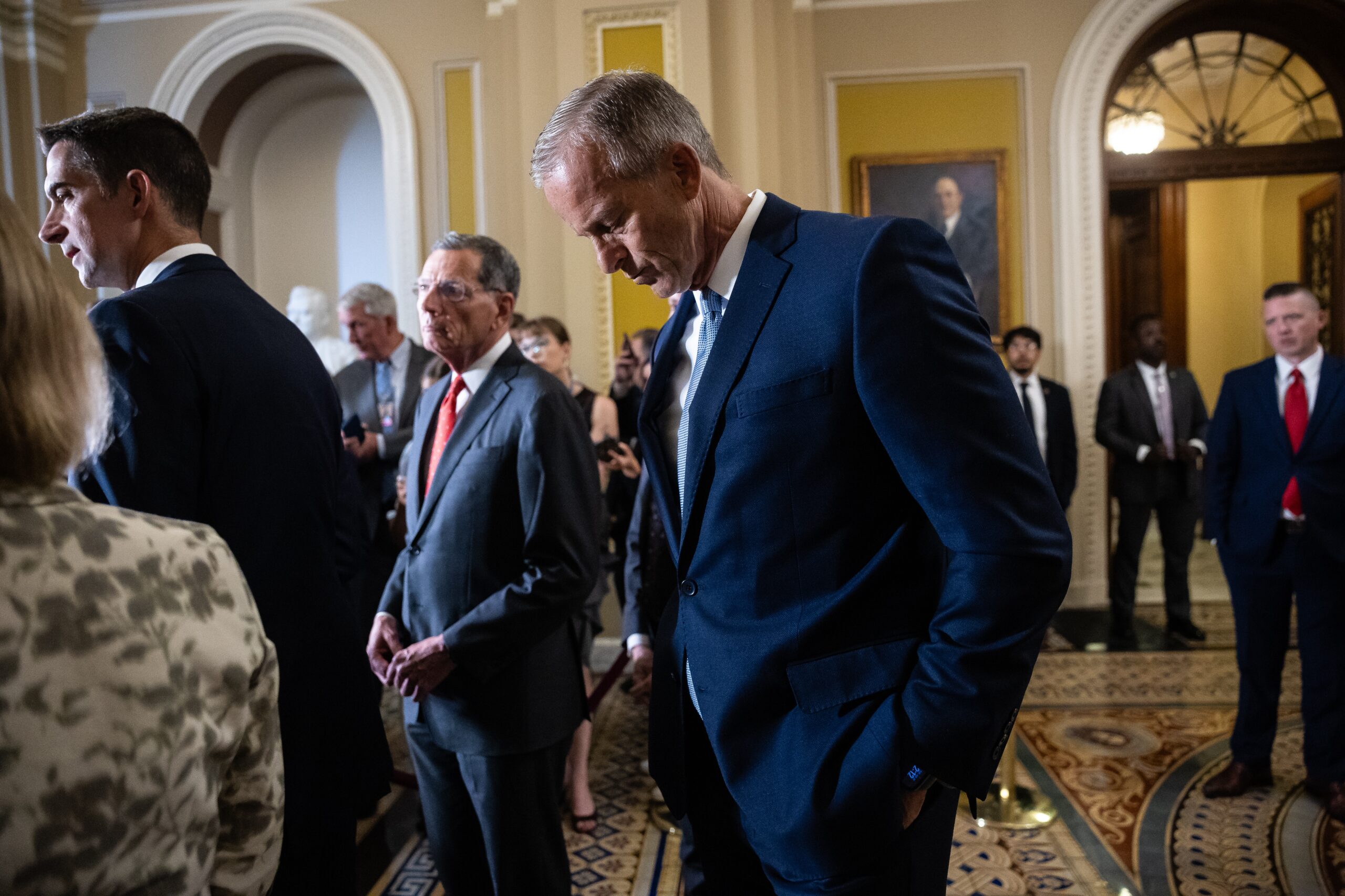
Senate Majority Leader John Thune has been frank about the rocky road the reconciliation effort faces and careful not to guarantee he’ll be successful…
Read More
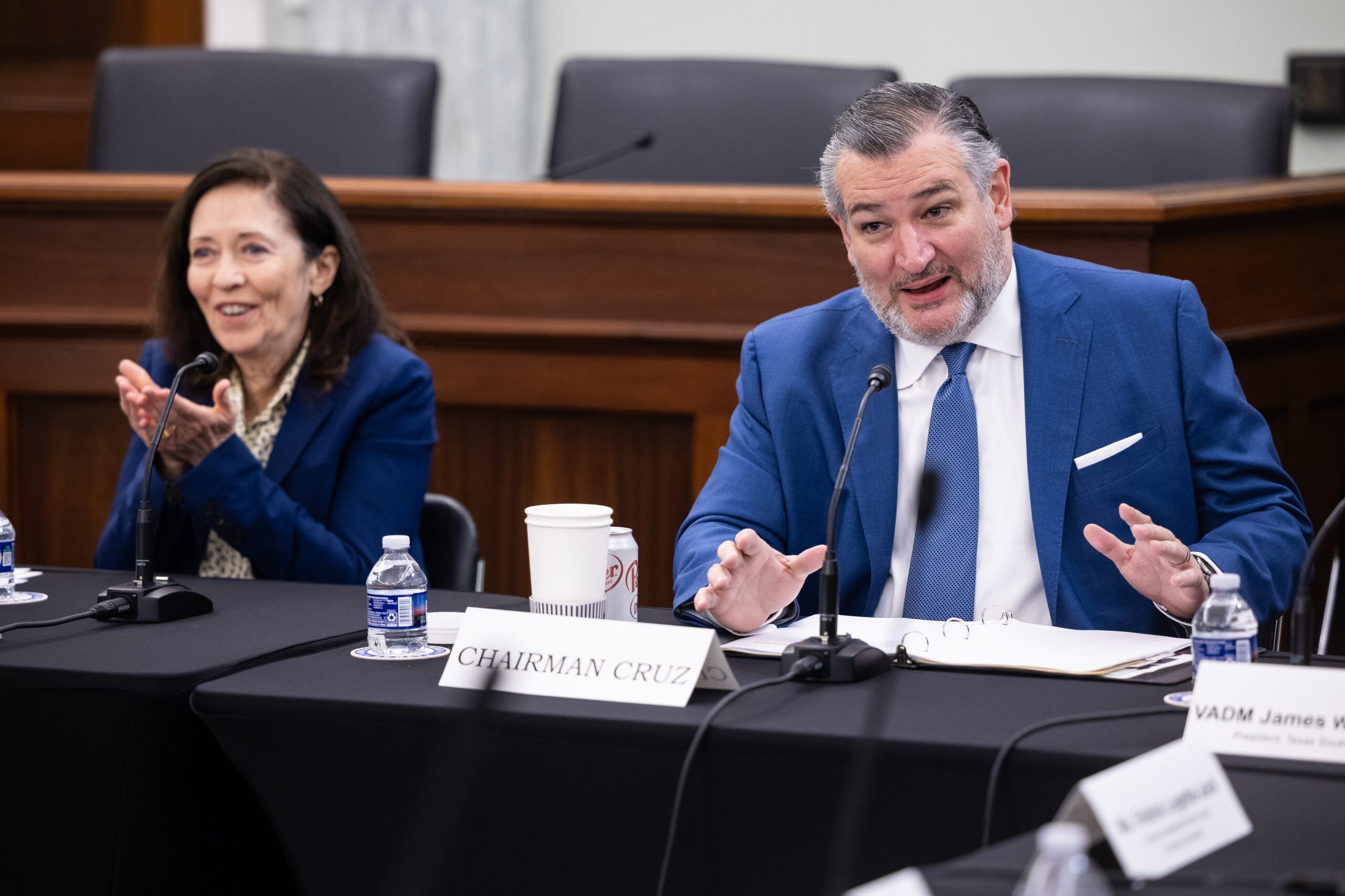
The much anticipated markup may include various artificial intelligence and online safety measures…
Read More
- It’s not just Hormuz: Widening oil supply shocks pose growing GOP danger
- Capitol agenda: A grueling summer campaign begins
- Poll: Republicans’ gas price problem is even worse than it seems
- House members stare down a grueling summer on the campaign trail
- Capitol agenda: House GOP budget faces Senate reality check
- Senate Commerce pushes AI markup plan to August
- Rob Bonta on blocking the Paramount merger, BLN concerns and Trump’s DOJ

- Mike Johnson’s budget blueprint faces Senate GOP buzzsaw
- Trump backs Iraq’s prime minister. Some Republicans want to see results.

- Lisa Murkowski is undecided on Blanche’s confirmation. Her state is getting a windfall from DOJ.
-

 Politics1 year ago
Former ‘Squad’ members launching ‘Bowman and Bush’ YouTube show
-

 The Josh Fourrier Show2 years ago
DOOMSDAY: Trump won, now what?
-

 The Dictatorship1 year ago
Luigi Mangione acknowledges public support in first official statement since arrest
-
Uncategorized2 years ago
Bob Good to step down as Freedom Caucus chair this week
-

 Politics1 year ago
Former Kentucky AG Daniel Cameron launches Senate bid
-

 The Dictatorship1 year ago
Pete Hegseth’s tenure at the Pentagon goes from bad to worse
-

 Politics1 year ago
Blue Light News’s Editorial Director Ryan Hutchins speaks at Blue Light News’s 2025 Governors Summit
-

 The Dictatorship11 months ago
Mike Johnson sums up the GOP’s arrogant position on military occupation with two words