
The Dictatorship
The dangerous truth I learned after I finally escaped the leader of the Oath Keepers


In February 2018, my children and I escaped what I felt was a very dangerous marriage. I secretly packed the last of my children’s important documents into my oldest son’s truck while two of my kids were ducked down onto the floorboards. My heart was beating so hard, it was almost all I could hear. The next 30 seconds would change everything, one way or another.
As we pulled away, my then-husband ran out of the house, but then stopped. “Pick up a steak on your way back,” he called out. And that was it. Two years of planning led to that one moment.
As is often the case, things didn’t start out that way.
Even on our best days, when Stewart was at his most romantic, just the slightest curve could change everything.
The day I first spotted the now infamous founder of the Oath Keepers, Stewart Rhodes, he wasn’t clad in camouflage or a black cowboy hat. With still two good eyes, he wasn’t outfitted with his iconic leather eye-patch. Nor was he stirring up a sea of followers with a speech that ended with a fist pump and a resounding shout of “Hoo-uh!” Instead, in the early spring of 1991, he was shuffling awkwardly with his dance teacher, mouthing, “Cha-cha, 1-2-3, cha-cha, 1…” to himself in a Las Vegas dance studio as he tried to keep up with her steps. I noticed him immediately because it was the first time in a week that a student under 65 years old had been inside the strip mall dance studio plunked between Mountain View Tax Preparers and The Kopper Keg, where I was then training to be a dance instructor. Later, when we were properly introduced, he bought me a soda in lieu of a beer (I was still a teenager) from the Elks Lodge bar counter and we danced a rumba together.
As our relationship progressed, we made a lot of plans for the future. There was little sign of the person he would become; I had no way of knowing the man I was with would be convicted of seditious conspiracy and spend time in prison for orchestrating crowds to storm the U.S. Capitol; that newly-elected President Donald Trump would then commute his 18-year sentence and release him and he’d return to Capitol Hill praising the new Trump era.
Back then, on our days off, we would scan the newspapers for open houses and visit several in a day in our best clothes with fancy coffees in hand. At 25, he was only a couple years out of the Army after a parachuting accident had abruptly ended his military career, and he was still rethinking his life path. He told me all about his visions for the future that included college and maybe even graduate school.
He often suggested it in a way that made me feel guilty — that he didn’t have the supportive family that I did, that life wasn’t as easy for him.
I felt completely swept up. In retrospect, there was plenty in our relationship to give me pause. Even on our best days, when Stewart was at his most romantic, just the slightest curve could change everything. Knocking a drink over on the table was enough to “ruin the whole day.” He could go from laughing to slamming things around with no warning at all. And I would be left trying to make some sort of sense of it all.
Eventually, we decided the only way we could really move forward with our plans was for me to support him as he attended school. I dropped out of college, quit the job that I loved as a dance instructor and stopped attending time consuming dance auditions and competitions. I began working as an exotic dancer to pay for our rent as well as many of his hobbies like martial arts and nights out with his friends. I thought if I could give him all the love and support that he claimed to have missed out on growing up, that I could somehow heal him. He explained to me that he only lost his temper in the way that he did because he wasn’t on the path he was meant to be on. It was all just a sort of “restlessness,” as he called it, that he only experienced when he wasn’t on track. I was impressed that he seemed to feel such a sense of destiny.
He suggested starting an organization, something he had talked about a lot over the years. I had a glimmer of hope that this could be it; this could finally be the missing piece that made him whole.
He graduated Summa Cum Laude from the University of Nevada, Las Vegas, and after a stint working in Washington, D.C. for congressman Ron Paul in 1998, he graduated Yale Law School in 2004 just before turning 40. By the time we left New Haven for his clerkship with the Arizona Supreme court, we had three small children. But I was still waiting for his yet undefined “restlessness” to subside. His constant search for purpose meant we moved a lot. I counted 20 moves in as many years, several of them cross-country.
Finally, he claimed to have found his purpose. He was going to be a small-town litigator. Montana was going to be our new home. It was short lived, however, and just a year and half later we were back in Las Vegas, where he briefly worked for a construction defect law firm.
It was around this time that he suggested starting an organization, something he had talked about a lot over the years. I had a glimmer of hope that this could be it; this could finally be the missing piece that made him whole. But instead of healing his restlessness, it seemed to only embolden the worst in him.
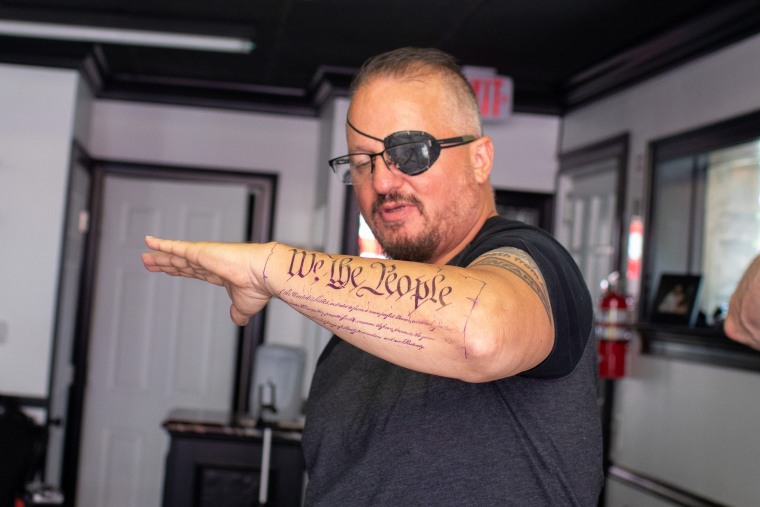
His big idea was everything he thought it would be and more. His group immediately went viral within the 2009 Libertarian blog-o-sphere. He had had this ability to draw people around him for as long as I knew him. Throughout the years, he was always instructing classes. The topic mattered little — anything from women’s self-defense to the U.S. Constitution — but it always resulted in a cult following of hanger on-ers. People would encircle him while he talked on and on. Six p.m. classes turned into 10 p.m. parking lot lectures after the staff flickered the lights to usher us outside. The parking lot tour would often shift over to Denny’s until 2 a.m., with the kids and I nodding off at the table or sleeping in the car while we waited. Even after he climbed into the car to drive home, he’d roll down the window, the last of his audience leaning on the car door while he carried on to the last.
Oath Keepers at its height had 40,000 dues-paying members (many of them police officers and politicians according to a leaked membership list) making it the largest militia in modern American history. Stewart held his followers’ attention with his uncanny ability to elicit their emotions in the same mesmerizing way many cult leaders do. He often focused on disillusioned veterans who were hungry for purpose and to regain a sense of mission they had lost. Oath Keepers gave them not just a brotherhood, but a task: “One more tour of duty, because your oath never expired!” as Stewart often told them. He ramped them up with his fervent speeches and then set them loose to further his own goals. Several of his schemes made national news, the 2014 Bundy Ranch stand-off being just one.
In January 2021, my children and I watched from afar as the Oath Keepers, the Proud Boys and several smaller groups joined forces to storm the Capitol (Stewart himself did not enter the Capitol that day). We saw the kind of chaos that can be unleashed when more than one carnival barker works together toward a symbiotic con.
After the 2024 election, with Trump granting clemency for Stewart and many others who participated in the insurrection on Jan. 6, it might appear to some that their star is rising again. But I’m not convinced.
If there is one useful lesson I learned from 30 years with someone like Stewart Rhodes, it’s that false promises and the smoke and mirrors magic tricks to woo crowds are not something that can last. Real change requires more than just an emotional surge. Without substance, the fervor always ends eventually. And even the most skilled of flim-flam men lose the faith of the crowd when the house lights click back on. Today, I’m only looking ahead. I work full time, have taken a few college courses and have been slowly piecing together a memoir. I don’t know what the future holds, but, like many, I’m here to face it the best I can. And I hope that when the dust finally settles, we can all move forward.
Tasha Adams was married to Stewart Rhodes for three decades before leaving him, with her six children. She is currently working on a memoir.


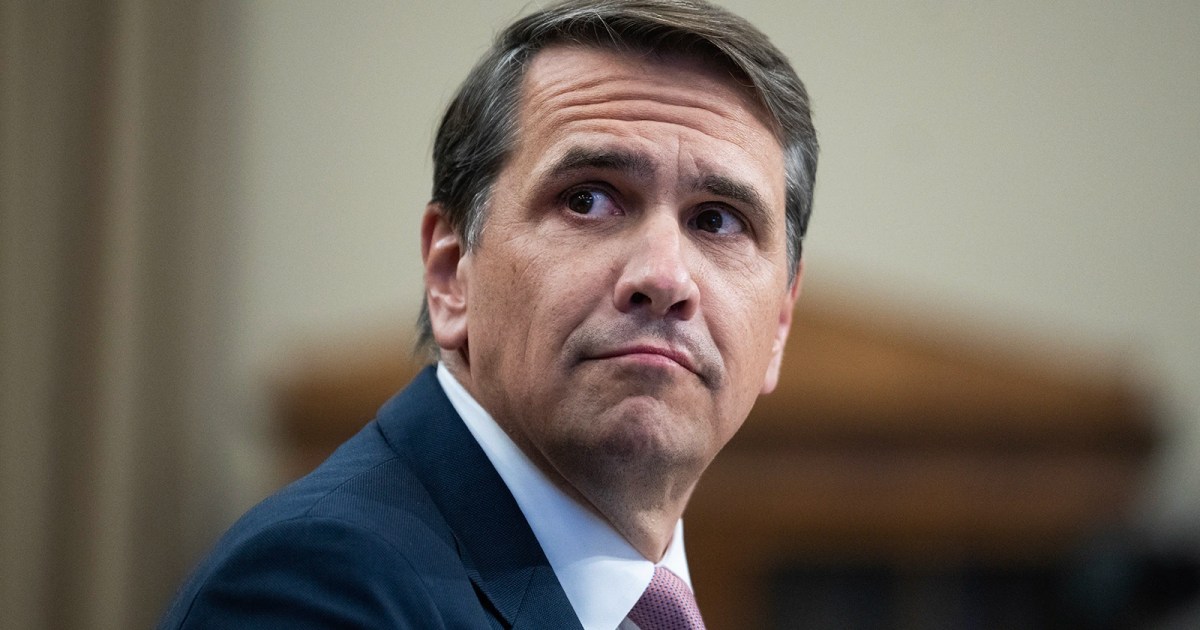
A federal judge in Washington has denied a bid Wednesday brought by a watchdog group to immediately block the Justice Department’s “anti-weaponization” fund, for now choosing to trust the department’s assertions that it is not moving forward with the fund.
U.S. District Judge Richard Leon ruled immediately, denying Citizens for Responsibility and Ethics in Washington’s request for a temporary restraining order that would have blocked the Department of Justice from taking steps to create the fund.
Throughout the 30-minute hearing, the DOJ reiterated that the administration was not moving forward with the nearly $1.8 billion fund, which seeks to compensate individuals who allege they have been politically targeted or victimized by the DOJ.
Andrew Block, the only lawyer present for the government, repeatedly cited Acting Attorney General Todd Blanche’s June 2 congressional testimonyin which he said the administration was “not moving forward” with plans to create the fund.
Leon indicated he agreed with the DOJ’s position that the case appeared to be moot, saying he was not persuaded there was an issue for the court to decide regarding the creation of the fund. He issued a stern warning to the DOJ, saying, “Don’t play possum with this court!” — meaning he does not want to be deceived.
The plaintiffs argued Blanche’s testimony did not amount to an official cancellation. Nikhel Sus, CREW’s attorney, said Blanche “refused to memorialize that rescission,” or in other words, put it in writing. Sus said that was “highly unusual.” Leon responded, “This whole case is highly unusual to say the least.”
Leon asked the government twice why they would not just rescind the order that established the fund. Block responded, “I don’t know,” and pointed again to Blanche’s public statements about the fund’s future.
Both Leon and Sus raised the issue of Trump’s continued public defense of the fund. “It can still be an important issue and also not moving forward,” Block said. “That isn’t a direction to move forward with the fund.”
Although Leon rejected CREW’s bid for an immediate block, he indicated he is still considering its request for a longer-term block against the fund.
A block order from a separate federal judge in Virginia remains in effect until at least Friday.
Fallon Gallagher is a legal affairs reporter for MS NOW.
The date when Social Security’s trust fund is expected to run out of money just got bumped up. The fund is now projected to empty in 2032according to a new report released by Social Security’s trustees.
The new depletion date isn’t an earth-shaking change — it’s only a quarter earlier than the estimate in last year’s report. But it illustrates how President Donald Trump’s policies are degrading a program he promised to never jeopardize — and accelerating an approaching crisis in how our government will assist the elderly and disabled.
The report names three factors that contributed to the earlier insolvency date. One is a declining fertility rate, but the other two drivers can be traced back to Trump: a drop in immigration into the country, and the “substantial effect” of the tax policies in the One Big Beautiful Bill he signed last summer.
Trump’s acceleration of the program’s insolvency comes atop his assaults on the program’s administrative capacities.
Reduced immigration during Trump’s second term — especially when coupled with a declining fertility rate — strains Social Security because the program is funded through payroll taxes. Those come out of people’s paychecks, and fewer workers supporting an aging population means the program receives less revenue. Indeed, Social Security already has been tapping its trust fund for the better part of the past two decades because the program’s costs have exceeded its cash income. And as the Center on Budget and Policy Priorities pointed out last yearlast year’s tax cuts were a boon to the rich but a bust for the solvency of the Social Security trust fund.
To be clear, if the fund is depleted, Social Security won’t go belly up. Benefits will continue to be paid out, but there will be a large drop in the amount. The Committee for a Responsible Federal Budget estimates that the “average monthly cut would total $500, which is more than what the average retired household spends on groceries each month.”

That would be a huge blow to the budgets of many older Americans. Social Security is a major source of income for most retirees, and roughly 40% of beneficiaries over the age of 65 rely on it for most of their income. And it would mark the destabilization of the sole source of retirement security for most Americans that is supposed to be insulated from ups and downs — unlike 401K plans. As the CBPP has pointed outSocial Security is “most workers’ only source of guaranteed retirement income that is not subject to investment risk or financial market fluctuations.”
Trump’s acceleration of the program’s insolvency comes atop his assaults on the program’s administrative capacities. His cuts to the Social Security Administration have left offices understaffedincreased wait timesand reduced quality of customer service.
Ultimately, Trump is exacerbating a colossal social safety net problem that predates him, and the trust fund will hit dire straits after he has left office. Democrats need to have clear plans for shoring up the program and making it robust for the future — which will require not being sheepish about taxes as a tool for renewing the social contract. And when Republicans try to claim that they, too, are champions of Social Security, all Democrats need to do is point to the truth.
Zeeshan Aleem is a writer and editor for MS NOW. He primarily writes about politics and foreign policy.

Today’s edition of quick hits.
* The latest from Northern Ireland: “The family of a man who lost an eye in a knife attack appealed for calm on Wednesday after the incident triggered a wave of anti-immigrant violence in Belfast overnight, with masked men burning families out of their homes and torching vehicles. The appeal came as a Sudanese man appeared in court charged with attempted murder and as British Prime Minister Keir Starmer and politicians in Northern Ireland condemned the violence by ‘masked thugs’ that had targeted ethnic minorities.”
* In related news: “The British government hit out at X owner Elon Musk Wednesday, accusing him of whipping up tensions online ahead of disorder in Belfast.”
* The tenuous state of a dubious ceasefire: “Trump said the U.S. is going to hit Iran ‘hard’ today when pressed by reporters in the Oval Office about his statement earlier that Tehran will ‘pay the price’ for taking ‘too long’ to reach a peace agreement. ‘Well, we’re going to be attacking them and attacking them very hard, resuming bombing,’ he said.”
* The latest casualty figures from Lebanon: “Israel’s military offensive in Lebanon has killed at least 3,666 people, including 131 healthcare workers, and injured more than 11,300 since the U.S. and Israel began their war with Iran in late February, the Lebanese health ministry reported yesterday.”
* The changing nature of modern warfare: “Ukraine is wreaking havoc on unarmored trucks and trains in the battlefield’s rear, using drones with upgraded engines and batteries, integrated Starlink communication systems and new artificial-intelligence capabilities. The ramped-up attacks are causing fuel shortages, complicating troop rotations and reducing Russian military activity on the front.”
* This seems like a reasonable request: “Democrats on the House Intelligence Committee demanded Wednesday that Bill Pulte, President Donald Trump’s controversial pick for acting director of national intelligence, submit to a full security check before assuming the post, including an examination of his financial holdings and foreign contacts.”
* Some market trends can’t be stopped despite the White House’s best efforts: “Even as President Donald Trump boosts coal over clean energy, solar power is hitting new milestones in the U.S. and remains the leading source of new power. Data released Wednesday by global energy think tank Ember, along with a report by the Solar Energy Industries Association and analytics firm Wood Mackenzie, show the continued growth of solar and decline of coal in the United States despite federal policy. In May, for the first time, solar supplied more of the nation’s electricity than coal, or 12.8%, Ember said.”
* A bizarre schedule for a nonemergency vanity project: “Federal officials are laying more groundwork to begin construction on President Donald Trump’s planned 250-foot-tall triumphal arch, sharing additional documents that detail the project’s scope and an aggressive timetable for potentially completing work before Trump’s term ends. According to National Park Service documents posted this month, the administration envisions 20 hours per day of construction on the arch, year-round, in hopes of completing the project within two to three years.”
See you tomorrow.
Steve Benen is a producer for “The Rachel Maddow Show,” the editor of MaddowBlog and an MS NOW political contributor. He’s also the bestselling author of “Ministry of Truth: Democracy, Reality, and the Republicans’ War on the Recent Past.”
- Senate Democrats’ political fortunes have improved. ‘It didn’t happen by accident,’ Schumer says.
- US to reach $41T debt ceiling as soon as late winter, forecasters predict
- The small-town voters deciding the UK’s future are demanding change, our focus group found

- Lee Zeldin on rising gas prices, energy dominance and AI data centers

- US to reach $41T debt ceiling as soon as late winter, forecasters predict
- Chuck Schumer is ready for redemption
- US to reach $41T debt ceiling as soon as late winter, forecasters predict
- US to reach $41T debt ceiling as soon as late winter, forecasters predict
- Court denies request to immediately block DOJ ‘slush fund’
- Trump is accelerating our Social Security insolvency crisis
-

 Politics1 year ago
Former ‘Squad’ members launching ‘Bowman and Bush’ YouTube show
-

 The Dictatorship1 year ago
Luigi Mangione acknowledges public support in first official statement since arrest
-
Uncategorized2 years ago
Bob Good to step down as Freedom Caucus chair this week
-

 Politics1 year ago
Former Kentucky AG Daniel Cameron launches Senate bid
-

 The Dictatorship1 year ago
Pete Hegseth’s tenure at the Pentagon goes from bad to worse
-

 The Josh Fourrier Show2 years ago
DOOMSDAY: Trump won, now what?
-

 Politics1 year ago
Blue Light News’s Editorial Director Ryan Hutchins speaks at Blue Light News’s 2025 Governors Summit
-

 The Dictatorship9 months ago
Mike Johnson sums up the GOP’s arrogant position on military occupation with two words