
Politics
Republicans’ outrage over Kamala Harris’ birthplace exposes a glaring double standard

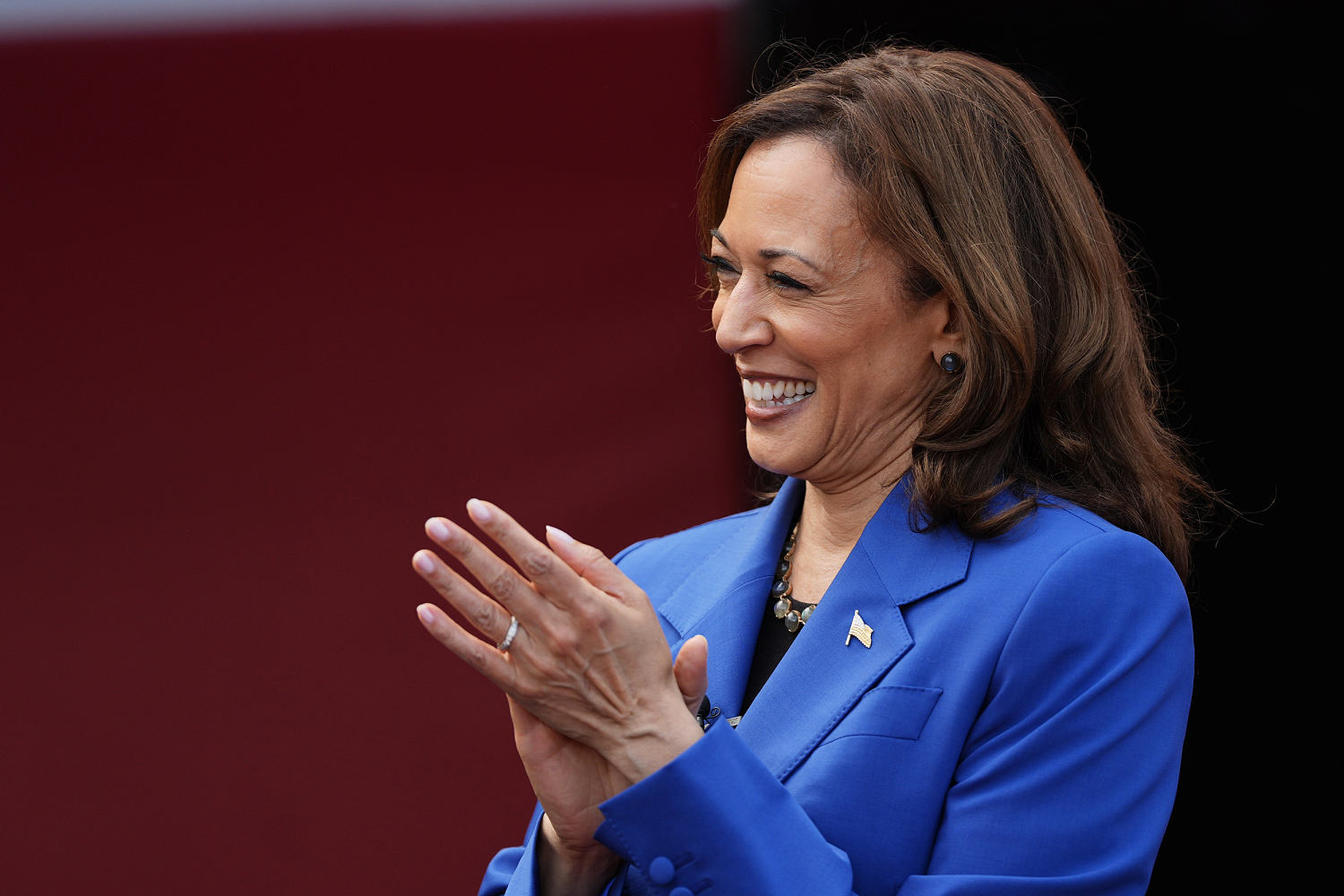
In what counts as one of the bizarre attacks of this year’s presidential race, Vice President Kamala Harris, the Democratic presidential nominee, stands accused of wrongly characterizing herself as a “daughter of Oakland.” According to an investigative report in The New York TimesHarris was born in the adjacent Berkeley, California.
Jesse Watters at Fox News went so far as to hold up Harris’ birth certificate with that Berkeley home address listed. As awful as that was, Watters using Harris’ birth certificate as some kind of gotcha was not only a reminder of the “birther” attacks on President Barack Obama, but it also revealed what this inquisition is really about: portraying Harris as sneaky, inauthentic and unworthy of trust.
Watters using Harris’ birth certificate revealed what this inquisition is really about: portraying Harris as sneaky, inauthentic and unworthy of trust.
Americans give a lot of attention to where a candidate is from and presidential candidates spend a lot of time emphasizing where they’re from — or at least emphasizing the place they’ve chosen to say they’re from. For example, as a candidate, and even as a president, Joe Biden has rarely missed an opportunity to mention his scrappy Scranton, Pennsylvania, roots. Yes, that’s where he was born, but Biden’s family relocated to Delaware when he was in elementary school. It’s likely that relatively few people know which cities in that state he called home as a child and teenager, but we know Biden eventually ended up in Wilmington where many residents affectionately refer to him as “Delaware Joe.”
All politicians, Harris included, are aware that the question of where they’re from is more about identity, or at least the identity we want to project, than geography. Home isn’t just a matter of where we say we’re from, it’s also about where others decide it makes the most sense for us to be from. If I tell you I’m from Detroit, then that conjures up not just associations, but expectations and explanations that are different than what they’d be if I told you I grew up in Boulder, Colorado. Geographers, city planners and urban designers call this place-based identity. Politicians call this useful.
As someone who was born in the Bay Area and then lived in Evanston, Illinois; Madison, Wisconsin; and MontrealCanada, before returning to the East Bay, there are a lot of places for Harris to gesture toward as potential homes and homes-away-from home. She chose Oakland.
Harris supporters like that she’s the celebrated daughter of a city we want to root for, too. They like the association for the same reason that her critics want to question it: it is politically useful, just like Biden’s beginning in gritty Scranton, or her running mate Tim Walz’s in small-town Nebraska. After all, the Black Panther Party was founded in Oakland in 1966 and organized a host of social services for low-income families such as legal aid, health clinics and free breakfast programs for kids. At least since then, Oakland has become synonymous with Black resistance, racial pride and self-reliance. It kind of reminds us of the underdog Harris says she is.
Barack Obama always put his Kansas roots (where his mother grew up) alongside his Hawaiian birthplace even as he claimed the South Side of Chicago as a home. Jeb Bush and George W. Bush shedding their ties to coastal Maine helped them get elected the governors of Florida and Texas respectively, and the Texan was twice elected president. Donald Trump is from Queens but has always wanted to be seen as the “king of Manhattan.”
Rightfully or not, a candidate’s hometown ends up symbolizing something profound about the individual, what the person stands for and, as importantly, whom the candidate will fight for. It’s why some of Harris’ Republican critics insist she was “raised in Canada.”
Harris may be fudging things slightly when she calls herself “the daughter of Oakland,” but she shouldn’t be singled out for it. Many people who grew up next to a big city call that bigger city home. Instead of asking whether it’s technically true that she’s from Oakland and whether she ought to be corrected for slighting Berkeley, we ought to be asking whether we put more demands on Black candidates to authenticate who they say they are, and whether their answers are more closely scrutinized.
Instead of asking whether it’s technically true that she’s from Oakland, we ought to be asking whether we put more demands on Black candidates to authenticate who they say they are.
By all indications, Oakland loves Harris and claims her back and doesn’t care where she went to primary school. Republicans who profess to be upset about it are, in keeping with Trump’s insulting attack on her identity, suggesting that she is falsely trying to claim Blackness. When she’s only doing what all politicians do: naming a place of origin that signals her politics. Yes, Harris gains bona fides from being associated with a city that symbolizes Black working class grit and activism, and not the image of white elitism and radicalism associated with San Francisco but especially Berkeley.
But JD Vance made a name for himself by highlighting his Appalachian roots and using that to illustrate how far he’s come even though Appalachia isn’t where he’s actually from.
Candidates such as Harris and Obama are subjected to more questions about their origins not because politicians as a rule give wholly truthful and clear declarations about their origins, but because they’re seen as not belonging in the first place.
Writer Zadie Smith”https://www.nybooks.com/articles/2009/02/26/speaking-in-tongues-2/” target=”_blank”> summed it up nicely in 2008 when she said that many of the public’s reservations about Obama stemmed from their inability to pinpoint where exactly he was from and who exactly he represented. To these people, he appeared too chameleonlike, too skilled at speaking to the many faces of American society. Smith said it was less a matter of Obama changing himself depending on his location, and more that he was from more than one place all at the same time, none truer or fuller than another.
“Where are you from?” is a loaded question that on its surface seems simple. The answer isn’t clear-cut for me, and it isn’t clear-cut for many of us. Are we talking about where I was born or where I grew up? What do we say if our family moved around a lot or if we spent some formative years abroad? We might answer differently depending on who’s asking, why we think they’re asking or what we feel comfortable sharing.
As for Harris, it’s not that important where home is according to her birth certificate. She had no say in that matter. Where she chooses to say she’s from tells us a lot more.
Robyn Autry
Robyn Autry is a sociology professor and director of the Center for the Study of Public Life at Wesleyan University. She is the author of “Desegregating the Past: The Public Life of Memory in the U.S. and South Africa.”


Some top congressional Republicans have privately concluded that it is likely impossible for them to keep control of the House of Representatives in the midterm elections, and they are now focused on limiting the scale of the defeat and salvaging the party’s Senate majority.
Five senior Republican lawmakers, all granted anonymity to speak candidly about their party’s dire position, told Blue Light News the House had all but slipped away.
One senior House Republican said the GOP’s goal at this point was to “save as many Republican seats as we can.” The president, this person said, was not helping.
“President Trump has made this election all about himself,” the lawmaker said. “Now we have to survive that political storm.”
A second Republican member of Congress said the movement of campaign advertising made plain which side was in control of the midterms. This lawmaker predicted Democrats would pick up about 10 seats, more than enough to take control of the chamber.
Even in newly redistricted red states like Florida and Texas, this person said, Republican candidates were “hanging on with their fingernails.”
Republicans have already fallen back from several contested House districts that they feel are no longer winnable, including those held by Rep. Mariannette Miller-Meeks of Iowa and Tom Kean Jr. of New Jersey. Trump carried their districts just two years ago. The party last week gave up on an Omaha-based district held by retiring Rep. Don Bacon.
Trump officials and other top GOP operatives say more candidates may be cut off in the coming days, in order to shift advertising money to races where it can make more of a difference. Republican groups have already given up on multiple races where they once hoped to unseat Democratic lawmakers.
The Republican Party is under extreme pressure across the Midwest, where it is now spending heavily to defend Senate seats in once-reliably MAGA states like Iowa, Nebraska and Kansas.
Bacon, a maverick often at odds with the White House, said there was no mystery in his party’s political tribulations.
“I’ve talked to some who are making these decisions: The biggest problem is the president’s polling numbers and unfavorables,” Bacon said.
White House officials insist they’re not giving up on either chamber of Congress. In a statement, White House spokeswoman Liz Huston said Trump remained “committed to maintaining Republican majorities in both the House and Senate.”
As he departed on Tuesday to campaign in Alaska for embattled GOP Sen. Dan Sullivan, Trump professed optimism about the midterms but acknowledged that sitting presidents typically see their party lose seats in the off year.
“But I’m doing a tour right now and I’m doing rallies,” Trump added. “The level of enthusiasm for the Republican Party is way up.”
House Speaker Mike Johnson went even further, flatly declaring during a campaign stop in deep-red Texas that “the polling is wrong” in showing his party on the brink of a broad defeat.
Yet at a tactical level, the Republican Party’s moves to shift money away from defending the House and toward saving the Senate are clear enough. In recent days, the Congressional Leadership Fund, the top super PAC for House Republicans, canceled advertising for key House candidates in Nebraska and Iowa and allowed the Senate Leadership Fund – a Republican group focused on the upper chamber – to swoop in and claim the airtime to support Nebraska Sen. Pete Ricketts and Rep. Ashley Hinson, who is running for Senate in Iowa.
“These are not the moves of a party that’s going to keep the House,” a third Republican lawmaker said.
In statements to Blue Light News, both CLF and the National Republican Congressional Committee said they had no intention of giving up on the fight for control of the House.
NRCC spokesperson Mike Marinella said districts are won “one by one,” and that the GOP has “the financial firepower and ground game needed to win.”
Chris Winkelman, president of CLF, said his group would keep moving money around to maximize the impact nationally.
The goal, he said, was to “keep the pressure on the most vulnerable Democrats and preserve a path to 218 seats.”
Former Rep. Carlos Curbelo, a Florida Republican who lost his swing seat in Trump’s first midterm election eight years ago, said his former colleagues were clear-eyed about where the election seemed to be headed.
“The environment is about as tough as one could expect,” Curbelo said. “There is no one who has privately stated that they believe Republicans can hold the House — not in recent weeks, anyway.”
Megan Messerly, Lauren Fedor, Lisa Kashinsky and Myah Ward contributed to this report.
Democratic Sen. Jon Ossoff said Tuesday he will not run for president in 2028 and committed to serving a full six-year Senate term if reelected.
“I have zero interest in running for president. I’m not running for president. I’m running for reelection to the Senate,” Ossoff said during a Georgia Senate debate against Republican Rep. Mike Collins.
Asked by Greg Bluestein of The Atlanta Journal-Constitution whether he would serve his full term if he wins in November, Ossoff replied: “Yes, I will.”
The remarks are Ossoff’s most forceful rejection yet of a potential 2028 presidential bid even as his name has repeatedly surfaced in national Democrats’ conversations about possible contenders for the party’s nomination. His public commitment to a full Senate term on Tuesday is the latest of his campaign’s many efforts to tamp down that speculation.
Ossoff gained national attention this year given his strong fundraising numbers, his consistent lead in public polling against Collins and his ability to generate viral moments on the campaign trail, particularly through his attacks on President Donald Trump. Democrats are bullish about Ossoff’s ability to hold onto his Senate seat — so much so that the Democratic-aligned Senate Majority PAC said Tuesday it was removing its ad spending in Georgia for the week.
He’s also taken steps to boost the state Democratic party in Georgia, a perennial battleground that has been and will be key to winning the presidency. If November brings historic wins up and down the ballot, Ossoff will get some of the credit — and he’ll have confirmed his status as a leader in the swing state.
Democrats may be discovering the political power of calling something rigged.
They’re leaning hard into anti-corruption messaging in the final weeks of the campaign as new research suggests that linking corruption to Americans’ economic struggles can boost Democrats into the home stretch.
Messaging from Democrats that tied corruption to housing, health care and the cost of living increased voter support for Democratic congressional candidates by about 3 percentage points, according to a national survey last month conducted by Blue Rose Research and Democratic-aligned Winning Jobs Narrative Action, which was obtained by POLITICO.
The findings align with a shift in how Democrats are talking about corruption — and help explain why that message has exploded on the campaign trail. From Sen. Jon Ossoff in Georgia to James Talarico in Texas and Abdul El-Sayed in Michigan, Democrats have zeroed in on a common argument: Washington is rigged to benefit the wealthy at the expense of everyday Americans.
“We have a corruption crisis in this country, and it is leading to an affordability crisis,” Iowa Democratic state Rep. Josh Turek said during his Senate debate against Rep. Ashley Hinson last week.
It’s a message that is reverberating across campaigns. In a recent presentation delivered to Democratic groups on Capitol Hill, longtime Democratic strategist Jesse Ferguson offered a succinct playbook: “Corruption is why your costs are high,” according to the presentation viewed by Blue Light News.
His presentation also encouraged Democrats to lead with the acknowledgement that costs are high and then go into corruption, acknowledge that it happens across parties and avoid making President Donald Trump the sole focus of their attacks. “Trump works as an example of corruption that raises costs, not as the whole case,” the presentation said.
Since April, Democratic candidates and outside groups in House and Senate races have spent roughly $104 million on advertising mentioning corruption, according to ad tracking firm AdImpact. Republicans, meanwhile, have spent $36 million across House and Senate campaigns over the same period.
“It’s not just like, ‘oh, look at what’s happening with the ballroom,’ or ‘boy, Donald Trump’s made a lot of money on crypto,’” Democratic strategist Chris Meagher said. “You have to be able to tie it to the impact on people’s lives.”
“The narrative works best when it’s an outsider candidate who is linking a rigged economy to a rigged political system,” longtime Democratic pollster Celinda Lake said of the anti-corruption messaging.
Running against corruption is not new. But as Democrats looked for a way out of the political wilderness after 2024, they began turning a familiar attack — anti-corruption — into a broader message tied to voters’ economic pain. What once was an attack largely focused on Trump has become a more expansive argument for candidates trying to connect it to why Americans are struggling financially, potentially providing a blueprint for the party beyond November.
“Democrats used to talk about corruption as a crime. Now corruption is the explanation for costs,” Ferguson, the Democratic strategist, said.
The issue — and messaging around it — is also coming to the fore in a cycle when anger over the suppression of Epstein files hit a fever pitch and public pressure to ban Congress from trading stocks continues to mount.
And it’s not just the research by Blue Rose that shows the potential potency of that message.
In another recent survey from the Democratic group Navigator Research, obtained by Blue Light News, the vast majority of Americans — both Democrats and Republicans — say corruption is driving up their costs. That same survey of registered voters, conducted in August, found majorities, including roughly a quarter of Republicans, say Trump is bringing more corruption to Washington than fixing it.
And new results from the nonpartisan Center Square’s Voter Voice Poll, conducted this month by Noble Predictive Insights and shared first with Blue Light News, show 10% of voters ranking government corruption as the second most important issue facing Americans, tied with the economy and jobs, and only behind inflation and price increases.
In some instances, Democrats have wrested the word “rigged” away from Trump who has used it in the context of unproven election fraud and turned it into a mobilizing political talking point. That’s a departure from March 2024 when Democrats criticized then Rep. Katie Porter for accusing special interests of spending money to “rig” the California Senate race after she lost in the state’s primary. But now some Democrats are embracing that language as a way to rail against what they see as a corrupt system.
“They’re rigging the rules to benefit their wealthy donors and corporate special interests,” former Ohio Democratic Sen. Sherrod Brown said in a message to supporters announcing the launch of his campaign to return to office.
But the corruption resonates across parties. Republicans who spoke with Blue Light News said Democrats do not own the issue — voters everywhere are animated by it. While polling shows that voters in both major parties believe the government is corrupt, Republicans accuse Democrats of lacking credibility on the issue.
“Americans have been disgusted by the level of self-serving corruption that spread like herpes through the slimy politicians who run the Democrat Party, and now they’re suddenly changing their tune because it’s an election year,” National Republican Congressional Committee spokesperson Mike Marinella said in a statement. “Voters see through the facade, and they know Republicans are cleaning up the rot left behind by Democrat leaders.”
On the Senate side, National Republican Senatorial Committee spokesperson Bernadette Breslin pointed Blue Light News to a poll in Minnesota — a rare offensive opportunity for Senate Republicans this cycle — that shows there are just about as many voters who blame Democratic Gov. Tim Walz for widespread fraud of federally-funded government programs in the state as there are who blame the criminals. Walz’s lieutenant governor, Peggy Flanagan, is running for Senate against Republican Michele Tafoya, and corruption under Democratic rule is a key theme for Republicans in the race.
“The overwhelming majority of Minnesotans blame the Walz-Flanagan administration — and the criminals it aided and abetted — for plundering their hard-earned taxpayer dollars,” Breslin said. “They’ll vote for Michele Tafoya to right the ship this November.”
Steve Pierce, executive director at Winning Jobs Narrative Action, said one of the biggest shifts for Democrats this cycle on corruption has been a move away from a message largely rooted in concerns over democratic norms, which have struggled to break through in a way that moves voters in past cycles.
“You’ve seen Democrats, rather than connecting corruption to democracy, connecting it to affordability, connecting it to the top concern that voters have,” said Pierce. “It’s connecting it in a way that’s meaningful to voters around the things that they are thinking about every day.”
The anti-corruption message has played out across the country, and as an explanation for frustration against different economic pain points, including rising electric bills and local data center projects.
A recent memo on data centers from House Majority PAC, the main super PAC working to elect House Democrats, noted the “message environment in the 2026 election cycle has been dominated by costs, with an important secondary theme around corruption that began to emerge last year.” The group’s spokesperson, CJ Warnke, told Blue Light News that “every single poll and every single focus group shows affordability to be voters’ number one issue, and they specifically point to corrupt politicians as being responsible for driving up prices.”
Next month’s midterms will offer the clearest test yet of whether Democrats can turn this message into votes. But Democratic operatives increasingly see anti-corruption messaging as more than just a short-term political weapon — as long as they try to do something about it if they win control next year.
“I think the thing for Democrats, if they do want to keep it on the radar heading into 2028, and I think they should because I think it is a really potent issue for them, they are going to have to also deliver on it,” said Pierce.
“They have to be able to show up to get caught trying,” he said.
-

 Politics2 years ago
Former ‘Squad’ members launching ‘Bowman and Bush’ YouTube show
-
Uncategorized2 years ago
Bob Good to step down as Freedom Caucus chair this week
-

 The Josh Fourrier Show2 years ago
DOOMSDAY: Trump won, now what?
-

 The Dictatorship2 years ago
Pete Hegseth’s tenure at the Pentagon goes from bad to worse
-

 Politics2 years ago
Former Kentucky AG Daniel Cameron launches Senate bid
-

 The Dictatorship2 years ago
Luigi Mangione acknowledges public support in first official statement since arrest
-

 Politics2 years ago
Blue Light News’s Editorial Director Ryan Hutchins speaks at Blue Light News’s 2025 Governors Summit
-

 The Dictatorship1 year ago
Mike Johnson sums up the GOP’s arrogant position on military occupation with two words