
Congress
Inside the lobbying fight threatening Congress’ college sports overhaul

Efforts to pass legislation governing the nation’s $19 billion college sports industry are teetering amid a fierce lobbying fight over media rights and antitrust protections.
The Protect College Sports Act advanced out of the Senate Commerce Committee on a 19-9 vote last month that pulled in seven Democrats. It was a hopeful moment for advocates of the Senate’s yearslong legislative push to regulate college athletics after the 2021 landmark Supreme Court decision that ultimately led to the NCAA allowing college athletes to profit off of their name, image and likeness.
But nine people close to the process say Senate Commerce Chair Ted Cruz (R-Texas) and ranking member Maria Cantwell (D-Wash.) have struggled to secure support among key industry players, including the Big Ten Conference and the Southeastern Conference, and universities are pushing for major changes to the bill before it’s brought to the floor.
With just a handful of legislative days left before the Senate leaves town for August recess, universities are on the cusp of starting another school year governed by a patchwork of state laws and court rulings that they say is financially unsustainable.
“It would be challenging for me to imagine supporting it if the Big Ten Conference and our two member universities in the state aren’t supportive,” Sen. Todd Young (R-Ind.) said of Cruz’s bill.
The bill, which lays out guidelines for everything from student athlete pay to negotiating broadcast rights, has languished amid pushback from the Big Ten and the SEC, the nation’s two most powerful college sports conferences. They’re zeroing in on a section allowing conferences to jointly negotiate their media rights, insisting it include explicit language clarifying that such action is voluntary.
Supporters of that “media pooling” provision argue it would bring stability to the industry by distributing streaming revenue more evenly across conferences, helping them absorb costs associated with the new era of paying student athletes outright. But the Big Ten and the SEC, which stand to lose the competitive edge their member schools reap from lucrative TV contracts, worry it would force them to share revenue with rival conferences — and they’re not the only ones taking issue with the section.
“We were unclear why the [media pooling provision] needed to be in this bill,” said Big East Commissioner Val Ackerman, who represents schools that could stand to profit from jointly negotiating media rights. “We’re not convinced that’s the magic wand.”
Ackerman said she had not yet seen modeling that proved media pooling would significantly increase revenue, adding that she had “all sorts of questions” around the provision that the committee had not answered.

Lawmakers have inched closer to bringing the SEC and the Big Ten on board in recent days, according to people directly engaged on the bill, but a deal remains elusive. Cruz and Cantwell hosted a call Sunday night with several commissioners and Notre Dame Athletic Director Pete Bevacqua alongside Vermont Sen. Peter Welch, one of the bill’s Democratic cosponsors.
“For how many conversations we have had with the Cruz and Cantwell team, I would say we’ve made stunningly little progress,” said one lobbyist directly engaged on the bill who was granted anonymity to describe private deliberations.
But Cruz regularly projects optimism that the bill is nearly ready. Asked if he was concerned about Republican votes for the bill if the two major conferences were not on board, he said no, adding that 70 percent of the committee voted for it.
“I think we will see something comparable on the floor next week,” he told Blue Light News on Wednesday. “I believe we’re going to pass this bill, and we’re going to see a large bipartisan vote on the floor of the Senate.”
Cruz has poured renewed energy into the effort to get the bill across the finish line in recent days, penning an op-ed in USA Today and meeting with other lawmakers including House Majority Whip Steve Scalise, according to one person familiar with the matter.
Two people granted anonymity to share private discussions said Senate Majority Leader John Thune has expressed interest in moving the bill to the floor once it can get 60 votes.
Thune told reporters last week he thinks it’s unlikely PSCA will pass the Senate before August amid other major priorities on Blue Light News. But on Monday, he struck a slightly different tune, saying talks were “steering in a really good direction.” In a Wednesday interview with Blue Light News, Thune didn’t rule out teeing up the bill for the fall before the August break.
The Commerce panel has made some concessions to the conferences, including clarifying that schools can’t face litigation for declining to participate in media pooling, according to three people granted anonymity to describe private talks.
The lawmakers are also offering to provide schools with an additional $20 million pool of funds for retaining student athletes, in addition to $5 million specifically for name, image, likeness promotional opportunities in women’s sports, according to the people.
But new legislative text sent to the two conferences on Tuesday afternoon lacks several key demands that the SEC and the Big Ten say are critical to winning their support, including a provision clarifying that postseason tournaments and contests would be excluded from media pooling, according to a draft obtained by Blue Light News.
Complicating things further, the draft includes a blank section called “IGNITE HBCUs Sports and Media Act.”
“Major concessions were made overnight,” a committee aide told Blue Light News on Wednesday. “At this point, with every passing minute, odds are slimmer that we can move the bill before the August recess. We’ve been working night and day to make the revisions they said they needed, and we need an answer.”
The SEC has also pressed lawmakers on another priority: to insert “critical amendments” broadening antitrust and preemption language, according to University of Tennessee Chancellor Donde Plowman, who chairs a coalition of presidents and chancellors across the Southeastern Conference. This would shield the NCAA and conferences from certain antitrust lawsuits and block states from setting their own rules governing college athletics and athlete pay.
But the latest draft of the bill failed to meaningfully change those pieces of the legislation.
Cruz and Cantwell are also unlikely to win the support of a broad group of southern GOP senators without the backing of the SEC — a goal they continue to pursue regardless.
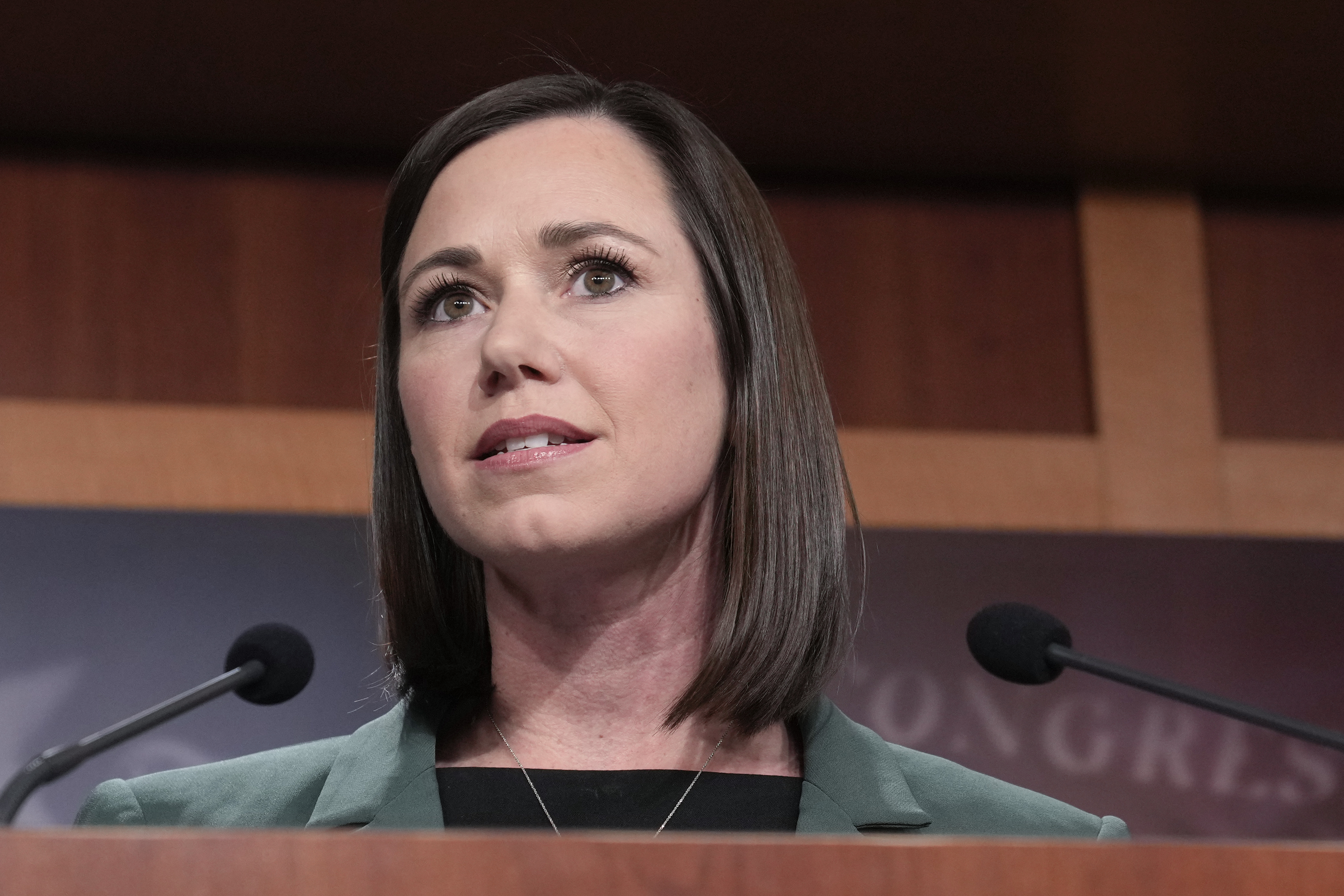
Sen. Katie Britt (R-Ala.) said Tuesday she plans to offer an amendment ensuring some of its provisions apply to high school sports. Britt has yet to publicly declare her position on the package amid opposition from Auburn University and The University of Alabama, the largest universities in her home state.
“We don’t need to solve one problem in order to then create or leave a gap in another,” Britt said in an interview. “Additionally, I want to make sure that we still protect people’s ability to allow their programs and conferences to thrive, and I don’t think we’ve hit the mark on that just yet. But I certainly hope we can find a pathway forward.”
Britt’s fellow GOP senator from Alabama, Tommy Tuberville — the former head football coach at Auburn, University of Mississippi, Texas Tech and University of Cincinnati — has been vocal in his opposition to the bill.
Cruz and Cantwell have touted support for the legislation across two dozen conferences and more than 250 individual universities, plus organizations like the NFL Players Association and the U.S. Olympic and Paralympic Committee.
But many of these same groups are also expressing some qualms with the package’s current form.
One of those groups is Ackerman’s Big East conference, which consists of 11 universities including Georgetown and Villanova. Ackerman said while Big East ultimately thinks “it’s better to have the bill than not to have the bill,” several crucial sticking points remain.
That includes the fact that Cruz and Cantwell’s bill doesn’t address whether college athletes can be considered employees with bargaining rights — an omission Ackerman called “disappointing.”
The House’s college sports bill, the SCORE Act, explicitly barred college athletes from attaining employee status. It had the support of many of the industry’s largest conferences, including Big East, but failed to make it across the finish line amid opposition from hard-liners who argued the bill was too favorable to the NCAA.
“We’re trying to strike the right balance” with the remaining sticking points, said Missouri Sen. Eric Schmitt, one of the bill’s GOP cosponsors who has been in many of the recent meetings with Cruz and Cantwell. “There’s a lot of things going on. But I feel good about it — we’re trying to build as broad a coalition as possible.”
Cruz and Cantwell have also touted backing from Louisiana State University, pointing to its board chair Lee Mallett and president Wade Rousse as signatories on a June 1 letter expressing “enthusiastic support” for the bill.
But Mallett and Rousse later said they did not support Cruz and Cantwell’s Senate legislation. Mallett said he meant to support the House’s SCORE Act, not the Senate’s version, and Rousse said he never agreed to have his name signed onto the letter.
“While we appreciate all the efforts surrounding the Protect College Sports Act, we believe key issues remain with the legislation and we do not support the bill in its current form,” Rousse and Mallett wrote in a separate letter to the Commerce panel last week. Louisiana Republican Sen. Bill Cassidy shared the letter on social media and said “LSU is right” to oppose the bill.
Supporters of the Protect College Sports Act applaud its provisions requiring agents to register with states and capping how much they can charge student athletes, along with the sections governing athlete compensation.
“The bill is not perfect, but it does address some very vital components in my mind that would improve the health of the college sports ecosystem,” West Coast Conference Commissioner Stu Jackson said in an interview.
Jackson, whose conference includes Gonzaga University and the University of Portland, said he would like to see the bill include limitations on expansion for larger conferences and a higher salary cap for student athletes, but he said talks with the Commerce panel about the bill had been “very productive.”
That’s not a view shared by multiple lobbyists representing college athletics conferences who are directly involved in talks about the bill.
“There’s not honest engagement or negotiation,” said a second lobbyist, granted anonymity to describe private discussions. “It’s really hard to get to a deal when there’s no trust, and there’s not a lot of trust right now.”
Jordain Carney contributed to this report.


The Department of Homeland Security still has not shared the findings from its investigations into the January killings of Alex Pretti and Renee Good in Minneapolis, despite continued requests from the top Republican on the Homeland Security and Governmental Affairs Committee.
Sen. Rand Paul (R-Ky.), the chair of the panel, said during a brief hallway interview that DHS has not yet given the committee any information from internal probes into any shootings involving immigration officers.
Asked if that included the two January shootings in Minneapolis, where immigration officers shot and killed two American citizens, Paul said: “We’ve asked for information. We’re still asking.”
DHS did not immediately respond to a request for comment.
Paul’s comments come as DHS faces continued bipartisan scrutiny following several incidents where ICE or Border Patrol agents used deadly force against individuals they were trying to apprehend. Several of those individuals were U.S. citizens.
Most recently, ICE agents Saturday shot an unauthorized immigrant who faced deportation. The man, 28-year-old Wilber Rafael Garcés Pérez, survived. His lawyers claim he has been transferred into ICE custody despite still having a bullet lodged in his back.
Paul had asked DHS earlier this year to share more information about its reviews of the shootings, and did not schedule a confirmation hearing for the administration’s ICE director nominee as he awaited those findings. The White House ultimately pulled that nomination last week as the nomination stalled.
Senate Armed Services Chair Roger Wicker lambasted the White House decision to invite Chinese leader Xi Jinping for a state dinner this week, calling the foreign head of state “a brutal, unelected and oppressive dictator” who cannot be trusted.
Wicker, typically a staunch defender of President Donald Trump and Republican loyalist, targeted most of his criticism at Xi and Chinese policy during a Senate floor speech Tuesday. But the comments were nonetheless a surprise rebuke of the president’s courting of Beijing amid broader concerns, such as the durability of U.S. security commitments to the Indo-Pacific, including in deterring a potential invasion of Taiwan from the Chinese mainland.
The Mississippi Republican urged Trump to press the Chinese premier on a variety of sensitive topics — including purported support for Iran, its military buildup and human rights abuses.
“Had the White House asked me for advice, I would have suggested the president not invite Xi Jinping to Washington for such a lavish welcome here in the United States, based on all of the troubling issues we have with President Xi and the Chinese Communist Party,” he said.
“I know the president tends to discuss trade and artificial intelligence with the Chinese leadership, and rightfully so,” he said. “Perhaps some progress will be made. But … during every minute of dialog, our commander in chief should keep in mind that his guest is a brutal, unelected and oppressive dictator who seeks to dominate his neighbors and whose massive military arsenal is aimed directly at the United States of America.”
The senior Republican’s comments on the Senate floor were delivered just a few hours before Xi’s expected arrival in Washington. Trump has scheduled a formal welcome ceremony for Xi and his wife at the White House on Thursday, along with talks between the two leaders throughout his three-day visit.
Trump is facing bipartisan criticism over the state visit by Xi. Wicker’s comments followed similar attacks on Chinese leadership from Sen. Dick Durbin (D-Ill.) and Ted Budd (R-N.C.).
“President Trump has been clear that under his leadership, the United States must engage with China, given the reality of our economic relationship,” Budd said. “But we can’t forget that China is also a competitor and an adversary.”
A federal appeals court ruling Tuesday on demonstrators’ access to the steps of the Capitol could bode poorly for President Donald Trump’s attempt to ban three media organizations from the White House.
The majority opinion, written by Trump appointee Neomi Rao, concluded that the East Steps of the Capitol are a “nonpublic forum” — just like most areas of the White House grounds, including the press facilities. While the government may impose restrictions on access to those nonpublic areas, the limits must be “viewpoint neutral,” apply “objective, workable standards” and not permit officials to exercise “unbridled discretion over a forum’s use,” the D.C. Circuit Court of Appeals panel concluded.
“A regulation that grants the government arbitrary control over who may speak invites the suppression of disfavored viewpoints and undermines the First Amendment’s core protections,” wrote Rao, who was joined in the majority by Judge Karen Henderson, a George H.W. Bush appointee.
The ruling, on the eve of a hearing over restoring White House accessfor Blue Light News, BLN and MS NOW, reaffirms the D.C. Circuit’s longstanding First Amendment precedents at an inopportune time for Trump. The president has explicitly described his ban on the three outlets as a punishment for publishing what he calls “fake news.”
“Fake News people and publications that only write negatively, and who violate our National Security by writing false and defamatory stories with unknown ‘sources,’ shouldn’t be allowed access to the most important Office anywhere in the World,” Trump said on social media Monday.
The outlets have said their access was revoked because the White House objected to their reporting and that the ban “threatens press freedom and the public’s right to independent journalism free from government interference.”
The D.C. Circuit would hear any appeals in the litigation over Trump’s media ban, and Trump has in fact already said he anticipates filing an appeal, presuming that he will be dealt a defeat in district court.
The White House did not immediately respond to a request for comment.
The D.C. Circuit’s Tuesday ruling stemmed from a lawsuit brought by Patrick Mahoney, a clergyman who sought to hold prayer vigils and demonstrations on the East Steps of the Capitol several months after the Jan. 6, 2021 attack, which resulted in new access restrictions. His permit was denied in part based on Capitol Police regulations that prohibit public demonstrations on the steps unless they are sponsored by a member of Congress.
Though the case has inched through the courts for years, Tuesday’s ruling resolves a key question, labeling the Capitol’s East Steps a “nonpublic forum” for which congressional authorities may restrict public access — in part because lawmakers use those steps to enter and exit the building.
But allowing members of Congress to sponsor gatherings on the steps creates an arbitrary system, the majority concluded.
“Because the protection of unpopular speech and advocacy is central to the First Amendment, we cannot leave it to the selective enforcement of members,” Rao wrote.
Notably, Rao’s opinion cites a D.C. Circuit ruling last year that concluded “it would be unreasonable to control access to White House press facilities through standardless discretion.”
The third judge on the panel, Clinton appointee Judith Rogers, dissented, but her opinion was even more protective of free-speech rights.
Rogers said she agreed with her colleagues that the “selective exception” for demonstrations sponsored by lawmakers was unconstitutional. However, she said she would have held that the lower portion of the Capitol steps was a public forum where the government was obligated to permit protest activity.
- Paul: ICE hasn’t shared information about Minneapolis shooting probes
- GOP Armed Services chair blasts White House welcome of Chinese leader
- Sen. Jon Husted: Iran war ‘needs to come to an end as quickly as possible’
- Mamdani and Trump face frosty reception in Queens over Sunnyside Yard plan
- Trump says decision on possible diesel export ban to come ‘fast’
- Appeals court’s Capitol steps ruling may signal trouble for Trump on media ban
- Ohio stations ignore Max Miller’s legal threat, run Democratic challenger’s ad
- GOP Senator wants to subpoena Donald Trump Jr. over Russian-funded wedding
- Capitol agenda: Senate GOP eyes exit plan as trail calls
- ‘We need to stop the contagion’: GOP ramps up midterms defense in Trump states
-

 Politics2 years ago
Former ‘Squad’ members launching ‘Bowman and Bush’ YouTube show
-
Uncategorized2 years ago
Bob Good to step down as Freedom Caucus chair this week
-

 The Josh Fourrier Show2 years ago
DOOMSDAY: Trump won, now what?
-

 Politics2 years ago
Former Kentucky AG Daniel Cameron launches Senate bid
-

 The Dictatorship2 years ago
Luigi Mangione acknowledges public support in first official statement since arrest
-

 The Dictatorship2 years ago
Pete Hegseth’s tenure at the Pentagon goes from bad to worse
-

 Politics2 years ago
Blue Light News’s Editorial Director Ryan Hutchins speaks at Blue Light News’s 2025 Governors Summit
-

 The Dictatorship1 year ago
Mike Johnson sums up the GOP’s arrogant position on military occupation with two words