
Politics
Mamdani and Trump face frosty reception in Queens over Sunnyside Yard plan

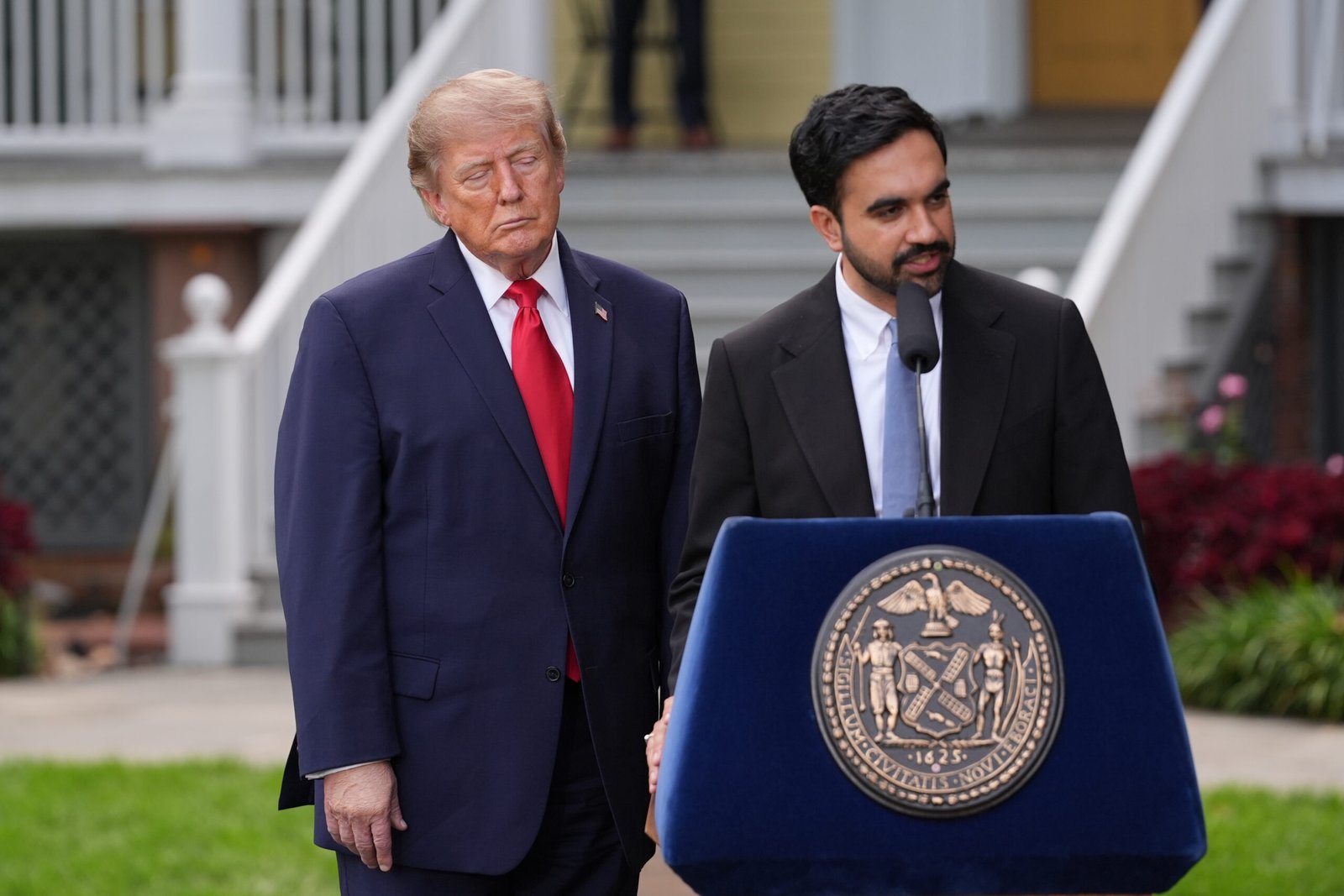
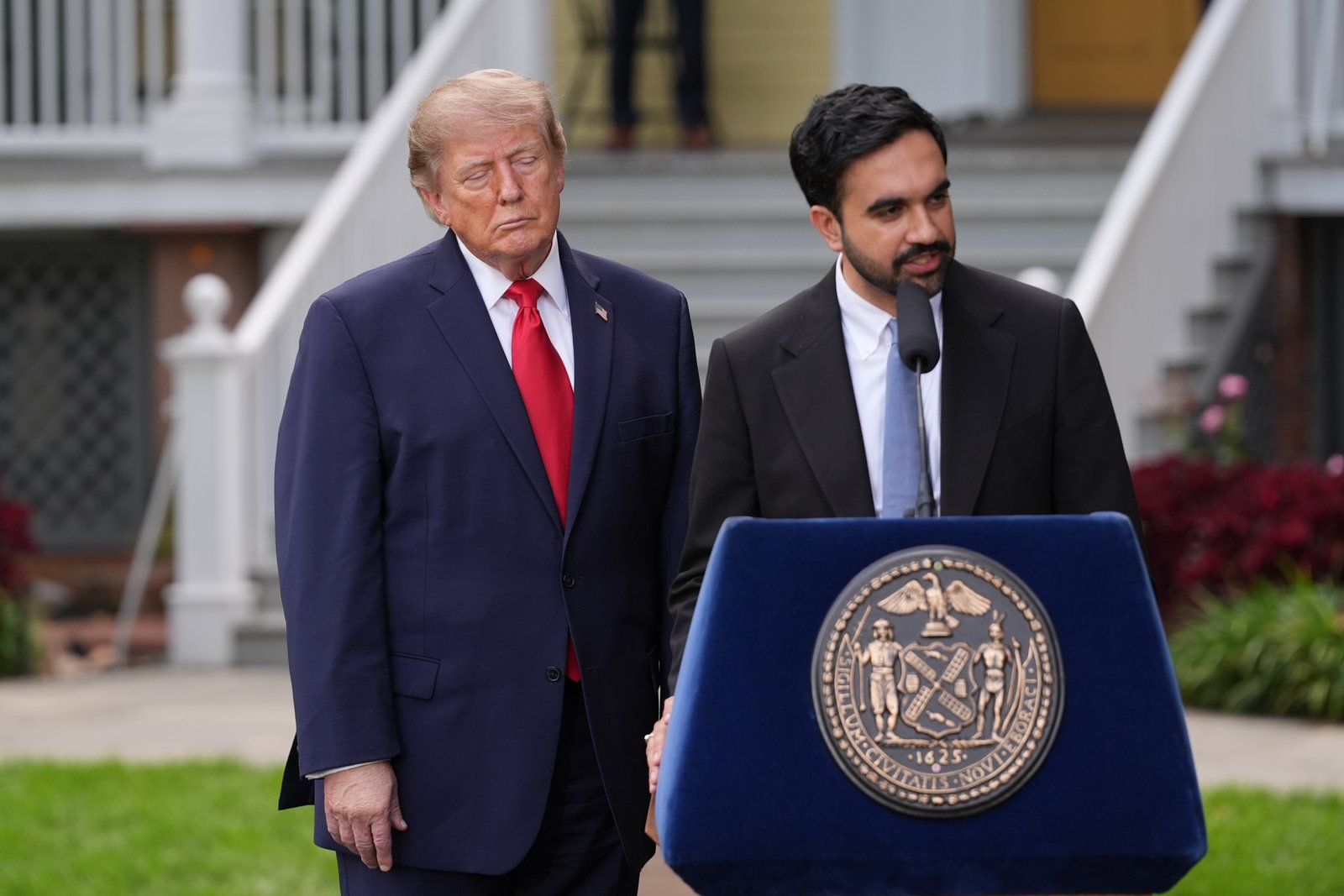
LOCAL INPUT: Mayor Zohran Mamdani is facing fresh backlash over sidelining key stakeholders from talks about developing thousands of housing units on top of a Queens rail yard.
The Sunnyside Yard project landed back in the headlines yesterday when Mamdani and President Donald Trump emerged from a chummy meeting at Gracie Mansion to announce they’d agreed to bring conversations about the long-stalled housing plan to “a new level.” The unlikely duo first announced at a White House meeting in February they were looking into reviving the project, which would be contingent on billions of dollars in federal funding and involve constructing a platform over the rail yard, on top of which 12,000 housing units would be built.
But Council member Julie Won — who represents Sunnyside and voiced concerns in February about not being included in the talks — said today she continues to be troubled by the fact that the mayor and the president aren’t consulting her or other local community voices.
“Since the last discussion on Sunnyside Yard months ago between the mayor and president there is no funding from Congress nor any public meetings to move this project forward,” Won said in a statement. “There is no federal, state, or city bill allocating funding for this project. There is still no timeline. Congress would have to fund it, and the State and City Legislature would have to approve it. Our neighbors in Sunnyside yet again were not part of yesterday’s conversation, and there still has been no meaningful engagement with the public.”
Farah Salam, Won’s chief of staff, said City Hall’s continued lack of engagement with her office flies in the face of a commitment Mamdani’s team made in February.
Salam recounted how, in a meeting with Won’s team at the time, Mamdani aides told the Council member’s staff they would keep them in the loop on any Sunnyside Yard-related updates. Nonetheless, Salam told Playbook that Won and her team haven’t heard a peep from Mamdani’s administration since then, and she added that Won only learned of the latest twist from watching Mamdani’s post-meeting press conference with Trump yesterday.
A Mamdani spokesperson declined to respond to Salam’s comments.
Won is a member of the Council’s Progressive Caucus, which has generally been supportive of the mayor, lending more weight to her Sunnyside-related rebuke. Still, she may have some political sour grapes with the mayor, given that she campaigned unsuccessfully this summer for Congress in a race that was ultimately won by Mamdani-endorsed Assemblymember Claire Valdez.
Won isn’t the only local politician concerned by Mamdani’s Sunnyside dealings with Trump, though.
Queens Borough President Donovan Richards told Playbook it would be more fruitful for Mamdani to focus on securing federal funding from Trump for housing developments where shovels can hit the ground on a short timeframe. Inevitably, Sunnyside Yard would need to go through years-long review and permitting processes before construction could begin, and Richards argued Jamaica and Long Island City are better suited for immediate, federally-backed projects, given that both areas recently underwent neighborhood-wide rezonings.
“I’m not saying give up on Sunnyside Yard, but let’s first move somewhere where we can actually get shovels in the ground now,” he said. “We are in a housing emergency.”
Richards also said he’s skeptical Trump will actually make good on his Sunnyside musings. “I have trepidations about how fast the Trump administration is going to move on this — forgive me if I have my trepidations about them,” he said. “Anything you deal with the Trump administration on has to be show and tell, and I don’t have much confidence even with the president’s remarks yesterday.”
When asked about the comments from Won and Richards at a press conference today, Mamdani avoided any direct response. Instead he simply reiterated the merits of the project, which he said would include a significant share of affordable housing.
“I will do everything in my power to build more housing in this city,” Mamdani said. “And working with the president to fulfill an idea that has existed for 50 to 60 years — that to me is clearly an example of what could be done.”
It remains to be seen how much Trump and Mamdani can actually get done on the Sunnyside project. Though they said yesterday their respective housing policy teams are initiating technical talks about the project, there are no funding commitments on the table, and local community concerns remain.
Former Mayor Bill de Blasio announced a plan in 2015 to build housing on top of Sunnyside Yard, but that iteration of the project never went anywhere because of the COVID pandemic and local pushback. — Chris Sommerfeldt and Joe Anuta
From the Capitol
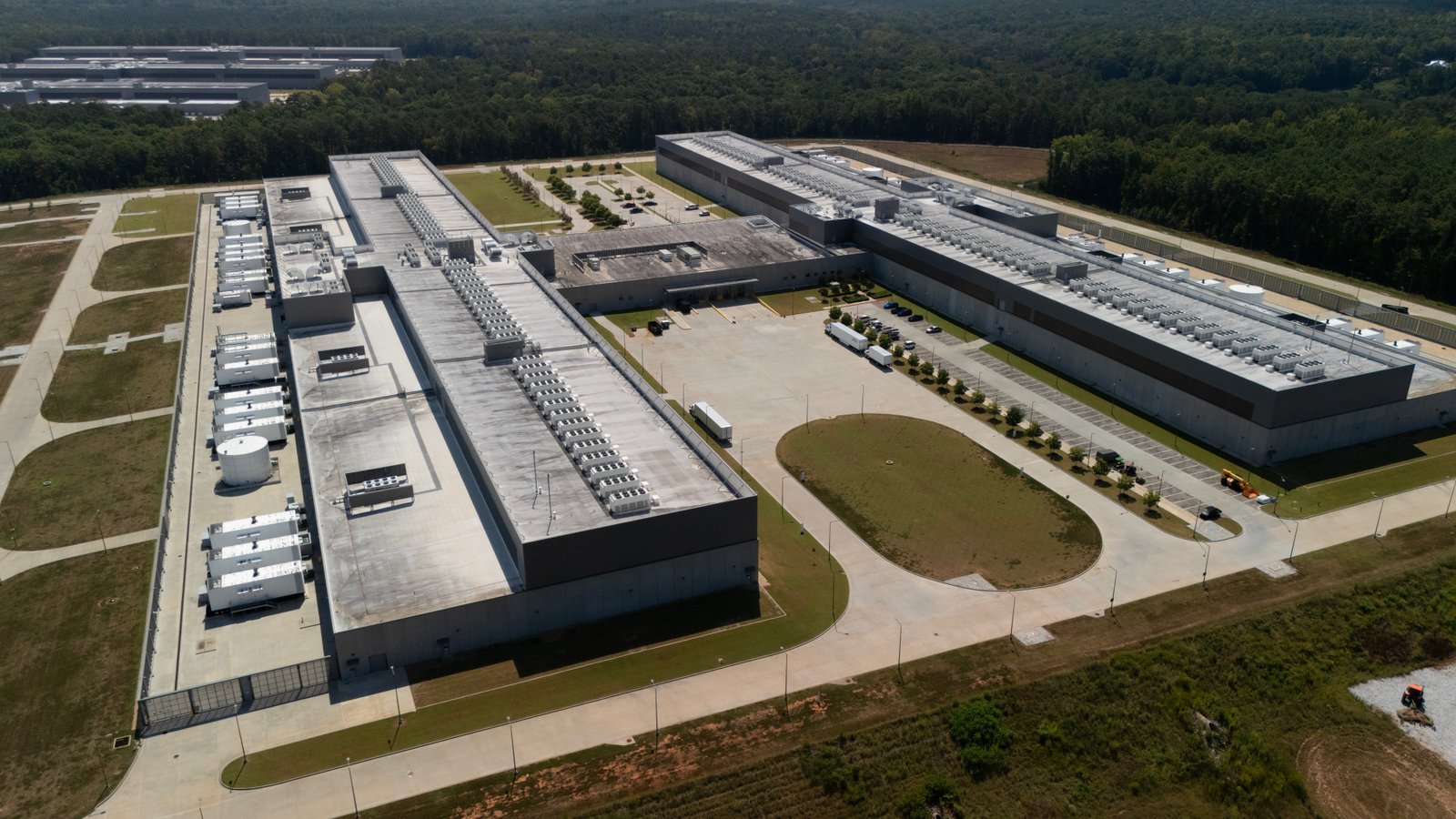
IT GUY GONE: The top official at the state’s Office of Information Technology Services was removed this week by Gov. Kathy Hochul after she lost confidence in him, her administration said today.
ITS Director Dru Rai held the job since September 2023, and his removal was effective immediately. Jenson Jacob will take over the role in an acting capacity. The office manages the state’s information technology, data centers and hardware infrastructure while providing digital services for state agencies and local governments.
“The administration has informed Dru Rai that the Governor no longer has confidence in his ability to effectively represent this administration and he was removed from his position as head of ITS,” a Hochul spokesperson said in a statement. “Jenson Jacob has been named Acting Director of ITS. Governor Hochul remains committed to holding employees to the highest leadership and ethical standards, and ITS will continue to deliver technology solutions and services for New Yorkers, our agencies and partners.”
Read more from Blue Light News Pro’s Nick Reisman.
BLAKEMAN BRUSHES OFF GRACIE GATHERING: Republican gubernatorial candidate Bruce Blakeman is downplaying the significance of Trump’s cordial Monday meeting with the mayor.
“Not at all,” he said when asked if Trump’s visit undercut Blakeman’s focus on Mamdani’s radicalism.
“The president is a government official. He’s the highest government official in the United States. And the mayor’s a government official, so I expect that the two of them would talk.”
Blakeman has attacked the mayor he refers to as “Commie Mamdani” while campaigning in every corner of the state. Would he similarly meet with Mamdani? “Depends what he was serving for lunch,” he said.
The Nassau County executive was in Albany today to receive the NYS Correctional Officers and Police Benevolent Association’s endorsement. Prison guards have had an icy relationship with the state in recent years, due to Cuomo-era limits on solitary confinement and Hochul’s strict crackdown on guards who engaged in an illegal strike last year.
It’s the first time NYSCOPBA has endorsed a gubernatorial candidate.
“Kathy Hochul, I want you to think about that: 95 percent of your employees voted to endorse me, a democratic vote,” Blakeman said. “What does that say about your leadership? You should be embarrassed that 95 percent of your workers didn’t think highly enough of you to endorse you.” — Bill Mahoney
FROM CITY HALL
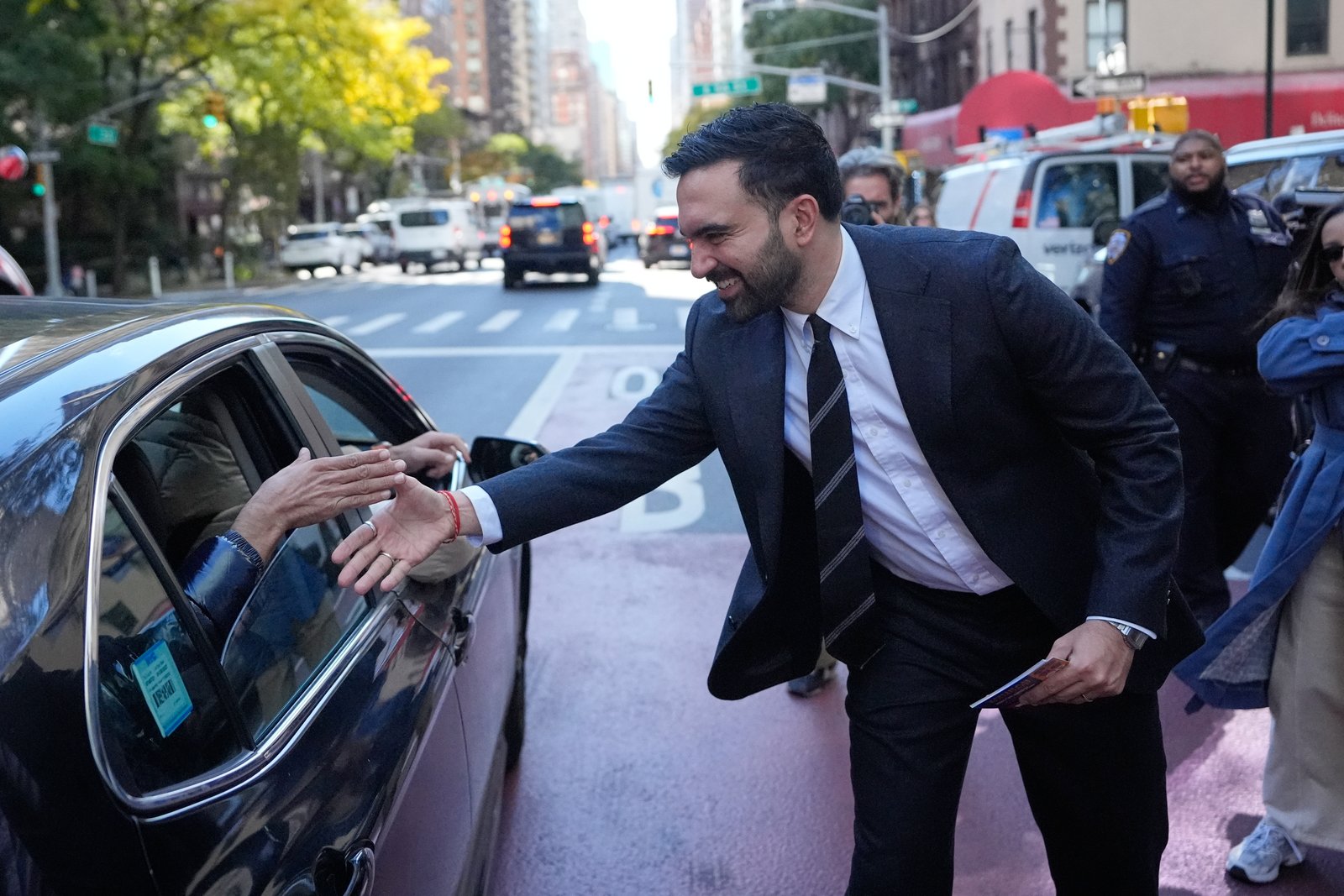
LEFT ON READ: City Council members — including the mayor’s allies — laced into Mamdani’s administration today at a Council hearing on the use of influencers in city government communications.
The central focus of their displeasure? Team Mamdani declined to send any representatives from the appropriate agencies to testify.
The oversight hearing comes on the heels of news that programs run by city agencies paid influencers to promote city policies. The hearing’s stated purpose: to begin to establish guidelines for how city officials communicate with influencers and disclose such communications.
Emilia Rowland, the mayor’s director of new media, skipped the hearing, despite being invited to testify. Earlier this month, a working paper from the Columbia University Initiative for Policy Dialogue reported that Rowland oversees a Signal group chat with more than 200 hand-picked influencers. In her place, the mayor’s office sent Tascha Van Auken, commissioner of the mayor’s Office of Mass Engagement, and Shawn(ta) Smith-Cruz, commissioner for the Department of Records and Information Services — neither of whom had much to offer on the administration’s use of influencers.
While pressing the two during their testimony, Public Advocate Jumaane Williams expressed disappointment that the communications officials who “should be here are not.”
“I don’t know that anything was done wrong, but there were questions that were raised by this article that I believe the public should hear answers to, so that they can feel sure that nothing wrong occurred,” Williams said. “The fact that the correct folks aren’t here doesn’t really help that story.”
Williams, a progressive Democrat, found himself in agreement with Council Minority Leader David Carr, the Republican who sponsored legislation that would require explicit disclosures on city-funded or directed influencer communications.
Carr pressed Van Auken and Smith-Cruz on specifics about the relationship between City Hall and third-party influencers — such as the number of influencers the administration has worked with, how much has been spent on the social media campaigns, how budgets are determined and how influencers are selected.
Van Auken and Smith-Cruz acknowledged they didn’t have fulsome answers to any of Carr’s questions, in stark contrast with the mayor’s characterization of the situation earlier today.
“I am confident in the testimony that our administration is providing today, that it will be sufficient in answering the council’s questions,” Mamdani told reporters this morning.
Taiwan Green, a Queens-based influencer with more than 50,000 followers, testified he was contacted a year ago by then-candidate Mamdani’s social media team. He said he’s never been offered pay for any content about the administration, though, and that he was never directed as to how to message his videos.
“I believe it’s my responsibility to sacrifice my time and my resources to educate myself and my followers on the political process,” said Green, who goes by the handle @mrfingaz. “Traditional press may not have the time to ask questions that are related to southeast Queens, but I will use this opportunity to do just that.”
Green left abruptly after about 90 seconds of testimony and didn’t take questions from council members.
It wasn’t the first time relevant officials from the mayor’s office skipped a Council oversight meeting. Last month, lawmakers slammed Mamdani’s administration for opting out of a hearing on the city’s controversial pied-à-terre tax rollout. At that hearing, Council Members Gale Brewer and Linda Lee read out 11 pages of questions to a row of empty chairs. — Molly Reinmann
SO MANY GAVELS: The city’s Conflicts of Interest Board fined Council member Mercedes Narcisse $2,500 for filming a reelection campaign video inside City Hall.
In one portion of the video, Narcisse is sitting in the Council chambers at the speaker’s chair, where she strikes a gavel. In another, she sits behind her nameplate in a separate committee room and … also strikes a gavel.
Narcisse is then filmed speaking (though not striking a gavel) at an official Council podium.
Because these areas of City Hall are off limits to the public, the board found Narcisee was using her government perch for personal gain. In a settlement agreement, the Brooklyn lawmaker said she did not intend to break the rules, but admitted wrongdoing. — Joe Anuta
FROM THE CAMPAIGN TRAIL
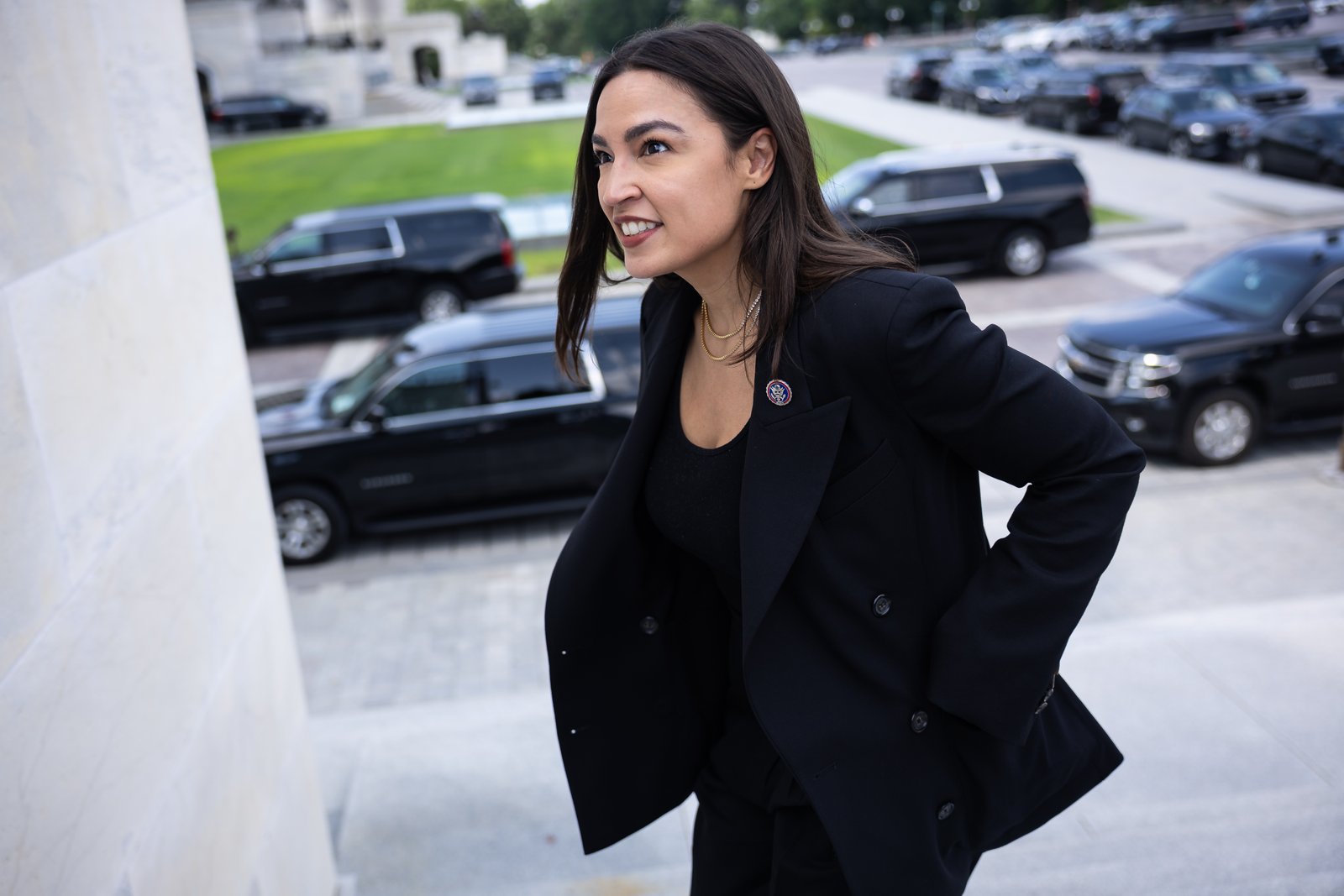
AOC IN BUF: Rep. Alexandria Ocasio-Cortez is planning to hit Buffalo Thursday to meet with Mayor Sean Ryan and host an organizing training aimed at inactive voters.
The trip comes amid speculation about whether she’ll run for the White House or Senate in 2028. In comments to The New York Times published on Tuesday, Ocasio-Cortez said she’s thinking about how her identity will factor into the campaign she chooses to mount.
“There’s an argument that some make that this is a very unique political window and, oftentimes in politics, you do only get one shot,” she told the Times. “And you don’t — and just in life in general — life doesn’t wait for you to be ready for things. Sometimes life just makes things ready for you.”
The Buffalo trip is part of an upstate swing that is also set to include Syracuse and Ithaca, the Times reported last week.
Ocasio-Cortez has been leaning into the curiosity surrounding her next political endeavor — but said she’s keeping her focus on the midterms as she stumps across the country boosting candidates. — Madison Fernandez
TAKING THE STAGE: Candidates for governor, state attorney general and comptroller will debate next month.
Spectrum News NY1 announced Tuesday that Hochul and Blakeman will debate on Oct. 13. Attorney General Letitia James will face off against GOP challenger Saritha Komatireddy on Oct. 8, and Comptroller Tom DiNapoli and Republican Joseph Hernandez will debate on Oct. 1.
Each of the debates will air live at 7 p.m.
Playbook previously reported that Hochul intended to debate Blakeman, even though she is not required to do so since her campaign declined to participate in the new public campaign finance system. — Madison Fernandez
IN OTHER NEWS
— ZO + BIBI: Mamdani doubled down on his criticism of Israeli Prime Minister Benjamin Netanyahu ahead of his speech at the U.N. this week. (CNN)
— SCHUMER ON AI: Sen. Chuck Schumer demanded Trump completely block China’s access to U.S. artificial intelligence technology ahead of the president’s meeting with Chinese President Xi Jinping tomorrow. (Punchbowl)
— MENIN + THE MET: City Council Speaker Julie Menin expanded on her condemnation of the Met Gala’s now-walked back decision to honor John Galliano, who has a history of racism and antisemitism. (New York Magazine)
Missed this morning’s New York Playbook? We forgive you. Read it here.


Haley Stevens is highly visible in the wake of her Senate primary loss: Meeting with the Dalai Lama, crashing “TMZ Live” with her new fiancee, getting spoofed on The Tonight Show with Jimmy Fallon.
One place she hasn’t been spotted: alongside her former rival Abdul El-Sayed.
Even though the representative quickly endorsed El-Sayed after their bruising Aug. 4 primary, she’s done little to help him since. That absence is becoming more conspicuous in the closing weeks of a crucial Senate contest, as some of her old supporters continue to vocally resist backing him.
In an interview, Stevens said El-Sayed is building a “new coalition” in the race against GOP former Rep. Mike Rogers — and suggested it’s not her place to push some of her more skeptical supporters into joining it.
When asked if she was encouraging her former donors to help El-Sayed, she said she believes her role this election is to “be part of the coordinated campaign, support where I can,” mentioning Michigan House races. When asked again if she would push donors to back him, she responded: “That’s Elissa’s thing,” referring to Sen. Elissa Slotkin (D-Mich.), who has been fundraising for El-Sayed. “I didn’t win a Senate primary,” she continued. “It’s not like a salty grapes deal or anything.”
Stevens said she’d checked in with El-Sayed’s team, but hadn’t met with the candidate himself recently because she’d been traveling.
“There’s changing dynamics, and there’s a new coalition that Abdul has built, and some people are a die-hard part of it, and some people are not. We’re seeing some constituent community pain coming out,” Stevens said, referencing resistance to El-Sayed among some Black and Jewish voters who backed her in the primary.
“Rogers is working the Black community harder and more successfully than we have ever seen a Republican do or at least that I can remember — ever,” Stevens said.
“But we’re also seeing Abdul go up to the UP [Upper Peninsula] and we’re seeing him fill venues in rural Michigan and it’s very real in terms of this coalition he’s built,” she added.
El-Sayed ran particularly strongly during the primary with young voters and in the state’s large Arab-American community, as well as in some rural, more populist parts of the state, and is working hard to expand that coalition in the general election.
Stevens’ remarks come as some of her former backers and financial boosters continue to publicly withhold support from El-Sayed and in some cases openly embrace his Republican rival. The ruptures are most visible among the Jewish and Black communities that largely broke for Stevens, and point to enduring friction within Michigan Democrats’ traditional coalition after a bitter primary that she could be in a unique position to mend.
Debbie Rosenman, the chair of Birmingham-Bloomfield Area Democratic Party Club in Stevens’ backyard and an El-Sayed supporter, said Stevens has been “absent” on the trail and said she was “very concerned” her coalition is not coalescing around El-Sayed.
“I feel that that could change with more of her public support,” Rosenman said.
El-Sayed’s campaign said the former rivals’ teams keep in close touch and noted several Stevens staffers joined the nominee’s team after the primary.
“The Abdul campaign is grateful for Congresswoman Stevens’ immediate and sustained support,” El-Sayed campaign spokesperson Roxie Richner said in a statement.
El-Sayed has worked to repair relationships with Black and Jewish leaders. He has endorsements from several of them and is campaigning with prominent Democrats from both communities, including former President Barack Obama and former Vice President Kamala Harris and Slotkin, who is Jewish. He has made more than two dozen visits to Black churches and participated in more than 100 events and meetings with Black leaders, according to his campaign. He has hired a liaison to the Jewish community, keeps in regular contact with Jewish leaders and has apologized for his controversial remark after a synagogue attack in West Bloomfield in the spring that “hurt people hurt people.”
“I take very seriously that I’m going to represent a large community of Jewish Michiganders, and I want them to know that I’m committed to their safety and their well being, even if there are points in foreign policy on which we might disagree,” El-Sayed said in an interview.
Not everyone has come around.
David Kramer, Stevens’ primary campaign chair and a vice chair of the Michigan Democratic Jewish Caucus who introduced Stevens to her fiance, is now working with Nonnegotiable Michigan, a group of Jewish leaders who have pledged to withhold their support from El-Sayed unless he adjusts his approach to Israel.
Kramer, a prominent Democratic fundraiser in the state who has also previously worked with Slotkin and Gov. Gretchen Whitmer, told Blue Light News he’s not tapping his donor network for the general election and estimated he’s left upward of seven figures on the table that he could have raised to boost El-Sayed.
Brian Hermelin, a normally Democratic donor who backed Stevens in the primary and leads the Jewish Federation of Detroit, co-hosted a fundraiser for Republican nominee Mike Rogers shortly after the primary that raised roughly $200,000.
Rogers’ campaign has attempted to capitalize on those cracks by launching a “Democrats for Mike Rogers” group and making overtures to Jewish and Black voters. Bobby Schostak, a former Michigan GOP chair who is serving as Rogers’ finance chair, estimated the Republican’s campaign has brought in roughly $3 million to $4 million since the primary from “nontraditional Republican donors” across the country, including Democrats.
“The Democratic Party is still divided,” said Democrat Mary Waters, a Black Detroit city councilor who’s met with both El-Sayed and Rogers but remains undecided. “People are still so torn about what it is that they want to do.”
Joe Tate, a Black state representative from Detroit who supported Stevens, acknowledged there has been some lingering apprehension around El-Sayed. But he said Stevens’ endorsement of El-Sayed helped convince him to back the candidate and predicted Democratic voters would largely stand by their party, too.
El-Sayed’s donor network may look different from Stevens’, but he’s still posted big numbers. He raised nearly $33 million from July through September, which included some raised before the Aug. 4 primary, compared to Rogers’ nearly $10 million, and has been outspending Rogers on the airwaves.
Some of El-Sayed’s prominent surrogates have also taken steps to court apprehensive Democrats. Jewish leaders like former Rep. Andy Levin, a former synagogue president who Stevens defeated in a 2022 primary, are holding house parties with voters coordinated by the grassroots group Michigan Jews for Democracy. Slotkin has privately pressed senators and donors to boost El-Sayed’s bid.
That includes hosting a fundraiser for El-Sayed in Washington, D.C., in late September with donors who she described as initially “skeptical” of the nominee.
“I talked to them about why I thought it was important and how I don’t agree with Abdul on everything … but we agree on the really important things, and that’s putting a check and balance on this president,” Slotkin told Blue Light News in a brief hallway interview on Capitol Hill the next day. “And they donated.”
Republican Senate candidates are hurting for cash.
Nearly every Democratic candidate in battleground Senate races outraised their GOP opponent from July through September. And in some cases, the disparities were stark.
- In Texas, Democrat James Talarico trounced Republican Ken Paxton $60.2 million to $10.2 million in their main campaign accounts.
- In Georgia, Democratic Sen. Jon Ossoff raised $33.1 million to Rep. Mike Collins’ nearly $2.8 million.
- In North Carolina, Democrat Roy Cooper raised $12.2 million to Michael Whatley’s $2.1 million.
- In Michigan, Democrat Abdul El-Sayed hauled in roughly $33 million to former Rep. Mike Rogers’ nearly $10 million.
- In Maine, Democrat Troy Jackson raised $20.5 million to GOP Sen. Susan Collins’ $5.2 million.
- In Ohio, Democratic former Sen. Sherrod Brown hauled in $23.1 million to GOP Sen. Jon Husted’s $4.8 million.
- In Iowa, Josh Turek raised $13.9 million to Republican Rep. Ashley Hinson’s nearly $3.3 million.
- In Alaska, Democratic former Rep. Mary Peltola raked in $17 million to GOP Sen. Dan Sullivan’s nearly $2.7 million.
- In New Hampshire, Democratic Rep. Chris Pappas brought in $8.1 million to Republican former Sen. John E. Sununu’s $1.5 million.
- And in Kansas, Democrat Adam Hamilton raised nearly $9.9 million to GOP Sen. Roger Marshall’s just $866,000.
Across those 10 Senate races, the Democratic campaigns raised more than five times as much as the Republican ones. Put another way: Talarico alone raised more than all those Republicans combined.
Marshall and Whatley each started October with less than $1 million left in the bank. Mike Collins wasn’t much better-positioned, entering the final weeks of the election with just over $1 million cash on hand.
These numbers do not include joint fundraising committees, which allow candidates to raise money and may have some more cash that has not yet been transferred to the campaigns.
Democrats have consistently outraised Republicans on the candidate level this cycle. But the yawning gaps heading into the midterm’s home stretch stand as the latest example of the deteriorating environment for the GOP.
And while GOP outside groups have significantly more money than Democrats, this candidate cash advantage matters because candidates get TV ads for much cheaper rates, letting their dollars stretch much farther.
To underscore how lopsided some of these figures are: At least half a dozen House Democratic challengers raised over $3 million in the third quarter — a sum higher than several GOP Senate incumbents.
There are some silver linings for the GOP.
In Minnesota, Republican Michele Tafoya raised $4.9 million to Democratic Lt. Gov. Peggy Flanagan’s $4.3 million. Tafoya started the month with $2.1 million to Flanagan’s $1.5 million.
Sullivan, Husted, Hinson, Rogers and Susan Collins all entered October with millions more in cash on hand than their Democratic opponents.
And Republicans are getting air cover from GOP super PACs bankrolled by billionaire Elon Musk and President Donald Trump’s MAGA Inc. that have pumped hundreds of millions of dollars into the midterms in recent weeks.
Musk was revealed on Thursday as the primary funder of Texas PAC, which has spent $131 million so far boosting Paxton and attacking Talarico. Musk gave $158 million to Senate Republicans’ super PAC arm last quarter, the filings showed, with the group in turn transferring the funds to the pro-Paxton PAC.
Republicans are also benefitting from a recent Supreme Court ruling that allows party committees to spend unlimited sums in coordination with candidates, allowing the National Republican Senatorial Committee to offset at least some of the differences.
Since the tranche of reports filed Thursday only cover until Sept. 30, the full scope of each candidates’ coffers is unknown.
But there are other signs that some are strapped for cash in the final sprint: Whatley has gone dark on television, a clear indication of him running low on funds even as his campaign insists it’s a temporary pause.
Inside the democratic socialists’ plan to shake up Congress
lead image
- Internal FEMA memo reveals plans to curb states’ reliance on federal aid
- House Democrat introduces bipartisan bill to block Trump’s Russian diesel deal
- A vulnerable Republican takes on both parties over immigration
- RFK Jr. and his allies are standing by Russell Brand as the comedian’s rape trial begins
- Haley Stevens is everywhere — except on the trail for El-Sayed
- No one wants to be on the Senate Ethics Committee
- Senate Republicans are getting smoked in fundraising
- Inside the democratic socialists’ plan to shake up Congress

- Trump lashes out at Republicans as Ken Paxton struggles in Texas
- Trump’s defense dreams are on life support
-

 Politics2 years ago
Former ‘Squad’ members launching ‘Bowman and Bush’ YouTube show
-
Uncategorized2 years ago
Bob Good to step down as Freedom Caucus chair this week
-

 The Josh Fourrier Show2 years ago
DOOMSDAY: Trump won, now what?
-

 The Dictatorship2 years ago
Pete Hegseth’s tenure at the Pentagon goes from bad to worse
-

 Politics2 years ago
Former Kentucky AG Daniel Cameron launches Senate bid
-

 The Dictatorship2 years ago
Luigi Mangione acknowledges public support in first official statement since arrest
-

 Politics2 years ago
Blue Light News’s Editorial Director Ryan Hutchins speaks at Blue Light News’s 2025 Governors Summit
-

 The Dictatorship1 year ago
Mike Johnson sums up the GOP’s arrogant position on military occupation with two words