
Politics
‘I am terrified’: Workers describe the dark mood inside federal agencies

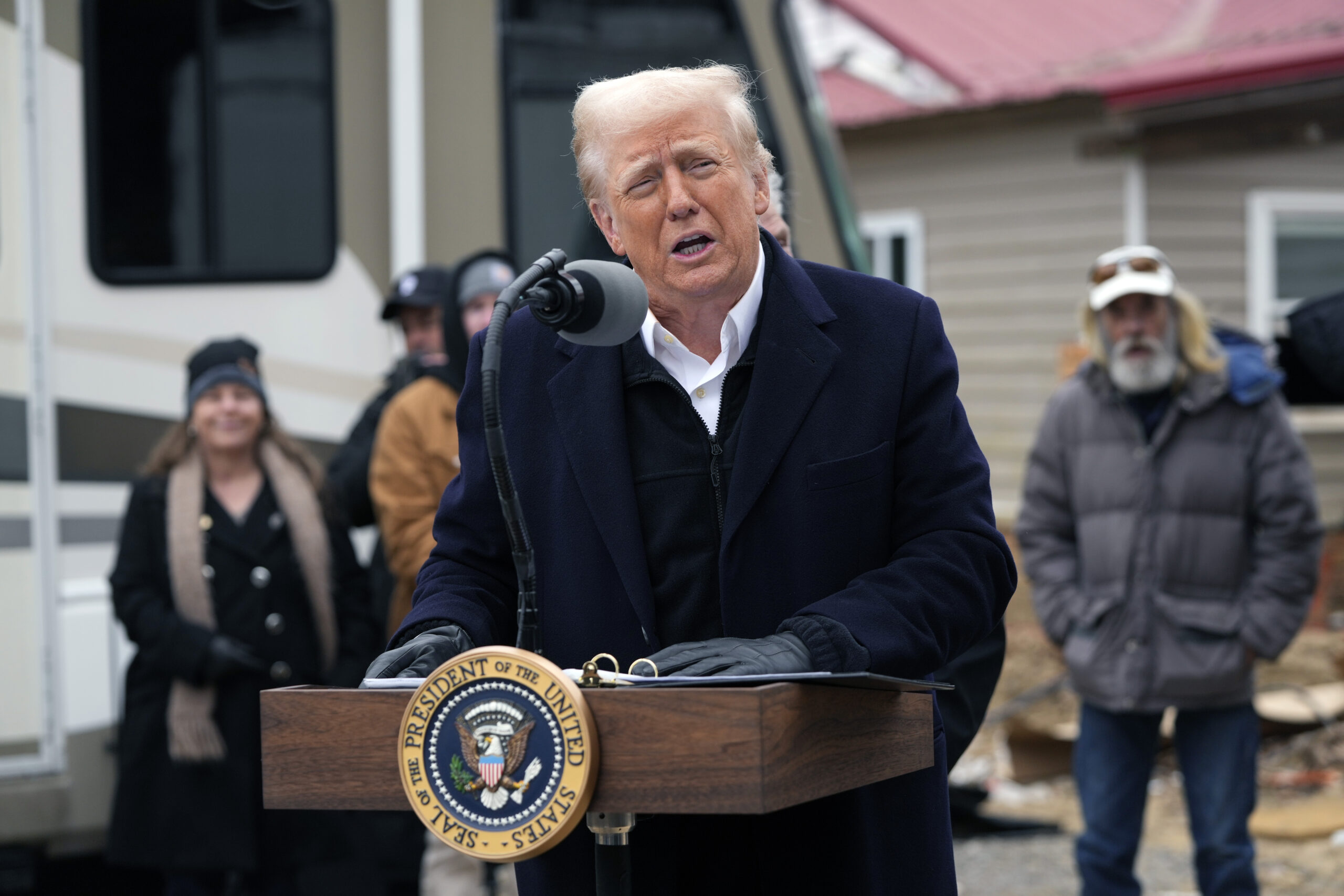
President Donald Trump’s executive orders targeting the federal workforce have injected a fresh wave of anxiety among employees across the bureaucracy — stoking fears the president is coming for their jobs.
Just a few days into Trump’s second term, some federal workers are contemplating quitting. Others are preparing to file grievances with their unions or moving communications with each other to secure platforms like Signal. Some, fearing they’ll be caught up in the White House’s purge of diversity programs, are leaving their names off of memos and documents they worry could be labeled as DEI-adjacent.
As federal employees searched this week for clues within the orders to see how they’ll be affected, a staffer with the Environmental Protection Agency said they were cleaning out their inbox and waiting for information about early retirement and buyout programs.
“Trump version 1.0 was bad,” said the EPA employee. “I’m already done with version 2.0.”
Trump, within hours of returning to power, issued a slew of executive orders seeking to overhaul how the federal government operates, from removing job protections to ending remote work to implementing a hiring freeze. The reception inside the federal government has been uneasy. But especially worrisome to some employees was the White House’s decision on Tuesday to eliminate diversity programs, subsequently placing those staffers on administrative leave.
At the State Department, the shutdown of those programs was something many saw coming. But some were startled by the directive that they report individual cases of people’s job descriptions being changed to “disguise” the DEI element to a special Office of Personnel Management email address. Some saw it as an order to snitch on colleagues. Others, who prepared for Trump’s return to office, had begun working months ago with outside nonprofits to archive websites they feared would be taken down by the Trump administration — including information on ending gender-based violence around the world.
“I would love to leave, but I don’t know where I’d go, and I am terrified of not being able to pay rent and not having healthcare,” one State staffer said.
Blue Light News spoke to almost two dozen federal workers for this article and granted anonymity to many in order to protect them from retribution for speaking out.
It’s too early to tell if a mass exodus of federal workers will occur. The vagueness of the president’s orders has many workers waiting to see how they will be implemented once political staff is in place. But what is clear is that the new administration intends to follow through on its threats to purge and dismantle the federal bureaucracy.
“Most of us are watching cautiously and letting the dust settle,” said an employee at the U.S. Agency for International Development. “We know that there is a range of possible outcomes, and some people are panicking, but most are taking a wait-and-see approach.”
Adding to federal workers’ distress, the acting head of the Office of Personnel Management, which is effectively the federal government’s HR department, on Monday instructed agencies to compile lists by the end of the week of all recent hires and “promptly determine whether those employees should be retained at the agency.”

Career staffers who have been in the job for less than a year are on probationary status, meaning they can be fired without triggering civil service protections that insulate much of the federal workforce.
“The only reason you would do that is that he’s going to fire them all,” said Alan Lescht, a Washington-based employment lawyer who represents federal workers. “If you have these mass firings you can’t accuse him of discriminating or anything. But then the question becomes who does [Trump] re-hire.”
Lescht said his firm began getting a spike in calls from worried federal employees starting Monday evening after Trump began signing executive orders.
New hires who have yet to start are also seeing their jobs vanish. Employees whose start date was Feb. 8 or later had their job offers revoked with limited exceptions, under a different OPM memo tied to the Trump administration’s federal hiring freeze.
At NASA, in the weeks leading up to Trump’s inauguration, union membership exploded as part of an effort to protect themselves as civil servants. The American Federation of Government Employees, which represents more than 800,000 employees throughout the government, “will be tracking how agencies implement the orders and will be prepared to file grievances if our contracts are violated,” a spokesperson said.
An Environmental Protection Agency staffer said they plan to file a grievance with the union if their remote work arrangement is rescinded. In the meantime, they’re preparing to find a job outside the government.
Another EPA employee predicted that no major changes would occur until March, when the short-term spending bill runs out. “After that, it’s a toss-up,” they said.
Carmen Paun, Katherine Hapgood, Alfred Ng and Marcia Brown contributed to this report.


Under the political radar, the country’s food stamps program is undergoing a slow-motion transformation. The ramifications could bubble up into the midterms.
Changes to the Supplemental Nutrition Assistance Program from Republicans’ One Big Beautiful Bill Act are rolling out in phases, from tougher work requirements to restrictions on non-citizens. Food stamp rolls already shrank by more than 5 million people nationwide as of this summer, as the hardest-hit state, Arizona, saw an outright majority of its food stamp recipients lose benefits.
The latest alteration clicked into place Oct. 1, when the share of administrative costs states and counties have to pay rose to 75% from 50%. An even bigger financial shift looms in a year, when states with high payment error rates will have to assume some benefit costs for the first time, a scenario that’s already rippling through state and local budget planning.
It all adds up to a new era in federal-state relations — and in the size and nature of the welfare state.
In a year when affordability worries top voters’ priority lists and grocery prices strain their wallets, Democrats think the SNAP shift gives them an opening to make Republicans pay politically after the GOP used social safety net cuts to food aid and Medicaid to help pay for last year’s tax cuts.
“People are getting kicked off these programs at the very moment they’re going to the polls to vote,” House Agriculture ranking member Angie Craig (D-Minn.) said. “I sure wouldn’t want to be a Republican headed into the November ballot.”
But Republicans think they have a compelling story to tell voters, trying to right-size a program that spends millions of dollars on erroneous payments. The SNAP changes align with the Trump administration’s broader push to crack down on fraud and make the government smaller or more efficient. Implementing stricter work requirements for welfare often polls well, and trying to move people toward work gets at the root causes of poverty, they argue.
“The premise is simple: Let’s make sure that this program is preserved for those truly in need, and that we aren’t squandering taxpayer dollars,” a senior USDA official told Playbook in an interview. “And let’s make sure that if folks are able-bodied, they are work training or volunteering for 20 hours per week.”
That doesn’t mean Republicans in competitive races are putting SNAP and Medicaid cuts front and center on the campaign trail. When they tout last year’s megalaw, new tax breaks typically lead the messaging. And 10 frontline GOP House campaigns didn’t respond to requests for interviews about how they can win on SNAP.
At the state and county level, some governments are scrambling to prepare for a massive cost shift, hitting at the same time as significant Medicaid changes. The resulting bureaucratic jumble has contributed to some of the SNAP losses this year, as recipients struggled to get through overtaxed call centers, some states cut staff, and others tightened their processes.
“It really sets up a change in the federal responsibility, and I view it as a slippery slope,” warned Barbara Guinn, New York’s commissioner of the Office of Temporary and Disability Assistance. Her state is staring down a possible $1 billion added burden next year, though they’re advocating for a repeal of the benefits change. “Once they implement any kind of cost shift, I think it will be easier for them to take similar actions in the future.”
Whether to delay next year’s cost shift has already generated tensions over the farm bill in the Senate, where Democrats are demanding a longer postponement than Republicans’ offer of one year. Some Minnesota counties are considering significant property tax increases to pay for the extra costs, Craig said: “We’re going to be pushing hard for a two-year delay — at the request of, frankly, many of my Republican county commissioners, not just Democrats.”
Conservatives see the new calculus as a long overdue change to improve efficiency and incentivize program integrity. Improper payment rates are high in many states (though they comprise both over-payments and under-payments, and error rates are different from fraud). Those that reduce errors enough won’t have to take on paying the benefits. And even opponents of the changes think lower error rates are a worthy goal. SNAP rolls often ebb and flow with the economy, and the recent drop could reflect the job market pulling people out of need — or the removal of people who shouldn’t have been getting food stamps in the first place.
“There needs to be some level of accountability,” the USDA official said. States with high error rates “need to start to have skin in the game.”
But at a time when many households are already squeezed by inflation, the SNAP changes have correlated with higher numbers of Americans turning to charities to ward off hunger. The surge in people losing food aid came more quickly than expected. The unemployment rate hasn’t meaningfully changed. And the vast majority of large food banks in a recent NBC survey said they were grappling with higher demand, in part due to food stamp changes. Another rule kicking in the day after the midterms could lead to many retailers being bumped out of SNAP as places where low-income people can use their benefits.
For state governments, a set of sweeping operational changes are now underway to conform to new policy demands, often requiring more money or staffing at already under-resourced offices. And the budgetary stakes to get error rates lower are sky-high.
“It’s a really complicated, nuanced and confusing time for states who are trying to administer SNAP,” said Lauren Kallins, a senior legislative director at the nonpartisan National Conference of State Legislatures, which has advocated for a delay in the benefits costs shift.
National Democrats are increasingly shifting their attention away from North Carolina’s Senate race as polls show former Gov. Roy Cooper ahead, eyeing once long-shot races as possible pickups. But a veteran Democratic strategist who helped deliver the party’s last presidential victory in the state is urging donors not to take a win for granted.
David Plouffe, who managed behind Barack Obama’s narrow 2008 victory in North Carolina, urged Democratic donors and supporters not to grow complacent in the final weeks of Roy Cooper’s Senate campaign, according to audio obtained by Blue Light News.
“I think that this race … has I think been the best run race in the country,” Plouffe said on the call. “But that doesn’t mean that we can rest easy.”
He warned about North Carolina’s relatively fixed partisan makeup as a purple state, making it difficult for a candidate to dramatically expand their base of support.
“There’s certain states that elections happen within a bound, and this one will be that way as well,” he said.
In public polling, Cooper leads Republican Michael Whatley, who has struggled to boost his name recognition against the much better-known former governor. And as Democrats grow increasingly bullish on their candidate’s chances of flipping the seat — one of four pickups they need to take control of the Senate — national groups have begun shifting their money and attention to other contests, including most recently to Kansas.
But Plouffe said North Carolina needs to remain a priority.
“We have to win the ones we have to win,” he said on the call to Cooper’s finance committee.
Just days before Plouffe’s remarks, Senate Democrats’ top super PAC pulled back some of its spending in North Carolina, following a much bigger retreat by Republicans’ top super PAC in the state.
Plouffe cautioned that North Carolina has historically been a tough state for Democrats at the federal level, especially in recent years. The party hasn’t won a Senate race there since 2008, when Obama became the last Democratic presidential candidate to carry the state, winning by fewer than 15,000 votes. He lost the state in 2012.
“Even though we carried the electoral votes back then, we only did so by I think 14,000 votes. So it was our narrowest victory,” Plouffe said. “And in 2012, we tried to win North Carolina again with the help of so many people on this phone, and we just couldn’t get it done. And that tells you how difficult the state is.”
Plouffe also cast the stakes of Cooper’s race as extending beyond November, arguing that a Cooper victory could provide a blueprint for the party’s eventual 2028 presidential nominee.
“Democrats need to compete and win in North Carolina in 28,” he said. “And it’s one thing to look how a governor can win a state. The best route, the best scout that you receive, is how someone in a federal race won in a tough state, and that can show you the way.”

Byron Donalds says he is not a ‘yes man’ to Trump
lead image
-

 Politics2 years ago
Former ‘Squad’ members launching ‘Bowman and Bush’ YouTube show
-
Uncategorized2 years ago
Bob Good to step down as Freedom Caucus chair this week
-

 The Josh Fourrier Show2 years ago
DOOMSDAY: Trump won, now what?
-

 The Dictatorship2 years ago
Pete Hegseth’s tenure at the Pentagon goes from bad to worse
-

 Politics2 years ago
Former Kentucky AG Daniel Cameron launches Senate bid
-

 The Dictatorship2 years ago
Luigi Mangione acknowledges public support in first official statement since arrest
-

 Politics2 years ago
Blue Light News’s Editorial Director Ryan Hutchins speaks at Blue Light News’s 2025 Governors Summit
-

 The Dictatorship1 year ago
Mike Johnson sums up the GOP’s arrogant position on military occupation with two words