
The Dictatorship
How the government shutdown could impact the US economy

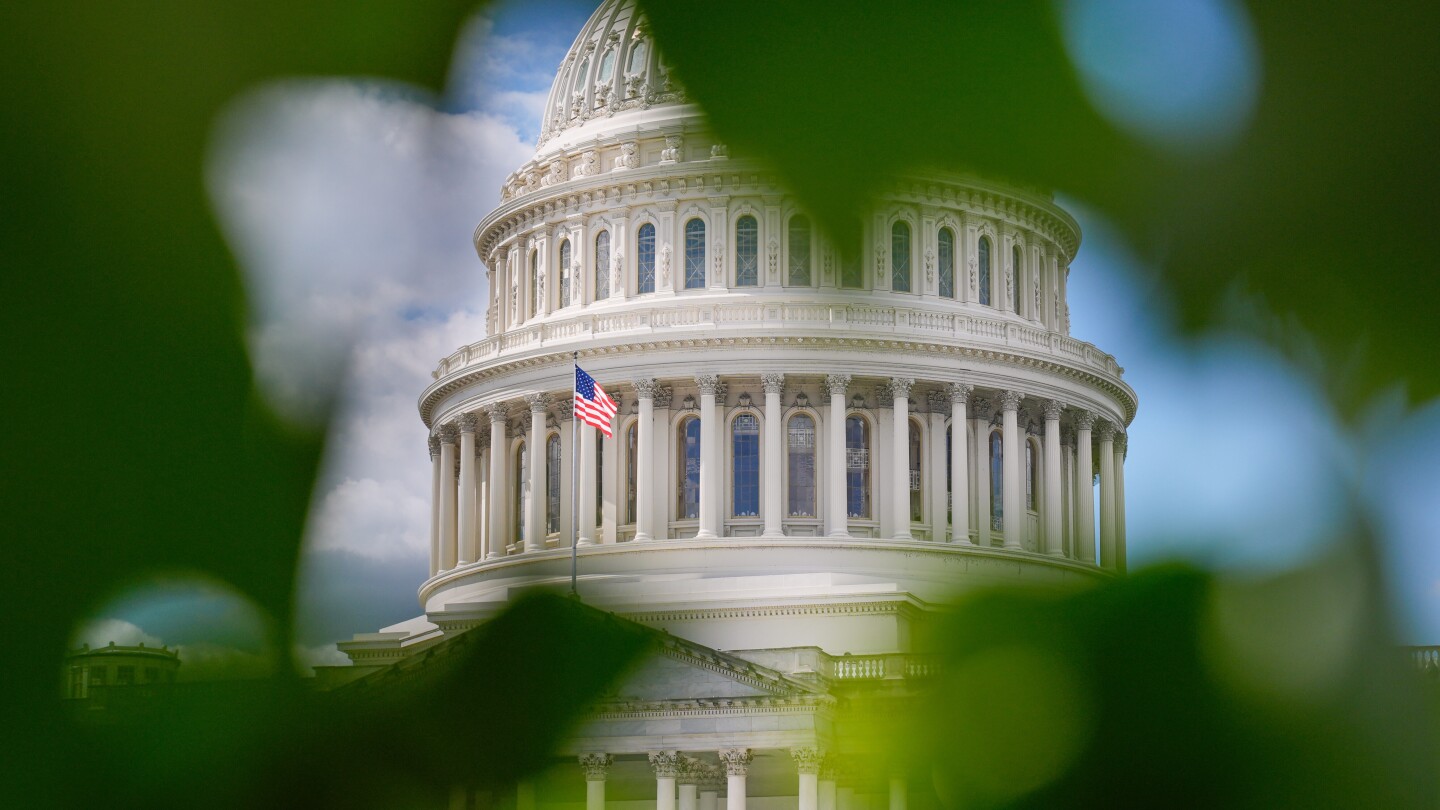
WASHINGTON (AP) — Shutdowns of the federal government usually don’t leave much economic damage. But the one that started Wednesday looks riskier, not least because President Donald Trump is threatening to use the standoff to permanently eliminate thousands of government jobs and the state of the economy is already precarious.
For now, financial markets are shrugging off the impasse as just the latest failure of Republicans and Democrats to agree on a budget and keep the government running.
“Everyone seems quite complacent about the shutdown, assuming the Democrats and Republicans will come to terms and life will go on, as has been the case in past shutdowns,” the independent economist Ed Yardeni wrote in a commentary Thursday. “History could certainly repeat, especially with a man known for dealmaking sitting in the Oval Office.’’
But given the chasm separating the two political parties, Yardeni added, “the lack of caution is somewhat surprising.’’
Speaker of the House Mike Johnson, R-La., and GOP leaders, from left, Rep. Lisa McClain, R-Mich., Majority Leader Steve Scalise, R-La., and Majority Whip Tom Emmer, R-Minn., blame the government shutdown on Democrats during a news conference at the Capitol in Washington, Thursday, Oct. 2, 2025. (AP Photo/J. Scott Applewhite)
Speaker of the House Mike Johnson, R-La., and GOP leaders, from left, Rep. Lisa McClain, R-Mich., Majority Leader Steve Scalise, R-La., and Majority Whip Tom Emmer, R-Minn., blame the government shutdown on Democrats during a news conference at the Capitol in Washington, Thursday, Oct. 2, 2025. (AP Photo/J. Scott Applewhite)
The U.S. government has now shut down 21 times in the past half century. The last of those shutdowns was the longest — stretching five weeks in December 2018 into January 2019 during Trump’s first term.
Even that one barely left a mark on the world’s biggest economy: The Congressional Budget Office estimates that it shaved just 0.02% off 2019 U.S. gross domestic product — the nation’s output of goods and services.
The economic impact of shutdowns is usually fleeting. Federal workers get furloughed and the federal government delays some spending while they last. When they’re over, federal workers go back to their jobs and collect back pay, and the government belatedly spends the money it had withheld. It’s pretty much a wash.
“Government shutdowns are inconvenient and messy,″ said Scott Helfstein, head of investment strategy at the investment firm Global X. ”But there is little evidence that they have a significant impact on the economy. Typically, the lost economic activity, if meaningful in the first place, is recovered in the following quarter.″
Government benefit payments that provide crucial income support for millions of Americans, such as Social Security, and health care programs such as Medicare, won’t be disrupted by the shutdown.
Data from previous shutdowns have shown little impact on U.S. GDP unless they are extended, according to CBO Director Phillip Swagel. “The impact is not immediate, but over time, there is a negative impact of a shutdown on the economy,” he recently told The Associated Press.
The damage could be worse this go-around.
John O’Hara works on the floor at the New York Stock Exchange in New York, Wednesday, Oct. 1, 2025. (AP Photo/Seth Wenig)
John O’Hara works on the floor at the New York Stock Exchange in New York, Wednesday, Oct. 1, 2025. (AP Photo/Seth Wenig)
First, some government agencies dodged the 2018-2019 shutdown because they’d received funding in advance and could just continue operating. That hasn’t happened this time: The CBO estimates that about 750,000 federal employees could be temporarily laid off.
Trump is also considering something more destructive: His budget office has threatened the mass firing of federal workers this time, not just putting them on temporary furlough.
A “reduction in force’’ would not only lay off employees but eliminate their positions, threatening more upheaval for a workforce that’s already been purged by Trump. “We’d be laying off a lot of people that are going to be very affected, and they’re Democrats. They’re going to be Democrats,” the president said Tuesday.
Thomas Ryan of Capital Economics wrote in a commentary that “it is reasonable to assume that (Trump’s mass layoff threat) is political bluster, aimed at pressuring Democrats to approve a funding extension without concessions.” But, he added, “if followed through, it could have longer-term consequences, prolonging government downsizing and keeping the sector as a drag on payrolls into next year.”
Ryan Sweet, chief U.S. economist at Oxford Economics, estimates that the shutdown and temporary loss of income for federal workers could shave 0.1 to 0.2 percentage points from the nation’s annual growth rate in the fourth quarter for each week the government is closed. Some of that will be recovered once it reopens.
“The economic costs of government shutdowns are normally minimal unless they last for several weeks,” Sweet wrote.
The shutdown also comes at a time when the job market is already under strain, damaged by the lingering effects of high interest rates and uncertainty around Trump’s erratic campaign to slap taxes on imports from almost every country on earth and on specific products — from copper to foreign films.
Financial information is displayed as traders work on the floor at the New York Stock Exchange in New York, Wednesday, Oct. 1, 2025. (AP Photo/Seth Wenig)
Financial information is displayed as traders work on the floor at the New York Stock Exchange in New York, Wednesday, Oct. 1, 2025. (AP Photo/Seth Wenig)
Labor Department revisions earlier this month showed that the economy created 911,000 fewer jobs than originally reported in the year that ended in March. That meant that employers added an average of fewer than 71,000 new jobs a month over that period, not the 147,000 first reported. Since March, job creation has slowed even more — to an average 53,000 a month. During the 2021-2023 hiring boom that followed COVID-19 lockdowns, by contrast, the economy was creating 400,000 jobs a month.
The September jobs report was supposed to come out Friday — forecasters had expected to see 50,000 new jobs last month — but has been delayed indefinitely by the shutdown.
The economy is sending mixed signals, however. GDP growth came in at a strong 3.8% annual pace from April through June, reversing a 0.6% drop in the first three months of the year. But it’s not yet clear if that solid growth can continue, or if it will spur a rebound in hiring.
“The economy is very much on a ‘knife’s edge,’” said Michael Linden, senior policy fellow at the left-leaning Washington Center for Equitable Growth. “The economic data is pointing in different directions right now. Second-quarter GDP growth was strong, but how much of that was merely a bounce back from incredibly weak first quarter GDP is hard to know. What we know for sure is that the economy is creating fewer jobs, wage growth is slowing, and middle-class consumers are feeling pinched.”
____
Associated Press Writer Fatima Hussein in Washington contributed to this story.


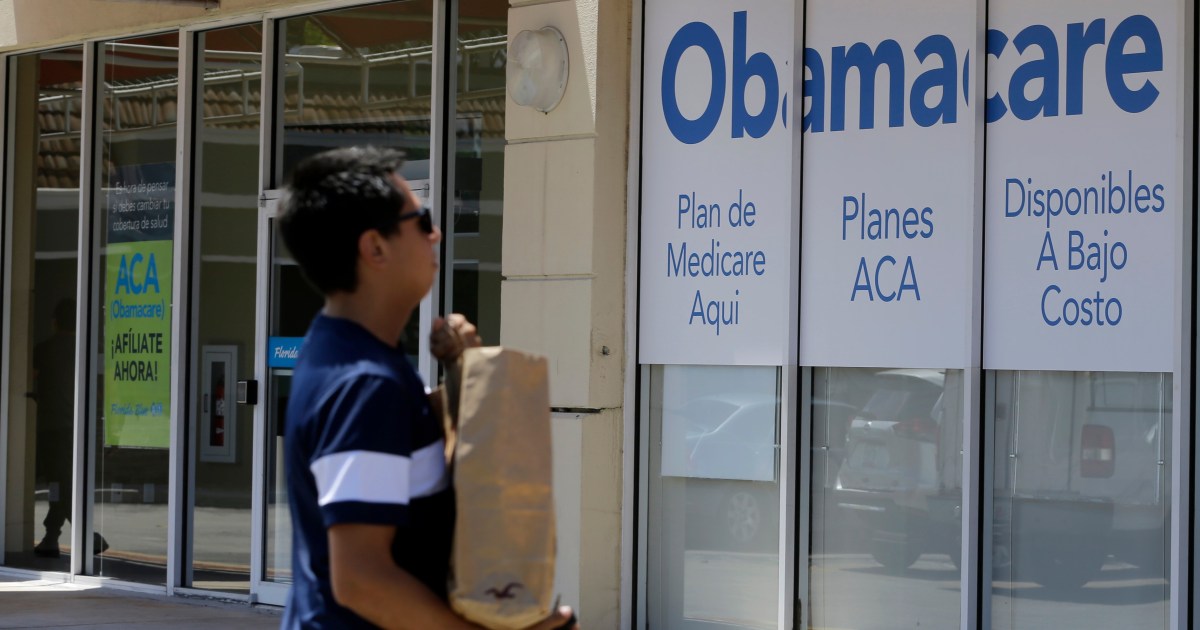
NEW YORK (AP) — About 3 million fewer people in the United States had Affordable Care Acthealth insurance plans in February compared with the same time last year, according to new federal data.
In the reportreleased Friday, the U.S. Department of Health and Human Services suggested the 13% drop in enrollment from 22.1 million people in 2025 to 19.2 million this year could be attributed to a federal crackdown on fraudulent or “phantom” enrollment. But health analysts said it was more likely related to the Jan. 1 expiration of federal subsidieswhich caused a surge in plan costs that resulted in many people being unable to pay their premiums.
“We know that real people lost their health insurance coverage,” said Cynthia Cox, a vice president and director of the ACA program at the healthcare research nonprofit KFF, citing survey findings on people who had left their plans. “This coverage loss happened at the same time millions of people faced double or even triple digit increases in their premium payments.”
The new data, compiled in April but showing coverage in February, represents the government’s first official look at how people’s inability to pay their first bills this year affected total enrollment. That is because the figures capture the marketplace after a nonpayment grace period expired.
A federal estimate in Januaryshowed that about 800,000 fewer people had signed up for ACA plans compared with the same time last year, marking the first time in the past four years that enrollment had been down from the previous year at that point in the shopping window.
Cox said KFF expects the total number of people in the government healthcare program to continue to declinethroughout the year, potentially to a low of about 17.5 million. That would be a significant drop for the government’s flagship subsidized health insurance program for working-age people who do not qualify for Medicaid. In recent years, ACA plans have become a popular choice for gig workers, farmers, ranchers, hairstylists and others without health coverage through an employer.
The ACA subsidies that expired this year were at the center of a bitter fight in Congress last fall, with Democrats and some Republicans calling for their renewal. Sharp increases in health costs across ACA and other health insurance programs come as voters in the approaching November elections say affordability is among their top concerns.
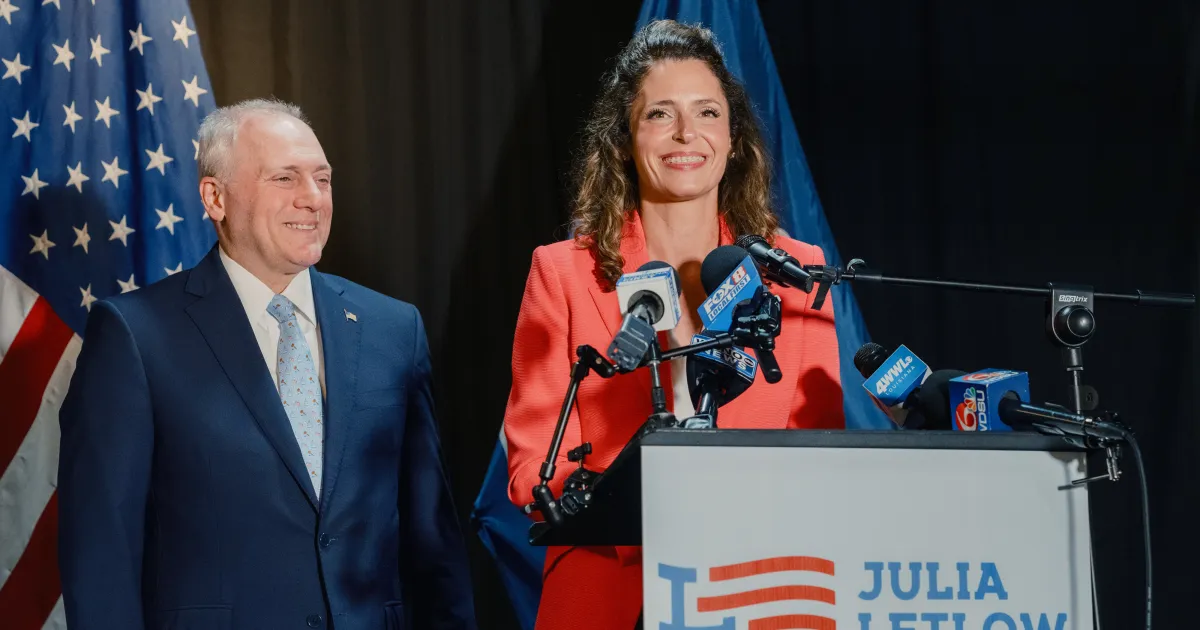
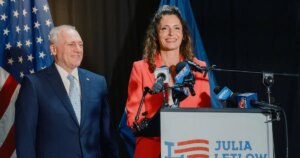
Rep. Julia Letlow won Louisiana’s Republican Senate primary runoff Saturday, defeating former Rep. John Fleming.
Her win comes as a victory for President Donald Trump, who has endorsed her repeatedly throughout the race — including before she was even officially running.
Letlow made history in 2021 when she became the first Republican woman to represent Louisiana in Congress. In that special election, she won the seat that her late husband, Luke Letlow, had won prior to dying of complications related to Covid-19 in December 2020.
Letlow had no political experience prior to running for her late husband’s seat. She holds a doctorate in communication from the University of South Florida and worked as an administrator for Tulane University and the University of Louisiana, according to her LinkedIn page. Nonetheless, she won the special election House race with nearly 65% of the vote.
In Congress, she has served on the appropriations and education committees, and has been a reliably MAGA Republican.
Letlow’s win also comes as a rebuke to Fleming, who loaned himself more than $11 million, according to the Federal Election Commission, and tried running for the same seat in 2016 only to finish in fifth place in the nonpartisan primary. (Letlow did not loan her campaign any money, and took in more than $5.35 million compared to Fleming’s more than $12.1 million, FEC filings show.)
Trump has played a key role in the race. In addition to backing Letlow early on, the president also helped tank Republican incumbent Sen. Bill Cassidy’s re-election campaign in last month’s primary, based on the senator’s record of bucking his party and voting in favor of Trump’s second impeachment. In the primaryLetlow earned nearly 45% of the vote, giving her a healthy lead over both Fleming, who received about 28% of the vote, and Cassidy, who earned nearly 25%.
Ahead of Saturday’s runoff, polling showed Letlow and Fleming in a close race, with Letlow retaining a small lead in several polls.
Letlow will now proceed to the November general election to face off against the Democratic nominee, farmer Jamie Davis, who came out on top in tonight’s Democratic primary runoff.
The state has not sent a Democrat to the Senate since 2008, when Mary Landrieu won her last term in office.
Julianne McShane is a breaking news reporter for MS NOW who also covers the politics of abortion and reproductive rights. You can send her tips from a non-work device on Signal at jmcshane.19 or follow her on X or Bluesky.

Bill Pulte, the acting director of national intelligencehas stirred fear by choosing as his chief of staff a GOP election lawyer who oversaw a poll watching program that included Jack Posobiec and other conservative conspiracy theorists. The lawyer, Christina Norton, also appears to have no experience working in the intelligence community.
“It is horrifying,” a former senior U.S. intelligence official told MS NOW Saturday. “Not only does Norton have absolutely no background, experience or expertise in national security or intelligence, but her principal qualifications appear to be loyalty to Pulte and an embrace of absurd election-interference conspiracies.”
Sen. Thom Tillis, R-N.C., who has been a vocal critic of Pulte, also raised concerns about election integrity on Sunday while taking shots at the director of national intelligence and the office itself.
“We should eliminate the DNI, and we should eliminate Pulte from the DNI until that happens,” he said on BLN, adding, “I am concerned that we’re gonna continue to cast doubt on elections in November and erode what has been a 250-year tradition of a peaceful transition of power.”
Pulte’s choice of Norton is also likely to increase concerns among Democrats that President Donald Trump intends to use the Office of the Director of National Intelligence to interfere in the midterm elections. Pulte, a loyalist with no intelligence experience, has used his current position as head of federal mortgage agencies to refer political rivals of the president for federal criminal prosecution.
Rep. Jamie Raskin, D-Md., told MS NOW on Sunday that the choice “just confirms” that the “only job qualification is absolute political loyalty and devotion to Donald Trump.” But he expressed faith in the judicial system during an appearance on “The Weekend,” noting that “right now we have federal courts across the land that are rejecting their various attempts to take over the election process. Nine different federal courts have rejected the claim that the president, by executive order, can compel the states in the union to turn over all of their voter lists to Donald Trump and to the White House.”
The New York Times first reported Norton’s appointment.
The former senior intelligence official, who requested anonymity due to concerns of retaliation, told MS NOW the choice also “signals as clearly as could be that Pulte has been put at ODNI to misuse the awesome power of the U.S. intelligence community to interfere in the upcoming midterm elections.”
Norton, reached by MS NOW by telephone, declined to comment and referred questions to an ODNI spokesperson. The spokesperson declined to comment on Norton but defended Pulte’s tenure.
“Acting Director Pulte and his team are focused on carrying out President Trump’s national security priorities while faithfully executing ODNI’s statutory mission,” the spokesperson told MS NOW. “We are leading the Intelligence Community to provide President Trump with elite, apolitical intelligence that keeps America safe.”
Sen. Bill Cassidy, R-La., appearing on CBS News’ “Face the Nation” Sunday, said his objection to Pulte is “that he used personal information to target a political enemy of the president,” a reference to New York Attorney General Letitia James.
“You should not be using the force of government to crash upon somebody just because the person in charge does not like them or finds them inconvenient. The fact that Bill did that is disqualifying for someone to be the director of national intelligence,” Cassidy said.
Rep. Jim Himes, D-Conn., the ranking Democrat on the House Intelligence Committee, said on Friday that Congress would ensure that the ODNI under Pulte will “report on legitimate foreign threats to elections, not Donald Trump’s imaginary ones.”
Himes warned that, “Trump was explicit when he appointed Bill Pulte to a job he had no qualifications for that he had elections in mind.”
Trump has said in interviews with the news media that he would like to see Pulte shrink the size of the ODNI and investigate election fraud. Pulte’s predecessor, Tulsi Gabbard, participated in investigations in Georgia and Puerto Rico to find proof of Trump’s false claims that the 2020 election was stolen.
Democrats and some former intelligence officials say they worry that Pulte may try to falsely claim that his office has found evidence that foreign governments are secretly funding Democratic candidates in the midterms.
Pulte could falsely claim foreign actors have hacked U.S. voting machines, they say, and altered vote totals in favor of Democrats during the midterms. Or Trump could instruct Pulte to be present if FBI agents seize ballots and election records in November as they did earlier this year in Fulton County, Georgia.
Sen. Mark Warner, D-Va., the ranking Democrat on the Senate Intelligence Committee, warned in a statement on Friday that Pulte should not use his position to spread Trump’s false election conspiracy theories.
“The mission of ODNI is to identify and counter foreign threats, not to import election denialism into the Intelligence Community,” Warner said. “Americans have every reason to fear that this administration is once again eroding the wall between our intelligence agencies and domestic elections.”
David Rohde is the senior national security reporter for MS NOW and a two-time winner of the Pulitzer Prize for International Reporting. Previously he was the senior executive editor for national security and law for NBC News.
- Republicans get antsy about confirmations as the Senate hangs in the balance
- Rick Scott says he’s just trying to help
- Millions drop Obamacare health coverage after subsidies expire and costs rise

- The Lincoln Memorial should be green with envy: This reflecting pool stayed clear

- Anna Paulina Luna has paralyzed the House, and fellow Republicans are mystified

- Capitol agenda: House GOP agenda gets tenuous Trump lifeline

- The Lincoln Memorial should be green with envy: This reflecting pool stayed clear
- Capitol agenda: House GOP agenda gets tenuous Trump lifeline
- Iranian diplomat blasts ‘pseudo-VAR’ interventions after World Cup exit
- Rep. Julia Letlow wins Louisiana GOP Senate primary runoff
-

 Politics1 year ago
Former ‘Squad’ members launching ‘Bowman and Bush’ YouTube show
-

 The Dictatorship1 year ago
Luigi Mangione acknowledges public support in first official statement since arrest
-

 Politics1 year ago
Former Kentucky AG Daniel Cameron launches Senate bid
-
Uncategorized2 years ago
Bob Good to step down as Freedom Caucus chair this week
-

 The Josh Fourrier Show2 years ago
DOOMSDAY: Trump won, now what?
-

 The Dictatorship1 year ago
Pete Hegseth’s tenure at the Pentagon goes from bad to worse
-

 Politics1 year ago
Blue Light News’s Editorial Director Ryan Hutchins speaks at Blue Light News’s 2025 Governors Summit
-

 The Dictatorship10 months ago
Mike Johnson sums up the GOP’s arrogant position on military occupation with two words