
Politics
Democrats can’t afford to laugh off RFK Jr.’s biggest appeal to voters

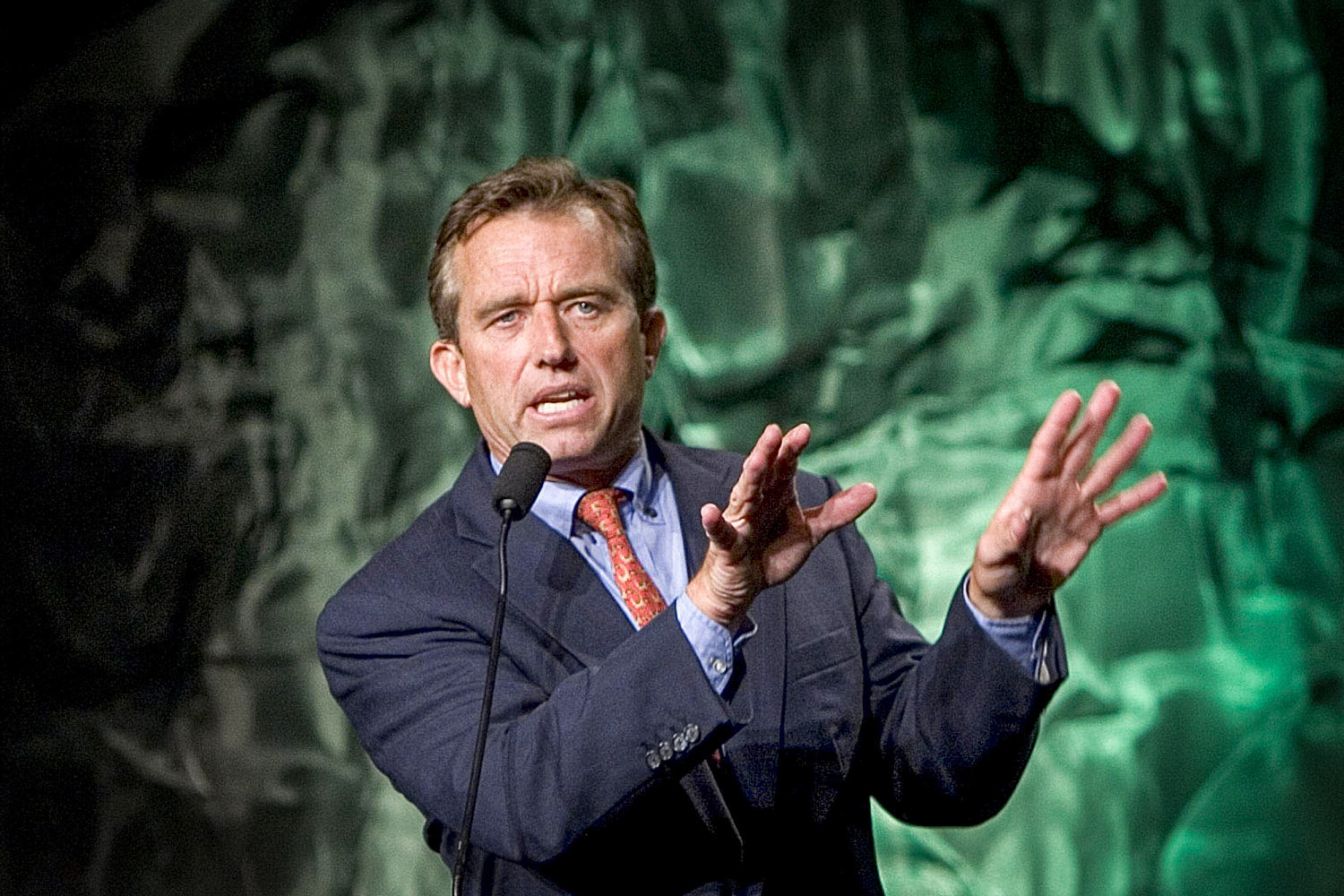
In the days since Robert F. Kennedy Jr. suspended his presidential campaign and endorsed Donald Trump, the former candidate has promised to provoke a “realignment” of environmental politics. While criticizing Democrats for “divisive” climate policies, Kennedy has made the case for environmental policies that could, he believes, “unite the nation,” including a focus on clean air and water, restoring the health of soils, and removing plastics, pesticides and toxic chemicals from supply chains.
There’s one problem with Kennedy’s vision for an environmental realignment: It rests on the electoral vehicle of Trump.
Recently, Kennedy won a vigorous endorsement for this so-called “Make America Healthy Again” agenda from Tucker Carlson in an interview that went viral last week. But there’s one problem with Kennedy’s vision for an environmental realignment: It rests on the electoral vehicle of Trump, who as president appointed profiteers from the plastics industry and Big Agriculture to key roles responsible for food and water safety, gave lobbyists from chemical companies a wish list of concessions, appointed Supreme Court justices who gutted government authority to regulate toxic substances, and now promises to cut government watchdogs and remove “forever chemicals” like PFAS from hazardous substance lists. And that’s to say nothing of his legacy on climate.
It’s easy enough for Democrats to laugh off Kennedy’s comments. Instead, they should make a serious play for his voters.
There’s a clear electoral case for doing so. While Kennedy’s support fell to roughly 5% in three-way matchups nationally after Vice President Kamala Harris entered the race, there was widespread evidencethat the third-party candidate was pulling more from Harris than from Trump. Although it’s hard to forecastwhether Kennedy will be able to persuade his supporters to vote for the Republican, even a single percentage point could be decisive in an election as close as this one. Look at Florida in 2000. Or any of the “blue wall” states in 2016.
Yet, there’s more at play here than swing state electoral math. Kennedy is seeking to give the Republicans something they haven’t had since the Nixon era: a way to claim the mantle of environmentalism. In an age of widespread distrust of big institutions, Kennedy is arguing that Americans can support the environment without supporting big-government climate policies. He is speaking directly to now-substantial wellness-focused demographic subgroups — organic moms, natural parenting advocates, fitness bros — who prioritize clean food, air and water but, especially since the pandemic, are leery of federal agencies and government authority.
So how should Democrats make the case to these voters?
Tell the truth. Drive home the message that Trump is the candidate of toxic chemicals.
While Trump has tried to distance himself from the Project 2025 blueprint, the key environment plans in the document were written by Trump appointees and match with his own promises to gut the “administrative state.” Project 2025 would remove the “hazardous substances” designation of PFAS chemicals — perfluoroalkyl and polyfluoroalkyl as well as related “forever chemicals.” Federal watchdogs finalized the classification of these substances in April, drawing on evidence that they present a serious threat to human health, including a range of cancers, cardiovascular disease, liver issues and fetal development issues. Extensive research demonstrates that such chemicals damage the functioning of the endocrine system and undercutmen’s testosterone and fertility levels, a fact that should concern Trump’s macho base. Project 2025 plans from Trump advisers moreover seek to eliminate the government’s authority to track Americans’ cumulative exposure to a wide range of toxic chemicals under the Toxic Substances Control Acta key defense against virtually all the toxic chemicals that Kennedy warns against.
Extensive research demonstrates that such chemicals damage the functioning of the endocrine system and undercut men’s testosterone and fertility levels, a fact that should concern Trump’s macho base.
To win would-be RFK Jr. voters, Democrats should also propose a proactive agenda on these issues. The Biden administration recently announceda new program to reduce single-use plastics in federal government operations, enhance plastics cleanup, strengthen regulations on toxic emissions from plastics, and modernize plastics recycling infrastructure. But Harris can go further. Her campaign should unveil a more comprehensive plan to counter PFAS and forever chemicals in the food system and supply chains.
Blockbuster reportingin The New York Times last week revealed how toxic sewage sludge with extremely high levels of PFAS and “forever chemicals” is being used to fertilize roughly 70 million acres of U.S. farmland and has been implicated in the deaths of livestock, not to mention untold risks to human health. The Times reported that the EPA has encouraged the use of these recycled biosoils in order to reduce the use of fertilizers made from fossil fuels. Harris could demonstrate her commitment to addressing toxic chemical threats and, in so doing, make a play for RFK Jr. voters by taking a stand to ensure that the government agencies no longer promote the use of such recycled fertilizers.
Trump — who recently promised the oil industrythat he would do anything it wants in exchange for a billion dollars for his campaign — has clear reasons to be beholden to the petrochemical industry as well as Big Ag and manufacturers of ultraprocessed foods. But Harris can and should welcome a fight with these interest groups.
In his interviewwith Carlson, Kennedy passionately declared that “the reason we protect the environment is because there’s a spiritual connection … there’s a love that we have. Our connection to the fish and the birds and the whales and the purple mountains majesty.” This, he argued, is what animated his campaign.
To seize an electoral opportunity, Democrats need to press the case: a vote for Trump is no way to express your love and commitment to Mother Nature.
Justin Talbot Zorn
Justin Talbot Zorn is senior adviser at the Center for Economic and Policy Research in Washington, D.C., a former senior congressional staffer, and author of a book on the politics of mindfulness. He’s written for the Washington Post,LA Times, New Republic, TIMEand other publications.


Democrats voted to make South Carolina their first presidential primary state for 2028 — a significant shift from past election cycles, and one that prioritizes a state with a significant Black voting bloc.
The Democratic National Committee’s Rules and Bylaws Committee voted Friday to make the Palmetto State the first contest in the 2028 primary calendar.
The decision to choose South Carolina over Nevada, another historic early state in contention for first place, came down in part to concerns about Nevada’s ability to process election results quickly. Democrats said they were also looking to strengthen Black voting power in the South after the Supreme Court significantly restricted the Voting Rights Act earlier this year, which triggered redistricting efforts.
Michigan bested Iowa in the vote to be the Midwest’s early state, meaning Iowa will not be an early state in 2028 after leading the calendar for decades through 2020. New Hampshire, which has gone second on the nominating calendar in most past cycles, finished a distant third in voting to be Democrats’ first primary state.
Gas prices are high. Americans think they’re even higher.
Three in five Americans believe gas prices in their area have risen by more than they actually have, according to an analysis of new results from The Blue Light News Poll. It’s those perceptions that candidates will be running against this fall.
Voters’ anxieties about fuel prices could give Democrats a boost ahead of the midterms, further strengthening the Democratic voting base and putting strains on the MAGA coalition as the increasingly unpopular war in Iran drags on. A plurality of Americans — 46 percent — say the change in gas prices will impact how they plan to vote come November.
Most voters overestimated the change in gas prices in their area, according to the analysis of polling and granular pricing data provided by OPIS, a Dow Jones company that tracks gas prices. That includes majorities of voters who supported President Donald Trump and also those who supported former Vice President Kamala Harris.
Roughly one in four Americans say gas in their local area has risen by $3.00 or more. But no zip code has actually seen that degree of change on average in the year and a half since Trump took office, as of early July.
Frustrations over cost of living could be reinforcing existing negative views of the Trump administration: Harris voters are far more likely to overshoot the cost jumps than Trump voters, making it harder for Republicans to peel off Democratic voters.
And the analysis shows a fracture among Trump voters. Self-identified MAGA Republicans were more likely to underestimate cost increases than non-MAGA Republicans — another crack in the president’s winning coalition as Republicans scramble to hold it together for the midterms.
“It is a particularly tough dance that many Republican candidates will have to endure for the next three months,” said Arizona GOP strategist Barrett Marson. “How do you feel the pain of your voters without feeling the wrath of Donald Trump?”
What’s more, American’s perceptions do not quickly change even when prices do. The Blue Light News Poll asked about gas prices in both May, when they were near their peak, and July, when they had dipped.
The results were the same in both.
“President Trump and his energy team anticipated these temporary market disruptions, communicated them openly to the American people, and implemented an aggressive plan to mitigate any impacts,” said White House spokesperson Taylor Rogers. “As the U.S. military degrades the terrorist Iranian regime’s ability to attack commercial vessels and disrupt the free flow of energy through the Strait of Hormuz, oil and gas prices will plummet back to pre-conflict levels.”
Gas prices could swing votes
Americans’ frustrations with prices and the economy overall are changing how they say they will vote in the fall.
Of the 46 percent of Americans who said gas prices will have an impact on their vote, just under 40 percent said they are considering voting for a different party than they normally would, including 49 percent of MAGA Republicans and 57 percent of non-MAGA Republicans.
“Three quarters of the country is confronting higher gas prices and feeling it,” said longtime Democratic strategist Jesse Ferguson. “That leaves them … very vulnerable to the economic pain and very vulnerable to the economic argument the Democrats are going to make.”
To better understand public perception of gas prices, The Blue Light News Poll asked Americans how the price of gas in their area had changed since Trump took office. Respondents could choose between buckets like “$1 to $2 higher per gallon,” “$1 to $2 lower per gallon,” or say prices had stayed roughly the same.
More than three-fourths said gas prices in their area have gone up.
Using OPIS data, Blue Light News compared each respondent’s answer against the actual average cost of regular gas in their zip code during the first week Trump was in office and the week prior to the July poll, which was conducted by the independent polling organization Public First from July 12 to July 15.
That comparison revealed the difference between the pain the American public is feeling and where actual gas prices stand — and, in particular, how that pain is expressed differently among Democrats and Republicans. Roughly 70 percent of Harris voters and 54 percent of Trump voters overestimated the increase in gas prices in their area, according to Blue Light News’s analysis.
“Democrats are highly motivated,” as a voting base, Marson said. “The longer the war goes on, probably the less motivated Republicans will be.”
The perception of higher gas prices is linked to how people see the economy — and who they blame for it.
Across the country, 57 percent of Americans say the cost of living is worse than they “can ever remember it being.” Those who overestimate gas price increases had more than twice the odds of agreeing with that statement, even after controlling for demographics and their 2024 vote.
Similarly, a plurality of Americans — 43 percent — blame Trump more than former President Joe Biden for the state of the economy overall. Those who overestimated their local increase in gas prices had nearly twice the odds of saying the same, compared with those who perceived the change in gas prices correctly or who underestimated the change.
It’s already affecting the battlegrounds
In the country’s most competitive races, Republicans will have to answer for the perceived cost pressures of rising gas prices more often than Democrats.
Thirteen of the most competitive districts have experienced gas price increases higher than the national average, according to Blue Light News’s analysis. Of those, nine are currently represented by Republicans.
In California’s 22nd District, where Republican incumbent Rep. David Valadao will face off against progressive political newcomer Randy Villegas, average prices across the district had gone up $1.17 by early July — the third highest increase of any district, according to Blue Light News’s analysis.
Villegas said in an interview that he thought frustration over gas prices would mobilize turnout in the fall, driven by how the cost of gas is “tied to every other thing.”
“It’s the cost of gas when you’re driving to the grocery store, when you’re driving to, you know, see a doctor,” he said. Or, the cost of gas when driving 7 to 8 hours away to “go get cheaper health care.”
Valadao did not respond to requests for comment.
In Colorado’s 8th District, where gas prices have risen by $0.73 on average since Trump took office, Republican incumbent Rep. Gabe Evans blamed local Democratic policies for increased costs more than the Iran war.
While “what’s happening halfway around the globe has some impact on global energy prices,” Evans said, high gas prices in the district are “a direct result of the local economic policies — the anti-energy policies — of the state Democrats who run the state of Colorado.”
But The Blue Light News Poll results from this month show voters don’t necessarily feel the same. Roughly 63 percent of Americans selected “the war with Iran” as the primary reason why gas prices have increased since Trump took office, including 59 percent of Trump voters and 70 percent of Harris voters.
By the middle of May, the average price of gas across the country reached its highest point of the Trump administration to date: $4.50 per gallon, according to the U.S. Energy Information Administration. In July, average prices dipped to $3.78 per gallon, the lowest average price since March.
Still, in both months, more than 75 percent of Americans said gas prices had gone up, Blue Light News’s polls show. And in both months, roughly 23 percent said prices had gone up by $3.00 or more.
This week, Trump said the upcoming midterms would not impact how he goes about fighting the war with Iran. “I can’t think about that having to do with this,” he said, referring to the elections. “I think people are very impressed.”
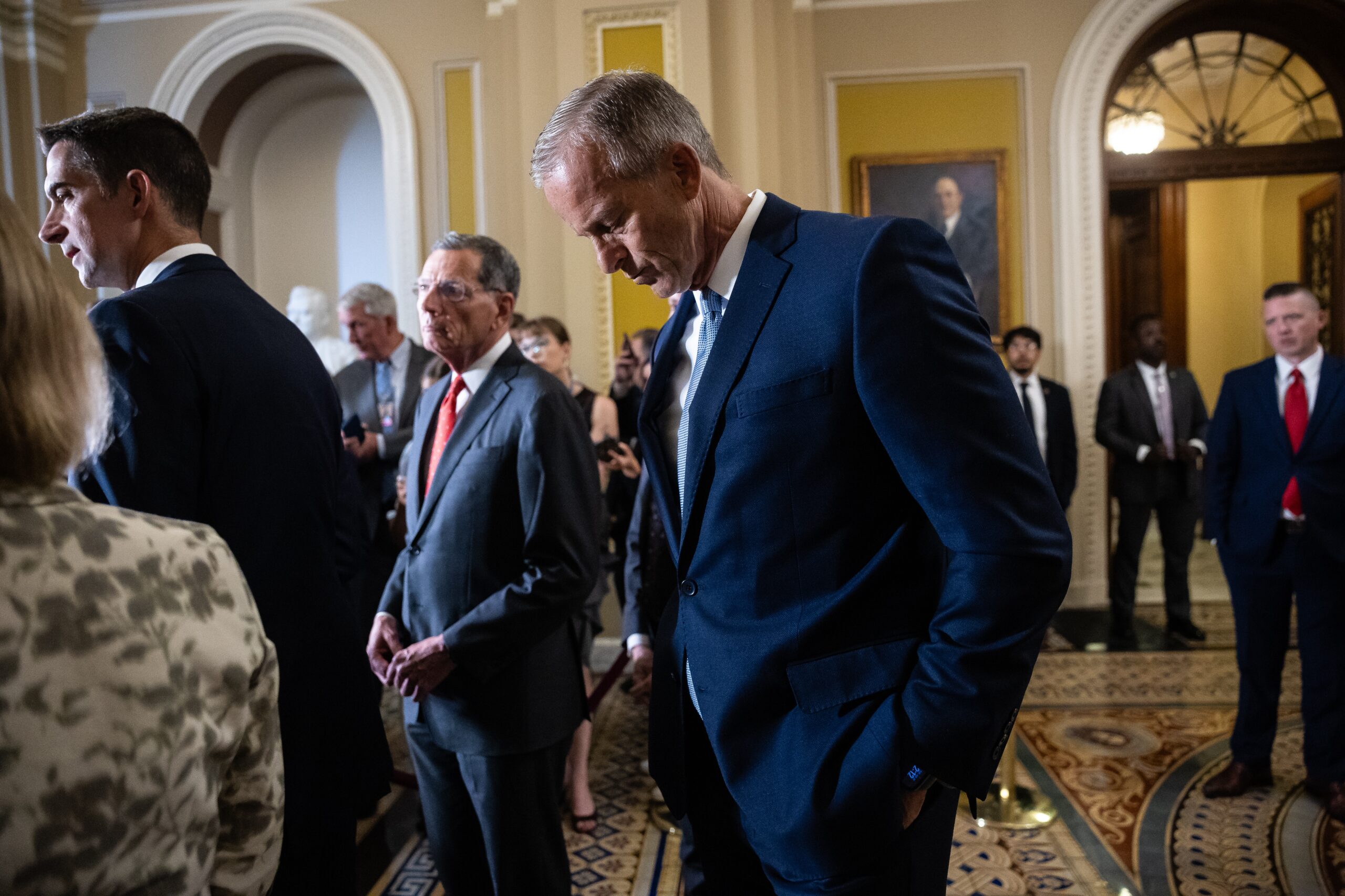
Senate Majority Leader John Thune has been frank about the rocky road the reconciliation effort faces and careful not to guarantee he’ll be successful…
Read More
- RFK Jr. promised to stop the ‘aggressive suppression’ of these controversial drugs. He’s making progress.
- Dems pick South Carolina to lead 2028 primary calendar
- It’s not just Hormuz: Widening oil supply shocks pose growing GOP danger
- Capitol agenda: A grueling summer campaign begins
- Poll: Republicans’ gas price problem is even worse than it seems
- House members stare down a grueling summer on the campaign trail
- Capitol agenda: House GOP budget faces Senate reality check
- Senate Commerce pushes AI markup plan to August
- Rob Bonta on blocking the Paramount merger, BLN concerns and Trump’s DOJ

- Mike Johnson’s budget blueprint faces Senate GOP buzzsaw
-

 Politics1 year ago
Former ‘Squad’ members launching ‘Bowman and Bush’ YouTube show
-

 The Josh Fourrier Show2 years ago
DOOMSDAY: Trump won, now what?
-

 The Dictatorship1 year ago
Luigi Mangione acknowledges public support in first official statement since arrest
-
Uncategorized2 years ago
Bob Good to step down as Freedom Caucus chair this week
-

 Politics1 year ago
Former Kentucky AG Daniel Cameron launches Senate bid
-

 The Dictatorship1 year ago
Pete Hegseth’s tenure at the Pentagon goes from bad to worse
-

 Politics1 year ago
Blue Light News’s Editorial Director Ryan Hutchins speaks at Blue Light News’s 2025 Governors Summit
-

 The Dictatorship11 months ago
Mike Johnson sums up the GOP’s arrogant position on military occupation with two words