
Politics
American voters face an online propaganda crisis

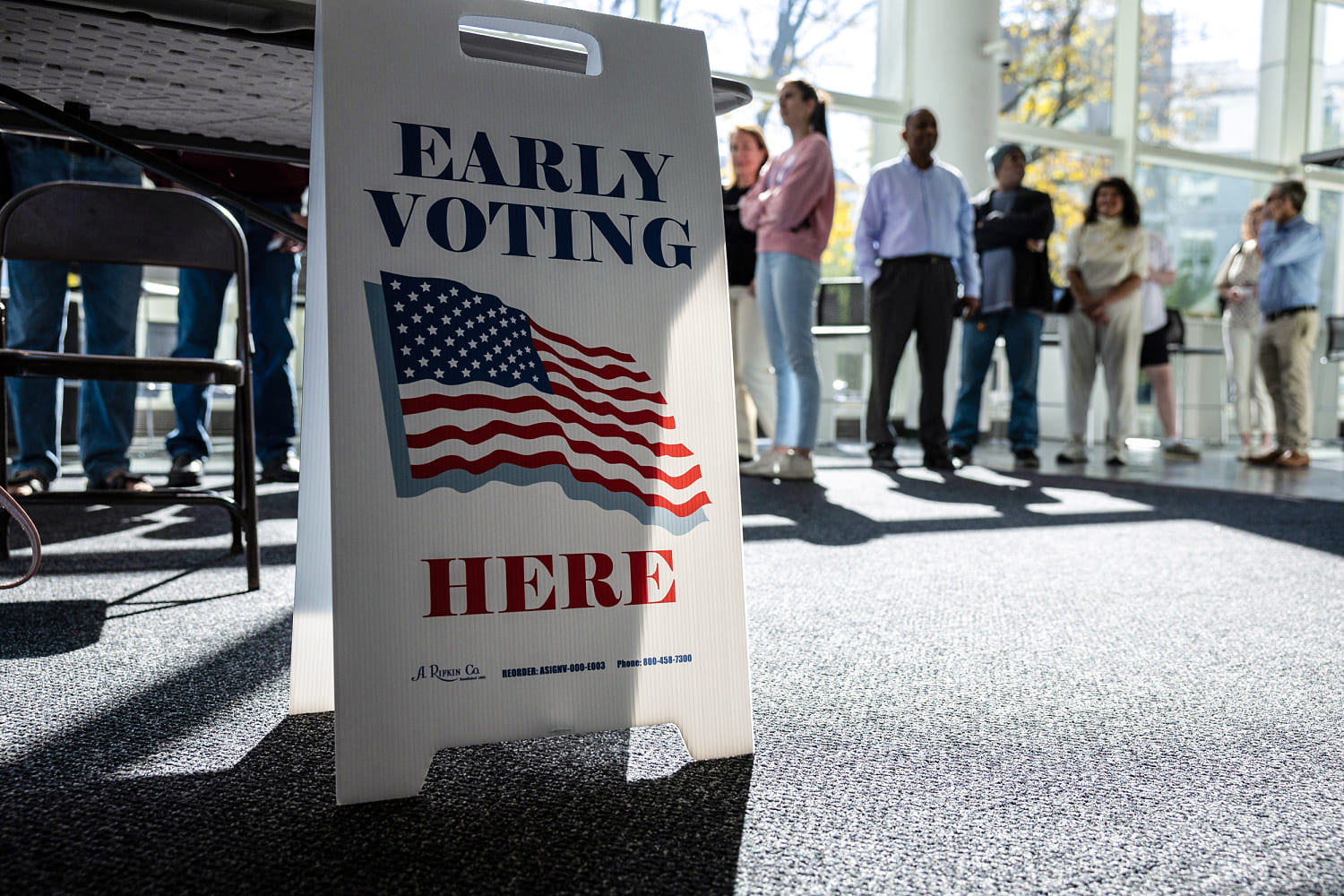
With Election Day fast approaching, disinformation efforts are everywhere. A Russian disinformation network pushed false claims of sexual abuse by Kamala Harris’ running mate, Tim Walz, reports Wired. Foreign adversaries’ election interference efforts are “more active now than they ever have been,” says the director of the Cybersecurity and Infrastructure Security Agency. The U.S. intelligence community “expects foreign influence efforts will intensify in the lead-up to Election Day,” according to a memo issued Monday by the Office of the Director of National Intelligence.
We are used to thinking of propaganda and disinformation through one lens: the far right. Stories around this subject have often centered around the alt-right movement that gained popularity in 2016, along with the Russian efforts to bolster Donald Trump’s rise. Indeed, at that time, that was by far the most pressing danger facing America online and beyond.
But in the past eight years, things have changed. Or rather, they have evolved.
What we are dealing with is extensive, all-encompassing and targeted at all of us.
Disinformation and online propaganda are skills that have now been perfected and adopted the world over by fascist and far-right governments. This means that we are no longer dealing just with Russia or the alt-right. What we are dealing with is extensive, all-encompassing and targeted at all of us. We are facing an online propaganda crisis like one we’ve never seen before.
As Russia has grown its influence operations since 2016, the internet has become an influence battlefield. One where pushing global opinions, sowing discord and chaos, and promoting antidemocratic thinking in democracies have become the tactics in a larger strategy among global powers to weaken their enemies, strengthen themselves, and transform the landscape in which future physical battlefields may one day take place.
Far-right movements are inherently oppositional and driven by maximalist ideologies, which means that while they may share certain characteristics — like nationalism, xenophobia and antiglobalism — their goals and strategies often clash. In essence, far-right movements are not a monolith, but a web of conflicting and cooperating entities, each using propaganda to further its own specific agenda while fighting both liberal democracies and rival authoritarian movements.
For example, the far-right movements in the U.S. focus heavily on anti-immigration and Christian nationalism, while Iran’s far right manifests through theocratic authoritarianism and anti-Israel rhetoric. These differences in ideology mean that far-right propaganda in the U.S. is vastly different from the far-right narratives in Iran or Russia, despite their shared opposition to liberal democracy.
Iran, for example, is targeting both the American left and right. U.S. intelligence assessments and researchers say that hackers linked to the country’s Islamic Revolutionary Guard Corps targeted both presidential campaigns. An Iranian influence operation has created fake news sites that appear to be U.S.-based. One site has run op-eds such as “Why Harris’s Stance On Palestine Cost Her My Vote,” which are meant to create more internal division among the left, while another site was meant to appear as a right-wing news outlet based in Georgia and spreading anti-Harris propaganda. By using AI software, they have been able to expand the scope and productivity of their propaganda. Unlike Russia, which often focuses on specific political outcomes, Iran’s primary goal is to foster internal discord and erode trust in U.S. democratic institutions as a whole.
These countries are waging war between each other, and that we are all potential victims.
On the other end of the spectrum is Israel. According to The New York Times and Haaretz, the Israeli Ministry for Diaspora Affairs paid for an influence campaign aimed at lawmakers as well as young progressives in order to increase support for its war in Gaza. The campaign created sites to spread Islamophobia by focusing on the role of Muslims in slave trade in East Africa and increase discord around protests on college campuses by labeling some campuses as “safe” or “unsafe.”
More broadly, Israel’s information warfare has aligned with other far-right movements spreading propaganda that aligns with their position. Poland’s far right publication Visegrad 24 has spent the entirety of the Gaza war promoting Israel’s position, including collaborations with some of the most outspoken pro-Israel influencers. Visegrad 24, which has some connections to the Polish government, also exists as an anti-Russian propaganda outlet.
Similar operations by other countries and movements have been uncovered, from China to Venezuela to North Korea. In essence, what this means is that these countries are waging war between each other, and that we are all potential victims. When they can convince us to turn against each other or to spread antidemocratic sentiment, we become their digital allies, helping achieve their goals in destroying trust in democracy and increasing their global power. One only needs to see how some white nationalists have successfully positioned themselves as pro-Palestinian to see how successful these movements can become.
With the news that Russia has used some of America’s biggest far-right influencers to spread propaganda, we can see how extensive and effective these operations have now become among the biggest players. All of this means that we must arm ourselves with digital media literacy as well as constant vigilance about the information we gather online. Being liberal, progressive or centrist does not protect anyone from disinformation anymore. We are all both soldiers and targets on the digital battlefield.
Elad Nehorai
Elad Nehorai is a writer and marketer who specializes in antisemitism, extremism and their intersection. His writing can be found in the Daily Beast, The Forward and his newsletter. He is the organizer of XOutHate, a campaign of Jewish leaders calling for major advertisers to drop ads on X.



Leading Republicans are pulling back from the North Carolina Senate race, sending a clear message: What was a top-tier battleground at the start of the cycle is no longer worth the money.
The foremost Senate GOP super PAC, Senate Leadership Fund, is pausing its future spending in North Carolina and instead launching a seven-figure ad buy in deep-red Kansas, according to one person familiar with the move. The news was first reported by Semafor.
The dramatic change in strategy — less than four weeks before the midterms — comes after SLF previously spent more than $30 million to boost GOP nominee Michael Whatley. It also comes as public polling has continued to show Whatley unable to close the gap against popular former Gov. Roy Cooper, the Democratic candidate.
Republicans are now deprioritizing a state that President Donald Trump carried in all three presidential runs, and that Democrats haven’t won in the Senate since 2008.
“We are all clear-eyed about where North Carolina stands,” said one national GOP operative working on Senate races, who like others in this article was granted anonymity to speak candidly.
SLF isn’t the only major GOP group shifting away from North Carolina as Republicans focus on other must-win seats and deep-red states, amid the Iran war, high fuel prices and other economic fallout of the war in Iran.
Earlier Friday, the Koch-aligned Americans for Prosperity Action left North Carolina off its $22 million list of future spending across key Senate contests, as POLITICO reported. Another major Republican group focused specifically on boosting Whatley — Old North Action — removed $6.5 million in ad reservations from North Carolina’s Senate race last month.
“Michael Whatley is a good man who took one for the team — but with states like Alaska, Kansas, and Texas requiring continued resource commitments, there is only so much,” said another national GOP operative working on midterm races. “Especially against a very popular former Governor in Roy Cooper.”
The National Republican Senatorial Committee is currently running coordinated ad reservations with six of its battleground candidates. Whatley in North Carolina is not one of them, according to data from advertising tracking service AdImpact.
NRSC regional press secretary Nick Puglia said in a statement that “Whatley will put North Carolina families first by cutting taxes and keeping criminals locked up.”
Whatley for months has struggled to boost his name ID against the much better-known Cooper. Some recent public polls show Cooper leading Whatley by double-digit margins. Private polling has also hardly budged, despite the recent influx of spending, according to a person working on the race.
In a statement, Whatley spokesperson DJ Griffin said the team feels “confident we have the resources” to win in November.
“Roy Cooper recently said about federal elections in North Carolina, ‘Democrats are often ahead until they are not,’” Griffin said. “Undecided Voters who break late decide the election in North Carolina and the majority of those Late-Breakers typically go Republican.”
AFP Action and Old North Action did not immediately respond to a request for comment about North Carolina. SLF declined to comment.
SLF’s decision came as a shock to some, but not all, North Carolina Republicans — mostly because Senate Majority Leader John Thune has been scheduled to be in North Carolina for an event with Whatley on Thursday night. Thune ended up joining the event virtually, according to two people with direct knowledge of the matter.
For weeks, top Republicans acknowledged North Carolina may be slipping away. One Republican who attended a donor meeting with Senate Majority Leader John Thune and SLF during the Dallas convention told POLITICO that holding the state would be “tough.”
“The map has shifted a little bit, and to be fair, we knew that was going to be a tough one from the beginning,” said one GOP operative working on Senate races, granted anonymity to speak candidly about the landscape.
Democrats are not letting up, recognizing that the contest in the purple state could still be close.
“A Democrat has not won statewide federal office here in nearly two decades, and North Carolina is a 50-50 state,” Cooper campaign manager Jeff Allen said in a statement.
“We’re building a campaign to earn every vote and make sure North Carolinians know that Roy Cooper will fight for them, while Michael Whatley will continue to enrich himself at their expense,” Allen said.
One North Carolina GOP strategist said that while Whatley has been a “fine” candidate, the current political climate coupled with Cooper’s long record in the state may be too much to overcome. And while Republicans have repeatedly hammered Cooper on crime, he still has strong favorability ratings from his time as governor.
“He’s really kind of hard to paint as a radical, ’cause, you know, he’s like Aunt Martha. She’s just been there forever. And so it’s just very difficult to get any traction on that, because, you know, people say, ‘well, Roy’s okay,’” they said.
When told that SLF was moving money from North Carolina to Kansas, the strategist responded: “$6.50 diesel fuel will kick your ass.”
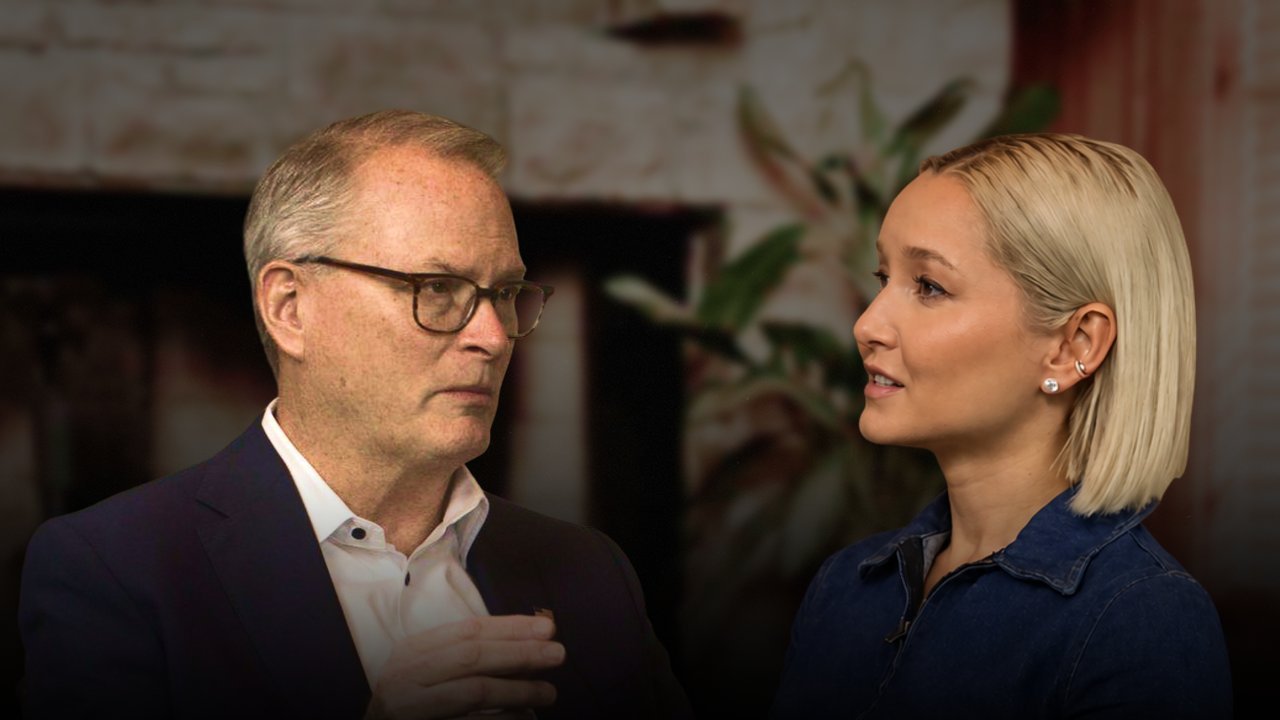
Adam Hamilton on faith, Trump and the fight for Kansas
lead image
- Top GOP groups scale back North Carolina spending
- October
- Sanders, AOC, Merkley propose bill to ban Flock cameras
- Capitol agenda: Dems spend big to help Hakeem’s dream
- The low-profile Democrat helping shape her party’s AI agenda
- ‘A game-changer’: House Dems aim for a big majority that could ease Hakeem Jeffries’ headaches
- Adam Hamilton on faith, Trump and the fight for Kansas

- New York grapples with kinks in $1B Medicaid system

- Top Democratic appropriator wants White House to pay for airing ‘propaganda’
- Barrage of lawsuits targets Trump’s funding cancellation
-

 Politics2 years ago
Former ‘Squad’ members launching ‘Bowman and Bush’ YouTube show
-
Uncategorized2 years ago
Bob Good to step down as Freedom Caucus chair this week
-

 The Josh Fourrier Show2 years ago
DOOMSDAY: Trump won, now what?
-

 Politics2 years ago
Former Kentucky AG Daniel Cameron launches Senate bid
-

 The Dictatorship2 years ago
Pete Hegseth’s tenure at the Pentagon goes from bad to worse
-

 The Dictatorship2 years ago
Luigi Mangione acknowledges public support in first official statement since arrest
-

 Politics2 years ago
Blue Light News’s Editorial Director Ryan Hutchins speaks at Blue Light News’s 2025 Governors Summit
-

 The Dictatorship1 year ago
Mike Johnson sums up the GOP’s arrogant position on military occupation with two words