
The Dictatorship
ACLU asks judge to force the Trump administration to state under oath if it violated his court order


A federal judge on Monday questioned whether the Trump administration ignored his orders to turn around planes carrying deportees to El Salvador, a possible violation of the decision he’d issued minutes before.
District Judge James E. Boasberg was incredulous over the administration’s contentions that his verbal directions did not count, that only his written order needed to be followed, that it couldn’t apply to flights that had left the U.S. and that the administration could not answer his questions about the deportations due to national security issues.
Republican presidential nominee former President Donald Trump speaks along the southern border with Mexico, on Aug. 22, 2024, in Sierra Vista, Ariz. (AP Photo/Evan Vucci, File)
Republican presidential nominee former President Donald Trump speaks along the southern border with Mexico, on Aug. 22, 2024, in Sierra Vista, Ariz. (AP Photo/Evan Vucci, File)
“That’s one heck of a stretch, I think,” Boasberg replied, noting that the administration knew as the planes were departing that he was about to decide whether to briefly halt deportations being made under a rarely used 18th century law invoked by Trump about an hour earlier.
“I’m just asking how you think my equitable powers do not attach to a plane that has departed the U.S., even if it’s in international airspace,” Boasberg added at another point.
AP AUDIO: Judge questions Trump administration on whether it ignored order to turn around deportation flights
AP Washington correspondent Sagar Meghani reports on deportations to Central America.
Deputy Associate Attorney General Abhishek Kambli contended that only Boasberg’s short written order, issued about 45 minutes after he made the verbal demand, counted. It did not contain any demands to reverse planes, and Kambli added that it was too late to redirect two planes that had left the U.S. by that time.
“These are sensitive, operational tasks of national security,” Kambli said.
The hearing over what Boasberg called the “possible defiance” of his court order marked the latest step in a high-stakes legal fight that began when President Donald Trump invoked the 1798 wartime law to remove immigrants over the weekend. It was also an escalation in the battle over whether the Trump administration is flouting court orders that have blocked some of his aggressive moves in the opening weeks of his second term.
“There’s been a lot of talk about constitutional crisis, people throw that word around. I think we’re getting very close to it,” warned Lee Gelernt of the ACLU, the lead attorney for the plaintiffs, during the Monday hearing. After the hearing, Gelernt said the ACLU would ask Boasberg to order all improperly deported people returned to the United States.
Boasberg said he’d record the proceedings and additional demands in writing. “I will memorialize this in a written order since apparently my oral orders don’t seem to carry much weight,” Boasberg said.
On Saturday night, Boasberg ordered the administration not to deport anyone in its custody through the newly-invoked Alien Enemies Act, which has only been used three times before in U.S. history, all during congressionally declared wars. Trump issued a proclamation that the law was newly in effect due to what he claimed was an invasion by the Venezuelan gang Aragua Train.
In this photo provided by El Salvador’s presidential press office, a prison guard transfers deportees from the U.S., alleged to be Venezuelan gang members, to the Terrorism Confinement Center in Tecoluca, El Salvador, Sunday, March 16, 2025. (El Salvador presidential press office via AP)
In this photo provided by El Salvador’s presidential press office, a prison guard transfers deportees from the U.S., alleged to be Venezuelan gang members, to the Terrorism Confinement Center in Tecoluca, El Salvador, Sunday, March 16, 2025. (El Salvador presidential press office via AP)
Trump’s invocation of the act could allow him to deport any noncitizen he says is associated with the gang, without offering proof or even publicly identifying them. The plaintiffs filed their suit on behalf of several Venezuelans in U.S. custody who feared they’d be falsely accused of being Tren de Aragua members and improperly removed from the country.
Told there were planes in the air headed to El Salvador, which has agreed to house deported migrants in a notorious prison, Boasberg said Saturday evening that he and the government needed to move fast. “You shall inform your clients of this immediately, and that any plane containing these folks that is going to take off or is in the air needs to be returned to the United States,” Boasberg told the government’s lawyer.
According to the filing, two planes that had taken off from Texas’ detention facility when the hearing started more than an hour earlier were in the air at that point, and they apparently continued to El Salvador. A third plane apparently took off after the hearing and Boasberg’s written order was formally published at 7:26 p.m. Eastern time. Kambli said that plane held no one deported under the Alien Enemies Act.
El Salvador’s President, Nayib Bukele, on Sunday morning tweeted, “Oopsie…too late” above an article referencing Boasberg’s order and announced that more than 200 deportees had arrived in his country. The White House communications director, Steven Cheung, reposted Bukele’s post with an admiring GIF.
Later Sunday, a widely circulated article in Axios said the administration decided to “defy” the order and quoted anonymous officials who said they concluded it didn’t extend to planes outside U.S. airspace. That drew a quick denial from White House press secretary Karoline Leavitt, who said in a statement “the administration did not ‘refuse to comply’ with a court order.”
The administration argues a federal judge does not have the authority to tell the president whether he can determine the country is being invaded under the act, or how to defend it.
After Boasberg scheduled a hearing Monday and said the government should be prepared to answer questions over its conduct, the Justice Department objected, saying it could not answer in a public forum because it involved “sensitive questions of national security, foreign relations, and coordination with foreign nations.” Boasberg denied the government’s request to cancel the hearing, which led the Trump administration to ask that the judge be taken off the case.
Kambli stressed that the government believes it is complying with Boasberg’s order. It has said in writing it will not use Trump’s invocation of the Alien Enemies Act to deport anyone if Boasberg’s order is not overturned on appeal, a pledge Kambli made again verbally in court Monday. “None of this is necessary because we did comply with the court’s written order,” Kambli said.
Boasberg’s temporary restraining order is only in effect for up to 14 days as he oversees the litigation over Trump’s unprecedented use of the act, which is likely to raise new constitutional issues that can only ultimately be decided by the U.S. Supreme Court. He had scheduled a hearing Friday for further arguments, but the two organizations that filed the initial lawsuit, the ACLU and Democracy Forward, urged him to force the administration to explain in a declaration under oath what happened.
As the courtroom drama built, so did international fallout over the deportations to El Salvador. Venezuela’s government on Monday characterized the transfer of migrants to El Salvador as “kidnappings” that it plans to challenge as “crimes against humanity” before the United Nations and other international organizations. It also accused Bukele’s government of profiting off the plights of Venezuelan migrants.
“President, I respectfully say to you, are you going to support this cruelty, this injustice … of imprisoning noble, hard-working migrants, good people, without trial, without having committed crimes in El Salvador, without any kind of sentence issued by a Salvadoran court?” President Nicolás Maduro said on state television. “Is this legal? Is it fair? Is it humane?”
Trump’s proclamation alleges Tren de Aragua is acting as a “hybrid criminal state” in partnership with Venezuela.
The Trump administration has transferred hundreds of immigrants to El Salvador even as a federal judge issued an order temporarily barring the deportations under an 18th century wartime declaration targeting Venezuelan gang members, officials said. President Trump defended the deportations, commenting ‘these were bad people.’
Families of some Venezuelans in U.S. custody scrambled to find out if their loved ones had been sent to El Salvador. Multiple immigration lawyers said they had clients who were not gang members who were being moved for possible deportation late Friday.
Franco Caraballo was held by immigration authorities during a routine check-in Feb. 3. His immigration lawyer, Martin Rosenow, said Caraballo not been accused of a crime. Caraballo’s wife believes he’s been wrongfully accused of belonging to the gang because of a tattoo he got marking his daughter’s birthday,
He called his wife Friday night in a panic because he was being handcuffed and put on a plane to an unknown destination in Texas, from where flights to El Salvador departed.
That was the last the family heard of him and he’s disappeared from the federal immigration detainee locator system. “I’ve never seen anything like this,” said Rosenow.
__
Cano reported from Caracas, Venezuela. Joshua Goodman in Miami, Michael Kunzelman in Washington, D.C., and Nicholas Riccardi in Denver contributed to this report.


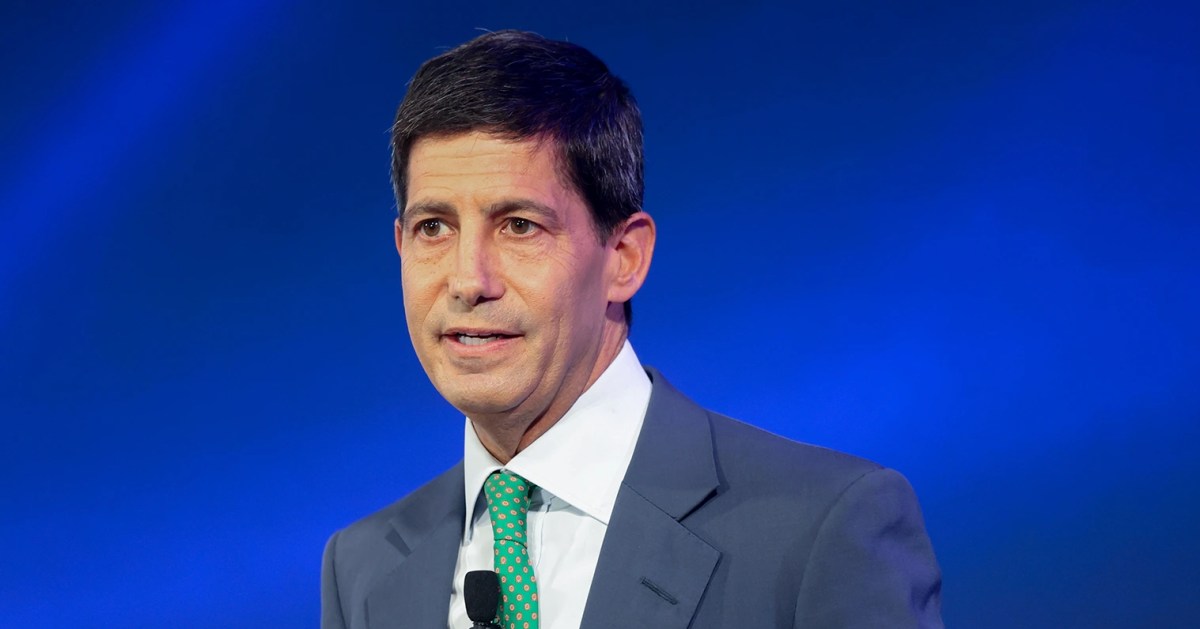
Kevin Warsh, President Donald”https://www.ms.now/news/trump-names-kevin-warsh-as-next-federal-reserve-chair?_thumbnail_id=1163350″>Trump’s pick to chair the Federal Reserve, told lawmakers Tuesday that he would not capitulate to Trump’s demands, saying he does not see outward political pressure as a threat to the central bank’s independence.
During his Senate confirmation hearing, Trump’s millionaire nominee faced scathing questions from Banking Committee Democrats over perceived gaps in his financial disclosures and his ability to maintain the central bank’s integrity. When pressed to divulge his stance on political questions outside of the bank’s jurisdiction, he refused, saying instead that “the Fed must stay in its lane.”
Warsh used his opening remarks to convey a simple but significant argument to the senators who will decide whether he is fit to steward America’s monetary policy: Political pressure is not a threat to the central bank — opining on fiscal and social policies outside of its purview is.
The insulation of the Fed from politics was widely expected to be the defining issue of Warsh’s confirmation hearing, given that the president who appointed him has made no secret of his belief that the White House should have greater control over the nation’s monetary policies.
Testifying under oath Tuesday, Warsh said Trump never asked him to “predetermine, commit, fix or decide on any interest rate decision in any of our discussions.”
“Nor would I ever agree to do so if he had,” Warsh said.
Warsh’s declarations might wind up being beside the point when it comes to whether he’s confirmed to replace the man currently in the job.
After the Justice Department subpoenaed Federal Reserve Chair Jerome Powell and accused him of knowingly misleading Congress about the ongoing $2.5 billion building renovation project at the Fed’s Washington headquarters, retiring Republican Sen. Thom Tillis of North Carolina vowed to block the confirmation of any Fed chair nominee until the DOJ dropped its investigation.
The subpoena came amid Trump’s public pressure campaign against Powell over his refusal to slash interest rates. His attacks included multiple threats to fire Powell and the Justice Department’s effort to pursue a criminal case against him.
Tillis decried the Justice Department’s Powell probe during his allotted time Tuesday. He focused on the potential the investigation has to delay Powell’s exit from his post as Federal Reserve chairman in May rather than the ethics of the probe itself, which he has publicly questioned in the past.
Powell has said he has no intention of leaving the central bank’s board until the DOJ drops the investigation, even though his term ends May 15. He can stay past May because he also serves as a member of the Fed’s board of governors, his term for which does not end until January 2028.
Praising Warsh for his background as an economist, Tillis made clear his “no” vote is not personal to Warsh. Tillis told MS NOW ahead of the hearing that he has spoken to the White House about his intention to vote against Warsh.
Warsh, a favorite among Republican circles and the son-in-law of billionaire Trump donor Ronald Laudertried to persuade lawmakers that he is not a reflection of the president who appointed him.
“I do not believe that independence of monetary policy is threatened when elected officials state their views on rates,” the former Morgan Stanley investment banker said in his opening remarks. “Fed independence is up to the Fed.”
Sen. Elizabeth Warren of Massachusetts, the committee’s highest-ranking Democrat, pressed Warsh on what she said were “secrets” in the financial disclosures he provided to the Office of Government Ethics ahead of the hearing. Warsh disclosed assets worth more than $100 million — including stakes in the prediction market platform Polymarket and Elon Musk’s SpaceX — but did not name the underlying holdings of his largest investments.
“If you can’t answer these questions, you don’t have the courage and you don’t have the independence,” Warren said after Warsh refused to say whether his undisclosed individual investments are tied to the Trump family, declined to answer a question about whether Trump lost the 2020 election and repeatedly demurred when she challenged him to name a policy point on which he disagreed with Trump.
Warsh said he would divest his undisclosed assets if confirmed, which would put him in compliance with the requirements of the ethics office. Doubling down on his bid to convince the panel of lawmakers that he will not yield to the president’s repeated calls for lower interest rates, Warsh said he is not Trump’s “sock puppet,” the term Warren used.
“Someone here is lying then,” Sen. Ruben Gallego, D-Ariz., said of Warsh’s claim that Trump never asked him to cut interest rates. “It’s either you or President Trump.” Gallego pointed to reporting from The Wall Street Journal in December that Trump pressed his nominee to “support interest rate cuts” when nominating him to lead the Fed.
In a live phone interview with CNBC the morning of the hearing, Trump said he would be disappointed if Warsh does not immediately slash rates upon his confirmation.
Sen. Kevin Cramer, R-N.D., previously joined Tillis in expressing concern over the motivations behind the probe. Warren called on her Republican colleagues to block Warsh’s nomination until the investigation comes to an end.
A federal judge quashed the investigation, which had become central to Trump’s smear campaign against Powellin March. In April, the same judge denied the Trump administration’s bid to revive the subpoenas he dismissed, writing that “the Government served these subpoenas on the [Federal Reserve] Board to pressure its Chair into voting for lower interest rates or resigning.” Despite the blow, U.S. Attorney Jeanine Pirro is still fighting to keep the investigation alive.
The banking committee, which oversees Fed nominations, has a narrow 13-11 Republican majority.
Warsh stumbled while answering questions from Sen. Raphael Warnock, D-Ga., about how he would grade the economy for working Americans. Rather than offer a serious answer about the Fed’s role in shaping the economic outlook for consumers, Warsh made a joke about grade inflation at elite universities.
Several staffers and some committee members could be seen chuckling behind him.
“Well the Americans that I talk to, particularly in the state of Georgia, who haven’t had the benefit of attending some of these elite institutions, are trying to make their lives work,” Warnock replied. “They’re sitting around their kitchen tables trying to figure out how to put their kids through school, and regardless of how the markets are doing, consumer confidence is at a record low. So that’s their grade on the economy.”
Warsh previously served as a Federal Reserve governor in the early 2000s, after being nominated by then-President George W. Bush.
Sydney Carruth is a breaking news reporter covering national politics and policy for MS NOW. You can send her tips from a non-work device on Signal at SydneyCarruth.46 or follow her work on X and Bluesky.
The public universities in Tennessee certainly warrant attention from the Tennessee General Assembly. However, with the recent passage of what they’re calling the “Charlie Kirk Act,” my Republican colleagues in the legislature continue to abuse their supermajority. This latest bill of theirs, which would punish students who signal their displeasure to guest speakersdoes nothing to help those struggling with the rising cost of tuition. Nor does it do anything to address a job market that looks increasingly bleak for recent graduates.
Instead the bill, named for the Turning Point USA founder who was assassinated while speaking on a Utah campus in September, is the latest item on a conservative legislative agenda that has stifled free expression in our institutions of higher learning.
Their extremist bill should terrify us all.
My colleagues have already criminalized “divisive concepts,” which has emboldened students to record and report their professors for teaching about topics such as racial and social justice. Not to be outdone by their previous bad ideas and bigotry, those same Republicans have advanced the Charlie Kirk Act to more thoroughly eviscerate the First Amendment by severely restricting the ability of college students to demonstrate and to register their dissent.
These legislators’ extremist bill, which passed both chambers and has been sent to Gov. Bill Lee’s deskshould terrify us all. In part, it mandates suspensions for coordinated walkouts by students and banners they might display in protest of a speaker. This law does nothing to promote dialogue, nor does it make our campuses better spaces for tough conversations. Instead, it tilts power in protecting certain acceptable forms of “free speech” against others and weaponizes state authority to silence those who wish to demonstrate an alternative to the views being platformed.
Even though the Republicans behind this measure proclaim what they call Kirk’s love of debate and differing opinions, this bill would make it harder to engage in constructive difference through protest and dissent, despite such protest being a time-honored tradition of American student movements. But let’s be honest, Kirk was not someone “who encouraged everyone to love others,” as Rep. Gino Bulso, my Republican colleague who sponsored the bill, would have you believe. Kirk proudly trumpeted racist views that included calling the Civil Rights Act a mistakecalling Martin Luther King Jr. an “awful” person and questioning Black people’s qualifications and achievementsparticularly those of Black women in elevated positions such as Supreme Court Justice Ketanji Brown Jackson. Nothing about how Kirk lived his life was “civil” or “neutral” or aligned with the values of democracy and justice for all.

As I told my Republican colleagues on the floor, “It’s ironic that this body is talking about free speech when we had professors in Tennessee schools expelled and suspended when they did not mourn the death of Charlie Kirk, when they said that his statements were problematic, and that the way he died did not redeem the way he lived.” This bill is hypocrisy at its worst. It would punish those who engage in speech that challenges power and uplifts moral courage in the face of pressure. At the same time, it would protect state-sanctioned discrimination.
Students who engage in protests are a vital part of American history, especially here in Tennessee.
Free speech is not just the right to engage in favored speech, it is also the unobstructed right to engage in moral dissent. This is what my Republican colleagues are so terrified of, and what they want to silence. Students who engage in protests are a vital part of American history, especially here in Tennessee. In the 1960s, students sat down as a way of standing up to Jim Crow, and through continued disruption made our state capital, Nashville, the first Southern city to desegregate its lunch counters. College students in Nashville — including the late Rep. John LewisBernard Lafayette, who died last monthand Diane Nash — are the model of what standing up for free speech, democracy and dissent looks like.
Their legacy is one of many reasons we should be promoting nonviolent protest at our colleges and universities, not discouraging it. Hopefully, this blatantly unconstitutional law will be struck down by the courts and serve as a warning to all government officials promoting censorship that protesters will not be silent and that those demanding racial and social justice will not be dragged backward in history.
Rep. Justin Jones is the youngest Black lawmaker in Tennessee and represents the people of House District 52 in Nashville, one of the most diverse districts in state
The Dictatorship
Tuesday’s Campaign Round-Up, 4.21.26: Trump, Johnson make eleventh-hour pitch in Virginia
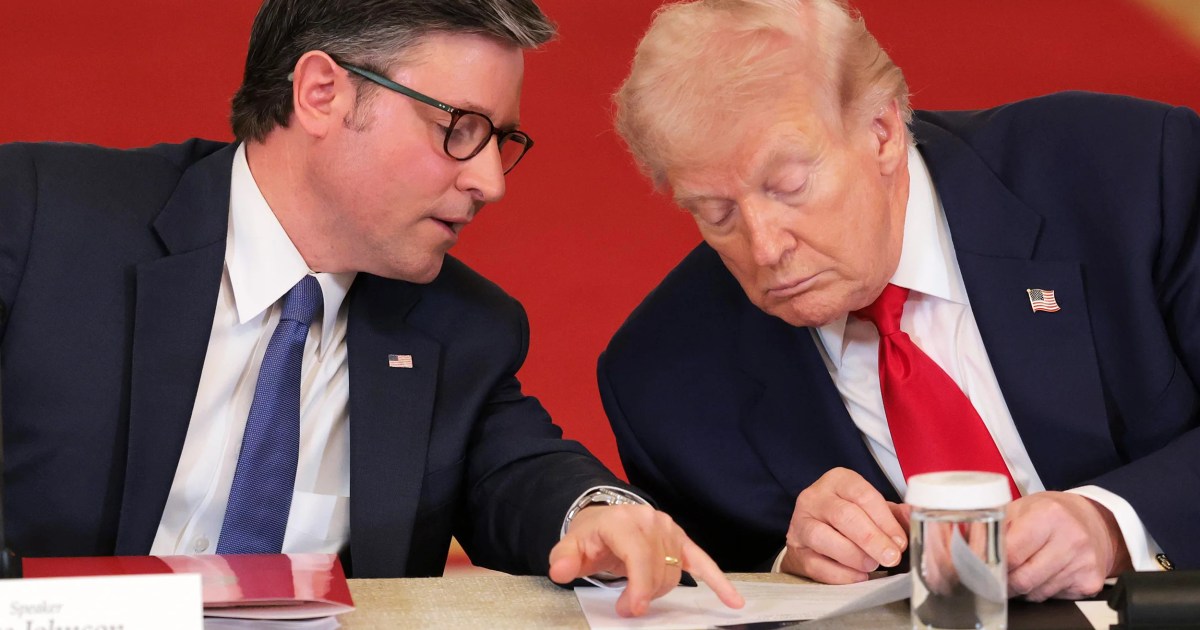
Today’s installment of campaign-related news items from across the country.
* Ahead of Virginia’s vote on a redistricting ballot measure, Donald Trump hasn’t said much about it, but the president and House Speaker Mike Johnson of Louisiana made an eleventh-hour pitch to supporters in the commonwealth with a Monday night telerally call. The morning after, Trump used his social media platform to direct Virginians to “save your country.”
* In California, the Democratic gubernatorial field is finally starting to shrink: On the heels of former Rep. Eric Swalwell’s departure, Betty Yee, a former state controller, announced Monday that she’s also suspending her campaign after struggling to raise enough money to remain competitive.
* Risa Lombardo used to sell MAGA merchandise and was a Republican Party official until very recently. Now, she’s a Green Party gubernatorial candidate in Arizona as part of an apparent attempt to fool progressive voters in the state and divide the left in the 2026 race.
* Indiana Republicans approved a voter-ID law, but it prohibits the use of student identification cards. This week, a federal appeals court allowed the partisan policy to remain in effect.
* There’s been talk for months that Ohio’s gubernatorial race will be competitive, and there’s fresh evidence to bolster the point: The latest poll conducted by Bowling Green State University found Republican Vivek Ramaswamy barely leading Dr. Amy Acton, the Democratic nominee, 48% to 47%.
* Minnesota Gov. Tim Walz’s lengthy career in public office is nearing its end, but the Democratic governor isn’t exiting the arena altogether: Walz this week launched a new political action committeecalled Small Town PAC, as part of a broader effort to recruit and support Democratic candidates running in rural areas.
* And in Wyoming, there was talk that Republican Gov. Mark Gordon was prepared to challenge the state’s term-limits law, but the governor announced late last week that he will instead step down at the end of his second term, which ends in early January.
Steve Benen is a producer for “The Rachel Maddow Show,” the editor of MaddowBlog and an MS NOW political contributor. He’s also the bestselling author of “Ministry of Truth: Democracy, Reality, and the Republicans’ War on the Recent Past.”
- Trump Fed chair pick Warsh vows independence at Senate hearing
- The awful irony in Tennessee’s ‘Charlie Kirk Act’
- Tuesday’s Campaign Round-Up, 4.21.26: Trump, Johnson make eleventh-hour pitch in Virginia
- GOP’s Mills faces expulsion effort launched by one of his Republican colleagues
- Senate launches budget debate
- Trump’s pick to replace Stefanik
- Johnson touts ‘bipartisan’ path for FISA reauthorization, but obstacles remain
- Graham releases blueprint for GOP immigration enforcement funding plan
- ‘Many families are struggling’
- Capitol agenda: Trump-Powell clash hijacks Warsh hearing
-

 Politics1 year ago
Former ‘Squad’ members launching ‘Bowman and Bush’ YouTube show
-

 The Dictatorship1 year ago
Luigi Mangione acknowledges public support in first official statement since arrest
-

 Politics1 year ago
Former Kentucky AG Daniel Cameron launches Senate bid
-

 The Dictatorship1 year ago
Pete Hegseth’s tenure at the Pentagon goes from bad to worse
-
Uncategorized1 year ago
Bob Good to step down as Freedom Caucus chair this week
-

 Politics1 year ago
Blue Light News’s Editorial Director Ryan Hutchins speaks at Blue Light News’s 2025 Governors Summit
-

 The Dictatorship7 months ago
Mike Johnson sums up the GOP’s arrogant position on military occupation with two words
-

 The Josh Fourrier Show1 year ago
DOOMSDAY: Trump won, now what?