
Politics
2026 Democrats jump to pan the shutdown deal

Senate Democrats’ embrace of a shutdown deal that doesn’t guarantee extended health care subsidies is already an electoral issue.
Nearly every major Democratic Senate candidate panned the deal, from Texas hopeful Colin Allred, a former member of Congress, deriding it as a “joke” to Illinois Lt. Gov. Juliana Stratton condemning it as a “complete betrayal of the American people.” Sen. Jon Ossoff (D-Ga.), the party’s most vulnerable incumbent in 2026, voted against advancing it, as did several senators eyeing a 2028 White House bid.
“Pathetic,” California Gov. Gavin Newsom wrote on X. “This is not a deal — it’s an empty promise,” Gov. JB Pritzker of Illinois said.
The Sunday agreement even caused a familial dispute: Stefany Shaheen, who is running in a crowded Democratic primary for an open House seat in New Hampshire, said she couldn’t support a deal that failed to extend the Affordable Care Act tax credits. Her mother, retiring Sen. Jeanne Shaheen, was one of the lead Democratic negotiators of the deal.
Democratic Rep. Chris Pappas, who is running to replace Jeanne Shaheen, creating the very opening her daughter is vying to fill, also rejected it in a statement Monday.
After looking to make soaring health care costs an albatross for Republicans in the midterms, Democrats’ deal to reopen the government after 40 days without language extending the expiring insurance subsidies delivered a blow to their base. The result was so fraught, even Senate Minority Leader Chuck Schumer (D-N.Y.) opposed it amid intense criticism for allowing eight members of the Democratic caucus to side with Republicans.
Now it’s creating a litmus test for candidates in competitive midterm races next year, as Democrats fight to retake the Senate — a tough task they feel better about after routing Republicans in last week’s off-cycle elections throughout the country. They’d need to net four seats in order to seize control of the upper chamber.
“The infighting over the deal will fade quickly and by the time we get closer to the midterms, it’s very clear that Democrats will aggressively prosecute the case against Republicans on health care,” said Matt Bennett of the centrist think tank Third Way. “They will say Republicans yanked lifesaving money away from millions of Americans to fund tax cuts for the rich. And that will have the benefit of being true.”
Thirty-three Senate seats are up for grabs next year and Democrats are making a serious play for holding or flipping at least a dozen of them. A quartet of candidates vying for open seats — Graham Platner in Maine, Mallory McMorrow in Michigan and Zach Wahls and Nathan Sage in Iowa — reiterated their opposition to Schumer’s leadership as news of the deal spread.
“Chuck Schumer failed in his job yet again,” Platner said in a video on X. “We need to elect leaders who want to fight. … Call your senators and tell them Chuck Schumer can no longer be leader. Call your congressman and tell them that they cannot vote for this when it comes to them.”
In Michigan’s three-way primary, each candidate panned the deal, representing the ideologically vast opposition within a party otherwise mired in internal dispute.
“This is a bad deal,” McMorrow said in a video late Sunday, adding that “the old way of doing things is not working.” Abdul El-Sayed slammed the “shit” agreement and castigated Democrats for giving up their leverage “when we actually can force [Republicans] to the table” after their electoral losses last week. Rep. Haley Stevens said the deal “doesn’t work for Michigan” and that she’s “going to need a whole lot more than empty promises that we’re going to lower costs.” She did not say how she’d vote on the measure in the House.
Senate Democrats’ capitulation opened an off-ramp to the record-breaking government shutdown that has snarled air travel and led to missed paychecks and lapsed food assistance. The agreement now advancing through the Senate would fund some agencies and programs for the full fiscal year and extend others until Jan. 30, 2026. It also promises Democrats a December floor vote on extending the expiring Obamacare subsidies, though it’s uncertain to pass the GOP-controlled chamber and Speaker Mike Johnson won’t promise to bring up such a vote in the House.
But in cutting a deal, Senate Democrats infuriated a party reinvigorated by its off-year electoral blowout, sparking accusations that the party again squandered its only leverage in the Republican-led Congress — and ensuring Schumer’s leadership will remain a touchstone in competitive Senate races.
None of the eight Democrats who voted to break the shutdown stalemate are facing voters next year. Two are retiring; the rest are not up for reelection until at least 2028.
They cited the financial pain the prolonged federal funding lapse was inflicting on their constituents. They cast the pending floor vote on the tax credits as a win for Democrats. And they touted other concessions they secured, like the rehiring of federal workers laid off during the shutdown.
“This bill is not perfect, but it takes important steps to reduce their shutdown’s hurt,” Sen. Dick Durbin, the No. 2 Senate Democrat who is retiring next year, said Sunday.
The Democrats vying to replace him disagree. Stratton, who’s previously called for new Senate leadership, cast Democrats’ cave as “a complete betrayal of the American people.” Reps. Raja Krishnamoorthi and Robin Kelly both said the outcome failed to help millions of people whose health care premiums are set to skyrocket.
Across the Senate map, opposition spanned Schumer’s handpicked recruits — who’ve been largely silent about the shutdown — to the insurgents who’ve called for his ouster.
“This is a bad deal for Ohioans,” former Sen. Sherrod Brown said in a statement. Maine Gov. Janet Mills panned “the promise of a vote [on the subsidies] that won’t go anywhere.” Former North Carolina Gov. Roy Cooper — Democrats’ best chance for flipping a Senate seat and the last major candidate to weigh in on the deal — said in a statement that “any deal that lets health care costs continue to skyrocket is unacceptable.
Sage slammed the Senate Democrats who “caved and accomplished nothing.” Jordan Wood, another Democrat running in Maine, said “America needs an opposition party willing to fight for them.” Minnesota Lt. Gov. Peggy Flanagan said in a video, “we deserve so much more than this bullshit.” Hours later, she was endorsed by Sen. Bernie Sanders (I-Vt.), who voted against the deal.
“If people believe this is a ‘deal,’ I have a bridge to sell you,” said Flanagan’s rival, Rep. Angie Craig (D-Minn.), adding that she’s a “no” when the measure comes up for a vote in the House. “I’m not going to put 24 million Americans at risk of losing their health care.”
Senate Democrats who brokered the spending deal argued Sunday that they had succeeded in hanging rising health care costs on Republicans’ necks heading into the midterms.
“If Republicans want to join us in lowering costs for working families, they have the perfect opportunity,” Sen. Catherine Cortez Masto (D-Nevada) said Sunday at the Capitol. “If they do choose not to come to the table, they can own the disastrous premium increases.”
Democrats continued to target their own.
Rep. Mikie Sherrill, who was elected the next governor of New Jersey in last week’s blue wave, denounced the deal as “malpractice.” Zohran Mamdani, New York City’s incoming mayor who Schumer declined to endorse, said the compromise and anyone who supports it “should be rejected.”
“That’s not a deal,” Rep. Ritchie Torres (D-N.Y.), who drew a primary challenge last week, said Sunday. “It’s an unconditional surrender.”
The political blast radius is extending to Schumer, who is up for reelection in 2028.
Some progressive Democrats and advocacy groups called for his ouster as leader, blaming him for failing to keep his caucus in line even as he voted against the deal he said didn’t address the “health care crisis” and vowed to “keep fighting.”
Schumer “is no longer effective and should be replaced,” Rep. Ro Khanna (D-Calif.), a potential 2028er, blasted out on X.
The Sunrise Movement called for Schumer to step aside. Justice Democrats urged voters to reject the eight Senate Democrats who allowed the funding patch to proceed.
“I don’t think the Democrats leading this surrender effort understand the trust they are shattering in their own voting coalition,” Andrew O’Neill, the national advocacy director for Indivisible, warned Sunday night.
Schumer voted against the bill because it does “nothing” to address a “health care crisis” he called “devastating.” He pledged to “keep fighting.”
As House Minority Leader Hakeem Jeffries, too, vowed to fight on, O’Neill called for his caucus to follow suit. Several said Sunday that they would.
Adam Wren contributed to this report.


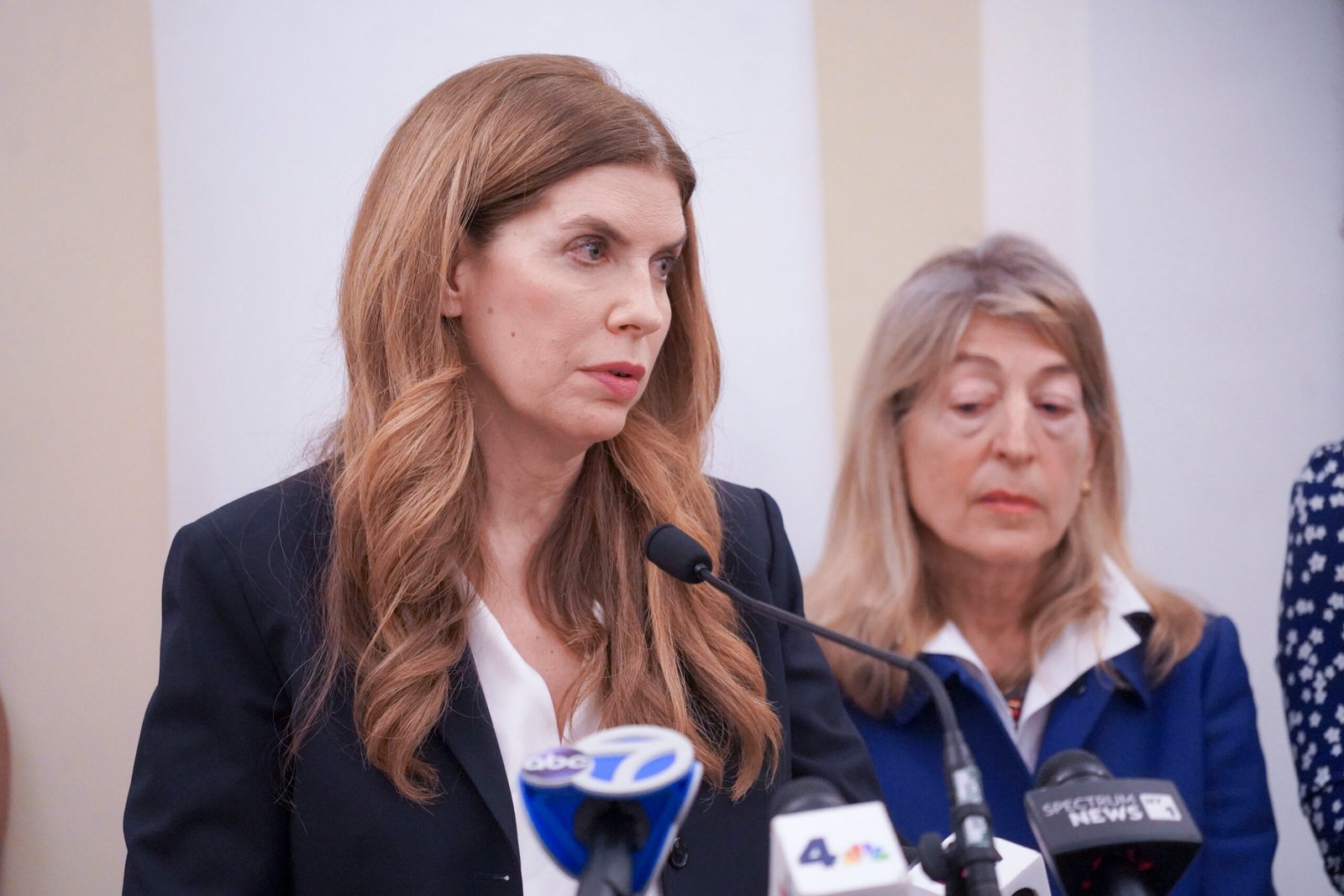
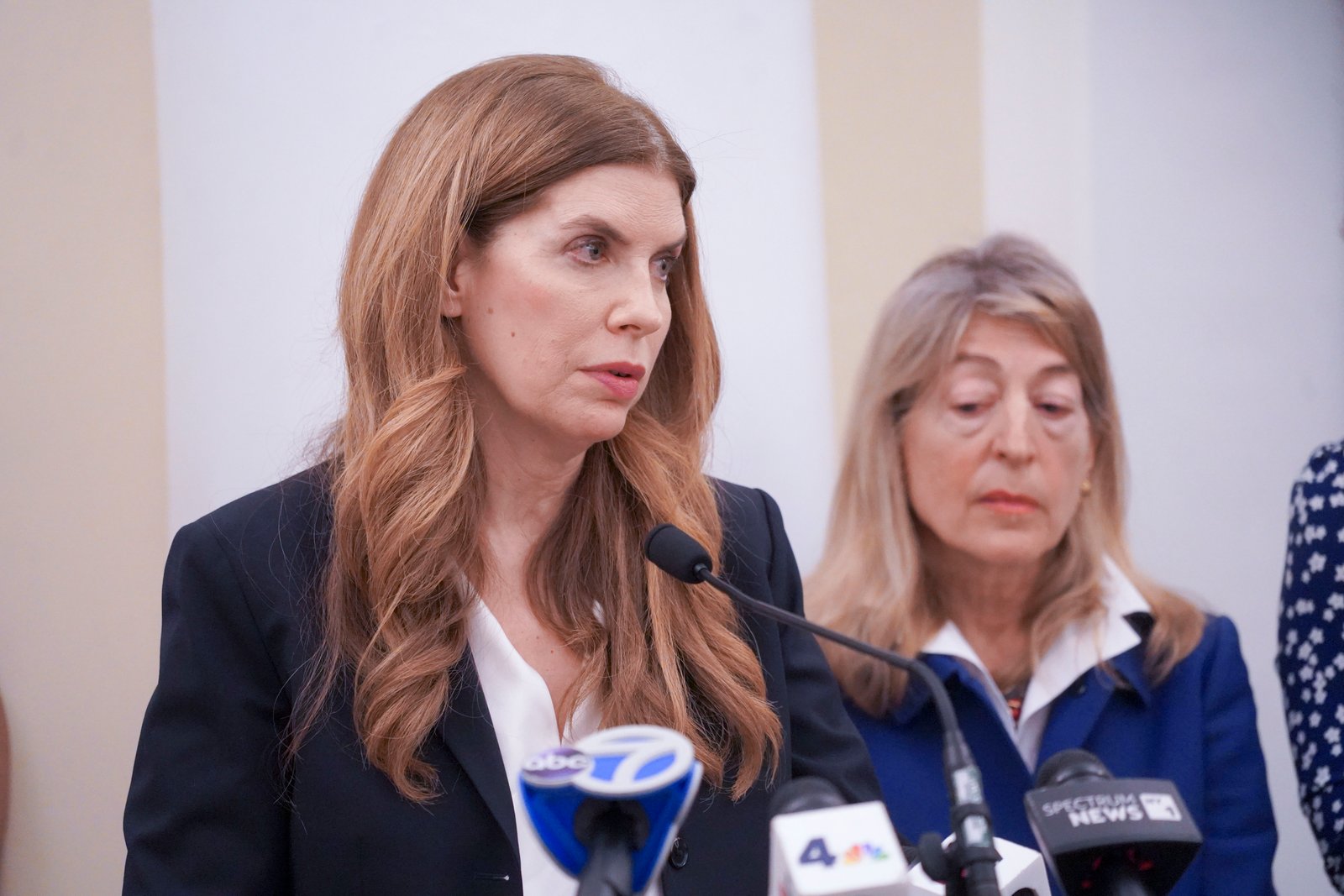
CITY HAL 9000: Amid a mad dash to try to regulate artificial intelligence, City Council Speaker Julie Menin is looking to make her mark.
The Manhattan lawmaker is planning to hold a hearing with all 51 members of the legislative body next week, and today confirmed the attendance of four major AI firms to discuss both the dangers the technology poses and a suite of Council bills that seek to protect New Yorkers.
“Leading experts and AI executives themselves are warning about the potentially grave risks of rapidly advancing AI, and governments have a responsibility to act,” Menin said in a statement announcing she issued a subpoena to SpaceXAI, the artificial intelligence company owned by Elon Musk, to compel the firm to attend.
Council hearings — even those run by lesser-known committees — are not known as concise affairs. And the notion of having all 51 members in the room to pepper AI executives with questions can only mean a marathon day with plenty of news coverage. (Remember Randy Mastro’s general counsel nomination hearing in 2024? No? You didn’t tune in for all 11 hours?)
Between the White House’s opposition to any type of AI regulation and New York City Mayor Zohran Mamdani’s desire for federal guardrails — though he has enacted an AI ban in elementary schools — a lane has opened for Menin to have her say in what has become one of the defining debates of the political moment.
Her muscular posture — her office dangled the possibility of subpoenas in front of the companies she sought for Monday’s hearing — shows she is not going to let it go to waste.
The package of bills being pursued by the Council includes a “kill switch” requirement and a new private right of action that would make it easier to sue AI companies. Menin is hoping to get input on that package Monday from artificial intelligence purveyors who agree that something needs to be done to slow the development of frontier AI models.
Google, which plans to be there Monday along with Anthropic, OpenAI and Meta, has released a white paper calling for a regulatory body that could develop safety standards along with audits for frontier AI models that are pushing the bounds of the technology. Separately, the firm has called for a regulatory framework for AI models like chatbots, which are already being used widely by the general public, and for the government to mitigate disruptions to the economy and workforce.
None of the firms have weighed in formally on the Council’s AI package, but one person with knowledge of the bills said there are early questions about how a “kill switch” activated in New York would affect a company’s services elsewhere around the globe, how the private right of action might interact with existing tort laws and whether there are downsides to retaining AI chat histories with consumers for extended periods of time.
Separately, there’s also the question of how the city’s AI bills would mesh with a separate AI regulation framework being pursued by Gov. Kathy Hochul. — Joe Anuta
From the Capitol

GATEWAY DREAMS: The long-awaited Gateway project reached a new milestone today: the start of tunnel boring under the Hudson River.
Hochul gathered with officials from New York and New Jersey to celebrate the latest stage of the development — which comes after more than a decade of planning and almost three years of construction work.
Following the “ceremonial launch” this morning, two hard-rock tunnel boring machines will be deployed this fall to construct a new rail tunnel between New Jersey and New York Penn Station. The machines are anticipated to clear about 30 feet of earth per day.
“We fought and beat efforts from the Trump administration to halt the Gateway project and today, that dream becomes a reality, with state of the art machinery operated by expert union workers starting their journey through soil and bedrock under the Hudson to Penn Station,” Hochul said in a statement. “This is a historic day for New York and a clear demonstration of our ambitions to once again be a state that dreams and builds big.”
Construction on Gateway began in late 2023, but the project previously faced a near-shutdown and temporary work stoppages after the Trump administration froze federal funds for it. The project resumed following legal action from New York and New Jersey. — Janaki Chadha
DON’T TRUST THE FILINGS: Hochul’s campaign is preemptively casting doubt on the accuracy of a disclosure report due to be filed by Republican opponent Bruce Blakeman on Friday.
If the past is any guide, the report won’t contain the definitive list of his financial activity. The campaign finance filing Blakeman submitted on July 15, for example, has since been amended on July 22, Aug. 13, Aug. 25 and Sept. 14.
As a result, a significantly different financial picture has formed compared to what was widely reported a couple months ago: Blakeman initially identified $3 million worth of contributions and $1.8 million in expenses over the spring; the latest amended version shows $4.5 million in contributions and $5 million in expenses. The total number of transactions disclosed went from 25,534 to 41,724.
Blakeman similarly resubmitted his March disclosure report four times and his January filing thrice.
“Either Blakeman wants to trick the press into reporting an inaccurate state of the race, or this guy sucks at math,” state Democratic Committee spokesperson Addison Dick said.
The Nassau County executive’s campaign did not respond to a request for comment. — Bill Mahoney
FROM CITY HALL

‘NOT IN AN INSHALLAH TIMELINE’: Mamdani said today he’ll release a plan “soon” for disbanding the controversial NYPD unit he pledged to get rid of last year as a candidate — and he’s leaving god out of it.
“I will fulfill that promise. The only question is the timeline of it … It’ll be not in an inshallah timeline, but an actual one,” he told reporters at a press conference in Manhattan, using the Arabic phrase for godwilling. “The critical point of it is just how to ensure we’re doing so while protecting New Yorkers’ rights and keeping New Yorkers safe, and that’s something that we’re going to share more information about soon.”
Mamdani made the comments after Playbook asked what’s causing the holdup on breaking up the NYPD’s Strategic Response Group, especially in light of the unit being deployed Thursday to arrest activists, including politicians close with the mayor, protesting Israeli Prime Minister Benjamin Netanyahu.
As a candidate last year, Mamdani was adamant that he would, if elected, abolish the SRG over concerns about its heavy-handed responses to protests.
But since taking office in January, the mayor has dragged his feet on the pledge. When asked about the status of it, he’s typically just said he’s continuing conversations with NYPD Commissioner Jessica Tisch — making today’s comments stand out.
A spokesperson for the NYPD declined to comment on Mamdani’s remarks. But the spokesperson did note that video posted to social media showed the SRG officers who effected arrests at last week’s anti-Netanyahu demonstrations acted peacefully and were joined by NYPD Community Affairs personnel who informed protesters they would be detained.
A political moderate, Tisch has defended using the SRG, once even cracking a joke that seemed aimed at highlighting the static between her and the mayor on the topic.
The fate of the SRG is among a number of issues Tisch and Mamdani have clashed on. They also hold divergent views on the issue of the NYPD’s gang database, with Mamdani promising last year to abolish it while Tisch calls it a critical tool that her department uses “every day.” — Chris Sommerfeldt
FROM THE CAMPAIGN TRAIL

FIRST IN PLAYBOOK: Hochul picked up an endorsement today from Planned Parenthood’s PAC in her bid for a second term.
In receiving the endorsement, Hochul touted her work in declaring the state as a “safe haven” for reproductive health care, creating a first-in-the nation paid prenatal leave program and increasing the child tax credit. Planned Parenthood Empire State Votes PAC Chair Robin Chappelle Golston said that the governor “understands what is at stake during relentless federal attacks.”
The group also backed Hochul, the first female governor of New York, when she ran for a full term in 2022.
Hochul’s opponent, Nassau County Executive Bruce Blakeman, has described himself as a “pro-choice Republican.” — Madison Fernandez
IN OTHER NEWS
— ZOHRAN’S SHADOW: Hochul is counting on Mamdani to stump for her reelection campaign, but the governor’s advisers are still figuring out the best way for him to do that. (The New York Times)
— SEX ED: A new study from the New York Civil Liberties Union found that many school districts have selected an abstinence-only sex education curriculum. (Times Union)
— JOB HUNT: As New York City government continues to reel from staff vacancies, Mamdani is opening a walk-in municipal jobs center to speed up hiring. (amNewYork)
Missed this morning’s New York Playbook? We forgive you. Read it here.
Battleground Republicans across the country are on defense as ICE operations keep finding their way into local headlines.
A flurry of ICE activity in four rural Kansas towns this week prompted businesses to shutter and public schools to urge families to identify who could pick up children from schools in case their parents were detained. Sen. Roger Marshall (R-Kansas) — a normally staunch MAGA defender who finds himself in a tougher-than-expected election — took to social media to say he was “closely following” the situation, signaled his displeasure that ICE wasn’t working more closely with local law enforcement, and said he had phoned Homeland Security Secretary Markwayne Mullin.
Later, he complained that ICE’s failure to communicate with local law enforcement caused “mass disruptions to local communities and businesses.”
“We must keep our communities safe, but it has to be done in a responsible and secure manner,” he said in a statement Thursday evening.
Mullin took over DHS in March with a mandate to keep immigration enforcement out of the news following a public outcry over the killing of two Americans by immigration agents during enforcement operations in Minneapolis. No subsequent incidents have generated the same type of national attention — but ICE’s recent record-high arrest rate is still landing hard in some communities.
“It does cause quite a disruption in the community,” said Scott Fischer, the GOP chair in Ford County, one of the counties where ICE activity was reported this week. “We don’t want our community disrupted.”
In Florida, local officials are warning about the impact of ICE raids on businesses, and a Republican incumbent is on air with a Spanish-language ad denouncing Trump’s crackdown. In Michigan, Democrats are calling for an investigation after a man crashed his car and died while fleeing ICE. In Maine, the fallout from a fatal ICE shooting of a 25-year-old from Colombia continues to loom over GOP Sen. Susan Collins’ reelection race. In Texas, last week’s nonfatal shooting of a Venezuelan in Austin is just the latest of several highly publicized ICE operations that have fueled wall-to-wall media coverage.
“There’s already been some blowback associated with what people feel is a little bit of a heavy hand when it comes to immigration enforcement,” said Sen. John Cornyn (R-Texas). “Obviously, border security is critical, but I think the administration maybe has miscalculated a little bit. … It is going to be one of the factors people are weighing in the election.”
The Department of Homeland Security said in a statement that the department “is focused on delivering the most HISTORIC mass deportation campaign in American history—exactly as President Trump promised.”“The men and women of ICE are enforcing the laws passed by Congress. We do not pick and choose which laws to enforce or where to enforce them,” the statement continued. “We will continue to enforce our nation’s laws and remove illegal aliens from American communities. Under President Trump and Secretary Mullin, if you break the law, you will face the consequences. Illegal aliens are not welcome in the U.S.”
The Trump administration’s deportation spree is not widely popular. A new Blue Light News Poll finds that a plurality of U.S. adults, 49%, think the mass deportations campaign is “too aggressive,” while 26% find it “about right” and just 14% think it is “not aggressive enough.” And in an election cycle where cost of living is atop voters’ list of concerns, ICE enforcement has become an economic issue too: Immigration raids are affecting workers, from construction sites in Texas to meatpacking plants in Kansas, frustrating business leaders.
In Kansas, where Democrats aim to win a U.S. Senate seat for the first time in nearly a century, ICE’s activity this week has provided another political opening.
“This is not how Washington should be treating Kansans,” Adam Hamilton, the Democratic nominee for Senate, said on social media Wednesday.
“It impacts these operations economically,” said Matt Teagarden, CEO of the Kansas Livestock Association, whose organization released a joint statement Thursday noting the “massive chilling effect” of ICE enforcement on “the legal, documented, skilled workers that put beef on the table and keep the cattle supply chain moving.”
“We’re all for getting the bad actors out of our communities,” Teagarden said. “The method by which they do that has an impact. We’ve seen it.”
Mullin said in a statement Friday that “ICE is not conducting worksite operations in Kansas” but “operations targeting heinous criminals including murderers, rapists, and drug traffickers and illegal aliens with final orders of removal.”
Some of Marshall’s allies downplayed the possibility that the immigration activity could have political ramifications.
“Senator Marshall has nothing to do with when ICE decides to do a surge, and I think most people understand that,” said Danedri Herbert, chair of the Kansas Republican Party.
But others winced at the way ICE conducted itself, even those who say enforcement is necessary to remove criminals.
“I’d sure ask that we go back to some of the concepts of working with local law enforcement who actually know the area better, and I think that might have improved things tremendously,” said Kansas State Rep. Jim Minnix, a Republican who represents Scott County, where some of the ICE activity occurred.
Texas has become the epicenter of ICE activity: One in five ICE arrests nationwide this year has occurred in the Lone Star State. Sunday’s Austin shooting came on the heels of a fatal ICE shooting in July. In South Texas, local news is consumed with a story of two teenagers who were stopped by ICE agents en route to a military recruiter’s office, one of whom was beaten on the side of the road. After17-year-old Luis Ochoa spoke out to say he was pepper sprayed and detained, his mother was quickly deported.
Bobby Pulido, the Democrat running in Texas’ 15th District, said his campaign has received more than 80 requests from South Texans asking for immigration help. The campaign passes those requests to pro bono attorneys, he said.
“Every single day we’re having people reach out. And it’s very frustrating, because we can’t help everybody,” Pulido said. “I’m not a congressman.”
His opponent, GOP Rep. Monica De La Cruz, has attempted to separate herself from the administration’s immigration crackdown: She hit the airwaves with an ad this month featuring a woman touting De La Cruz’s work getting her husband, who had legal status, released from immigration custody.
“I have been very direct with the White House, with leadership, that enforcement policy should be focused on the criminals and on the cartels that are terrorizing our communities,” De La Cruz said during an appearance on a conservative radio show Thursday. “They should not be on hardworking immigrants that are navigating the immigration process.”
Maine Democrat Troy Jackson has made Duran Guerrero’s death a key focus of his Senate campaign, hosting a town hall in the city where he was killed earlier this month and frequently criticizing Collins for voting to fund the Homeland Security Department. In response, Collins has emphasized she supports guardrails for ICE officers like body cameras and deescalation training.
In South Florida, public pressure is growing this week against policing partnerships with ICE as businesses report a dropoff in sales. GOP Rep. Maria Elvira Salazar released an ad — in both English and Spanish — that criticized the Trump administration for going “too far” on immigration. In the ad, she claims that half of the people detained in July “had no criminal record” and says Hispanics who backed Trump in 2024 feel “betrayed.”
Liliam López, president of the South Florida Hispanic Chamber of Commerce and the U.S. Hispanic Women’s Chamber of Commerce, said that her communities “are really, really hurting” from the ICE crackdown.
“All elected officials of the Republican Party that think that their constituents are being affected in an adverse manner should speak up, like Congresswoman Salazar did,” she said. “You can’t do what this administration is doing because it doesn’t work. It just doesn’t work.”
The concerns from vulnerable Republicans come as Mullin seeks to balance pressure from immigration hardliners with public backlash. When he took over the department in the spring, the administration moved to make its arrests of unauthorized immigrants more discreet, but the dip in visible deportation operations — coupled with messaging missteps wherein Mullin seemed to indicate an openness to some legal pathways for would-be immigrants — prompted considerable pushback from some of the loudest anti-immigration voices in Trump’s coalition.
DHS then recalibrated its messaging to highlight increased deportations and project continued operational toughness, in an effort to shore up support from that section of the president’s base.
The reported lack of body camera footage in the Austin shooting in particular has frustrated even some of Mullin’s defenders, given consistent pledges from DHS that the technology would be deployed and operational by the end of September.
“If the public report is accurate, that’s unacceptable,” Sen. Thom Tillis (R-N.C.) said. “Markwayne needs to pull these folks in and say, every piece of equipment you have, whether it’s a camera, a handgun or a mace canister, you show up to work with it every day or you’re failing to do your job.”
Voters’ concern seems to be building again with the election looming.
“Obviously for Hispanics, but I think just all voters in general right now, their main issue is overreach. They feel that there’s been abuse of power from everywhere,” said Sofia Kinzinger, a former DHS deputy assistant secretary during the president’s first term, and the wife of Trump-critical former Rep. Adam Kinzinger (R-Ill.). “Either you speak firmly against it, or you try to justify, which right now is the opposite of what people need.”
Jessica Piper contributed reporting.
Not everyone thinks there’s an affordability crisis.
While many Americans say the cost of living is the top issue facing the U.S. more than any other, President Donald Trump’s MAGA base does not always agree, according to a new analysis of The POLITICO Poll. Just 28 percent of voters who self-identify as part of the MAGA movement say expenses have become less affordable since Trump took office.
In fact, MAGA voters are more likely to say things have gotten better rather than worse.
That’s a stark break from the rest of the country, including the voters who backed Kamala Harris in 2024 and those who voted for Trump but do not identify as part of the MAGA movement.
The Blue Light News Poll results reveal a complicated challenge for Republicans: In an election all about the economy, cost of living concerns are reinforcing partisanship divides — entrenching Democrats’ opposition to Trump — while also driving a wedge among Republicans’ own base. Now, GOP candidates are facing frustrated voters from all sides.
Harris voters are far more likely than Trump voters to say groceries, gas and other expenses have gotten more expensive since the president took office, despite facing similar increases in household costs, according to a Blue Light News analysis of cost of living data.
Democrats hope to ride that frustration to victory in November, and have made affordability their top messaging issue this fall. They’re poised to benefit from the backlash to Trump’s economic agenda — from his unpopular tariffs to an Iran war that’s raised gas prices — which politicians and strategists widely agree are helping motivate Democratic voters.
“Those Democrats are definitely going to go vote,” said Michigan-based GOP strategist Jason Roe. “And we’ve got some voters that are a little harder to get to the polls, and when they are mad, frustrated, disappointed, disillusioned, in disagreement, and we don’t have them motivated, that’s going to be a problem.”
Many of those disillusioned Trump voters, The Blue Light News Poll suggests, are the ones who don’t identify as part of the MAGA base.
Consider the 52% of non-MAGA Trump voters who say the cost of living in their area is the “worst” it has ever been: Nearly half say they either wouldn’t vote for a Republican in the midterms or are still making up their minds.
But what is a boon to Democrats today could be a problem for them later. Partisanship also shapes how Americans remember the economy in years past, the poll results show.
Harris voters have a more favorable memory toward Democratic presidents and Trump voters have a more favorable memory toward Republican presidents, each saying life was more affordable when their party held the reins.
Democrats and Republicans simply don’t share an understanding of the economic reality — and without a common frame for the past, nor whether things are improving in the present, any party in power stands to lose its grip against an increasingly frustrated opposition when the economy is the key issue.
This year, that will be a major challenge for Republicans.
MAGA vs. Non-MAGA vs. Democrats
The Blue Light News Poll asked adults across America last month about affordability in their area, including about local prices and their memory of when prices were more affordable in the past.
Across the board, Harris voters outpaced Trump voters in their pessimism about the economy. And among Trump voters, non-MAGA voters outpaced their MAGA counterparts.
For example, 70% of Harris voters and 52% of non-MAGA Trump voters say the cost of living is worse than they can “ever remember it being.” MAGA Trump voters disagreed — a 43% plurality said the cost of living today is bad, but they could “remember times when it was worse.”
The results are a warning sign about the Trump coalition: In question after question, the president’s most loyal base is still sticking with him, but among the non-MAGA voters he convinced to back him in 2024, their frustration more closely resembles how Harris voters feel.
“There will be voters who voted for Donald Trump in 2024 who know he’s made life more expensive and won’t vote for his party this time,” said longtime Democratic strategist Jesse Ferguson. “Some will vote for a Democrat, some won’t vote. But they won’t cast a ballot for a Republican who they blame for the high cost of living.”
Of the non-MAGA Trump voters who say the cost of living is the worst they’ve seen, just 53% say they would vote for a Republican if the midterms were held tomorrow. More than 25% would vote for a Democrat or third-party candidate. The rest say they would stay home or have not yet made up their minds.
Changes to family budgets are similar on average among those that voted for Trump and those who voted for Harris, according to a Blue Light News analysis of data from the Living Wage Institute, a nonpartisan public benefit corporation that produces cost of living data. Across the country, family budgets have increased by 2.5 percent on average from early 2025 to early 2026, according to the Living Wage Institute.
But it is the concept of who is to blame that creates division among each voting bloc. Though each group is concerned about affordability — the cost of living is the most common concern for each — only MAGA Trump voters remain sympathetic to the current administration.
Young voters — and young men in particular — have also grown disillusioned with the Trump administration amid cost of living concerns, a warning sign for the GOP. Among those under the age of 25 who say the cost of living is the worst it’s ever been, 56% say they trust Democrats to bring down the costs. Just 20% trust Republicans to do the same.
“Young people feel like the system isn’t working for them,” said Joe Mitchell, a Republican running for Iowa’s open and competitive 2nd District. Mitchell, who is 29, would be the second Gen Z member to join the House if elected. “You see them being attracted to some of these DSA candidates like Zohran Mamdani. And they’re going to be attracted to these candidates if we don’t figure something out for them now.”
Partisanship even drives memory
Partisanship also colors how Americans see the past, making it difficult for any incumbent party to convince voters of plans for the future.
The Blue Light News Poll asked respondents whether it was easier or harder to afford everyday items in years past compared to today in one of two ways: In one, they were asked about a specific calendar year, and in another, the presidential administration in power at the time.
For each question framed around a calendar year, Trump and Harris voters gave similar answers. But when asked to compare how easy or hard it was to afford things during a particular presidential administration compared to today, their answers split along party lines.
For example, just over a third of both Harris and Trump voters said it was “easier” to afford everyday items in 2024 compared to today. But when asked the same question about the “end of [former President] Joe Biden’s term,” 55% of Harris voters said everyday items were easier to afford, compared to 39% of Trump voters.
The results show that Americans lack a common frame of reference on the issue most people care about — the cost of living — creating a massive hurdle for politicians hoping to win over new voters who may not be willing to listen.
The same effect happens among Trump voters looking back on a Democratic administration. When asked about costs in 2010 compared to today, 63% of Trump voters said everyday items were easier to afford then compared to now. But when asked about costs during the “middle” of former President Barack Obama’s first term — or 2010 — only 36% of Trump voters said the same.
It’s only when a political party is attached that Americans’ version of the truth changes.
When Blue Light News asked whether it was easier or harder to afford everyday items “just before the Covid-19 pandemic” or in “2019,” majorities from both parties said things were easier to afford then, and in both framings.
The challenge for both parties is that voters don’t know “who has a better plan for the future,” GOP communications strategist Kevin Madden said. “Instead, what you’re seeing is a gap — or a canyon — emerge between the rest of the country and Washington.”
He added: “When you see that gap emerge, watch out if you’re an incumbent.”
Alisa Vasquez and Andrew Howard contributed to this report.
- Republicans scheme to block Trump’s funding cancellations
- Senate passes bipartisan bill to overhaul college sports
- Taxpayer-funded ads are the latest Trump headache for beleaguered GOP senators
- Senate negotiators reach deal on permitting text
- Menin’s AI moment

- Vance, RFK Jr. and Iron Mike to headline MAHA Summit
- John Thune: Taxpayer dollars shouldn’t fund Trump ads
- Inside the anti-climate campaign against researchers
- Senate to vote on member stock trading bill
- Capitol agenda: Thune plots final votes before midterms
-

 Politics2 years ago
Former ‘Squad’ members launching ‘Bowman and Bush’ YouTube show
-
Uncategorized2 years ago
Bob Good to step down as Freedom Caucus chair this week
-

 The Josh Fourrier Show2 years ago
DOOMSDAY: Trump won, now what?
-

 Politics2 years ago
Former Kentucky AG Daniel Cameron launches Senate bid
-

 The Dictatorship2 years ago
Pete Hegseth’s tenure at the Pentagon goes from bad to worse
-

 The Dictatorship2 years ago
Luigi Mangione acknowledges public support in first official statement since arrest
-

 Politics2 years ago
Blue Light News’s Editorial Director Ryan Hutchins speaks at Blue Light News’s 2025 Governors Summit
-

 The Dictatorship1 year ago
Mike Johnson sums up the GOP’s arrogant position on military occupation with two words