
Politics
Forced out of the military — and into the redistricting wars


The latest battle in the 2026 redistricting wars will be decided Tuesday in Virginia, where a map favoring Democrats in 10 of 11 districts looks narrowly poised to spell doom for Republican incumbents — and tee up Democrats’ next big fight.
Welcome to primaries in the era of redistricting, where a Democrat-on-Democrat clash in a Washington, D.C.-adjacent district is opening a long-shot bid for one progressive candidate with a made-for-resistance background.
Veteran Bree Fram is seizing on the Virginia referendum to mount a race from the left against Rep. James Walkinshaw, a six-month incumbent who slid into the seat held by Rep. Gerry Connolly, his former boss, after Connolly died in May 2025.
Fram’s candidacy highlights an unintended consequence of Democrats’ retaliation against the redistricting wars President Donald Trump declared in an effort to retain the GOP House majority. And win or lose, it will inform the direction of a Democratic Party still seeking an exit from the political wilderness.
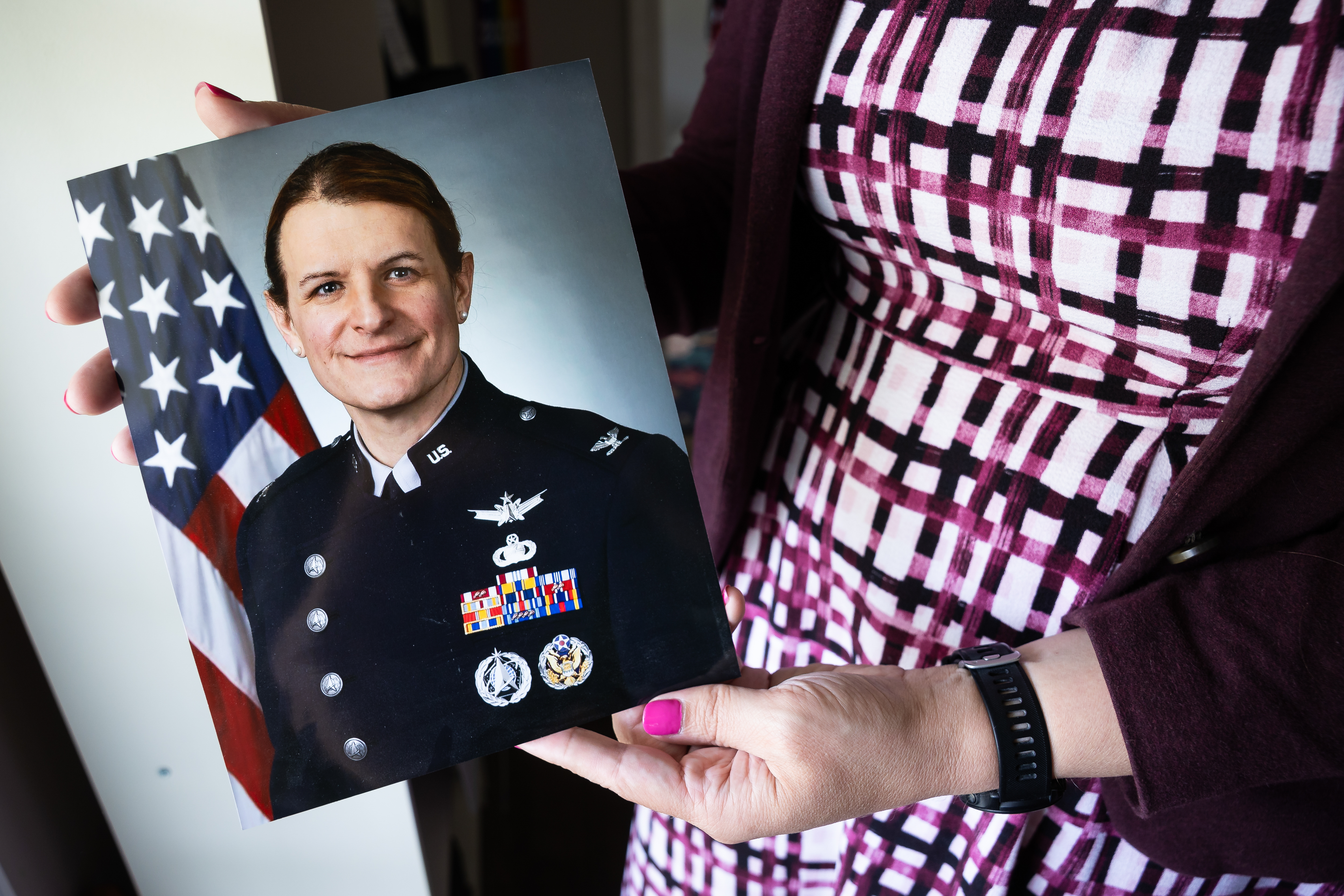
Fram, once the highest-ranking transgender person in the military, was forced into retirement last year when Trump declared via executive order that trans people are “not consistent with the humility and selflessness required” of service. Now, Fram and her campaign manager Sabrina Bruce, also a trans woman pushed out of the Space Force, are running their campaign like a military operation. And while they acknowledge the bid is a long shot, they think they have a chance — if Virginia voters approve redistricting in the state.
“Assuming that it does go through, there is a path to victory there, because when it comes to the landscape, when you’re looking at this from a strategic sense, you can’t go where your [opponent] is strongest. You have to go where they are weakest,” Bruce said.
And if redistricting fails, or the state Supreme Court blocks it? “The circumstances in that path to victory are much more out of our hands,” Bruce admitted.

At first glance, Fram has a resume expected of congressional candidates. She’s a 23-year veteran — 18 in the Air Force and five in the Space Force — and is quick to mention the high marks she earned from the military’s best schools. She’s smart — an actual rocket scientist — and has written or edited three books, including one on leadership. She’s married, with two teenage children, and lives in a house in the sprawling Washington suburbs. She talks a lot about democracy, duty and service.
But the circumstances surrounding Fram’s underdog bid against Walkinshaw are anything but ordinary — and her candidacy highlights the perfect storm that Trump swept into the American political universe. It’s a path that wanders from the terrorist attacks of Sept. 11, 2001, to the redistricting wars of 2026. And its terminus will be instructive as the country looks toward the future.
Fram has the type of progressive platform that will play well in Washington’s deep-blue suburbs: no money from corporate PACs, universal health care, altering the capital gains tax. She wants to keep data centers — for which the region is the global capital — away from residential areas. She’s a harsh critic of DOGE, whose decimation of the federal workforce was uniquely painful for the bureaucrats who call Northern Virginia home. And she joins a number of Democratic politicians bolstered by their military service credentials, calling Trump’s consistently unpopular war in Iran “a reckless disaster.”
Fram also isn’t afraid to bash her own party. She said she was “disappointed” by some Democrats who sought to distance themselves from trans advocacy in the aftermath of 2024. And she’s called for a constitutional amendment restricting presidential pardon power — including the type of preemptive pardons Biden issued his inner circle before leaving office.
Walkinshaw is running as an establishment Democrat — and an extension of Connolly, who served in Congress for 16 years and is mentioned five times on the webpage laying out Walkinshaw’s policy priorities. He sits on the House Oversight Committee (which Connolly chaired) and Homeland Security Committee — two high-profile panels whose Democratic members have set themselves in opposition to Trump’s handling of the Jeffrey Epstein files and immigration crackdown. He is also co-chair and founder of the Federal Workforce Caucus, which advocates for federal workers.
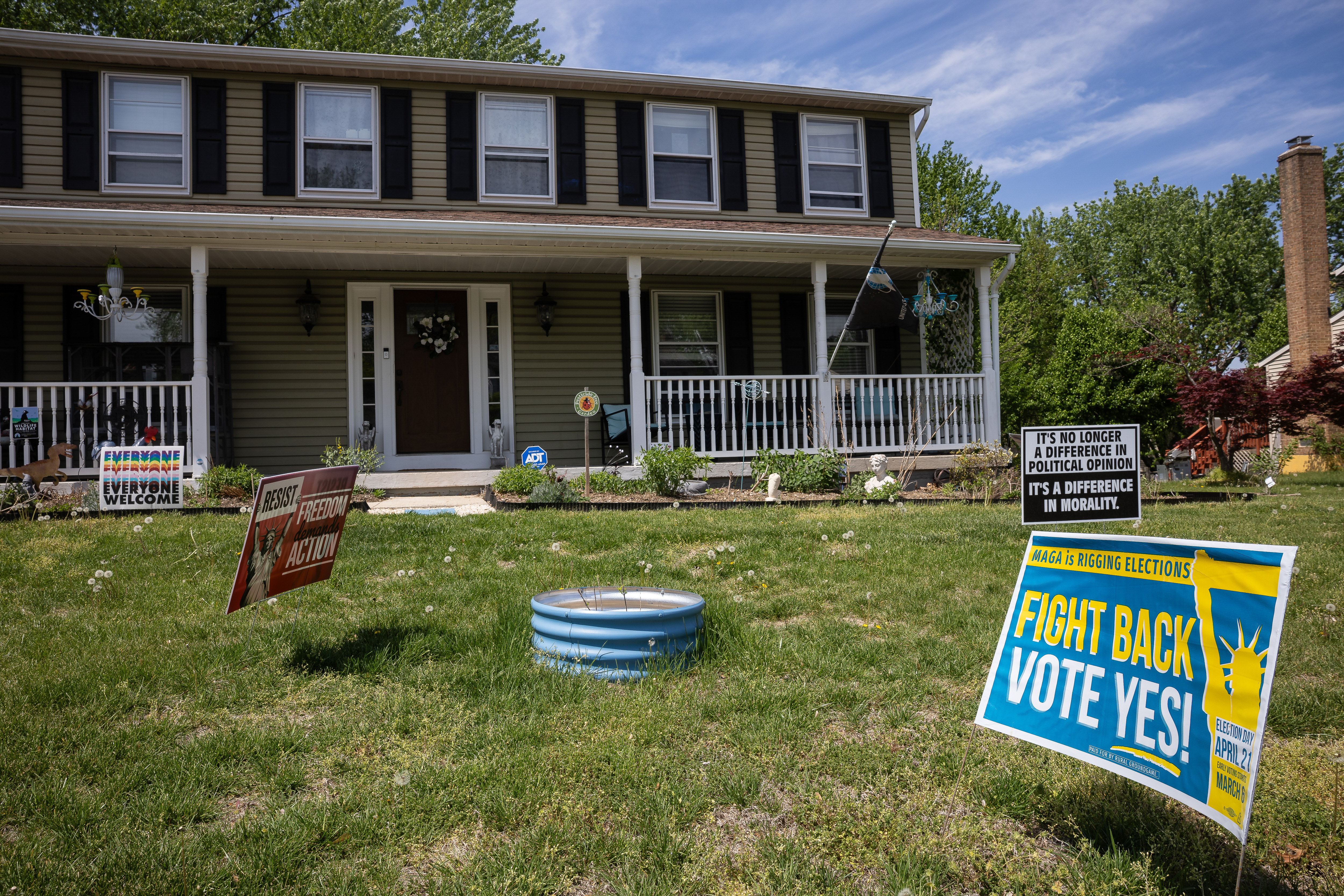
Bruce and Fram knew it would be an uphill battle to defeat Walkinshaw, who ended 2025 with more than $340,000 cash on hand. Then, days before Fram announced her campaign on Jan. 20, the Virginia state Senate and House of Delegates passed the constitutional amendment setting the stage for the redistricting referendum.
Weeks later, Democratic Virginia Gov. Abigail Spanberger signed legislation drawing a new congressional map that would take effect if voters approve the measure. Fram’s home district in that map — the “new 11th” — includes a majority of voters from surrounding districts currently represented by Reps. Suhas Subramanyam (D), Don Beyer (D) and Ben Cline (R). Walkinshaw and every other Democrat in the Virginia delegation have endorsed the map.
“We were aware that the terrain and the battlefield had shifted slightly in our favor with redistricting,” Bruce said. “That chaos is a ladder, and when you have an opportunity to exploit that, to take advantage of it, it’s clear that you can use that to win.”
The campaign is operating under the assumption that the referendum, which is polling very narrowly in Democrats’ favor, will pass. So far, that’s involved a “listening tour” of the new 11th — inspired by a commander’s first order of business when they take over a new base or squadron: Speaking to all the people who work for them to understand their needs.
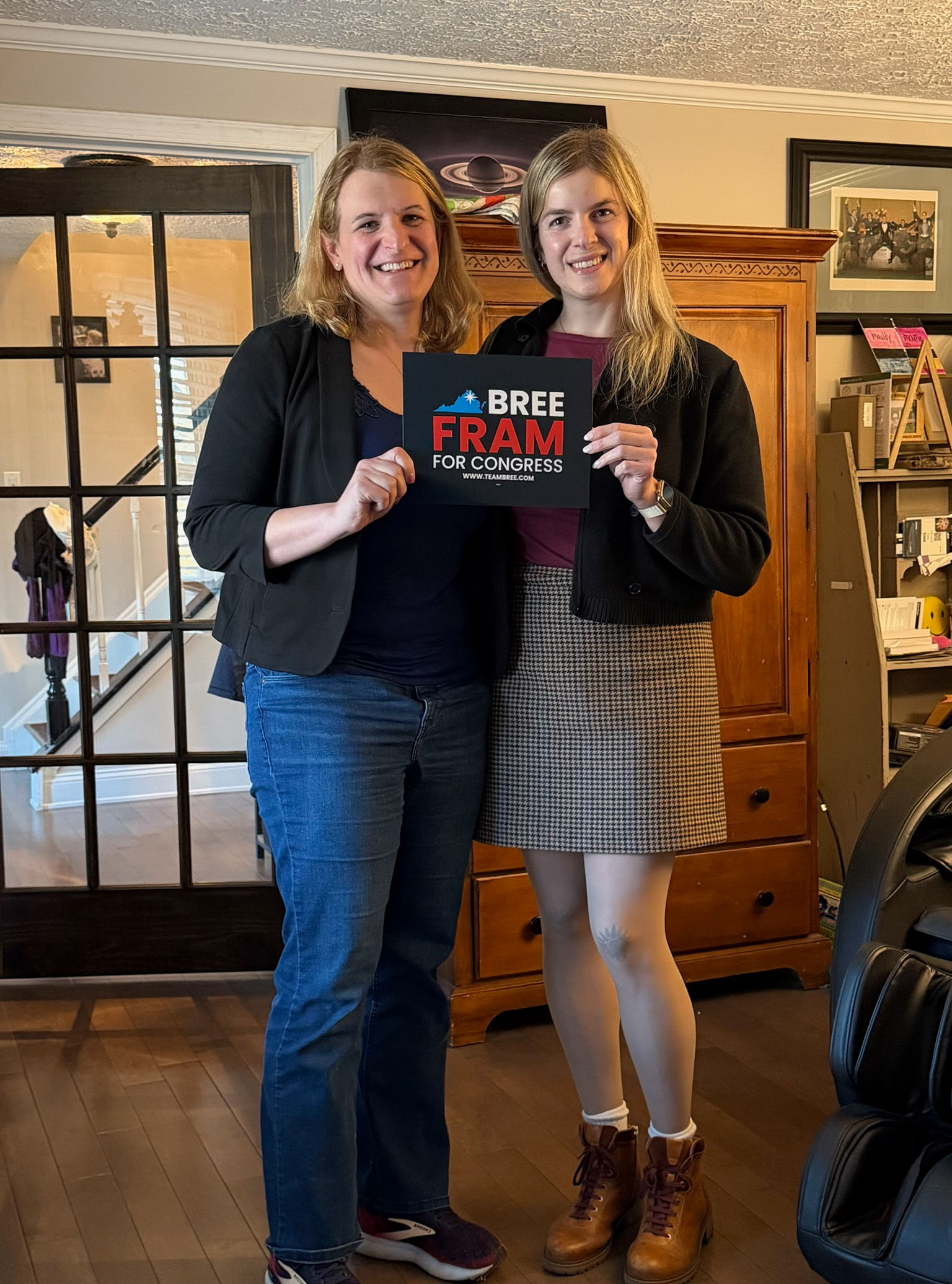
But Fram is still the underdog.
An internal poll commissioned by Fram’s campaign and shared with Blue Light News shows Walkinshaw with a major lead. In a head-to-head contest between the two, 43 percent of Democratic primary voters in Virginia’s new 11th district said they would support Walkinshaw, and only 9 percent said they would vote for Fram — while 48 percent said they weren’t sure. In the same poll, after being presented with information about both candidates, Fram cuts into the gap, if only slightly: Walkinshaw carries 42 percent, and Fram garners 21 percent.
Then there’s the money.
Fram’s campaign raised just over $250,000 in the first quarter of 2026 and had about $135,000 cash on hand at the end of March, according to FEC filings. Her campaign has received donations from every state and D.C., and every county in the new 11th district. None of it came from PACs.
Walkinshaw raised more than $630,000 over the same period, nearly $210,000 of which came from PACs. His campaign reported nearly $800,000 cash on hand as of March 31. Donald Brownlee, Walkinshaw’s campaign manager, said in a statement that over the past year, they received more than 6,000 individual donations, averaging $25 each.

“The grassroots energy we saw in our special election last year remains strong and [Walkinshaw] is focused on helping deliver a win for the Yes campaign in next week’s redistricting referendum,” Brownlee said.
Despite their differences, Fram is focused on running a campaign that steers clear of trench warfare. Fram and Walkinshaw are on the same team, the campaign says.
“I think that there is a line between winning, and being happy with the way that you won,” Bruce said. “And for a campaign that is centered on hope, centered on building something that is better than what we have, I don’t think we can stray too far from that and start attacking fellow Democrats. How are we going to get away from this malaise that Trump has put us in if we don’t try to be better ourselves?”
To understand Fram’s motivation for running, her background is important. The fact that she is trans, Fram says, is “the 17th most interesting thing about” her. When she was promoted to Space Force colonel in 2024, Fram became the highest-ranked openly trans person in the entire military. But then came the Supreme Court’s emergency stay on Trump’s executive order ousting Fram and thousands of other trans service members.
“That was devastating, because that was the day I knew the Supreme Court had just fired me,” Fram said.
Fram’s journey to the military began decades earlier with an episode of “Star Trek: Next Generation.” A young Fram was drawn to the character Geordi La Forge, helmsman of the show’s Enterprise-D starship. “I saw Geordi and I’m like, ‘That’s my job. I want to make the warp engines go. I want to help humanity expand into the stars,’” she said. Fram graduated from the University of Minnesota in 2001 with a degree in aerospace engineering and began looking for jobs at places like NASA and Boeing.
But the Sept. 11 attacks changed Fram’s trajectory. In the days after, Fram was driving from Minneapolis to Duluth to visit her girlfriend — now wife — when she saw an American flag draped from an overpass. She started to cry. “I walked into her apartment and said, ‘I’m going to join the Air Force,’” Fram recalled. By January 2003, Fram reported to officer training school, just as former President George W. Bush was beginning his second term and plotting the invasion of Iraq.
During her first 13 years in the Air Force, Fram told only two people in the military she was trans. In one close call around 2014, Fram recalled, she reported to work on a Saturday and accidentally brought a personal phone — which contained female-presenting photos of herself — into a classified zone. After quickly realizing and turning over the device to the security office, Fram waited in terror. “My wife thought that black helicopters were going to appear over our house,” she said. But five days later, security officers pulled Fram aside and asked if she could be blackmailed over the pictures. She said no, and they told her to pick up her phone on the way out.
On June 30, 2016, the Obama administration declared that “effective immediately, transgender Americans may serve openly, and they can no longer be discharged or otherwise separated from the military just for being transgender.” Fram was ready: She had drafted an email coming out to her colleagues and a Facebook post to come out to the world. She took a couple breaths. And then she hit send.
Fram scurried to the Pentagon gym, where she got on the elliptical and “went nowhere faster than I’d ever gone anywhere in my life,” she said. When she returned to her desk, her colleagues walked up to her one by one to shake her hand and say it was an honor to serve alongside her.

Four months later, Trump won his first presidential election.
On the 2016 campaign trail, Trump’s comments about trans people were fairly moderate. In April of that year, he said they should “use the bathroom they feel is appropriate.” Mostly, he avoided the topic altogether.
But in July 2017, the president said in a post on Twitter that, “After consultation with my Generals and military experts … the United States Government will not accept or allow … Transgender individuals to serve in any capacity in the U.S. military.” Fram wasn’t sure what to make of the missive — was a tweet an official order? — but she knew something had shifted.
That trans ban by tweet faced swift legal challenges, and in March 2018, the administration issued a revised policy that barred trans people from enlisting but allowed those already serving to remain if they received a diagnosis of “gender dysphoria” from a military doctor.
“It felt like being an endangered species at that point,” Fram said, “where the policies were just going to be so onerous and unpleasant that they thought we were just going to walk away, and eventually all of us would be gone.” She decided to stay and became one of the founding members of Trump’s Space Force.
When former President Joe Biden took office, he reversed the trans ban on Day One. Fram ascended the military’s ladder, climbing to the rank of colonel by the end of his term.
At the same time, Trump was stepping out of exile and back into the national political spotlight. His comeback campaign centered on anti-trans rhetoric, railing against “transgender for everybody” — a phrase he ambiguously attributed to Democrats. The GOP platform pledged to “End Left-wing Gender Insanity.” One of the Trump reelect’s most successful ads bashed Kamala Harris over the issue: “Kamala is for they/them, President Trump is for you,” the narrator of the ad said.
“The 2017 tweet was a lightning bolt out of a clear blue sky that no one saw coming,” Fram said. “But approaching 2024, we had $200 million spent in the last two months of the campaign demonizing trans people. This was like a hurricane you saw forming far away. You know it’s coming toward you, and the question is just how bad is it going to be when it hits shore.”
As the prospect of Trump’s return to office became more of a reality, Fram was sitting on a beach in Maine when her mother asked her a jarring question: “What’s your plan to flee?”
It hit home for Fram, whose grandfather and great grandfather according to family lore left Germany at the onset of the Holocaust on a midnight train to Paris.
“I plan to stay and fight,” Fram said she told her mother. “If the uniform gave me anything, it’s the courage to stand up when it’s appropriate to do so.”
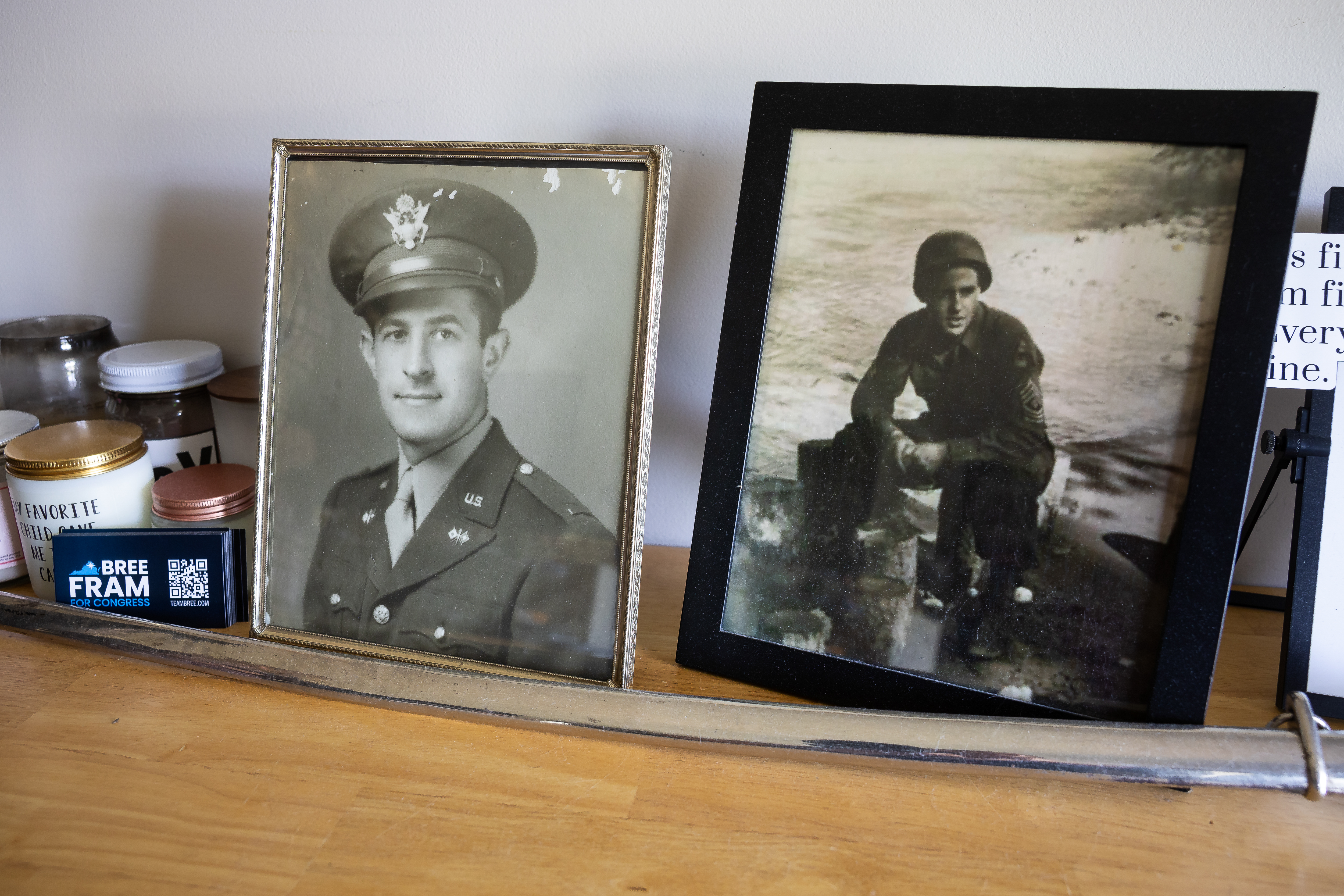
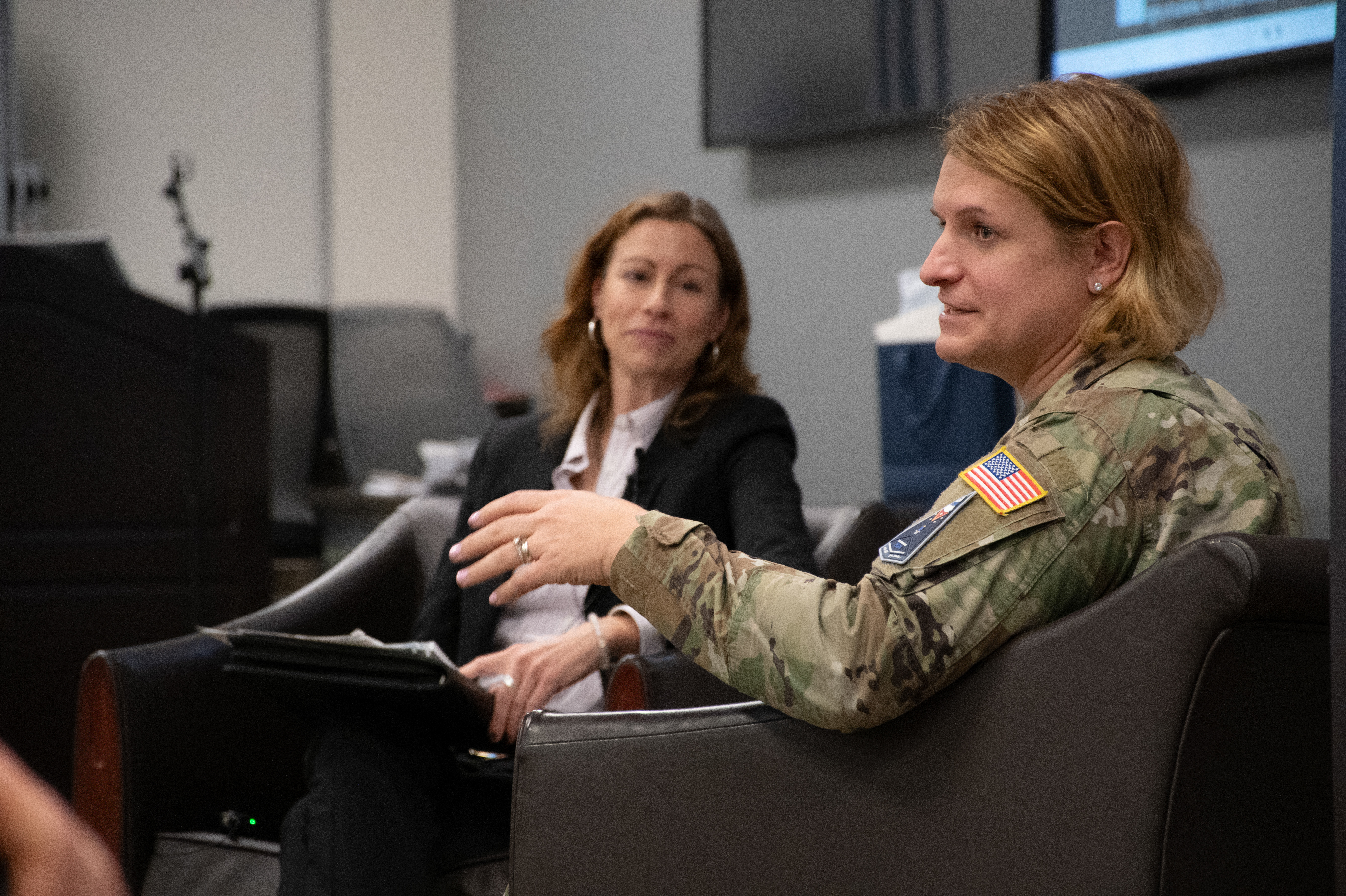
When the Supreme Court issued the decision that precipitated her ouster, Fram had one final meeting with the joint staff, which she attended as a colonel due to the Space Force’s small size. After delivering an update on her work, Fram informed the admirals and generals of her “unexpected departure.”
“The person sitting next to me looked over and said, ‘Oh, why? What new assignment did you get? Where are you going?’” Fram said. “And I’m like, ‘Well, I don’t meet this administration’s standard for military excellence and readiness, so I’m going to be placed on administrative leave in two days.’ And it took a moment for what that meant to descend upon the people in the room.”
Just like the day she came out nearly a decade earlier, Fram said each person at the meeting shook her hand and told her “it’s an honor to have served with you.”
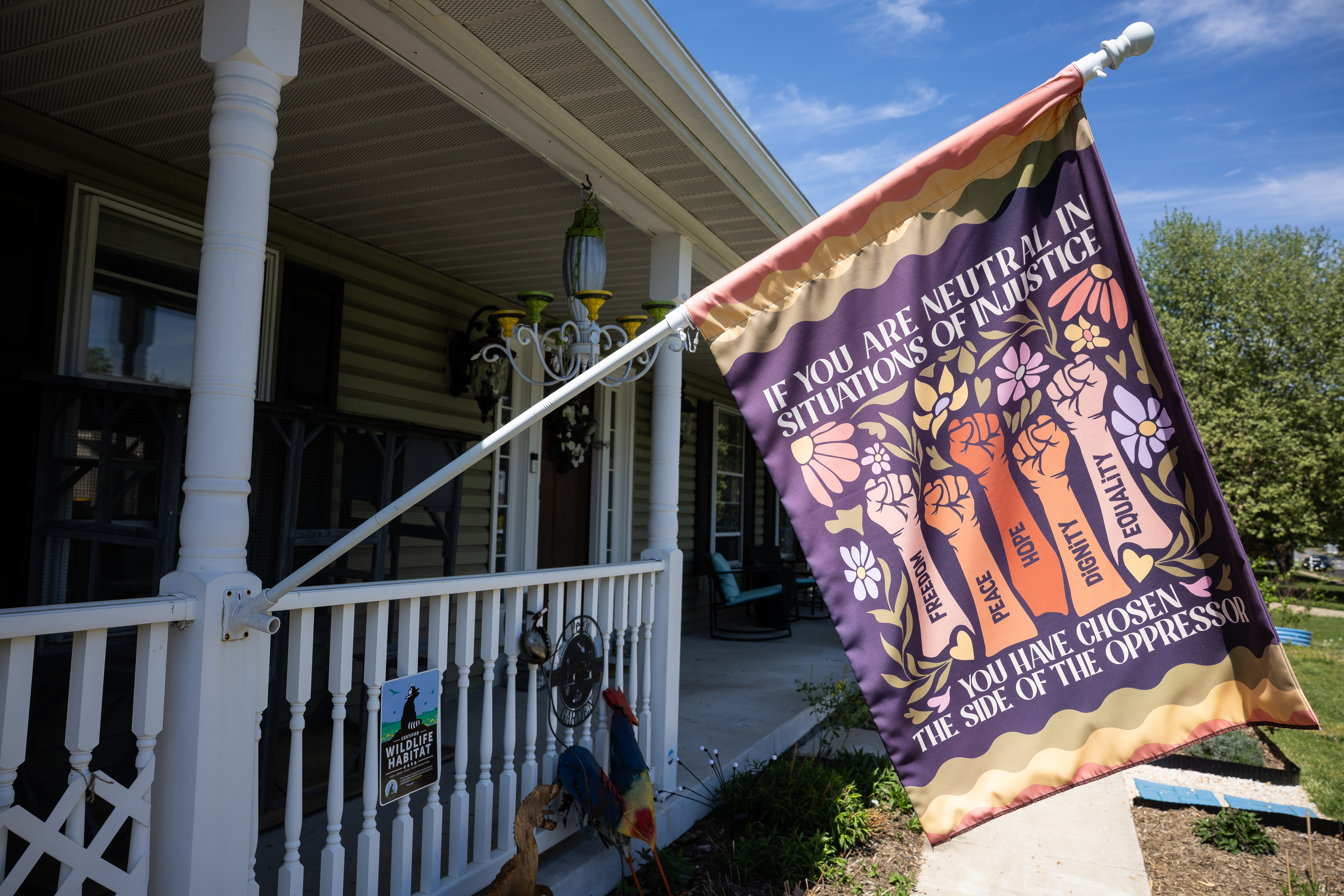
Fram was placed on administrative leave in early June 2025. A week before her retirement — authorized for Jan. 1, 2026, after a bureaucratic delay for approval — a three-star general summoned Fram to the Pentagon to deliver a message: the normal retirement celebrations would not be available. There would be no honor guard and no band. Others from her unit would not be allowed to attend. And she wouldn’t be able to wear her own uniform.
“Every pettiness, every cruelty as part of this process was inflicted on us,” Fram said.
Neither the Pentagon nor the White House responded to requests for comment by the time of publication.
Later that month, the Human Rights Campaign Foundation hosted a ceremonial retirement in Washington for five trans service members, including Fram. Their uniforms were displayed on mannequins.

“Our uniforms are not coming off because we failed in our duty, but because we did it so well that what it represented could not be hidden away,” Fram said in that ceremony’s closing remarks. “We may be done with our military service. We are not done serving.”
On April 28, 2025, Connolly released a statement announcing that he would not seek reelection after nine terms in Congress, citing the return of esophageal cancer.
Just over a week later, on May 6 — the same day the Supreme Court ordered its emergency stay — Walkinshaw, who had served as Connolly’s chief of staff for 10 years, filed paperwork seeking the Democratic nomination to replace his former boss. Connolly endorsed him the same day and transferred $1.8 million to a PAC backing Walkinshaw, according to campaign finance records first reported by the Washington Examiner.
Connolly died on May 21, triggering a firehouse Democratic primary to replace him in the deep-blue district on June 28 ahead of a Sept. 9 special election. Even after his death, Connolly’s campaign sent emails to its listserv soliciting donations for Walkinshaw, and his X account told followers to vote early for him, the Examiner reported. Walkinshaw cruised to victory in the primary, notching nearly 60 percent of the vote.
In the background, Fram and Bruce — who had known each other since 2018 — were set on a collision course with Walkinshaw. As Walkinshaw was announcing his campaign, Bruce was driving to her Space Force reenlistment ceremony when the high court released the decision that would force her out of the service. She went on administrative leave the next week. Fram had already been eyeing a run for Virginia’s 11th District, but couldn’t retire quickly enough to jump into the special election.
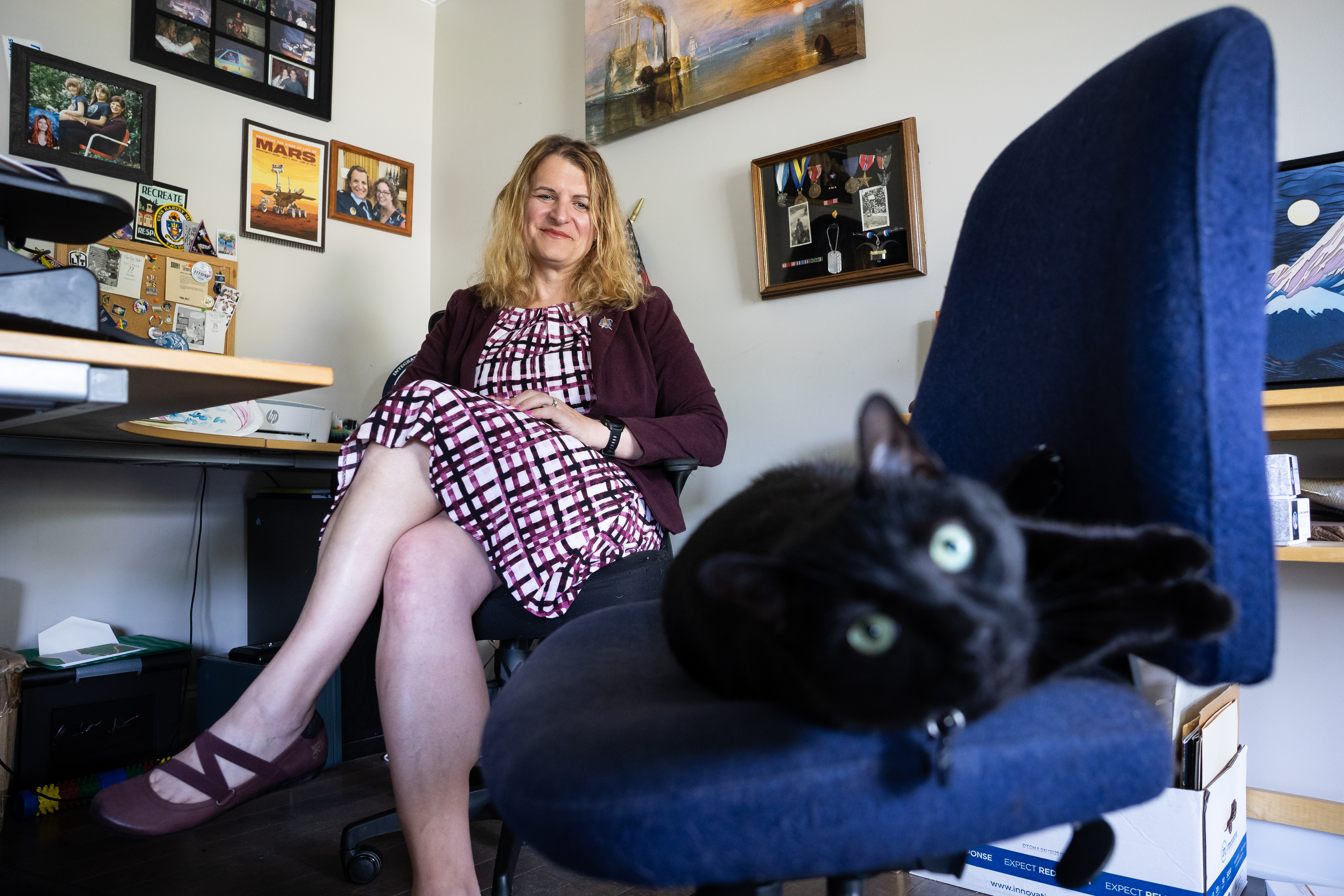
But by September, Fram and Bruce began to seriously discuss their next mission: a 2026 bid.
“If this administration thinks they can kick out a bunch of highly motivated badasses without expecting it to come back and bite them in the butt,” Fram said, “this is a way to show them wrong.”



911 EMERGENCY: An ambulance in New York City now takes an average of 13 minutes to reach someone in life-threatening distress.
That response time has risen five years straight and is up 41.2% from a decade ago, a city comptroller’s report revealed earlier this month. According to this year’s Mayor’s Management Report, which came out in September, ambulance response times to life-threatening emergencies shot up by almost 16% between fiscal year 2025 and fiscal year 2026 — the sharpest increase this decade.
A core part of the issue is that calling 911 does not necessarily mean an ambulance will be immediately dispatched. Callers are put in dispatch queues. If a higher-priority call comes through, the ambulance might be rerouted. And all of this happens behind the scenes — which means those experiencing medical emergencies have no idea when help will actually arrive.
Council member Joann Ariola, chair of the Fire and Emergency Management Committee, proposed a bill in August that would require the city to send New Yorkers broad notifications when the emergency response system is overloaded.
Now, the Queens Republican is pushing for these notifications to be completely personalized.
“The idea is that I would be able to track my ambulance in real time, just like you’re able to do for your bus, or your train, or your rideshare car,” she told Playbook.
If patients know how far away help is, they can make an informed decision to forgo an ambulance and instead pursue other means of transportation to a hospital, she said. That would also alleviate pressure on the already overloaded EMS system and potentially get callers the care they need faster.
The idea has support from a council member across the political aisle.
“We get live texts about everything under the sun, but for some reason, in our current system, we don’t get alerts about this,” Democratic Council member Harvey Epstein said. “If I’m waiting for an ambulance because my kid broke their leg, and I learn that it’s going to be half an hour, it’s smarter for me to just hop in a cab anyway.”
Ariola said she met with top FDNY officials — including Commissioner Lillian Bonsignore, Chief of Department John Esposito and Chief of EMS Paul Miano — ahead of Tuesday’s hearing to discuss the idea. All of them, she said, appeared more receptive to specific text alerts than to the broad notification system proposed in her initial bill.
Amanda Farinacci, an FDNY spokesperson, said the department is “considering and exploring all options that will help us respond to emergency medical calls quickly and keep New Yorkers informed.”
“We are exploring all our options, this included,” she said, referring to the live text-update model.
Ariola said she’s submitted the new version of the bill and is waiting to hear back from the legislative affairs committee.
The solution proposed by she and Epstein would address the public-facing side of the problem, offering relief to callers in emergency situations.
The root cause of the issue, though, is retaining EMS employees — a challenge officials and union leaders say stems from low pay for a high-stress job.
“This is not fixing the broken system,” Ariola said. “We are in a state of emergency right now. It’s a systemic problem with EMS because they cannot retain their members, because it’s not a career.”
Entry-level pay for emergency medical technicians is less than that of sanitation workers, firefighters, correction officers and police officers. Since 2019, about 4,300 EMTs and paramedics have left their titles, many for better-paying jobs elsewhere in the department. Last fiscal year, 58% of departing EMTs became firefighters.
The union representing emergency medical workers is negotiating a contract that lapsed in 2022, and it’s seeking pay parity with firefighters. But the comptroller’s report found that parity alone would raise EMS salary-related expenses by $184 million a year, a 66% jump.
“The City can reverse this dangerous trend by ensuring members of EMS are treated as equals to members of fire operations, and by providing EMS personnel with pay and benefit parity comparable to their firefighter counterparts,” Local 3621 President Vincent Variale and Local 2507 President Michael Greco said in a joint statement. “These actions would not only treat our EMS workforce respectfully and properly; they would save the lives of New Yorkers in peril.”
Response times to life-threatening emergencies saw the sharpest year-to-year increase of the decade between the last two fiscal years, a timeframe that straddles the Mamdani administration and the administration of former Mayor Eric Adams.
“This is something that each mayor inherited, but the new administration, it is now absolutely their issue,” Ariola said. “I’m hoping this is the administration that finally solves the retention problem. And the only way to solve that problem is to pay EMTs their worth and also recognize them as uniformed workers.”
The mayor’s office declined to comment on Ariola’s new proposal and referred to a comment from the fire department.
“The Department is currently engaged in a challenging period of increasing response times. We know this is unacceptable and we are working tirelessly to reverse this trend,” Farinacci said. “We will continue to take steps to improve response times and keep New Yorkers safe, including improving coordination with hospitals, enhancing efficiency in high-volume areas, and increased operational visibility to help return units to service quickly.” — Molly Reinmann
FROM THE CAMPAIGN TRAIL

A SUBURBAN ALARM: Suburban voters across the country are turning against President Donald Trump, according to a poll that amounts to a major warning sign for the GOP this election season.
The results of the National Suburban Poll by the National Center for Suburban Studies at Hofstra University paint a bleak picture for Trump and his party.
“Numbers that are concerning Republicans throughout the country become even more so when they show up in suburbs, which for years have been the ‘swing’ voting bloc that determines national and many statewide elections,” said Larry Levy, the center’s dean. “When a party’s or candidate’s numbers are weak in the suburbs, as we’ve found in many instances for Republicans, the situation goes from concerning to alarming.”
The survey found 33% of suburban voters approve of the president’s job performance. His approval rating in swing suburban House seats isn’t much better: 35%.
Just over a quarter of suburban voters nationally — 26% — are satisfied with the direction of the country.
Suburban voters by a margin of 50% to 42% prefer Democrats over Republicans in the generic Congressional ballot question. The GOP, though, is in a statistical tie with Democrats in suburban swing seats. In those districts, Democrats lead Republicans 47% to 44%.
Taken together, the numbers highlight the challenge Republicans face this year, especially in deep blue New York, home to several swing House districts in the New York City suburbs.
The most competitive race is in the Hudson Valley, where GOP Rep. Mike Lawler is fending off a challenge from Democratic opponent Cait Conley.
The survey included 1,500 people nationwide and was conducted in late September. It oversampled suburban residents who live in swing House districts. — Nick Reisman
SARATOGA FRESH: To get an idea of how much national headwinds might apply to the New York State Senate, look to Saratoga County.
Plenty of indicators suggest two factors will heavily influence the outcome: Voters are angry at Republicans and willing to oppose well-tenured incumbents.
That could be a double-barreled problem for Sen. Jim Tedisco, who’s running in a district where Donald Trump lost by 8 points two years ago. The Republican is now the dean of the state Legislature by a large margin: Tedisco came to Albany in 1983, the first year of Mario Cuomo’s time as governor. Only four other members who might be in office next year served in 1999.
“Jim Tedisco’s been in office for over 40 years, almost as long as I’ve been alive,” said Sarah Rogerson, Tedisco’s Democratic challenger. “People are ready for some fresh voices.”
Even if current assumptions about the electorate’s mood prove true, Republicans remain optimistic they won’t apply to New York. The GOP believes 2026 will be a repeat of 2022, when a lack of enthusiasm for the top of the ticket meant a good year for Democrats nationwide bypassed the Empire State.
“If there’s going to be a blue wave across the country, it’s probably going to miss New York, and it’s largely because of how deeply unpopular Kathy Hochul is,” Senate Republican Campaign Committee Chair George Borrello said.
Nobody’s predicting Republicans will retake the majority in a chamber where Democrats had a 41-22 edge this year. The main question now is whether Democrats can pull off a two-thirds supermajority of 42 or more members, a feat accomplished in 2020 and 2022 but not 2024.
READ MORE in Blue Light News Pro from Bill Mahoney.
FROM CITY HALL
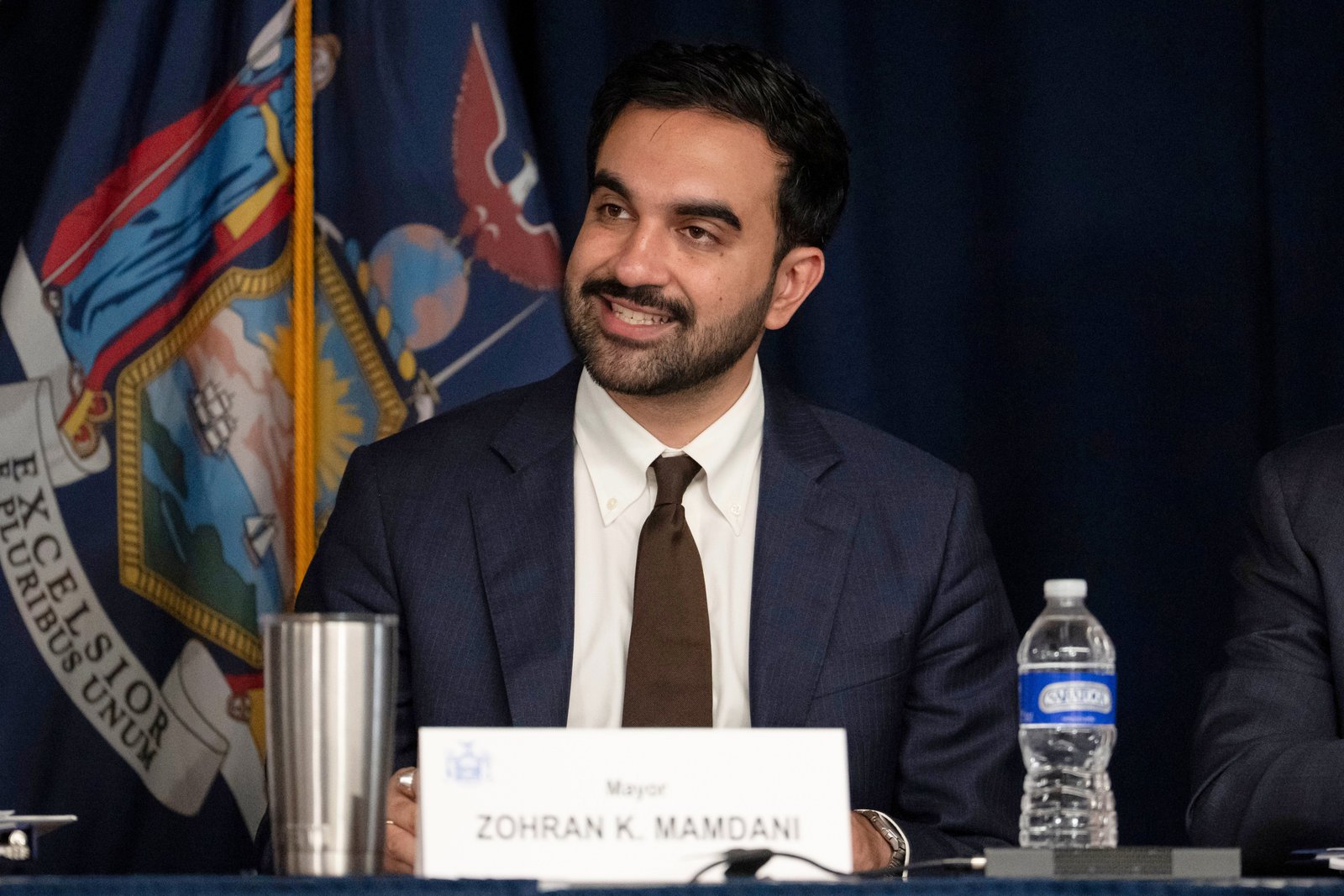
BILL SIGNING TIME: Mayor Zohran Mamdani will sign two bills passed by the City Council that come with significant transit and housing policy ramifications, his office confirmed today.
The first measure Mamdani plans to put his John Hancock on will abolish New York City’s horse carriage industry. The second will give nonprofit groups and local land trusts first dibs on buying distressed residential properties in their communities, with the idea that those regulations will protect affordable housing stock.
Mamdani had already voiced support for both pieces of legislation before the Council passed them yesterday. But his office hadn’t until today confirmed he would sign the bills, as opposed to letting them lapse into law.
Mamdani’s office did not immediately provide a date for when he plans to sign the bills.
The issue of signing bills came to the fore this week when the New York Post noted that Mamdani has only inked one bill since taking office. Ultimately, as long as the mayor doesn’t veto a bill, there’s no practical difference between whether he signs it or lets it lapse, as it becomes law regardless. — Chris Sommerfeldt
IN OTHER NEWS
— IN THE SCHOOLS: New York City is considering closing a Harlem high school due to underenrollment, the first in what could be a growing number of school mergers and closures amid public school enrollment declines. (Chalkbeat)
— HOCHUL: The governor’s vision for New York is largely shaped by her upbringing in a small Rust Belt city in western New York and her family’s slow climb up the socioeconomic ladder. (New York Times)
— CORNELL 7: Attorney General Letitia James is asking a court to dismiss a request to remove her from the investigation into the alleged sexual assault at Cornell University due to impartiality concerns. (Times Union)
Missed this morning’s New York Playbook? We forgive you. Read it here.
Senior Democrats are tempering their expectations about how big of a House majority they might win, as both parties see a tightening battlemap.
The latest rounds of internal polling from both parties from the middle of October show GOP candidates gaining ground in the Midwest and narrowing races in a key Colorado seat and elsewhere, according to six people familiar with the data who were granted anonymity to discuss it. Republicans’ deluge of money also seems to be helping shore up some imperiled Florida seats even as they face serious problems in North Carolina and Texas. The GOP gerrymandered those three states in their favor in the Trump-induced round of redistricting following the 2024 election.
Now, Democrats on Capitol Hill are starting to privately caution some of their bolder colleagues that it seems very possible they don’t hit the 235-seat height of their majority following the 2018 elections, according to one of those people and two others with direct knowledge of the conversations.
“I don’t think anyone ever believed we were going to have 2018 numbers,” one House Democrat said. “I honestly think the results are going to be all over the place. Caution seems smart to me. But, optimistic is also a good place to be.”
That’s a notable change from the tune some Democrats were singing just earlier this month: Brooke Butler, political director for the Democratic Congressional Campaign Committee, had predicted that their majority this cycle could reach 240 seats. “Anywhere between 218 and 240 feels very viable,” she told POLITICO earlier this month in announcing the DCCC’s plans to target new districts deep in GOP territory.
Some Democrats feel their own internal polling is over-indexing their strength in some cases, according to two other operatives working on competitive races, granted anonymity to speak candidly. But the party is still confident they’ll win the majority and are eager to keep Republicans spending to defend once-safe red seats.
Before the all-out GOP panic started in late September and boosted many Democrats’ bullishness, Minority Leader Hakeem Jeffries predicted House Democrats would win 220 seats.
“Given the mountain of outside, billionaire-backed cash being dropped in competitive House races across the country and the seemingly never-ending schemes by Republicans to try to rig the midterms — we’ve always known that the majority-making races would come down to the wire,” DCCC spokesperson Viet Shelton said in a statement. “We’re clear-eyed that House Democrats are poised to win the majority, and it will take running flat out until Election Day.”
Still, the tightening in the core House battleground districts that were identified as battlegrounds early on means a slew of those races are currently within the margin of error, or Republicans in some cases are running just a few points behind, according to the six people with knowledge of the internal Democratic and GOP polling. That includes the race for Michigan’s 7th District between GOP Rep. Tom Barrett and Democrat William Lawrence.
Another marquee battleground in Wisconsin’s 3rd District has tightened a few points since last month, as Republicans pour in millions of dollars more in ad spending. Democrat Rebecca Cooke is running 1 percentage point ahead of GOP Rep. Derrick Van Orden in a multi-candidate vote, 47% to 46%, according to an internal Cooke campaign poll from mid-October obtained by Blue Light News. “Wisconsin is always close and hard-fought — especially in a district Trump won decisively,” a Cooke campaign aide said. “Our working class message is connecting, but we need the resources to make sure it’s heard.”
In Iowa, Republicans still feel they’re likely to lose Rep. Mariannette Miller-Meeks 1st District. But they’re cautiously optimistic about Rep. Zach Nunn in Iowa’s 3rd district and Joe Mitchell in Iowa’s open 2nd District, where President Donald Trump is set to hold a rally on Nov. 1.
“Any Republican in Iowa in a neck and neck race ends up winning on Election Day,” said one GOP operative working on House races, who was granted anonymity to discuss the landscape.
Top GOP staff and officials still believe it’s more likely than not that they lose the House majority, but they’re hopeful they can limit Democrats’ margin.
The new polling is helping them see they might avoid some of the deep hemorrhaging, especially in the Midwest, that they feared in late September and earlier this month. That region has been hit hardest by Trump’s tariff agenda and rising diesel costs resulting from an unpopular Iran war — something the White House has seemed to acknowledge, with Trump promising $8 billion to farmers hurting from high fuel prices.
“Democrats spent months measuring the drapes, and now they’re scrambling to lower expectations before a single race is called,” National Republican Congressional Committee spokesperson Mike Marinella said. “Republicans have been laser-focused since day one and built our operation to win the races that will get us to 218.”
Trump is also personally working to shore up at-risk Republicans in his home state of Florida with a visit Friday to rally GOP voters.
Republicans in the last few days started to pile money into a series of once-safe GOP seats there, including Rep. Anna Paulina Luna’s Gulf Coast seat. Republicans are also racing to save several open seats, despite redrawing the districts in their favor, where the GOP is struggling. House Majority Leader Steve Scalise is in South Florida to boost GOP Rep. Maria Salazar on Friday and campaigned on Thursday for Republican Dan Green in the redrawn seat against Rep. Darren Soto, who should be toast under the GOP gerrymander in most political environments.
Senior Republicans believe the money bomb is starting to help shore up some Florida seats, though they still have more work to do.
South Texas remains one of the worst spots on the map for House Republicans, after the top House GOP super PAC cut off spending for one of their star recruits — Tano Tijerina, who is challenging Democratic Rep. Henry Cuellar — to help other imperiled GOP candidates. Some at-risk Republicans in the area, like Rep. Monica De La Cruz, should’ve been safe in a recently redrawn seat.
In North Carolina, Republicans are facing some dire fallout across House seats after the implosion of Republican Michael Whatley’s Senate campaign and top Senate GOP groups cutting off spending in the state. Top House GOP groups and Trump’s political operation have already cut off spending in North Carolina’s open 11th District, where Democrat Jamie Ager is challenging Republican Jennifer Balkcom.
President Donald Trump and his allies are mounting a last-minute mission to shore up his longtime personal friend in a battleground Arizona district.
GOP groups have spent more than $22 million to boost Jay Feely against Democrat Amish Shah, with much of that spending coming in the final weeks of the race. The president has known Feely for decades as a friend and golf partner, and he sees the former Arizona Cardinals kicker as a formidable candidate, according to two Trump officials familiar with their relationship, who were granted anonymity to share details about it.
The ferocious support for Feely appears to mark a rare instance of personal friendship and loyalty shaping political strategy in the close of the midterm campaign — especially after Trump personally intervened to clear a pathway for Feely to clinch the nomination. Trump and his allies have largely taken an unsentimental approach to political spending, including backing away from high-profile Senate races in Georgia and North Carolina where Trump loyalists are on the ballot.
Trump, in public and private, maneuvered other Republicans out of the way so Feely could switch races and defend one of the premier battleground districts in the country, according to the two Trump officials.
Still, Feely has been forced to navigate Trump’s deep unpopularity on the campaign trail.
Shah has been working to tie Feely to Trump in a flurry of ads, in the district where the president has an approval rating around negative 13 points, according to Democratic internal polling viewed by Blue Light News.
Feely, a star GOP recruit, also attended a meeting with Speaker Mike Johnson and tech billionaire Elon Musk in Texas this August as top Republicans worked to secure Musk’s help in defending the House GOP majority alongside the Senate, according to two people with direct knowledge of the meeting, granted anonymity to share private details.
Musk has donated $20 million to the top House GOP super PAC, though he’s focused much of his attention this midterms season on the Texas Senate race.
The Trump team appears to be taking a pragmatic view of Feely’s campaign, giving him some room to distance himself from the White House — even if that means avoiding the president’s rallies and breaking with him on other matters, according to the two Trump officials and two other people with direct knowledge of the matter who were granted anonymity to speak candidly.
Feely posted on social media this week: “I will stand up to anyone including the president if it is not in the best interest of this district and this state.” He and another battleground Arizona Republican, Rep. Juan Ciscomani, didn’t attend a rally Trump held in their state Oct. 14.
Brian Seitchik, Feely’s general consultant and a former 2016 and 2020 Trump campaign staffer, would only say Feely “regrettably could not attend” the event.
Feely’s run is a rare case this cycle where the Republican candidate is a well-known figure in his own right — and who has been personal friends with Trump for decades. He’s running in a wealthy GOP-held district that includes Scottsdale and part of the Phoenix suburbs that the president only narrowly won in 2024 and Democrats are eager to flip. Trump officials are keenly aware if they lose the seat, Democrats could hold it for several elections to come.
“Both parties know how important the seat is,” Feely told Blue Light News at the GOP midterm convention in Dallas this September. “It’ll be one of three to five seats in the country that’ll determine who wins the House,” he said, predicting it would “probably be the most expensive race in the country.”
“I’m honored to have a relationship with President Trump for the last two decades and to have his support at the same time,” Feely added at the time.
Internal polling on both sides show Feely locked in a tossup race against Shah, who was a physician with the New York Jets during Feely’s tenure on that team.
Feely noted the importance of winning over independent voters in the district. That’s an even harder task now given the growing unpopularity of the war in Iran and high fuel prices hitting voters.
The White House did not respond to a request for comment.
“In a race that’s going to come down to potentially hundreds of votes, Jay is doing the hard work required to win this battleground seat,” Seitchik, Feely’s general consultant, said.
Trump and Feely, who went on to have a career in broadcasting, have known each other for several decades. They’ve golfed together in recent years: Feely posted a photo of himself with Trump in August of 2020 after a round of golf with the president at his Bedminster, New Jersey, club. “What an epic day!!” he wrote.
Trump-aligned super PACs have poured north of $9 million into the race to boost Feely on the airwaves against Shah. The top House GOP super PAC, Congressional Leadership Fund, is highly focused on defending the seat and has also dropped nearly $7 million on the race. And the National Republican Congressional Campaign has spent $2.6 million on coordinated ad buys with Feely’s campaign.
Feely was originally running in the redder 5th District to replace Andy Biggs, who is now competing to be the state’s next governor. But Trump urged Feely to switch races to the battleground 1st District after retiring GOP Rep. David Schweikert announced he would also run for governor.
Trump’s encouragement helped draw Feely into a GOP primary fight with Gina Swoboda, a longtime Trump ally and former state party chair. The president initially expressed support for both Feely and Swoboda, but soon he posted only in support of his personal friend.
“I know Jay well, and he is a TOTAL WINNER, on and off the field!” Trump wrote.
- Spiking ambulance response times spur calls for real-time tracking

- Democrats are warning their party not to get too bullish on House gains
- Exit of RFK Jr. ally widens rift in GOP tent
- Meet Trump’s favorite House Republican candidate
- Democrats want Mullin in the hotseat in the next Congress
- John Barrasso to campaign with Ken Paxton
- Capitol agenda: Bennie Thompson warns about Dems’ late bet
- Poll: Trump wants the midterms to be about him. That could backfire.
- Can Angie Nixon prove Democrats can win in Florida?

- Elon Musk pours another $76 million into boosting Republicans
-

 Politics2 years ago
Former ‘Squad’ members launching ‘Bowman and Bush’ YouTube show
-
Uncategorized2 years ago
Bob Good to step down as Freedom Caucus chair this week
-

 The Josh Fourrier Show2 years ago
DOOMSDAY: Trump won, now what?
-

 The Dictatorship2 years ago
Pete Hegseth’s tenure at the Pentagon goes from bad to worse
-

 Politics2 years ago
Former Kentucky AG Daniel Cameron launches Senate bid
-

 The Dictatorship2 years ago
Luigi Mangione acknowledges public support in first official statement since arrest
-

 Politics1 year ago
John Legend advises Trump to drop the ‘dictator s‑‑‑’ if he wants Nobel Peace Prize
-

 Politics2 years ago
Blue Light News’s Editorial Director Ryan Hutchins speaks at Blue Light News’s 2025 Governors Summit