
Politics
2026 Democrats jump to pan the shutdown deal

Senate Democrats’ embrace of a shutdown deal that doesn’t guarantee extended health care subsidies is already an electoral issue.
Nearly every major Democratic Senate candidate panned the deal, from Texas hopeful Colin Allred, a former member of Congress, deriding it as a “joke” to Illinois Lt. Gov. Juliana Stratton condemning it as a “complete betrayal of the American people.” Sen. Jon Ossoff (D-Ga.), the party’s most vulnerable incumbent in 2026, voted against advancing it, as did several senators eyeing a 2028 White House bid.
“Pathetic,” California Gov. Gavin Newsom wrote on X. “This is not a deal — it’s an empty promise,” Gov. JB Pritzker of Illinois said.
The Sunday agreement even caused a familial dispute: Stefany Shaheen, who is running in a crowded Democratic primary for an open House seat in New Hampshire, said she couldn’t support a deal that failed to extend the Affordable Care Act tax credits. Her mother, retiring Sen. Jeanne Shaheen, was one of the lead Democratic negotiators of the deal.
Democratic Rep. Chris Pappas, who is running to replace Jeanne Shaheen, creating the very opening her daughter is vying to fill, also rejected it in a statement Monday.
After looking to make soaring health care costs an albatross for Republicans in the midterms, Democrats’ deal to reopen the government after 40 days without language extending the expiring insurance subsidies delivered a blow to their base. The result was so fraught, even Senate Minority Leader Chuck Schumer (D-N.Y.) opposed it amid intense criticism for allowing eight members of the Democratic caucus to side with Republicans.
Now it’s creating a litmus test for candidates in competitive midterm races next year, as Democrats fight to retake the Senate — a tough task they feel better about after routing Republicans in last week’s off-cycle elections throughout the country. They’d need to net four seats in order to seize control of the upper chamber.
“The infighting over the deal will fade quickly and by the time we get closer to the midterms, it’s very clear that Democrats will aggressively prosecute the case against Republicans on health care,” said Matt Bennett of the centrist think tank Third Way. “They will say Republicans yanked lifesaving money away from millions of Americans to fund tax cuts for the rich. And that will have the benefit of being true.”
Thirty-three Senate seats are up for grabs next year and Democrats are making a serious play for holding or flipping at least a dozen of them. A quartet of candidates vying for open seats — Graham Platner in Maine, Mallory McMorrow in Michigan and Zach Wahls and Nathan Sage in Iowa — reiterated their opposition to Schumer’s leadership as news of the deal spread.
“Chuck Schumer failed in his job yet again,” Platner said in a video on X. “We need to elect leaders who want to fight. … Call your senators and tell them Chuck Schumer can no longer be leader. Call your congressman and tell them that they cannot vote for this when it comes to them.”
In Michigan’s three-way primary, each candidate panned the deal, representing the ideologically vast opposition within a party otherwise mired in internal dispute.
“This is a bad deal,” McMorrow said in a video late Sunday, adding that “the old way of doing things is not working.” Abdul El-Sayed slammed the “shit” agreement and castigated Democrats for giving up their leverage “when we actually can force [Republicans] to the table” after their electoral losses last week. Rep. Haley Stevens said the deal “doesn’t work for Michigan” and that she’s “going to need a whole lot more than empty promises that we’re going to lower costs.” She did not say how she’d vote on the measure in the House.
Senate Democrats’ capitulation opened an off-ramp to the record-breaking government shutdown that has snarled air travel and led to missed paychecks and lapsed food assistance. The agreement now advancing through the Senate would fund some agencies and programs for the full fiscal year and extend others until Jan. 30, 2026. It also promises Democrats a December floor vote on extending the expiring Obamacare subsidies, though it’s uncertain to pass the GOP-controlled chamber and Speaker Mike Johnson won’t promise to bring up such a vote in the House.
But in cutting a deal, Senate Democrats infuriated a party reinvigorated by its off-year electoral blowout, sparking accusations that the party again squandered its only leverage in the Republican-led Congress — and ensuring Schumer’s leadership will remain a touchstone in competitive Senate races.
None of the eight Democrats who voted to break the shutdown stalemate are facing voters next year. Two are retiring; the rest are not up for reelection until at least 2028.
They cited the financial pain the prolonged federal funding lapse was inflicting on their constituents. They cast the pending floor vote on the tax credits as a win for Democrats. And they touted other concessions they secured, like the rehiring of federal workers laid off during the shutdown.
“This bill is not perfect, but it takes important steps to reduce their shutdown’s hurt,” Sen. Dick Durbin, the No. 2 Senate Democrat who is retiring next year, said Sunday.
The Democrats vying to replace him disagree. Stratton, who’s previously called for new Senate leadership, cast Democrats’ cave as “a complete betrayal of the American people.” Reps. Raja Krishnamoorthi and Robin Kelly both said the outcome failed to help millions of people whose health care premiums are set to skyrocket.
Across the Senate map, opposition spanned Schumer’s handpicked recruits — who’ve been largely silent about the shutdown — to the insurgents who’ve called for his ouster.
“This is a bad deal for Ohioans,” former Sen. Sherrod Brown said in a statement. Maine Gov. Janet Mills panned “the promise of a vote [on the subsidies] that won’t go anywhere.” Former North Carolina Gov. Roy Cooper — Democrats’ best chance for flipping a Senate seat and the last major candidate to weigh in on the deal — said in a statement that “any deal that lets health care costs continue to skyrocket is unacceptable.
Sage slammed the Senate Democrats who “caved and accomplished nothing.” Jordan Wood, another Democrat running in Maine, said “America needs an opposition party willing to fight for them.” Minnesota Lt. Gov. Peggy Flanagan said in a video, “we deserve so much more than this bullshit.” Hours later, she was endorsed by Sen. Bernie Sanders (I-Vt.), who voted against the deal.
“If people believe this is a ‘deal,’ I have a bridge to sell you,” said Flanagan’s rival, Rep. Angie Craig (D-Minn.), adding that she’s a “no” when the measure comes up for a vote in the House. “I’m not going to put 24 million Americans at risk of losing their health care.”
Senate Democrats who brokered the spending deal argued Sunday that they had succeeded in hanging rising health care costs on Republicans’ necks heading into the midterms.
“If Republicans want to join us in lowering costs for working families, they have the perfect opportunity,” Sen. Catherine Cortez Masto (D-Nevada) said Sunday at the Capitol. “If they do choose not to come to the table, they can own the disastrous premium increases.”
Democrats continued to target their own.
Rep. Mikie Sherrill, who was elected the next governor of New Jersey in last week’s blue wave, denounced the deal as “malpractice.” Zohran Mamdani, New York City’s incoming mayor who Schumer declined to endorse, said the compromise and anyone who supports it “should be rejected.”
“That’s not a deal,” Rep. Ritchie Torres (D-N.Y.), who drew a primary challenge last week, said Sunday. “It’s an unconditional surrender.”
The political blast radius is extending to Schumer, who is up for reelection in 2028.
Some progressive Democrats and advocacy groups called for his ouster as leader, blaming him for failing to keep his caucus in line even as he voted against the deal he said didn’t address the “health care crisis” and vowed to “keep fighting.”
Schumer “is no longer effective and should be replaced,” Rep. Ro Khanna (D-Calif.), a potential 2028er, blasted out on X.
The Sunrise Movement called for Schumer to step aside. Justice Democrats urged voters to reject the eight Senate Democrats who allowed the funding patch to proceed.
“I don’t think the Democrats leading this surrender effort understand the trust they are shattering in their own voting coalition,” Andrew O’Neill, the national advocacy director for Indivisible, warned Sunday night.
Schumer voted against the bill because it does “nothing” to address a “health care crisis” he called “devastating.” He pledged to “keep fighting.”
As House Minority Leader Hakeem Jeffries, too, vowed to fight on, O’Neill called for his caucus to follow suit. Several said Sunday that they would.
Adam Wren contributed to this report.


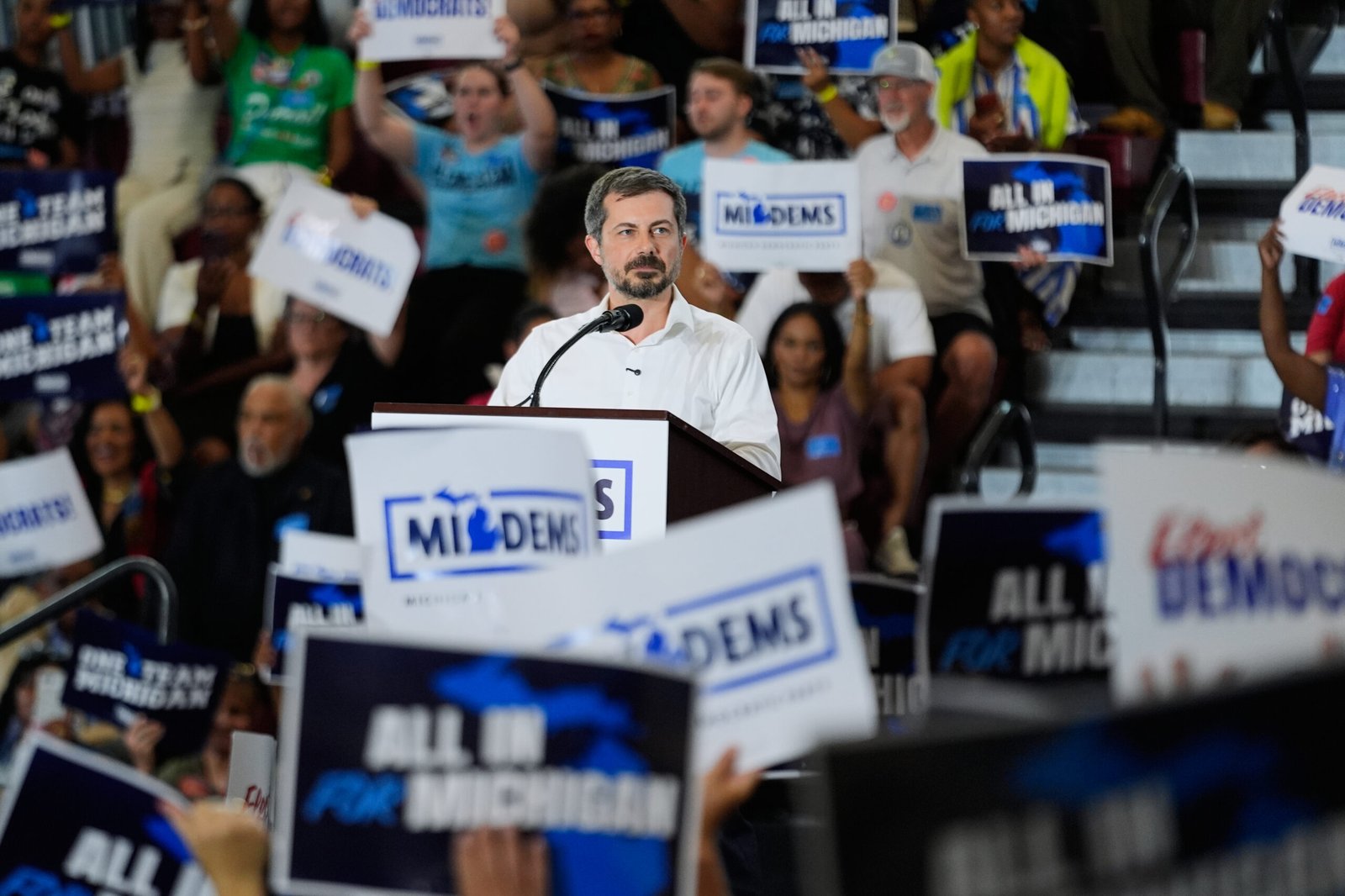
Top Democrats are using 2026 as a launching pad for potential 2028 presidential runs.
From progressive Reps. Ro Khanna (D-Calif.) and Alexandria Ocasio-Cortez (D-N.Y.) to the more moderate Pete Buttigieg and Pennsylvania Gov. Josh Shapiro, Democrats have sought to shape their party by endorsing in contested primaries this year. They’ve traveled the country to raise their own profiles and elevate candidates they see as the future of the party.
Their strategies have not always been successful — but they have been revealing: Some endorsed against incumbents based on generational or ideological differences. Some weighed in early to give candidates credence, while others waited until the last minute to help them close out the race. And some have focused on purple districts and other competitive races that could determine control of Congress in the fall.
“If you’re thinking about running for president, you need allies,” said Mike Nellis, a Democratic strategist whose firm works with House and Senate campaigns across the country. “The more that you’re out there, trying to get people elected and making a meaningful difference, voters are going to remember that.”
Appearing with candidates on the campaign trail is an opportunity for potential 2028 candidates to create social media buzz, Nellis noted. Traveling gives them opportunities to connect with donors and elected officials across the country who might be helpful for a future presidential run and pressure test how messages work in various parts of the country. For those not up for an election of their own this year, it’s also a way to stay relevant.
Some potential presidential candidates have been particularly prolific, while others have been more cautious or stuck to their home states, according to a Blue Light News review of endorsements in House, Senate and gubernatorial races. And a handful mostly stayed out of this year’s primaries.
The most prolific endorsers
Few members of Congress threw out as many endorsements as Khanna.
The California representative, who has said he is “seriously considering” running for president in 2028, endorsed in more than a dozen races, often serving as one of the earliest national backers of progressive candidates such as Kat Abughazaleh in Illinois’ 9th District and Analilia Mejia in New Jersey’s 11th District. Abughazaleh lost her race, while Mejia won.
Khanna also backed left-wing candidates that other national progressives shied away from, most notably democratic socialist state Rep. Francesca Hong in the Wisconsin gubernatorial race.

His record is mixed. Hong lost and former Maine Senate Democratic nominee Graham Platner, who Khanna stood by despite a series of controversies, had to drop out after winning a primary but facing an allegation of sexual assault, which he denies — at which point Khanna, like many others, withdrew his endorsement.
Khanna told Blue Light News he likes “endorsing early when an insurgent candidate is a bit of a longshot because that is when they need the endorsement most.” He looks for candidates who support Medicare for All and taxing billionaires and are opposed to foreign wars.
“My philosophy is to give those who are outsiders and have to scrape their way in — like I had to — a fair shot,” he said in a text message.
Ocasio-Cortez also endorsed a large slate of progressive candidates, but she’s been more selective than Khanna — a difference in approach that’s sparked some infighting within the Bernie Sanders wing of the progressive movement.
Critics have argued she’s played it too safe. But her selectivity has also meant she avoided high-profile stumbles.
Ocasio-Cortez has positioned herself as more of a closer this cycle. In California’s 22nd District, a battleground in the Central Valley, Khanna endorsed progressive professor Randy Villegas last September, while Ocasio-Cortez dropped her endorsement in May — about a month before the primary. Villegas ultimately defeated a moderate lawmaker backed by the Democratic Congressional Campaign Committee and is among the progressives who will now try to knock off an incumbent Republican in November.
Ocasio-Cortez actively campaigned for progressives in several contested battleground primaries, rallying with Sam Forstag in Montana and alongside Sanders with Abdul El-Sayed, who narrowly won the Democratic Senate nomination in Michigan.
She recently threw her support behind Sen. Ed Markey (D-Mass.), who faces a primary challenge from Rep. Seth Moulton next week.
The other most frequent endorser among potential Democratic 2028ers this cycle played in a different lane. Former Transportation Secretary Pete Buttigieg, a moderate, has been active on the campaign trail, visiting most presidential battleground states and endorsing in key Senate primaries, including Rep. Angie Craig in Minnesota’s Democratic Senate primary — which she lost to progressive Peggy Flanagan — and state Rep. Josh Turek in Iowa’s Democratic Senate primary, which he won.
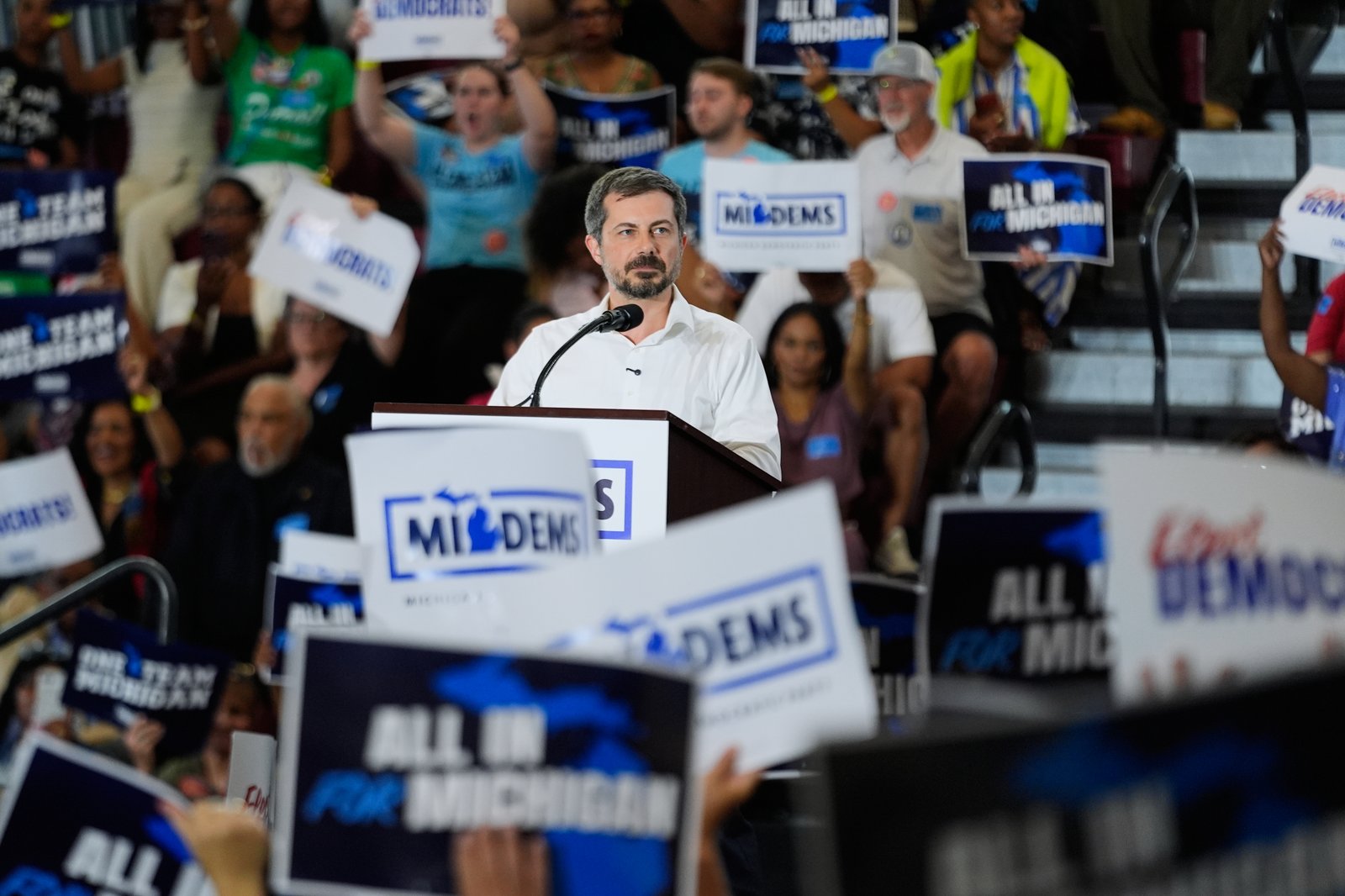
Buttigieg, who has said he is “more inclined than not” to run for president again in 2028, has also notched endorsement wins with Rebecca Cooke in Wisconsin’s battleground 3rd District and former Hartford Mayor Luke Bronin in Connecticut, who defeated incumbent Rep. John Larson earlier this month.
Most governors stuck close to home
Governors eyeing White House runs kept their endorsements closer to home, largely trying to play kingmaker within state lines as they face their own reelection fights.
The local focus allows them to flex their influence while avoiding criticism for nationalizing their own states’ politics. And they’ve campaigned aggressively for their chosen candidates — political power plays that not only strengthen their standing on home turf but could also serve as springboards for national bids.
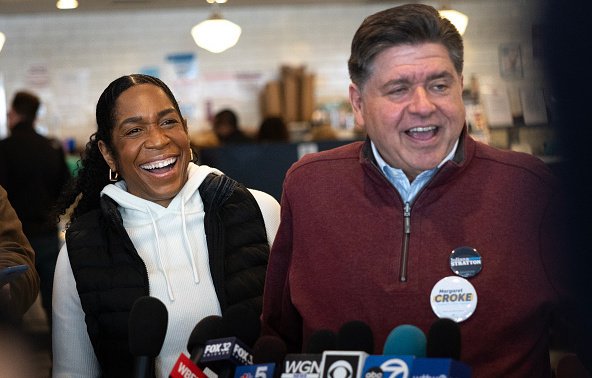
Illinois Gov. JB Pritzker pumped $10 million into a super PAC supporting his lieutenant governor, Juliana Stratton, in the contentious Senate primary to replace retiring Sen. Dick Durbin, and appeared alongside her on the campaign trail. He described the race as “personal” to him; Stratton won by 7 points.
Pennsylvania Gov. Josh Shapiro expended significant political capital in one of Democrats’ top House targets in his state, helping recruit longtime ally and firefighter union chief Bob Brooks into the race against GOP Rep. Ryan Mackenzie in the state’s swingy 7th District and then working to elevate him out of a four-way primary. Shapiro fundraised for Brooks, cut an ad for him and joined him on the stump ahead of Election Day; Brooks won by nearly 20 points.
Shapiro was also one of a handful of Democratic attorneys-general-turned-governors who backed Colorado Attorney General Phil Weiser in his gubernatorial primary against Sen. Michael Bennet. Weiser won by 14 points.
In Maryland, Gov. Wes Moore backed state Del. Adrian Boafo in the crowded race to replace retiring Rep. Steny Hoyer and boosted Rep. April McClain Delaney in her bruising primary against former Rep. David Trone — including recording a robocall on her behalf. An adviser to Moore said the governor had preexisting relationships with both candidates he endorsed, and that he prioritizes local and in-state races as he seeks to make endorsement decisions that will benefit his constituents.
Michigan Gov. Gretchen Whitmer also stuck to her state, only really playing in Michigan’s high-profile Senate race. She endorsed Rep. Haley Stevens in the final stretch of the race, although she wasn’t active on the campaign trail in the same way Pritzker was for Stratton or Shapiro for Brooks.
Disagreements among moderates
Even among candidates occupying a more centrist lane heading into 2028, there was room for disagreement.
Sen. Elissa Slotkin (D-Mich.), a former national security official, endorsed retired Navy SEAL Matt Maasdam, a moderate in Michigan’s 7th district, which she previously represented. Several Democrats had hoped she’d back former foreign service officer Bridget Brink, a fellow moderate — and as they split the centrist vote, progressive William Lawrence ascended to the nomination in the toss-up district instead.
A person familiar with Slotkin’s thinking, granted anonymity to speak candidly about internal deliberations, said that she connected better with Maasdam and saw him as a stronger general election candidate.
The person also acknowledged that Slotkin’s decision to wait to issue her endorsement until three weeks before the primary didn’t leave enough time for voters and party leaders to coalesce around Maasdam.
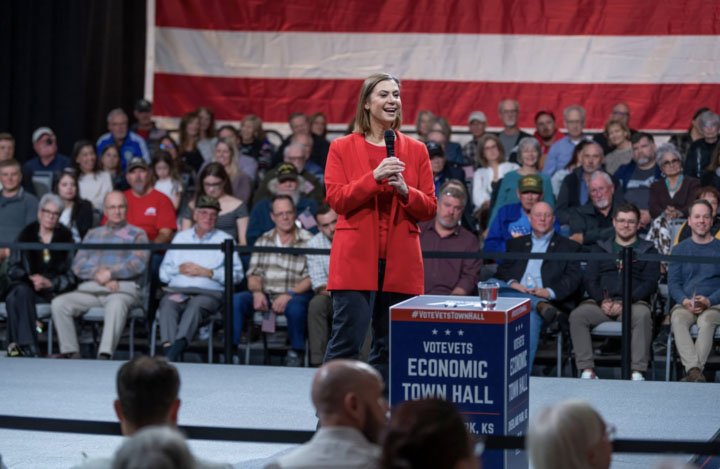
Sen. Mark Kelly (D-Ariz.) rolled out a slate of endorsements of veteran candidates, mostly for the general election, but has backed a range of other Democrats in primaries. That includes DCCC-backed political novice Marlene Galan-Woods in his home state, only for her to lose the primary in Arizona’s 1st District.
“As Navy combat veteran and former NASA astronaut, Mark Kelly knows the country is best served by leaders who represent their communities and bring a range of different backgrounds and experiences to the job. It’s why he’s endorsed candidates in competitive primaries and campaigned for Democrats up and down the ballot,” Kelly spokesperson Marisol Samayoa said.
In next week’s primary in New Hampshire’s 1st District, Kelly is supporting Stefany Shaheen, the daughter of his Senate colleague Jeanne Shaheen, praising her as a “fearless leader” who would stand up to President Donald Trump.
New Jersey Gov. Mikie Sherrill also went on a recent endorsement spree focused on military veterans. But she’s backing Maura Sullivan in the race against Shaheen next week, along with Rep. Seth Moulton in his primary against Sen. Ed Markey, who has gotten backing from progressives including Ocasio-Cortez.
“The fight isn’t moderates versus DSA candidates,” Sherrill told POLITICO earlier this month. “The fight is if we are going to have strong people in the Democratic Party that are going to actually make change to make people’s lives better, or people who you can just expect more of the same.”
The ones who (mostly) sat it out
Not every potential presidential candidate was eager to endorse this cycle.
Even after working to redraw boundaries in his home state to create more safely blue seats, California Gov. Gavin Newsom stayed out of the federal races — and the contest to succeed him. Kentucky Gov. Andy Beshear endorsed after primaries in his home state were complete. Former White House Chief of Staff Rahm Emanuel, who is considering his own White House bid, also eschewed endorsements.
And Kamala Harris declined to weigh in on the majority of competitive primaries because of her high profile, according to a person familiar with her thinking who was granted anonymity to speak candidly. The exceptions were “based on the closeness” of the former vice president’s relationships with the people she did endorse.
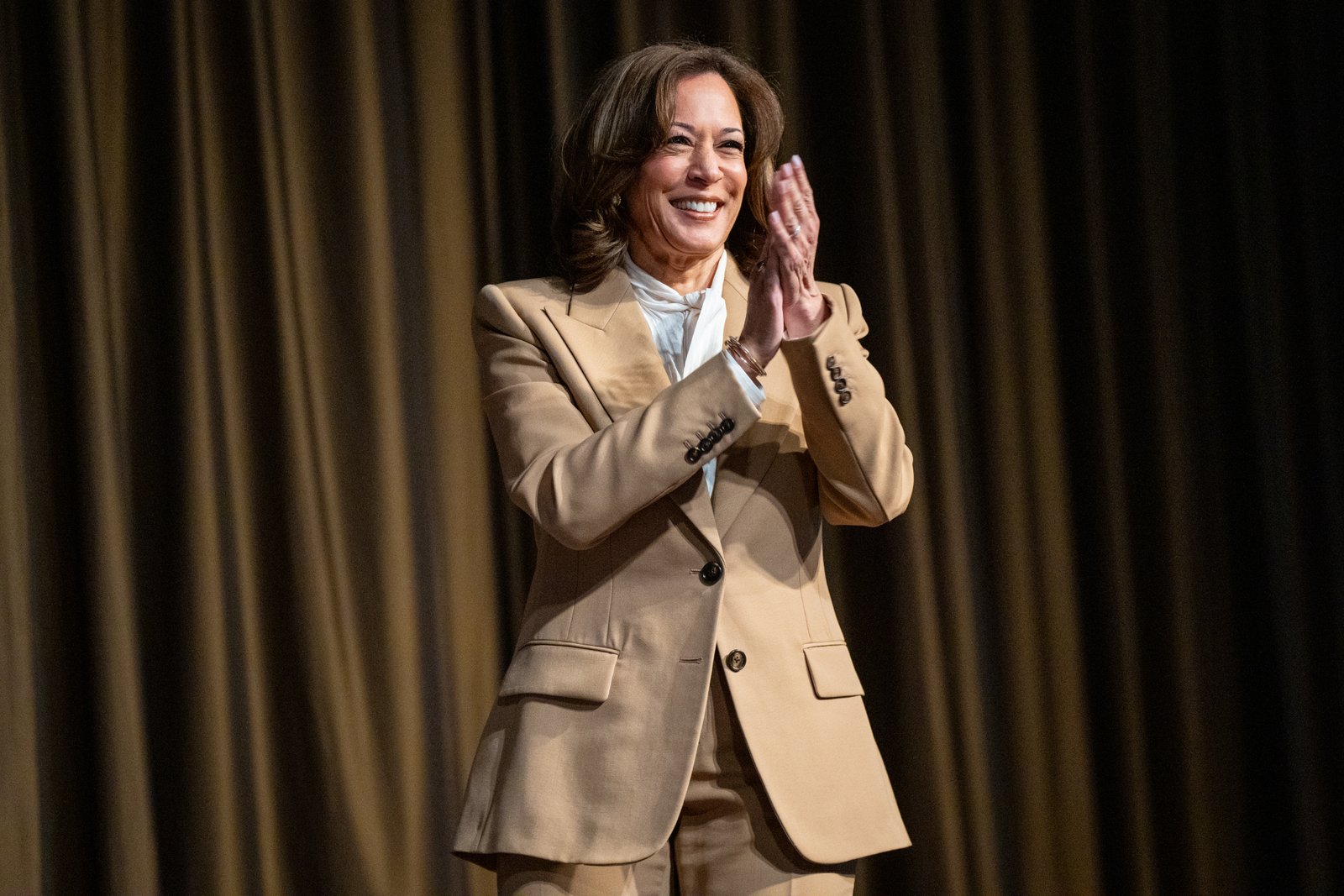
Harris recorded a robocall for Rep. Jasmine Crockett in the Texas Senate primary before Crockett eventually lost to James Talarico. She backed Del. Stacey Plaskett ahead of her U.S. Virgin Islands’ gubernatorial primary victory earlier this month. She has also endorsed Dan Koh in next week’s primary for Massachusetts’ 6th District.
All three candidates have close ties to Harris. Crockett served as co-chair of Harris’ 2024 presidential campaign, Plaskett endorsed Harris when she first ran for president in the 2020 primary, and Koh is a former Biden administration official.

Iowa’s last Democrat on how he can win in Trump country
lead image
Alaska GOP Sen. Dan S. Sullivan can’t shake his same-name challenger.
Retired teacher Dan J. Sullivan punched a ticket out of the state’s top-four, all-party primary early Wednesday morning. He could now play spoiler in a high-stakes Senate clash between the Republican senator and former Democratic Rep. Mary Peltola that could help swing control of the upper chamber.
Republicans fought and failed to keep Dan J. Sullivan off the primary ballot, arguing he was a Democratic plant designed to boost Peltola. Both Dan J. Sullivan and Peltola’s campaign have denied any coordination.
The senator’s allies have already taken steps to mitigate the second Sullivan’s potential vote siphoning, in some cases running ads using the senator’s middle initial to help differentiate between the same-named candidates.
Supporters of the state’s ranked-choice voting system, which kicks in for the general election, argue the process helps curtail the spoiler effect. But the presence of other candidates could still skew the results of the battleground race. Outside groups flooded the primary with more than $2 million to boost myriad fringe candidates — and could do so again ahead of November.
It’s not smooth sailing for Peltola, either, as she wages an uphill battle to flip a red seat in a state President Donald Trump won by 13 percentage points in 2024. She recently replaced her campaign manager in a staffing shakeup ahead of the primary, among other internal moves.
- Chuck Edwards defends himself ahead of censure vote: ‘Context matters’
- Will Kevin Warsh Squander a Huge Opportunity?
- The Social Security benefit cliff is here. Washington is struggling to wake up.

- The primaries testing Democratic 2028ers
- House GOP leaders under pressure to act on data centers before the midterms
- Lawmakers press Treasury to target Chinese banks over Iran
- House GOP leaders eye quick vote on Senate-passed stopgap
- Senate Democrats urge Netanyahu to stop surge of violence in West Bank
- Pentagon claims to have found ‘hidden’ files on final days of the Afghanistan war
- Iowa’s last Democrat on how he can win in Trump country

-

 The Josh Fourrier Show2 years ago
DOOMSDAY: Trump won, now what?
-

 Politics2 years ago
Former ‘Squad’ members launching ‘Bowman and Bush’ YouTube show
-

 The Dictatorship2 years ago
Luigi Mangione acknowledges public support in first official statement since arrest
-
Uncategorized2 years ago
Bob Good to step down as Freedom Caucus chair this week
-

 Politics2 years ago
Former Kentucky AG Daniel Cameron launches Senate bid
-

 Politics2 years ago
Blue Light News’s Editorial Director Ryan Hutchins speaks at Blue Light News’s 2025 Governors Summit
-

 The Dictatorship2 years ago
Pete Hegseth’s tenure at the Pentagon goes from bad to worse
-

 The Dictatorship12 months ago
Mike Johnson sums up the GOP’s arrogant position on military occupation with two words