
Congress
Why Can’t Mike Johnson and John Thune Just Get Along?

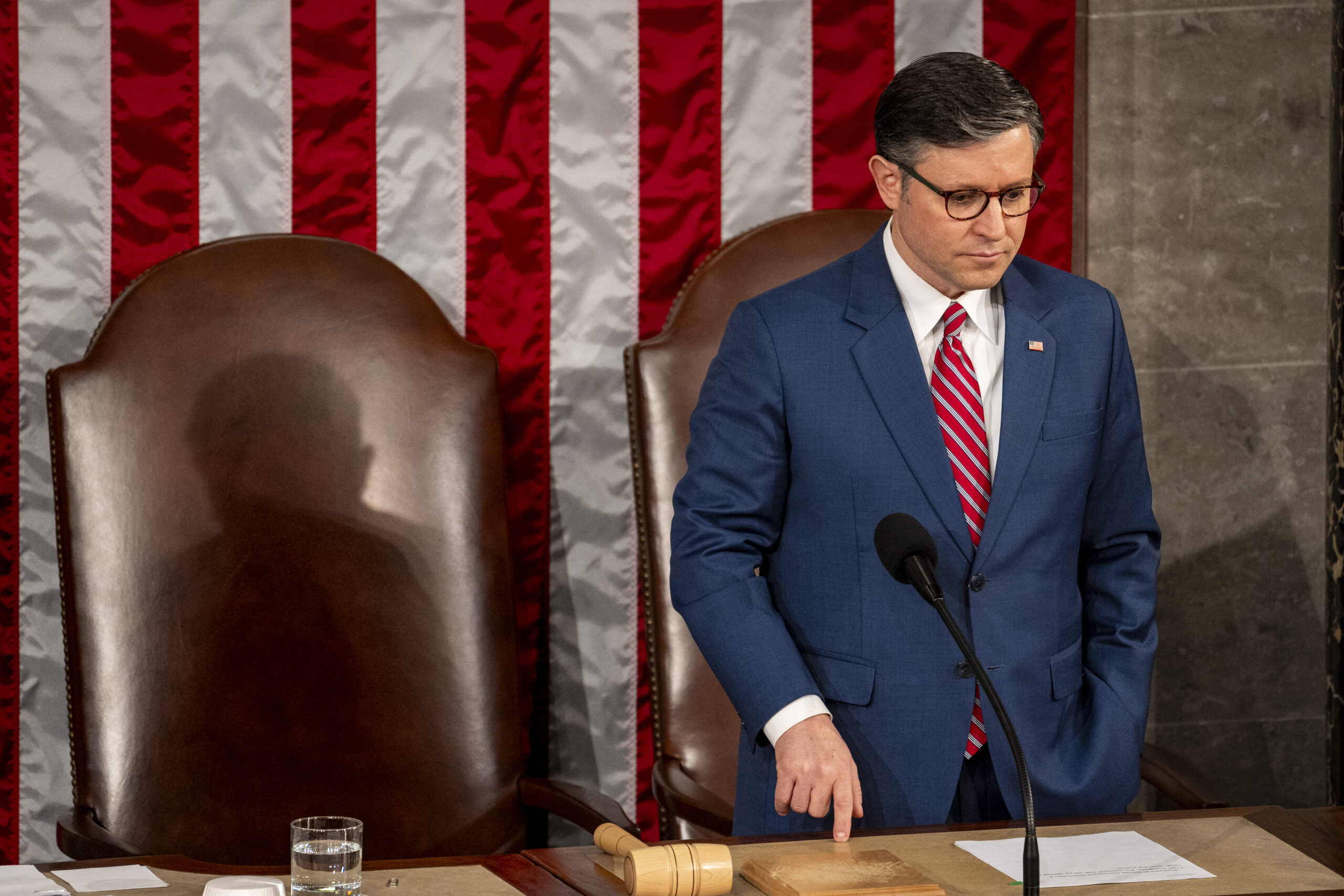
Ask Congress’ top two leaders about each other, and you’ll hear all the expected pleasantries — on the surface.
When I asked Speaker Mike Johnson about Senate Majority Leader John Thune at a Blue Light News Live event Tuesday, he was quick to praise the South Dakotan as a “principled” and “experienced” counterpart. He called Thune a straight shooter and spoke graciously about a recent dinner they’d shared with their wives.
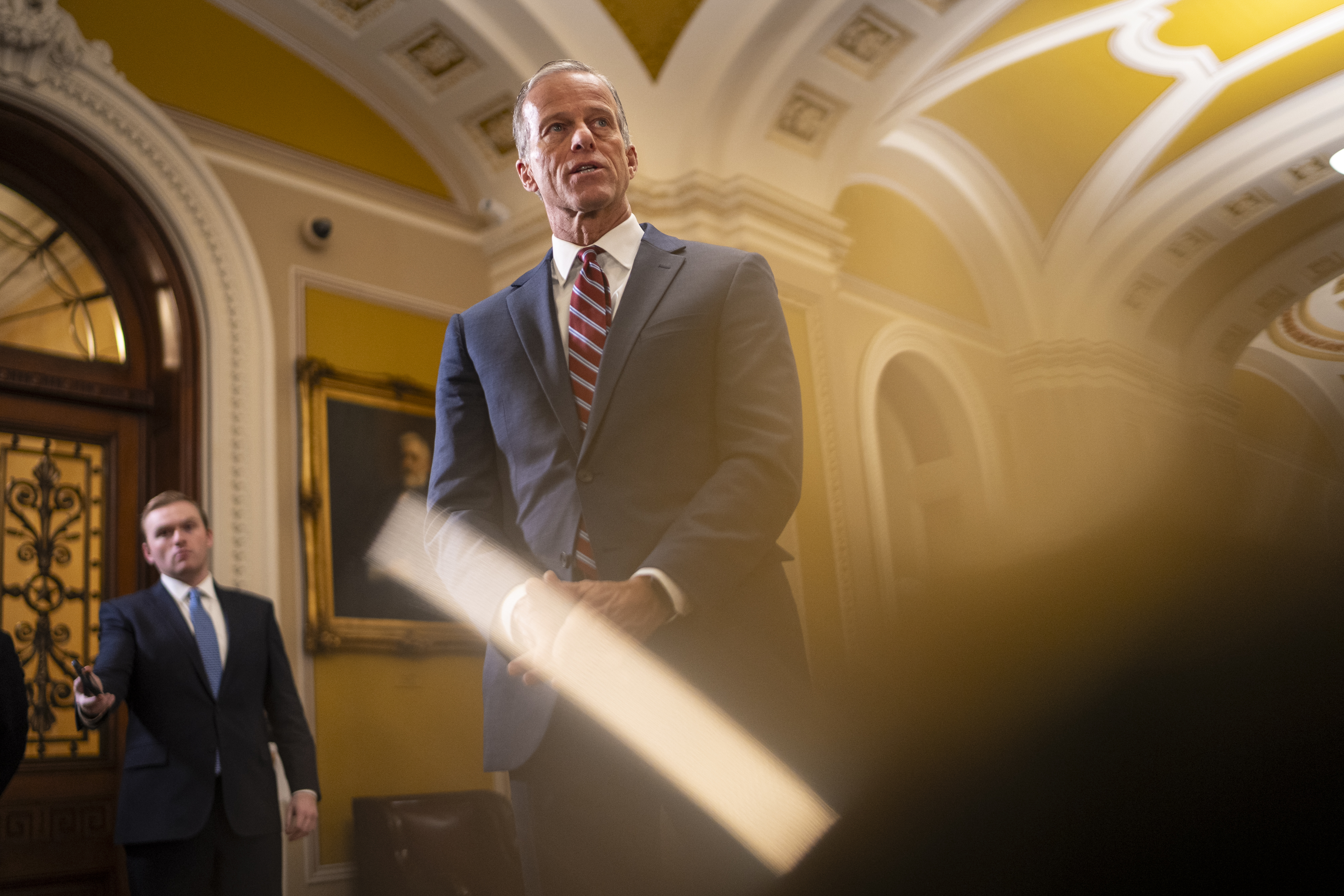
Thune, in turn, commended his “strong working relationship” with Johnson in a “Meet the Press” interview earlier this month and said he was ready to give “deference to how he runs the House.”
Dig a little deeper, though, and it becomes obvious that all is not well in cross-Rotunda relations at the moment.
On fundamental questions of legislative strategy, Johnson and Thune remain at loggerheads as Trump prepares to take the oath of office — risking delays in enacting President-elect Donald Trump’s agenda and hinting at potential trouble in what’s quickly shaping up to be one of the most important relationships in Washington.
Both men have separately suggested, in blunt terms, that more needs to be done to get Republicans in the House and Senate singing from the same song sheet as Trump prepares to lead the choir.
“We intend for the House to be the leader on this, because that’s the way it’s designed to work,” Johnson told me, laying out the challenges of his super-slim majority and “much more diverse caucus.”
Thune suggested to NBC it was the Senate that would need to lead: “He’s got a lot of folks that are headed in different directions,” he said, adding that the House “will need to be … working closely as a team” to deliver on Trump’s sweeping agenda.
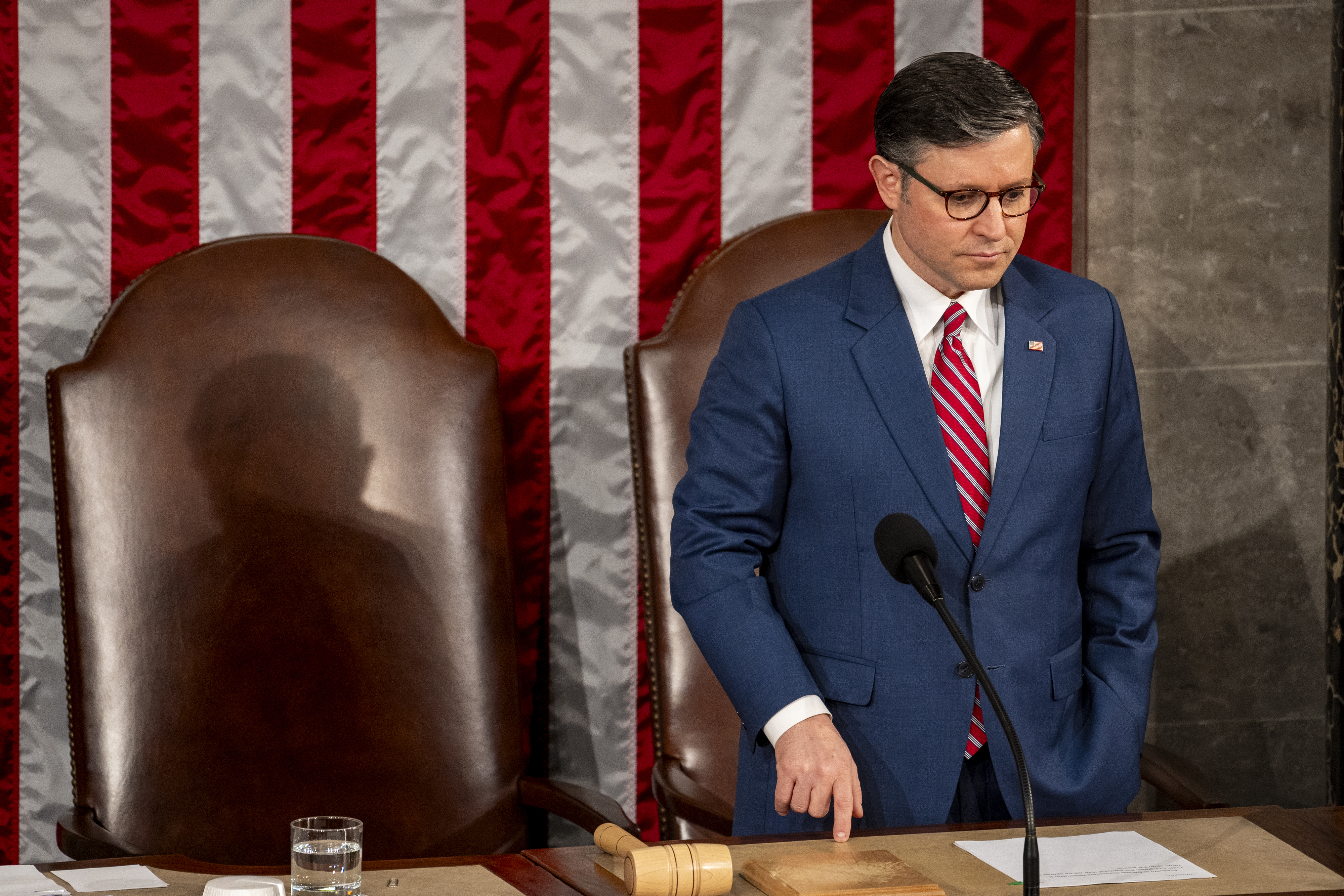
Right now, that teamwork isn’t happening. Not by a long shot.
Despite Trump endorsing Johnson’s pitch for “one big, beautiful” domestic policy bill that packages border security and energy measures together with tax cuts, Thune and his conference have refused to get fully on board. They’re moving forward with their own budget blueprint, allowing for an initial “skinny” border bill, leaving the rest for later.
And after Johnson sketched out a plan to raise the federal debt ceiling as part of that one-bill effort — writing it into the budget reconciliation procedures Republicans will have to use to avoid a Democratic filibuster — Thune balked.
In private conversations before the holiday break, I’m told, Thune told Johnson his plan would have trouble passing given just how averse some hardcore conservatives are to ever raising the borrowing cap.
Johnson marched the idea forward anyway — only for Thune to pour cold water on it this week, this time publicly: He told POLITICO’s Jordain Carney on Monday Republicans have no plans to include the debt ceiling instructions in their own budget blueprint.
Surely, inter-chamber rivalries are nothing new on Capitol Hill. Even under unified GOP control, House conservatives have long scorned Republican senators as moderate squishes, while those same senators chortle at the House hard-liners’ pie-in-the-sky policy ambitions.
Yet the stakes right now could hardly be higher, with Trump’s agenda hanging in the balance and neither Johnson nor Thune fully yielding in ongoing strategic debates. While both men say they have a good rapport, tensions have trickled down, with their inner circles each beginning to snipe at the other side.
Thune allies, for instance, gripe about Johnson backing away under pressure from his members after, they say, initially endorsing the two-track approach. Johnson allies, meanwhile, insist it’s Thune who had gotten out over his skis — and that senators, who are used to calling the shots, are just sensitive about having their strategy dictated by a closely divided House.
“It is interesting that no one has just conceded to the other,” Brendan Buck, a former top staffer to speakers John Boehner and Paul Ryan, told me. During the first Trump term, he noted, “we were aligned on the strategic question.”
Buck was quick to add, “I also don’t think that it means these folks can’t work together.” But they have to start working together — and, from Trump’s perspective, it needs to happen yesterday.
This time eight years ago, Republicans under Ryan and then-Senate Majority Leader Mitch McConnell had not only already decided to prioritize an overhaul of the Affordable Care Act, they had adopted the budget blueprint to make it possible.
Same went for Democrats after Joe Biden’s election in 2020: Speaker Nancy Pelosi and Senate Majority Leader Chuck Schumer were in lockstep (at least at first) with White House plans to quickly pass a massive pandemic-era stimulus bill, followed by a bigger domestic policy swing. They had their budget in place by Feb. 5.
Under the best case scenario laid out by Johnson this week, it will be late February before Republicans find themselves similarly situated this time — and even then, the one-bill-versus-two-bill question might not be settled.
The inability to answer central strategic questions now foreshadows much bigger problems ahead. When lawmakers actually put pen to paper to write the tax and border bills, a whole host of other, finer-grained but just as politically sensitive disagreements will arise, making the Thune-Johnson working relationship essential.
That’s especially true given Trump’s lack of distinct policy preferences and his obvious reluctance to play referee between the chambers — as became clear in recent weeks as the GOP flip-flopped between the one-bill and two-bill plans while struggling to deal with Trump’s demand for a quick debt limit hike.
Part of the challenge is that Johnson and Thune don’t have a long working relationship — or much of a relationship at all. Beyond hailing from different chambers, they’re products of different generations and different styles of Republican politics.
They also secured their leadership posts in very different ways — with Johnson hugging Trump close, while Thune mastered the inside game with fellow senators who relish their independence. Now they’re both learning the ropes as they go, leaving little time for get-to-know-you pleasantries.
At the same time, those close with the two men say they’re cut from the same cloth in some important ways. They’re known as honest brokers who are trusted by Republicans of different ideological bents — not backstabbers or schemers. They’re both calm, level-headed and inquisitive, not preachy firebrands.
And even as they’ve made their clashing positions known publicly, the two have been careful about not slandering the other, and aides say they’ve tried to give each other space to manage their own members. That would explain why Thune suggested to reporters on Tuesday that a one- or two-track strategy would work, while Johnson softened his push for handling the debt ceiling in reconciliation — even though each has members who continue to firmly disagree.
Yet they’re clearly in competition when it comes to winning Trump’s ear. I took note last month when Thune showed up at the Army-Navy football game after Johnson announced he planned to use the opportunity to lobby Trump on his reconciliation strategy. Conversely, Johnson used an audience with Trump on New Year’s Day (without Thune present) to persuade the president to back the one-bill plan.
And as Johnson made clear on stage with me Tuesday, that jockeying is going to continue, both in public and in private.
He described how he personally wrote lengthy texts to Senate Budget Chair Lindsey Graham (R-S.C.) and Sen. Ted Cruz (R-Texas) — both fans of Thune’s quick-hit approach to a border bill — to explain his complicated math problem.
“I have a much more complex decision matrix than the Senate does,” he said. “And sometimes I feel like that may be underappreciated by some of our colleagues in the other chamber.”
You hear that, Mr. Leader?


House Majority Leader Steve Scalise is zeroing in on one of House Republicans’ biggest contests — a purple district in Nebraska — when he starts his recess campaign sprint.
Scalise will travel to Nebraska’s 2nd Congressional District in the Omaha area for an event with Republican Brinker Harding in the coming days, according to a person with direct knowledge of the matter granted anonymity to share plans not yet made public. Republicans are digging in to defend the seat, which Kamala Harris won in the 2024 presidential race and is among Democrats’ best pick up opportunities this fall as they seek to flip the House.
Harding is running against Democratic consultant Denise Powell to replace retiring GOP Rep. Don Bacon. Bacon, a moderate-leaning Republican, flipped the Omaha district red in 2016.
After Nebraska, Scalise is planning to travel across the country throughout August, including to defend GOP incumbents Mariannette Miller-Meeks’ and Zach Nunn’s key battleground seats in Iowa’s 1st and 3rd Congressional Districts and Derrick Van Orden in Wisconsin’s 3rd Congressional District.
He’ll boost candidates working to flip blue districts like Laurie Buckhout in North Carolina’s 1st Congressional District, Derek Merrin in Ohio’s 9th Congressional District and Mike LiPetri in New York’s 3rd Congressional District.
Scalise also plans to travel to Michigan, Colorado, South Carolina and Texas for campaign events over the August recess.
President Donald Trump goaded John Cornyn on social media Friday morning, accusing the Texas senator of withholding his vote on Todd Blanche’s attorney general nomination in retaliation for Trump’s central role in his political demise.
Cornyn, who lost his May primary to Texas’ scandal-ridden attorney general, the Trump-endorsed Ken Paxton, has threatened to block Blanche’s nomination in the Senate Judiciary Committee until the White House promises to permanently shelve its $1.8 billion “anti-weaponization fund” in writing — something Trump appears unwilling to do.
“John Cornyn never had a problem with the so called “Fund,” which will not benefit me, but rather the great American Patriots who were hunted down like dogs and whose lives were unfairly and illegally destroyed by the Crooked Joe Biden Administration, until after I decided to Endorse and Support his Republican Primary opponent in Texas, who easily won the Nomination for the United States Senate,” Trump wrote on Truth Social.
Several Republicans bristled at the fund, which could have been deployed to compensate Americans who faced charges after the Jan. 6 Capitol riot and which gives the president and his family audit immunity over taxes. At his July confirmation hearing, Blanche said that the fund, part of a settlement the president reached with the IRS, was defunct. But the administration has been “reluctant to change” the text of the settlement, Cornyn told reporters Thursday.
Trump signaled his continued support for the Jan 6 rioters on Friday.
“I will always feel that these victims of government abuse should be paid back for what they were forced to endure, their lives have been ruined!” he wrote. “Millions of people agree with me, as was proven in my landslide Presidential win, where this was a major subject of debate, and so did John Cornyn, until he lost his Election to an opponent that I Endorsed.”
On Thursday, the president suggested that he could punt a Senate vote on Blanche until after Cornyn — and Sen. Thom Tillis (R-N.C.) — leaves the chamber at the end of the year. Cornyn, however, suggested on social media that there are other Republican senators with concerns about the fund.
“After the midterms, who knows who’s going to be the next United States senator from North Carolina or Texas?” Cornyn told reporters.
Senate Republicans are prepping a jam-packed — if somewhat optimistic — agenda for their final week before summer recess.
Majority Leader John Thune wants to move stopgap funding through Dec. 11, bipartisan Russia sanctions legislation and a bloc of nominees — perhaps including attorney general pick Todd Blanche.
He’s also under pressure from President Donald Trump, administration officials and many of his GOP colleagues to adopt a budget resolution — the first step in unlocking another party-line spending bill.
Leaders are prioritizing the stopgap, though. Appropriations Chair Susan Collins (R-Maine) expects continuing resolution text to be unveiled later today, she told reporters Thursday, and an initial vote is expected Monday evening.
Still TBD: Collins wants to use the funding patch to block the Trump administration from putting political appointees in charge of approving grants — a demand Democratic senators are also making.
The decision is in Thune’s hands. He acknowledged a “handful of issues” are still under consideration with the CR, and said he’s “hoping both sides can come together and figure” them out.
As for the sanctions bill, leaders of both parties are still trying to work out a deal to fast-track the legislation amid concerns from some Democrats and Sen. Rand Paul (R-Ky.) that it gives Trump too much tariff power.
In addition to the nominees package, Thune also hasn’t ruled out an initial vote on the landmark cryptocurrency bill both parties have spent months negotiating or teeing up a bipartisan college sports overhaul now in final stages of talks.
But the big question is whether Republicans can take a major step toward another reconciliation bill by advancing a budget resolution.
Thune met Thursday with Budget Chair Ron Johnson (R-Wis.), who said he was “optimistic in terms of how things are kind of coming together.”
Republicans anticipate giving a number of Senate committees instructions for the bill, setting up a lengthy and politically painful process ahead of adoption despite pushes for urgency from the White House.
Trump’s chief of staff, Susie Wiles, was the latest official to head to Capitol Hill to try and light a fire under top Republicans. But GOP senators don’t necessarily see the urgency.
“The hard part is the president wants to be able to move fast, like an executive can move, and we’re a legislative branch,” said Sen. James Lankford (R-Okla.). “It doesn’t move that fast.”
What else we’re watching:
— BLANCHE TEETERING: Todd Blanche’s nomination as attorney general isn’t dead yet. But it’s certainly on life support. The acting AG met with Cornyn and Tillis Thursday at NRSC headquarters, and one person familiar with the discussion said the group was “working collaboratively now.” But it would now be difficult to confirm him before August recess under Senate rules.
— FARM BILL TEXT: Senate Agriculture Chair John Boozman said his farm bill legislative text — originally expected Thursday — could come Friday or Saturday. The bill, which is expected to include language allowing year-round E15 sales and a potential compromise on postponing GOP-led cuts to the Supplemental Nutrition Assistance Program, is set to be marked up Thursday.
Jordain Carney and Grace Yarrow contributed to this report.
- Pentagon ends leadership of Ukraine aid group as US distances from Europe
- New disclosures reveal $9M in corporate donations to Trump’s Freedom 250
- Oil industry warns refining limits could keep energy prices high
- Scalise will kick off August campaign sprint in marquee Nebraska House race
- Trump needles Cornyn as Blanche remains blocked
- Capitol agenda: The Senate’s fly-out agenda takes shape
- Faced with Blanche dilemma, Trump chooses revenge
- Former MLB star Mark Teixeira to hit campaign trail with GOP leaders
- FCC chair Brendan Carr on Trump, free speech and his threats against broadcasters

- Trump-aligned parents rally behind kids’ online safety rules
-

 The Josh Fourrier Show2 years ago
DOOMSDAY: Trump won, now what?
-

 Politics1 year ago
Former ‘Squad’ members launching ‘Bowman and Bush’ YouTube show
-

 The Dictatorship1 year ago
Luigi Mangione acknowledges public support in first official statement since arrest
-
Uncategorized2 years ago
Bob Good to step down as Freedom Caucus chair this week
-

 Politics1 year ago
Former Kentucky AG Daniel Cameron launches Senate bid
-

 The Dictatorship1 year ago
Pete Hegseth’s tenure at the Pentagon goes from bad to worse
-

 Politics1 year ago
Blue Light News’s Editorial Director Ryan Hutchins speaks at Blue Light News’s 2025 Governors Summit
-

 The Dictatorship11 months ago
Mike Johnson sums up the GOP’s arrogant position on military occupation with two words