
Politics
What to expect when you’re expecting a budget


DAYS THE BUDGET IS LATE: 41
SPENDING SPECIFICS: Crucial state budget details — including aid for New York City, the structure of a surcharge on high-value second homes and the contours of major pension changes — are yet to be fully ironed out.
Gov. Kathy Hochul last week announced a “general agreement” for a $268 billion spending plan — but without specifics on many items. The closed-door discussions remain underway in Albany and none of the nine remaining budget bills have been printed.
The state budget is now destined to be at least six weeks past its March 31 due date. Yet Hochul is counting on voters to appreciate her policy wins and not focus on what has been an at-times messy process.
Hammering out these final specifics won’t make or break a final deal. But the fine print will matter for how much New York plans for its massive tax-and-spend plan — impacting some 19 million people.
Here’s what’s to still expect when you’re expecting a budget.
New York City aid: More help for the Big Apple is on the way from Albany. Lawmakers and Hochul are discussing additional foundation aid, potentially changing the formula for how public education spending is determined, and more cash for homeless students. At the same time, enabling legislation for pension amortization is being considered.
Those measures are designed to help New York City Mayor Zohran Mamdani close what’s left of a $5.4 billion budget gap. And they come on top of the additional $1.5 billion Hochul agreed to earlier this year.
The governor told reporters Monday morning her office has been working well with the Mamdani administration to fix the city’s budget woes.
“There’s quite a bit that needs to be OK’d by New York state,” she said. “I spent last night talking to the mayor, Friday night talking to the mayor. It’s been a great level of cooperation.”
Pied-à-terre structure: Lawmakers are yet to see any detailed budget language for Hochul’s proposed surcharge on non-primary second residences worth $5 million and above. How that surcharge is structured — including how much it will rely on a home’s assessed value — will matter for how many residences are actually captured by the tax.
Overhauling Tier 6: Overhauling the Tier 6 pension category is a potentially costly endeavor. Hochul and lawmakers are now considering what’s being called a “skinny” version of a plan originally pushed by unions, according to two people familiar with the talks.
The change would lower the retirement age for teachers to 58 after 30 years of service, but it would not alter how much they contribute from their paychecks. For the rest of the public workforce, contributions of no lower than 3 percent of a worker’s take-home pay is under consideration, but no change would be made to their retirement age.
The move is expected to cost $500 million combined for the state, local governments and school districts. That’s far less than the $1.5 billion proposal advanced earlier this year by the New York State AFL-CIO.
Buffer zones: As POLITICO Pro reported earlier, lawmakers and Hochul have weighed a 50-foot protest buffer zone that would allow local officials to expand it as they see fit. Having those zones around houses of worship is largely agreed to, but working through the specifics remains a sticking point. — Nick Reisman
From the Capitol

HANTAVIRUS IN NEW YORK: Three New Yorkers were aboard a cruise ship at the center of an international hantavirus outbreak, state Health Commissioner James McDonald said in a statement this afternoon. The three passengers were sent to the Offutt Air Force Base in Nebraska, where they are expected to be subject to a 42-day monitoring period, according to McDonald.
“While the Department is working in close coordination with the Centers for Disease Control and Prevention and local health departments to gather information, at this point it is unclear how long they will stay in Nebraska and whether, or when those individuals intend to return to New York,” McDonald said.
“At this point, it is important to emphasize that there is no immediate risk to the public. We will continue to monitor the situation and provide updates as needed,” he added.
When asked about the threat of the virus to New Yorkers, Hochul said the state health agency is working with the CDC, and she is monitoring the federal government to make sure officials have the capacity to handle any potential outbreak.
“I want to make sure that the CDC is capable of handling something that could be larger than they are predicting, and I say that because I know that over a year ago, there were significant cuts to the CDC,” Hochul said. “We have outstanding resources here in the state of New York…so I’ve activated them to start preparing New York for worst-case scenarios and hope they do not come.”
She noted that the state is putting together a plan to address any spread of the virus, but she does not believe it will turn into another coronavirus pandemic. She said she will begin doing briefings if it spreads beyond the three individuals flown in from the ship. — Katelyn Cordero
GOV’S SOCIAL ACCOUNT GETS PLAUDITS: The state government’s eyebrow-raising, joke-telling, irreverent social media accounts were honored with a Webby Awards “Honoree” award last week, Hochul’s office told Playbook.
The accounts, which go under the handle @NYGov on Instagram and X, are separate from the “Governor Hochul Press Office” account, which drew the ire of Barstool Sports founder Dave Portnoy last week when it mocked him for his age.
@NYGov, also known as “State of New York” on X, most recently posted messages like “it’s hole filling season” to spread the word about the state’s pothole reporting hotline on X, or “UNALIVE THOSE FLYS” as an Instagram PSA on the invasive spotted lantern fly.
“I’ve always believed that government is for the people, and in order to reach people, we need to communicate like them,” said Milly Czerwinski, a digital content strategist who works in Hochul’s comms shop and runs the account. “NYGov’s oddity and authenticity has broken down the traditional bureaucratic barriers to reach millions of people. Being weird works — this award is proof of that.” — Jason Beeferman
FROM CITY HALL

CCR-CHI COMPLAINT: City Councilmember Chi Ossé filed a misconduct complaint today against an NYPD officer who arrested him, advancing a case that stands to drive a further wedge between the police department and Mayor Mamdani.
The complaint, which Ossé shared with Blue Light News, alleges the officer used excessive force during the April 22 arrest in Brooklyn, where the Council member and others were protesting the planned eviction of a woman who claims she’s the victim of deed theft.
The Civilian Complaint Review Board, which investigates and prosecutes cases of police misconduct, has received Ossé’s claim and is reviewing it, a spokesperson confirmed.
Ossé, a democratic socialist and ally of Mamdani, told Blue Light News he believes the arresting officer violated his civil rights. “My rights were violated, but more importantly, my responsibility to my community and constituents demands a fact-finding,” said Ossé, who claims he suffered a concussion from being slammed to the ground.
The NYPD previously said Ossé and three other protesters were only arrested after refusing verbal commands to stop blocking access to the property where the eviction was set to be executed.
A spokesperson for Mamdani — who called video of Ossé’s arrest “incredibly concerning” last month — said in response to the Council member’s complaint that “the mayor respects the independence of the CCRB and will allow the disciplinary process to play out based on the evidence, established procedures, and the NYPD’s disciplinary matrix.”
Mamdani, a longtime NYPD critic, faces a fraught situation in responding to Ossé’s complaint.
If he doesn’t back up his fellow democratic socialist, Mamdani is likely to anger his allies on the left. On the flipside, if he condemns the arresting officer, he risks drawing the ire of NYPD leaders, including Commissioner Jessica Tisch, as well as the department’s rank-and-file cops.
Read more about the CCRB and Ossé from Chris Sommerfeldt in Blue Light News.
CASE CLOSED: Council member Vickie Paladino has reached a settlement with the City Council to resolve disciplinary charges focused on her controversial social media posts.
The takeaway? The Council has withdrawn its disciplinary charges, and Paladino is dropping her lawsuit challenging the proceedings.
The agreement, filed in Manhattan Supreme Court on Monday, effectively dismisses the charges and cancels an ethics hearing that could have led to censure, fines or expulsion. As part of the settlement, Paladino must delete three posts cited in the case. She must also remove “Council Woman” from her personal X account display name within 48 hours of court approval to communicate to the public a clearer separation between her official posts, which are subject to some of the Council’s rules and regulations, and her personal opinions, one member familiar with the parameters of the settlement told Playbook.
The case stemmed from a string of inflammatory posts starting in December where, in a deleted post, she called for the “expulsion of Muslims from western nations,” prompting the committee to look into her conduct.
In February, she posted that New York was under “foreign occupation” following Mamdani’s appointment of a top immigration official. Paladino questioned whether the administration included “one single actual American” and later described a photo of Muslim sanitation workers praying as part of an “Islamic conquest.”
The Council’s Rules and Ethics Committee had charged Paladino with disorderly conduct and violations of its anti-harassment and discrimination policy in March.
Paladino sued to block the proceedings, arguing she was being targeted for her conservative views and that the discipline violated her First Amendment rights.
As part of the settlement, Paladino must issue a statement saying she did not intend to make colleagues or staff feel “unwelcomed or unsafe.” Council member Sandra Ung, who chairs the ethics committee, issued her own statement Monday afternoon saying the resolution “strikes the balance” between protecting staff and lawmakers’ free speech rights.
Both sides agreed to issue limited public statements and refrain from further comment. — Gelila Negesse
FROM THE CAMPAIGN TRAIL

EYES ON AI: Rep. Pat Ryan is backing state Assemblymember Alex Bores to succeed retiring Rep. Jerry Nadler, making him the latest member of the New York delegation to weigh in on one of the state’s most competitive primary elections.
In making his endorsement, the Hudson Valley Democrat cited the high-profile AI fight that’s become a central theme of the race as a key reason for backing Bores.
“He’s going to be the next member of Congress for the New York 12th District,” Ryan said at an event in Midtown with Bores today. “If you have any doubt, you don’t have to take my word for it — follow the money. Look at the incredible unprecedented amount … It’s because these tech billionaires are terrified, they’re terrified of Alex specifically.”
The millions of dollars in spending by a pro-artificial intelligence super PAC against Bores — an alum-turned-critic of data analytics company Palantir and a sponsor of the AI safety RAISE Act in the state Legislature — has also drawn an influx of money from regulation-friendly AI and tech-affiliated groups to boost him.
Bores’ campaign said that both he and Ryan “share a belief that the next Congress must take decisive action to regulate artificial intelligence before this transformative technology outpaces the rules meant to govern it” — a debate that continues to rage on in Washington and globally.
Bores is viewed as one of the top contenders for the 12th District, which covers a large swath of Manhattan. He’s up against Assemblymember Micah Lasher, Kennedy scion Jack Schlossberg and anti-Trump commentator George Conway, as well as a handful of lesser-known challengers. Public polling has been sparse in the race, and internal polls from earlier this year don’t show a clear front-runner. — Madison Fernandez
IN OTHER NEWS
— CLOCK’S TICKING: Mamdani has less than a month to fill two longstanding vacancies on the Metropolitan Transportation Authority board — and the appointments could be key for his mission to make the city’s buses “fast and free.” (THE CITY)
— NECK AND NECK: Hochul made a joint campaign appearance with Rep. Dan Goldman who’s running for reelection in New York’s 10th congressional district, with a primary challenge from Mamdani-backed Brad Lander. (Gothamist)
— SARCONE DOGGED: The top prosecutor in the U.S. attorney’s office for the Northern District of New York is accused of misconduct, according to the watchdog organization Campaign for Accountability. (POLITICO Pro)
Missed this morning’s New York Playbook? We forgive you. Read it here.


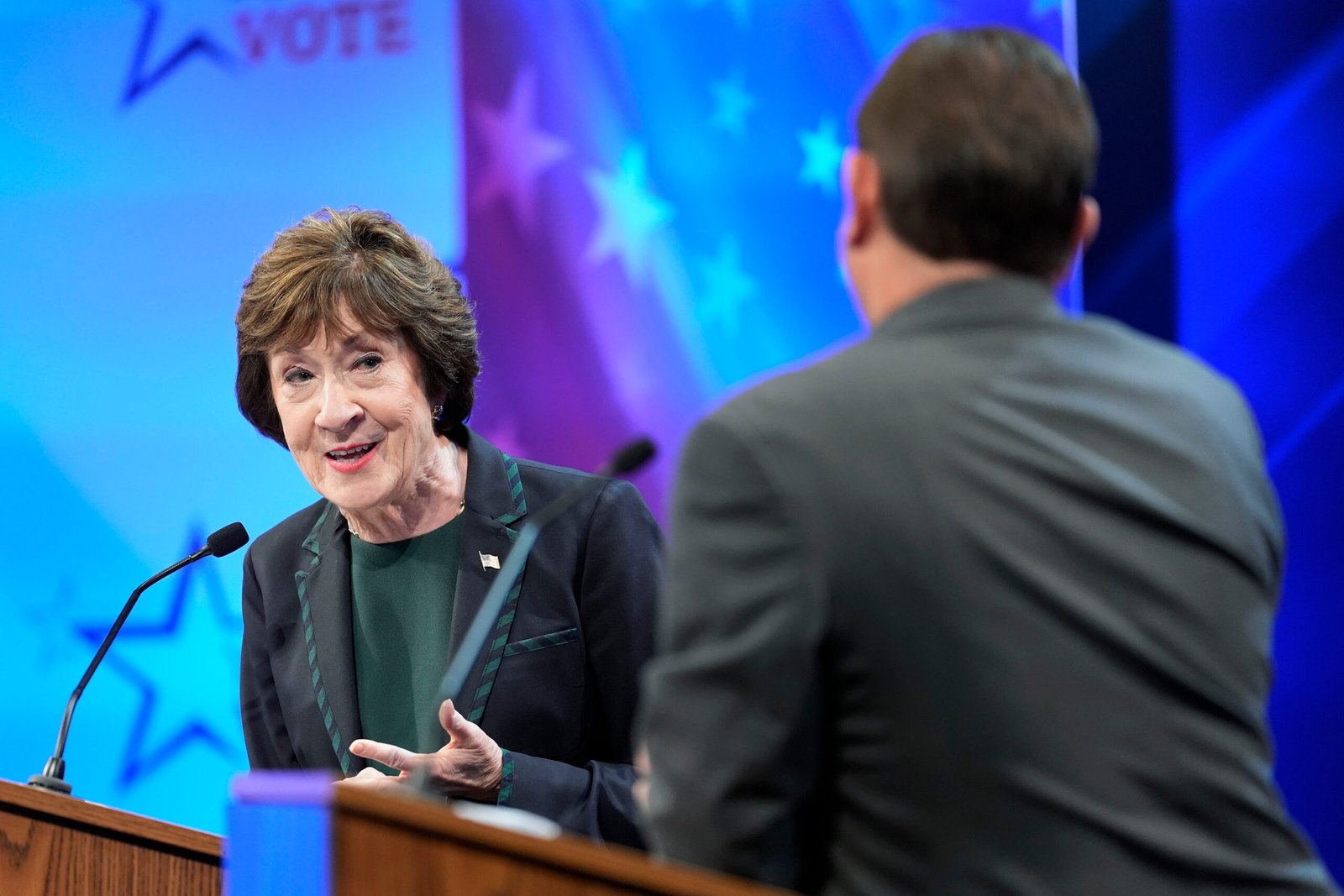
With less than two weeks until Election Day, most statewide debates have come and gone. Democrats tried to paint their Republican opponents into corners over loyalty to President Donald Trump, and Republicans tried to stake out nuanced positions on the Iran war and data centers.
Here’s what we learned from the more than two dozen statewide candidate debates that occurred — and from those that didn’t.
Republicans walk a fine line with an unpopular Trump
In debate after debate, Democrats tried to tie their opponents to the unpopular president. Republicans weren’t always willing to let them.
Several candidates — especially in blue states — were willing to break with the president. In New Hampshire, GOP former Sen. John Sununu said he’s “never met President Trump” and emphasized he’s “never hesitated to stand up to my party or the president when they’re wrong,” specifically criticizing Trump’s policies on trade, Iran and Ukraine. In Minnesota, Republican Senate nominee Michelle Tafoya said she disagreed with Trump’s tariff policy and immigration enforcement, and when asked if she would appear onstage with Trump, she demurred. “I am talking to Minnesotans. Theirs is the only endorsement that I care about,” she said.
In Maine, GOP Sen. Susan Collins emphasized that she has voted against the president more than 100 times this year, and criticized his approach on Iran. Bobby Charles, the GOP nominee for governor and a former official in President George W. Bush’s State Department during the Iraq and Afghanistan wars, said he disagreed with Trump’s “extended engagement” in Iran because “I know what it means to get stuck in a place.”
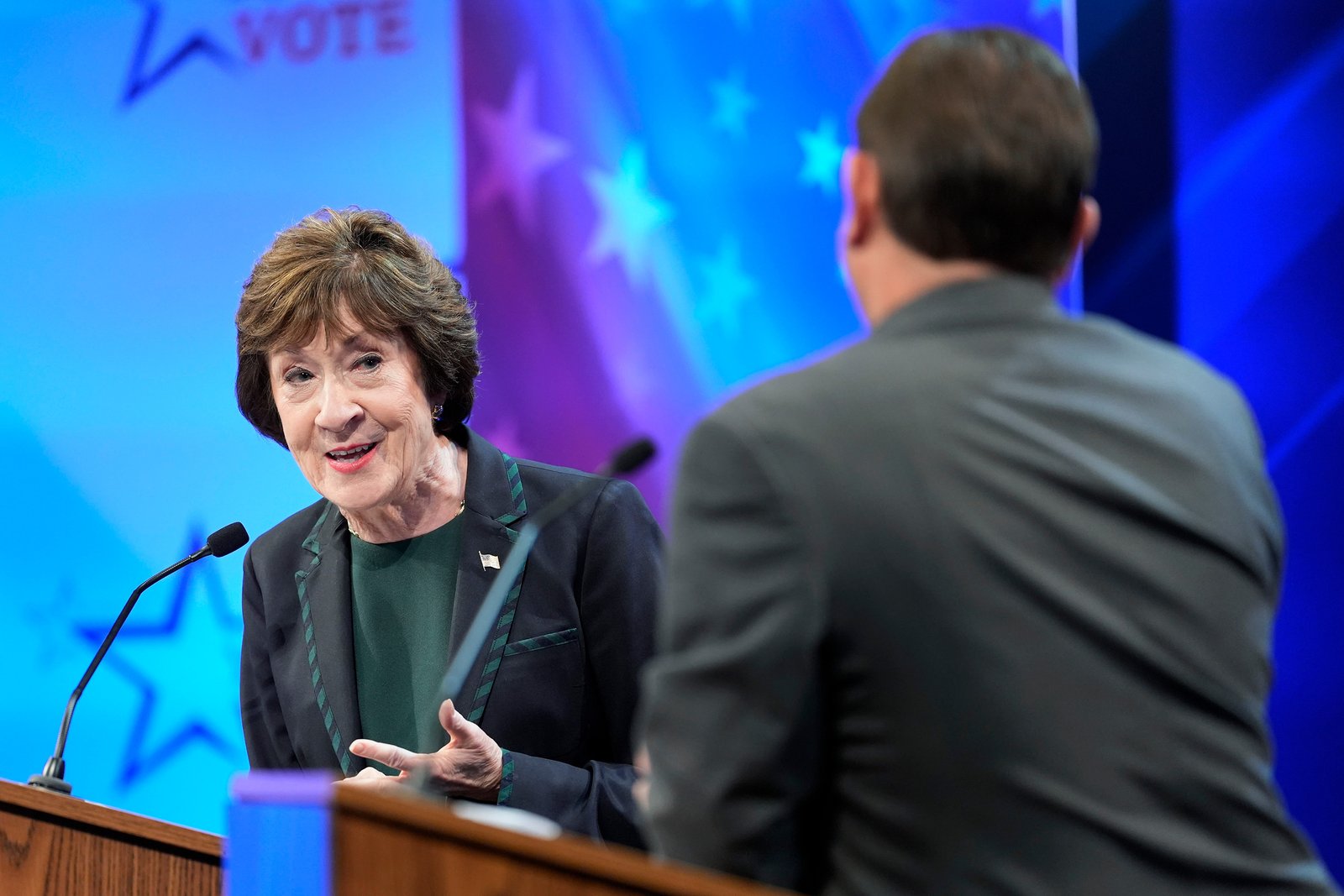
Some Republicans became frustrated by their opponents’ efforts to tie them to the president. “He wants to make this about Donald Trump,” said former Rep. Mike Rogers (R-Mich.) “The bingo game ought to be, how many times can he put the word ‘Trump’ in any answer that he has given in the last, whatever, 30 minutes? It’s ridiculous.”
But in some redder states, candidates were more willing to hug the president — recognizing support from his base will be critical to win.
“We need the Trump voters to come out,” Sen. Roger Marshall (R-Kansas) said in a debate Wednesday. “Just like with my wife, I can disagree with her. Now, my wife is always right, and President Trump is not always right. But I do think that it’s great that I have a relationship that I can pick up the phone and discuss with him the pros and cons of what he’s contemplating.”
It’s the economy, stupid
Democrats hammered Republicans on affordability issues, blaming Trump’s tariff policy and Iran for spiking prices. In response, a few conceded some Trump policies were hurting them — while others tried to blame the last president.
“That Bidenomics, that Green New Deal that my opponent voted for, that’s where all this inflation came from,” said Rep. Mike Collins (R-Ga.) in a Senate debate in early October.
The other Collins, Susan, went the opposite way in blue-leaning Maine. “The bottom line is Troy and I both would have voted against the Canadian tariffs,” she said in an October 13 debate, after saying the Iran war was “not well thought out.”
Rep. Ashley Hinson, the GOP nominee for Senate in Iowa, said she would pause the gasoline tax before acknowledging the effect of the war: “I trust in our U.S. military, the greatest fighting force in the world, to bring this to a close as quickly as possible, because I know people are being squeezed,” she said.

Democrats largely sang the same tune on Trump’s policies.
“These tariffs are crushing our state, and we’ll repeal those tariffs,” said Sen. John Ossoff (D-Ga.).
“The tariffs and the war in Iran has hurt Iowa more than any other state,” said state Rep. Josh Turek (D-Iowa).
“If you appreciate having record diesel fuel prices … then I’d say vote for Roger Marshall,” said Adam Hamilton, the Democratic nominee running for Senate in Kansas. “If you want change, then I’d like to ask you to vote for me.”
Everyone hates data centers
Republicans and Democrats showed a remarkable similarity in their distaste for data centers even as their specific policy prescriptions diverged — a sign of the issue’s rapid ascent as a bipartisan bogeyman, even as Trump reiterates his support for them.
Candidates from both parties called for local control. “Look, if you don’t want a data center, I will stand up and defend it and make sure you don’t get it,” said Rick Jackson, a Republican billionaire businessman running for Georgia governor. “Local communities know best,” said Hinson, the Iowa Republican.
In Maine, both Senate candidates said guardrails should be installed to prevent the data centers from raising utility rates for local residents. In Iowa, both gubernatorial candidates — Democrat Rob Sand and Republican Zach Lahn — supported ending tax breaks for data center developers. In New Hampshire, both Senate candidates agreed with GOP Gov. Kelly Ayotte’s push for a statewide moratorium.
“At the end of the day, it’s up to our governor, our local leaders, to make decisions about any big infrastructure, transmission, power plants, new factories, and data centers should be treated just the same,” Sununu said.
Gaffe gamechangers
Debates can do candidates more harm than good, and some candidates had some cringey moments.
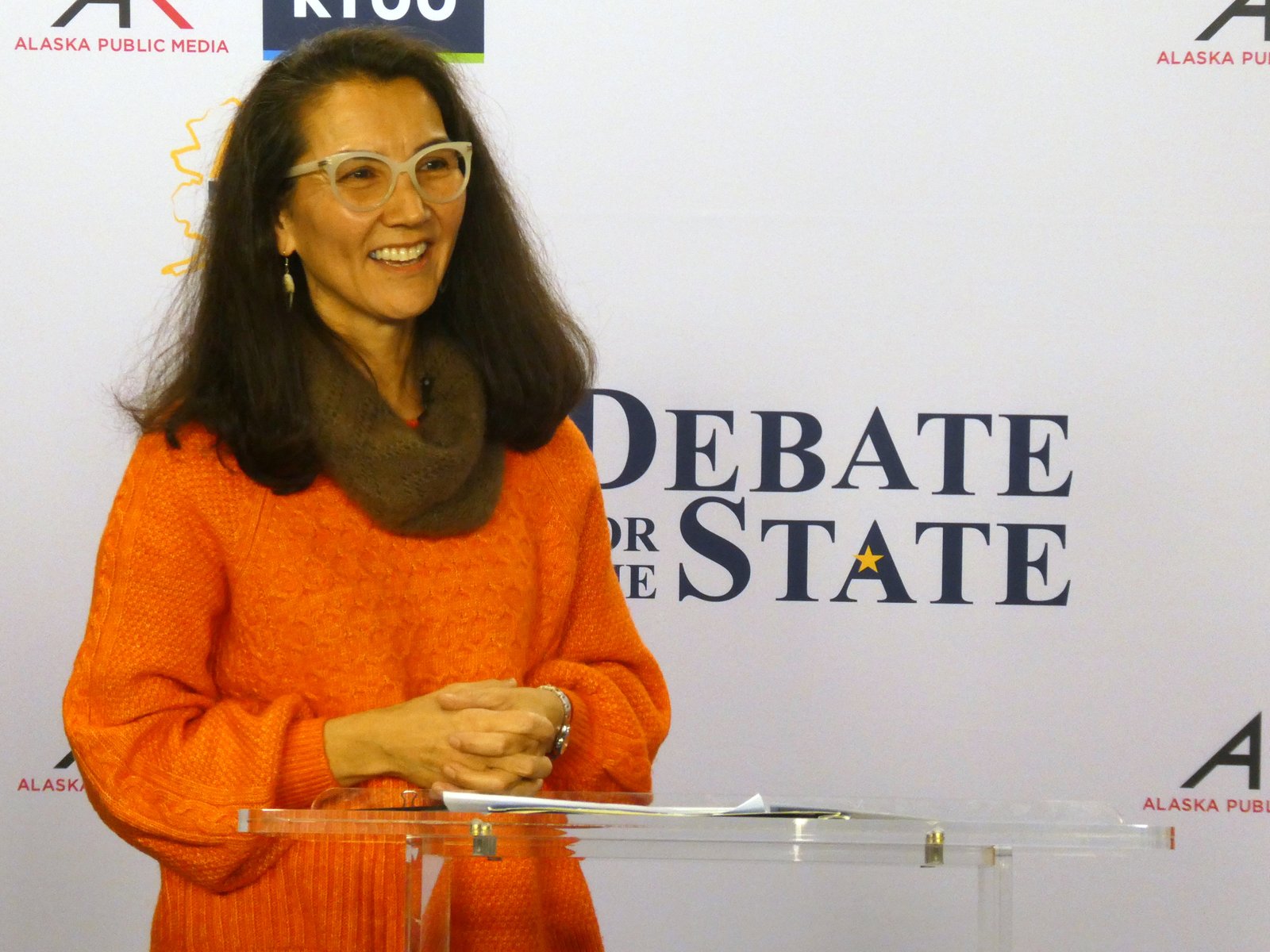
In Alaska, Democratic former Rep. Mary Peltola appeared to be reading from a notecard throughout a recent debate, giving her opponent, GOP Sen. Dan Sullivan, a chance to pounce. “We weren’t supposed to get these questions beforehand, were we?” he asked the moderator.
“You can’t cue-card your way through the Senate,” Sullivan later wrote on social media.
Sullivan had his own moment a few weeks earlier when he peeked at Peltola’s answer during a lightning-round question, prompting laughter from the audience. “Happy to help, Dan,” Peltola wrote on social media.
In Kansas, Marshall faced loud chats of “you don’t live here” during a debate at the state fair, while speaking about his residence in Kansas and his home in Florida.
In Maine, Jackson said Collins should “shut up” after a protester interrupted the debate and Collins claimed the demonstrator was “obviously one of Troy’s supporters.”
“Oh, shut up,” Jackson said. “I don’t even know that kid.” Collins has pounced on the moment to try to paint Jackson as a sexist hothead; Jackson later said he did not regret his outburst.
In Iowa, Hinson responded to a question about ensuring the solvency of Social Security by slamming young people’s saving habits. “We also need to be talking about millennials saving money,” she said. “Millennials are the worst group of savers in the country right now and have the least amount of savings.”
The debates that didn’t happen
Fear of gaffes may have cost voters a chance to see their candidates square off, as the longstanding political tradition of campaign debates took another hit this cycle.
In Senate battlegrounds across the country, nominees in both parties outright refused to join their opponents onstage or carefully ducked debates.
In Texas, Attorney General Ken Paxton rebuffed invitation after invitation (including one from Fox News), even after Trump urged him to get onstage. In Ohio, the Senate candidates still haven’t reached an agreement to debate. In North Carolina, there is no debate scheduled between the major-party Senate candidates for the first time in nearly 30 years.
There doesn’t seem to be a partisan division over who will and won’t debate. Democratic Arizona Gov. Katie Hobbs and Ohio Democratic nominee Amy Acton refused to debate their opponents. So did GOP Gov. Greg Abbott of Texas and Sen. Tommy Tuberville of Alabama, who have rebuffed invitations to debate.
“There’s so much difference between us, I mean, there’s no reason to get up there and argue about differences of opinion,” Tuberville, running for Alabama governor against Democratic former Sen. Doug Jones, told reporters in August.
Andrew Howard, Jason Beeferman, Lisa Kashinsky, Aaron Pellish, Alec Hernandez, Erin Doherty and Jessica Piper contributed reporting.
A new company whose polls had influenced campaign decisions and helped shape the midterms narrative admitted that it was faking its polling data on Tuesday night, setting off a firestorm in the electionsphere.
Wedgewood Polls, facing an imminent publication of an investigation from FiftyPlusOne showing it was fabricating its numbers, declared late Tuesday night that it had been an “experimental project” to show how an “entirely fabricated polling firm” could sway public opinion while painting themselves as the good guys.They’d left an impact and been included by multiple credible polling aggregators including The New York Times — and mentioned twice in Blue Light News’s Morning Score polling roundup.
Speculation is flying about what, exactly, Wedgewood was trying to achieve, and there’s still little public information about the defunct company that had crowdfunded thousands of dollars for its fake data. Was it an effort to boost progressives Democrats in primaries? If so, were progressives or Republicans really behind it? Was it being used to game betting markets? Were top operatives using the bogus data to make spending decisions? Were aggregation accounts too quick to jump on posting the data?
An email to the account listed on Wedgewood’s X account bounced back, and previous PDFs of polls that were tied to the account are no longer available online.
Regardless of what Wedgewood said it was trying to achieve (they remain adamant the project “was never intended to sway an election or permanently mislead the public”) — pollsters, operatives and candidates alike said there were real world implications for posting fake data online.
Mallory McMorrow, the unsuccessful Michigan Democratic Senate candidate who dropped out before her primary, said a fake Wedgewood poll that showed her crashing to single-digit support against Abdul El-Sayed and Rep. Haley Stevens “dried up” donations, “devastated” volunteers and led to numerous calls to exit the race.
“It killed us,” McMorrow wrote on X. “These were some of the absolute worst days on the campaign. Especially for my team. There are no words to explain the morale blow, and nothing I could do or say to my team to fix it.”
Jennifer Holdsworth, a Democratic operative who ran a super PAC supporting McMorrow, said the Wedgewood poll “was used by several donors to pull back funding at a time we were being outspent by $80 million.”
The account also posted a poll showing democratic socialist Francesca Hong leading in Wisconsin gubernatorial primary, when there was scant public polling, something that contributed to the narrative she was ahead before the election (which she lost).
They also posted a poll showing the Mississippi Senate race within reach, just before Democrats plowed money into the state. Scott Colom, the Democrat running for the seat, blasted the poll to his press list as proof there was “massive momentum” behind him.
That led election watchers to argue that Wedgewood’s data was being used to make spending decisions in top outside groups, which elicited a response from Democrats’ main Senate super PAC.
“Absolutely not. We don’t make spending or strategic decisions based on external polling,” Lauren French, a spokesperson for Senate Majority PAC, said on X.
In its investigation, FiftyPlusOne said it had included Wedgewood in its aggregator because the firm was founded by people who had worked in the polling industry previously.
There’s also been broad finger pointing at the aggregator X accounts that post polls frequently — and sometimes without verifying their accuracy.
“You posted our polls multiple times. If you suspected it was fake, why did you post our results?” Wedgewood’s account shot back after Polling USA wrote that “my suspicions about Wedgewood were correct.”
The whole ordeal illuminates just how big a problem polling could be in 2028, where both parties will have presidential primaries and polling can shift the narrative on a dime.
“What I’m concerned about is essentially information pollution, things that are either intended to skew prediction markets or just straight misinformation flying around,” Charlotte Swasey, a pollster for the Democratic group Searchlight, told POLITICO Magazine recently. “It would be really difficult, especially in a primary, to tell people that what they’re seeing about their preferred candidate isn’t real.”
A version of this article first appeared in Blue Light News Pro’s Morning Score. Want to receive the newsletter every weekday? Subscribe to Blue Light News Pro. You’ll also receive daily policy news and other intelligence you need to act on the day’s biggest stories.

America’s Heartland sows doubt in the GOP
lead image
- Kevin McCarthy predicts GOP will lose House majority
- Trump plans to fast-track arch despite legal challenge
- GOP senator questions Elon Musk’s influence over military assets
- The good, the bad and the unruly from over two dozen candidate debates
- How a fake pollster may have moved some 2026 elections
- Top Senate Finance Democrat maps out clean energy plan
- Australian treasurer says opponents want higher inflation for political gain
- Rising bond yields will add billions to budget pressure: Australian treasurer
- Capitol agenda: Some Republicans get bipartisan curious
- America’s Heartland sows doubt in the GOP

-

 Politics2 years ago
Former ‘Squad’ members launching ‘Bowman and Bush’ YouTube show
-
Uncategorized2 years ago
Bob Good to step down as Freedom Caucus chair this week
-

 The Josh Fourrier Show2 years ago
DOOMSDAY: Trump won, now what?
-

 The Dictatorship2 years ago
Pete Hegseth’s tenure at the Pentagon goes from bad to worse
-

 Politics2 years ago
Former Kentucky AG Daniel Cameron launches Senate bid
-

 The Dictatorship2 years ago
Luigi Mangione acknowledges public support in first official statement since arrest
-

 Politics2 years ago
Blue Light News’s Editorial Director Ryan Hutchins speaks at Blue Light News’s 2025 Governors Summit
-

 Politics1 year ago
John Legend advises Trump to drop the ‘dictator s‑‑‑’ if he wants Nobel Peace Prize