
Politics
Trump nominates Kari Lake and Doug Mastriano to diplomatic posts

President Donald Trump has nominated Kari Lake and Doug Mastriano — two allies who waged failed bids for governor in battleground states — to diplomatic posts.
The White House announced Monday that Trump has nominated Lake to be ambassador to Jamaica and Mastriano to be ambassador to Slovakia. Both nominations require Senate confirmation.
Mastriano, who ran for governor of Pennsylvania, and Lake, who lost in Arizona, both embraced the president and his baseless election conspiracies and were rejected by voters in 2022.
“I look forward to representing our nation abroad, strengthening the friendship between our two countries, and advancing the interests of the American people,” Mastriano said in a statement posted online.
Lake, a former local TV personality who dismantled the Voice of America as Trump’s appointed head of the U.S. Agency for Global Media, said she was looking forward to her new role in the Caribbean.
“Jamaica is a country I know very well, full of incredible people, and if confirmed by the Senate, I look forward to strengthening the partnership between our nations, advancing America’s interests abroad, and building on the deep friendship shared by the American and Jamaican people,” she said in a social media post.
Mastriano said he will continue serving as a Pennsylvania state senator until his appointment is confirmed by the Senate. Lake’s future status leading the U.S. Agency for Global Media is unclear.
Mastriano’s appointment likely undermines an ascendant write-in campaign for him in Pennsylvania’s Republican gubernatorial primary, the race he won in 2022. The campaign, which Mastriano supported but was not involved with, threatened to pose an obstacle for Republicans’ preferred pick, state Treasurer Stacy Garrity, ahead of next Tuesday’s primary.
Lake earned an appointment to USGM last year after losing two statewide races in battleground Arizona. She lost to Gov. Katie Hobbs in 2022, then sought to succeed former Sen. Kyrsten Sinema in 2024, but lost to Ruben Gallego.
Shortly after joining USGM in a non-Senate confirmed role, Lake oversaw the gutting of Voice of America as part of the administration’s remaking of the federal workforce. By the end of the administration’s cuts last year, roughly 85 percent of the agency’s staff had been removed.
But Lake’s work at USGM hasn’t withstood legal scrutiny. A federal judge ruled in March that Lake’s tenure at the head of the agency was improper because she was not confirmed by the Senate. Later in March, the same judge ordered the Trump administration to reinstate the staff members who had been placed on leave.


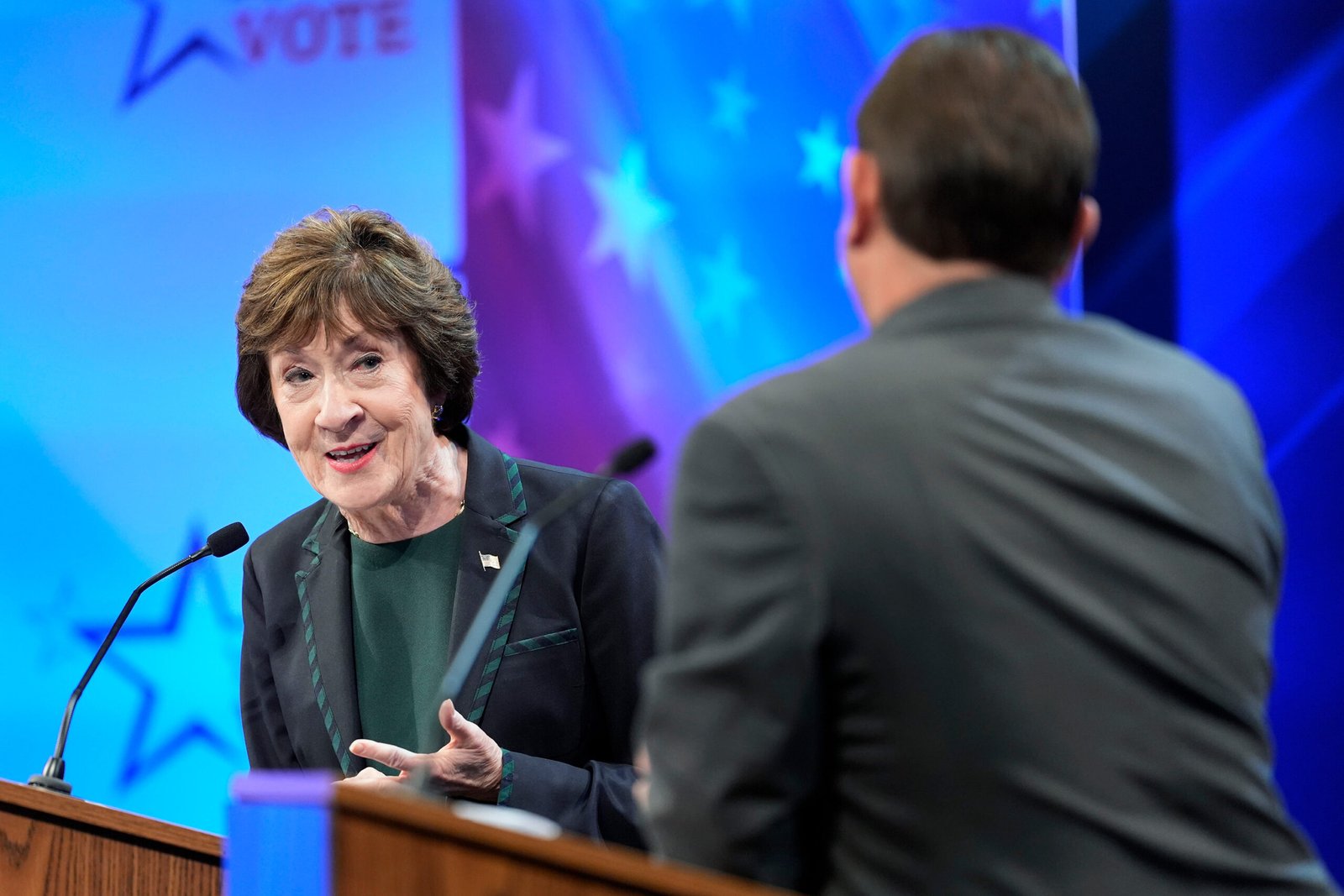
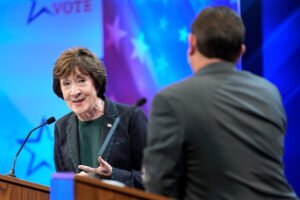
With less than two weeks until Election Day, most statewide debates have come and gone. Democrats tried to paint their Republican opponents into corners over loyalty to President Donald Trump, and Republicans tried to stake out nuanced positions on the Iran war and data centers.
Here’s what we learned from the more than two dozen statewide candidate debates that occurred — and from those that didn’t.
Republicans walk a fine line with an unpopular Trump
In debate after debate, Democrats tried to tie their opponents to the unpopular president. Republicans weren’t always willing to let them.
Several candidates — especially in blue states — were willing to break with the president. In New Hampshire, GOP former Sen. John Sununu said he’s “never met President Trump” and emphasized he’s “never hesitated to stand up to my party or the president when they’re wrong,” specifically criticizing Trump’s policies on trade, Iran and Ukraine. In Minnesota, Republican Senate nominee Michelle Tafoya said she disagreed with Trump’s tariff policy and immigration enforcement, and when asked if she would appear onstage with Trump, she demurred. “I am talking to Minnesotans. Theirs is the only endorsement that I care about,” she said.
In Maine, GOP Sen. Susan Collins emphasized that she has voted against the president more than 100 times this year, and criticized his approach on Iran. Bobby Charles, the GOP nominee for governor and a former official in President George W. Bush’s State Department during the Iraq and Afghanistan wars, said he disagreed with Trump’s “extended engagement” in Iran because “I know what it means to get stuck in a place.”
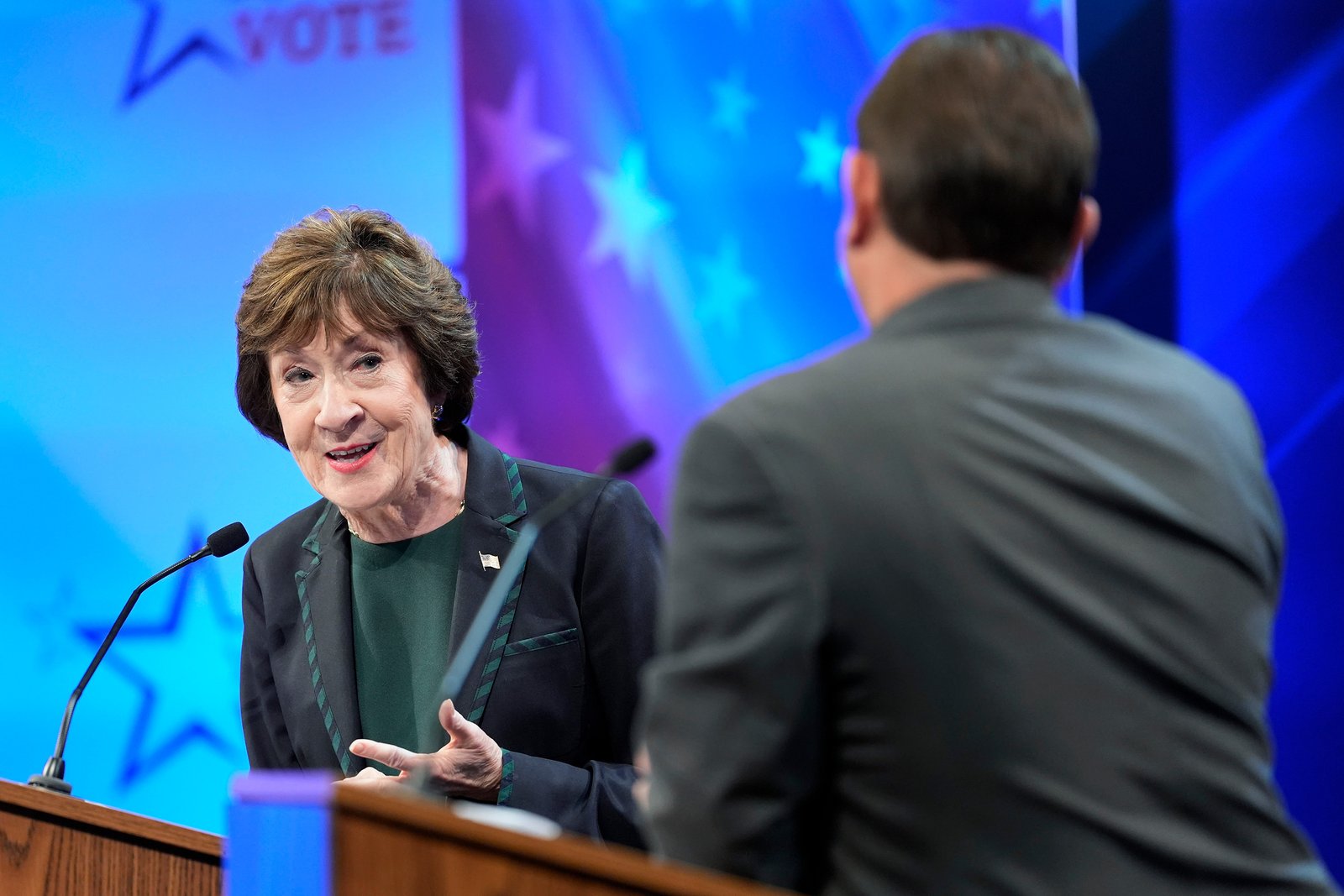
Some Republicans became frustrated by their opponents’ efforts to tie them to the president. “He wants to make this about Donald Trump,” said former Rep. Mike Rogers (R-Mich.) “The bingo game ought to be, how many times can he put the word ‘Trump’ in any answer that he has given in the last, whatever, 30 minutes? It’s ridiculous.”
But in some redder states, candidates were more willing to hug the president — recognizing support from his base will be critical to win.
“We need the Trump voters to come out,” Sen. Roger Marshall (R-Kansas) said in a debate Wednesday. “Just like with my wife, I can disagree with her. Now, my wife is always right, and President Trump is not always right. But I do think that it’s great that I have a relationship that I can pick up the phone and discuss with him the pros and cons of what he’s contemplating.”
It’s the economy, stupid
Democrats hammered Republicans on affordability issues, blaming Trump’s tariff policy and Iran for spiking prices. In response, a few conceded some Trump policies were hurting them — while others tried to blame the last president.
“That Bidenomics, that Green New Deal that my opponent voted for, that’s where all this inflation came from,” said Rep. Mike Collins (R-Ga.) in a Senate debate in early October.
The other Collins, Susan, went the opposite way in blue-leaning Maine. “The bottom line is Troy and I both would have voted against the Canadian tariffs,” she said in an October 13 debate, after saying the Iran war was “not well thought out.”
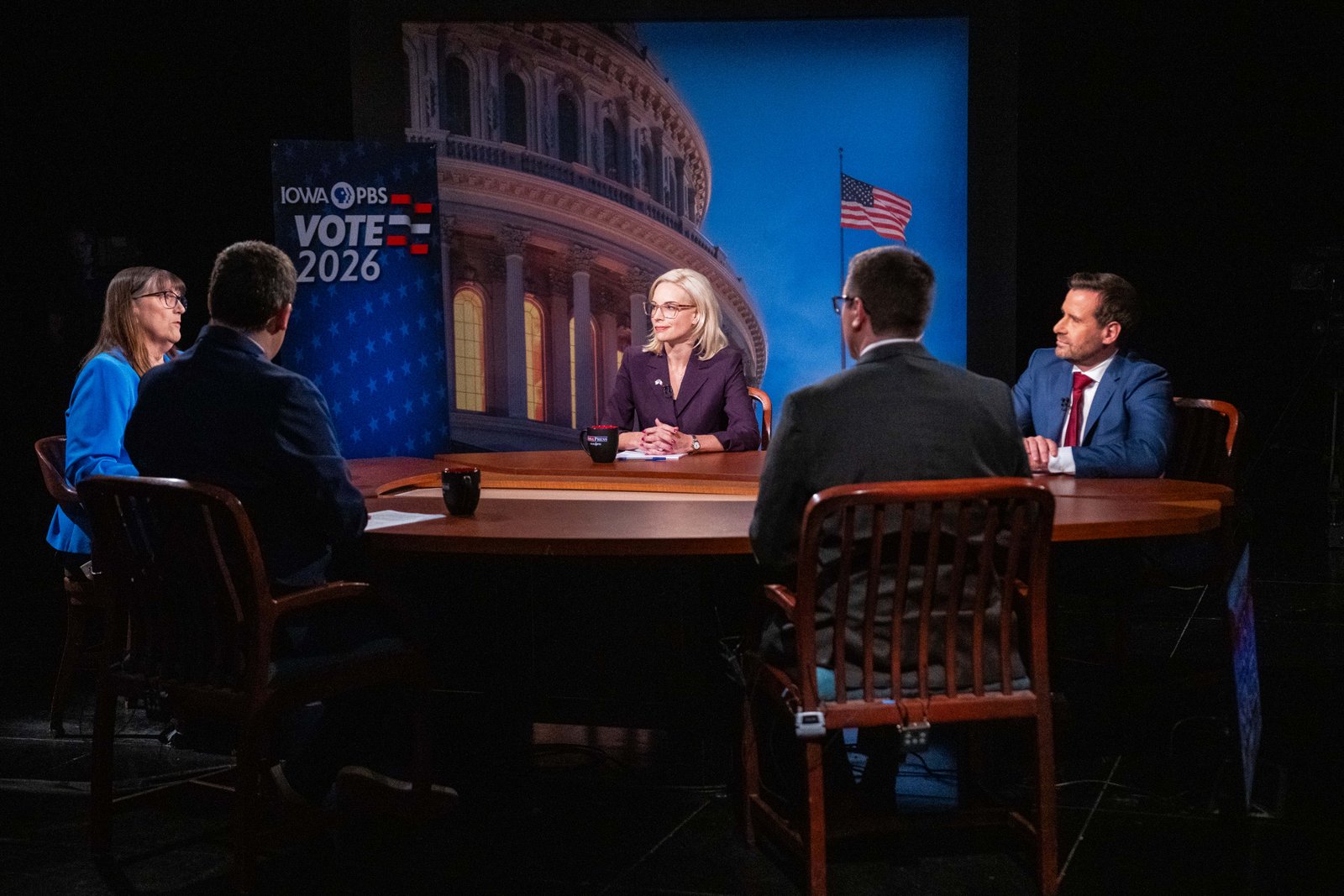
Rep. Ashley Hinson, the GOP nominee for Senate in Iowa, said she would pause the gasoline tax before acknowledging the effect of the war: “I trust in our U.S. military, the greatest fighting force in the world, to bring this to a close as quickly as possible, because I know people are being squeezed,” she said.
Democrats largely sang the same tune on Trump’s policies.
“These tariffs are crushing our state, and we’ll repeal those tariffs,” said Sen. John Ossoff (D-Ga.).
“The tariffs and the war in Iran has hurt Iowa more than any other state,” said state Rep. Josh Turek (D-Iowa).
“If you appreciate having record diesel fuel prices … then I’d say vote for Roger Marshall,” said Adam Hamilton, the Democratic nominee running for Senate in Kansas. “If you want change, then I’d like to ask you to vote for me.”
Everyone hates data centers
Republicans and Democrats showed a remarkable similarity in their distaste for data centers even as their specific policy prescriptions diverged — a sign of the issue’s rapid ascent as a bipartisan bogeyman, even as Trump reiterates his support for them.
Candidates from both parties called for local control. “Look, if you don’t want a data center, I will stand up and defend it and make sure you don’t get it,” said Rick Jackson, a Republican billionaire businessman running for Georgia governor. “Local communities know best,” said Hinson, the Iowa Republican.
In Maine, both Senate candidates said guardrails should be installed to prevent the data centers from raising utility rates for local residents. In Iowa, both gubernatorial candidates — Democrat Rob Sand and Republican Zach Lahn — supported ending tax breaks for data center developers. In New Hampshire, both Senate candidates agreed with GOP Gov. Kelly Ayotte’s push for a statewide moratorium.
“At the end of the day, it’s up to our governor, our local leaders, to make decisions about any big infrastructure, transmission, power plants, new factories, and data centers should be treated just the same,” Sununu said.
Gaffe gamechangers
Debates can do candidates more harm than good, and some candidates had some cringey moments.
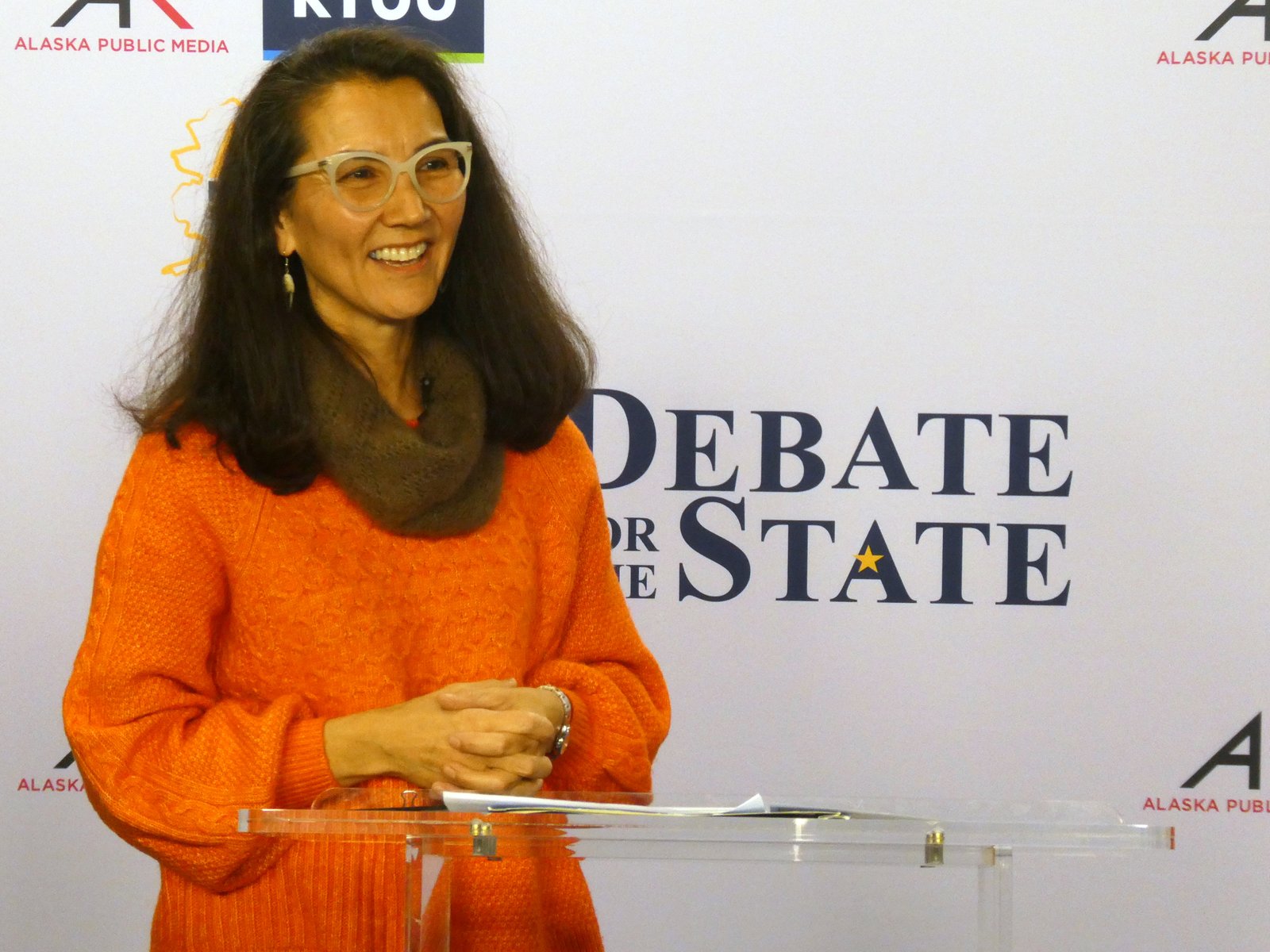
In Alaska, Democratic former Rep. Mary Peltola appeared to be reading from a notecard throughout a recent debate, giving her opponent, GOP Sen. Dan Sullivan, a chance to pounce. “We weren’t supposed to get these questions beforehand, were we?” he asked the moderator.
“You can’t cue-card your way through the Senate,” Sullivan later wrote on social media.
Sullivan had his own moment a few weeks earlier when he peeked at Peltola’s answer during a lightning-round question, prompting laughter from the audience. “Happy to help, Dan,” Peltola wrote on social media.
In Kansas, Marshall faced loud chats of “you don’t live here” during a debate at the state fair, while speaking about his residence in Kansas and his home in Florida.
In Maine, Jackson said Collins should “shut up” after a protester interrupted the debate and Collins claimed the demonstrator was “obviously one of Troy’s supporters.”
“Oh, shut up,” Jackson said. “I don’t even know that kid.” Collins has pounced on the moment to try to paint Jackson as a sexist hothead; Jackson later said he did not regret his outburst.
In Iowa, Hinson responded to a question about ensuring the solvency of Social Security by slamming young people’s saving habits. “We also need to be talking about millennials saving money,” she said. “Millennials are the worst group of savers in the country right now and have the least amount of savings.”
The debates that didn’t happen
Fear of gaffes may have cost voters a chance to see their candidates square off, as the longstanding political tradition of campaign debates took another hit this cycle.
In Senate battlegrounds across the country, nominees in both parties outright refused to join their opponents onstage or carefully ducked debates.
In Texas, Attorney General Ken Paxton rebuffed invitation after invitation (including one from Fox News), even after Trump urged him to get onstage. In Ohio, the Senate candidates still haven’t reached an agreement to debate. In North Carolina, there is no debate scheduled between the major-party Senate candidates for the first time in nearly 30 years.
There doesn’t seem to be a partisan division over who will and won’t debate. Democratic Arizona Gov. Katie Hobbs and Ohio Democratic nominee Amy Acton refused to debate their opponents. So did GOP Gov. Greg Abbott of Texas and Sen. Tommy Tuberville of Alabama, who have rebuffed invitations to debate.
“There’s so much difference between us, I mean, there’s no reason to get up there and argue about differences of opinion,” Tuberville, running for Alabama governor against Democratic former Sen. Doug Jones, told reporters in August.
Andrew Howard, Jason Beeferman, Lisa Kashinsky, Aaron Pellish, Alec Hernandez, Erin Doherty and Jessica Piper contributed reporting.
A new company whose polls had influenced campaign decisions and helped shape the midterms narrative admitted that it was faking its polling data on Tuesday night, setting off a firestorm in the electionsphere.
Wedgewood Polls, facing an imminent publication of an investigation from FiftyPlusOne showing it was fabricating its numbers, declared late Tuesday night that it had been an “experimental project” to show how an “entirely fabricated polling firm” could sway public opinion while painting themselves as the good guys.They’d left an impact and been included by multiple credible polling aggregators including The New York Times — and mentioned twice in Blue Light News’s Morning Score polling roundup.
Speculation is flying about what, exactly, Wedgewood was trying to achieve, and there’s still little public information about the defunct company that had crowdfunded thousands of dollars for its fake data. Was it an effort to boost progressives Democrats in primaries? If so, were progressives or Republicans really behind it? Was it being used to game betting markets? Were top operatives using the bogus data to make spending decisions? Were aggregation accounts too quick to jump on posting the data?
An email to the account listed on Wedgewood’s X account bounced back, and previous PDFs of polls that were tied to the account are no longer available online.
Regardless of what Wedgewood said it was trying to achieve (they remain adamant the project “was never intended to sway an election or permanently mislead the public”) — pollsters, operatives and candidates alike said there were real world implications for posting fake data online.
Mallory McMorrow, the unsuccessful Michigan Democratic Senate candidate who dropped out before her primary, said a fake Wedgewood poll that showed her crashing to single-digit support against Abdul El-Sayed and Rep. Haley Stevens “dried up” donations, “devastated” volunteers and led to numerous calls to exit the race.
“It killed us,” McMorrow wrote on X. “These were some of the absolute worst days on the campaign. Especially for my team. There are no words to explain the morale blow, and nothing I could do or say to my team to fix it.”
Jennifer Holdsworth, a Democratic operative who ran a super PAC supporting McMorrow, said the Wedgewood poll “was used by several donors to pull back funding at a time we were being outspent by $80 million.”
The account also posted a poll showing democratic socialist Francesca Hong leading in Wisconsin gubernatorial primary, when there was scant public polling, something that contributed to the narrative she was ahead before the election (which she lost).
They also posted a poll showing the Mississippi Senate race within reach, just before Democrats plowed money into the state. Scott Colom, the Democrat running for the seat, blasted the poll to his press list as proof there was “massive momentum” behind him.
That led election watchers to argue that Wedgewood’s data was being used to make spending decisions in top outside groups, which elicited a response from Democrats’ main Senate super PAC.
“Absolutely not. We don’t make spending or strategic decisions based on external polling,” Lauren French, a spokesperson for Senate Majority PAC, said on X.
In its investigation, FiftyPlusOne said it had included Wedgewood in its aggregator because the firm was founded by people who had worked in the polling industry previously.
There’s also been broad finger pointing at the aggregator X accounts that post polls frequently — and sometimes without verifying their accuracy.
“You posted our polls multiple times. If you suspected it was fake, why did you post our results?” Wedgewood’s account shot back after Polling USA wrote that “my suspicions about Wedgewood were correct.”
The whole ordeal illuminates just how big a problem polling could be in 2028, where both parties will have presidential primaries and polling can shift the narrative on a dime.
“What I’m concerned about is essentially information pollution, things that are either intended to skew prediction markets or just straight misinformation flying around,” Charlotte Swasey, a pollster for the Democratic group Searchlight, told POLITICO Magazine recently. “It would be really difficult, especially in a primary, to tell people that what they’re seeing about their preferred candidate isn’t real.”
A version of this article first appeared in Blue Light News Pro’s Morning Score. Want to receive the newsletter every weekday? Subscribe to Blue Light News Pro. You’ll also receive daily policy news and other intelligence you need to act on the day’s biggest stories.

America’s Heartland sows doubt in the GOP
lead image
- Kevin McCarthy predicts GOP will lose House majority
- Trump plans to fast-track arch despite legal challenge
- GOP senator questions Elon Musk’s influence over military assets
- The good, the bad and the unruly from over two dozen candidate debates
- How a fake pollster may have moved some 2026 elections
- Top Senate Finance Democrat maps out clean energy plan
- Australian treasurer says opponents want higher inflation for political gain
- Rising bond yields will add billions to budget pressure: Australian treasurer
- Capitol agenda: Some Republicans get bipartisan curious
- America’s Heartland sows doubt in the GOP

-

 Politics2 years ago
Former ‘Squad’ members launching ‘Bowman and Bush’ YouTube show
-
Uncategorized2 years ago
Bob Good to step down as Freedom Caucus chair this week
-

 The Josh Fourrier Show2 years ago
DOOMSDAY: Trump won, now what?
-

 The Dictatorship2 years ago
Pete Hegseth’s tenure at the Pentagon goes from bad to worse
-

 Politics2 years ago
Former Kentucky AG Daniel Cameron launches Senate bid
-

 The Dictatorship2 years ago
Luigi Mangione acknowledges public support in first official statement since arrest
-

 Politics2 years ago
Blue Light News’s Editorial Director Ryan Hutchins speaks at Blue Light News’s 2025 Governors Summit
-
 Politics1 year ago
John Legend advises Trump to drop the ‘dictator s‑‑‑’ if he wants Nobel Peace Prize