
The Dictatorship
What it’s like watching ‘Apple Cider Vinegar’ as a cancer survivor who trusted her doctors


The popular new Netflix series, “Apple Cider Vinegar,” based largely on the true story of Australian wellness influencer and fraudster Belle Gibsonaffected me deeply. Gibson claimed her wellness treatments cured her terminal brain cancer, a brazen and consequential lie that risked the lives of her followers.
As a two-time breast cancer survivor, I know cancer treatments are not for the fainthearted or noncompliant. But they have kept me — and millions of others — alive. Meanwhile, research shows patients who reject or delay the advice of their doctors are much more likely to die.
Today, after an ordeal including surgery, radiation and chemotherapy, I am 10 months cancer-free. And free, also, to binge this drama, enraged by the premise.
In the warped world inhabited by so-called wellness warriors, a strong person rejects conformity, and a weak person passively complies with the medical establishment.
In the warped world inhabited by so-called wellness warriors, a strong person rejects conformity, and a weak person passively complies with the medical establishment. This argument distorts the global medical community, twisting “the establishment” into a nefarious moneymaking conspiracy. But while Big Pharma does rake in billions, cancer treatment is not a scam. And influencers who try to lure vulnerable people away from established science are toxic, in every sense of the word. Just as we have seen with Covid deniers and vaccine skepticsdisinformation can kill.
I could not watch any movie, series, program or TEDx talk on cancer while I was in the middle of my own treatments and recovery. There was nothing entertaining about the stories, or the characters — too many of whom died. I just knew I didn’t want to be like them.
When I was first diagnosed with Stage 1 breast cancer in 2006, I eagerly did everything my surgeon and oncologist told me to do. I got the lumpectomy. I submitted to the prescribed brachytherapy (internal seed radiation) twice daily for one week and many years of Tamoxifena hormone-blocking medication with uncomfortable and inconvenient side effects.
I wanted to live. And I trusted my doctors and medical team wanted me to live as much as I did.
A single mom with sole custody of three sons, then 13, 16 and 18, I wanted to see them all through high school, college, weddings, my grandchildren and my eventual retirement.
Almost two decades later, in June 2023, a second breast cancer identified as triple-negative, invasive, aggressive Stage 3 showed up on my ultrasound. The three tumors measured 7 centimeters all together. Once again, I did absolutely everything my oncologist, surgeon and cardiologist ordered — including eliminating alcohol after reading about the link between drinking and cancer. I also gave up diet soda at the suggestion of my oncologist. Why not?
Because the truth is that cancer is scary. And highly motivating. The other main protagonist in “Apple Cider Vinegar” is Milla Blake, a character who seems at least partly inspired by a real woman named Jessica Ainscough. Diagnosed with a rare cancer in her early 20s, Ainscough eventually stopped chemo and adopted an intense (and unproven) regimen of juices and coffee enemas. I deeply empathized with her honesty, vulnerability and courage as she searched for answers. She was aiming to fight for herself, not build a wellness empire based on lies.
But Ainscough also reportedly convinced her mother to forgo doctor recommendations and try the alternative therapy route. Her mother died from breast cancer in 2013. Ainscough would succumb to her own cancer a few years later. A tragedy layered on top of a tragedy.
The U.S. Centers for Disease Control and Prevention reports that in 2022, the latest year numbers are available, over 600,000 people in the United States died from cancer. There are 18 million people with a history of cancer who are still alive, according to the American Cancer Society.
Survival rates vary by cancer type, diagnosis timeline and various other personal variants. But the overall five-year survival rate for breast cancer in women is 90% — if those women follow the recommended surgery, chemotherapy and radiation protocol.
On the other hand, the Mayo Clinic notes that alternative treatments may be able to help with some symptoms, but they are not cures. If they were, doctors would use them.
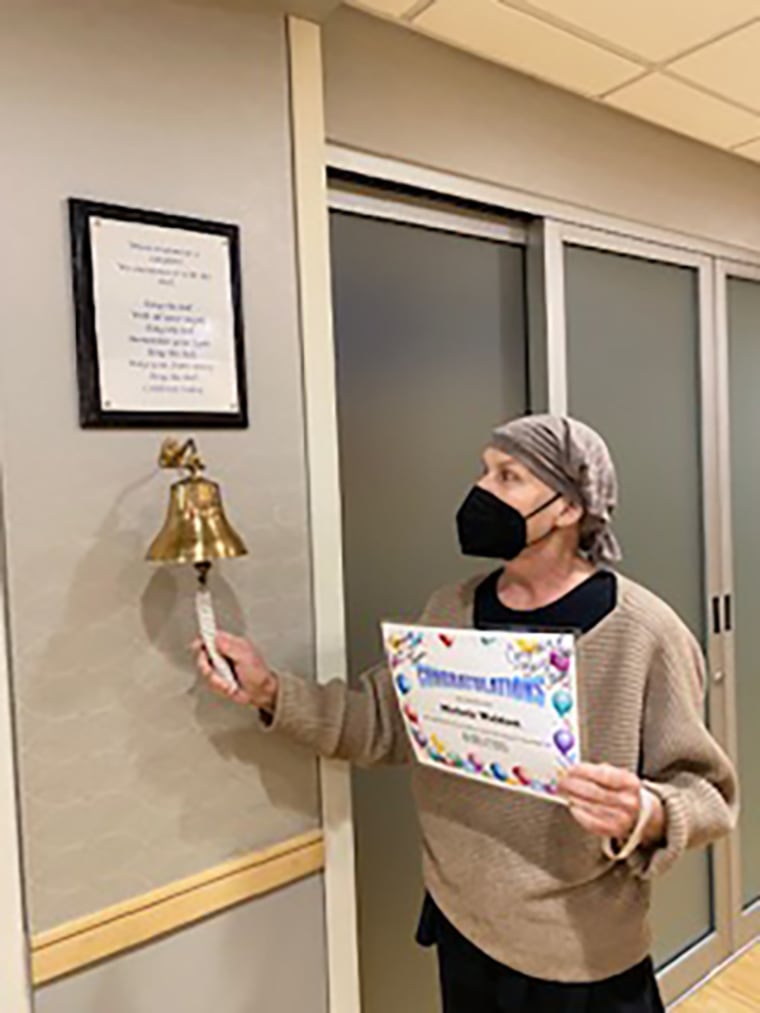
As accurately presented in the series by screenwriter Samantha Strauss, chemotherapy is almost intolerable; my own treatments were cut short and surgery for a radical mastectomy moved up more than three months because my system could not handle the stress.
I also went completely bald, just as the character Lucy did in the series. I wore a wig for a bit, until my hair began to grow back months after radiation ended. Chemo gave me mouth sores and made everything taste like gasoline; I ultimately lost more than 30 pounds.
And still, I listened to the experts. Any anger I felt was directed at my cancer, not at my doctors. Unlike in most every other aspect of my professional and personal life, when dealing with cancer, I was completely obedient.
A number of my friends have had their own cancer experiences, and I adamantly advise them to do everything their doctors and nurses recommend. I darkly joke that I spent my 30s sending flowers to my friends in hospitals having babies; in my 60s, I send flowers to my friends in hospitals having surgeries.
Ultimately, the tragedies presented in “Apple Cider Vinegar” are real. But there is nothing inherently weak about following the science. And nothing inherently brave about ignoring it.
Michele Weldon is an award-winning journalist, author, TEDx speaker, emerita faculty at Northwestern University and senior leader with The OpEd Project. Her latest book is “The Time We Have: Essays on Pandemic Living.”


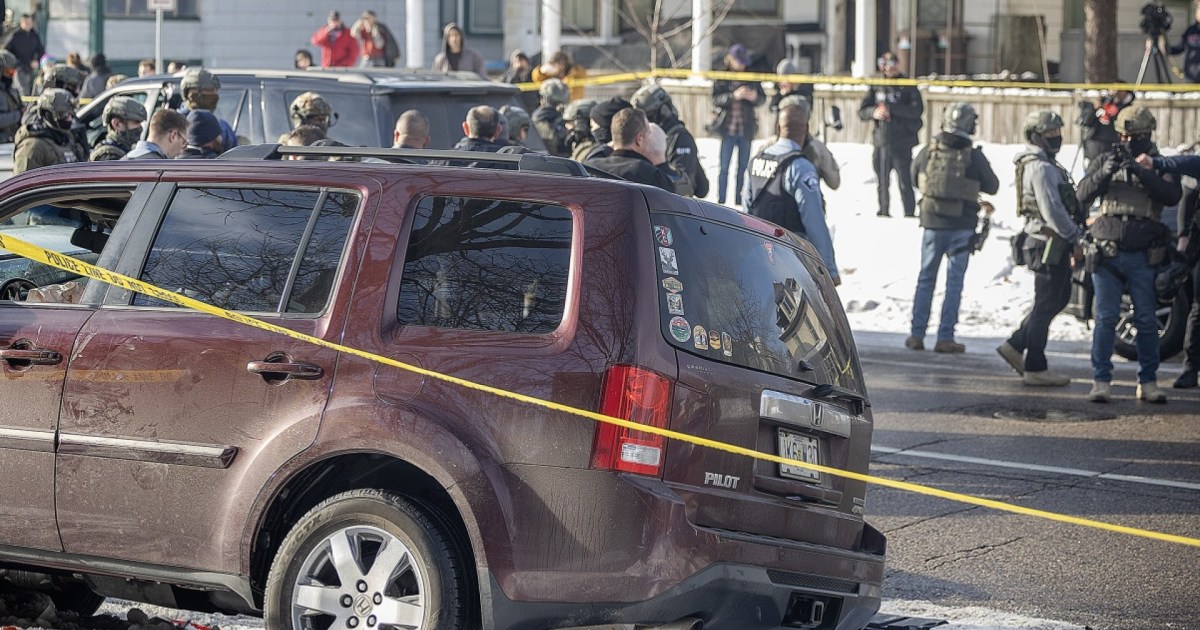
In the wake of Renee Nicole Good’s death, Americans are asking, with heightened urgency, what authority ICE and CBP agents have when they engage with U.S. citizens. And as with many areas of the law, the answer is largely, “It depends.”
Can ICE use deadly force on U.S. citizens – or ever?
When it comes to the use of force, and specifically, the use of firearms, ICE has its own specific policy that was last updated in 2023. That policy was filed in the Chicago-area litigation over ICE and CBP’s treatment of protesters, clergy, and journalists. (Interestingly, on ICE’s website, that same policy is almost entirely redacted.) This policy does not vary depending on the subject’s immigration or citizenship status. Here’s what it says:
First, the policy authorizes the use of force “only when no reasonably effective, safe, and feasible alternative appears to exist and may use only the level of force that is objectively reasonable in light of the totality of facts and circumstances confronting the officer at the time force is applied.” But the policy is equally clear that an officer does not have to meet force with equal or lesser force, does not have to wait for an attack before using force, and does not have any duty to retreat to avoid the reasonable use of force.
Second, where feasible and without creating any greater threat to his own safety or that of others, an ICE officer must attempt to “de-escalate by the use of communication or other techniques during an encounter to stabilize, slow, or reduce the intensity of a potentially violent situation without using physical force, or with a reduction in force.”
Third, ICE policy is also clear that officers have a “duty to intervene to prevent or stop a perceived use of excessive force” so long as it is safe to do so. It further states that a failure to intervene and/or report such incidents is itself misconduct — and potential grounds for discipline.
What’s the guidance if U.S. citizens are given orders by ICE?
Short of using force or deadly force, however, can ICE give orders to U.S. citizens? For example, it appears that ICE agents directed Renee Nicole Good to get out of her car shortly before she was killed.
ICE can give orders to U.S. citizens, but again, only in limited circumstances that are directly tied to the ICE agent’s immigration-related authority. For example, ICE can give orders to U.S. citizens — or even detain them temporarily — if they are obstructing or interfering with immigration enforcement activity.
These situations are often very subjective. U.S. citizens do have significantly more freedom in their interactions with ICE than non-citizens. For example, according to guidance issued by the ACLU and the City of New Yorkamong others, if ordered or detained by ICE, a U.S. citizen can ask, “Am I free to leave?” and they should then be allowed to leave on their own free will.
Can ICE agents search a car without a warrant?
ICE agents also have the authority to search a car without a warrant in limited scenarios. The Fourth Amendment includes the automobile exceptionwhich allows federal agents to search a vehicle without a warrant if there’s probable cause to believe there’s evidence to a crime or contraband. Because a car can be driven away quickly, it may not be practical to secure a warrant beforehand without jeopardizing the investigation.
But federal agents must have specific probable cause to search a car without a warrant. A hunch or a feeling that the car conceals evidence of illegal activity is not enough for a federal agent to search a car without a warrant. ICE does have broader authority to search vehicles within 100 miles of the U.S. border, but even so, these searches typically require probable cause. Notably, ICE cannot search a car without a warrant simply because they suspect someone may be an undocumented immigrant.
However, car searches are the only major exception. ICE officers require search warrants for all other searches. Without a warrant, both U.S. citizens and non-citizens can say, “I do not consent to a search,” according to guidance issued by immigration rights organizations.
What’s the guidance on U.S. citizens recording or taking photos of ICE during enforcement activities?
Civil liberties groups generally advise that under the First Amendment, U.S. citizens can record or take photos of ICE performing law enforcement activities in public places so long as the recording does not interfere with ICE activity, like an arrest. Bystanders are allowed by law to collect important information, including names and badge numbers of the ICE agent executing the immigration activity.
Some states, including Florida, Tennessee, and Louisiana, have enacted their own laws requiring observers — or anyone else — to move back 25 feet or more from law enforcement or other first responders upon their request. While other, similar laws passed by Arizona and Indiana have been struck down, the constitutionality of these states’ laws has not been determined.
Finally, citizens and non-citizens alike share one fundamental right when it comes to encounters with ICE, or any other law enforcement agency, for that matter: the right to remain silent.
Lisa Rubin is MS NOW’s senior legal reporter and a former litigator.
Fallon Gallagher is a legal affairs reporter for MS NOW.
“We Love America” is one of CBS News’ “five simple principles” under new editor-in-chief Bari Weiss. In apparent defiance of a powerful, unseen enemy that demands they not love this country, the network added on social media, “And we make no apologies for saying so. Our foundational values of liberty, equality and the rule of law make us the last best hope on Earth.”
The strangeness of a straight news outlet — whose job ostensibly is to be skeptical of the powerful, especially the government — feeling the need to distinguish itself by proclaiming “love” for America aside, it’s a reductive, Manichean sentiment. Its opponent is a strawman, and it carries the implication that there’s only one way to love America: their way.
America showed its distaste for the Blame America First crowd and voted for Donald Trump even after he attempted a self-coup, among other national disgraces.
Now, I’m not oblivious to the point CBS News is trying to make. There’s a subset of far-left Americans, particularly in academia and activism, that considers the United States to be inherently illegitimate because of its history of slavery and ethnic cleansing. Some others in left-wing spaces believe capitalism is the root of all evil, that people should be judged by their immutable characteristics in the name of “anti-racism,” that political violence is justifiable (as long as it’s from the left) and that any deviation from their radical values is problematic. I’ve been critical of some of the more prominent figures in this area, whose work I’ve found ranged from the vacuous to the merely unhelpful if justice and equality are the goals.
In 2024, America showed its distaste for the Blame America First crowd and voted for Donald Trump even after he attempted a self-coup, among other national disgraces.
But America’s backlash against far-left activists far exceeds their actual influence in government, business and culture. They did, however, make for great bogeymen in GOP campaign ads — and were often their own worst enemies. As the progressive comedian Marc Maron asked his audience in a recent special, “You do realize we annoyed the average American into fascism, right?”
Still, there are plenty of people, myself includedwho “love America” and don’t subscribe to a childish — and frankly, dangerous — “my country, right or wrong” binary.
The America I love is a representative democracy where the ruling party doesn’t try to stay in power after losing an election or permanently brain-poison its followers with lies about voter fraud. The America I love respects civil liberties and due process under the law and doesn’t make exceptions in the name of meeting mass deportation quotas.
The America I love stubbornly defends freedom of speech. Its government doesn’t try to forbid the use of certain words to describe political opponents or harass news outlets with bogus litigation or ideologically-motivated regulatory threats. The America I love doesn’t deport people for their legitimate political activism.
The America I love is strong and reflective enough to grapple with even the worst of its own history. It doesn’t ban the teaching of slavery in public schools as a “divisive concept” on the grounds that it will make the children of right-wingers feel bad about their country. That’s what has happened in many Republican-led states and localities in recent years, but, if anything, the decades we’ve spent confronting America’s racist sins — and expanding the scope of civil rights — demonstrate that the country we love so dearly has the capacity to evolve for the better.
But, as the second Trump administration keeps reminding us, America also has the ability to devolve for the worse.
I don’t love that Trump’s America has renormalized gutter racismhelped in large part by the president, the vice president and many of their most influential supportersincluding the richest man in the world (who was also the biggest donor to their campaign).
As the second Trump administration keeps reminding us, America also has the ability to devolve for the worse.
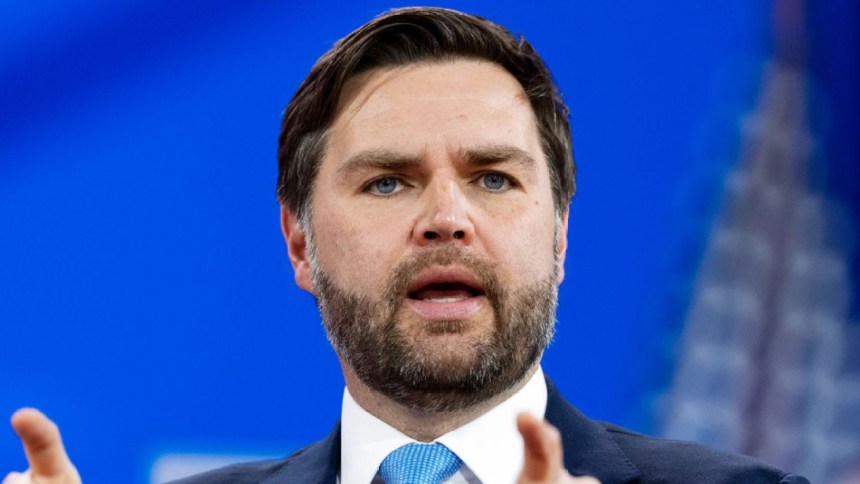
Just this week, Elon Musk posted a “100” emoji to promote an X post that declared, “If White men become a minority, we will be slaughtered. … White solidarity is the only way to survive.” As of Friday, it had been viewed over 42 million times. Also this week, Vice President JD Vance, who last month touted that in America you no longer have to apologize for being white, said America has a “Somali problem,” a kind of phrasing that wouldn’t have sounded out of place in early 1930s Germany.
I don’t love that Trump’s America allowed Musk’s ludicrously destructive Department of Government Efficiency (DOGE) to destroy America’s moral and strategic advantage in “soft power,” killing USAID, which cost a pittance of our annual GDP to save millions of lives in poor countries from preventable diseases, and keep warlords and despots from filling the power vacuums.
I don’t love that in Trump’s America the executive branch ignores the Constitution, invades a sovereign country without congressional consultation and deposes its tyrannical leader with no apparent legal justificationwhile deputy White House chief of staff Stephen Miller touts the virtues of neo-colonialism. And I don’t love that Trump is threatening to seize Greenland from Denmark, our NATO ally, an ambition that seems hellbent on pointlessly destroying the rules-based international order that has made the United States a superpower since the end of World War II.
And I don’t love the fact that Musk and Vance have been enthusiastic boosters of Germany’s ascendant Nazi-sympathizing partythe Alternative for Deutschland (AfD). Nor am I proud of the fact that on Friday a DHS post on Instagram featured a recording of, “By God We’ll Have Our Home Again,” a chilling marching song known to be popular among the Proud Boys and white ethno-nationalist separatists. (I asked DHS for comment on the use of the song, but have not received a response.)
I don’t love that during Trump’s second term, it has become completely normal for masked, secret law enforcement agents to violently accost and arrest people without due process, including American citizens. As I warned in September when Trump’s campaign of extralegal killings of alleged drug traffickers in the Caribbean kicked into high gear: “President Donald Trump — whether intentionally or not — is laying the groundwork to normalize the concept of the U.S. military’s killing Americans without due process.”

ICE agent Jonathan Ross killing Renee Good in Minneapolis this week shows my fears were not unfounded. The celebratory bloodlust on the right that followed Good’s death tells me the worst is yet to come.
“We Love America” isn’t a journalistic principle, it’s barely a bumper sticker. True patriotism does not mean ignoring your country’s faults or dismissing its critics as haters or disloyal. Loving your country means taking the good with the bad. It means being proud and being embarrassed — or even appalled — when necessary.
You can love America, and also apologize for it. But if loving America means caping for the powerful, whitewashing the racists and believing that military might-makes-right, you don’t love America.
You just love saying you do.
Anthony L. Fisher is a senior editor and opinion columnist for MS NOW.
The Bondi Beach massacre of Dec. 14, in which 15 people were murdered during a Hanukkah celebration, has become a grim symbol of rising antisemitic violence across Western democracies. In Sydney, as well as in places like Paris, London, Berlin and Copenhagen, Jews have been living in fear of threats, intimidation and terrorist violence.
Governments have rushed to act. Too often, however, their response has been to expand laws criminalizing speech — an approach that offers the appearance of resolve while doing little to address the sources of violence and much to erode fundamental freedoms. Australia offers a telling example.
Following outbreaks of antisemitism after Hamas’ attack on Israel on Oct. 7, 2023, Australian hate speech laws were expanded both at the federal level and in New South Waleswhere Bondi Beach is located. As became all too clear on Dec. 14, these laws did nothing to prevent the attack.
What began as a moment of national mourning has rapidly turned into one of the most sweeping expansions of hate speech laws and protest restriction powers in the country’s modern history.
Yet, the immediate response of Australian Prime Minister Anthony Albanese has been to promise yet more speech-restrictive legislation. What began as a moment of national mourning has rapidly turned into one of the most sweeping expansions of hate speech laws and protest restriction powers in the country’s modern history. Intended as an urgent response to antisemitism, new federal and state measures threaten to reach far beyond violence or direct incitement — reshaping how speech, protest and political dissent are regulated in the wake of terrorism.
The Bondi Beach attack has also had ramifications for free speech outside Australia. British police arrested two people after announcing their intentions to crack down on the pro-Palestinian slogans “globalize the intifada” and “from the river to the sea.” This policy has already been introduced in Germany, with ramifications for protest and online dissent.
There’s no doubt these slogans are deeply offensive to many Jews, who reasonably hear them as legitimizing violence. But when the government criminalizes speech that is merely offensive and ambiguous, rather than incitement to imminent violence, there are serious second-order consequences. The freedom to dissent and protest is the most fundamental difference between democracies and authoritarian states. The vagueness of hate speech laws risks blurring that bright line. Moreover, the very minorities that hate speech laws are supposed to protect can easily become their targets.
In Germany, the Israeli-Jewish left-wing activist Iris Hefets has been detained by police on several occasions for solo protests carrying a placard with the words “As a Jew and Israeli, stop the genocide in Gaza.” One does not have to agree with Hefets’ views on the Gaza conflict to see that arresting her for using politically charged language constitutes a threat to peaceful political protest. In fact, to suppress illegal chants, slogans and symbols, police in Berlin went so far as to ban all protests in languages other than German or Englishunless a “police-approved” interpreter was present.
Predictably, the policy backfired spectacularly. In July 2024, police intervened during a pro-Ukrainian demonstration outside the Russian Embassy in Berlin, where Ukrainian speakers protested a Russian airstrike on a children’s hospital in Kyiv.

Hate speech laws can also end up protecting those in power against criticism. In 2024, Marieha Hussain, a British teacher of South Asian heritage, attended a pro-Palestinian demonstration in London and carried a placard caricaturing then-Prime Minister Rishi Sunak and then-Home Secretary Suella Braverman as “coconuts.” Hussain was charged with a racially aggravated public order offense. After losing her job, being doxed and standing trial while nine months pregnant, Hussain was acquittedbut only because the judge found that the context placed the placard within political satire rather than criminal abuse.
This instinct to suppress speech in the name of protection is not new, but it sharply diverges from the way earlier generations of civil rights leaders confronted bigotry and helped shape the tradition of free speech exceptionalism, especially in America.
Historically, American Jewish organizations opposed hate speech laws. In the 1930s, as states and municipalities sought to criminalize the rhetoric of American Nazi groups, the American Jewish Committee formally rejected such measures, arguing that they would hurt minorities. Vague laws criminalizing the expression of racial or religious “hatred” or “offense” could be turned against minority groups, who could be accused of “hatred” when speaking out against discrimination.
Black civil rights organizations came to the same realization. Thurgood Marshall of the NAACP opposed a Florida hate speech bill, observing that “there is grave danger that these bills when enacted will serve to throttle … any [speaker] which seeks to champion the cause of minority groups,” since “laws imposing penalties on expression of opinion usually defeat their own purpose.”
Hate speech laws can also end up protecting those in power against criticism.
In the wake of a series of temple bombings in the South in the 1950s, when segregationists targeted synagogues that promoted racial integration, several Jewish organizations insisted that counter-speech and education were more effective remedies for antisemitism than hate speech regulation.
Laws prohibiting hate speech would “at best control the symptoms but would not reach the disease,” observed the American Jewish Congress in a policy statement from 1958 titled “Bombings and Hate Sheets.” The American Jewish Congress’ support of the NAACP, which was being persecuted in the South for its civil rights organizing, made the organization acutely aware of the importance of freedom of speech to the pursuit of civil rights. In the 1960s, the NAACP went as far as to defend the free speech of white supremacists, knowing that the survival of the civil rights movement depended on a broad reading of freedom of speech.
Eighty years after the Holocaust, increasing antisemitism is a moral failure of Western democracies. But Jewish and Black civil rights leaders have understood that when fear drives democracies to suppress speech, the very freedoms that have allowed minorities to organize and demand equality are undermined.
Laws that promise safety by policing words may satisfy a public appetite for action, but they do not stop violence. What they do is corrode democratic culture and hand extremists the grievance they crave.
If liberal societies are serious about preventing hate crimes, they should resist the temptation to criminalize speech and instead recommit to the harder work of defending free expression, confronting violence directly and fighting hate crimes through law enforcement, education and solidarity — not censorship.

Jacob Mchangama
Jacob Mchangama is the executive director of The Future of Free Speech and a research professor at Vanderbilt University. He is also the author of “Free Speech: A History From Socrates to Social Media.”
Professor of law at the University of Iowa College of Law
- When it comes to ICE encounters, what are the rules — and your rights?

- The country I love doesn’t look like Trump’s America
- Australia’s hate speech crackdown is a threat to legitimate dissent
- Protests swell over ICE killing of Minneapolis woman as White House blames victim
- US options to take over Greenland

- Rubio’s 2028 profile rises with Venezuela — and so do his risks
- Trump calls for one-year 10 percent cap on credit card interest rates
- Washington National Opera to leave Kennedy Center amid Trump takeover
- Protests against ICE scheduled across Texas this weekend
- Rapper Fetty Wap freed from federal prison nearly a year early

-

 The Dictatorship11 months ago
Luigi Mangione acknowledges public support in first official statement since arrest
-

 The Dictatorship4 months ago
Mike Johnson sums up the GOP’s arrogant position on military occupation with two words
-

 Politics11 months ago
Blue Light News’s Editorial Director Ryan Hutchins speaks at Blue Light News’s 2025 Governors Summit
-

 Politics11 months ago
Former ‘Squad’ members launching ‘Bowman and Bush’ YouTube show
-

 Politics11 months ago
Former Kentucky AG Daniel Cameron launches Senate bid
-

 The Dictatorship11 months ago
Pete Hegseth’s tenure at the Pentagon goes from bad to worse
-
Uncategorized1 year ago
Bob Good to step down as Freedom Caucus chair this week
-

 Politics9 months ago
Democrat challenging Joni Ernst: I want to ‘tear down’ party, ‘build it back up’