
The Dictatorship
Australia’s hate speech crackdown is a threat to legitimate dissent

The Bondi Beach massacre of Dec. 14, in which 15 people were murdered during a Hanukkah celebration, has become a grim symbol of rising antisemitic violence across Western democracies. In Sydney, as well as in places like Paris, London, Berlin and Copenhagen, Jews have been living in fear of threats, intimidation and terrorist violence.
Governments have rushed to act. Too often, however, their response has been to expand laws criminalizing speech — an approach that offers the appearance of resolve while doing little to address the sources of violence and much to erode fundamental freedoms. Australia offers a telling example.
Following outbreaks of antisemitism after Hamas’ attack on Israel on Oct. 7, 2023, Australian hate speech laws were expanded both at the federal level and in New South Waleswhere Bondi Beach is located. As became all too clear on Dec. 14, these laws did nothing to prevent the attack.
What began as a moment of national mourning has rapidly turned into one of the most sweeping expansions of hate speech laws and protest restriction powers in the country’s modern history.
Yet, the immediate response of Australian Prime Minister Anthony Albanese has been to promise yet more speech-restrictive legislation. What began as a moment of national mourning has rapidly turned into one of the most sweeping expansions of hate speech laws and protest restriction powers in the country’s modern history. Intended as an urgent response to antisemitism, new federal and state measures threaten to reach far beyond violence or direct incitement — reshaping how speech, protest and political dissent are regulated in the wake of terrorism.
The Bondi Beach attack has also had ramifications for free speech outside Australia. British police arrested two people after announcing their intentions to crack down on the pro-Palestinian slogans “globalize the intifada” and “from the river to the sea.” This policy has already been introduced in Germany, with ramifications for protest and online dissent.
There’s no doubt these slogans are deeply offensive to many Jews, who reasonably hear them as legitimizing violence. But when the government criminalizes speech that is merely offensive and ambiguous, rather than incitement to imminent violence, there are serious second-order consequences. The freedom to dissent and protest is the most fundamental difference between democracies and authoritarian states. The vagueness of hate speech laws risks blurring that bright line. Moreover, the very minorities that hate speech laws are supposed to protect can easily become their targets.
In Germany, the Israeli-Jewish left-wing activist Iris Hefets has been detained by police on several occasions for solo protests carrying a placard with the words “As a Jew and Israeli, stop the genocide in Gaza.” One does not have to agree with Hefets’ views on the Gaza conflict to see that arresting her for using politically charged language constitutes a threat to peaceful political protest. In fact, to suppress illegal chants, slogans and symbols, police in Berlin went so far as to ban all protests in languages other than German or Englishunless a “police-approved” interpreter was present.
Predictably, the policy backfired spectacularly. In July 2024, police intervened during a pro-Ukrainian demonstration outside the Russian Embassy in Berlin, where Ukrainian speakers protested a Russian airstrike on a children’s hospital in Kyiv.

Hate speech laws can also end up protecting those in power against criticism. In 2024, Marieha Hussain, a British teacher of South Asian heritage, attended a pro-Palestinian demonstration in London and carried a placard caricaturing then-Prime Minister Rishi Sunak and then-Home Secretary Suella Braverman as “coconuts.” Hussain was charged with a racially aggravated public order offense. After losing her job, being doxed and standing trial while nine months pregnant, Hussain was acquittedbut only because the judge found that the context placed the placard within political satire rather than criminal abuse.
This instinct to suppress speech in the name of protection is not new, but it sharply diverges from the way earlier generations of civil rights leaders confronted bigotry and helped shape the tradition of free speech exceptionalism, especially in America.
Historically, American Jewish organizations opposed hate speech laws. In the 1930s, as states and municipalities sought to criminalize the rhetoric of American Nazi groups, the American Jewish Committee formally rejected such measures, arguing that they would hurt minorities. Vague laws criminalizing the expression of racial or religious “hatred” or “offense” could be turned against minority groups, who could be accused of “hatred” when speaking out against discrimination.
Black civil rights organizations came to the same realization. Thurgood Marshall of the NAACP opposed a Florida hate speech bill, observing that “there is grave danger that these bills when enacted will serve to throttle … any [speaker] which seeks to champion the cause of minority groups,” since “laws imposing penalties on expression of opinion usually defeat their own purpose.”
Hate speech laws can also end up protecting those in power against criticism.
In the wake of a series of temple bombings in the South in the 1950s, when segregationists targeted synagogues that promoted racial integration, several Jewish organizations insisted that counter-speech and education were more effective remedies for antisemitism than hate speech regulation.
Laws prohibiting hate speech would “at best control the symptoms but would not reach the disease,” observed the American Jewish Congress in a policy statement from 1958 titled “Bombings and Hate Sheets.” The American Jewish Congress’ support of the NAACP, which was being persecuted in the South for its civil rights organizing, made the organization acutely aware of the importance of freedom of speech to the pursuit of civil rights. In the 1960s, the NAACP went as far as to defend the free speech of white supremacists, knowing that the survival of the civil rights movement depended on a broad reading of freedom of speech.
Eighty years after the Holocaust, increasing antisemitism is a moral failure of Western democracies. But Jewish and Black civil rights leaders have understood that when fear drives democracies to suppress speech, the very freedoms that have allowed minorities to organize and demand equality are undermined.
Laws that promise safety by policing words may satisfy a public appetite for action, but they do not stop violence. What they do is corrode democratic culture and hand extremists the grievance they crave.
If liberal societies are serious about preventing hate crimes, they should resist the temptation to criminalize speech and instead recommit to the harder work of defending free expression, confronting violence directly and fighting hate crimes through law enforcement, education and solidarity — not censorship.

Jacob Mchangama
Jacob Mchangama is the executive director of The Future of Free Speech and a research professor at Vanderbilt University. He is also the author of “Free Speech: A History From Socrates to Social Media.”
Professor of law at the University of Iowa College of Law


The Dictatorship
What Tom Emmer said about Somalis was racist. What’s worse is he doesn’t believe it.
ByMichael Tisserand
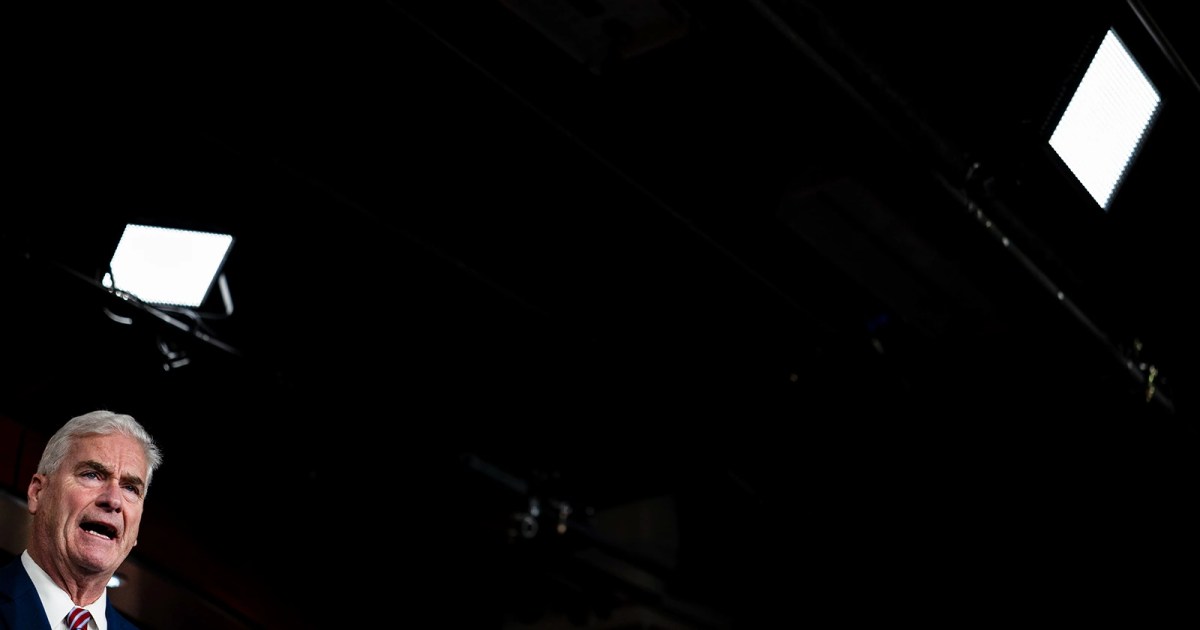
There was a time when President Donald Trump and MAGA Republicans didn’t think House Majority Whip Tom Emmer, R-Minn., had a sufficient understanding of who his enemies ought to be. But in remarks he made Wednesday at a Capitol Hill event sponsored by Ralph Reed’s Faith & Freedom Coalition, Emmer did his best to signal that Trump’s enemies are his enemies, too.
Emmer’s 11-minute talk, during which he expressed racism and transphobia and railed against abortion, also served as yet another contrast to the memory of what Republicans in Minnesota used to be. The name of the state party used to be Independent-Republicansand the late U.S. Sen. Dave Durenberger used to describe the state party’s worldview, without irony, as progressive Republicanism.
Emmer’s talk served as yet another contrast to the memory of what Republicans in Minnesota used to be.
That party is long gone. At Wednesday’s event, Emmer theatrically dismissed a few sheets of paper he said were his talking points and proclaimed, Trump-like, that he was going rogue. He took aim at transgender youth (“there’s a reason why Sodom and Gomorrah was destroyed”), at “elite radical lefties,” at “evil Marxists,” at the media, called his state’s abortion laws “as bad as North Korea” and called the state itself the “People’s Republic of Minnesota.”
But Emmer earned some of the most enthusiastic applause in his racist rant against the state’s large Somali American population. “Sometimes Minnesotans are so afraid that you’re going to call us a racist, you’re going to call us an Islamophobe,” he said, before saying, “But I’m done being careful. Even the least bit careful.”
He said, “I don’t really care where you come from. But if come to this great country, you have to understand, you’re coming here to be an American.” Somalis “don’t assimilate,” he said, “And if they don’t assimilate, then they should go the hell back to where they came from.”
Among the people who responded angrily to Emmer’s slander of Somalis was Rep. Ilhan Omar, D-Minn., who was born in Somalia. “I assimilated all the way to Congress and this idiot still tells me to go back to where I came from,” she wrote on X.
In the debacle that followed Kevin McCarthy being voted out of the House speakership in 2023, Emmer was not elected to replace him because, by MAGA standards, he was too moderate. Trump called him a “Globalist RINO” and was still fuming that after Joe Biden won the race for president in 2020, Emmer voted to certify that election.
Emmer has worked harder to be seen as MAGA since then. In December, he appeared on “Varney & Co.” on Fox Business to support an Immigration and Customs Enforcement surge that made Somalis among its primary targets and became known as Operation Metro Surge. He offered up conspiracy theories and lies about Somali Americans committing 80% of the crime in the Twin Cities. He said money was being stolen from Minnesota state and federal programs to fund the Somali-based terrorist group al-Shabab.
When he signed up with the so-called Sharia Free America Caucus in February, he railed against letting “anti-American ideologies take root in our communities” and said he had been fighting against the nonexistent threat of Sharia law since he was a state legislator. I was unable to find stories of Emmer as a state legislator fearmongering about Sharia law. However, in 2015, when one of Emmer’s fellow Republicans was being rightly rebuked for attending an anti-Muslim event in St. Cloud, Emmer was a voice of reason and tolerance. He wanted his constituents to know that Somali Americans were contributing to the Minnesota communities they had made home and that they were “some of the fastest-assimilating populations.”
That same year, Emmer joined then-Rep. Keith Ellison, the Democrat who’s now the state’s attorney general, to found the Congressional Somalia Caucus: to help Somali Americans here and to promote peace and stability in Somalia.
Now Ellison is taking the lead in legal challenges against the ICE assaults Emmer champions.
This is the ticket into MAGA world: an embrace of abdication of decency and a necessary rejection of the spirit of welcome and tolerance one once held.
This is the ticket into MAGA world.
In April, a west central Minnesota event called “Understanding Immigration: A Community Conversation,” included Ayan Omar, a Somali American from St. Cloud, as a speaker. She works as equity director for the public schools and has been active in interfaith dialogues in the city.
Omar spoke of coming to the U.S. as a child, learning English by watching “The Simpsons” and learning self-value by watching “Mr. Rogers’ Neighborhood.” The message from Mr. Rogers, she said, was especially important because “I just wanted to cower and hide away because I stood out. Not only because I was a Somali-American refugee, but I was also poor.” It was learning about Frederick Douglass that inspired her to become a teacher.
What she was describing was the process of her becoming more and more American. Countless other Somali Americans have had similar experiences. OEmmer knows that.
And not so long ago, he wasn’t afraid to say it.
Michael Tisserand
Michael Tisserand is a Minnesota-based writer whose works include “Krazy,” a biography of cartoonist George Herriman, and Sugarcane Academy, a memoir of his family’s experiences of Hurricane Katrina. With support from a Guggenheim Fellowship, he is currently writing a book about Charlie Chaplin and “The Great Dictator,” for Oxford University Press.
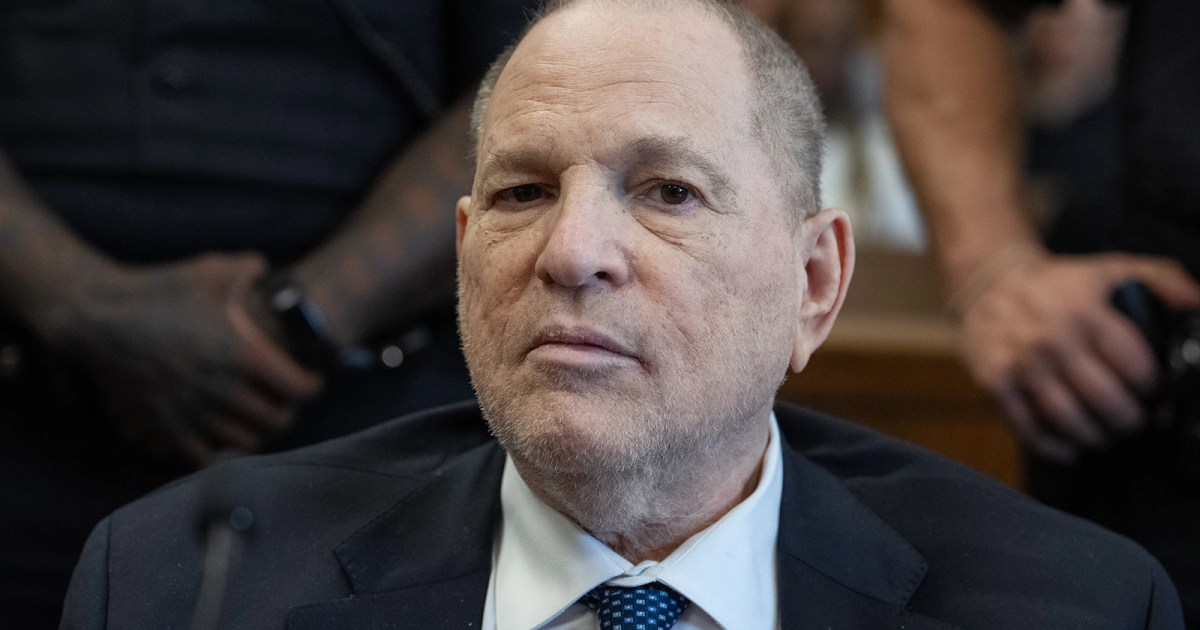
An appeals court on Friday upheld Harvey Weinstein’s2022 rape and sexual assault conviction in California, but ordered the trial judge who gave him 16 years in prison to resentence him.
A three-judge panel from California’s 2nd District Court of Appeal unanimously issued the decision, saying his trial judge did not violate the former movie magnate’s constitutional rights.
“We reject his attempts to disturb the jury’s guilty verdicts,” the judges wrote in their opinion.
Weinstein spokesperson Juda Engelmayer said in an email that “We are disappointed by today’s decision and respectfully disagree with the Court of Appeal’s conclusions regarding the fairness of Mr. Weinstein’s trial. At the same time, the court correctly recognized that his sentence cannot stand.”
The decision came a day after prosecutors in New York decided Weinstein would not face a fourth trial there, dropping the #MeToo-era case after the accuser said she could not bear to testify again.
The California panel said that resentencing was necessary because the judge that sentenced him considered New York convictions that were later thrown out as an aggravating factor. California’s attorney general agreed.
Weinstein, 74, still stands convicted of another sexual felony in New York, and he remains behind bars awaiting a September sentencing there. Prosecutors there are seeking a 20-year prison term.
In California, Weinstein was convicted in December 2022 of one count of rape and two counts of sexual assault against an Italian model and actor known during the trial as Jane Doe 1. He would serve his new sentence there only after his New York term is complete.
After the trial, Jane Doe 1 came forward under her name, Evgeniya Chernyshova, when she sued Weinstein in civil court.
The Associated Press does not typically name people who say they have been sexually abused unless they come forward publicly as Chernyshova did. Her attorney also said she consented to being named.
Chernyshova testified that Weinstein arrived uninvited to her hotel room during the 2013 LA Italia Film Festival and assaulted her.
Weinstein’s defense argued that Weinstein deserved a new trial because Los Angeles Superior Court Judge Lisa B. Lench wrongly prevented his trial lawyers from asking about Facebook messages between Chernyshova and festival head Pascal Vicedomini that would have shown they had a sexual relationship.
The questioning would have demonstrated that she perjured herself when she said she and Vicedomini were just friends and colleagues, the defense said. And the lawyers argued it would have bolstered their assertion that she was not even in her room on the night of the alleged assault.
“The lower court all but gutted Mr. Weinstein’s defense,” attorney Jennifer Bonjean told the appeals judges at April 23 oral arguments.
But the appeals court said in its ruling that Weinstein did make the arguments he wanted during the trial based on other evidence, including another set of Facebook messages that Lench allowed.
“Thus, there was no denial of Weinstein’s constitutional right to present a defense,” the panel wrote in its opinion.
The three judges also found that Weinstein’s lawyers failed to adhere to California’s rape shield law prohibiting evidence of an accuser’s sexual history when they tried to introduce the messages. Weinstein’s lawyers had argued that the shield law was not pertinent because they wanted to use the messages only to impeach the witness’s credibility.
And the appeals judges said testimony from accusers describing sexual assaults Weinstein was not charged with was appropriate, and allowed under state law.
Before his sentencing, Weinstein told the judge that this was a “made-up story” from a woman he had never met.
The Los Angeles jury acquitted Weinstein of the sexual battery of a massage therapist and failed to reach verdicts on counts involving two other women.
“This is not the end of the appellate process,” Engelmayer said in his email Friday. “We intend to seek review in the California Supreme Court because we continue to believe significant legal errors affected the proceedings and warrant further review.”
The Los Angeles County District Attorney’s Office said it would not have comment on the decision until the office reviewed it.
An email seeking comment from Chernyshova’s attorney was not immediately answered.
ByGarry Pierre-Pierre
One of the first people, and the very first doctor, to publicly receive a Covid-19 vaccine in the United States was Dr. Yves Duroseauthe chair of emergency medicine at Lenox Hill Hospital in Manhattan.
At a time when fear had emptied city streets and refrigerated trucks were lined up near hospital loading docksthat son of Haiti was a face of hope.
For Haitians, that image carried a deeper resonance. Ours is a community that America has often noticed only in moments of crisis. For once, the country was looking at a Haitian because he represented hope.
Ours is a community that America often noticed only in moments of crisis.
That memory from five and a half years ago is one reason the Supreme Court’s decision Thursday allowing the Trump administration to end Temporary Protected Status for hundreds of thousands of Haitians and Syrians hit me so hard. Not with anger, but with deep sadness.
When I took the oath of citizenship decades ago, I believed America rewarded commitment with belonging. I still want to believe that. Thursday’s ruling suggests that, for some immigrants, the word “temporary” didn’t just describe their legal status but the nature of America’s welcome.
The first TPS recipients from Haiti arrived after the magnitude 7 earthquake that devastated Port-au-Prince and killed hundreds of thousands of people in 2010. Today, Haiti faces a different catastrophe. Armed gangs control much of the capitalthousands have been killed or displaced and the State Department continues to warn Americans not to travel there.
For many TPS holders, the country they fled has not recovered. In many ways, it has become even more dangerous.
They believed something basic: that the United States would not send them back to a country engulfed by political violence, armed gangs and institutional collapse. TPS was created for those for whom returning home is unsafe. That humanitarian commitment should matter just as much as the lives those TPS holders have built since arriving.

They waited for Congress to do what some members had pushed for for years: create a pathway from temporary protection to permanent belonging. Instead, the years passed. Children became adults. Mortgages were paid. Careers were built. Entire lives unfolded while Washington postponed action. Temporary Protected Status became less a bridge than a waiting room. The finish line kept moving. Now, for many, it has disappeared altogether.
During the Covid-19 pandemic, Haitian nurses, home health aides and other essential workers were hailed as heroes. Their work was indispensable then, and healthcare leaders say it remains indispensable today.
This dependence is not sentimental. It is measurable. The Boston Globe, citing data from the National Domestic Workers Alliancereported that roughly 13,000 Haitian TPS holders work as nursing assistants each day, caring for an estimated 65,000 patients.
According to a report by Massachusetts lawmakers Sen. Ed Markey and Rep. Ayanna Pressley, ending TPS for Haitians “threatens to seriously disrupt the health care, senior care and disability care workforces amid a nationwide health care crisis and persistent staffing shortages.”
Roughly 13,000 Haitian TPS holders work as nursing assistants each day, caring for an estimated 65,000 patients.
There is nothing temporary about the lives these TPS holders have built. There is nothing temporary about paying taxes for decades, buying a home, planting a garden or knowing your neighbors by name. There is nothing temporary about raising children who begin each school day by pledging allegiance to the flag of the United States of America. There is nothing temporary about risking your life to care for strangers during a once-in-a-century pandemic.
I never imagined that, decades after taking my own oath of citizenship, I would be writing about a generation of immigrants who walked that same path with the same faith only to discover that the road ended before they reached their destination.
As the nation celebrates its 250th birthday, it must also confront a question that has shadowed much of its history: Who gets to belong?
Too often, America has answered that question by welcoming people when their labor is needed most, only to question their place later.

Perhaps that is the greatest irony of all. The people we continue to call temporary have spent years proving their commitment to this country. This ruling is bigger than Haitians or Syrians. It speaks to the covenant a nation makes with the people who answer its call during moments of need.
Though that process has never been smooth, America has always been at its best when it expanded the circle of belonging. Italians, Jews, Asians and even Black Americans born here were all told at one time that they could never fully be American. The country was not diminished by widening the definition of who belongs — it was strengthened by it.
The question is no longer whether Haitians who have their built lives here belong. They have answered that question through years of work, sacrifice and service.
The question is whether America still remembers what it means to be a country that welcomes immigrants.
The U.S. has every right to enforce its immigration laws. But laws do not exist in a vacuum.
The U.S. has every right to enforce its immigration laws. But laws do not exist in a vacuum. They also reflect the promises a nation makes about who belongs. After more than 16 years, the Haitians affected by Thursday’s ruling are no longer strangers passing through. They are co-workers, parishioners, homeowners and taxpayers woven into the fabric of neighborhoods from New York to Florida to Massachusetts.
Pull one thread and you do more than remove one person. You weaken the fabric itself.
Garry Pierre-Pierre
Garry Pierre-Pierre is a Pulitzer-prize winning, multimedia and entrepreneurial journalist. In 1999, he left The New York Times to launch the Haitian Times, a New York-based English-language publication serving the Haitian diaspora. He is also the co-founder of the City University Graduate School of Journalism‘s Center for Community and Ethnic Media and a senior producer at CUNY TV
-

 Politics1 year ago
Former ‘Squad’ members launching ‘Bowman and Bush’ YouTube show
-

 The Dictatorship1 year ago
Luigi Mangione acknowledges public support in first official statement since arrest
-

 Politics1 year ago
Former Kentucky AG Daniel Cameron launches Senate bid
-
Uncategorized2 years ago
Bob Good to step down as Freedom Caucus chair this week
-

 The Josh Fourrier Show2 years ago
DOOMSDAY: Trump won, now what?
-

 The Dictatorship1 year ago
Pete Hegseth’s tenure at the Pentagon goes from bad to worse
-

 Politics1 year ago
Blue Light News’s Editorial Director Ryan Hutchins speaks at Blue Light News’s 2025 Governors Summit
-

 The Dictatorship10 months ago
Mike Johnson sums up the GOP’s arrogant position on military occupation with two words