
The Dictatorship
‘We will follow the law’: Border czar Tom Homan on deportations


-

‘Wrong on the law, wrong on the facts’: Joe slams Trump WH on Abrego Garcia
12:59
-

New book recounts Paul Revere’s dramatic ride
03:21
-
How Europe views America’s political landscape
10:07
-
Now Playing
-
UP NEXT
Rubio warns U.S. will walk away from Ukraine peace deal if no progress made
07:46
-
‘The Carters’ looks at the impact of childhood stardom
07:28
-

‘Can’t Look Away’ examines how social media adversely impacts children
07:36
-

Europe’s future in a changing geopolitical landscape
10:46
-
Law firms made deals with Trump and now he wants more from them: NYT
06:16
-

‘I want to stay in business’: Small business owner pleads with Trump to reconsider tariffs
06:31
-

‘We do not disappear people’: Sen. Warren slams Trump WH over Abrego Garcia deportation
13:01
-
‘Devastating consequences’: Doctor warns of dangers of removing fluoride from water
04:36
-
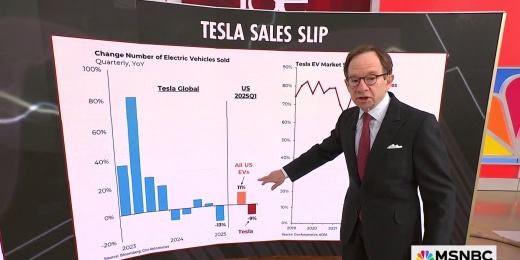
Tesla hits bump in the road as sales slip: Steve Rattner
08:39
-

‘Must stand up against this now’: Hillary Clinton shreds Abrego deportation
09:32
-

‘Public opinion is turning’: Town halls get heated over Abrego Garcia’s return
10:48
-

‘We will not be driven by fear’: ‘Good Night, and Good Luck’ director on play’s importance
07:56
-
You’re declaring war on our friends: Governor lays out impact of trade war
04:40
-
Republicans reconsider their commitment to tax cuts for the rich in Trump agenda bill
03:37
-
‘Bad for all of us’: London’s mayor rebukes trade wars, protectionism, nativism
08:10
-
The living monitor their buried loved ones in body horror film ‘The Shrouds’
06:25
-
‘Wrong on the law, wrong on the facts’: Joe slams Trump WH on Abrego Garcia
12:59
-
New book recounts Paul Revere’s dramatic ride
03:21
-
How Europe views America’s political landscape
10:07
-
Now Playing
‘We will follow the law’: Border czar Tom Homan on deportations
22:38
-
UP NEXT
Rubio warns U.S. will walk away from Ukraine peace deal if no progress made
07:46
-
‘The Carters’ looks at the impact of childhood stardom
07:28


ByDavid Rohde
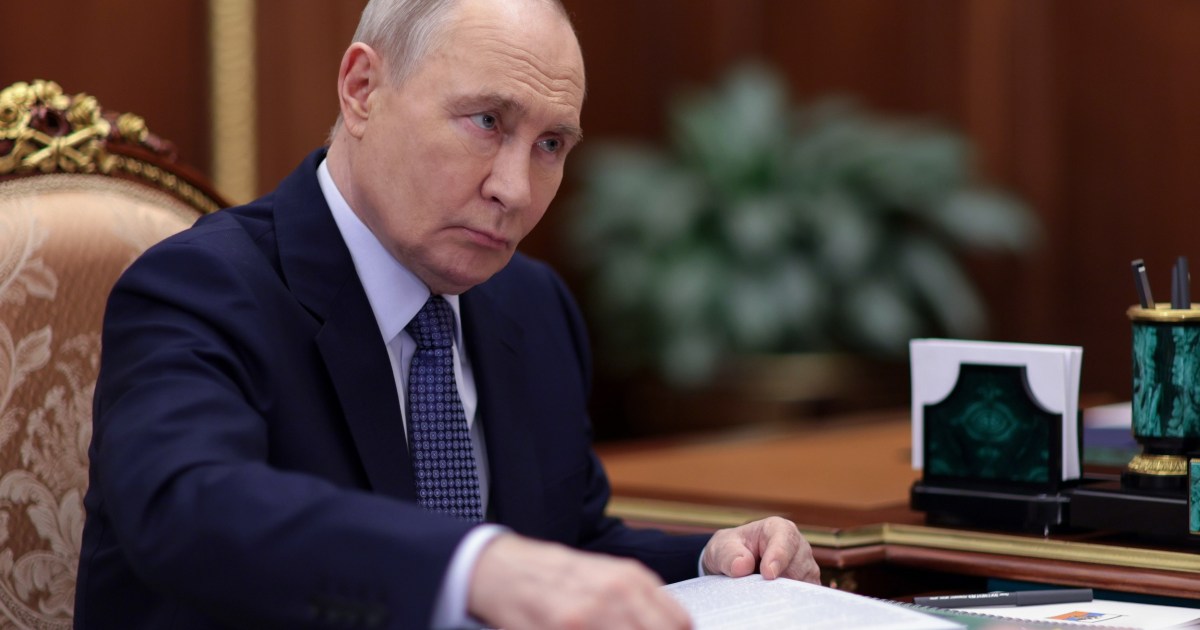
Russia has provided Iran with information that could help Iranian forces strike American ships, aircraft and bases in the region, two U.S. officials with knowledge of the matter tell MS NOW.
“Russia is providing intelligence help to Iran,” said one of the U.S. officials.
Both officials said that U.S. intelligence agencies have not uncovered evidence that Moscow is directing Iranian officials or forces regarding what to do with the information.
“I’ve seen nothing that suggests that Russia is playing a strategic or tactical combat role,” said one. Both officials spoke on condition of anonymity, citing the sensitive nature of the issue.
President Donald Trump on Friday chastised a Fox News reporter for asking him if Russia was helping Iran target U.S. forces.
“That’s an easy problem compared to what we’re doing here,” Trump said during a White House event on the future of college sports., before adding, “What a stupid question that is to be asking at this time.”
Speaking separately at the White House on Friday, Press Secretary Karoline Leavitt played down the importance of the Russian activity. “It clearly is not making any difference with respect to the military operations in Iran because we are completely decimating them,” she said.
And Defense Secretary Pete Hegsteth said in a 60 Minutes interview on Friday that President Trump is aware of “anything that shouldn’t be happening” and it “is being confronted and confronted strongly.”
He added that the Russian activity was not a concern. “We’re not concerned about that,” Hegseth said. “But the only ones that need to be worried right now are Iranians that think they’re gonna live.”
Democrats have accused Trump of failing to criticize actions that Russian President Vladimir Putin has taken against the U.S. interests and for failing to adequately support Ukraine’s effort to defend itself from Russia’s invasion.
Congressional Republicans have also expressed alarm. Rep. Michael McCaul, R-Texas, former chairman of the House Foreign Affairs Committee, told MS NOW, “Russia and Iran are locked in an unholy alliance.”
The Washington Post and The Associated Press first reported on the Russian information sharing with Iran.

David Rohde
David Rohde is the senior national security reporter for MS NOW. Previously he was the senior executive editor for national security and law for NBC News.
ByJoseph Zeballos-Roig
The U.S. economy right now is like the hero of an action movie in the last few minutes: bloodied, but resilient.
After facing everything from stubborn inflation to sweeping global tariffs to a record-breaking government shutdown, America has somehow managed to avoid a recession and soldier on. The labor market, though, is showing bruises as U.S. employers reported cutting92,000 jobs in February.
But, as in an action movie, the economy is now up against its biggest foe yet: a costly war in Iran, a regional power in the Middle East that just happens to sit next to what is arguably the world’s most critical maritime energy chokepoint.
The blows are already coming. The war is costing the U.S. an estimated $1 billion a dayaccording to two congressional sources with knowledge of the matter. Oil prices are now forecast to go higher, while gas prices have already jumped to $3.32. It’s the highest price it has reached in either of Trump’s two terms. The situation is so in flux that gas prices are poised to climb higher than that after this article is published.
The knock-on effects of increasingly expensive oil will be felt next.
The knock-on effects of increasingly expensive oil will be felt next. Higher costs for oil and gas will spread to the costs of other goods and services, particularly those relying on trucks for transportation. Higher prices for airline tickets aren’t out of the question. Grocery bills and electricity prices will also follow suit if the war drags on.
The war with Iran almost instantly wrecked forecasts for lower oil prices this year, one of the only slices of the U.S. economy that had been getting cheaper for consumers. Analysts had previously expected Brent crude to trade at about $60 per barrel in 2026. Instead, Brent crude rocketed to $93 per barrel as of Friday due to the conflict.
On Wednesday, Goldman Sachs published a worst-case scenario in which $100 per barrel of oil becomes a reality in five weeks. That was based on whether Iran managed to choke off oil shipments in the Strait of Hormuz, the Persian Gulf waterway near Iran that accounts for one-fifth of global oil and natural gas shipping. It did, and Goldman quickly updated its forecast for oil prices to cross into dreaded triple-digit territory as soon as next week.
Mark Zandi, chief economist at Moody’s Analytics, recently said“a good rule of thumb” is to assume that for every $10 per barrel increase in oil prices, the cost of a gallon of regular unleaded will rise by 25 cents. Prices at the pump usually move in tandem with crude oil, which quickly climbed after the first wave of U.S.-Israeli airstrikes that killed Iran’s supreme leader, Ayatollah Ali Khamenei.
The country’s clerical regime does have incentives to drive up global oil prices as high as possible in a last-ditch effort to ensure its survival. The Iranian military has already targetedpower plants and oil refineries in the Gulf, and the financial fallout of the war stands to get worse if nothing changes. Qatar warned on Fridayoil prices may reach $150 per barrel within three weeks if the war shuts down commercial traffic in the Strait of Hormuz.
So far, this latest war has only intensified across the Middle East. Trump has statedhe believes the U.S. will keep up its air-and-sea offensive against Iran for four or five weeks, adding, “we have capability to go far longer than that.” Indeed, Defense Secretary Pete Hegseth raised a scenario in which the war lasts eight weeks.
Trump has railed against “affordability” and even called it “a hoax”during an economic speech late last year. So it wasn’t surprising to hear him downplaya possible long-term spike in gas prices this week.
“I don’t have any concern about it. They’ll drop very rapidly when this is over, and if they rise, they rise,” the president told Reutersin a Thursday interview. Yes and no.

Even if the U.S. and Israel call off their military campaign in the next two or three weeks, gasoline prices could remain elevated for a while. Economists have named this tendency “rockets and feathers.” Gas prices shoot up like a rocket overnight. But those same prices fall delicately like a feather over many weeks.
Still, the U.S. is better able to withstand an oil shock than in the past. It enjoys a privileged position as the world’s top oil drillerso it’s not as dependent on foreign oil supplies as it was two decades ago when it launched the second Iraq War. Still, that doesn’t mean the U.S. economy is completely inoculated.
Sugar prices rosethis week with the expectation of Brazilian mills stepping up production of ethanol instead of sugar as a cheaper fuel alternative.
The Strait of Hormuz is associated with oil, but it’s also a vital arteryfor fertilizer transport. Fertilizer prices were already elevated prior to the Iran conflict, dealing a blow to American farmers coping with dwindling markets and lower crop prices.
Now their spring planting budgets face more strain due to rising prices for urea, a version of nitrogen fertilizer often used for corn. Farmers facing fresh hardship could take it out on Republicans in the November midterms.
Many companies spent the past year reshuffling supply chains to avert Trump’s double-digit tariffs. The war is jolting them anew. The top five largest container shipping firms, including Maersk, suspended their operations in the Persian Gulf, per trade analystJacob Jensen at the American Action Forum.
Instead of traveling through the Suez Canal, the companies are sending their cargo fleets around the Cape of Good Hope at the tip of South Africa. The fraught, dangerous environment caused them to add surcharges ranging from $1,500 to $3,500 per container.
The building blocks of prolonged uncertainty are all falling into place.
The building blocks of prolonged uncertainty are all falling into place. Trump remains devoted to his tariffs, which affect just about everyone in the U.S. The White House is scrambling to rebuild a 15% universal tariff regime that the Supreme Court knocked down. If the war in Iran stretches on for months, it will magnify the expected price increasesfor food, furniture and much more.
Trump continues lashing out at long-standing allies, particularly in Europe. Recently, Spain caught the brunt of his fury when the government refused to allow U.S. warplanes to use their bases for the Iran war. Trump then threatened to cut off trade with Spain, a member of NATO and the European Union. No one knows which country will land in hot water with the president next.
Still, don’t count out the U.S. economy just yet. Reports of its demise have been greatly exaggerated before. Famously, it defied a 100% probability call for a recession in 2023 made by Bloomberg Economics models.
Only time will tell if the economy keeps going despite sustaining so many body blows, or if it’s knocked down by another war in the Middle East. The longer the war goes on, though, the harder it will be to stay standing.

Joseph Zeballos-Roig
Joseph Zeballos-Roig is a reporter who has covered economic policy and politics for Semafor, Business Insider and Quartz, among other publications.
How are you?
When you live with a chronic disease, this everyday question can feel like a trap.
“Does this person really want to know how I’m doing — or is she just being polite?” you wonder. If you opt to share the actual truth, is the nascent conversation going to screech to an uncomfortable halt?
As someone who has lived with multiple sclerosis for a decade, when I’m asked this question, I usually say I’m fine, even if I’m not. There’s a great deal of pressure on folks with chronic illnesses to feign wellness so we don’t make people regret speaking with us.
There’s a great deal of pressure on folks with chronic illnesses to feign wellness so we don’t make people regret speaking with us.
Yet there are many days when this incurable, degenerative autoimmune disease makes me most definitely not fine, like during hot and humid summer months when the areas of my brain that MS damaged make me ill. Or when my MS fatigue — imagine you’re a smartphone that suddenly can’t hold a charge — renders me unable to function or think properly.
This is why Emmy-winning actor Christina Applegate’s candid descriptions of how she’s faring with her MS make me feel seen and understood. During the publicity tour for her new memoir, “You with the Sad Eyes” — released during MS Awareness Month — Applegate has said that sharing the difficult truths about the effects of the disease, refusing to sugarcoat it, is her goal.
In an interview, People magazine described the “Dead to Me” and “Anchorman” star as needing to lie in bed most days because of physical pain from her condition. “People’s lives … f–––ing suck sometimes,” Applegate said. “So I’m being as honest and raw as I possibly can.”
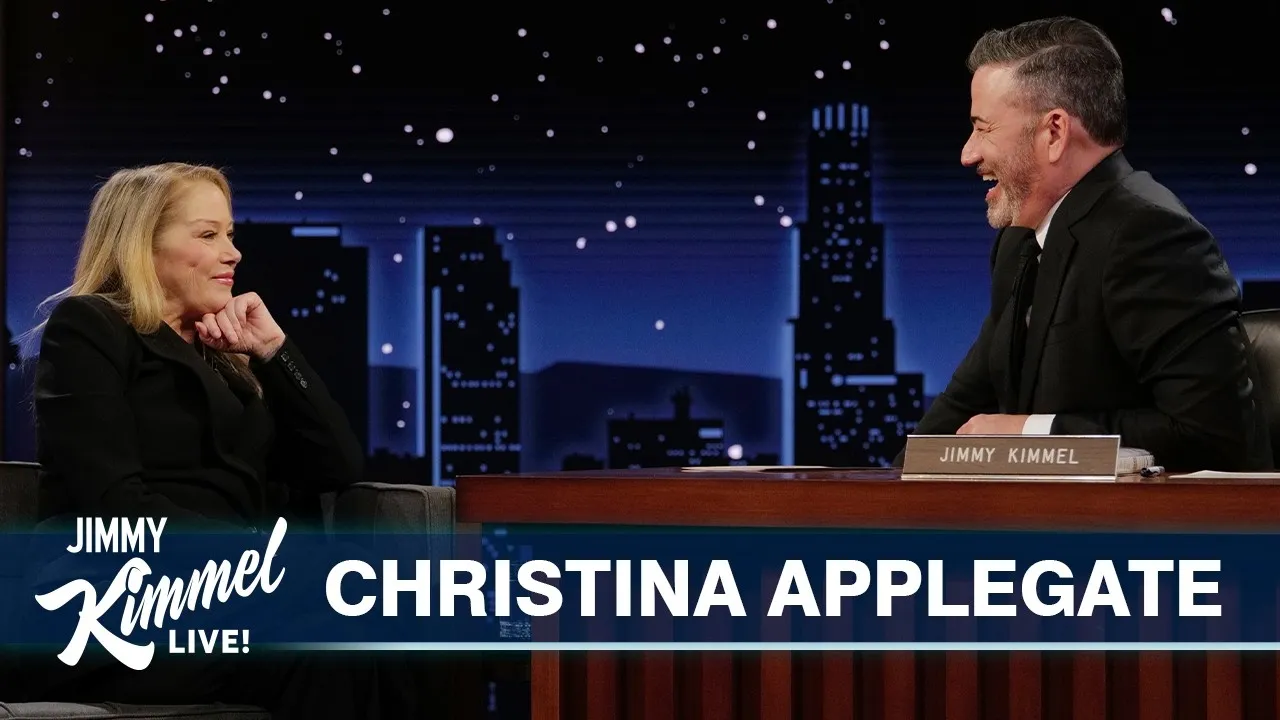
In an appearance on “Jimmy Kimmel Live,” Applegate also discussed her launch of a web platform for people with MS. “There’s got to be more communities that are not, like, sentimental and weird. I’m weird. … Let’s talk weird about MS.” In a promo video for the site, Next In MS, she promised to share everything from “honest conversations about the ugly truths to the real, genuine wins.”
“Yes,” I thought, “more of Applegate’s brand of honesty, please.”
To be fair, she’s been doing this honesty thing since March 2024, when she launched the podcast “MeSsy” with fellow actor and MS patient Jamie-Lynn Sigler. They’ve discussed topics like parenting children when you’re exhausted and in pain, and struggling with your sense of self-worth when the disease strips you of the ability to do the things you want to do. Their first episode was aptly titled “How Are You?”
For someone of Applegate’s stature not only to raise awareness about what MS is — a disease of the central nervous system that affects an estimated 1 million people in the United States and almost 3 million globallyaccording to the National Multiple Sclerosis Society — but also to be so candid about it gives people who aren’t famous permission to speak with more candor. When people hear about the impact of MS on a celebrity, that creates a foundation of understanding on which MSers can build with our friends and family.
In a recent interview on “Good Morning America,” host Robin Roberts asked Applegate if she’s still grieving her 2021 diagnosis. The actor said that the disease still does “suck,” and that none of the people she knows with MS would ever say that they’re “great.”
“Where am I with acceptance? Not at all. I hate it.”
“There is no ‘great,’” she said. “There’s a better day and a less s––––y day. … Where am I with acceptance? Not at all. I hate it.”
This wasn’t a “woe is me” response. It was real. It was something I’d say if I was being truthful about living with relapsing remitting MS during summer days when I’m trapped inside air-conditioned spaces so I don’t become nauseated, lose limb strength or become cognitively fuzzy as my vision becomes impaired. It. Sucks.
And thanks to Applegate’s frankness, whether in her book or in the spaces she is helping us build as a community, perhaps I’ll be able to muster the courage to answer the question “How are you?” a little more honestly next time.
Meredith O’Brien is the author of six books, including a memoir, “Uncomfortably Numb: A Memoir about the Life-Altering Diagnosis of Multiple Sclerosis,” and “Uncomfortably Numb 2: An Anthology for Newly-Diagnosed MS Patients.” She is a trustee for the Greater New England Chapter of the National Multiple Sclerosis Society.
- Russia gave Iran information that could harm U.S. forces, officials say

- America can’t afford Trump’s war with Iran for long
- Christina Applegate’s honest answer to the worst question you can ask

- Jeanine Pirro’s failure to indict Biden speaks to something bigger
- Pam Bondi’s in trouble with Republicans on Capitol Hill
- Israeli strikes pound Iran and Lebanon as USA warns attacks will intensify…

- Criticism of media coverage of US casualties has long history

- The rural Democrats who say their party has affordability all wrong
- Gonzales is out in Texas, and Dems see a chance to beat ‘The AKGuy’
- Trump calls on Iran to surrender and rules out talks as Israel bombs Lebanon

-

 The Dictatorship1 year ago
Luigi Mangione acknowledges public support in first official statement since arrest
-

 Politics1 year ago
Former ‘Squad’ members launching ‘Bowman and Bush’ YouTube show
-

 Politics1 year ago
Blue Light News’s Editorial Director Ryan Hutchins speaks at Blue Light News’s 2025 Governors Summit
-

 The Dictatorship6 months ago
Mike Johnson sums up the GOP’s arrogant position on military occupation with two words
-

 Politics1 year ago
Former Kentucky AG Daniel Cameron launches Senate bid
-

 The Dictatorship1 year ago
Pete Hegseth’s tenure at the Pentagon goes from bad to worse
-
Uncategorized1 year ago
Bob Good to step down as Freedom Caucus chair this week
-

 Politics11 months ago
Democrat challenging Joni Ernst: I want to ‘tear down’ party, ‘build it back up’