
Politics
‘We know what is coming’: Federal bureaucrats wrestle with fight-or-flight response to Trump election

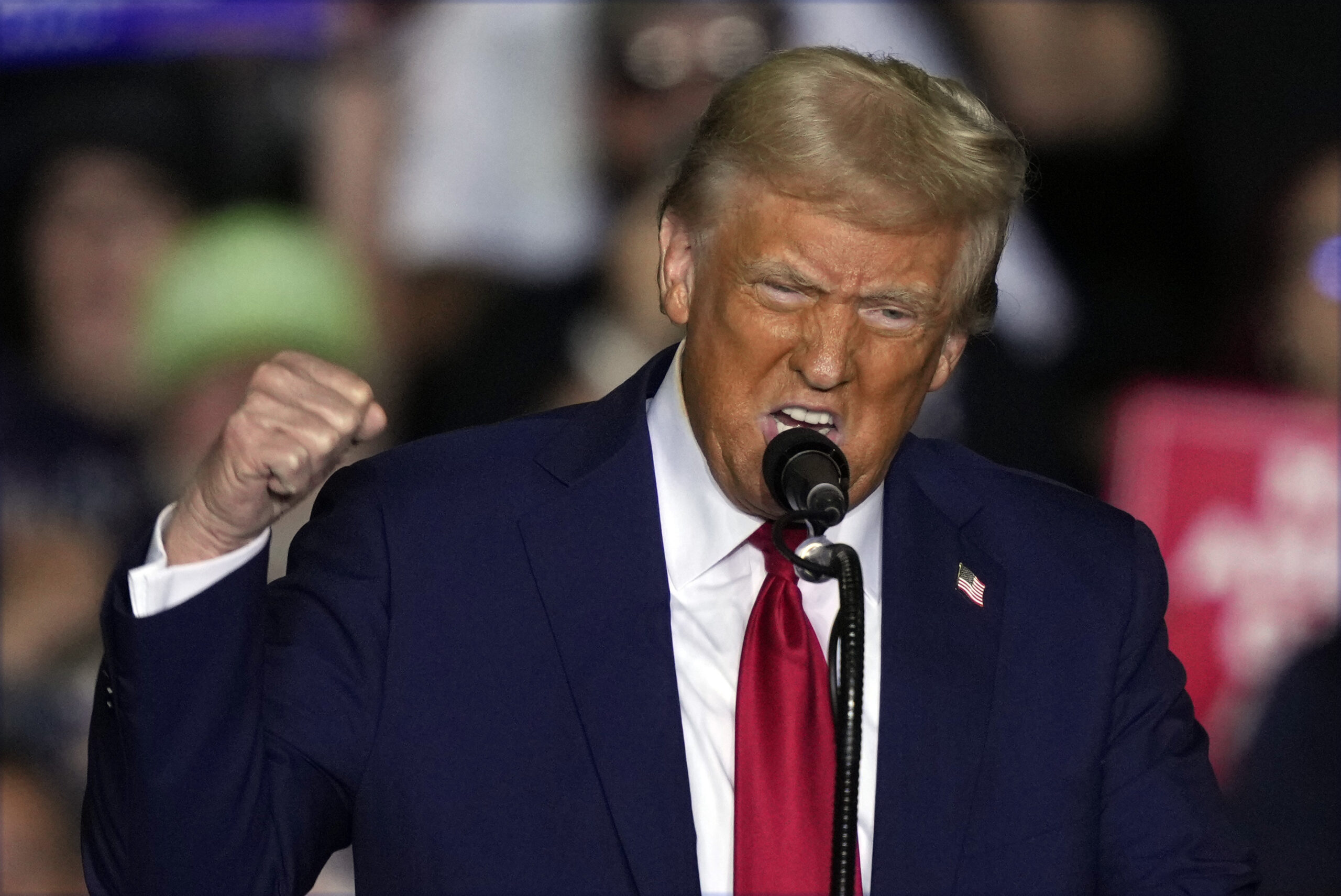
Thousands of federal bureaucrats have lived through one Donald Trump administration. Many are not sure they can or will survive a second.
Blue Light News spoke with more than a dozen civil servants, political appointees under President Joe Biden and recently departed Biden administration staffers in the days since the presidential election was called for Trump, who were granted anonymity due to the sensitivity of the topic and the risk to their jobs. Many are bracing for a wave of departures from key federal agencies in the coming months, amid fears that the next president will gut their budgets, reverse their policy agendas and target them individually if they do not show sufficient loyalty. The result is likely to be a sizable brain drain from the federal workforce — something Trump may welcome.
“Last time Trump was in office, we were all in survival mode with a hope for an end date,” said one State Department official. “Now there is no light at the end of the tunnel.”
The former president and his allies are deeply distrustful of the executive branch bureaucracy and the more than 2 million civil servants who staff it — blaming a federal “deep state” for trying to undermine him in his first term and driving the impeachment efforts against him. As president, Trump named political appointees to various agencies with the purpose of cleaning house — and will again have the chance to nominate people for roughly 4,000 political jobs throughout the administration. In 2021, his White House launched an effort to make it easier to fire civil servants and replace them with political appointees, something he is expected to restart when he returns in January. He’s also threatened to move thousands of federal jobs outside D.C.
Trump-Vance Transition spokesperson Karoline Leavitt did not reply directly to a query about the future of the federal workforce, saying, via email, “President-Elect Trump will begin making decisions on who will serve in his second Administration soon. Those decisions will be announced when they are made.”
Trump’s policy agenda is also at odds with core priorities for a number of agencies under Biden.
Several of Biden’s political appointees at Department of Transportation headquarters near Washington’s Navy Yard were despondent at the prospect of a new Trump administration set on undoing much of their work over the past four years, including airline consumer protections and massive investments in infrastructure.
“There’s a lot of anxiety among Biden appointees, like myself, who need to find new jobs — and also among career staff who are worried about Trump trying to remove career civil servants who had a policymaking role,” a DOT official told Blue Light News.
“I am glad that I am retiring soon. … EPA is toast,” said a staffer at the Environmental Protection Agency, whose efforts to fight climate change clash with Trump’s “drill, baby, drill” approach to energy policy.
A number of officials, however, are wrestling with the conflicting desire to stay in government and defend the mission of the agencies they work for.
“We do our best to make sure either administration does what’s legal,” said a Department of Homeland Security staffer in a legal office. “If I leave, I’d be replaced with an enabler.”
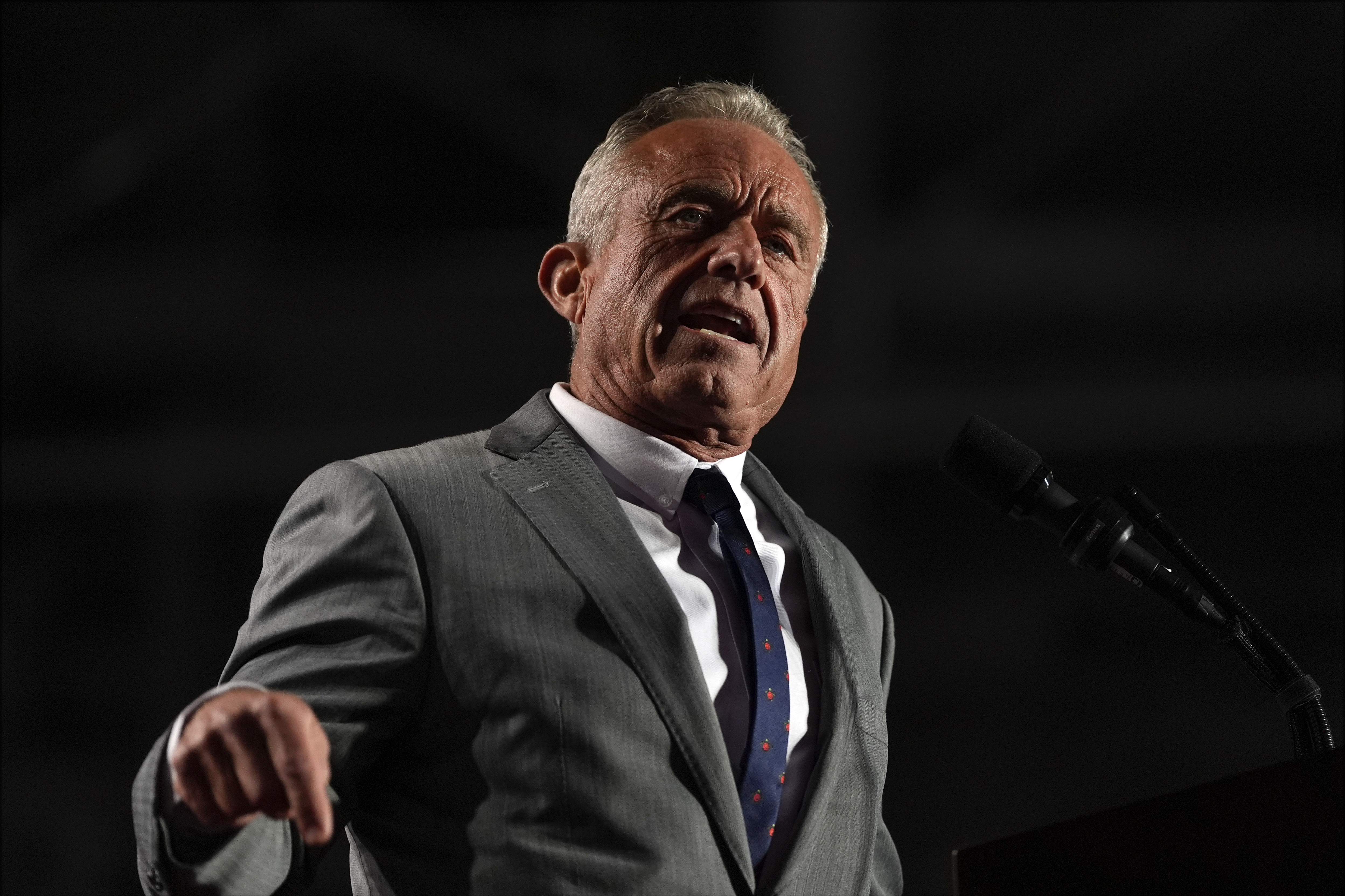
The alarm over Trump’s return is particularly palpable among national security officials, environmental agencies and the federal health agencies, who fear the president-elect will follow through on his pledge to let noted vaccine skeptic Robert F. Kennedy Jr. “go wild on health.”
In his victory speech early Wednesday morning, Trump reiterated that promise. “He’s going to help make America healthy again. … He wants to do some things, and we’re going to let him get to it,” Trump said.
On Wednesday, Kennedy made the rounds on radio and television, saying that he would not seek to halt vaccinations.
Still, one current staffer at the National Institutes of Health said concerns are building inside the research agency about the future of vaccine research in the next administration.
NIH Director Monica Bertagnolli seemed to hint at those fears in an email sent to agency staff Wednesday that was shared with Blue Light News.
“With the 2024 election day now behind us, I want to acknowledge that change can leave us feeling uncertain,” she wrote.
“I do not want to dismiss those feelings, but I do want to remind everyone that throughout our 137-year history, the NIH mission has remained steadfast, and our staff committed to the important work of biomedical research in the service of public health.”
A former Food and Drug Administration official told Blue Light News on Wednesday that Kennedy’s assertions that he would have heavy influence over health agencies during Trump’s second term is raising the risk of career staff departing the agency responsible for drug oversight and food safety.
“The agency personnel are concerned, especially in light of Robert F. Kennedy Jr.’s statements and his potential role at the agency,” said the former official. “The reality of that is something the agency has to grapple with.”
“They’re worried, they’ve been through transitions before so they clearly understand how to do that, but they read the news, the same as you and me,” said a separate former senior FDA official. “I think it’s a lot of RFK-driven stuff.”
Staffers at the Centers for Disease Control and Prevention also fear that under Trump, the public health agency — so central to the Covid-19 response — has “a target on its back,” as one person who works with the agency said.
Republicans have outlined clear plans for changes to the CDC — including the Heritage Foundation’s Project 2025, which includes ambitions to split the agency into two. (The Trump campaign has insisted that Project 2025 isn’t its official policy.) And many conservatives, including Trump’s former FDA commissioner, have argued that the CDC should narrow its scope to focus mainly on disease control.
“What is very clear is that in 2016, Trump was completely unprepared, and now he has a plan, and public health is right smack in the middle of it,” the person said.
A national security analyst who recently left the Biden administration shared similar fears and said having lived through a previous Trump administration, many civil servants are even more wary of working for a second one.
“People are sad and frightened. And what makes it worse is this time we know what is coming. It isn’t theoretical. It is real,” the analyst said.
“At State in particular, it is going hard to overstate how targeted people, career officers will be,” they said. “There will be no grace.”
Not everyone shared that bleak outlook. “I actually don’t see the freak-out yet, maybe it will come when the transition begins in earnest, but the folks I’ve talked to seem to have a pretty sober take that Trump’s victory means we carry out his policies,” said another State Department official. “If people disagree with those policies, nobody will hold anything against anyone that opts to leave.”
One Health and Human Services official who has worked under both Republican and Democratic administrations told Blue Light News that while individual employees are freaking out about the election results, the overall vibe of her office this week is: “Business as usual. Keep on working. It is what it is.”
She is trying to find a glimmer of hope in the Trump administration’s mixed record on health care.
“There are sometimes weird synergies,” she said. “Like under the first Trump administration, Scott Gottlieb was a very strong tobacco control advocate, and the Center for Tobacco Products was actually able to do more than they could under the Obama administration.”
“So I’m asking myself: Are there pathways to work with people that you disagree with and despise?”
Michael Doyle, Kevin Bogardus and Hannah Northey contributed to this report.


Haley Stevens is highly visible in the wake of her Senate primary loss: Meeting with the Dalai Lama, crashing “TMZ Live” with her new fiancee, getting spoofed on The Tonight Show with Jimmy Fallon.
One place she hasn’t been spotted: alongside her former rival Abdul El-Sayed.
Even though the representative quickly endorsed El-Sayed after their bruising Aug. 4 primary, she’s done little to help him since. That absence is becoming more conspicuous in the closing weeks of a crucial Senate contest, as some of her old supporters continue to vocally resist backing him.
In an interview, Stevens said El-Sayed is building a “new coalition” in the race against GOP former Rep. Mike Rogers — and suggested it’s not her place to push some of her more skeptical supporters into joining it.
When asked if she was encouraging her former donors to help El-Sayed, she said she believes her role this election is to “be part of the coordinated campaign, support where I can,” mentioning Michigan House races. When asked again if she would push donors to back him, she responded: “That’s Elissa’s thing,” referring to Sen. Elissa Slotkin (D-Mich.), who has been fundraising for El-Sayed. “I didn’t win a Senate primary,” she continued. “It’s not like a salty grapes deal or anything.”
Stevens said she’d checked in with El-Sayed’s team, but hadn’t met with the candidate himself recently because she’d been traveling.
“There’s changing dynamics, and there’s a new coalition that Abdul has built, and some people are a die-hard part of it, and some people are not. We’re seeing some constituent community pain coming out,” Stevens said, referencing resistance to El-Sayed among some Black and Jewish voters who backed her in the primary.
“Rogers is working the Black community harder and more successfully than we have ever seen a Republican do or at least that I can remember — ever,” Stevens said.
“But we’re also seeing Abdul go up to the UP [Upper Peninsula] and we’re seeing him fill venues in rural Michigan and it’s very real in terms of this coalition he’s built,” she added.
El-Sayed ran particularly strongly during the primary with young voters and in the state’s large Arab-American community, as well as in some rural, more populist parts of the state, and is working hard to expand that coalition in the general election.
Stevens’ remarks come as some of her former backers and financial boosters continue to publicly withhold support from El-Sayed and in some cases openly embrace his Republican rival. The ruptures are most visible among the Jewish and Black communities that largely broke for Stevens, and point to enduring friction within Michigan Democrats’ traditional coalition after a bitter primary that she could be in a unique position to mend.
Debbie Rosenman, the chair of Birmingham-Bloomfield Area Democratic Party Club in Stevens’ backyard and an El-Sayed supporter, said Stevens has been “absent” on the trail and said she was “very concerned” her coalition is not coalescing around El-Sayed.
“I feel that that could change with more of her public support,” Rosenman said.
El-Sayed’s campaign said the former rivals’ teams keep in close touch and noted several Stevens staffers joined the nominee’s team after the primary.
“The Abdul campaign is grateful for Congresswoman Stevens’ immediate and sustained support,” El-Sayed campaign spokesperson Roxie Richner said in a statement.
El-Sayed has worked to repair relationships with Black and Jewish leaders. He has endorsements from several of them and is campaigning with prominent Democrats from both communities, including former President Barack Obama and former Vice President Kamala Harris and Slotkin, who is Jewish. He has made more than two dozen visits to Black churches and participated in more than 100 events and meetings with Black leaders, according to his campaign. He has hired a liaison to the Jewish community, keeps in regular contact with Jewish leaders and has apologized for his controversial remark after a synagogue attack in West Bloomfield in the spring that “hurt people hurt people.”
“I take very seriously that I’m going to represent a large community of Jewish Michiganders, and I want them to know that I’m committed to their safety and their well being, even if there are points in foreign policy on which we might disagree,” El-Sayed said in an interview.
Not everyone has come around.
David Kramer, Stevens’ primary campaign chair and a vice chair of the Michigan Democratic Jewish Caucus who introduced Stevens to her fiance, is now working with Nonnegotiable Michigan, a group of Jewish leaders who have pledged to withhold their support from El-Sayed unless he adjusts his approach to Israel.
Kramer, a prominent Democratic fundraiser in the state who has also previously worked with Slotkin and Gov. Gretchen Whitmer, told Blue Light News he’s not tapping his donor network for the general election and estimated he’s left upward of seven figures on the table that he could have raised to boost El-Sayed.
Brian Hermelin, a normally Democratic donor who backed Stevens in the primary and leads the Jewish Federation of Detroit, co-hosted a fundraiser for Republican nominee Mike Rogers shortly after the primary that raised roughly $200,000.
Rogers’ campaign has attempted to capitalize on those cracks by launching a “Democrats for Mike Rogers” group and making overtures to Jewish and Black voters. Bobby Schostak, a former Michigan GOP chair who is serving as Rogers’ finance chair, estimated the Republican’s campaign has brought in roughly $3 million to $4 million since the primary from “nontraditional Republican donors” across the country, including Democrats.
“The Democratic Party is still divided,” said Democrat Mary Waters, a Black Detroit city councilor who’s met with both El-Sayed and Rogers but remains undecided. “People are still so torn about what it is that they want to do.”
Joe Tate, a Black state representative from Detroit who supported Stevens, acknowledged there has been some lingering apprehension around El-Sayed. But he said Stevens’ endorsement of El-Sayed helped convince him to back the candidate and predicted Democratic voters would largely stand by their party, too.
El-Sayed’s donor network may look different from Stevens’, but he’s still posted big numbers. He raised nearly $33 million from July through September, which included some raised before the Aug. 4 primary, compared to Rogers’ nearly $10 million, and has been outspending Rogers on the airwaves.
Some of El-Sayed’s prominent surrogates have also taken steps to court apprehensive Democrats. Jewish leaders like former Rep. Andy Levin, a former synagogue president who Stevens defeated in a 2022 primary, are holding house parties with voters coordinated by the grassroots group Michigan Jews for Democracy. Slotkin has privately pressed senators and donors to boost El-Sayed’s bid.
That includes hosting a fundraiser for El-Sayed in Washington, D.C., in late September with donors who she described as initially “skeptical” of the nominee.
“I talked to them about why I thought it was important and how I don’t agree with Abdul on everything … but we agree on the really important things, and that’s putting a check and balance on this president,” Slotkin told Blue Light News in a brief hallway interview on Capitol Hill the next day. “And they donated.”
Republican Senate candidates are hurting for cash.
Nearly every Democratic candidate in battleground Senate races outraised their GOP opponent from July through September. And in some cases, the disparities were stark.
- In Texas, Democrat James Talarico trounced Republican Ken Paxton $60.2 million to $10.2 million in their main campaign accounts.
- In Georgia, Democratic Sen. Jon Ossoff raised $33.1 million to Rep. Mike Collins’ nearly $2.8 million.
- In North Carolina, Democrat Roy Cooper raised $12.2 million to Michael Whatley’s $2.1 million.
- In Michigan, Democrat Abdul El-Sayed hauled in roughly $33 million to former Rep. Mike Rogers’ nearly $10 million.
- In Maine, Democrat Troy Jackson raised $20.5 million to GOP Sen. Susan Collins’ $5.2 million.
- In Ohio, Democratic former Sen. Sherrod Brown hauled in $23.1 million to GOP Sen. Jon Husted’s $4.8 million.
- In Iowa, Josh Turek raised $13.9 million to Republican Rep. Ashley Hinson’s nearly $3.3 million.
- In Alaska, Democratic former Rep. Mary Peltola raked in $17 million to GOP Sen. Dan Sullivan’s nearly $2.7 million.
- In New Hampshire, Democratic Rep. Chris Pappas brought in $8.1 million to Republican former Sen. John E. Sununu’s $1.5 million.
- And in Kansas, Democrat Adam Hamilton raised nearly $9.9 million to GOP Sen. Roger Marshall’s just $866,000.
Across those 10 Senate races, the Democratic campaigns raised more than five times as much as the Republican ones. Put another way: Talarico alone raised more than all those Republicans combined.
Marshall and Whatley each started October with less than $1 million left in the bank. Mike Collins wasn’t much better-positioned, entering the final weeks of the election with just over $1 million cash on hand.
These numbers do not include joint fundraising committees, which allow candidates to raise money and may have some more cash that has not yet been transferred to the campaigns.
Democrats have consistently outraised Republicans on the candidate level this cycle. But the yawning gaps heading into the midterm’s home stretch stand as the latest example of the deteriorating environment for the GOP.
And while GOP outside groups have significantly more money than Democrats, this candidate cash advantage matters because candidates get TV ads for much cheaper rates, letting their dollars stretch much farther.
To underscore how lopsided some of these figures are: At least half a dozen House Democratic challengers raised over $3 million in the third quarter — a sum higher than several GOP Senate incumbents.
There are some silver linings for the GOP.
In Minnesota, Republican Michele Tafoya raised $4.9 million to Democratic Lt. Gov. Peggy Flanagan’s $4.3 million. Tafoya started the month with $2.1 million to Flanagan’s $1.5 million.
Sullivan, Husted, Hinson, Rogers and Susan Collins all entered October with millions more in cash on hand than their Democratic opponents.
And Republicans are getting air cover from GOP super PACs bankrolled by billionaire Elon Musk and President Donald Trump’s MAGA Inc. that have pumped hundreds of millions of dollars into the midterms in recent weeks.
Musk was revealed on Thursday as the primary funder of Texas PAC, which has spent $131 million so far boosting Paxton and attacking Talarico. Musk gave $158 million to Senate Republicans’ super PAC arm last quarter, the filings showed, with the group in turn transferring the funds to the pro-Paxton PAC.
Republicans are also benefitting from a recent Supreme Court ruling that allows party committees to spend unlimited sums in coordination with candidates, allowing the National Republican Senatorial Committee to offset at least some of the differences.
Since the tranche of reports filed Thursday only cover until Sept. 30, the full scope of each candidates’ coffers is unknown.
But there are other signs that some are strapped for cash in the final sprint: Whatley has gone dark on television, a clear indication of him running low on funds even as his campaign insists it’s a temporary pause.
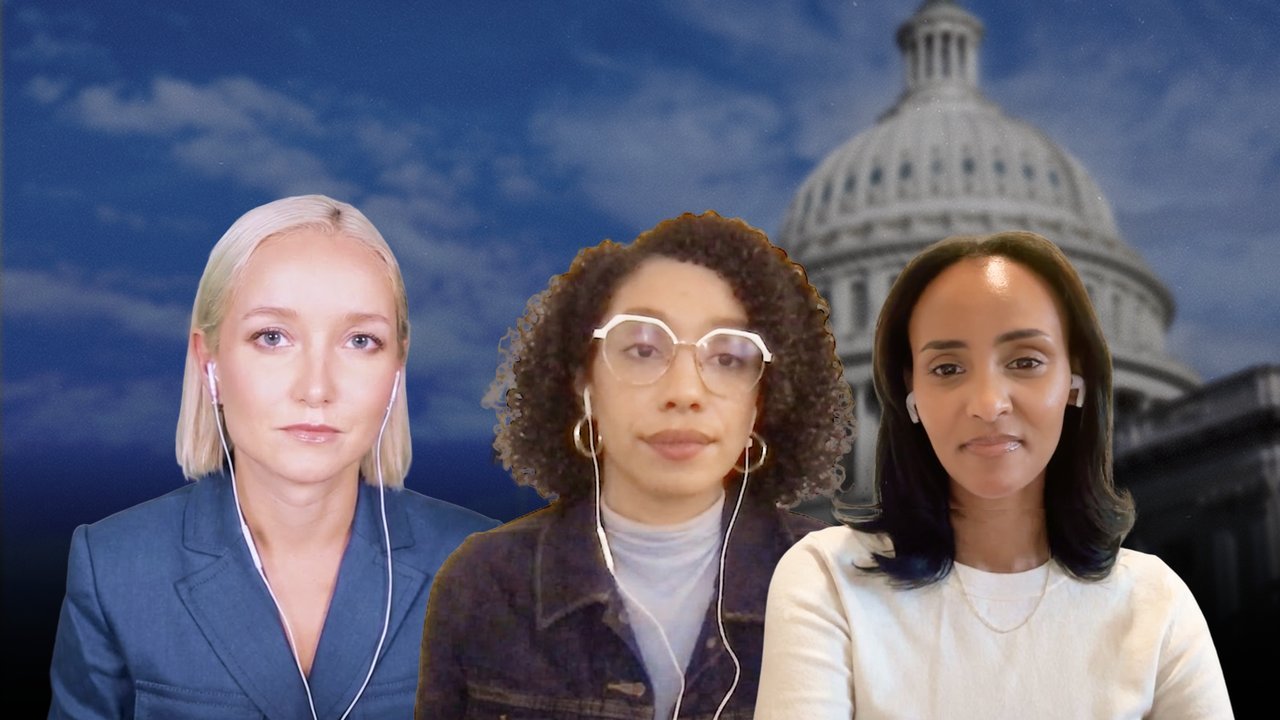
Inside the democratic socialists’ plan to shake up Congress
lead image
- Internal FEMA memo reveals plans to curb states’ reliance on federal aid
- House Democrat introduces bipartisan bill to block Trump’s Russian diesel deal
- A vulnerable Republican takes on both parties over immigration
- RFK Jr. and his allies are standing by Russell Brand as the comedian’s rape trial begins
- Haley Stevens is everywhere — except on the trail for El-Sayed
- No one wants to be on the Senate Ethics Committee
- Senate Republicans are getting smoked in fundraising
- Inside the democratic socialists’ plan to shake up Congress

- Trump lashes out at Republicans as Ken Paxton struggles in Texas
- Trump’s defense dreams are on life support
-

 Politics2 years ago
Former ‘Squad’ members launching ‘Bowman and Bush’ YouTube show
-
Uncategorized2 years ago
Bob Good to step down as Freedom Caucus chair this week
-

 The Josh Fourrier Show2 years ago
DOOMSDAY: Trump won, now what?
-

 The Dictatorship2 years ago
Pete Hegseth’s tenure at the Pentagon goes from bad to worse
-

 Politics2 years ago
Former Kentucky AG Daniel Cameron launches Senate bid
-

 The Dictatorship2 years ago
Luigi Mangione acknowledges public support in first official statement since arrest
-

 Politics2 years ago
Blue Light News’s Editorial Director Ryan Hutchins speaks at Blue Light News’s 2025 Governors Summit
-

 The Dictatorship1 year ago
Mike Johnson sums up the GOP’s arrogant position on military occupation with two words