
Congress
‘We are facing an existential crisis’: Redistricting rocks the race for the nation’s bluest House seat

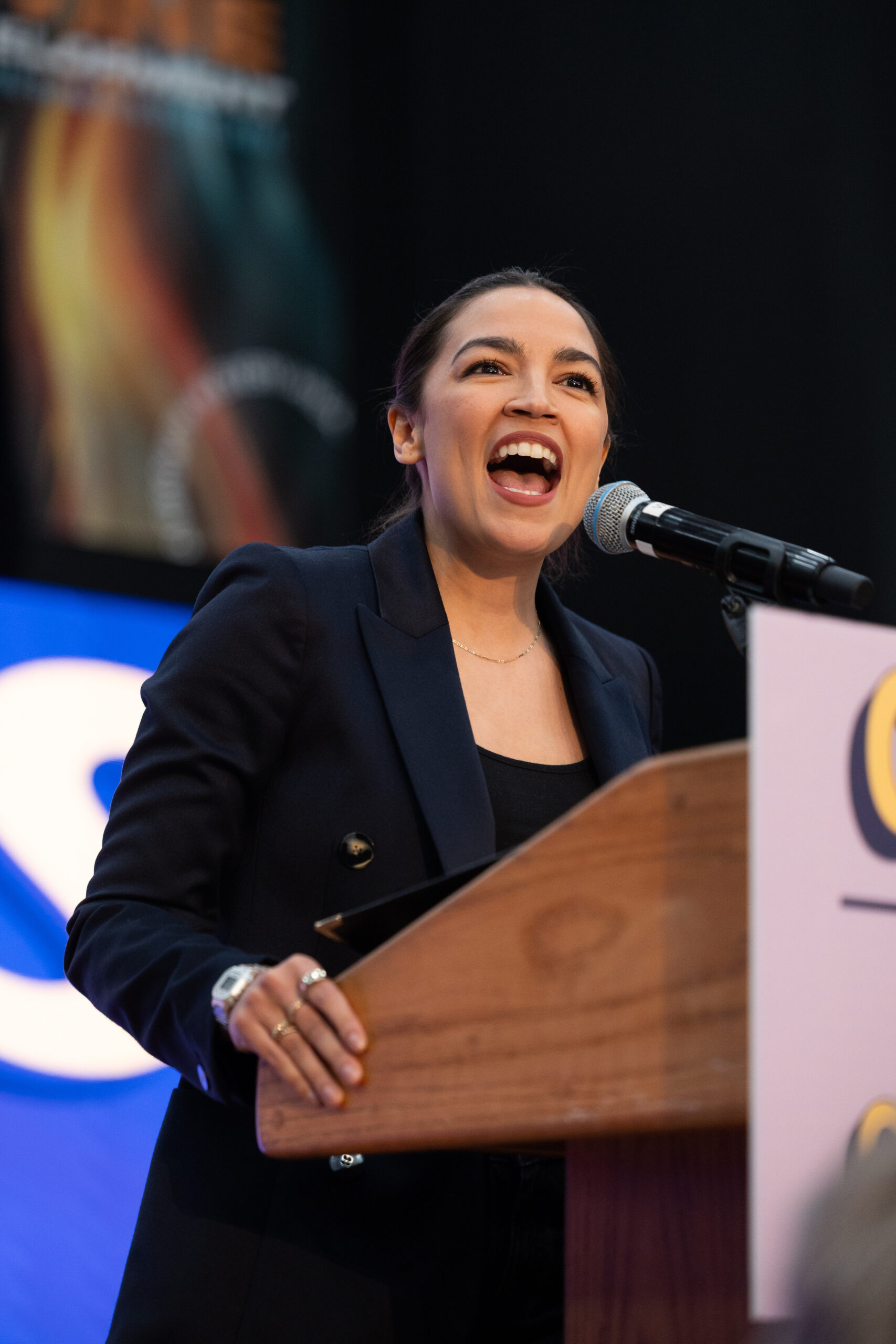
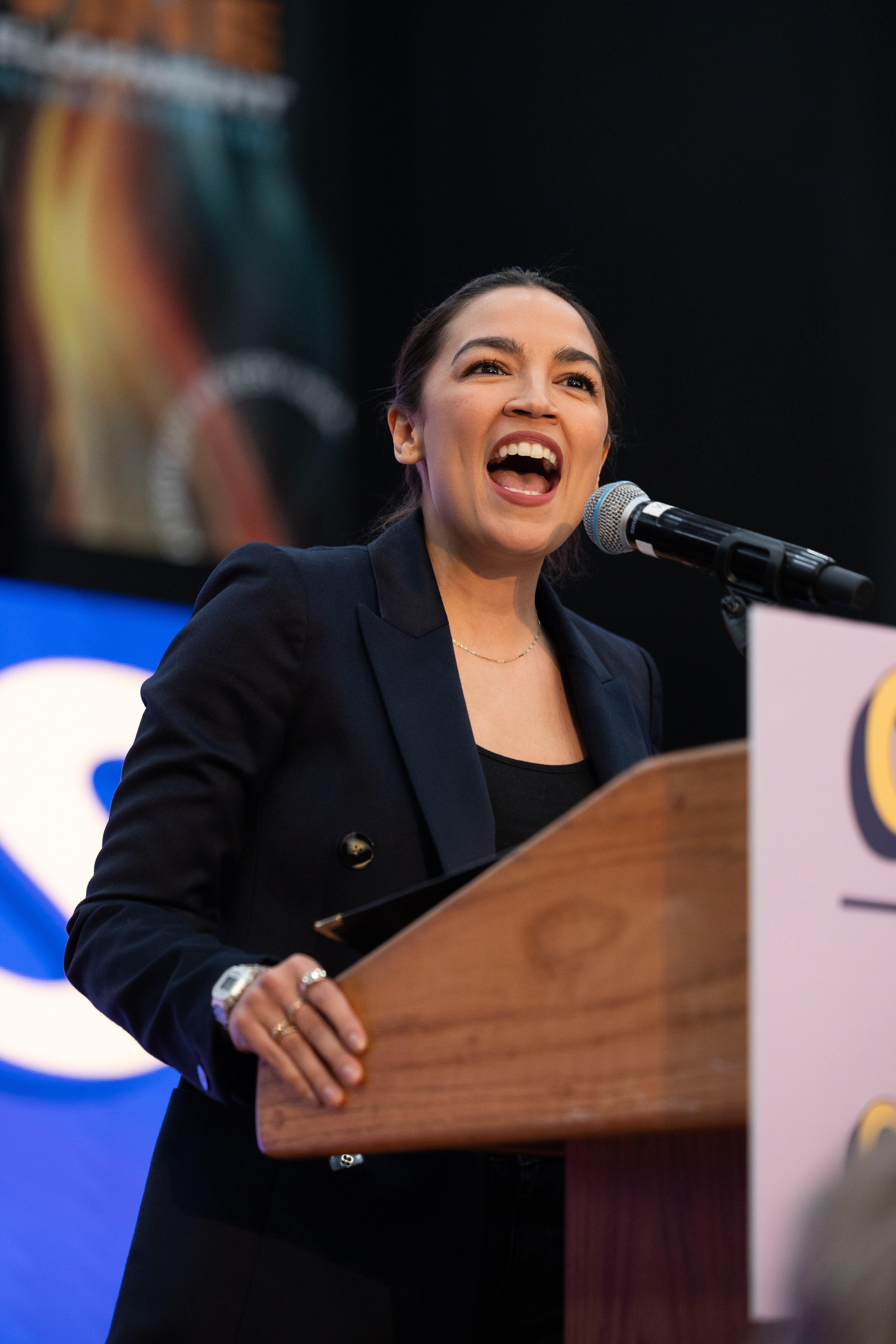
PHILADELPHIA — Rep. Alexandria Ocasio-Cortez’s voice boomed over the crowd of progressive activists that had packed the pews and lined the walls of a North Philadelphia church. “The very foundations of our democracy are being shaken with the attacks on the Voting Rights Act,” the New York Democrat warned.
But Ocasio-Cortez pointed to hope for resistance in a “city of abolitionists and organizers,” where “somebody in each generation refused to accept the world as it was.” For her, that meant supporting congressional candidate Chris Rabb, who she was rallying alongside Friday.
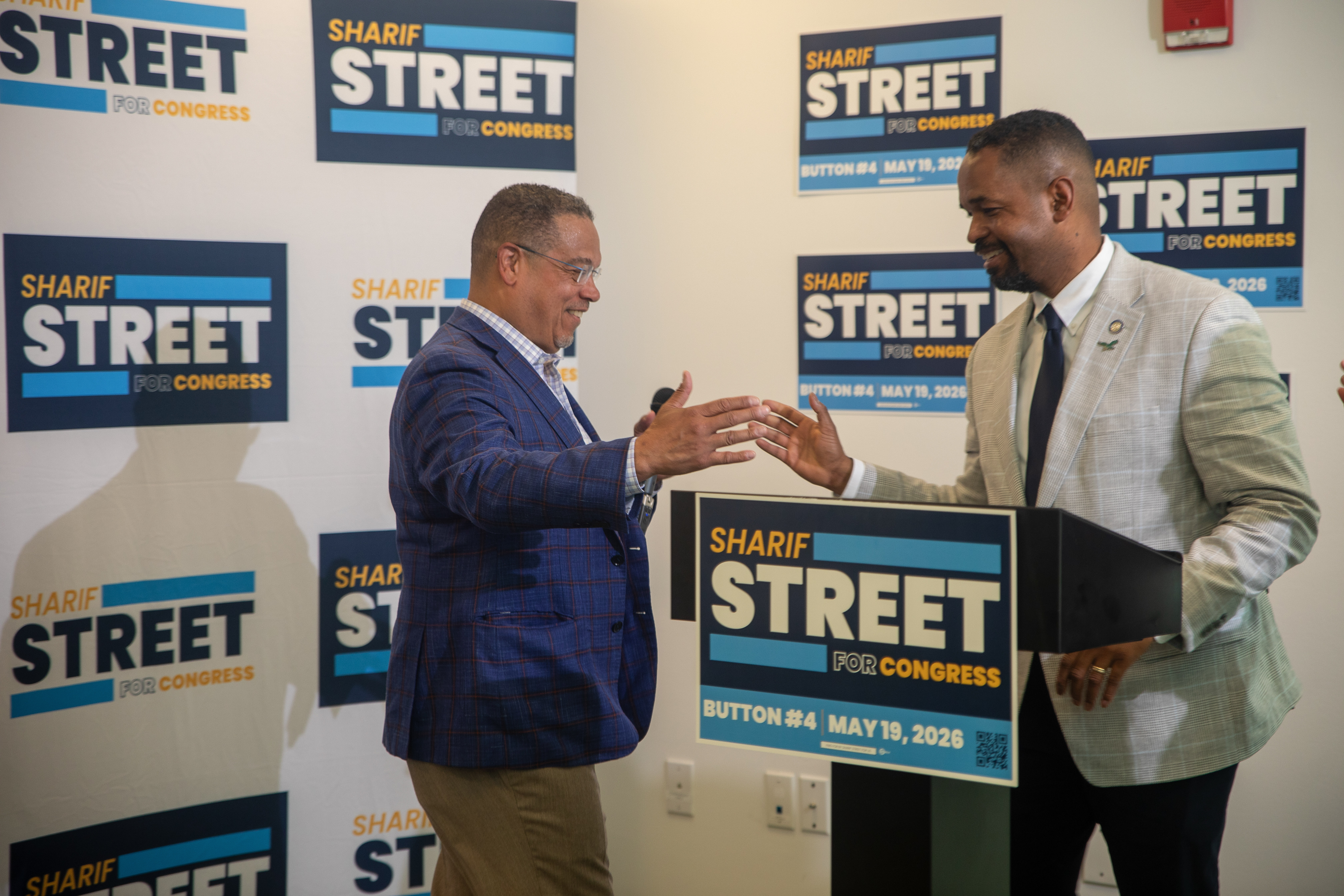
A day earlier, in a too-hot conference room near City Hall, Minnesota Attorney General Keith Ellison made a similar appeal to a couple dozen community leaders — about Sharif Street.
“You saw what they just did with the VRA. They’re not done,” said Ellison, a former House member, as sweat beaded on his forehead. “The time requires not just inspirational leadership. And it sure requires principled leadership. And in Sharif we have both.”
Republicans’ rush to erase majority-Black seats across the South after the Supreme Court weakened the VRA has turbocharged the primary for an open congressional seat in this northern city long at the forefront of the civil rights movement. The crowded race to replace retiring Rep. Dwight Evans in the 3rd District, which spans from South Philadelphia to Chestnut Hill and is the bluest in the country, has divided Philadelphia and Pennsylvania Democrats. And it has fueled a family fight within the Congressional Black Caucus (CBC), with some members choosing sides between the three Black candidates in Pennsylvania’s sole majority-Black district.
Red-state gerrymanders threaten to force up to one third of the 63-member caucus from office, including some of its longest-tenured and most influential leaders like Reps. Jim Clyburn (D-S.C.) and Bennie Thompson (D-Miss.). It’s a major challenge to one of the most powerful voting blocs in Congress and a pillar of the Democratic Party, just as one of its own, House Minority Leader Hakeem Jeffries (D-N.Y.), could ascend to the speakership if Democrats retake the chamber. And it comes at a time when the CBC was already facing generational and ideological divides, with younger members and candidates pushing to inject fresh vigor into an aging caucus that has long been deferential to seniority.
The upheaval has placed outsized importance on primaries that could impact Black representation in Congress. The Congressional Black Caucus PAC is playing a role in several of these races by backing Black candidates, throwing its support behind former Rep. Colin Allred against Rep. Julie Johnson in a high-profile Texas runoff, and endorsing first-time candidate Lauren Babb Tomlinson in a crowded field that includes independent Rep. Kevin Kiley in California’s redrawn 6th District. It has stayed out of another redistricting-created fight, a generational member-on-member battle in Texas between Black Reps. Christian Menefee and Al Green.
“The CBC is and will always be the conscience of Congress. Our members share the core values of protecting and preserving voting rights, creating an affordable America with opportunity for all, and defeating the extremist politics of Donald Trump and MAGA Republicans,” said Chris Taylor, a spokesperson for the Congressional Black Caucus PAC. “We will win in November and further the people’s agenda.”
And it has ratcheted up the stakes late in the game in Philadelphia, where Democrats were already warring over who best meets the moment.
“We are facing an existential crisis,” said Rep. Summer Lee (D-Pa.), a 38-year-old progressive member of the caucus from the Pittsburgh area who has endorsed Rabb. “We need people who understand the urgency of right now. There are old ways of doing things and there are bold ways of doing things. And they’re not the same.”
Evans has a different approach in mind. And the 72-year-old five-term representative and longtime state lawmaker who is retiring after missing months of House votes in 2024 following a stroke, has a different candidate — Ala Stanford, a pediatric surgeon and political novice who emerged as an early front-runner with his backing — to execute it.
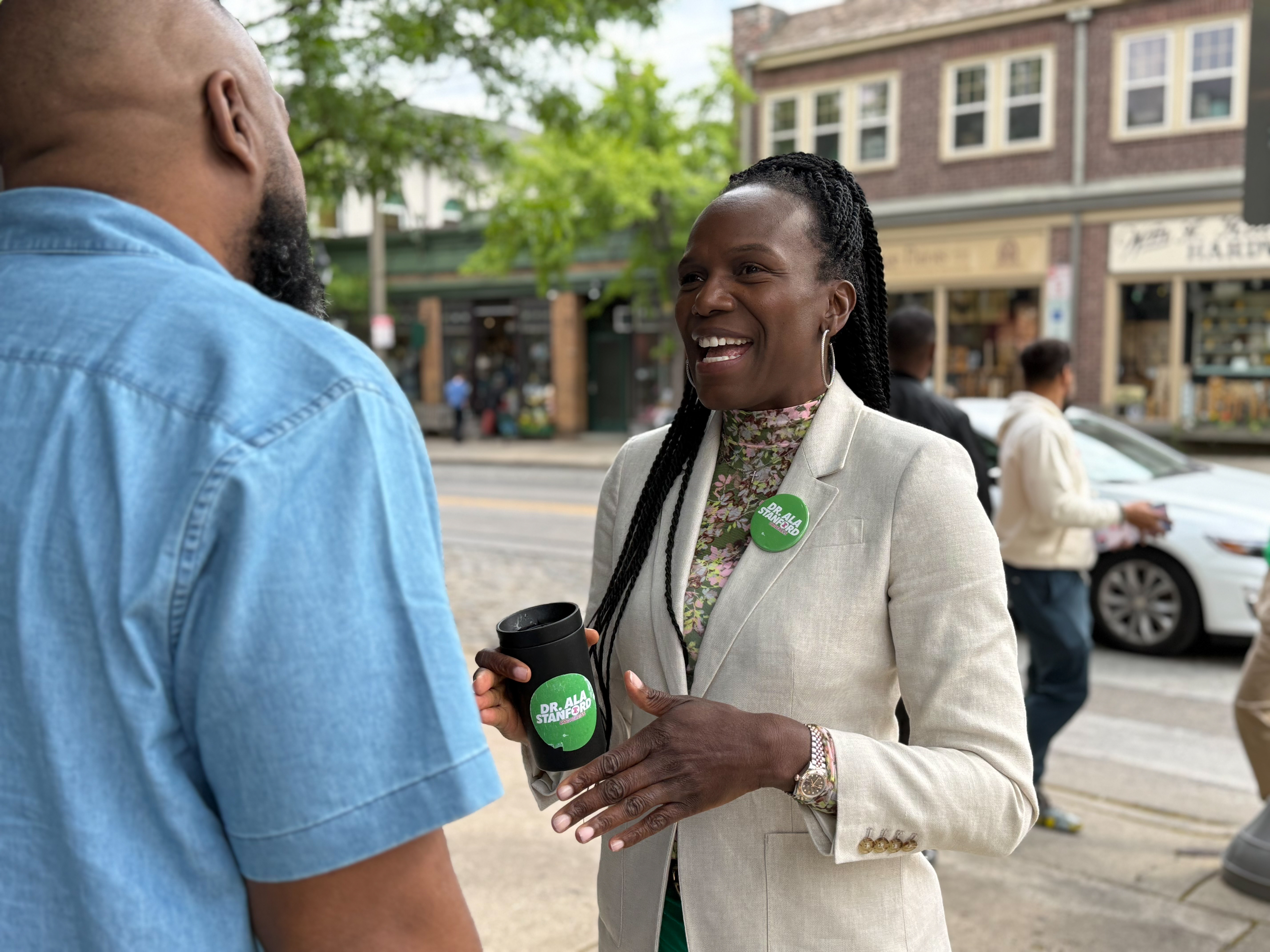
“[John Lewis] always talked about doing good things together,” Evans said, referencing the civil-rights icon and longtime Georgia lawmaker who died in 2020. “And what we desperately need — especially in this day and age, when you look at people talking about [gerrymandering] affecting Benny Thompson, Jim Clyburn — she more than anybody has the ability to bring [people] together.”
SCOTUS Raises the Stakes
The race to represent the 3rd District was already playing out as a messy microcosm of the stylistic and ideological fights roiling Democrats nationally.
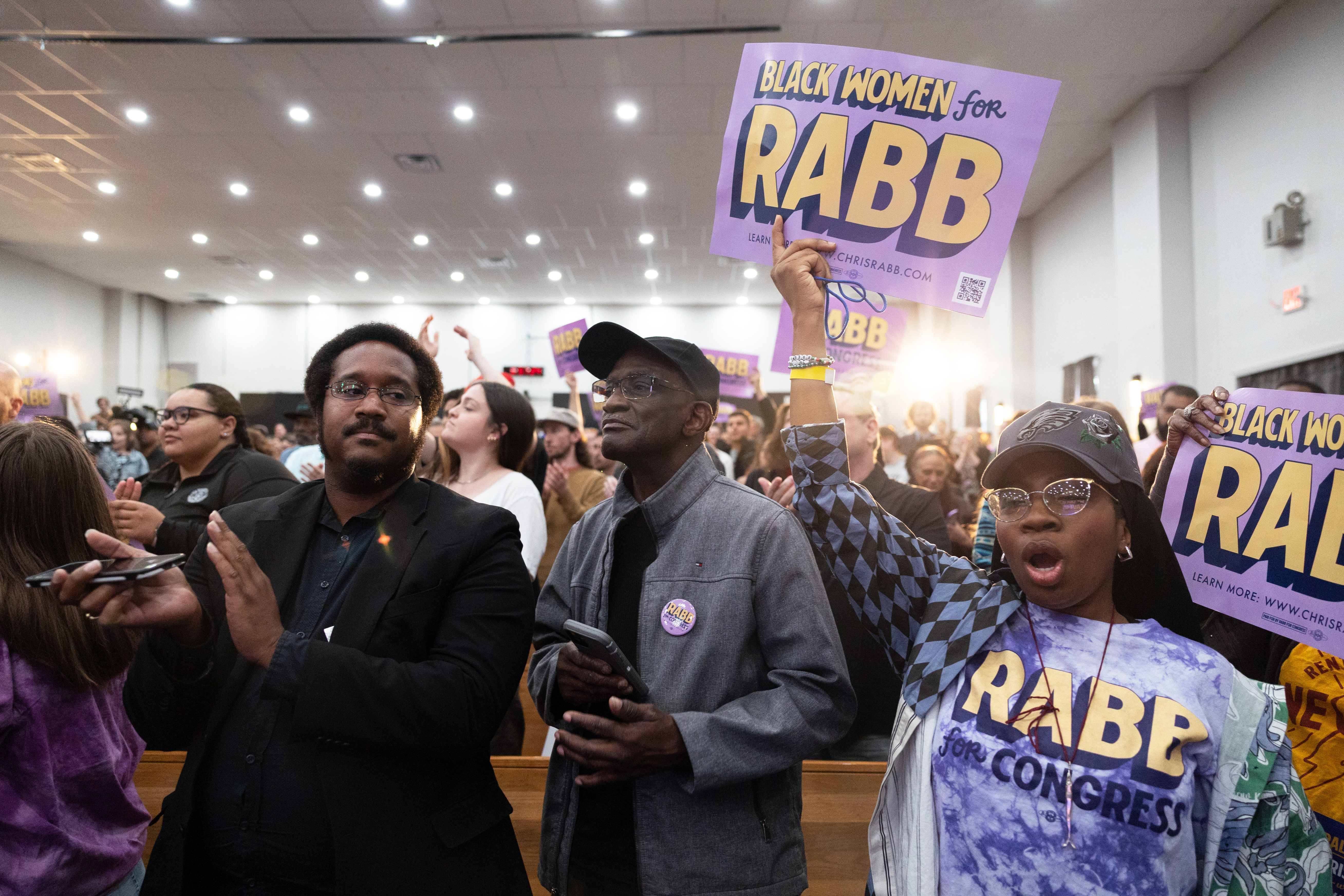
“We know that the next member of Congress is going to be Black, we know they’re going to be a Democrat. The question is, what kind of Democrat are we sending to Congress amidst great dysfunction and chaos?” Rabb, a five-term state representative, told Blue Light News. “I am the troublemaker of the three, and I believe we need a real troublemaker in troubled times. We need to shake things up.”
In interviews on the campaign trail across Philadelphia last week, the leading contenders offered similarly stark assessments of the potential ramifications of the recent Supreme Court ruling on Black representation and voting rights.
But they offered different approaches.
Rabb said “centrism and establishment politics is [not] going to get us anywhere beyond where we are now.”
Street, a state senator, former state Democratic Party chair and scion of a prominent North Philadelphia political family, said he would draw on his background as a lawyer and legislator to counterattack in the courts, in Congress and on the campaign trail by boosting Democratic turnout in the midterms.
Stanford, a former regional Health and Human Services director in the Biden administration, called for “fearless leaders” in the style of Clyburn who are also willing to work across the aisle to “find common ground” to advance voter protections and expand access.
“I am a disrupter,” Stanford said. “But [you also can’t be] a bull in a china shop and no matter which way you turn, you’re crushing and breaking everything but you’re not building anything.”
The candidates have also cleaved over whether to back Jeffries as speaker. Street has committed to the minority leader, and Stanford also said she’ll back him. But Rabb said he wants to see who runs before weighing in.
Redistricting has become a late-stage flashpoint on the campaign trail. The political arm of the pro-Rabb Working Families Party launched an ad Friday across digital and streaming platforms attempting to link Street to red-state gerrymanders by referencing a draft 2021 redistricting map the senator worked on with a key Republican that would have drawn Democratic Rep. Brendan Boyle and GOP Rep. Brian Fitzpatrick into the same district and created an incumbent-free seat in Philadelphia where Street could have run. The spot accused Street of trying to “sacrifice our power for himself.”
The map was never formally introduced and Street has distanced himself from it. He says he favored another that still would have drawn Boyle and Fitzpatrick into the same district but would have given Democrats an advantage in 10 of the state’s 17 congressional seats and grown the number of majority-Black districts.
Anthony Campisi, a spokesperson for Street, said the senator was trying to “bolster Pennsylvania maps against the type of attacks we’re seeing from Republicans in Washington now.”
A House Caucus Divided
As Rabb runs to the left, he’s picked up support from younger progressives like Lee and Reps. Maxwell Frost (D-Fla.) and Ilhan Omar (D-Minn.) and a constellation of left-leaning groups including the local chapter of the Democratic Socialists of America.
Meanwhile, Rep. Herb Conaway (D-N.J.), a fellow Black physician, is backing Stanford, who besides Evans also has support from Pennsylvania Democratic Reps. Madeleine Dean and Chrissy Houlahan, leading health officials and an outside super PAC that works to elect STEM candidates.
Sen. Cory Booker (D-N.J.) offered 11th-hour support for Street in a rally Monday, positioning him as the best choice in a “time of crisis.” Street also has the backing of Philadelphia Mayor Cherelle Parker and the city’s Democratic establishment, along with a raft of high-profile state politicians like former Gov. Ed Rendell and state House Speaker Joanna McClinton.
Most CBC members have stayed out of the race, but some have made connections with candidates behind the scenes. Stanford said she met Clyburn, the Democratic kingmaker who is likely to lose his seat in a GOP gerrymander, at a book tour stop last December. She said she considers him a mentor and sends regular updates to his chief of staff. Clyburn’s office and an outside adviser did not respond to a request for comment.
Some presidential hopefuls have also waded in beyond Booker and Ocasio-Cortez in a race that will offer a directional test for Democrats. Rep. Ro Khanna (D-Calif.) and Sen. Chris Van Hollen (D-Md.) are backing Rabb, while Pennsylvania Gov. Josh Shapiro, who has not endorsed in the race, is working behind the scenes to block Rabb — even though he and Street have some historic beef of their own.
“This moment matters,” Ocasio-Cortez said. “And if you want to change the Democratic Party, we have to change the kind of Democrats that get elected to serve in Congress.”
Cheyanne M. Daniels contributed to this report.


Senate Republicans’ campaign arm took out $20 million in loans in September, a significant cash infusion as the party looks to fight an increasingly challenging map ahead of November’s midterm elections.
The National Republican Senatorial Committee incurred a $17 million loan on Sep. 1 and another $3 million on Sep. 22, according to a filing submitted to the Federal Election Commission on Tuesday.
The need for cash comes after months of the NRSC and other GOP groups boasting about their large cash advantage over Democrats, as the party floods the airwaves in an effort to win core battlegrounds in an unfavorable environment.
The organization framed the loan as part of continuing that cash advantage.
“The NRSC has raised record-breaking resources, consistently maintained one of the lowest burn rates across all committees, and furthered the efficacy of every dollar by immediately acting on the fall of unlimited coordinated spending with our candidates,” NRSC communications director Joanna Rodriguez said in a statement. “We’re going to throw everything we can at protecting our Republican Senate Majority, and we’re going to win.”
It’s not unusual for campaign arms to take out loans late in an election cycle. In 2024, the NRSC took out $17 million in loans, and it borrowed $20 million during the 2022 cycle as well, according to FEC reports.
The NRSC has raised $228 million this cycle compared to $188 million for the Democratic Senatorial Campaign Committee, but Democratic Senate candidates have far outraised Republican ones.
The NRSC had $28 million in the bank, including the loan, at the end of September after raising $31 million and spending $41 million in the month, although a slight majority of the funds raised — $18 million — came via transfers from the Republican National Committee.
The DSCC, by comparison, ended September with just under $25 million in the bank. It had not taken out any loans this cycle as of that point.
Unlike past cycles, political parties can now more freely pay for advertising in coordination with candidates — and at a much cheaper rate. That will allow the party to stretch the $20 million further than in past election cycles.
In September, the NRSC put just under $34 million into coordinated spending, all of it on advertising, according to the Tuesday FEC filing.
Democrats’ money machine is on its way to Mississippi.
Senate Majority PAC is putting an initial $1.2 million on television statewide through Election Day to boost Scott Colom, the group announced Tuesday — another plunge into deep-red territory for Democrats as they take advantage of a dismal environment for Republicans.
Colom, a local prosecutor, has gained on GOP Sen. Cindy Hyde-Smith in recent public polling, and has started to gain the attention of national Democrats. Some Senators, including Georgia Sen. Raphael Warnock and Arizona Sen. Ruben Gallego, have pushed for more party investment in the race, which they believe in the right environment could flip a traditionally red seat.
But until now, Democrats said their resources were stretched too thin across a widening map that would allow them to play in the Magnolia State.
SMP is launching its first ad Wednesday attacking Hyde-Smith as a “do-nothing” senator and is planning a digital program as well. Lauren French, a spokesperson for SMP, said in a statement that “it is clear Colom is running a competitive race that has put Hyde-Smith on her heels.”
Hyde-Smith’s campaign downplayed the race’s competitiveness while tying Colom to Senate Minority Leader Chuck Schumer.
“It took Chuck Schumer and his Super PACs thirteen months to run a single ad for Scott Colom,” Hyde-Smith campaign spokesperson Nathan Calvert said in a statement. “Chuck knows what Mississippians know, Scott Colom is too liberal, supports transgender surgeries for children, men in women’s restrooms and locker rooms, open borders, and higher taxes. Team Cindy is confident that voters will reject this radical agenda at the ballot box on November 3rd.”
Colom’s campaign didn’t immediately reply to a request for comment.
Other national Democrats have started paying attention to the race too, with several set to descend on Mississippi ahead of Election Day. Former Vice President Kamala Harris will campaign alongside Colom later this week, and former Secretary of Transportation Pete Buttigieg will hit the trail next week.
The state has the highest proportion of Black people in the nation, giving Democrats a high base of support in most elections — and has long left Democrats dreaming they could win statewide, having invested some resources in recent Senate and governor’s races over the past decade. Hyde-Smith did not top 55% of the vote in either of her previous elections, and Colom has seized on an interview clip when she was asked about the high price of beef: “You know, you have so many proteins to choose from.”.
Still, despite the overall positive environment for the party, flipping the seat remains a steep uphill battle. Republicans control all levers of state government, and Trump handily won by 24 points in 2024. The last time Mississippians elected a Democrat statewide was 2015, and the last time the state sent a Democrat to the Senate was 1982.
SMP’s investment in Mississippi follows multimillion-dollar dives into Kansas and Texas that collectively show how far the Senate map has shifted onto red turf in the midterm’s closing weeks. The Chuck Schumer-aligned group has also cut back on spending on television in North Carolina and Georgia in recent weeks amid increasingly bullish outlooks for Democrats Roy Cooper and Sen. Jon Ossoff, respectively.
House Democrats’ campaign arm is launching its first ad buy against seven-term GOP Rep. Mike Turner in his western Ohio district as they seek to turn up the pressure on Republicans in once-safe red seats.
The DCCC is dropping separate six-figure buys on two coordinated television ads boosting challenger Kristina Knickerbocker, spokesperson Riya Vashi said — a remarkable investment considering Turner won in 2024 by over 18 percentage points, overperforming President Donald Trump.
Ohio adopted a new redistricted congressional map last year that was expected to favor Republicans. Turner’s 10th District voted for Trump by 6 points in 2024; under the new lines it would have been closer to 8 points.
The first ad airing this week opens with a woman saying, “It’s time we had someone in Congress who actually stands up for us” as Knickerbocker jogs through a neighborhood.
Democrats are eyeing Turner’s Dayton-area seat as a reach opportunity. A new internal DCCC poll of 535 likely general election voters reviewed by Blue Light News shows Knickerbocker running three percentage points ahead of Turner. Polling from this summer showed Turner leading the race.
Another Democratic group, House Majority PAC, has already poured more than a million dollars into the race against Turner and has reservations planned through Nov. 3. Knickerbocker is not on the DCCC’s “Red to Blue” roster of candidates who get the bulk of its resources.
“Alarm bells should be ringing for Mike Turner,” Vashi said in a statement. “Kristina Knickerbocker has the momentum in this race, and the DCCC will make sure every voter in this district knows exactly how Turner has betrayed them.”
But the NRCC has been spending in the district for several weeks to boost Turner. House Republican campaign operatives are so far dismissing efforts to flip the seat.
NRCC spokesperson Zach Bannon called Turner “a life-long Ohioan who has a record of cutting taxes, lowering costs, and making Ohio streets safer.”
“While Congressman Turner delivers commonsense conservative wins, out of touch Democrat Kristina Knickerbocker supports a radical far-left agenda,” Bannon said. “This November, Ohioans will reject liberal Knickerbocker and send Congressman Mike Turner back to Congress.”
- NRSC takes on $20M in loans
- Blakeman’s uptown fracking fiesta
- FEMA chief tells states to prepare to handle disasters on their own
- Trump is promising farmers $8B. Republicans are praying it will save their campaigns.
- Senate Democrats start spending in Mississippi
- Poll: Voters see Republicans as the party of Big Tech tax breaks
- Two Dans, four choices, one big headache for GOP in Alaska Senate race
- Democrats’ Musk-ask questions

- DCCC launches ads against Mike Turner in red Ohio district
- Capitol agenda: Dem gavels are coming for Elon Musk
-

 Politics2 years ago
Former ‘Squad’ members launching ‘Bowman and Bush’ YouTube show
-
Uncategorized2 years ago
Bob Good to step down as Freedom Caucus chair this week
-

 The Josh Fourrier Show2 years ago
DOOMSDAY: Trump won, now what?
-

 The Dictatorship2 years ago
Pete Hegseth’s tenure at the Pentagon goes from bad to worse
-

 Politics2 years ago
Former Kentucky AG Daniel Cameron launches Senate bid
-

 The Dictatorship2 years ago
Luigi Mangione acknowledges public support in first official statement since arrest
-

 Politics2 years ago
Blue Light News’s Editorial Director Ryan Hutchins speaks at Blue Light News’s 2025 Governors Summit
-
 Politics1 year ago
John Legend advises Trump to drop the ‘dictator s‑‑‑’ if he wants Nobel Peace Prize