
Politics
Watch live: White House holds briefing amid Trump, Supreme Court immigration scuffle

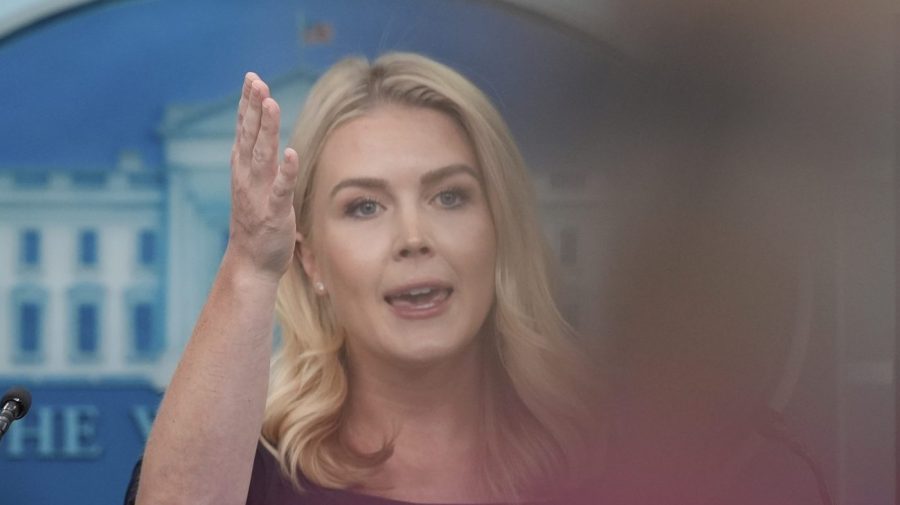
White House press secretary Karoline Leavitt will brief reporters Tuesday afternoon as President Trump and the Supreme Court tango over his sweeping immigration agenda — including using the Alien Enemies Act of 1798 to speed up deportations. The nation’s highest court moved early Saturday to halt the administration’s ability to use the 18th century law…
Read More


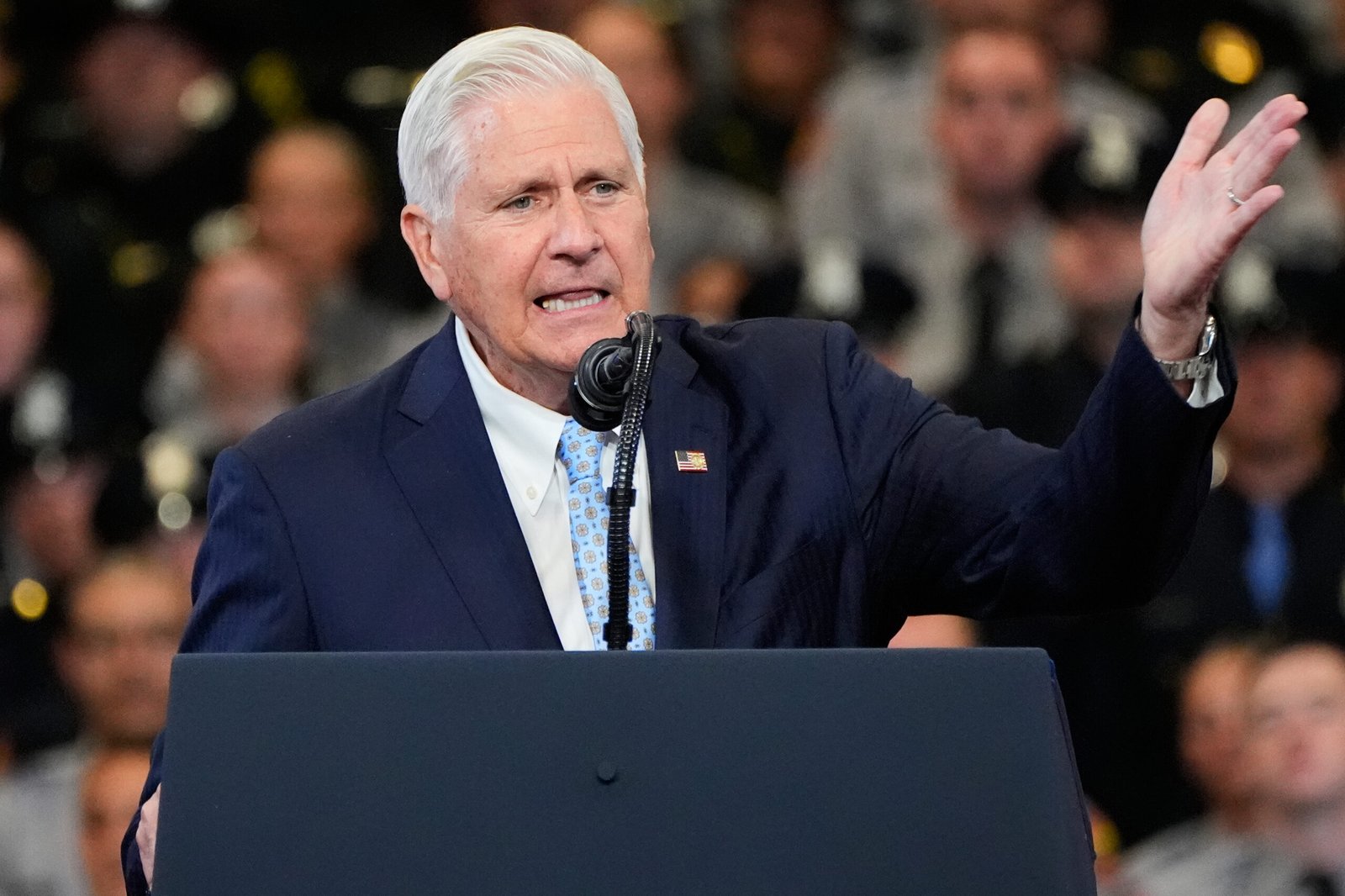
MO’ MONEY: Republican gubernatorial candidate Bruce Blakeman has received dozens of contributions surpassing the legal limit in recent months.
Blakeman has yet to refund roughly $360,000 to donors who have given to him above the cap, as POLITICO first reported on Monday. Gubernatorial candidates are allowed to raise $9,000 from individuals for each election — so $18,000 if they have both a primary and a general. Blakeman dodged a June election, so he’s required to give back any money he’s raised above $9,000.
Many of the excess contributions came early in the election cycle. Knicks owner James Dolan, for example, gave $18,000 on Jan. 20, before it was known whether there would be a primary.
But there have been at least 40 donations above the $9,000 limit that have come in since the Board of Elections certified the primary ballot on May 13, according to Blakeman’s disclosure reports.
Many of those came well past the primary. An Eric Sternberg who used a Nassau County PO Box, for example, gave Blakeman $15,000 in the spring. A donor with the same name who used a nearby home address gave $18,000 on Aug. 19; three more $5,000 checks from those Eric Sternbergs were reported on Sept. 10.
In addition to those 40 donations, there are several individuals who have gone over the limit by making multiple contributions. Former Republican Rep. Nan Hayworth, for example, gave $5,205.08 on May 22, then the same amount on July 31, bringing her total to $10,410.16 for the election cycle.
The unusual figure appears to arise from another way the Blakeman campaign is going past the $9,000 cap. His donation page asks people to make a supplemental contribution to cover processing fees — so somebody giving $5,000 gets a request to give an additional $205.08.
Attempting to donate $9,000 brings forth a suggested donation of $9,369.14. That exact amount has been given 22 times, including by Nassau resident — and one-time Trump administration official — Anthony Scaramucci.
“Anyone who looks at campaign finance filings will see every campaign eating the cost for processing fees,” Democratic campaign finance lawyer Ben Kallos said. “I admire the creativity of trying to have donors eat those costs, but you can’t go over the limit.”
Blue Light News asked the Blakeman campaign about the refunds it owes on Monday. It replied on Tuesday without addressing the issue.
“So many New Yorkers opened their wallets to support Bruce Blakeman that the state’s antiquated campaign finance system couldn’t keep up,” spokesperson Madison Spanodemos said. “The Board of Elections required the campaign to split its most recent finance report into multiple files since it included so much data, causing some contributions to appear multiple times.”
The Public Campaign Finance Board said it’s not to blame.
“Mr. Blakeman’s campaign is the only filer that experienced this issue,” Democratic co-director Brian Keegan said. “This is a user error, not a system error.”
Spanodemos did not respond to questions about the large donations or what the committee’s actual war chest is. If every potential duplicate is removed from Blakeman’s filing, his contribution total would fall by $292,000. That would lower his balance to a $114,000 deficit, even before accounting for the $360,000 in refunds he owes.
A shift like that wouldn’t be unprecedented. Blakeman’s previous report, submitted on July 15, showed he had $4.7 million in the bank. An amended version submitted on July 22 changed his balance to $6.1 million. Yet another amendment on Aug. 13 said that his war chest in mid-July had actually been $4.3 million.
Gov. Kathy Hochul has recently received a handful of contributions over the limit as well. But as has been the norm for gubernatorial candidates, her committee has returned surpluses: The New York State Council of Machinists, for example, gave $10,000 on Sept. 15 and got $1,000 back on Sept. 28.
Hochul’s campaign has started to make Blakeman’s campaign finance foibles an issue in recent weeks.
“It’s against the law,” state Democratic Committee Chair Jay Jacobs said of the Republican’s large contributions. “He’s desperate for money, and desperate people do desperate things. And I think to him, it’s more important he try to get elected than comply with the law.” — Bill Mahoney
ONE WEEK AWAY: Mayor Zohran Mamdani’s administration is pursuing a bold agenda to tame the city’s affordability crisis — making New York City a testing ground for progressives across the country. Join Blue Light News’s New York Outlook: Affordability, Industry & The Economy in NYC on Oct. 14 for live conversations about the business and policy decisions being made today that will shape the city’s economic future. The lineup includes NYC Comptroller Mark Levine, New York City Economic Development Corp. CEO Anthony Shorris, New York City Council Speaker Julie Menin, Partnership for NYC CEO Steven Fulop, Citizens Budget Commission President Andrew Rein, Charles H. Revson Foundation President Maria Torres-Springer, and more. Register now to attend in person or watch the livestream.
FROM CITY HALL
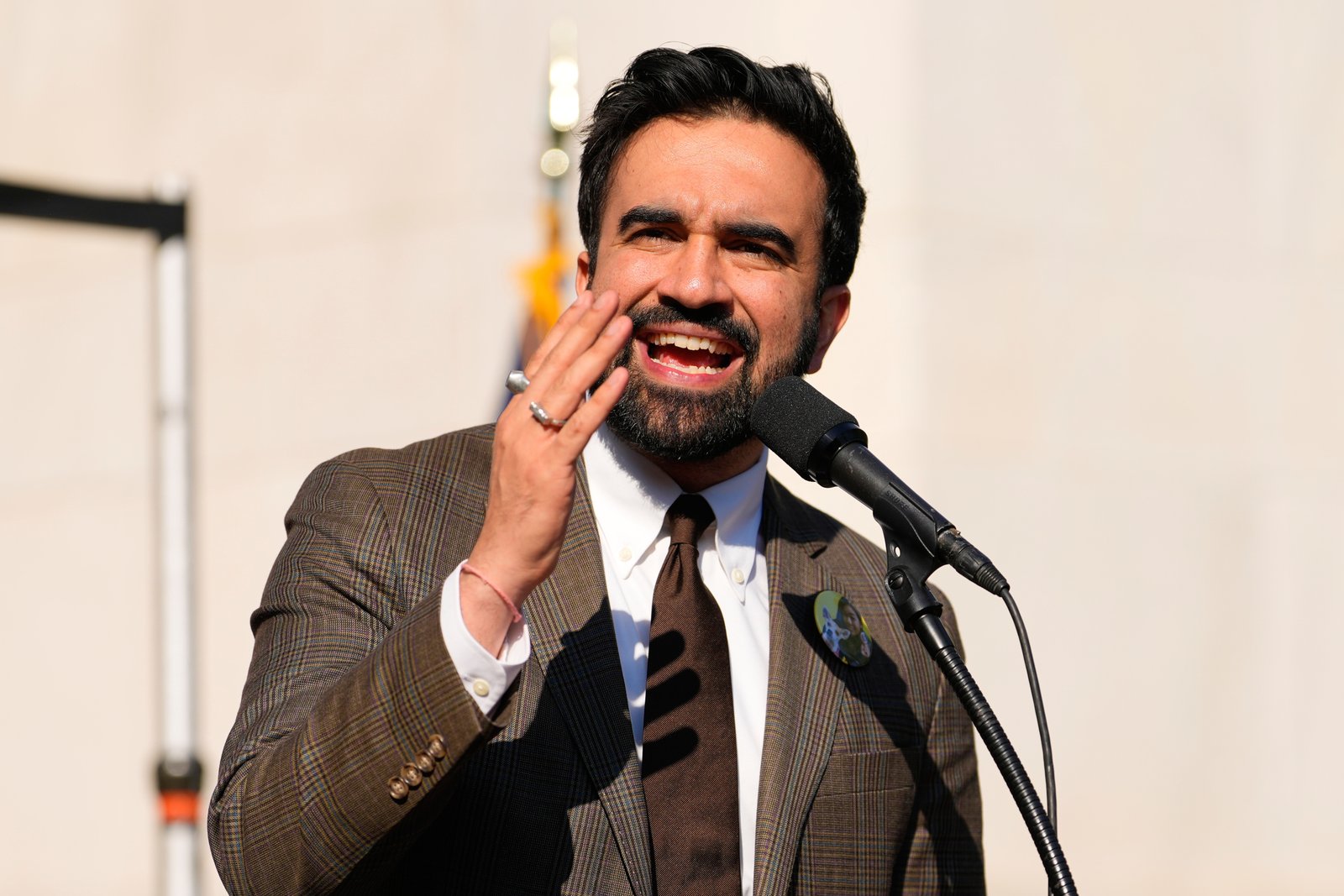
MAMDANI’S OCT. 7 MESSAGE: Mamdani marked the third anniversary of Hamas’ Oct. 7, 2023 attack by condemning the “horrific war crimes” that took place in Israel that day — and then proceeded to blast the American ally for the military campaign it launched in response.
“On that day, Hamas killed more than 1,100 Israelis and abducted 251 others. We grieve alongside our many friends and neighbors who still carry that unthinkable loss,” he said in a written statement this morning.
He then pivoted: “The suffering did not begin nor end that day. It instead continued through the Israeli government’s devastating, ongoing genocide in Gaza, in which it has killed more than 74,000 Palestinians — including more than 21,000 children … Many New Yorkers are reckoning with this unbearable grief, and we mourn alongside them — all while knowing that our tax dollars fund these war crimes.”
Mamdani’s missive — which he also posted on X, where it had garnered nearly 11 million views as of early this afternoon — was consistent with how he has for years messaged regarding the events on and after Oct. 7. What’s remarkable is that he did it as mayor on a somber day — the kind of occasion for which elected officials typically deploy restraint. Today marked his first time commemorating the anniversary as mayor of New York City, home to the largest Jewish community outside Israel, swaths of which believe Mamdani has fomented antisemitism by accusing the country of commiting a genocide in Gaza, a charge Israeli leaders vehemently deny.
Backlash to the mayor’s statement was swift.
“It is like turning September 11 into a day of mourning for al-Qaeda terrorists,” Danny Danon, Israel’s ambassador to the United Nations, wrote on X in response to Mamdani’s comments. “We will not let this happen. We will remember those who were murdered, and we will never forget who was behind this massacre.”
Rep. Dan Goldman, a fellow Democrat, called it a “reprehensible statement.”
“In the guise of ‘grieving’ with those mourning that day, Mayor Mamdani asserts as fact hotly disputed allegations that he knows full well will offend and further upset those same people he pretends to grieve with,” Goldman wrote on X. “On this day of all days, the Mayor of the city with the largest Jewish population outside of Israel embraces extreme activism instead of balanced leadership.”
A spokesperson for Mamdani declined to respond to such criticisms. The mayor is scheduled to attend an Oct. 7 remembrance vigil this evening.
Hochul commemorated the anniversary by ordering the Israeli flag be hoisted on top of the Capitol in Albany. She also ordered that flags be flown at half mast at all state government buildings across New York.
“It’s hard to fathom that it has been three years since the October 7 Hamas massacre. Three years since the deadliest day for the Jewish people since the Holocaust,” the governor said in a statement. “The pain of that dark day has not faded. But neither has the strength, resilience and enduring hope of the Jewish people.” — Chris Sommerfeldt
From the Capitol
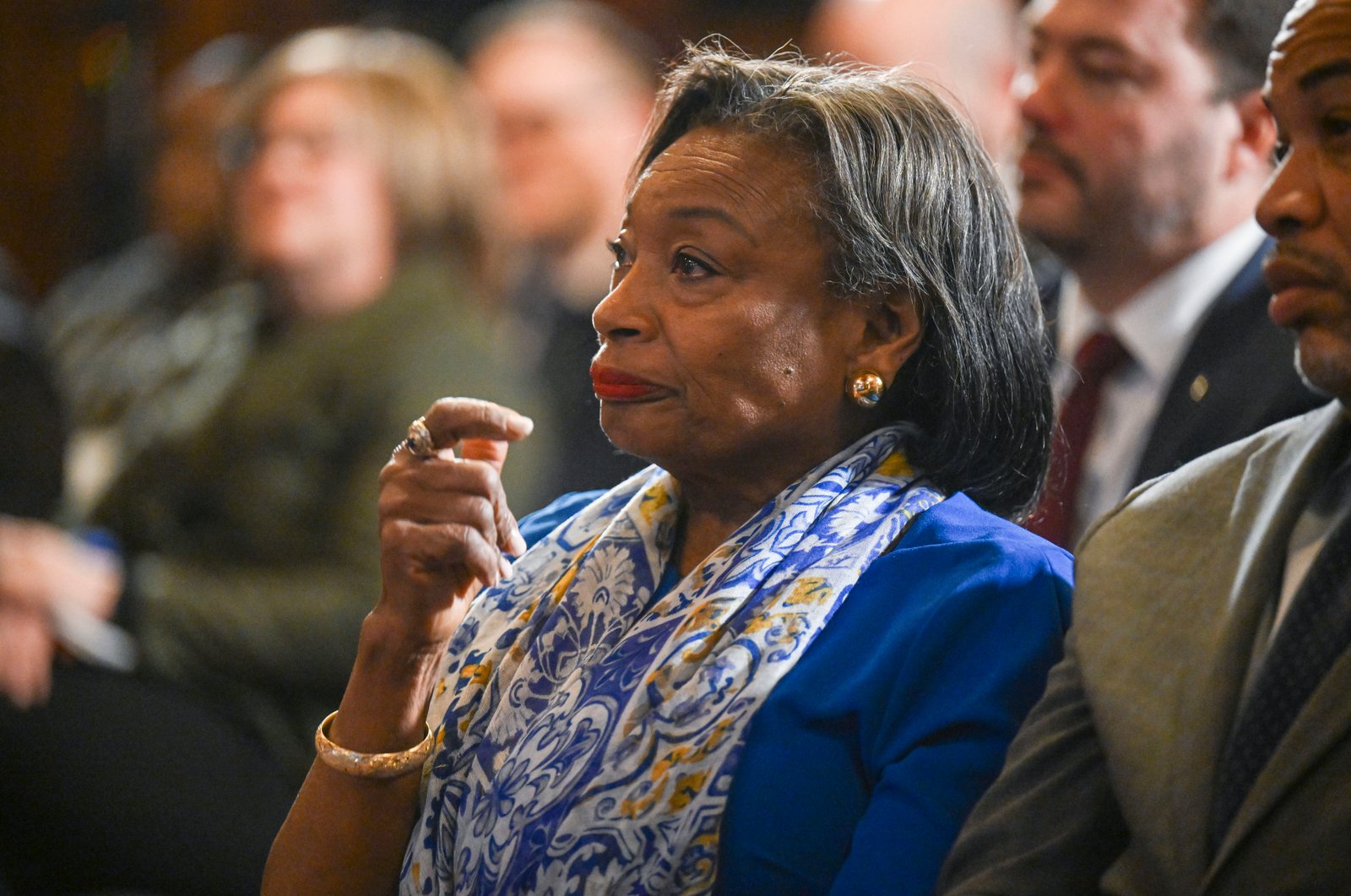
FEDERAL TAX CREDIT UNDER FIRE: New York’s legislative leaders are urging Hochul to reject a GOP-backed federal tax credit scholarship program, setting up a potential clash over the hot-button issue.
The Treasury Department released a pair of rules for the initiative — which was included in President Trump’s sweeping 2025 tax-and-spending package — last week. The program would give donors to nonprofits that support educational expenses a dollar-for-dollar tax credit of up to $1,700 annually. Married taxpayers filing jointly could receive a credit of up to $3,400.
In a statement Wednesday, state Senate Majority Leader Andrea Stewart-Cousins said the regulations would undercut the state’s ability to establish “meaningful guardrails,” leaving New York with little control over which schools and expenses qualify or how the funding is used. She also said it would allow the money to potentially flow to schools outside the state.
“I am apprehensive about this federal proposal and have serious reservations about the potential impact it could have on public schools across New York State,” Stewart-Cousins said. “New York should not opt in to this program.”
Assembly Speaker Carl Heastie also said Tuesday that his chamber will prioritize ensuring public schools are fully funded.
“Public dollars should support public schools that serve all children and are accountable to the taxpayers who fund them,” Heastie said in a statement. “New York should opt out of the federal voucher program and continue investing in the public schools that educate the overwhelming majority of our children.”
The city’s and state’s teachers unions, with which the Legislature is closely aligned, have also urged Hochul to reject the program.
Spokespeople for the governor did not immediately respond to a request for comment on the opposition of legislative leaders.
But Hochul has signaled support for the scholarship program.
Ahead of the release of the regulations, her office said the credits could expand educational opportunities for public and private school students statewide “without diverting resources from public schools or state and local budgets.” The governor’s team also said public schools could benefit from the program. — Madina Touré
FROM THE CAMPAIGN TRAIL

TAKING THE STAGE: A debate is on the books in the battleground race between Democratic Rep. Tom Suozzi and his Republican challenger, former Assemblymember Mike LiPetri.
The debate, hosted by News 12, will air on Oct. 20. The station said that’s the only Long Island congressional debate it’s hosting after Democratic Rep. Laura Gillen and Chris Gallant, Republican Rep. Nick LaLota’s Democratic challenger, declined News 12’s invite for their respective races. Republican Rep. Andrew Garbarino’s campaign did not respond to its invite, the station said.
Suozzi defeated LiPetri by 4 points in 2024. National Republicans are pouring millions into the seat in the final stretch of the race with the hope of flipping it this year. — Madison Fernandez
POLL POSITION: Hochul leads Republican foe Bruce Blakeman by 11 points in a Marist University survey released this morning.
Hochul, seeking a second full term, draws 53% in the poll; Blakeman stands at 42%. Voters by a 55% to 42% margin plan to support the Democratic congressional candidate, the survey found.
The poll of 1,361 likely voters was conducted from Oct. 1 to Oct. 4. It has a 3.6 percentage point margin of error. — Nick Reisman
IN OTHER NEWS
— GROCERY BRANDING: Branding for Mamdani’s signature city-run grocery stores will be handled by the same Brooklyn design firm behind trendy products like Graza olive oil and Yellowbird hot sauce. (New York Magazine)
— GENDER-AFFIRMING CARE: New York City plans to spend nearly $9 million on local organizations providing gender-affirming care to minors, after two major hospital systems in the city struck deals with the Trump administration to stop providing such care. (Gothamist)
— MAKE POLITICS SEXY AGAIN: Long Island Democratic congressional candidate Chris Gallant is leaning into sexiness, after the New York Post revealed last month he had appeared in bondage photos more than a decade ago. (The New York Times)
Missed this morning’s New York Playbook? We forgive you. Read it here.
Michigan Republican Senate nominee Mike Rogers called for an end to the “tariff war” with Canada in a new campaign advertisement released on Wednesday, another break from the Trump administration weeks before the midterm elections.
Rogers’ ad comes as Republican campaign groups across the country have entered triage mode in an effort to salvage GOP control in an unfavorable political environment.
“Here in Michigan, we know that Canada is not our enemy. We need to end this tariff war now,” Rogers said in the advertisement, which is part of a coordinated spend between his campaign at the National Republican Senatorial Committee.
He added, “as Michigan’s senator, I’ll bring both parties together to lower your prices.”
Each year, Michigan does roughly $80 billion in trade with Canada, according to the Michigan Chamber of Commerce.
The new video comes weeks after he put out another advertisement breaking with President Donald Trump, publicly calling for the war with Iran to end “quickly.”
In both commercials, Rogers said that prices are too high and neither mentioned the president by name.
The latest ad is a shift from his previous positioning on trade with Canada.
Last month, Rogers said that some of the tariffs imposed on Canadian goods are needed, as the state’s manufacturing sector has been gutted by cheap foreign imports in the past.
“President Trump is right to put America first — and tariffs are necessary, but are not a one-size-fits-all solution,” Rogers previously said in a press release.
But, he also said he has the pull to end the trade war threatening Michigan.
The White House, along with Rogers’ and Democratic nominee Abdul El-Sayed’s campaigns, did not immediately respond to requests for comment.
National Republicans have spent months trying to rescue Ken Paxton. He’s complicating that effort.
Tensions are brewing with some Republicans after Blue Light News published Paxton’s closed-door comments that “D.C.” Republicans were largely controlling his race.
“He is welcome to raise his own money and say whatever he wants,” said one Republican involved in the Paxton rescue effort, who like others in this article was granted anonymity to speak candidly. “In fact, if he did that, he’d probably be winning right now and we wouldn’t need to spend all this money.”
Senate Republicans and top operatives didn’t want to be in this position in the first place. Many had warned that the Trump effort to unseat Sen. John Cornyn and back Paxton in the primary would cost Republicans hundreds of millions to drag Paxton across the finish line in the general election. Cornyn and Senate GOP groups spent millions of dollars on ads during the primary attacking Paxton over his series of scandals and warning he was a flawed candidate.
Since then, the usual crowd of never-Paxton types has expanded into a wider circle of frustrated Republicans who are irked by the effort it’s taking to boost the scandal-plagued Senate candidate. And Paxton saying he doesn’t control his campaign messaging — alongside his remarks that President Donald Trump’s midterm convention hurt him politically — isn’t helping.
Paxton also complained about the drag of the Iran war and high prices on his campaign in another closed-door recording that Axios published Wednesday.
“Beggars can’t be choosers. He can try to raise federal money at a level that is necessary to save his candidacy at this point but his arms don’t reach that high,” said a Texas-based GOP consultant who’s closely monitoring multiple races. “As usual, he communicates something that is unhelpful, that is undisciplined, that is politically self-harmful and like most things, lacks any gratitude whatsoever.”
The top Senate GOP super PAC, Trump’s aligned MAGA Inc. operation and other Republicans are pumping more than $200 million into the race to salvage Paxton’s campaign against Democrat James Talarico. Trump allies say they have worked hard to shore up Paxton, suggesting they’ve pushed donations toward the campaign and the larger GOP Super PAC effort to avoid disaster in the Lone Star state. Trump plans to travel to Texas for the second time Wednesday to boost Paxton.
Paxton allies have brushed off his latest closed-door comments, saying he was referring to GOP super PACs he’s not allowed to coordinate with as a candidate.
The Paxton campaign did not respond to a request for comment, though campaign adviser Nick Maddux said in response to POLITICO’s initial report of the audio that “AG Paxton is thankful for the support and knows how important Texas is to keeping the majority which is why he’s on the ground every day.”
But another Republican, a Trump ally working on the fundraising effort, said the national intervention isn’t overstepping. That person said the messaging guidance from the national GOP is standard for major Senate races and that Paxton “needs the help.”
One national GOP operative involved in the Texas Senate race noted that the attorney general’s lackluster fundraising early on left him vulnerable to Talarico’s attacks throughout the summer — especially over Paxton’s series of “self-inflicted” scandals, which have made him “toxic” with key voting blocs in the deep red state.
“We warned them about this,” the GOP operative said.
The Texas Senate race has sucked up oxygen, despite Trump winning the state in 2024 by double digits. And, the Senate map has kept expanding as Democrats have made gains in other typically red states, forcing Republicans to make critical decisions about where to allocate resources.
Senate Majority Leader John Thune and Republicans have said there are dedicated donors who are backing their effort to help Paxton, as they also try to shore up red seats across the map.
Paxton, in the September meeting with donors, acknowledged Washington’s influence.
“I’ve never been in a race where I felt less control over the campaign … it’s all coming — you know — from D.C.,” Paxton told donors during a small fundraising event last month, according to the audio.
Top GOP officials have tried to downplay Paxton’s comments. The White House referred Blue Light News to the RNC when asked for comment. The RNC argued Paxton, in the audio, was referring to the super PACs he can’t coordinate with as a candidate.
“This is fake news nonsense mixed with lazy reporting demonstrating a clear ignorance about how super PACs work. President Trump has called Ken Paxton the single greatest attorney general in history and has been clear he will do whatever it takes to make him the next senator from Texas,” RNC spokesperson Zach Kraft said in a statement.
Trump, when speaking to reporters at the White House on Tuesday, said he hadn’t seen Paxton’s latest comments. He added that his midterm travel blitz has helped Paxton and other Republican candidates.
“Ken’s doing much better now that I — everybody is — since starting three, four days ago, since starting the rallies. It’s brought a whole new awareness to how great the Republicans are doing, how great the economy is doing,” Trump said, touting investments and manufacturing.
The president last week traveled to Texas and told the crowd that Paxton is a “pain in the ass sometimes” and later acknowledged he’s “a little controversial.” But, he also warned the Texas crowd that Talarico would be “such a horror to your state,” adding, “we need the votes and I’m here for that, and I think we’re going to win.”
Vance also traveled to Texas, where he called Paxton “amazing attorney general and your next senator.”
Still, other Republicans have simply grown resigned to the state of the race, with Paxton needing all the aid he can get.
“There is only so much we can do,” one senior Senate GOP aide said. “And I feel like we’re doing a lot.”
The Paxton campaign told POLITICO it raised $18 million in the third quarter across the campaign and his joint fundraising committees. That’s roughly double his second-quarter total, though the campaign did not provide its cash-on-hand numbers, and Talarico has yet to release his fundraising haul.
Paxton also announced a $20 million ad buy last week — a significant single media investment in the race. But he’s had to rely heavily on Trump, MAGA Inc. and the top Senate GOP super PAC to bail him out.
Republicans have largely leaned on the Senate Leadership Fund, rather than the Trump-aligned MAGA Inc. super PAC, to keep Paxton afloat. SLF is spending a Texas record-breaking $131 million sum through Oct. 12 and has pledged to continue to spend more through the final weeks of the election.
MAGA Inc. is increasing some spending for Paxton and is expected to hit near $45 million by Oct. 12.
If Paxton were to lose, Trump’s reaction and whether he chooses to distance himself from the rescue effort will be driven by media coverage, said a former Trump fundraiser.
“If the media coverage related to election night and the autopsy a couple days afterwards is brutal towards Trump, like, horrible economy, inflation’s not that much better than the last year of Joe Biden’s … he will lash out,” the person said. “But if the narrative is, it’s a midterm presidential, this is what normally happens … he’ll move on as fast as he can and never talk about Ken Paxton again. It just depends what the coverage looks like post the November election.”
- Trump approved Ohio disaster aid ahead of rally
- Clean energy group sets its sights on a new GOP target: Lauren Boebert
- Blakeman’s campaign finance mess
- HASC Dems weigh reviving Pentagon oversight subcommittee
- Trahan unveils AI liability discussion draft
- Vance to sit for CBS town hall in Michigan ahead of midterms
- Michigan’s Mike Rogers says trade war with Canada needs to end
- ‘He is welcome to raise his own money’: GOP confronts its Paxton woes
- The top House sleeper races to watch, according to the pros
- Top Commerce Committee Democrat releases AI framework
-

 Politics2 years ago
Former ‘Squad’ members launching ‘Bowman and Bush’ YouTube show
-
Uncategorized2 years ago
Bob Good to step down as Freedom Caucus chair this week
-

 The Josh Fourrier Show2 years ago
DOOMSDAY: Trump won, now what?
-

 The Dictatorship2 years ago
Pete Hegseth’s tenure at the Pentagon goes from bad to worse
-

 Politics2 years ago
Former Kentucky AG Daniel Cameron launches Senate bid
-

 The Dictatorship2 years ago
Luigi Mangione acknowledges public support in first official statement since arrest
-

 Politics2 years ago
Blue Light News’s Editorial Director Ryan Hutchins speaks at Blue Light News’s 2025 Governors Summit
-

 The Dictatorship1 year ago
Mike Johnson sums up the GOP’s arrogant position on military occupation with two words