
Politics
U.S.-Iran ceasefire: What we know

When President Donald Trump announced a two-week ceasefire with Iran shortly before his own deadline for Tehran to comply with U.S. demands or be wiped off the Earthhe didn’t simply say hostilities had halted.
He said the United States had favorably received a 10-point proposal from Iran and billed the two weeks not as a temporary end to fighting, but a chance to simply formalize a deal the countries had been negotiating since before the U.S. and Israel attacked at the end of February.
“Almost all of the various points of past contention have been agreed to between the United States and Iran,” Trump said in a Truth Social post Tuesday night.
Since then, the two sides seem to have agreed on very littleincluding whether the war has actually been paused. Iran has alleged it has faced attacks even after the ceasefire was announced; the U.S. military ha said it was not them.
That 10-point plan — the one Trump called “a workable basis on which to negotiate” Tuesday night — was dismissed Wednesday by White House press secretary Karoline Leavitt as “fundamentally unserious, unacceptable and completely discarded,” saying the president literally threw it in the garbage.
In fact, after thousands of deaths, more than a month of regional instability and a hit to the global economy, it’s unclear how much of what’s on the table even differs from the lead-up to the war.
Here’s a closer look at some of the points of contention that could determine whether the ceasefire holds:
The Strait of Hormuz
Trump called the ceasefire contingent on Iran reopening the Strait of Hormuz, a narrow trade route at the mouth of the Persian Gulf through which about 20% of the global oil and gas supply passes. He even floated the strange possibility of Washington and Tehran jointly collecting tolls on tankers that use the lane.
Iran said it would only reopen the strait once a series of conditions were met, including some that may be beyond Trump’s control, such as whether Israel withdraws from Lebanon.
Control of the strait is arguably Iran’s greatest strategic advantage. After it was attacked, Iran effectively closed the tightly curved passage by striking ships that tried to sail past, sending the price of oil and other goods skyrocketing. Trump’s threat to destroy an entire civilization was meant to force Tehran to allow tankers to once again pass through, even though he has insisted over the course of the conflict that he would leave other nations to cope with the closure since the U.S. sources relatively little energy from that route.
Nuclear enrichment
The U.S. has demanded Iran completely stop its uranium enrichment, and of the shifting reasons the Trump administration has provided for why it went to war alongside Israel, this one eventually became the most consistent.
Before the war, Iran was working toward enriching its nuclear fuel to the point that it could be considered weapons-grade, well beyond the level agreed upon by several countries in the 2015 Joint Comprehensive Plan of Action. Trump withdrew the U.S. from the agreement during his first term in 2018, calling it a bad deal. Tehran responded by ramping up enrichment despite international pressure to stop.
In its ceasefire proposal, Iran emphasized its right to enrichment. Without a return to something like the 2015 arrangement, this could be the single biggest sticking point.
Sanctions
Iran has been burdened with its own economic crisis even before the war started. Iran’s national currency, the rial, fell to a record low in December, leading shopkeepers in Tehran to take to the streets in protest. U.S. sanctionson Iran, some of which have existed since the 1979 Islamic Revolution, have further strained an already struggling economy. Iran has called on the U.S. to lift primary and secondary sanctionswhich not only directly affected Iran, but also prevent third parties from conducting trade with the country.
The most crippling U.S. sanctions are on Iranian oil.
“We are, and will be, talking Tariff and Sanctions relief with Iran,” Trump said Wednesday.
Lebanon
Iran has demanded the withdrawal of U.S. forces from the region, an unlikely scenario considering the positive relationship between the U.S. and Gulf Arab countries that host its military bases. More immediately pressing is the issue of Lebanon.
Pakistani Prime Minister Shehbaz Sharif, who has emerged as a the primary diplomatic intermediary in the war, said all parties agreed to “an immediate ceasefire everywhere including Lebanon and elsewhere, EFFECTIVE IMMEDIATELY.” Israel and the U.S disagreed.
Lebanon was dragged into the war after the Iran-backed militia Hezbollah mounted an attack against Israel in retaliation for assassination of Iran’s Ayatollah Ali Khamenei.
Not even 24 hours after the ceasefire was announced, Israel struck central Beirut in what Israel called the largest coordinated military strike in the war, with more than 100 Hezbollah targets hit within 10 minutes in Beirut, southern Lebanon and other areas.
Israel’s attack on Lebanon could jeopardize the fragile agreement, with Iran threatening to pull back. Following the attack, Iranian Foreign Minister Abbas Araghchi said, “The U.S. must choose — ceasefire or continued war via Israel. It cannot have both. The world sees the massacres in Lebanon,” adding that “the ball is in the U.S. court.”
What’s next?
Sharif proposed direct talks between the U.S. and Iran on Friday in Islamabad. Leavitt said Wednesday that Vice President JD Vance, special envoy Steve Witkoff and Jared Kushner, the president’s son-in-law, will represent the U.S. in negotiations, though Trump said it was possible Vance would not attend due to security concerns.
In the meantime, Sharif asked all warring countries to adhere to the ceasefire amid reports of attacks in the region. While Israel has continued to bombard Lebanon, countries such as Qatar, the UAE and Kuwait said they have continued to intercept missiles and drones coming from Iran.
Erum Salam is a breaking news reporter for MS NOW, with a focus on how global events and foreign policy shape U.S. politics. She previously was a breaking news reporter for The Guardian.


President Donald Trump is asking voters to “pretend” he is on the ballot. That might backfire.
New results from The POLITICO Poll show that Democratic midterm voters are more motivated to oppose the president than Republican voters are to support him. Many Republican voters also aren’t looking for blind loyalty to Trump in the midterms: Half say they’d rather their local candidate aim to win, even if it means speaking out against the president.
It’s not uncommon for voters in the party out of power to be more motivated in a midterm year. But the lopsided findings are an ominous sign for Trump, who has fundamentally reshaped the GOP over the past decade and has once again staked his brand — and political capital — on delivering wins for Republicans in November.
With less than two weeks before the election, the poll suggests Republicans are pragmatic, and care more about preventing a blue wave than standing by Trump. And in a year when voter frustration over high pricesappears poised to play a major role, that distinction could prove consequential.
The poll, conducted by London-based firm PF Global, reveals the extent to which frustration with Trump is driving Democrats: Nearly half of Democratic midterm voters say they will be voting “mainly to oppose President Trump,” compared to just 38% of Republican voters who say they will be voting mainly to show support for Trump.
Instead, a plurality of Republican midterm voters — 48% — say their main motivation when casting a vote is to show support for a local candidate. Only 37% of Democratic voters agree.
“[Trump is] 100% motivating Democrats more than Republicans,” said Doug Heye, a longtime GOP strategist. “That may have been the case regardless, but it’s even more true with words like ‘diesel’ and ‘Iran’ now a part of everyday political discussion.”
Half of Republicans think candidates have a better chance of winning if they align themselves with Trump rather than breaking from him, compared to just 30% who believe candidates would have a better chance of winning if they break away.
But half of Republicans also accept their candidates speaking out against the president if that’s what they need to do to win their own election. That’s compared with 37% who say candidates should remain loyal to the president and support his agenda, even if it means risking a loss.
On top of that, majorities of Republican voters say Trump himself should give candidates some room to break with him on specific policy issues to win elections.
If it helps GOP candidates’ chances of winning, they said, the president should allow for disagreement on the speed of AI development, the cost of living, and whether the war in Iran was a good decision. That holds true for pluralities or even majorities of Trump 2024 voters who self-identify as part of the “MAGA” movement across each policy area, suggesting that even his most loyal voters want the president to let candidates distance themselves if it can help them win.
“President Trump is the unequivocal leader, best messenger, and unmatched motivator for the Republican Party, and he is committed to maintaining Republican majorities in Congress,” said White House spokesperson Davis Ingle.
RNC spokesperson Natalie Baldassarre said “Blue Light News didn’t need to conduct a poll to know that Democrats are motivated by their hatred for President Trump and Republicans.” She added that the GOP is “running on actual accomplishments like cutting taxes and securing the border,” while saying Democrats have made “investigations, obstruction, and impeachment” their campaign platform.
Still, the tension is playing out in real time as Republican candidates locked in competitive races walk a tightrope between maintaining Trump’s support — and that of his MAGA base — without alienating critical moderate and independent voters. They’re especially under pressure as Trump hits the campaign trail in battlegrounds and red states, with several candidates having to quietly make calculations whether it will hurt them politically to appear next to him.
“I think Republicans … are stuck choosing which finger to cut off,” said a national GOP operative, granted anonymity to speak candidly about the midterm landscape. “There is no good answer.”
In Iowa, where voter frustration over some of Trump’s marquee policies, including tariffs and rising costs stemming from the Iran war, has mounted, Republican candidates have sought to create some distance from the president. Republican Rep. Ashley Hinson, the party’s Senate nominee, has said the war needs to be “brought to a successful and immediate end.” She also skipped a rally Vice President JD Vance held in the state last month.
Several other GOP candidates have also skipped Trump rallies in their home states, and many have grown increasingly wary of mentioning Trump in ads, including in red states that over the last few months have suddenly started to look competitive. In battleground Georgia, GOP gubernatorial nominee Rick Jackson has carefully navigated his relationship with Trump, avoiding public breaks with the president on policy but still limiting direct references to him in campaign ads and on the debate stage.
“I don’t know that Trump coming [to Georgia] helps Republicans more so than it excites Democrats, especially in a wave election year,” said Jason Shepherd, a former Cobb County GOP chair who is supporting Jackson.
That leaves Republican candidates in a tricky position: Their voters are willing to accept breaking from Trump if victory is on the line, but voters — and candidates — won’t know what will cost them their race until it’s too late.
“There’s no reason to gratuitously attack the White House and make an enemy,” the national GOP operative said. “But the end game here is to get reelected, and if they have to get reelected, but the president’s annoyed at them for a period of time, they’ll get over it.”
While Republican candidates balance loyalty to Trump with the possibility of breaking away on certain issues, Democratic midterm voters remain highly motivated to vote against Trump’s agenda.
Even Trump’s endorsement of a Republican candidate seems to influence Democrats more than Republicans: Roughly 70% of Democratic midterm voters say his endorsement would make them less likely to support a candidate, compared to 55% of Republican midterm voters who say the endorsement would make them more likely to support a candidate.
“The midterm elections are about anger management and failed expectations,” said North Carolina based GOP strategist Paul Shumaker. “A lot of Republicans and swing voters feel like their expectations have not been met in helping address their economic concerns.”
Alec Hernández and Alisa Vasquez contributed to this story.
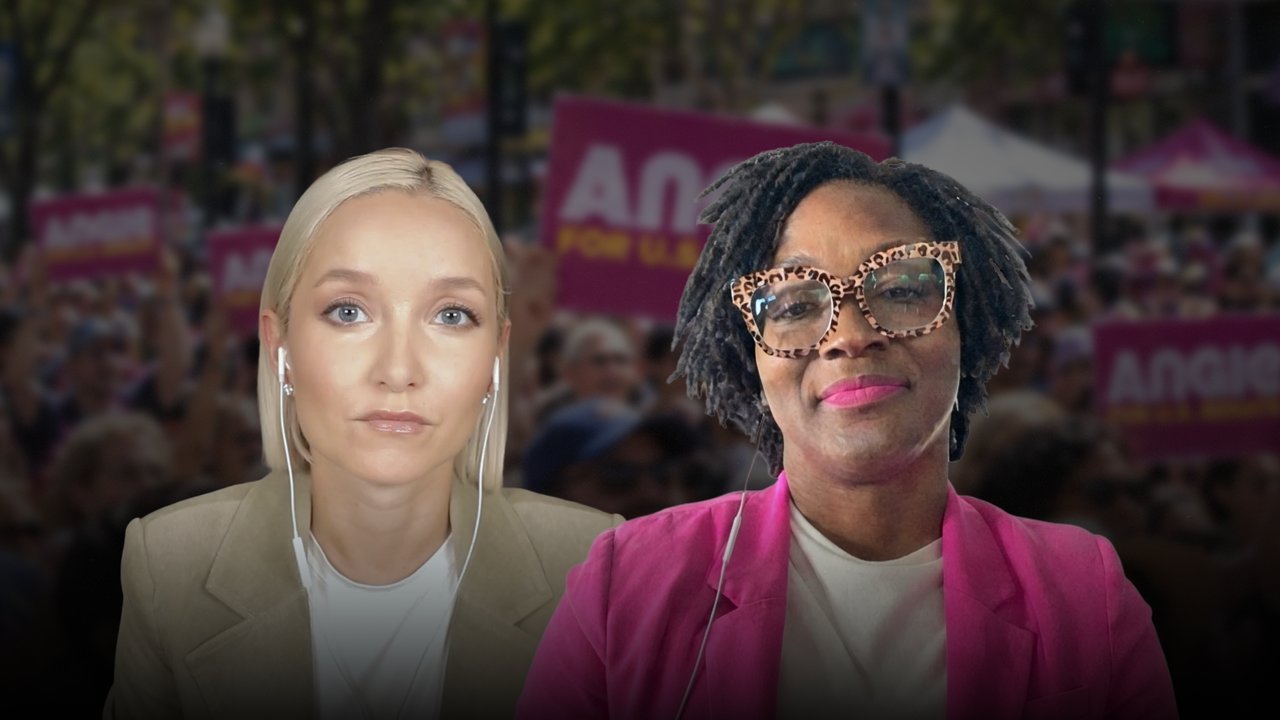
Can Angie Nixon prove Democrats can win in Florida?
lead image
Democrats’ top Senate-focused super PAC will report raising $354 million through Oct. 14 — including roughly $88 million in the first two weeks of the month— as Democrats race to seize control of the upper chamber in the election’s closing weeks.
Senate Majority PAC shared their fundraising totals, which are higher than any previous cycle, with Blue Light News ahead of a Federal Election Commission deadline later Thursday. The super PAC had $32.7 million in the bank as of Oct. 14.
“This is already the strongest cycle in Senate Majority PAC’s history, and it’s arriving exactly when it counts,” SMP spokesperson Lauren French said in a statement. “We’re on the air across the battleground through Election Day, and every dollar is going toward beating price-gouging Republicans and winning back the Senate.”
That’s more than the $306 million SMP raised in the 2024 campaign cycle, according to FEC filings, its previous high.
SMP is still being outraised by the Senate Leadership Fund, the GOP’s top Senate super PAC, in large part thanks to billionaire Elon Musk and other Republican megadonors. Musk gave $158 million to SLF in the third quarter, according to its most recent FEC report, and the super PAC in turn sent that money to Texas’ Senate race in order to boost the scandal-plagued GOP nominee Ken Paxton.
As of Sept. 30, SLF had raised more than $423 million for the cycle.
Democrats have been able to offset much of Republicans’ super PAC cash advantage on the airwaves because of stronger candidate fundraising.
But Republicans still have the advantage of a favorable map — and more outside money — as they hope to maintain control of at least one chamber of Congress next month.
- Democrats want Mullin in the hotseat in the next Congress
- John Barrasso to campaign with Ken Paxton
- Capitol agenda: Bennie Thompson warns about Dems’ late bet
- Poll: Trump wants the midterms to be about him. That could backfire.
- Can Angie Nixon prove Democrats can win in Florida?

- Elon Musk pours another $76 million into boosting Republicans
- Senate Democrats’ campaign arm takes out $15M loan
- Democrats’ top Senate super PAC has raised $354M this year
- Biotech investment is the new front in the U.S.-China trade fight
- A final farewell to NYC’s horse carriage industry

-

 Politics2 years ago
Former ‘Squad’ members launching ‘Bowman and Bush’ YouTube show
-
Uncategorized2 years ago
Bob Good to step down as Freedom Caucus chair this week
-

 The Josh Fourrier Show2 years ago
DOOMSDAY: Trump won, now what?
-

 The Dictatorship2 years ago
Pete Hegseth’s tenure at the Pentagon goes from bad to worse
-

 Politics2 years ago
Former Kentucky AG Daniel Cameron launches Senate bid
-

 The Dictatorship2 years ago
Luigi Mangione acknowledges public support in first official statement since arrest
-

 Politics2 years ago
Blue Light News’s Editorial Director Ryan Hutchins speaks at Blue Light News’s 2025 Governors Summit
-

 Politics1 year ago
John Legend advises Trump to drop the ‘dictator s‑‑‑’ if he wants Nobel Peace Prize