
Politics
Trump says hush money sentence means Democrats have lost the ‘Witch Hunt’

Donald Trump framed Friday’s sentencing hearing as a win, saying the sentence that will leave him unpunished for his felony conviction in the Manhattan hush money case means the “Radical Democrats have lost another pathetic, unAmerican Witch Hunt.” “That result alone proves that, as all Legal Scholars and Experts have said…
Read More


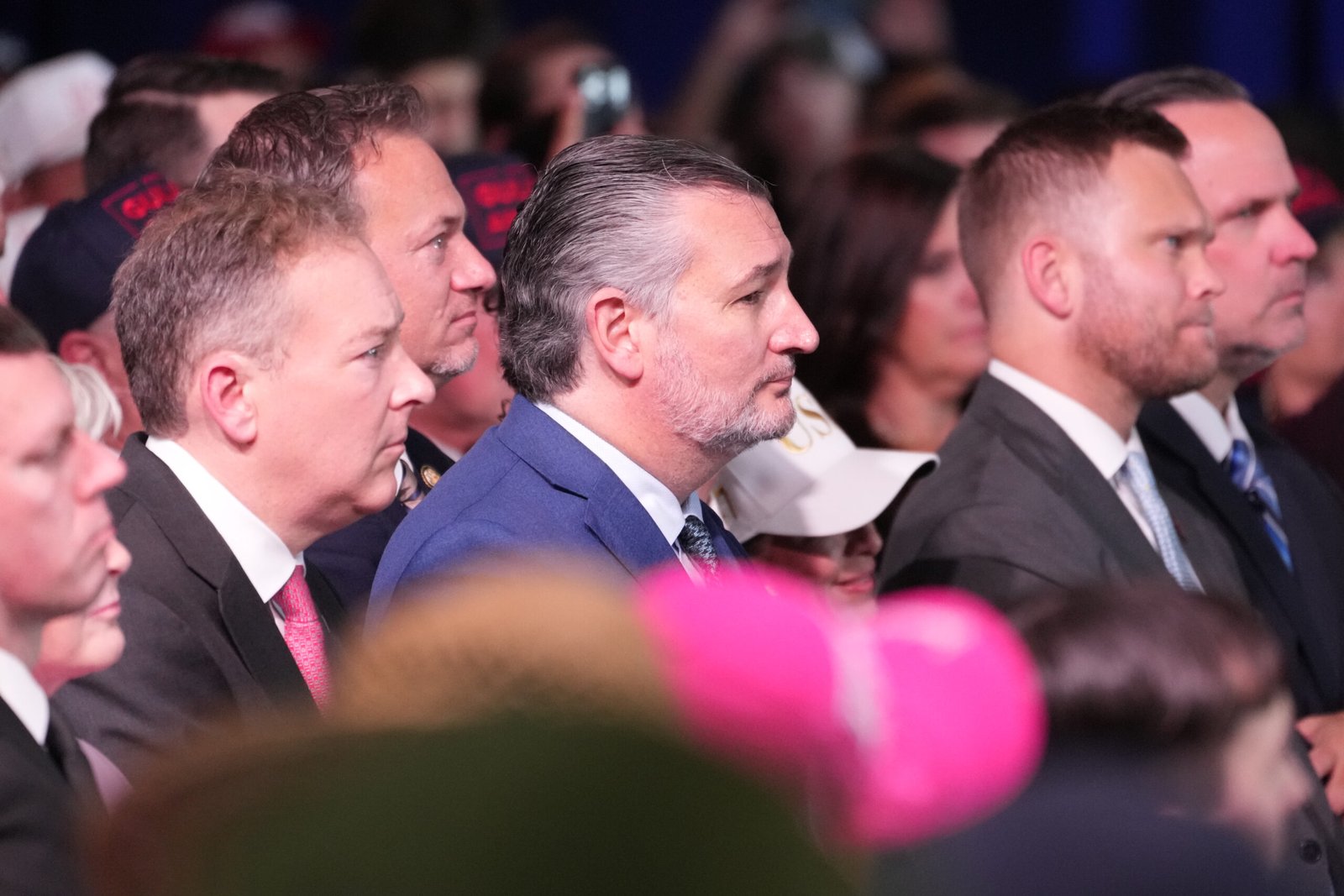
Secretary of State Marco Rubio on Tuesday came as close to the campaign trail as he’s been all year. And even then, he tried to stay just offshore.
Rubio appeared with President Donald Trump in Corpus Christi, Texas, as he rallied alongside an oil tanker carrying Venezuelan crude. The visit helped spotlight a proud White House accomplishment — toppling the Venezuelan dictator Nicolás Maduro and opening the country’s energy supply — in a political battleground state.
The unexpected nature of Rubio’s presence, after the president coaxed him up on stage during the rally, is likely enough to shield the nation’s top diplomat from allegations that he is interfering in the midterm campaign. The former Florida senator has kept a careful distance from partisan politics, even as colleagues like Attorney General Todd Blanche have defied longstanding norms against some administration officials engaging in electioneering.
“It’s an honor to work for the greatest country in the world, for the greatest president in the history of the United States of America,” Rubio said in brief remarks from the stage. “We love you, Texas.”
A White House official, who like others in this article was granted anonymity to share details of the trip, said that Rubio was backstage during the rally when the president brought him up and that he was only there in his capacity as national security adviser, not to stump ahead of the midterms.
While Rubio, who was not expected to speak at the event, has maintained the tradition of secretaries of State not campaigning, Republicans have been clamoring for the potential 2028 presidential hopeful to do so, seeing him as one of the party’s strongest messengers in a bruising midterm cycle in which they have been desperate for any additional help. One GOP official in a state with a key Senate race, granted anonymity to share private conversations, said that they asked for Rubio to attend a recent political event but were told the secretary of State wasn’t doing political events given his role as chief diplomatic officer.
“Rubio is Trump’s best asset, and they know they are in a dog fight to win in Texas,” said Bill Cortese, a GOP operative who has advised Rep. Elise Stefanik (R-N.Y.). Even if Rubio had not come up on stage, “news of Rubio simply being in the state could potentially boost the GOP’s chances in places that they need it.”
Plus, the secretary of State had another good reason for being there: Rubio was one of the central architects of the administration’s Venezuela strategy and has been a leading figure in managing the country’s political transition and economic arrangements with the U.S. in the wake of Maduro’s ouster.
“It’s his win and his deal,” a Trump administration official added about Rubio and the Venezuela link.
Asked why Rubio accompanied Trump on the Texas trip, the White House referred to one of Trump’s Truth Social posts from August in which he credited Rubio and Defense Secretary Pete Hegseth for negotiating the oil deal with Venezuela.
A State Department spokesperson noted Rubio’s role as national security adviser and said that he “needs time with the president on all kinds of issues. The president will be on the go, so being on the plane with him gives him a chance to talk to him about these items.”
The secretary of State notably skipped the Republican National Committee’s midterm convention in Dallas last month, opting instead to go on a diplomatic trip to Colombia.
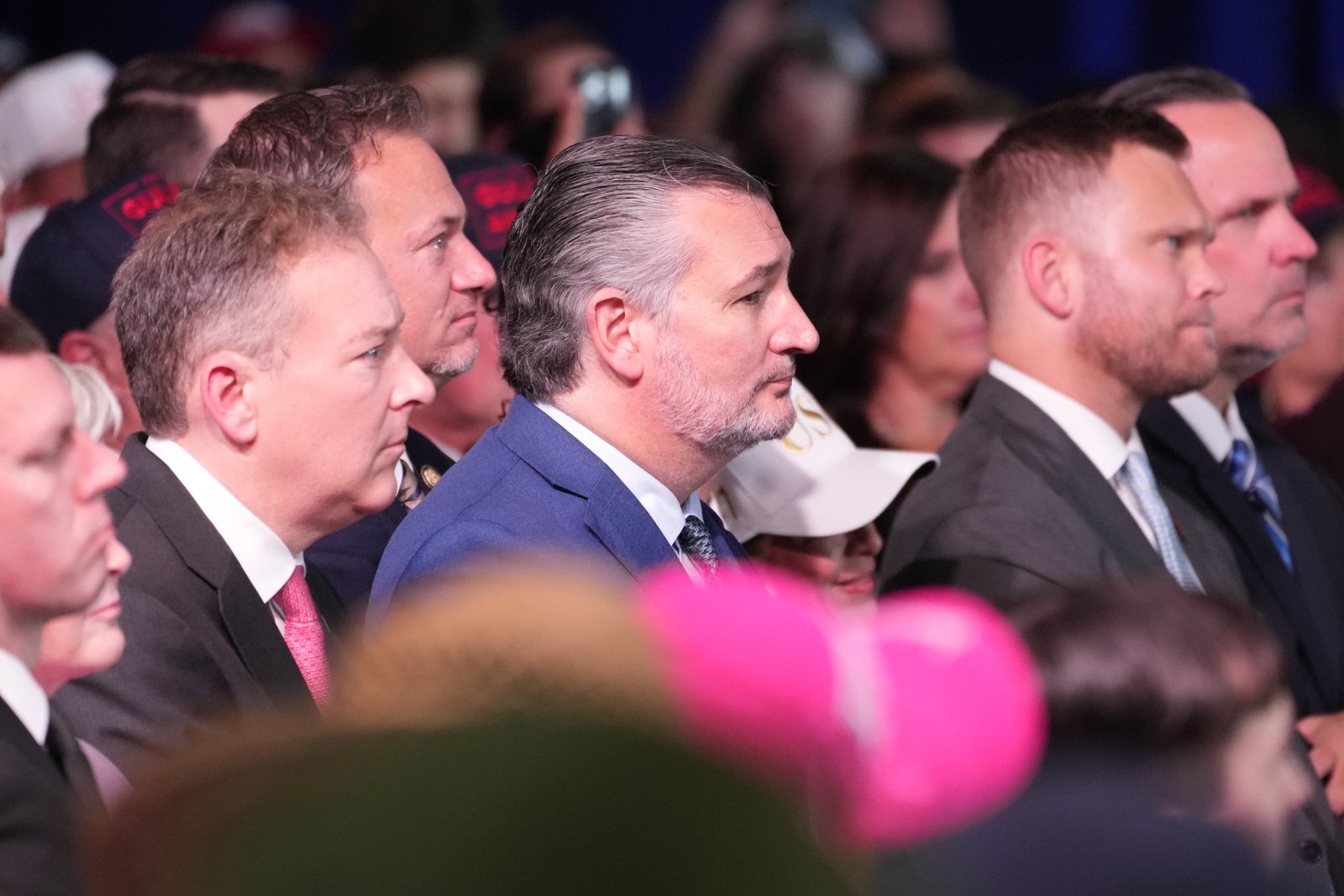
“Marco loves campaigns and politics and he cares desperately about making sure that the House and Senate remain in Republican hands, but I think he also realizes that part of being secretary of State is you don’t engage in overt political activity,” said a person close to Rubio.
In Trump’s first term, Secretary of State Mike Pompeo broke with tradition and made a handful of public appearances that directly or indirectly appeared campaign related, including delivering remarks to the Republican National Convention in 2020.
On a practical level, most secretaries of State travel overseas so much that it’s hard to spare time for campaigns. But Rubio travels more infrequently than his predecessors, in part because of his national security adviser role, which keeps him at the White House.
And Rubio also has a more nontraditional role even as secretary of State, focusing most of his energy on Latin America while the president’s special envoys, including Steve Witkoff and Jared Kushner, have handled negotiations to try to end the wars in Iran, Ukraine and Gaza.
Yet the Texas visit — in which Trump sought to link one of his signature foreign policy accomplishments with efforts to reduce prices — came as a relief to the Republicans who believe Rubio is one of the party’s most trusted messengers on the economy and have for months wanted to see him on the trail.
Results from The Blue Light News Poll suggest Rubio can be a useful surrogate on the campaign trail. Across three polls this month, Republican midterm voters consistently selected Rubio as their third-highest choice to hit the campaign trail to help their party, behind Trump and Vice President JD Vance but ahead of Texas Sen. Ted Cruz, Health Secretary Robert F. Kennedy Jr. and others.
Support for Rubio on the campaign trail is also fairly steady across Trump’s 2024 coalition, with only an 8-point gap between the MAGA base (31%) and non-MAGA Trump voters (23%) saying the secretary of State would help Republicans if he campaigned. Meanwhile, MAGA loyalists were significantly more likely than non-MAGA Trump voters to support Trump and Vance hitting the trail.
Notably, Rubio also generates less negative backlash than other figures. Democrats widely support the impeachment of Trump, Vance, Kennedy and others. But support for impeaching Rubio is lower than the other figures, pushing overall public opinion against impeachment.
“Marco Rubio is Republicans’ most valuable asset in this difficult environment. While he has broad support from the MAGA base, he also appeals to centrist voters and obviously to critical Hispanic voters. It makes sense that they would find a way to activate him,” said former Florida Rep. Carlos Curbelo.
Kimberly Leonard, Alex Gangitano and Seb Wride, chief pollster at PF Global, contributed to this report.
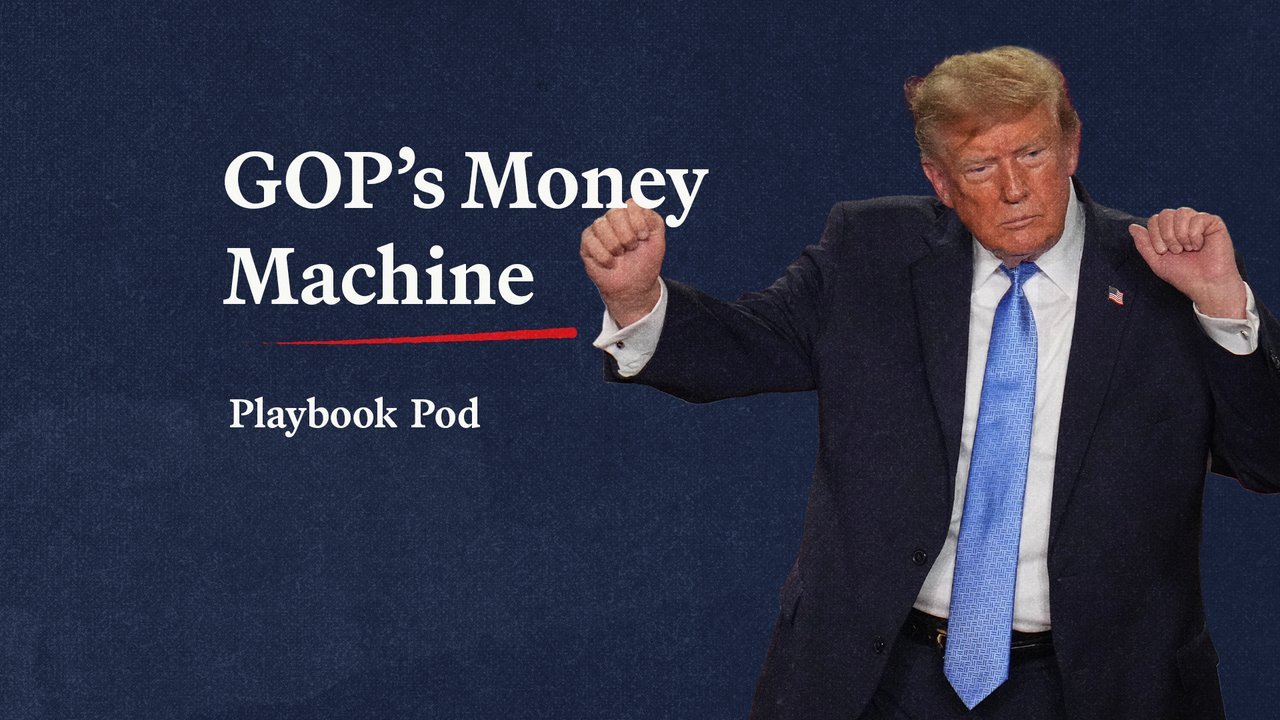
Trump is still the center of the GOP money universe
lead image
Republicans’ small-dollar donor base has contracted in recent years, leaving the party more dependent on a tiny group of wealthy megadonors for support.
The GOP has had a cash advantage all year thanks to a relatively small group of large donors who have funded super PACs — Elon Musk alone has given nearly half a billion dollars this cycle. But the campaigns themselves have raised relatively little, and there’s one major reason: Other than President Donald Trump, who is still the party’s biggest fundraiser, Republicans still haven’t figured out how to raise money online.
New campaign finance filings reveal just how deep the problem goes. While Republicans have long struggled to grow their grassroots donor base, they’ve moved in the wrong direction in recent years. The number of federal donors giving through WinRed, the major GOP online fundraising platform, is down, with roughly 1.5 million donors so far this cycle compared to 2.2 million at this time in 2022. Meanwhile the number of donors has increased by about one third on ActBlue, from 4.9 million to roughly 6.6 million.
The contrast is stark: A single Democratic candidate, James Talarico in Texas, has had roughly the same number of donors on ActBlue this cycle as all Republican candidates and committees combined had on WinRed, according to a Blue Light News analysis of reports ActBlue and WinRed submitted to the Federal Election Commission.
Republican digital strategists who have been sounding the alarm for years say lagging donations are a product of fatigue, driven by years of urgent messages to the same set of potential donors.
“We beat the absolute hell out of low-dollar donors with texts and emails without expanding our [donor lists], and now no one pays attention,” said Wesley Donehue, a South Carolina-based GOP digital strategist.
Republicans’ online fundraising struggles have put their House and Senate candidates at a particular disadvantage, as candidates — unlike super PACs — face strict contribution limits and need a far larger pool of donors from which to raise money. Poor candidate fundraising has major campaign implications: Democrats’ cash advantage on that front has helped them run nearly as many ads as Republicans despite having less money overall, because candidates and parties get better rates than super PACs on broadcast TV.
Democrats’ grassroots fundraising strength is in part because of how decentralized the party is, with individual campaigns and groups building their own donor lists and fundraising operations. Virtually all of the the top Democratic fundraisers online this year are Senate candidates in competitive races.
But Republicans’ online fundraising, like so much of the party, is still centered around Trump and the official party committees. Unlike on the Democratic side, few individual Republicans have managed to break out.
Republicans’ fundraising troubles have left them more reliant on Trump: The president’s super PAC, MAGA Inc., is among the biggest midterm spenders. The group and its affiliates have now spent $296 million — after facing pressure for much of the cycle from some in the GOP who wished it would have gotten involved sooner.
“Candidates are not investing the time and resources in programs that grow the donor lists and attract their supporters into the ecosystem. Instead, they just barrage previous donors with ongoing requests for donation,” said Eric Wilson, a longtime Republican digital strategist and executive director of the Center for Campaign Innovation. “Credit to the Trump team — they brought new people into the ecosystem, and those people continue to give to them.”
Trump has continued to fundraise since returning to the White House, including through his Never Surrender leadership PAC, which was formed out of his 2024 campaign committee, and two joint fundraising committees from his previous presidential runs.
Of the nearly 1.5 million donors who have given on WinRed this cycle, 324,000 of them — a bit over 22% — have given only to Trump’s groups through the platform but not any other candidate or committee, Blue Light News’s analysis found. Another 39% of WinRed donors have given to both Trump and another Republican.
Overall, that means about 3 in 5 WinRed donors this cycle have given to Trump, when he is neither on the ballot nor able to run for president again. That’s left non-Trump GOP donors in the clear minority just as the party begins to look for a new standard bearer ahead of 2028.
WinRed isn’t the only online GOP fundraising platform, but it is by far the largest and features all of the major party committees along with prominent House and Senate candidates across the map. Its FEC reports include only federal candidates and committees, not those in state-level races or nonprofits that use the platform.
Republicans once saw their online fundraising disadvantages as a matter of technology. ActBlue, which has been around since the 2000s, gave Democrats a major fundraising advantage in the late 2010s, at a time when Republicans had no similar centralized platform. WinRed, which launched in 2019, aimed to counter that. Now strategists say the GOP’s infrastructure has come a long way, but the party’s tactics still lag behind.
Democratic candidates eyeing higher office often maintain large fundraising operations, which they can use to raise money on behalf of candidates in battleground races while also building their own lists. Among the top 20 ActBlue fundraisers this cycle are former Transportation Secretary Pete Buttigieg’s leadership PAC and Sen. Mark Kelly’s (D-Ariz.) campaign committee. Kelly leveraged GOP attacks on his military service earlier this cycle to boost both his own fundraising and help Democrats across the map.
Wilson, the GOP strategist, credited out-of-cycle Democrats for building strong lists that they could use to shore up other candidates. The Republican side, he said, lacks similar coordination.
“Any time a Democrat announces they’re running for reelection, that week every Democrat in the Senate is sending a message to their list raising money for that person,” he said.
About the analysis: Donation totals and number of donors are based on ActBlue and WinRed receipts from all reports this cycle, covering Jan. 1, 2025, through Oct. 14, 2026. Donations that were later refunded are still included. Blue Light News’s analysis identifies unique donors based on matching full names and zip codes.
- Abbott taps tech cash for closing push in Texas governor’s race
- Trump touts methane rollback at Paxton campaign stop
- Republicans wanted Rubio on the stump. Trump coaxed him there.
- FBI raids Beverly Hills mansion tied to former Eric Swalwell donor
- Capitol agenda: Democrats face reckoning on trans issues
- Trump is still the center of the GOP money universe

- How Big Tech and Abbott made Texas the ‘epicenter’ of data centers
- Conservative climate movement faces a blue wave wipeout
- Democrats’ affordability message collides with calls to defend transgender rights
- Trump’s fundraising dominance is masking a long-term problem for Republicans
-

 Politics2 years ago
Former ‘Squad’ members launching ‘Bowman and Bush’ YouTube show
-
Uncategorized2 years ago
Bob Good to step down as Freedom Caucus chair this week
-

 The Josh Fourrier Show2 years ago
DOOMSDAY: Trump won, now what?
-

 The Dictatorship2 years ago
Pete Hegseth’s tenure at the Pentagon goes from bad to worse
-

 Politics2 years ago
Former Kentucky AG Daniel Cameron launches Senate bid
-
 Politics1 year ago
John Legend advises Trump to drop the ‘dictator s‑‑‑’ if he wants Nobel Peace Prize
-

 The Dictatorship2 years ago
Luigi Mangione acknowledges public support in first official statement since arrest
-

 Politics2 years ago
Blue Light News’s Editorial Director Ryan Hutchins speaks at Blue Light News’s 2025 Governors Summit