
The Dictatorship
Tourism groups warn of fallout from Trump administration’s proposed social media screening rule


The travel industry thought 2025 couldn’t get much worse. Las Vegas and New York watched as millions of tourists vanished. Border towns from Washington to Maine felt the sting of Canadian boycotts triggered by trade war tensions and President Donald Trump’s flippant comments about turning our longtime ally into the “51st state.”
But then, just days before the holiday rush, the Trump administration delivered another blow: a proposal that international visitors from visa-waiver countries would have to surrender five years of social media history and close family contacts just to step onto American soil.
“Travelers are already avoiding the United States. We are the only one of the top 25 countries for tourism to see a major decline in 2025,” travel expert and founder of Frommer’s guidebooks Pauline Frommer told MS NOW. “This feels, quite frankly, like an intentional act of sabotage by our government to destroy the travel industry.”
The new rule, proposed by Customs and Border Protection on Tuesday as a measure to protect national security interests and public safety, would affect millions of travelers from 42 countries, including close allies like Britain, France, Israel and Italy. Visitors would be required to provide five years of social media history, a decade of email addresses, and identifying information for immediate family.
“Nothing has changed on this front for those coming to the United States,” CBP spokesperson Trish Driscoll said. “This is not a final rule, it is simply the first step in starting a discussion to have new policy options to keep the American people safe.”
Already though, travel agents, guides and bloggers are strategizing about what to tell their clients. Tamara Elliott, founder of Global Guide, worries that if the proposal is approved, visa processing times will increase as administrators comb through information. This could lead to delays that have a ripple effect on the economy, she explained, resulting in lost revenue for agents and tour operators who adjust or cancel bookings.
Since 2016, sharing your social media with the U.S. government has been optional. The Trump administration did not appear to have consulted with industry groups ahead of announcing the rule that would make it mandatory, according to Clint Henderson, the managing editor of travel trade site The Points Guy.
The American travel industry supports nearly 20 million jobsand agents say the real figure is likely higher when accounting for the jobs with secondary associations.
“Most travelers just want a smooth, straightforward holiday, not a deep audit of their online lives,” said Leigh Barnes, president of Intrepid Travelers, The Americas. “If this proposal goes through, we could see real flow-on effects for airlines, hotels, tour operators and the small businesses that depend on international visitors.”
Andrea Flores, a vice president at the immigration and criminal justice policy group FWD.us who worked at the Department of Homeland Security and the National Security Council under Democratic administrations, has already asked friends and family outside of the country to be careful when traveling to the U.S.
She has questions about what the government will do once they have years’ worth of travelers’ personal data: “How will they store it? Where will they share it? Will they be sharing it with other national security agencies? Why will they be sharing it with them?”
Immigration advocates and civil liberties organizations say the anxiety is warranted.
Sophia Cope, a senior staff attorney on the Electronic Frontier Foundation’s civil liberties team, warned that for tourists and people with loved ones they hope to visit in the United States, this level of government surveillance will make them feel less free to express their beliefs, especially if they’re in opposition to the current administration.
“It’s a real tragedy when people are disincentivized from doing that, and it not only affects the people who are the applicants, but also people in their social orbit, right? So maybe their friends or family or colleagues may themselves engage in self censorship to avoid doing anything that might implicate their loved ones.”
Cope also pointed out that CBP has yet to clarify some basic administrative steps. Will travelers who’ve always kept their social media pages private be required to make them public in order to go see the Grand Canyon or a Broadway show?
And for the American travelers who think this won’t impact them, Cameron Hewitt of Rick Steves’ Europe, an operator that focuses on outbound travel, cautioned that there is a history of European governments implementing reciprocal requirements when America changes its policies.
“A Trump supporter might initially think this policy is a smart move,” he said. “But what happens if, down the road, their dream trip to Ireland or Italy gets scuttled just because they’ve shared and liked MAGA content online? Of course, they’d want their freedom of speech to not run the risk of affecting their travel options.”
CBP will accept 60 days of public comment and feedback on the policy. But industry leaders say the damage may already be done by thenand 2025 may be remembered as a year that redefined not just who visits the United States but how the country is seen from abroad.
Kyla Guilfoil contributed to this report.
Antonia Hylton is co-anchor of “The Weekend: Primetime” and an award-winning correspondent for MS NOW.


The Dictatorship
Judge rules companies are entitled to refunds for Trump tariffs overturned by the Supreme Court

WASHINGTON (AP) — In a defeat for the Trump administration, a federal judge in New York ruled Wednesday that companies that paid tariffs struck down last month by Supreme Court are due refunds.
Judge Richard Eaton of the U.S. Court of International Trade wrote that “all importers of record’’ were “entitled to benefit’’ from the Supreme Court ruling that struck down sweeping double-digit import taxes President Donald Trump imposed last year under the 1977 International Emergency Economic Powers Act (IEEPA).
The Supreme Court found those tariffs to be unconstitutional under the emergency powers law, including the sweeping “reciprocal” tariffs he levied on nearly every other country. The majority ruled that the president could not unilaterally set and change tariffs because taxation power clearly belongs to Congress.
In his ruling, Eaton wrote that he alone “will hear cases pertaining to the refund of IEEPA duties.’’ The ruling offers some clarity about the tariff refund process, something the Supreme Court did not even mention in its Feb. 20 decision. Trade lawyer Ryan Majerus, a partner at King & Spalding and a former U.S. trade official, said he expects the government to appeal or “seek a stay to buy more time for U.S. Customs to comply.″
The federal government collected more than $130 billion in the now-defunct tariffs through mid-December and could ultimately be on the hook for refunds worth $175 billion, according to calculations by the Penn Wharton Budget Model.
Eaton was ruling specifically on a case brought by Atmus Filtration, a Nashville, Tennessee, company that makes filters and other filtration products, claiming a right to a tariff refund.
All goods that go through U.S. Customs and Border Protections enter a process called “liquidation,” when the agency issues its final accounting of what is owed. Once liquidated, importers have 180 days to formally contest the duties. After that window closes, the liquidation is legally final.
The judge ordered customs to stop collecting the IEEPA tariffs the Supreme Court struck down last month on goods going through the liquidation process. And if the goods were past that part of the process, the agency would have to recalculate them without the tariffs.
“This is a great decision for importers and consumers who paid,” said Barry Appleton, a law professor and co-director New York Law School’s Center for International Law. “It will make customs brokers busy. It should make things easier for the courts — and get a process underway for those importers who paid within the last 180 days.”
On Monday, another federal court rejected the Trump administration’s attempt to slow the refund process. The U.S. Court of Appeals for the Federal Circuit started the next phase in the refund process by sending it to New York trade court to sort out.
Now the U.S. Customs and Border Protection agency must come up with a way to process the refunds. Customs routinely refunds tariffs when there’s been some kind of error, but its system was “not designed for a mass refund,″ said trade lawyer Alexis Early, a partner at Bryan Cave Leighton Paisner. “The devil will be in the details of the administrative process.″
____
Anderson reported from New York.
AP Writer Lindsay Whitehurst contributed to this story.
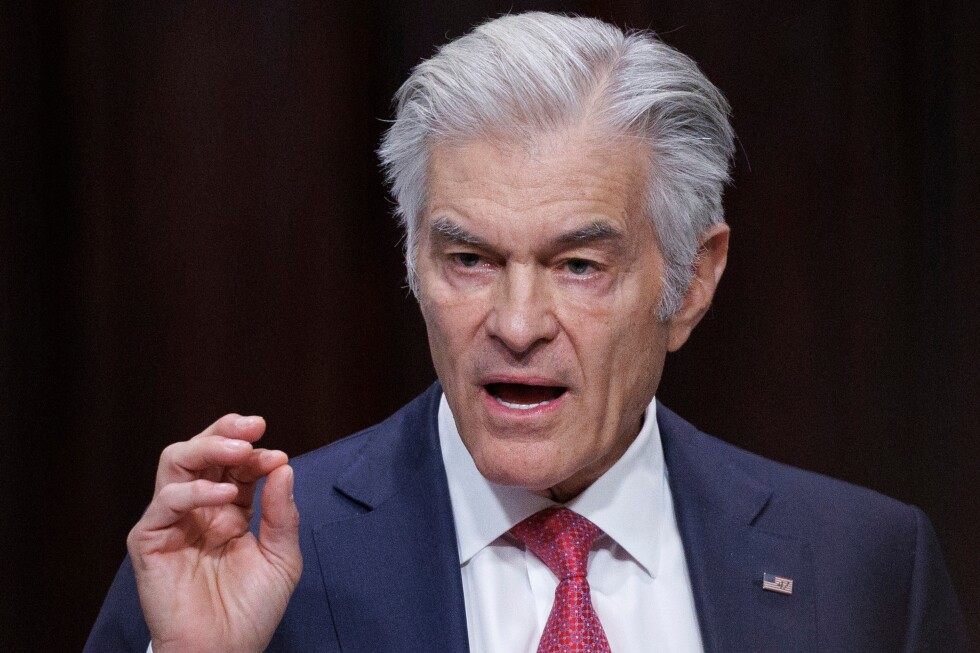
NEW YORK (AP) — President Donald Trump’s administration is expanding its crackdown on state Medicaid programs to New York, launching a fraud probe in the state a week after it said it was freezing nearly $260 million in Medicaid funding in Minnesota over similar accusations.
Centers for Medicare and Medicaid Services Administrator Dr. Mehmet Oz announced Tuesday that the Trump administration identified concerning trends in New York’s Medicaid program and demanded that state officials provide details about their handling of fraud, waste and abuse within 30 days or risk deferred payments.
“Heart surgeons are trained to look at the numbers,” Oz, a former celebrity heart surgeon, said in a video on Tuesday. “Right now, the numbers coming out of New York’s Medicaid program don’t add up.”
The new investigation is part of an administration-wide initiative to address fraud around the country, which federal officials say is needed to rein in runaway spending and protect taxpayers. With many midterm voters concerned about affordability, Trump has ramped up those efforts, announcing that Vice President JD Vance would help balance the nation’s budget by spearheading a national “war on fraud.”
Targeted Democratic state officials have decried the Republican administration’s moves as politically motivated and potentially disastrous for the millions of people who rely on the health care safety net for low-income Americans.
New York’s Democratic governor says the move is politically targeted
In a letter to New York Gov. Kathy Hochul, a Democrat, Oz wrote that the state’s spending levels combined with “serious concerns” about its oversight of certain Medicaid services demand “immediate investigation, corrective action and enhanced transparency.”
The letter flagged specific areas of concern, including a high proportion of New York’s Medicaid beneficiaries receiving personal care services related to daily living activities like bathing, grooming and meal preparation.
New York’s soaring Medicaid costs have long vexed the state’s governors and were a top priority of Gov. Andrew Cuomo, a Democrat who grappled for years with the program’s spiraling price tag as residents age and receive additional benefits. The state’s program, which cost $115.6 billion in the 2025 fiscal year, provides health care for about 1 in 3 New Yorkers and spends more per person for care than Medicaid programs in any other state.
Hochul has also tried to rein in costs through an overhaul of how a home health care program is administered.
Asked Wednesday by reporters about Oz’s letter, Hochul said the Trump administration is targeting a Democrat-led state for political reasons but added, “I will have to stand up and show them the truth and show them the facts, that they’re wrong. When there is fraud I will help them fight it.”
Hochul’s office said the fraud investigation was an attempt by the Trump administration to rip health care away from everyday New Yorkers. CMS said in an emailed statement that ensuring states comply with federal rules is “a core part of the agency’s federal oversight role.”
New York investigation follows CMS action in other blue states
The New York investigation comes less than a week after CMS halted Medicaid payments to Minnesota over fraud concerns. Oz said the money would be delivered only after Minnesota implements “a comprehensive corrective action plan.”
The administration had previously cited allegations of fraud involving day care centers run by Minneapolis-area Somali residents as a reason for a massive federal enforcement surge there. Minnesota Gov. Tim Walz, a Democrat, called the new funding freeze “targeted retribution.”
Minnesota on Monday sued the Trump administration over the deferred payments. The state is also appealing CMS withholding $2 billion in annual Medicaid funds announced in early January.
Earlier this year, Oz announced that CMS had sent letters to Democratic governors in Maine and California demanding more information or corrective action on alleged fraud in government health programs in those states.
In the days after receiving Oz’s letter last month, Maine Gov. Janet Mills said she wouldn’t be intimidated by the administration and called the request “a political attack.” The 30-day timeline he gave her to respond or risk losing Medicaid payments is set to expire this week. A spokesperson for Mills didn’t immediately respond to a request for comment.
Maine is facing a political attack from a president who uses allegations of fraud as a pretense to send ICE and other weaponized federal agents into states led by Democrats with devastating consequences.
The Trump administration has sought to withhold funding from Democratic-led states at least two other times in recent months citing fraud concerns. It happened with child care subsidies and other social services programs in Minnesota, New York and three other states and with the Supplemental Nutrition Assistance Program in 22 states that have declined to hand over data that the federal government says is needed to catch fraud.
In both those cases, judges have ruled that the money must continue to flow for now.
___
Associated Press writer Geoff Mulvihill in Philadelphia contributed to this report.
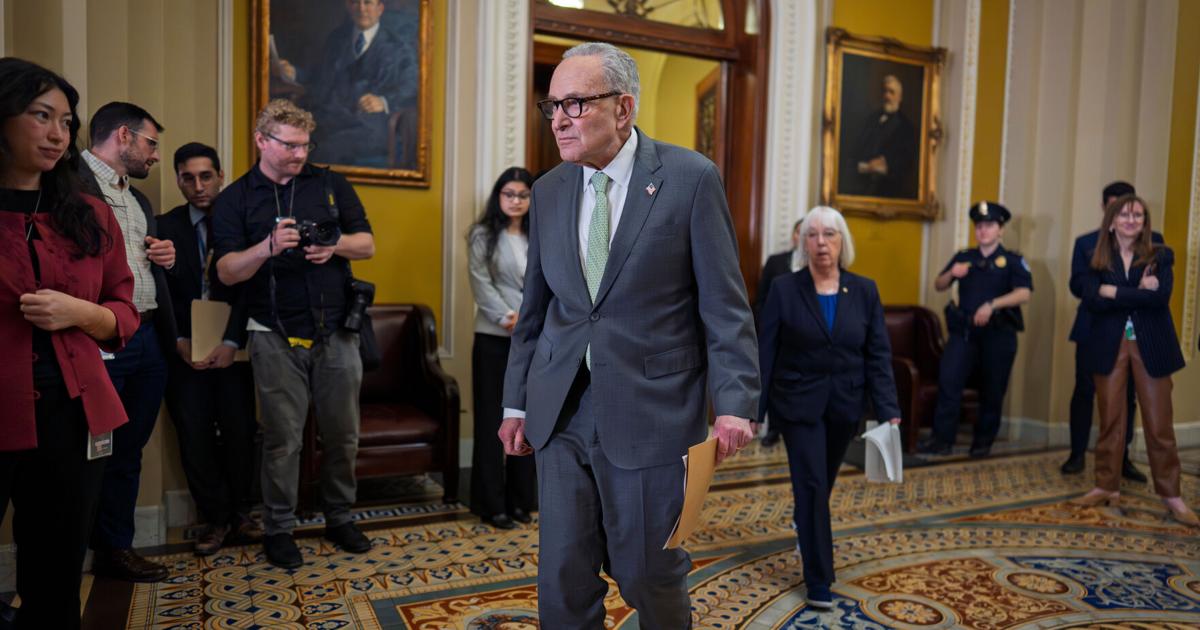
WASHINGTON (AP) — Senate Republicans voted down an effort Wednesday to halt President Donald Trump’s war against Irandemonstrating early support for a conflict that has rapidly spread across the Middle East with no clear U.S. exit strategy.
The legislation, known as a war powers resolutionfailed on a 47-53 vote tally. The vote fell mostly along party lines, though Republican Sen. Rand Paul of Kentucky voted in favor and Democratic Sen. John Fetterman of Pennsylvania voted against.
The war powers resolution gave lawmakers an opportunity to demand congressional approval before any further attacks are carried out. The vote forced them to take a stand on a war shaping the fate of U.S. military members, countless other lives and the future of the region.
Underscoring the gravity of the moment, Democratic senators filled the Senate chamber and sat at their desks as the voting got underway. Typically, senators step into the chamber to cast their vote, then leave.
House Minority Leader Hakeem Jeffries, D-N.Y., speaks to reporters during a news conference on Capitol Hill in Washington, Tuesday, March 3, 2026. (AP Photo/Manuel Balce Ceneta)
House Minority Leader Hakeem Jeffries, D-N.Y., speaks to reporters during a news conference on Capitol Hill in Washington, Tuesday, March 3, 2026. (AP Photo/Manuel Balce Ceneta)
“Today every senator — every single one — will pick a side,” Senate Democratic Leader Chuck Schumer said before the vote. “Do you stand with the American people who are exhausted with forever wars in the Middle East or stand with Donald Trump and Pete Hegseth as they bumble us headfirst into another war?”
Sen. John Barrasso, second in Senate Republican leadership, said during the debate that GOP senators were sending a message that Democrats are wrong for forcing a vote on the war powers resolution.
“Democrats would rather obstruct Donald Trump than obliterate Iran’s national nuclear program,” he added.
Trump administration scrambles for congressional support
AP AUDIO: Congress is taking its first votes on the Iran war as debate rages about US goals
AP Washington correspondent Sagar Meghani reports on Congress weighing in amid the war against Iran.
After launching a surprise attack against Iran on Saturday, Trump has scrambled to win support for a conflict that Americans of all political persuasions were already wary of entering. Trump administration officials have been a frequent presence on Capitol Hill this week as they try to reassure lawmakers that they have the situation under control.
Defense Secretary Pete Hegseth said Wednesday that the war could extend eight weeks, a longer time frame than has previously been floated by the Trump administration. He also acknowledged that Iran is still able to carry out missile attacks even as the U.S. tries to control the country’s airspace.
U.S. service members “remain in harm’s way, and we must be clear-eyed that the risk is still high,” Gen. Dan Caine, chairman of the Joint Chiefs of Staff, said at the same press conference.
Six U.S. military members were killed over the weekend in a drone strike in Kuwait.
Republican Sen. Joni Ernst of Iowa acknowledged the human costs of the war in her floor speech. Two of the soldiers killed Sunday were from Iowa and a National Guard unit from her state was also attacked in Syria in December, resulting in the deaths of two other soldiers.
“But now is our opportunity to bring an end to the decades of chaos,” said Ernst, who herself served as an officer in the Iowa National Guard for two decades.
“The sooner the better,” she added.
Trump has also not ruled out deploying U.S. ground troops. He has said he is hoping to end the bombing campaign within a few weeks, but his goals for the war have shifted from regime change to stopping Iran from developing nuclear capabilities to crippling its navy and missile programs.
Senate Majority Leader John Thune, R-S.D., center, joined at left by Sen. John Barrasso, R-Wyo., the GOP whip, speaks to reporters at the Capitol in Washington, Tuesday, March 3, 2026. (AP Photo/J. Scott Applewhite)
Senate Majority Leader John Thune, R-S.D., center, joined at left by Sen. John Barrasso, R-Wyo., the GOP whip, speaks to reporters at the Capitol in Washington, Tuesday, March 3, 2026. (AP Photo/J. Scott Applewhite)
“We should be careful about opening a door into chaos in the Middle East when we cannot see the other side of it,” Democratic Sen. Chris Coons of Delaware said in a solemn floor speech after the vote concluded.
He said he was praying for “grace to find a path forward together where more do not needlessly join those who have already fallen in this new war in the Middle East.”
Lawmakers go on record
Defense Secretary Pete Hegseth arrives for a briefing for lawmakers on Iran at a secure room in the basement of the Capitol in Washington, Tuesday, March 3, 2026. (AP Photo/J. Scott Applewhite)
Defense Secretary Pete Hegseth arrives for a briefing for lawmakers on Iran at a secure room in the basement of the Capitol in Washington, Tuesday, March 3, 2026. (AP Photo/J. Scott Applewhite)
The votes in Congress this week represented potentially consequential markers of just where lawmakers stand on the war as they look ahead to midterm elections and the consequences of the conflict.
“Nobody gets to hide and give the president an easy pass or an end-run around the Constitution,” said Sen. Tim Kaine, the Virginia Democrat leading the war powers resolution.
Republican leaders have successfully, though narrowly, defeated a series of war powers resolutions pertaining to several other conflicts that Trump has entered or threatened to enter. This one, however, was different.
Unlike Trump’s military campaigns against alleged drug boats or even Venezuelan leader Nicolás Maduro, the attack on Iran represents an open-ended conflict that is already ricocheting across the region. Several senators who have voted for previous war powers resolutions noted that they opposed this one because it applied to a conflict that is already raging.
“Passing this resolution now would send the wrong message to Iran and to our troops,” said GOP Sen. Susan Collins of Maine. “At this juncture, providing unequivocal support to our service members is critically important, as is ongoing consultation by the administration with Congress.”
House vote looms
On the other side of the Capitol, an intense debate over the war unfolded before a vote Thursday. The House first debated a resolution presented by GOP leadership affirming that Iran is the world’s largest state sponsor of terrorism.
Rep. Brian Mast, the GOP chairman of the House Foreign Affairs Committee, publicly thanked Trump for taking action against Iran, saying the president is using his own constitutional authority to defend the U.S. against the “imminent threat” of Iran.
Mast, an Army veteran who worked as a bomb disposal expert in Afghanistan, said the Democratic resolution was effectively asking “that the president do nothing.”
Rep. Gregory Meeks, the top Democrat on the Foreign Affairs panel, said before the debate that the hardest votes he has taken in Congress have been to decide whether to send U.S. troops to war. “Our young men and women’s lives are on the line,” he said, his voice showing emotion as he emerged from a closed-door bri efing late Tuesday with Trump officials.
At a news conference Wednesday, several Democratic members who are also veterans of the Iraq and Afghanistan wars spoke about the heavy costs of those conflicts.
One of them was Rep. Jason Crow, D-Colo. “I learned when I was fighting in Iraq and Afghanistan, that when elites in Washington bang the war drums, pound their chest, talk about the costs of war and act tough, they’re not talking about them doing it, they’re not talking about their kids,” Crow said. “They’re talking about working class kids like us.”
- Dems aren’t sure whether to actually spend big to flip Texas
- Top Mamdani aide takes progressive project to the UK

- Republicans confront the massive cost of Trump’s Middle East war
- Judge rules companies are entitled to refunds for Trump tariffs overturned by the Supreme Court

- War, Trump and Washington’s Gridlock | Sen. Katie Britt

- Trump administration launches Medicaid fraud probe in New York

- ‘Dead in the water’: Anti-war GOP feel abandoned by Trump
- GOP fundraiser with Hegseth scrapped amid Iran War buildup
- Republican group attacks Thomas Massie for his opposition to Iran war
- Markwayne Mullin faces a straightforward path to confirmation as DHS secretary
-

 The Dictatorship1 year ago
Luigi Mangione acknowledges public support in first official statement since arrest
-

 Politics1 year ago
Former ‘Squad’ members launching ‘Bowman and Bush’ YouTube show
-

 Politics1 year ago
Blue Light News’s Editorial Director Ryan Hutchins speaks at Blue Light News’s 2025 Governors Summit
-

 The Dictatorship6 months ago
Mike Johnson sums up the GOP’s arrogant position on military occupation with two words
-

 Politics1 year ago
Former Kentucky AG Daniel Cameron launches Senate bid
-

 The Dictatorship1 year ago
Pete Hegseth’s tenure at the Pentagon goes from bad to worse
-
Uncategorized1 year ago
Bob Good to step down as Freedom Caucus chair this week
-

 Politics11 months ago
Democrat challenging Joni Ernst: I want to ‘tear down’ party, ‘build it back up’