
Politics
‘Those days are over’: Trump books draw lackluster sales

President Donald Trump promised Americans they would get tired of winning — for now, it appears they are getting tired of reading about him.
Trump’s first term saw books authored by prominent journalists sell hundreds of thousands of copies each as the public rushed to learn the inside details of Trump’s norm-shattering presidency.
But similar books aren’t exactly flying off the shelves in his second term, and the bar to getting onto the coveted New York Times bestseller list has been lowered as the overall nonfiction book market has dipped. In these tenuous times for the nonfiction political book market, industry insiders say there are fewer big advances being paid and narrower routes to success that rely on brand-name authors or a partisan perspective.
“Everyone is desperately looking for the next Michael Wolff or James Comey for next year, but it’s not clear there could ever be one again,” said one concerned publisher, referencing two of the authors with biggest book successes of Trump’s first term.
“There’s definitely a slump, and it’s across all of nonfiction,” added a book agent. “Part of it is that we were just actually tired of this, and we’re exhausted, and we don’t want to spend 30 bucks and six or eight hours of our time feeling worse.” (Publishing insiders and authors were granted anonymity for this story because they didn’t have authorization to speak from their employers or wanted to speak candidly about the state of the industry.)
The latest example is “2024: How Trump Retook the White House and the Democrats Lost America,” by political journalists Josh Dawsey, Tyler Pager and Isaac Arnsdorf. “2024” sold roughly 6,000 hardcover copies in the first week of publication, according to data released last Wednesday from NPD BookScan. Yet even with that sales figure, it hit the New York Times bestseller list at No. 4. (The Times bestseller list does not disclose its data sources.)
It has become somewhat easier to get on to the Times bestseller list because it measures comparable sales across the board. One point of comparison: In a similar week in July 2017, the No. 4 book on the Times nonfiction list was former Sen. Al Franken’s book, which had been out for weeks and still sold almost 11,000 copies that week.
Dawsey and Pager referred a request for comment to a publicist for their publisher, who said she was “very happy” with sales, while Arnsdorf didn’t respond to a request for comment. Their agent Elyse Cheney said the numbers, including all formats, “far exceed” the BookScan figure but declined to give exact numbers. A person with direct knowledge of the sales said they were more than double 6,000 including all formats, and that e-book and audio sales were almost as high as print sales. (BookScan data is not a full account of a book’s success as it captures around 70 percent of hardcover sales and does not track e-book and audio uploads.)
“They are three great reporters, but they have a difficult time finding an audience, because at the end of the day, they play it pretty straight,” said another book agent. “A fundamental question in our divided politics, and it’s just as true for publishing — who are you marketing to? Are you selling a book to the BLN crowd or the Fox News crowd? There’s very little in between.”
To wit: “Butler: The Untold Story of the Near Assassination of Donald Trump and the Fight for America’s Heartland,” by conservative journalist Salena Zito, came out the same week as “2024” and sold about 23,000 hardcover copies, according to BookScan numbers, hitting No. 1 on the Times bestseller list. Zito said in a statement that she was “deeply humbled by this ranking” and “grateful to President Trump, who interviewed with me dozens of times for the book and generously encouraged people to read” it. Trump posted about the book on social media, including sharing a preorder link before its publication.
“That’s a book that’s being published to the MAGAs. So those books are always different in their numbers,” said a book agent.
This follows other second-term Trump books experiencing lackluster sales. “Trump in Exile,” by the Wall Street Journal’s Meridith McGraw, has sold roughly 2,000 copies since its release last August, according to BookScan. Axios’ Alex Isenstadt’s “Revenge: The Inside Story of Trump’s Return to Power,” published in March, has sold around 3,000 copies so far, according to BookScan. McGraw and Isenstadt declined to comment.
Author Michael Wolff became one of the masters of the Trump genre with 2018’s “Fire and Fury,” which sold more than 25,000 copies during its first week on sale in 2018 and went on to sell more than 900,000. But the writer sold only around 3,000 print copies during the equivalent first week publicity campaign for his latest installment “All or Nothing: How Trump Recaptured America,” published in March. (It has now sold around 11,000 copies, according to BookScan.)
As these books have posted middling sales figures, publishers are finding it hard to justify signing big advances for new Trump books. That’s made it more difficult for political journalists to get lucrative book deals.
“Editors are not spending anywhere near the amount of money that they did this time eight years ago,” said one of the book agents. “The days of just writing a book to write a book and checking the box for someone’s career — those days are over.”
“We are taking on fewer projects in the space because the ones that we do take on, they basically have to rise to a mid six- or seven-figure deal,” said the agent. The person said that they talk with publishers who speak of “a lot of fatigue in the market” and that there has to be “a clear path on either breaking news or a ‘wow factor’ for a book to get that kind of money today.”
The skepticism in the marketplace for political nonfiction, particularly Trump books, has led publishers and agents to try to get authors who are big brand names with built-in fan bases like Ezra Klein or Jake Tapper. Both have seen significant success this year with their books “Abundance” (co-written with Derek Thompson) and “Original Sin,” respectively. “Abundance” has sold roughly 146,000 copies since its publication in March, according to BookScan.
Tapper, one of the most prominent BLN anchors, was attached to Axios’ Alex Thompson’s Biden book project after his book deal had been cancelled. “Original Sin,” which focused more on the 46th president than the 47th, became a No. 1 Times bestseller for two weeks and was on the bestseller list for almost two months. It has sold about 97,000 copies since its publication in May, according to BookScan.
“You gotta have podcasts or TV, unfortunately, these days,” said one of the book agents.
Authors are well aware of readers’ news exhaustion after a decade of Trump dominating the political conversation. “Trump as an angry president yelling at clouds is not news anymore,” said one author of a recent political book. “News is what sells books.”
Trump’s first term saw multiple major sellers besides “Fire and Fury.” Bob Woodward’s “Fear” sold 1.1 million copies in all formats in its first week, and Simon and Schuster called it the bestselling book in company history. “The Room Where It Happened,” the explosive 2020 memoir by former national security adviser John Bolton, and “A Higher Loyalty,” by former FBI Director James Comey, each logged more than 600,000 sales within their first few years of publication.
“[Trump] is so familiar to everyone by now, and people are less shocked by new revelations because it enforces their own ideas about who he is or they just don’t care,” said an author of a recent Trump book.
There have been some other bright spots for the industry this year. NBC News’ Jonathan Allen and Blue Light News’s Amie Parnes registered success with their 2024 election book “Fight: Inside the Wildest Battle for the White House,” which entered the Times list at No. 1 and has been optioned to become a feature film. The authors said in a statement they “are proud of our unmatched behind-the-scenes reporting on the last three presidential elections and deeply humbled by the response” to their latest work.
Dawsey, Pager, Arnsdorf, McGraw, Isenstadt, Allen, Parnes and Alex Thompson all previously worked for Blue Light News.
Still, the broader shift in the market’s appetite for Trump books is clear. During the Biden presidency, books by former Trump aides similarly failed to generate much interest. (Biden books didn’t tend to sell well, either.)
The author of the recent Trump book said they didn’t even ask their publisher how many copies it sold.
“I didn’t go into it being like, ‘I’m going to make a bunch of money off of it,’” said the author. “I had a good advance, and I went into it for the experience of it, and as a reporting exercise, and a chance to put a mark on a certain moment in time that I knew really well and covered really closely.”


President Donald Trump’s primetime address on Iran did little to relieve rising alarm from plugged-in Republicans in key states across the country who see the war as pushing costs higher and their midterm chances ever-lower.
Trump declared Wednesday night that the U.S. offensive in Iran is “nearing completion” but warned that military operations would intensify over the “next two to three weeks.” He attempted to clarify his goals for the war — to destroy Iran’s nuclear capabilities — and insisted it was never about regime change. And he shrugged off the spike in oil and gas prices as a “short-term increase.”
To a number of GOP strategists and local party leaders involved in key congressional and gubernatorial races, the message was too little, too late and too jumbled.
“What the hell did he just say?” one GOP strategist in a battleground state wrote in a text to Blue Light News after the president’s address, granted anonymity to speak candidly. “A quick recap and a path forward would’ve been helpful. Instead, it was nonsense left for Sean Hannity to articulate.”
Trump’s decision to attack Iran, and the subsequent spike in oil and gas prices, are the latest sources of heartburn for Republicans who were already feeling queasy about public opinion that has turned against Trump’s domestic agenda. They heard little new information Wednesday night from the president that signaled a course correction.
Conversations with more than half a dozen operatives and party chairs across seven battleground states revealed their anxiety that the prolonged conflict is overshadowing the White House’s affordability message and could hurt their chances of holding onto power this November.
The Republicans who spoke to Blue Light News were particularly concerned about Trump’s waving off the financial strain the war has put on day-to-day prices, touting “the strongest economy in history” with “no inflation.” Two different strategists compared the latter comments to President Joe Biden’s repeated insistence that the economy was doing better than they believed.
“Not sure people will buy the strong economy part,” Todd Gillman, a Michigan GOP district chair, said in a message Wednesday night. “Inflation is definitely more under control than it was under Biden, but the prices haven’t come down on a lot of things.”
Without any clear announcements from Trump on an endgame in the region, future markets for U.S. stocks recoiled and average national gas prices topped $4 per gallon. Crude oil prices soared to over $111 per barrel on Thursday morning.
Others were left wanting more specifics from Trump on an exit strategy and the factors that drew the U.S. into the war. “I think it could’ve been a little more specific or expanded on the exact threats that Iran poses to the U.S.,” said one Wisconsin-based GOP strategist. “I don’t know the extent he’s able to get into that stuff based off intelligence, but maybe he could have been a little bit more expansive there.”
Polls have consistently shown a majority of Americans oppose the military operation in Iran by double-digit margins. The conflict is already fracturing the president’s loyal MAGA base, alienating young men who believed in his “America First” message. And Democrats are beginning to go on the attack in campaign ads, accusing vulnerable GOP lawmakers of prioritizing the president’s multibillion dollar offensive over making voters’ lives more affordable.
One GOP operative working on a battleground House race found solace in Trump’s talk of an exit strategy, saying voters would be “relieved to hear that we’re not going to be sticking around.”
“On the other hand, I don’t think anybody has confidence that gas prices will just come down on their own,” said the operative, who was granted anonymity to deliver a candid assessment. “Overall, there’s really nothing in here that helps to sell this to the public.”
Some said the address may have come too late.
“It’s something that probably should have been done at the beginning of the conflict,” said Dennis Lennox, a Michigan-based GOP strategist.
Still, others in the party found that Trump’s address met the moment and lavished praise on the president. Mark Levin, a staunch Trump ally and conservative commentator, said he delivered a “PERFECT SPEECH” in a post on X.
Brent Littlefield, a GOP strategist involved in several races, including in Maine’s battleground 2nd congressional district, lauded Trump’s decision to speak directly to Americans and dismissed concerns that the remarks came too late in the conflict to help him articulate his case to voters.
“It was right for the President to wait to do that until after the conflict began,” Littlefield said. “He did not telegraph the move to the enemy of what the United States was planning to do.”
Samuel Benson contributed to this report.
Republicans once saw Georgia as the crown jewel of their Senate pickup opportunities. They’re now blaming each other as the GOP primary unravels into an intraparty brawl that could cost them their chance of defeating Democratic Sen. Jon Ossoff.
The party is grappling with a crowded field, no dominant front-runner, no endorsement from President Donald Trump — and the reality that the May 19 primary will very likely extend into an expensive, bruising mid-June runoff.
Rep. Mike Collins (R-Ga.), a close Trump ally, leads in public polling, with fellow Rep. Buddy Carter (R-Ga.) and Gov. Brian Kemp-endorsed former football coach Derek Dooley battling for second. But a large share of voters remain undecided, underscoring how fluid the race is. Meanwhile, incumbent Ossoff — who faces no primary challenge of his own — is keeping his powder dry and has amassed a formidable eight-figure campaign war chest ready to deploy in the general election.

“If Ossoff could write a playbook for how he wants this primary to go, this is exactly it,” said a GOP operative, who, like others interviewed for this story, was granted anonymity to speak candidly about the race’s dynamics. They said that Georgia is like a “red-headed stepchild” not getting any attention from Washington.
Republicans point to several unforced errors that got the party to this point. Some say their current challenges were set in motion last year, when they failed to convince the state’s popular outgoing GOP governor, Kemp, to run for Ossoff’s seat. Others point to a lackluster effort by the National Republican Senatorial Committee to recruit a stronger crop of candidates or unify the field. Many also fault Trump and Kemp, who have had a sometimes-testy relationship, for failing to agree on a candidate they both could support to avoid a costly primary.
“It’s not ideal that it looks like it’s going to runoff,” said Cole Muzio, president of the conservative Frontline Policy Council. “There was so much talk about Kemp and Trump getting together and finding a nominee together, landing the plane on one person. I’m not going to try to sort out what happened with that, but a unity nominee would have been ideal.”
The early finger-pointing that has emerged in conversations with a dozen GOP strategists and officials in Georgia reflects their deep frustration with the state of their primary — and their chances of holding onto the Senate majority. The party is fending off competitive Democratic candidates in several red states as voters sour on Trump’s agenda, making flipping Georgia even more of a priority.
“It’s a mess that could have been much less messy if they had figured this out six months ago,” said a second Georgia-based Republican strategist unaffiliated with any campaign. “Everybody’s resigned to this going to May and then a June runoff and then pick up the pieces after that.”
Early general election polling shows Ossoff leading all three potential GOP candidates in a head-to-head matchup. After five years in the Senate, he has built a formidable political operation, churned out razor-thin statewide wins and amassed a sizable fundraising cushion.
“Jon Ossoff has $24 million. Jon Ossoff is on TV all of the time, carefully articulating his positions, grilling Tulsi Gabbard — really being methodical,” said Ryan Mahoney, a GOP strategist unaffiliated in the race. “He has tons of resources — great name ID, a lot of exposure — while the Republicans are fighting against each other, trying to see who can break out and ultimately be the nominee.”
“He’s just in a great position,” Mahoney noted.
Still, several Republicans say they’re confident about their prospects in a state that Trump won in 2024, and they expect money and outside support to dramatically ramp up once their nominee is decided.
“Republicans created this problem. We created this problem and it’s not any one person,” the second GOP strategist said. “I still think a Republican can win, I just think we’re making it way harder.”
With around 40 percent of likely GOP primary voters still undecided, according to recent public polling, the Senate candidates have been jockeying for Trump’s blessing — an endorsement that could be pivotal in deciding the future of the race.
All three candidates have engaged with the White House directly. In an interview with conservative host Clay Travis’ Outkick podcast, Dooley said he met with Trump in the Oval Office last year and had a “very engaging conversation.” Carter, for his part, told Blue Light News in a brief interview that his campaign continues “to talk to the administration” about the race. Collins and the president have also met and discussed the race, according to a person familiar with the conversation. In February, Collins appeared onstage with the president during an event in Rome, Georgia, focused on Trump’s economic agenda.

Collins’ campaign recently released a lengthy memo outlining his argument for why the field should coalesce him around the primary. “[Democrats] are watching Republicans turn what should be the best pickup opportunity of the midterms into a needless intraparty squabble that wastes time and resources,” the memo reads. “Instead of spending the majority of 2026 focused on defeating Jon Ossoff, Republicans are on track to not be unified until late June, after a runoff, leaving the Republican nominee only four months to raise money and campaign across the largest state east of the Mississippi to unseat the Democrat.”
Most outside groups have been waiting to line up behind a clear front-runner, though Club for Growth PAC, a major conservative super PAC, has already endorsed Collins’ campaign — an unusual step for a group that usually acts in lockstep with the White House’s political strategy.
The White House did not respond to a request for comment regarding Trump’s thinking about the primary or his conversations with the three candidates.
Then there’s the Kemp factor.
After the governor declined to run, Republicans feared the primary could become a proxy war between himand Trump, who’ve previously clashed over Trump’s insistence that the 2020 election in Georgia was fraudulent. That hasn’t quite played out, with the president staying out of the race so far. But Kemp’s decision to back Dooley, the former football coach, means it’s unlikely they’ll find common ground.
Dooley has no prior experience in politics. State voting records show the former coach did not vote in presidential elections in 2016 and 2020 — attack fodder for his opponents as they seek Trump’s endorsement. (He did vote for Trump in 2024.)
“It’s no secret that the profile of a candidate that President Trump would prefer is much different than the profile of a candidate that Governor Kemp would prefer,” said a third local GOP strategist, who is unaffiliated in the race. “The nexus between those two just made it very hard, if not impossible, to come out with a consensus candidate.”
Garrison Douglas, a spokesperson for Kemp, doubled down on the governor’s support for Dooley in a statement and said he isn’t “wasting time worrying about the complaints of anonymous consultants.” Dooley spokesperson Connor Whitney said he’s confident Georgia voters will “choose the only political outsider in this race — not another stale D.C. politician.”

Carter spokesperson Chris Crawford rejected the criticism of running a messy primary, saying that “only in Washington do consultants think voters choosing their nominee is a problem.”
Collins, in a statement, expressed confidence in his ability to win the primary, and added that his campaign “would welcome any help to ensure we could wrap this up in May and get on to the main event.”
With Georgia in a holding pattern, some local Republicans worry that Washington’s attention is drifting toward Michigan, where former GOP Rep. Mike Rogers has unified the party — and the president — around him in the state’s key battleground Senate race as a trio of Democrats battle it out in their own messy primary.
“There’s offense and defense. I think on offense, [Georgia] is still a top race. I think the only difference is that Michigan is a clear field. Rogers is ready to roll. He’s raising money. Dems have a mess on their side over there,” said one national Republican familiar with the party’s midterm strategy, who was granted anonymity to discuss behind-the-scenes planning.
Still, the person said they believe Georgia remains competitive, particularly if Republicans unify.
In a statement, Nick Puglia, a spokesperson for the NRSC, said Ossoff “is the most vulnerable incumbent on the map” and Georgia “has been and remains a top state for Republicans to expand President Trump’s Senate Majority.”
But Republicans in the Peach State are skeptical.
“I sense from some Republicans a feeling that maybe Michigan is a better opportunity, and of course, one of the reasons … for that is, ‘well, the field’s been cleared,’” said a fourth GOP strategist in Georgia.
“It feels like D.C. is shifting to Michigan because of a problem that they could solve today,” said the second Georgia-based GOP strategist.
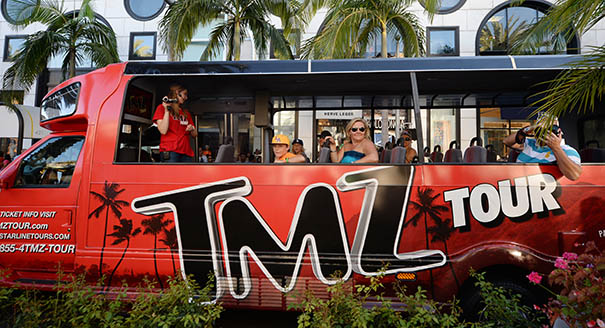
The celebrity-focused site is making a splash with crowdsourced recess photos…
Read More
- ‘What the hell did he just say?’ GOP Iran worries build after Trump speech
- Florida’s budget stalemate takes on Cherfilius-McCormick probe-related twist
- Senate gives House a second chance to deliver DHS funding
- Inside the blame game roiling Georgia’s GOP Senate primary
- Republicans aren’t rushing to save Trump’s ballroom
- MIDTERM WATCH: Executive Order Cracks Down on Voting…
- Democrats sue Trump administration over mail-in-voting order
- Hill staffers brace for their boss’s ‘TMZ moment’

- ‘The status quo is unsustainable’: Congressional scrutiny of Kalshi, Polymarket explodes

- IrynaZarutskamural censored by leftists, mayor calls it ‘divisive’

-

 Politics1 year ago
Former ‘Squad’ members launching ‘Bowman and Bush’ YouTube show
-

 The Dictatorship1 year ago
Luigi Mangione acknowledges public support in first official statement since arrest
-

 Politics1 year ago
Former Kentucky AG Daniel Cameron launches Senate bid
-

 The Dictatorship7 months ago
Mike Johnson sums up the GOP’s arrogant position on military occupation with two words
-

 Politics1 year ago
Blue Light News’s Editorial Director Ryan Hutchins speaks at Blue Light News’s 2025 Governors Summit
-

 The Dictatorship1 year ago
Pete Hegseth’s tenure at the Pentagon goes from bad to worse
-
Uncategorized1 year ago
Bob Good to step down as Freedom Caucus chair this week
-

 Politics12 months ago
Democrat challenging Joni Ernst: I want to ‘tear down’ party, ‘build it back up’