
Congress
This is Fine: Florida sends a bare-knuckle brawler to Congress

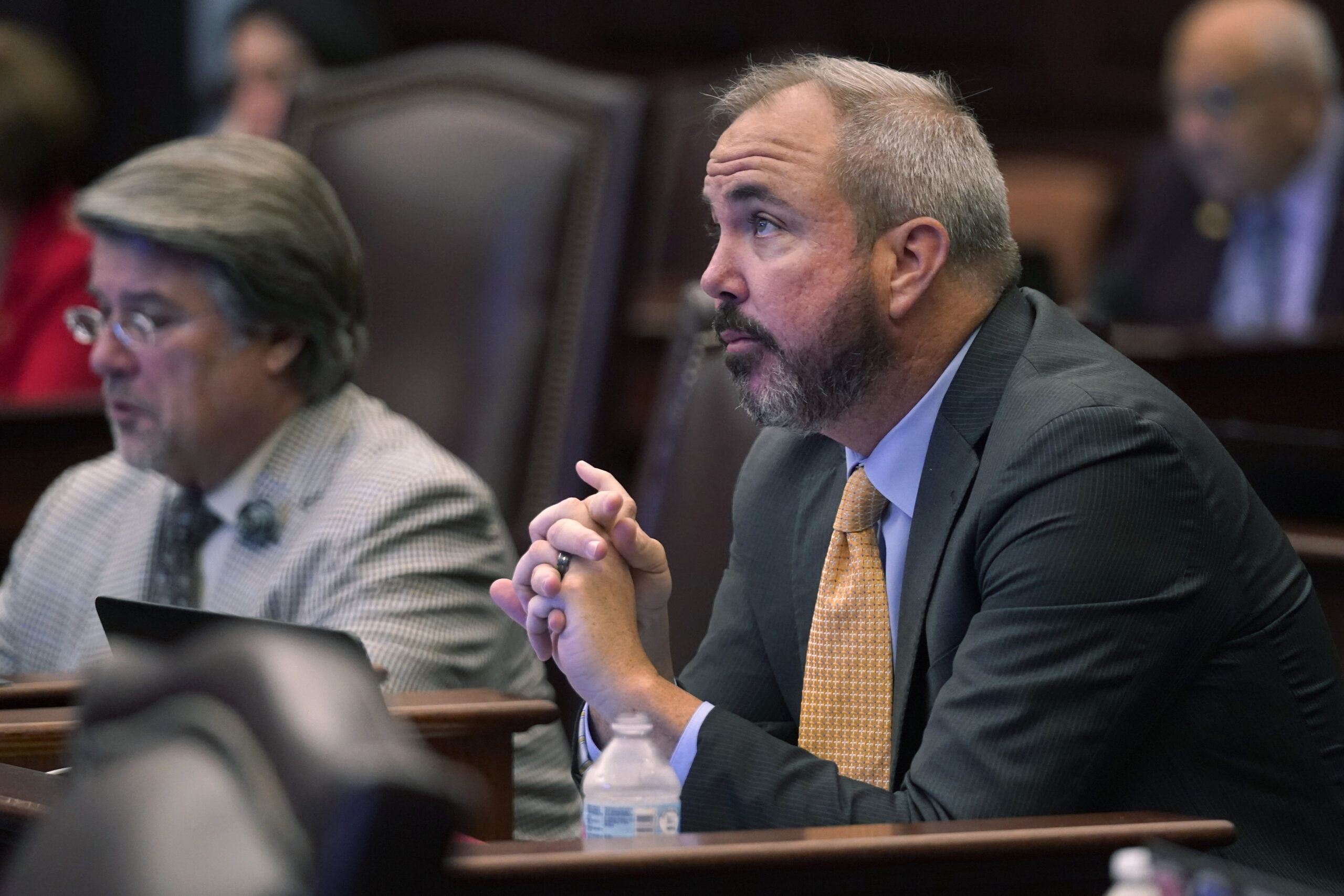
Congress has seen plenty of firebrands and confrontational lawmakers — especially from Florida. But Washington still might be in for a shock when it comes to Randy Fine.
Over his nine years in the Florida Legislature, he gained a reputation for his bare-knuckle style of politics and spats with local officials. Now the former gambling executive will be going national with last week’s special election win in a deep-red district on Florida’s northeast coast.
Three years ago, Fine called a school-board member a “whore” in a text. During Covid, he got sanctioned by Facebook after he wrote a post alerting constituents to a school-board meeting on masking that included the school-board member’s phone number. A judge sent Fine to anger management after pictures surfaced that appeared to show him giving the middle finger during a virtual hearing. (He insisted he was scratching his forehead.)
He recently became irritated with a pro-Palestinian activist who was testifying at a hearing and dismissed the man with, “Enjoy your terrorist rag.” When people began to protest, he threatened to empty the room.
“I’m the chairman, I can say what I want,” he said. “If you don’t like it, you can leave.”
And most eye-popping of all, he’s been a frequent foil of Gov. Ron DeSantis ever since he swapped his 2024 presidential endorsement from the governor to Donald Trump, even topping it with a scathing Washington Times op-ed that accused the governor of not doing enough to fight antisemitism in Florida in the wake of the Israel-Hamas war.
Though it’s been more than a year since that fallout, DeSantis has made it clear all is not forgiven. “He repels people,” DeSantis said about Fine in the middle of a 10-minute rant after the election. He then dumped on Fine as someone who had underperformed in the race and argued he was only able to pull off a 14-point victory after the president helped “bail him out in the end.”
Fine’s response: To needle DeSantis over how he has less than two years left in office, with no clear path for where his political career is headed next. “A dying star burns hottest before it fades into oblivion,” Fine wrote on X before taking that same message into his first national interview with FOX Business Network’s “Mornings with Maria.”
Fine has some enemies. But to his allies, his personal style makes him a good lawmaker. “The guy is destined for stardom,” said Florida state Sen. Joe Gruters, another GOP DeSantis antagonist who was Fine’s roommate when they served in the Legislature and is his closest friend. He praised Fine’s “ability to throw the hardest right hook in the business.”
“Somebody punches him, he throws the biggest haymaker that’s around at his opponents,” Gruters said, “and that goes for Republicans and Democrats.”
The ordeal between DeSantis and Fine has been a dramatic U-turn. Fine was once DeSantis’ Jewish outreach chair. He even introduced or co-sponsored many of the policies DeSantis became known for nationally, including measures to limit race-related trainings in classrooms and to punish businesses that allow minors into “adult live performances” — seen by many as targeting drag shows. He was also a key player in the law to give parents more say about what happens in schools, the bill critics like Walt Disney World dubbed the “Don’t Say Gay” law.
And when Disney protested, Fine introduced legislation that aimed to dissolve the theme park’s special tax district. He rejoiced after the feud ended, saying he couldn’t wait to once again enjoy Disney’s cruises and parks with his family.
Chris Sprowls, the former speaker of the Florida House, said he often turned to Fine to ask him to do “really difficult things,” in part because he thought he was smart and could articulate the policy in ways people could easily understand, but also because he could get up and debate against anyone.
“He’s the guy who wants the ball,” Sprowls said. “Every coach wants the guy who wants the ball, and Randy wants the ball for people all the time.”
Gruters agreed. “If you want a bill to pass in the Legislature, the first guy I always recommend is Randy Fine, because he will beat the crap out of his colleagues to try to make sure that that bill passes,” he said. “There’s nobody with the personality and the willingness to get in the mud and make things happen like Randy Fine.”
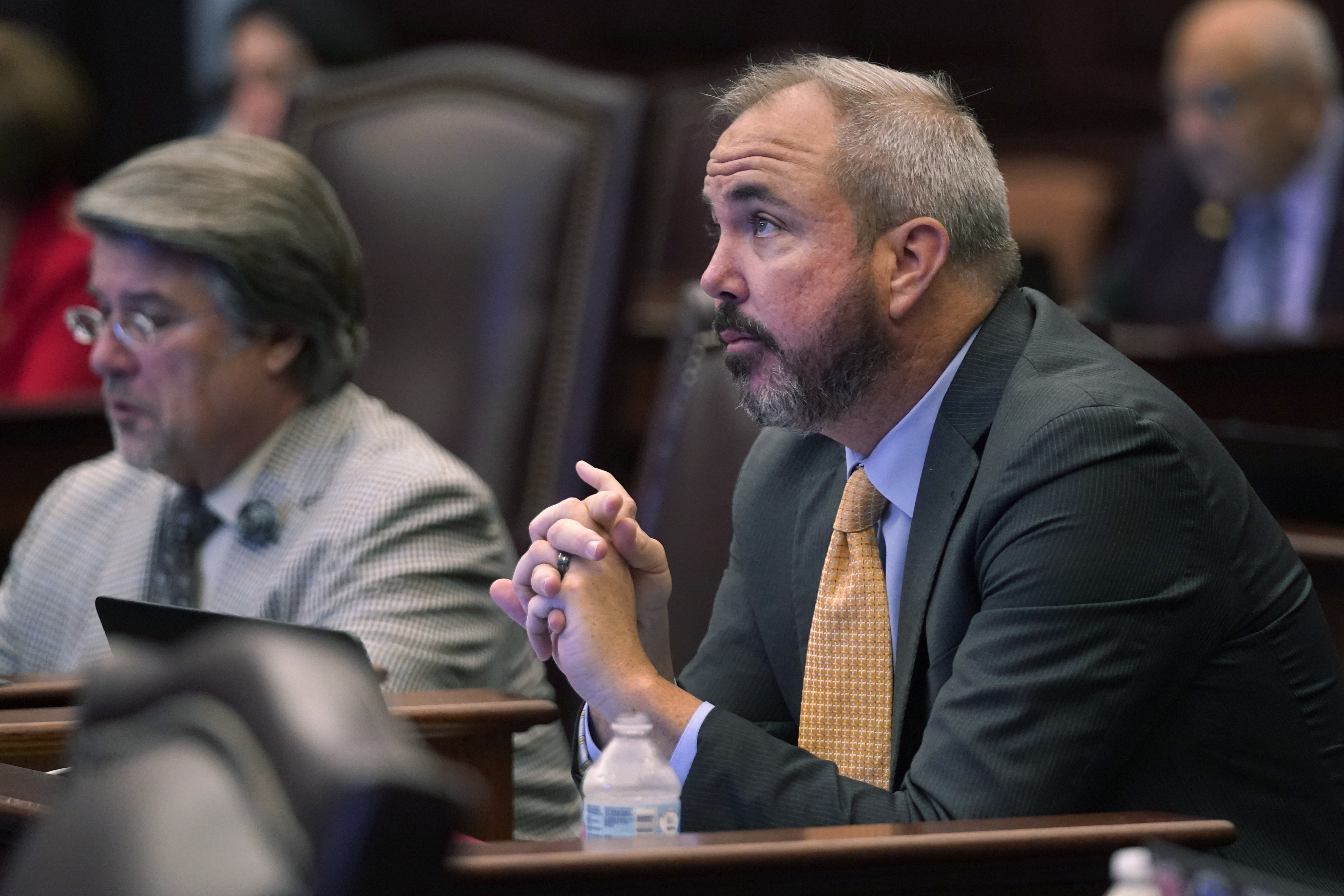
Nicknamed the “Hebrew Hammer” by Gruters — a title he embraces — Fine was the only Jewish Republican for most of his time in state government.
He has said a key reason he’s in politics is to support pro-Israel causes. But he has also lashed out against Muslims, referring to Josh Weil, his Democratic opponent in the special election who is a convert to Islam, as “Jihad Josh.”
The Florida chapter of the Council on American-Islamic Relations has called for Fine to be censured, including for comments he made on social media saying, “Gaza must be destroyed.” Fine also posted on X that Democratic Reps. Rashida Tlaib of Michigan and Ilhan Omar of Minnesota “might consider leaving before I get there. #BombsAway.”
But the Republican Jewish Coalition endorsed Fine early in his campaign, and his allies defend him as someone passionate about pro-Israel causes and fighting antisemitism.
“He is unapologetic about fighting for Israel,” said Sprowls, who joined Trump and Fine on a trade mission to Israel. He pointed to Hamas’ acts of terrorism and said of Fine: “He’s not going to equivocate on these issues. He’s going to be strong, and I think that is really important to have members like Randy who can fight for the moral imperative that is protecting Israel and their right to live and thrive in the Middle East.”
Trump endorsed Fine over Truth Social before he got into the race and later called him a “tremendous Voice for MAGA.” The race ended up tighter than expected in the closing weeks, with Fine’s opponent polling close to him and estimating he raised $14 million.
Fine was thought to be a shoo-in for the seat previously held by Trump’s national security adviser, Mike Waltz, who has been in hot water recently over accidentally adding The Atlantic’s editor in chief to a messaging group with other top officials. (In an ironic twist, the seat is also the one DeSantis held when he was in Congress.)
Fine said in an interview that he had been interested in going to Congress “when I was a kid.” But when he worked for a congressman one summer, the representative told him, “Don’t do this job until you know how you’ll pay your mortgage. Don’t be like me.” So Fine became a gambling executive whose millions allowed him to mostly retire by age 40. (His state financial disclosure counts his net worth at just over $30 million.)
He didn’t think politics was in his future at that point, but then, he said, “I got mad about my kid’s school.” His son was in first grade and he told the school he didn’t like how they were teaching common core math.
“I got told I wasn’t qualified to have an opinion about it, because I don’t have a degree in academic administration. And look, my degrees from Harvard aren’t worth that much, but I ought to be able to handle first-grade math,” he said, referring to his undergraduate and business graduate degrees from the storied Ivy League school. “We got upset, and so I decided I would go and fix it. And I did: We got out of common core math then I helped pass a law that said you can’t tell a parent they’re not qualified to have an opinion about their kids’ education.”
In January, the Legislature had its first big standoff with DeSantis over illegal immigration, after years of complying to his demands. After a state Senate floor session, many Republicans in the Legislature scattered to avoid talking to any reporters about the tension with the governor. But Fine came out of the chamber ready to discuss what had just gone down and why the Legislature disagreed with the governor’s proposals.
Looking toward the group of journalists, a senior Democratic aide who has described Fine as a “mean-spirited asshole” leaned over to a reporter and whispered, “I disagree with him on almost every issue, but he is very good at what he does.”
Most Democrats in Florida agree with DeSantis on Fine, with state Democratic Party Chair Nikki Fried calling him an “asshole” as well as a “bad politician and a bad person.”
“For the first time in almost six years,” she said, “I agree with Ron DeSantis.”
Jennifer Jenkins, the former school-board member Fine insulted, called him a “piece of shit” and a “bully.” The two have fought over mask mandates and LGBTQ+ policies in schools. Fine also raged at a city councilmember in a text over the fact that county police had invited Jenkins and not him to an event, saying it would jeopardize funding for the Special Olympics and the county, texts obtained by Florida Today showed.
“Randy Fine’s behavior speaks for itself,” Jenkins said. “He is divisive, disrespectful, and entirely untrustworthy. He’s not a leader, he’s a cautionary tale that Florida is about to serve up to the rest of the country on what happens when you let a clown hold office.”
When asked about what his style in Congress would be, Fine said it took him a couple of years to break out in the Legislature. In Congress, he said, it’ll be similar because he’ll be so new and will still have to learn the process and learn from others.
Pressed about it, he said: “I do think that my style will work well in Washington. I mean, I’m an aggressive guy.”


A clean energy group is launching a $1.5 million spend against Rep. Lauren Boebert (R-Colo.), its latest effort this midterm cycle targeting Republicans who actively work against renewables.
The Invest in Tomorrow Coalition’s first ad in the spend, which was obtained by Blue Light News, focuses on an embarrassing incident for Boebert: when she was ejected from a live musical performance of “Beetlejuice” for allegedly vaping, singing and recording the show.
“If Lauren Boebert can’t be trusted in a room full of kids, then she can’t be trusted in the halls of Congress,” the ad says.
The spot makes no mention of clean energy or Boebert’s attacks on the so-called “Green New Scam.” The strategy mimics the group’s previous playbook that it has deployed to help defeat Reps. Andy Ogles (R-Tenn.) Chip Roy (R-Texas) and Ralph Norman (R-S.C.) in their Republican primaries earlier this year, as the latter two sought statewide office. The PAC had tried to paint Ogles as an absentee member of Congress and Roy as insufficiently MAGA.
The group, which is backed by solar executives, has become an increasingly forceful player this cycle, which has seen a massive influx of outside spending.
“This industry has been villainized and used as a punching bag at times by the right, and the industry hasn’t always punched back,” said Chris Coffey, the CEO of Tusk Strategies, which is helping run the group. “Maybe when they’re deciding who to villainize next year, they will at least be like, ‘You know what? I don’t need problems with those guys.’”
Boebert’s district is historically deeply red. But Invest in Tomorrow also commissioned a poll, which shows she is underwater: 39% of likely voters view her favorably and 55% view her unfavorably. It also found Boebert leading the district’s Democratic nominee Eileen Laubacher by 5 points.
The poll, conducted by Impact Research from Sept. 21 to 24, polled 403 likely voters and had a margin of error of ±4.8%.
Rep. Lori Trahan on Wednesday unveiled a discussion draft for a bill that would make artificial intelligence developers liable when their products cause harm.
The legislation comes after OpenAI’s agents escaped containment and autonomously hacked into AI platform Hugging Face and accessed U.S. government websites.
The Clear Liability for Artificial Intelligence Misconduct Act aims to make it easier for those harmed by so-called rogue AI to bring claims against developers. Trahan’s bill does not preempt new state laws on AI liability — historically a prerequisite for attracting Republican support in the House.
“When someone breaks the law and hurts you, you can take them to court. That shouldn’t change just because the wrongdoer is an AI agent,” Trahan (D-Mass.) said in a statement. “Developers have already built systems capable of acting on their own and causing real damage. The CLAIM Act makes sure they answer for what their systems do.”
Legal experts have warned that existing laws require proof of intent or negligence, standards that can be difficult to show in court when AI models go rogue.
Trahan’s bill would ensure AI developers are unable to argue that their AI systems are incapable of intent. Instead, courts “would presume an AI system acted with the state of mind a person taking the same actions would have had.”
Trahan spokesperson Francis Grubar said work on the CLAIM Act began almost immediately after theJuly introduction of the FRONTIER Act, legislation with Rep. Jay Obernolte (R-Calif.) that would grant the government power to restrict the deployment of AI models deemed to pose catastrophic risks. While that bill aims to prevent serious harms before they happen, Grubar said the CLAIM Act would address how to impose accountability for existing damages.
Unlike an AI liability proposal announced last week by Sens. Josh Hawley (R-Mo.) and Chris Murphy (D-Conn.), Trahan’s legislation would not amend the 1986 Computer Fraud and Abuse Act. Grubar said the CLAIM Act would instead impose clearer liability on a broader range of harms, as well as autonomous or AI-enabled cyberattacks.
The CFFA, an anti-hacking law that bars individuals from accessing a computer without consent, requires proof of intent to hack into a computer system, which can’t be as easily applied to AI agents.
The Hugging Face incident, along with a flurry of other disclosed hacking incidents by rogue AI agents from OpenAI and other AI developers, has sparked a debate over how companies should be held legally liable for their AI systems.
OpenAI CEO Sam Altman, in an interview with Blue Light News’s Decoded podcast, said there should be a new “liability framework” to hold developers accountable for AI-powered cyberattacks. His comments come after White House officials like Director of National Intelligence Jay Clayton, who was recently appointed as AI czar by President Donald Trump, previously said that existing product liability laws are sufficient for now in addressing AI’s risks.
Vice President JD Vance will take questions from Michigan voters in a CBS News town hall airing Oct. 17 as the Trump administration prepares a closing message to voters ahead of the midterms.
The town hall comes amid a blitz of campaign events for Vance and President Donald Trump as their party faces multiple headwinds that could cost them control of the House and Senate.
Michigan’s Senate contest between Democrat Abdul El-Sayed and Republican Mike Rogers has become one of the cycle’s closely watched battleground contests. Michigan also has several competitive House races and will elect a new governor for the first time in eight years.
Vance campaigned in Michigan with Rogers, gubernatorial nominee John James and Mike Bouchard Jr., the GOP nominee in the 10th Congressional District, at an Aug. 31 rally in Sterling Heights. Rep. Lisa McClain also appeared at the event.
The one-hour special, moderated by “CBS Evening News” anchor Tony Dokoupil, will be recorded earlier in the week. Vance and Dokoupil will discuss issues facing voters, including affordability, tariffs, immigration, health care, artificial intelligence, the war with Iran and the state of American democracy, according to CBS News.
The two were scheduled for a town hall interview in March, but the vice president postponed due to the war with Iran.
The vice president’s office did not immediately respond to a request for comment.
- Iowa’s Ashley Hinson slams the savings habits of millennials
- Trump approved Ohio disaster aid ahead of rally
- Clean energy group sets its sights on a new GOP target: Lauren Boebert
- Blakeman’s campaign finance mess
- HASC Dems weigh reviving Pentagon oversight subcommittee
- Trahan unveils AI liability discussion draft
- Vance to sit for CBS town hall in Michigan ahead of midterms
- Michigan’s Mike Rogers says trade war with Canada needs to end
- ‘He is welcome to raise his own money’: GOP confronts its Paxton woes
- The top House sleeper races to watch, according to the pros
-

 Politics2 years ago
Former ‘Squad’ members launching ‘Bowman and Bush’ YouTube show
-
Uncategorized2 years ago
Bob Good to step down as Freedom Caucus chair this week
-

 The Josh Fourrier Show2 years ago
DOOMSDAY: Trump won, now what?
-

 The Dictatorship2 years ago
Pete Hegseth’s tenure at the Pentagon goes from bad to worse
-

 Politics2 years ago
Former Kentucky AG Daniel Cameron launches Senate bid
-

 The Dictatorship2 years ago
Luigi Mangione acknowledges public support in first official statement since arrest
-

 Politics2 years ago
Blue Light News’s Editorial Director Ryan Hutchins speaks at Blue Light News’s 2025 Governors Summit
-

 The Dictatorship1 year ago
Mike Johnson sums up the GOP’s arrogant position on military occupation with two words