
Congress
‘This is about attention’: Mike Lee’s MAGA crusade is driving his colleagues crazy

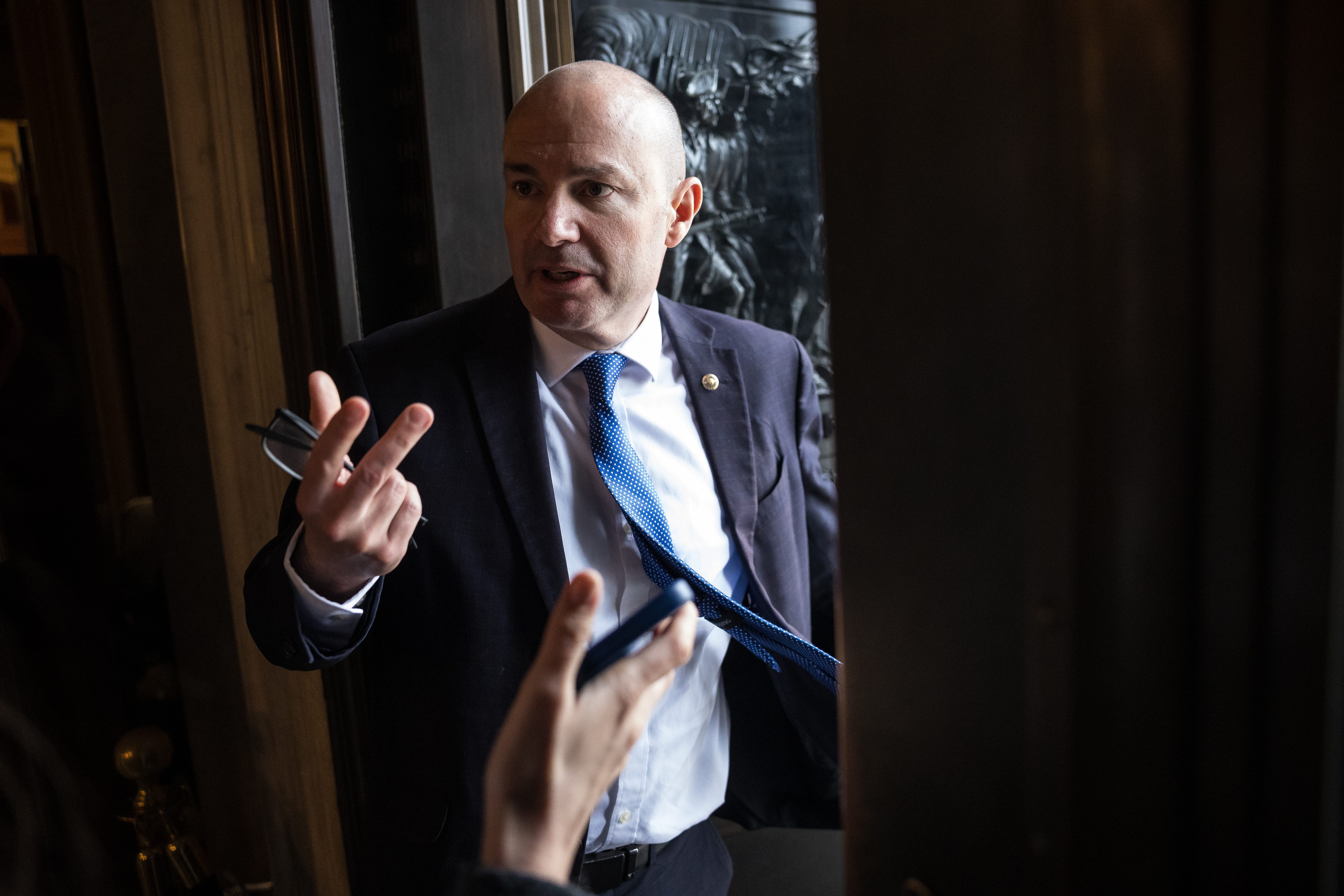
Among online activists and in some corners of the Republican Party, Mike Lee is being heralded as a MAGA champion willing to pressure his own party to embrace hardball tactics or risk political suicide.
But inside the Senate, the Utahn’s scorched-earth, hyper-online methods are sparking a wave of mostly private animosity from GOP colleagues who believe his plan to push through legislation overhauling how federal elections are conducted is ill-conceived and potentially harmful to the party’s chances in the midterms.
They believe he doesn’t have a realistic path to passing the SAVE America Act, and they view him as seeking personal attention at the cost of sparking an ongoing intraparty feud, according to five Republicans granted anonymity to speak candidly about their colleague.
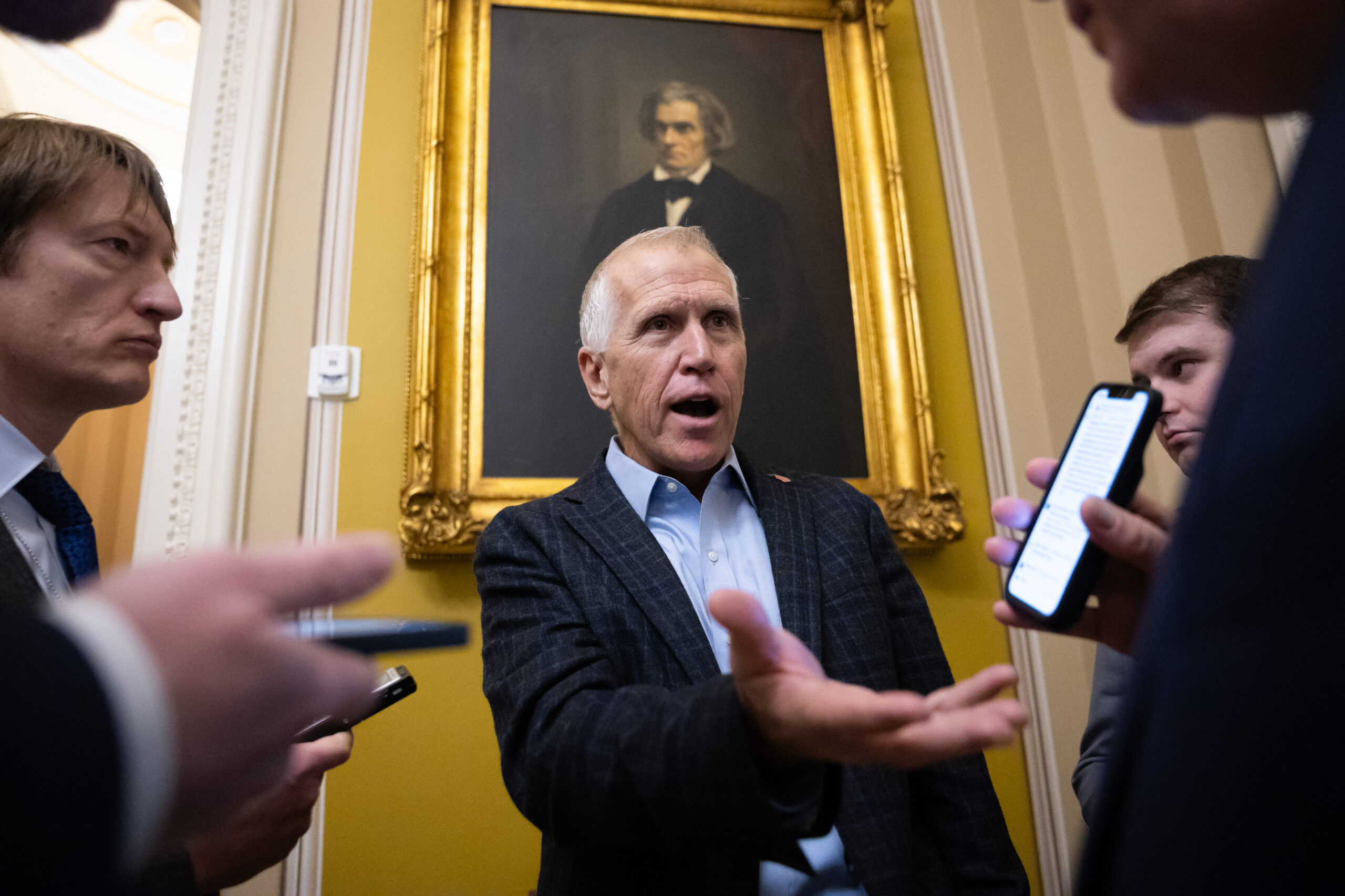
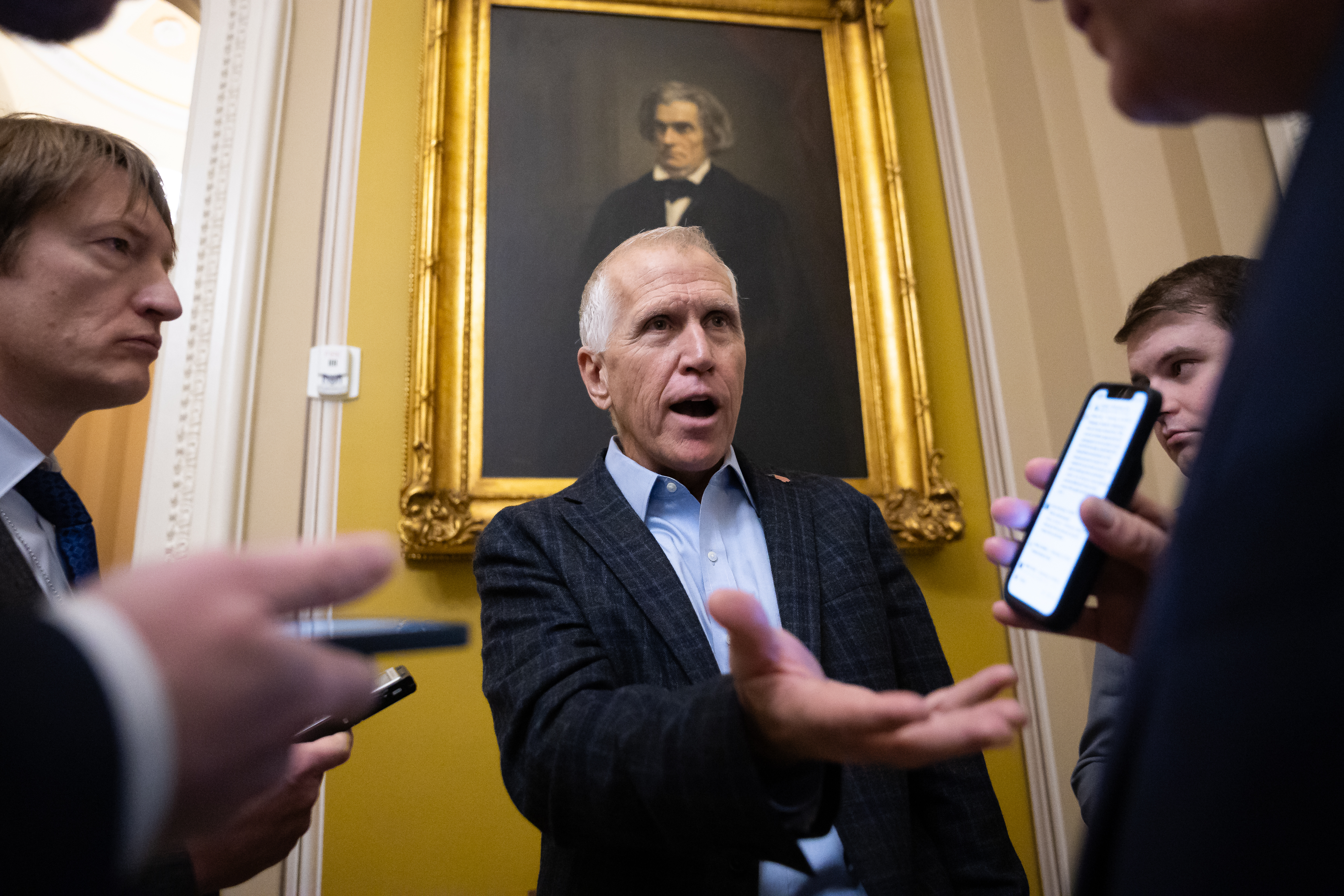
“That seems to be a self-serving attempt at elevating yourself at the expense of your Republican colleagues, and I don’t have any patience for that sort of stuff,” Sen. Thom Tillis (R-N.C.) said in an interview about Lee’s social media strategy. Tillis, a retiring lawmaker who is not one of the five who spoke privately, lamented a lack of “strategic clarity” from Lee on the endgame for the elections debate.
Lee, however, shows no hint of self-doubt in news conferences and floor speeches — and, more importantly, late-night X streams and a constant stream of social-media posts — that the SAVE America Act is anything less than a make-or-break moment for American democracy.
“It would be a suicidal move for us as Senate Republicans, for Republicans in general, if we don’t put everything we’ve got into this,” Lee said at a news conference this week. ”We need to debate this as long as it takes to get it done.”
Lee’s office did not respond to a request for an interview with the senator or a detailed message seeking comment about the criticism he’s facing from colleagues.
‘He’s hurting us’
The inside-outside split that has emerged in recent weeks is the culmination of a long political evolution for Lee’s persona. He was once viewed as a bookish conservative with a libertarian bent but has now emerged as the Senate GOP’s most inveterate social-media poster — and a darling of the online right.
But it’s his strategy around the elections bill, which President Donald Trump has called his “No. 1 priority,” that has soured some of his relationships inside the Senate. Some Republican colleagues compared him to Sen. Rand Paul — the Kentucky gadfly who also has a history of sparking frustration within the Senate GOP ranks.
Republicans have circulated Lee’s online posts, including one saying that if a senator doesn’t support his tactics to pass the elections bill “you might need to replace them.” That kind of talk has some suggesting that Lee, who was part of a bipartisan coalition that helped pass a criminal justice bill during Trump’s first term, will have a hard time getting legislation passed in the future.
Frustrations have grown to the point that some GOP senators are privately wondering if they could remove him as chair of the Energy and Natural Resources Committee, according to two Republicans. Several other colleagues dismissed the talk as blowing off steam.
“He’s hurting us,” one of the two Republicans said.
Lee appeared to distance himself from the social media tactics when a Blue Light News reporter asked him during a news conference this week about concerns from his Republican colleagues and whether any had approached him directly.
“Every time I talk to activists, people who support this, I’m like a broken record telling them, you catch more flies with honey than with vinegar, and I recommend encouragement and focusing on the positive elements of the bill,” Lee said. “They do what they do. It is what it is.”
Tillis brushed off Lee’s answer: “You’re telling people to be nice when you post a statement that says you should challenge them in primaries? How does that work?”
With a swath of GOP senators dead-set against bypassing the 60-vote filibuster threshold, Lee has argued that forcing Democrats into a “talking filibuster” will ultimately force them to negotiate and capitulate. That doesn’t make sense to many of his colleagues, who don’t see the Democrats ever providing enough votes to pass the bill.
And they fear Lee is selling a fantasy to his online followers, who believe failure should be at least partially pinned on the weakness of Republicans, not the opposition of Democrats.
“It’s the clicks,” one Republican senator said in an interview when asked what Lee wants to accomplish. “He goes too far. … He has almost no self-awareness.”
‘Maximum success in the Senate’
But Lee’s supporters believe his push has gotten at least some results. Senate Majority Leader John Thune agreed to call up the bill and start debate without a clear end date — something that is next to unheard-of in the modern Senate. And GOP ears perked up this week when Minority Leader Chuck Schumer told reporters that Democrats weren’t opposed to photo ID requirements.
Rachel Bovard, a former Lee staffer who is now a vice president at the Conservative Partnership Institute, said her former boss is seeking to “represent a part of the base that feels unheard.”
“It’s encouraging I think for a lot of people to see that a single United States senator can still speak for them, the Senate still speaks for them,” she said.
Lee himself credited pressure from his army of online supporters for Thune’s decision to keep the Senate working through this weekend. He has credited the majority leader so far for implementing a version of the talking filibuster.
“Bullcrap if anyone says X isn’t real,” he said during a late-night stream hosted on the social-media platform this week.
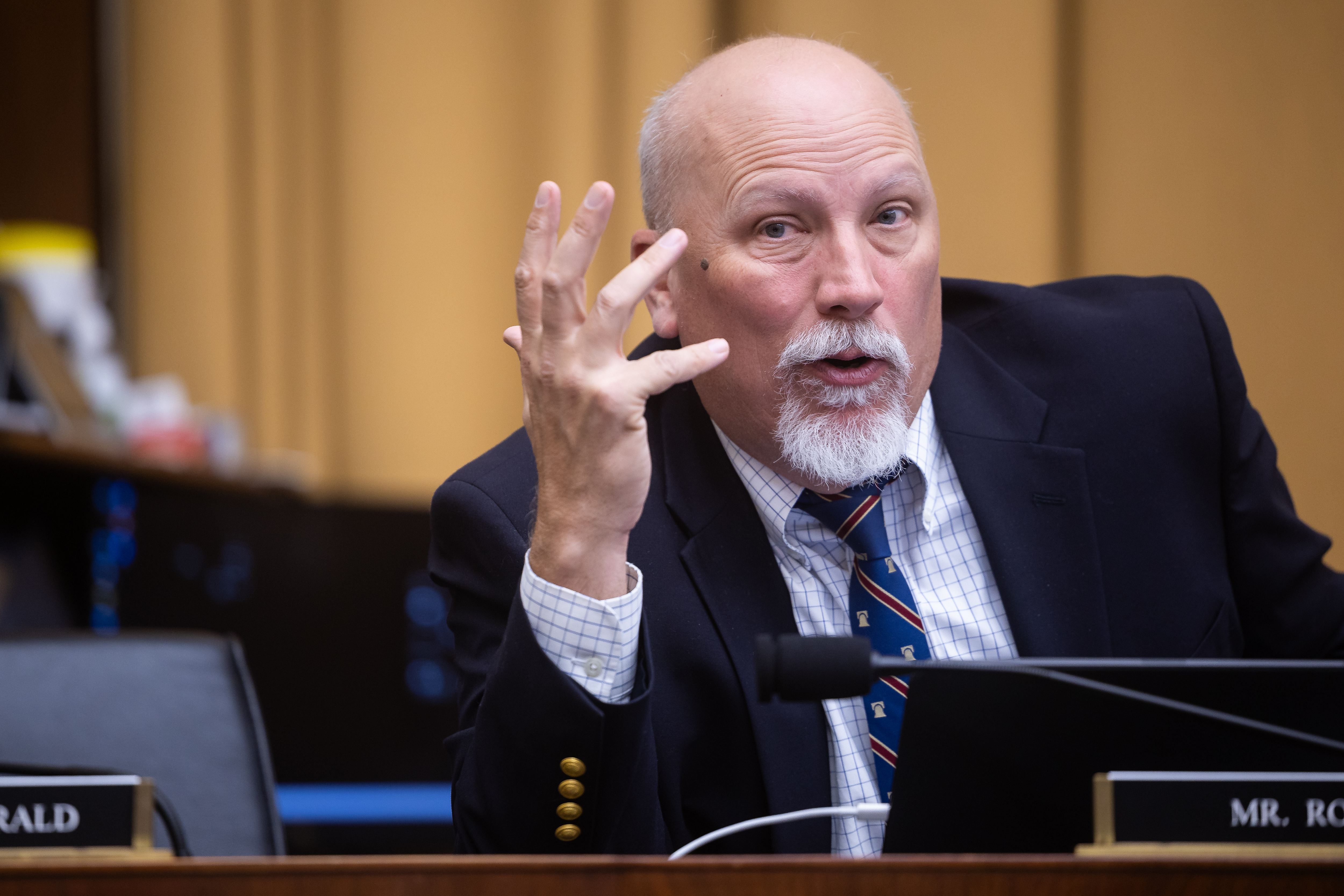
Rep. Chip Roy (R-Texas), who authored the SAVE America Act in the House, said he and Lee worked together to set the bill up for “maximum success in the Senate procedurally — and now Mike is single-handedly trying to make the U.S. Senate actually work and debate.”
“To those Senators saying Mike Lee is doing this for attention — it’s utter bullshit and they should have the cajones to call the President and tell him that,” he added in a text message. “But it’s the Senate, so.”
Several Senate Republicans have praised Lee online and as they’ve appeared alongside him at news conferences this week. But many other Republican colleagues have kept their distance, not understanding how he intends to bring the fight to a close. A sixth GOP senator granted anonymity was not personally critical of Lee but described the process he unleashed as a “very chaotic situation.”
“He gets stuck on things,” the senator said, describing Lee as an adamant believer in the policy he is pushing.
As Thune outlined his plans for the bill during a closed-door Senate GOP lunch last week — which were widely understood to involve eventually subjecting it to a 60-vote hurdle — Lee was largely silent, according to three people with knowledge of the meeting.
Leadership ambitions?
Thune and Lee have kept in close touch behind the scenes as the Senate has taken up the bill.
“I think the key is to keep people’s expectations realistic and not overpromise. And that’s what I’m trying to do,” Thune said in an interview about how he felt Lee was handling the debate. He declined to comment on whether Lee was doing that.
While Lee has repeatedly asserted this week that he and his allies are winning, he also acknowledged that it would not be “good for the movement” if he started “planning for failure now.”
“If we do our job, and … Republican senators do their jobs, we will win,” he added.
Some of those Republican senators have spent time recently wondering about Lee’s motivations.
Four of the GOP senators said they believed Lee has higher ambitions. He once flirted with a leadership bid, something some colleagues believe he still aspires to, while others pointed to a potential Cabinet spot as his ultimate goal. Some of Lee’s most fervent online supporters have floated a run for Senate majority leader, with one raising the Supreme Court as a landing spot during a recent online meetup.
“I think he’s frankly very frustrated that he’s not more than he is, that he feels like he’s passed over,” the first GOP senator said. Another added, “I think he looks in the mirror and thinks he’s leadership.”
While Lee has retweeted negative commentary about Thune from other users on social media, he has also encouraged his online followers to presume Thune is well-intentioned and told them that Thune was “handling this very well right now.”
Bovard was among several Republicans who dismissed the idea that Lee is using the elections fight as a political springboard.
“It’s kind of hilarious, because the Senate is so dead … and it’s so broken that if any senator leans into something and actually cares about something, the assumption is [it’s] because they’re running” for another office, Bovard said, adding that being the majority leader “seems like kind of a miserable job.”
Three Republicans said the point is moot. Given the way he’s operated inside the GOP conference, they predicted, Lee cannot win a leadership race. But during an X stream shortly after midnight Friday supporters told Lee that majority leader is exactly the job they wanted him to have.
“Look,” he said, “let’s just get the bill passed.”


President Donald Trump gave his blessing Friday afternoon for a party-line package focused narrowly on immigration enforcement — in a boost to Senate GOP leaders amid the Department of Homeland Security funding stalemate.
Trump’s comments came after he met Friday with Senate Budget Chair Lindsey Graham of South Carolina and Senate Majority Whip John Barrasso of Wyoming. The two lawmakers went to the White House to pitch Senate GOP leadership’s plan to restrict the party’s filibuster-skirting effort to only funding for Immigration and Customs Enforcement and parts of Customs and Border Protection.
“Reconciliation is ON TRACK, and we are moving FAST and FOCUSED in keeping our Border SECURE, and getting funding to the Department of Homeland Security and the Justice Department to continue our incredible SUCCESS at MAKING AMERICA SAFE AGAIN!” Trump wrote on Truth Social.
Trump had previously backed using reconciliation to pass funding for immigration enforcement after it became clear Democrats would not agree to reopen those shuttered operations within DHS without a deal for more guardrails on ICE and CBP. But the president’s post Friday, which hammered home the preference for focusing the bill on this issue, is a significant boost to GOP leaders as they face calls from some of their members to broaden the scope of any reconciliation measure.
Some Republicans have called for funding all of DHS through reconciliation. The Senate previously passed a bipartisan deal that would reopen the department except for ICE and Border Patrol, but it has stalled in the House as hard-liners demand the Senate first pass the immigration enforcement funding.
Graham, whom Trump also re-endorsed Friday, is responsible for crafting the budget resolution that will allow the party to begin the reconciliation process — its second time using this maneuver in addition to last year’s tax and spending megabill. He is expected to tap the Judiciary Committee and the Homeland Security and Governmental Affairs panel to draft the immigration enforcement measure.
Senate Republicansare expected to not include pay-fors for the funding, arguing that it would have gone through the appropriations process were it not for opposition from Democrats. They’ll need sign-off from their own conservatives and the right-flank in the House for such a plan.
Trump also reiterated Friday that he wants the bill on his desk by June 1, adding that Republicans won’t need Democrats’ votes “as long as Republicans UNIFY, and stick together.”
The White House did not immediately respond to a request for comment.
Myah Ward contributed to this report.
Republican infighting is leaving Congress in legislative limbo.
While there are plenty of partisan disputes that have frustrated Capitol Hill — such as the nearly two-month shutdown of the Department of Homeland Security — divisions between House and Senate Republicans have been the more significant obstacle for a laundry list of stalled legislation that could otherwise sail to President Donald Trump’s desk.
Trump could intervene to settle many of these disputes, but he has kept his distance in most cases. That has left each chamber pushing ahead with their own proposals — and against their counterparts in the other chamber.
In the one instance where the president appears truly invested, in passage of a sweeping GOP elections bill, his fixation has only made the intraparty divisions worse.
Lawmakers will return to Washington next week with the pre-midterm legislative calendar dwindling and leaders eyeing action on at least one party-line budget reconciliation bill — a time-consuming process that could make it even tougher to find consensus on these pending items:
Housing affordability
With cost-of-living concerns dominating the pre-midterm political landscape, a bipartisan effort to address housing prices should be a no-brainer, but disputes over niche policy provisions are holding up dueling House and Senate housing packages.
The Senate passed a bill last month that includes a temporary ban on central bank digital currency as well as a provision restricting large investors from owning more than 350 homes. Both provisions face serious opposition from House Republicans, who joined with Democrats in their chamber to pass their own bill in February.
While the Senate wants the House to accept its version, House Financial Services Chair French Hill (R-Ark.) and others in the GOP are pushing for the two chambers to go to conference — potentially adding months to the process.
Aviation safety
Legislation aiming to respond to the deadly crash near Ronald Reagan Washington National Airport last year is stuck in a battle of wills among GOP committee chairs. A bill backed by Senate Commerce Chair Ted Cruz (R-Texas) appeared set for Trump’s desk earlier this year until the heads of two key House committees, Armed Services Chair Mike Rogers (R-Ala.) and Transportation and Infrastructure Chair Sam Graves (R-Mo.), came out against it, causing the measure to fail on the House floor.
The Senate bill’s requirement for advanced aircraft location-alerting technology has been one of the biggest points of contention among Republicans, with the House version of the bill opting for more open-ended language. The House bill focuses on a different technology, which major aviation labor groups argue wouldn’t have prevented the Washington disaster.
Cruz has called the House rejection of his ROTOR Act a “temporary delay,” but the House chairs are pushing forward with their own ALERT Act, with a floor vote expected Tuesday. How the policy disputes will be settled from there remains uncertain.
College sports
Trump has taken a keen interest in college athletics, issuing a flurry of executive orders on this topic. But Congress has struggled to act on legislation tackling the controversial “name, image and likeness” regime for compensating student athletes
House Republicans last year made a push for the SCORE Act, which would create new standards for how college athletes are paid and give antitrust exemptions, before opposition from hard-liners and many Democrats put it on ice.
While there has been new chatter about putting it on the floor this month, the bill is dead on arrival in the Senate, where Cruz and Sen. Maria Cantwell (D-Wash.), the top Commerce Committee senators, have warned the measure doesn’t have enough support. The two are discussing ways to address NIL concerns but have yet to produce a bill.
Tech regulation
The House and Senate have failed to reach consensus on a number of tech-industry flashpoints, including artificial intelligence and children’s online safety.
The House GOP largely wants to codify a Trump executive order creating a national AI rulebook, but some Senate Republicans appear concerned that the president’s plan could limit state-level regulations the White House wants to override.
There’s a similar standoff over online safety bills. The Senate cleared a privacy bill by unanimous consent, but the House hasn’t taken it up and instead is pushing ahead with a package that doesn’t include key Senate-passed provisions.
One of the key differences is on state preemption — included in the House version but not the Senate version. Another dispute is over “duty of care” language in the Senate bill that requires tech companies to design their platforms with an eye toward preventing harm to children. Senate Majority Leader John Thune floated pairing AI legislation with kids online safety legislation in an interview earlier this year.
And then there’s cryptocurrency: A closely watched “market structure” bill is stuck for now in the Senate after it was excluded from a landmark crypto bill signed into law last year despite a push in the House.
The Trump administration is increasing pressure, with Treasury Secretary Scott Bessent saying Thursday that “Senate time is precious, and now is the time to act.”
Elections oversight
Conservative lawmakers and Trump have joined forces behind the SAVE America Act — a GOP bill aimed at fully eliminating noncitizen voting — as a top-level, must-pass agenda item even as many Senate Republicans doubt it can ever skirt their chamber’s 60-vote filibuster threshold.
Trump views the bill as his “No. 1 priority,” and House hard-liners are pushing for a filibuster workaround. Sen. Mike Lee (R-Utah) has pushed to force Democrats into a “talking filibuster” where they would have to hold the floor to block the bill, and the Senate will resume debate early next week with no indication of when GOP leaders will choose to hold a likely doomed vote and move on.
Some Republicans, including Senate Budget Chair Lindsey Graham of South Carolina, want to try to pass parts of the bill through the reconciliation process later this fall. But hard-liners view that as a nonstarter because most of the bill likely violates the strict Senate rules governing the party-line reconciliation process.
DHS funding
There’s no bigger dispute for House and Senate Republicans to settle than DHS funding, which has already been subject to nearly a month of back-and-forth.
A Senate-passed bill delivering funding for all of the department save for immigration enforcement agencies is currently held up in the House. Republicans there aren’t enthused about a plan that would instead fund ICE and other agencies through the reconciliation process — an idea Speaker Mike Johnson called “garbage” before flipping in support.
Now, many House Republicans want their Senate counterparts to pass immigration enforcement funding before the House passes the balance of DHS spending. The hard-line Freedom Caucus has gone further, demanding GOP leaders fund all of DHS through reconciliation.
As party leaders make plans to pass a narrowly targeted reconciliation bill ahead of a Trump-imposed June 1 deadline, most Senate Republicans want the House to fund most of DHS now — or risk prolonging the infighting that even one GOP senator called a “circular firing squad.”
Katherine Hapgood, Gabby Miller, Alfred Ng, Nick Niedzwiadek and Sam Ogozalek contributed to this report.
Just a few months ago, President Donald Trump denounced Rand Paul as a “sick wacko” who opposes “everything.” Now the Kentucky senator is a key gatekeeper for one of the president’s biggest priorities.
As chair of the Senate Homeland Security and Governmental Affairs Committee, Paul faces a stark choice as his fellow Republicans race to pass a party-line immigration enforcement bill by Trump’s June 1 deadline. At the same time, he’s confronting his own political future.
Paul’s colleagues sidelined him last year when he refused to give as big a cash infusion for border security as the White House wanted. Now he must decide whether to go along as GOP leaders discuss potentially funding parts of DHS for as long as a decade.
It would come as little surprise if Paul raised objections. Known in Washington as a perennial leadership gadfly, he’s repeatedly broken with Trump since January 2025 on everything from tariffs to the ongoing Iran war and last year’s deficit-busting megabill, where he was one of three Senate Republicans who voted no.
Paul is also eyeing a possible presidential run in 2028 as he tries to get the GOP to look past Trump’s dramatic expansion of federal power and illustrate there is still room for libertarian-leaning, small government Republicans like him.
Spokespeople for Paul and the committee he chairs did not respond to a request for an interview. They also did not respond to a question on whether they have gotten any guidance yet on what the Kentucky Republican’s role will be in the immigration enforcement funding push.
Under the filibuster-skirting budget reconciliation process GOP leaders are hoping to employ, Paul’s committee is expected to be asked to hand over legislative language as part of a bill that will deliver tens of billions of dollars to ICE and parts of Customs and Border Protection. Paul has criticized those agencies at times, suggesting they should not get a blank check as they face questions about their use of force.
“This isn’t because I want no ICE,” Paul told reporters earlier this year. “I want people to trust ICE. I want people to trust the immigration authorities and I think they do hard work.”
A senior White House official granted anonymity to speak candidly downplayed any concerns about Paul in the upcoming reconciliation bill, noting he recently backed the administration’s plans for a major White House renovation. The official also questioned whether Paul, who has repeatedly voted to advance a House-passed bill that includes immigration enforcement money, would want to be against DHS funding.
“Rand voted for the ballroom, right?” the official said, referring to Paul’s ex-officio vote on a D.C. planning board.
His colleagues are not as convinced.
“Rand generally votes no,” Sen. John Kennedy (R-La.) said in an interview.
Paul’s fellow Republicans likely wouldn’t have voluntarily picked the maverick senator to shape an immigration enforcement bill, but he secured the gavel on the Homeland Security panel last year by dint of seniority.
After spending years warning against an overreaching federal government, Paul raised pointed concerns about some of the Trump administration’s immigration enforcement tactics after federal agents shot and killed two U.S. citizens in Minneapolis in January. He was also the only Republican to oppose Markwayne Mullin’s nomination as Homeland Security secretary, arguing in part he did not have the temperament to run the department.
During a recent CBS News interview, Paul argued more broadly that Congress wasn’t doing enough to check the administration and put the odds at “50-50” that he makes another run for the White House in 2028.
“I’m not going to do it just to do it,” Paul said. “It would be … because we need to have a free-market wing, we need to have a free-trade wing of the party who is not eager for war.”
Paul previously ran for president in 2016 but dropped out shortly after the Iowa caucuses. A bill currently moving through the Kentucky state legislature would allow Paul to run simultaneously for president and reelection to the Senate in 2028 — something he unsuccessfully pursued ahead of his 2016 run.
Trump, for his part, has repeatedly criticized Paul as a frequent roadblock in public remarks and on his Truth Social account — including the November “sick wacko” reference. He took notice this month when Paul agreed to green-light the White House ballroom in a vote of the National Capital Planning Commission. (Paul’s chief of staff attended the meeting and cast the vote on his behalf.)
“I am pleased to announce that even Board Member Senator Rand Paul, known as an extraordinarily difficult vote, voted a strong YES,” Trump said in a Truth Social post.
But it was Paul’s spending-hawk tendencies that got him sidelined by the White House and his GOP colleagues last year as they sought to wrap up the party’s tax-cuts-focused megabill. Senate Budget Chair Lindsey Graham (R-S.C.), in coordination with party leaders, effectively discarded Paul’s border security proposal and inserted his own language into the bill.
Paul and Graham had released substantially different proposals for funding under the Homeland Security panel’s jurisdiction. Paul proposed $6.5 billion for building the border wall, while Graham pitched $46.5 billion. Graham proposed $45 billion for ICE detention facilities, roughly twice what Paul proposed.
Graham at the time dismissed Paul’s pitch for a lower funding level as “shallow,” and members of the Homeland Security panel said Paul hadn’t consulted with them.
Paul has said little about how he is thinking about the upcoming GOP immigration enforcement push. He has separately warned that he does not support including funding for the Iran war in a reconciliation bill.
If the bill stays narrowly focused, Paul could have less sway as the bill is tightly negotiated by House and Senate Republican leaders, as well as the White House. The Judiciary Committee, not the committee Paul chairs, drafted a significant swath of the immigration language in last year’s megabill.
GOP colleagues aren’t vowing yet that they will sidestep him as they scramble to meet Trump’s deadline. But they are making clear that the DHS provisions will ultimately be decided by what can get the votes needed to clear the Senate — even if that does not comport with what the libertarian-leaning Kentuckian wants.
A GOP senator granted anonymity to speak candidly predicted Paul would have “influence” as the committee chair, but not a final say.
“Ultimately what it’ll come down to is where there’s 51 votes,” the senator added.
Senate Majority Leader John Thune added in an interview that Paul and other committee chairs tasked with writing the bill would have “input.”
Eli Stokols contributed to this report.
- Trump endorses ‘focused’ immigration enforcement funding bill
- Mamdani’s 100th day

- Inside the DNC’s Middle East (not) working group
- Pope Leo XIV condemns war, rejects claims of divine backing
- Harris gives her clearest signal she is mounting a 2028 presidential bid
- Newly created Polymarket accounts bet big on US-Iran ceasefire in hours before Trump’s announcement

- These Republican-on-Republican disputes are keeping Congress frozen
- Why Trump’s endorsement hasn’t been a ‘close out move’ for Louisiana Senate
- Candidate security costs up in era of political violence: Research

- CDC delays COVID vaccine benefits report

-

 Politics1 year ago
Former ‘Squad’ members launching ‘Bowman and Bush’ YouTube show
-

 The Dictatorship1 year ago
Luigi Mangione acknowledges public support in first official statement since arrest
-

 Politics1 year ago
Former Kentucky AG Daniel Cameron launches Senate bid
-

 The Dictatorship1 year ago
Pete Hegseth’s tenure at the Pentagon goes from bad to worse
-

 Politics1 year ago
Blue Light News’s Editorial Director Ryan Hutchins speaks at Blue Light News’s 2025 Governors Summit
-

 The Dictatorship7 months ago
Mike Johnson sums up the GOP’s arrogant position on military occupation with two words
-
Uncategorized1 year ago
Bob Good to step down as Freedom Caucus chair this week
-

 Politics12 months ago
Democrat challenging Joni Ernst: I want to ‘tear down’ party, ‘build it back up’