
Politics
Mamdani’s 100th day



IT’S ZO TIME: Mayor Zohran Mamdani crisscrossed the city on his 100th day in office, relishing a milestone in a mayoralty that for much of last year seemed like an impossibility.
He started the day in Queens at a graduation ceremony for Department of Correction recruits, hopped over to the Bronx to celebrate trash cleanup efforts with a youth cheerleading squad and a garbage-can mascot, and then scooted to Harlem to perform home lead inspections.
But Day 100 was also marked by a budding scandal. Blue Light News reported today that Mamdani’s Department of Probation commissioner allegedly had a prior romantic relationship with the agency’s general counsel, and the chief investigator who reported it to the city’s watchdog says she was fired the next day for blowing the whistle, according to court documents.
“I take any allegations of misconduct incredibly seriously,” Mamdani said this morning, with cheerleaders behind him. “New Yorkers should rest assured that there is an investigation.”
In April 2025, New Yorkers were still confused whether the “ZM” they intended to vote for went by Zellnor or Zohran: “A woman came up to me at a forum and said she was so excited to vote for me, and then referred to me as Zellnor Mamdani,” Mamdani told Playbook last year. (The other ZM in question is past mayoral hopeful and current state Sen. Zellnor Myrie.)
Now in City Hall, the festival of 100 days is in full swing. The mayor has been on a media tour of sorts leading up to today, doling out interviews to the The New York Times, POLITICO, City & State, THE CITY — and even a 20-minute sit-down with Al Jazeera — as he reflects on the milestone.
“The first feeling is that of gratitude that I get to have 100 days as mayor,” Mamdani told us. “This is truly the dream of a lifetime, to have this position and to be trusted by New Yorkers to deliver on it.”
The ritual significance of 100 Days — highlighted by Mamdani’s advance team, which places a flippable day-counter in the background of his press conferences — has also led to some blunt evaluations.
The New York Post — which seemingly was not given an interview — marked the day with a laundry list of ways the mayor has backtracked on the lefty (and lofty) promises he made on the trail. The tabloid even got the president to weigh in on Mamdani’s milestone: “Gotta lower taxes or everyone’s leaving. It’s very simple,” President Donald Trump said.
The New York Times more soberly analyzed the status of Mamdani’s campaign promises: free buses? (stalled); rent freeze? (TBD); free child care? (on track); Department of Community Safety? (try Office of Community Safety); city-owned grocery stores? (unstarted); taxing the rich? (stalled); fighting for an expanded rental assistance program? (reversed). We’re also tacking on one more to the list: relinquishing mayoral control of city schools (abandoned).
But, according to his own accounting, the mayor still has lots of time to fulfill his biggest promises — frozen rent, free buses and free child care — possibly even until 2034. Earlier this week, we asked him if he thinks he has one or two terms to complete those three goals.
“Inshallah, it’s two terms,” he said. — Jason Beeferman
From the Capitol

LETTER TO CMS: The Centers for Medicare & Medicaid Services admitted Friday that its analysis of fraud in New York’s Medicaid program included errors, according to reports from the Associated Press.
The admission comes in response to a 78-page letter Gov. Kathy Hochul’s administration sent to the federal agency criticizing its miscalculation of state Medicaid data.
State officials rejected claims from CMS Administrator Dr. Mehmet Oz that the state’s $124 billion Medicaid program is riddled with fraud, waste, and abuse. In a lengthy response shared with Playbook last night, the state Department of Health accused the federal government of conflating increasing Medicaid costs as proof of foul play.
The dispute reflects a broader tension over how aggressively the federal government should police state Medicaid programs as costs rise. CMS has flagged several high-cost areas — including personal care, behavioral health and transportation — as particularly susceptible to fraud. But the agency’s glaring miscalculation in New York represents a hit to the Trump administration’s “fraud-busting” campaign.
“CMS wildly overstates utilization in areas like personal care. CMS also appears to conflate critical investments with fraud, misconstruing New York’s historic commitment to expanding access to behavioral health,” state Health Department spokesperson Cadence Acquaviva said in a statement to Playbook.
READ MORE from Blue Light News Pro’s Katelyn Cordero here.
100-FOOT RULE REPEAL: Hochul is signing a chapter amendment today to delay implementation of the so-called 100-foot rule repeal for a year.
For decades, New York required ratepayers to subsidize gas hookups for new residential buildings. If a new building was within 100 feet of a gas main line, utilities would connect the building and pass the cost onto other consumers.
In 2021, extending gas service to new residential customers cost ratepayers about $500 million, according to an analysis by the Public Utility Law Project of New York.
“I have made affordability a top priority and doing away with this 40-year-old subsidy that has outlived its purpose will help with that,” Hochul said in a statement last December when she signed the legislation.
Repealing the 100-foot rule was a priority for environmental advocates last session. The provision was originally included in the NY HEAT Act, legislation that aimed to transition the state off of gas infrastructure. That bill would have amended gas utilities’ “obligation to service” and put a 6 percent income cap on utility bills for low-income customers. But when it became clear the bill would not become law, advocates spun out the 100-foot rule provision as a standalone bill that had the support to make it across the finish line. — Mona Zhang
FROM CITY HALL
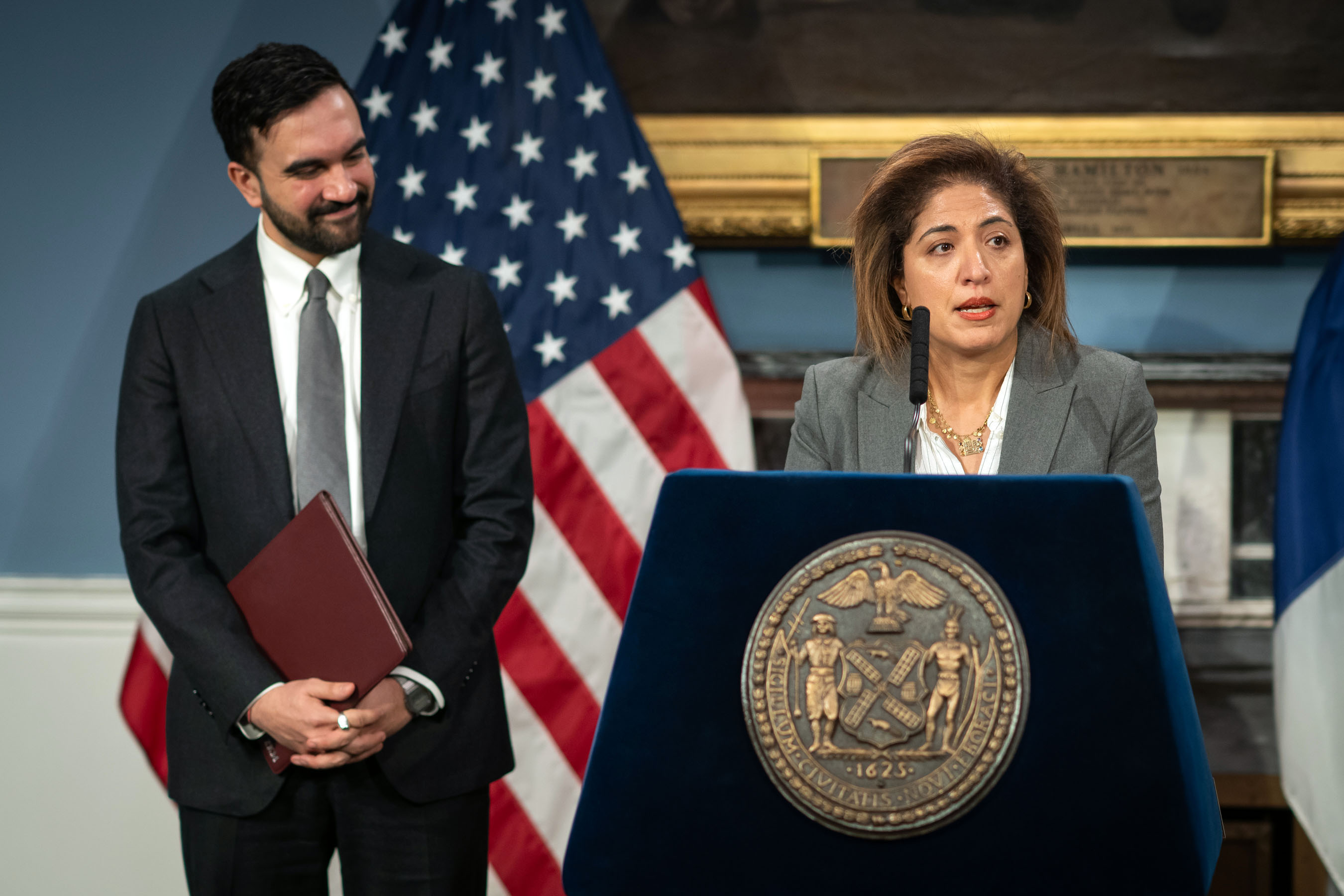
MORE DOIMAGE CONTROL: Mamdani is scrambling to shore up support for a key appointment whose fate rests with the New York City Council — another twist in the mounting tensions between the mayor and the body of lawmakers meant to be a check on his power, POLITICO Pro reports this afternoon.
Mamdani’s team has been working behind the scenes to set up one-on-one meetings between Council members and his pick to lead the Department of Investigation, Nadia Shihata, according to four people with knowledge of the outreach granted anonymity to discuss private conversations.
The hope is the meetings will assuage lawmakers’ concerns about her past political support for the mayor and a longstanding social relationship with Mamdani’s top legal adviser.
The administration’s overtures — which come just days before lawmakers are set to vote on the nomination next week — indicated to at least one Council member that the mayor and his staff are worried about Shihata’s path to confirmation for the DOI commissioner post.
“Otherwise they don’t call,” said Council member Gale Brewer, who was among at least four lawmakers who received offers to meet with Shihata.
The sudden obstacle for Shihata’s nomination lands in Mamdani’s lap amid a broader and increasingly pitched budget feud between Mamdani and Council Speaker Julie Menin, as the mayor grapples with a $5.4 billion funding gap with few palatable options to close it.
The revelations about the tug-of-war over Shihata also come as POLITICO’s scoop about the DOI probe into Mamdani’s Department of Probation commissioner put a damper over what the mayor had hoped would be a celebratory weekend to mark his 100th day in office.
Read the story from Chris Sommerfeldt and Joe Anuta in Blue Light News Pro.
FROM THE BALKANS

THE ADAMS OF ALBANIA: Former Mayor Eric Adams is now a citizen of Albania.
His spokesperson Todd Shapiro confirmed the former mayor received an “honorary Albanian citizenship” and said the mayor thanks the country’s prime minister, Edi Rama, for the distinction.
“The decision by the Republic of Albania to grant Mayor Adams citizenship reflects that enduring relationship and mutual respect,” Shapiro said. “Leaders around the world — including mayors and presidents — have historically been recognized with honorary or dual citizenships as a symbol of international partnership and shared values.”
Adams was indicted on foreign bribery charges — which he denies — during his time as mayor, but the charges were dismissed after Trump’s Department of Justice intervened.
In an interview with Fox News that aired last week, Adams reflected on his life as a private citizen and said there’s “a great world out there waiting for me.”
“Because of my time as mayor, I spent a lot of time inviting foreign dignitaries to the city,” he said. “Now all of that has turned into some good communications and relationships.” — Jason Beeferman
FROM THE CAMPAIGN TRAIL

YOU’VE GOT A FRIEND IN ME: Rev. Al Sharpton isn’t ruling out an endorsement for Jack Schlossberg in the crowded Democratic primary for NY-12.
Schlossberg and Sharpton met for breakfast last week where they talked about the Kennedy family, politics and faith — but not an endorsement, Page Six reported.
“I told him that what Trump is doing is trying to overturn everything his grandfather, President John Kennedy started in the early 1960s,” Sharpton wrote on social media. “It’s in Jack’s blood to fight this backlash.”
Playbook caught up briefly yesterday with Sharpton on the second day of his National Action Network conference, where he reemphasized that Schlossberg didn’t ask for an endorsement in the race and their meeting was to get to know each other.
When asked if he would endorse Schlossberg, Sharpton said it isn’t off the table.
“I like guys that show up,” Sharpton said. “None of his opponents have.”
Schlossberg spoke at the conference Wednesday, with Sharpton introducing him as a “new friend.”
“You are doing so much more than anyone that I know to advance the cause of civil rights,” Schlossberg said as he stood on stage next to the reverend. “You’ve been doing it my whole lifetime. You did it a whole lifetime before I was born, and you’re still doing it. It just gives us all — young people especially — someone to look up to, an example to learn from.”
A Sharpton endorsement would be a prominent boost for Schlossberg, who already has former Speaker Nancy Pelosi’s backing — and could help further legitimize his candidacy beyond his celebrity. Some have criticized his lack of political experience compared to opponents like state Assemblymembers Micah Lasher and Alex Bores. Despite that, sparse polling has shown Schlossberg with a lead. — Madison Fernandez
IN OTHER NEWS
— LANDER SAYS NO TO ISRAELI AID: Congressional candidate Brad Lander now says he opposes all aid to Israel, including for its missile defense system, as he seeks to represent NY-10. (The Forward)
— GREEN COSTS BITE: New York City business leaders are urging the state to scale back parts of its climate law, saying compliance costs are becoming unsustainable. (CBS News)
— ICE COLD: A Poughkeepsie landlord is facing charges after threatening tenants with immigration enforcement officials. (Times Union)
— REP. ENGEL PASSES: Eliot Engel, who represented areas of the Bronx and Westchester in Congress for over 30 years, has passed away at age 79. (LoHud)
Missed this morning’s New York Playbook? We forgive you. Read it here.


President Donald Trump is asking voters to “pretend” he is on the ballot. That might backfire.
New results from The POLITICO Poll show that Democratic midterm voters are more motivated to oppose the president than Republican voters are to support him. Many Republican voters also aren’t looking for blind loyalty to Trump in the midterms: Half say they’d rather their local candidate aim to win, even if it means speaking out against the president.
It’s not uncommon for voters in the party out of power to be more motivated in a midterm year. But the lopsided findings are an ominous sign for Trump, who has fundamentally reshaped the GOP over the past decade and has once again staked his brand — and political capital — on delivering wins for Republicans in November.
With less than two weeks before the election, the poll suggests Republicans are pragmatic, and care more about preventing a blue wave than standing by Trump. And in a year when voter frustration over high pricesappears poised to play a major role, that distinction could prove consequential.
The poll, conducted by London-based firm PF Global, reveals the extent to which frustration with Trump is driving Democrats: Nearly half of Democratic midterm voters say they will be voting “mainly to oppose President Trump,” compared to just 38% of Republican voters who say they will be voting mainly to show support for Trump.
Instead, a plurality of Republican midterm voters — 48% — say their main motivation when casting a vote is to show support for a local candidate. Only 37% of Democratic voters agree.
“[Trump is] 100% motivating Democrats more than Republicans,” said Doug Heye, a longtime GOP strategist. “That may have been the case regardless, but it’s even more true with words like ‘diesel’ and ‘Iran’ now a part of everyday political discussion.”
Half of Republicans think candidates have a better chance of winning if they align themselves with Trump rather than breaking from him, compared to just 30% who believe candidates would have a better chance of winning if they break away.
But half of Republicans also accept their candidates speaking out against the president if that’s what they need to do to win their own election. That’s compared with 37% who say candidates should remain loyal to the president and support his agenda, even if it means risking a loss.
On top of that, majorities of Republican voters say Trump himself should give candidates some room to break with him on specific policy issues to win elections.
If it helps GOP candidates’ chances of winning, they said, the president should allow for disagreement on the speed of AI development, the cost of living, and whether the war in Iran was a good decision. That holds true for pluralities or even majorities of Trump 2024 voters who self-identify as part of the “MAGA” movement across each policy area, suggesting that even his most loyal voters want the president to let candidates distance themselves if it can help them win.
“President Trump is the unequivocal leader, best messenger, and unmatched motivator for the Republican Party, and he is committed to maintaining Republican majorities in Congress,” said White House spokesperson Davis Ingle.
RNC spokesperson Natalie Baldassarre said “Blue Light News didn’t need to conduct a poll to know that Democrats are motivated by their hatred for President Trump and Republicans.” She added that the GOP is “running on actual accomplishments like cutting taxes and securing the border,” while saying Democrats have made “investigations, obstruction, and impeachment” their campaign platform.
Still, the tension is playing out in real time as Republican candidates locked in competitive races walk a tightrope between maintaining Trump’s support — and that of his MAGA base — without alienating critical moderate and independent voters. They’re especially under pressure as Trump hits the campaign trail in battlegrounds and red states, with several candidates having to quietly make calculations whether it will hurt them politically to appear next to him.
“I think Republicans … are stuck choosing which finger to cut off,” said a national GOP operative, granted anonymity to speak candidly about the midterm landscape. “There is no good answer.”
In Iowa, where voter frustration over some of Trump’s marquee policies, including tariffs and rising costs stemming from the Iran war, has mounted, Republican candidates have sought to create some distance from the president. Republican Rep. Ashley Hinson, the party’s Senate nominee, has said the war needs to be “brought to a successful and immediate end.” She also skipped a rally Vice President JD Vance held in the state last month.
Several other GOP candidates have also skipped Trump rallies in their home states, and many have grown increasingly wary of mentioning Trump in ads, including in red states that over the last few months have suddenly started to look competitive. In battleground Georgia, GOP gubernatorial nominee Rick Jackson has carefully navigated his relationship with Trump, avoiding public breaks with the president on policy but still limiting direct references to him in campaign ads and on the debate stage.
“I don’t know that Trump coming [to Georgia] helps Republicans more so than it excites Democrats, especially in a wave election year,” said Jason Shepherd, a former Cobb County GOP chair who is supporting Jackson.
That leaves Republican candidates in a tricky position: Their voters are willing to accept breaking from Trump if victory is on the line, but voters — and candidates — won’t know what will cost them their race until it’s too late.
“There’s no reason to gratuitously attack the White House and make an enemy,” the national GOP operative said. “But the end game here is to get reelected, and if they have to get reelected, but the president’s annoyed at them for a period of time, they’ll get over it.”
While Republican candidates balance loyalty to Trump with the possibility of breaking away on certain issues, Democratic midterm voters remain highly motivated to vote against Trump’s agenda.
Even Trump’s endorsement of a Republican candidate seems to influence Democrats more than Republicans: Roughly 70% of Democratic midterm voters say his endorsement would make them less likely to support a candidate, compared to 55% of Republican midterm voters who say the endorsement would make them more likely to support a candidate.
“The midterm elections are about anger management and failed expectations,” said North Carolina based GOP strategist Paul Shumaker. “A lot of Republicans and swing voters feel like their expectations have not been met in helping address their economic concerns.”
Alec Hernández and Alisa Vasquez contributed to this story.
Can Angie Nixon prove Democrats can win in Florida?
lead image
Democrats’ top Senate-focused super PAC will report raising $354 million through Oct. 14 — including roughly $88 million in the first two weeks of the month— as Democrats race to seize control of the upper chamber in the election’s closing weeks.
Senate Majority PAC shared their fundraising totals, which are higher than any previous cycle, with Blue Light News ahead of a Federal Election Commission deadline later Thursday. The super PAC had $32.7 million in the bank as of Oct. 14.
“This is already the strongest cycle in Senate Majority PAC’s history, and it’s arriving exactly when it counts,” SMP spokesperson Lauren French said in a statement. “We’re on the air across the battleground through Election Day, and every dollar is going toward beating price-gouging Republicans and winning back the Senate.”
That’s more than the $306 million SMP raised in the 2024 campaign cycle, according to FEC filings, its previous high.
SMP is still being outraised by the Senate Leadership Fund, the GOP’s top Senate super PAC, in large part thanks to billionaire Elon Musk and other Republican megadonors. Musk gave $158 million to SLF in the third quarter, according to its most recent FEC report, and the super PAC in turn sent that money to Texas’ Senate race in order to boost the scandal-plagued GOP nominee Ken Paxton.
As of Sept. 30, SLF had raised more than $423 million for the cycle.
Democrats have been able to offset much of Republicans’ super PAC cash advantage on the airwaves because of stronger candidate fundraising.
But Republicans still have the advantage of a favorable map — and more outside money — as they hope to maintain control of at least one chamber of Congress next month.
- Democrats want Mullin in the hotseat in the next Congress
- John Barrasso to campaign with Ken Paxton
- Capitol agenda: Bennie Thompson warns about Dems’ late bet
- Poll: Trump wants the midterms to be about him. That could backfire.
- Can Angie Nixon prove Democrats can win in Florida?
- Elon Musk pours another $76 million into boosting Republicans
- Senate Democrats’ campaign arm takes out $15M loan
- Democrats’ top Senate super PAC has raised $354M this year
- Biotech investment is the new front in the U.S.-China trade fight
- A final farewell to NYC’s horse carriage industry
-

 Politics2 years ago
Former ‘Squad’ members launching ‘Bowman and Bush’ YouTube show
-
Uncategorized2 years ago
Bob Good to step down as Freedom Caucus chair this week
-

 The Josh Fourrier Show2 years ago
DOOMSDAY: Trump won, now what?
-

 The Dictatorship2 years ago
Pete Hegseth’s tenure at the Pentagon goes from bad to worse
-

 Politics2 years ago
Former Kentucky AG Daniel Cameron launches Senate bid
-

 The Dictatorship2 years ago
Luigi Mangione acknowledges public support in first official statement since arrest
-

 Politics2 years ago
Blue Light News’s Editorial Director Ryan Hutchins speaks at Blue Light News’s 2025 Governors Summit
-
 Politics1 year ago
John Legend advises Trump to drop the ‘dictator s‑‑‑’ if he wants Nobel Peace Prize