
Politics
The next races where Latino voters will be decisive

Democrats watched with mouths agape this week as Latino voters, many of whom have sat out previous primary seasons, turned out in droves for James Talarico in Texas.
But the push to win back the elusive and swingy coalition that proved pivotal to President Donald Trump’s 2024 victory goes way beyond the closely watched Lone Star State. This is a story that kicked off last year as Democrats overperformed in Latino-dominant districts across Virginia and New Jersey. It’s one that multiple candidates and strategists told Playbook could make or break Dems’ ambitions to take the House — and there’s a handful of key districts across the country that will offer the next test cases.
From Colorado to Arizona to Nebraska, top candidates in Democratic primaries are watching the record turnout numbers from Latinos and making these voters a top target for their campaigns to flip their razor-edge districts now held by Republicans. It’s an early bet as they face primaries in the months ahead — but in seats that in the past have been won by less than a percentage point, these voters could make the difference.
“They vote for Trump, they vote for Mikie Sherrill, they just showed up [in Texas] in record numbers,” said Chuck Rocha, a strategist who advised Talarico’s campaign. “So what that tells you is you should start talking to them sooner with a persuadable message.”
Nebraska’s 2nd Congressional District, the state’s so-called blue dot which is represented by the retiring Republican Rep. Don Bacon, is a top target for Democrats to flip this year. So too is Colorado’s 8th District, held by incumbent Republican Rep. Gabe Evans. There’s also Arizona’s 6th District, which recently was added to the DCCC’s Red-to-Blue program as Democrats aim to edge out incumbent GOP Rep. Juan Ciscomani. All of these districts have an influential minority of Latinos that local strategists say are crucial to any Democratic victory.
Enter this crop of Democratic candidates who watched Texas’ results roll in with an eye toward their own races: Denise Powell in Nebraska, Manny Rutinel in Colorado and JoAnna Mendoza in Arizona.
In each district, there’s a growing enthusiasm on the ground among Latinos that indicates they’ll be major players in this cycle. “Especially when you have a contested primary in a year like this, every vote matters,” Powell said in an interview. “And I know that’s something so cliche that we all say and whatever,” she said. But when it comes to Latinos, “we’re not taking anything for granted.”
Rutinel, one of the top Democrats running in Colorado’s 8th, told Playbook he’s buoyed by the surge in Latino voters that he’s seen. “This is Colorado’s most Latino district. It’s drawn for Latino representation,” he said. “And I think folks right now are feeling both scared on the one hand about what’s happening with ICE brutality in this district and beyond, and they’re also feeling energized to fight back.”
And he’s not the only one in the primary watching the Latino vote: former state legislator Shannon Bird has earned the endorsement of top labor unions with Latino membership. “We’ve already knocked on thousands of doors in heavily Hispanic neighborhoods and attended dozens of community and cultural events organized by local Hispanic institutions,” Bird’s campaign manager Eve Zhurbinskiy said in a statement.
Rutinel and his team are leaning into his background to persuade voters ahead of the June 30 election: “I’m the only Latino candidate in this race and bilingual, I have the ability to speak directly to these communities,” he said. Colorado’s 8th was one of the most expensive House races of the 2024 cycle, and it’s 39 percent Latino. Should Rutinel win, he’d face Evans for a Latino vs. Latino showdown.
Over in Arizona, even its lower Latino-dominant districts like the 6th are still heavily influenced by the coalition. “This is just a part of the world where one out of every three people is Latino,” a Democratic strategist working on Arizona races said. It’s a district that contains parts of Tucson, a major Air Force base and more rural on-the-border voters.
The path to victory there for a Democratic candidate like Mendoza is a bit closer: her primary isn’t nearly as contentious, but the district is a toss-up. Ciscomani, in the 2022 midterm season, carried the district by fewer than 6,000 votes. A Mendoza and Ciscomani matchup will make for another Latino vs. Latino showdown.
But of course, whether it be in Colorado, Arizona or Nebraska, the Democratic nominees will inevitably face a tough battle against Republicans, who’ve made significant inroads with Latinos over the past several years. Republicans are still pointing to those significant margins as they get deeper into the primary season and beyond, and they’re projecting confidence that the margins will stick.
“Democrats haven’t learned a thing from the historic realignment among Hispanic voters in recent elections,” RNC spokesperson Zach Kraft said in a statement. Trump’s agenda of “secure borders, safe communities, and a strong economy resonates with all hardworking Americans and is enabling Republicans to be on offense,” he said.
But with Texas delivering such a resounding early sign of Latino engagement for Democrats, the campaigns are growing more bullish that these voters may start trending back in their direction. “We don’t treat Latino voters like a turnout target. We treat them like they are a persuasion target,” the Arizona strategist said.
Latino voters have historically had abysmal turnout in midterm elections. Many report in polls having never interacted with any campaign. It’s making the recent trends all the more eye-popping, and reaffirming Powell’s campaign strategy to target them in a place like Nebraska’s 2nd, where Latinos in South Omaha make up about 10 percent of the district.
Powell is also facing fierce competition to win over the district’s Latinos ahead of the May 12 primary. John Cavanaugh, a state senator and one of the primary front-runners, said in a statement that he’s also pursuing an “aggressive Latino voter contact plan” building on “prominent Latino endorsements, my work with and for the Hispanic community in the Legislature, and my record of showing up in every part of this district.”
The throughline connecting all these campaigns is the significance of the Latino voter margins. Powell said Democratic campaigns like hers were “glued to Texas” to see if the turnout trend would continue to bear out. With all signs pointing to yes, expect the Latino outreach to grow in these must-watch races.
“We’re paying close attention to it,” a Democratic strategist working in Nebraska said. “We’re communicating to [Latino voters] in every way that we possibly can, and making sure they know we need to turn out in this primary.”
Like this content? Consider signing up for Blue Light News’s Playbook newsletter.


NEW YORK — A fear of losing again is already shaping how Democrats think about 2028.
Chants of “run again!” reverberated through the packed room as Kamala Harris spoke Friday at the National Action Network convention, a gathering of Black voters, lawmakers and power brokers that saw drop-ins from a steady stream of potential presidential candidates. But several Black attendees openly questioned whether anyone other than a straight, white man can win the White House.
“The Democratic Party, they’re going to have to consider … who can win? Who can win, Black, white, who can win?” the Rev. Kim Williams, 63, a New Yorker and registered independent said in an interview.
“I don’t think [the country is] ready for another different type of person,” said Annette Wilcox, a 69-year old New Yorker.
It’s an open question the party is grappling with in the wake of Harris’ decisive 2024 loss to President Donald Trump. Conversations with a dozen people on the sidelines of the Rev. Al Sharpton’s gathering found some lingering concerns that America remains too bigoted — and that as a result, the desire to diversify the highest reaches of government is in tension with the desire to win.
In interviews, several of the prospective 2028 Democrats themselves argued that anyone can win. They poured into the midtown Manhattan ballroom over the week to build their relationships with Black voters for what became a barely-hidden shadow primary.
Sen. Ruben Gallego, a first-term Democrat who won statewide in Arizona despite Harris losing the state, told Blue Light News on the sidelines of the convention that the party shouldn’t let fear narrow who ultimately runs.
“If you got stuck into this idea of what an ideal character is … you could potentially miss some really great talent,” said Gallego, who leaned intohis identity as a Latino veteran in his 2024 campaign.
Maryland Gov. Wes Moore, another possible 2028 candidate, said that he doesn’t “know many people back in 2022 who thought that an African American who had never held political office in his life was gonna be the next governor of Maryland.”
“People want to know, does your message meet a moment,” he added.
On stage with Sharpton on Friday, Harris seemed to agree. She made her most explicit overture at running again for the presidency, telling the audience she was “thinking about it” — to loud cheers and applause. Her appearance at the convention energized an otherwise largely staid event.
But even Harris, the first Black and South Asian woman to become vice president, has tacitly acknowledged the limitations of the country.
In her latest book, she divulged that former Transportation Secretary Pete Buttigieg — another 2028 contender who also made a pit-stop at NAN — was her top vice presidential pick in 2024. But she didn’t select him because she didn’t believe the country was ready for both a woman of color and a gay man in the White House.
A spokesperson for Harris declined to comment.
Some women, from former first lady Michelle Obama to various convention attendees disappointed by Harris’ 2024 loss, have said the U.S. isn’t ready for a female president.
“I believe the current climate of this country is not ready for a Black woman as president,” Aaliyah Payton, 30, a middle school teacher in the Bronx, said while waiting to see Harris speak on the third day of the convention in a line that spanned far outside the convention room.
“If Kamala Harris is running as a Democrat, and there is another white man also running as a Democrat, she would have a tough time winning,” said 60-year-old Donna Carr, who lives in New Jersey. “It’s a man’s world.”
“I’m not going to lie, it may be too soon,” said 27-year-old New Yorker Justina Peña when asked if Harris should run again.
The same handwringing roiled the 2020 Democratic presidential primary, and voters ultimately selected Joe Biden — a more moderate straight white man — to block Trump from winning a second consecutive term.
The debate within the Democratic Party over what kind of candidate is electable played out again most recently in Texas, where the Democratic Senate primary was defined by tensions over race and concerns over which candidate could unify enough Democrats, independents and disillusioned Republicans to flip the red state. Voters chose seminarian James Talarico, a white man, over political firebrand Jasmine Crockett, a Black woman, in the end.
“We saw it with the race with Crockett, and I saw a woman say she wanted to vote for Crockett, but she knew she could not win against [a] white male Republican,” said Williams, the 63-year-old reverend.
Now, those conversations are already emerging for 2028 before a single Democrat has officially announced a bid for the White House. The question over 2028 ambitions hovered over Moore, Gallego, Harris, Buttigieg, Illinois Gov. JB Pritzker, Pennsylvania Gov. Josh Shapiro and California Rep. Ro Khanna this week — and while nobody said they officially are, nobody ruled it out. Kentucky Gov. Andy Beshear and Arizona Sen. Mark Kelly are slated to speak on Saturday.
Buttigieg has dismissed concerns over his viability, including in a direct response to Harris’ revelation of why she didn’t choose him as a running mate in 2024.
“My experience in politics has been that the way that you earn trust with voters is based mostly on what they think you’re going to do for their lives, not on categories,” Buttigieg told POLITICO in a September interview.“Politics is about the results we can get for people and not about these other things.”
Some of the Black voters at the conference similarly expressed frustration with the idea that candidates’ identities should be a consideration in the looming 2028 primary.
“My concern — biggest concern — is when we get into a crisis like this in this country, people want to go to the ‘center,’ which usually is right of center in my view. A lot of people get kind of left out,” said Wilcox, the 69-year-old New York voter.
“In my experience, or history I’ve had with the Democratic Party, I feel like when that happens, Black people get tossed to the side.”
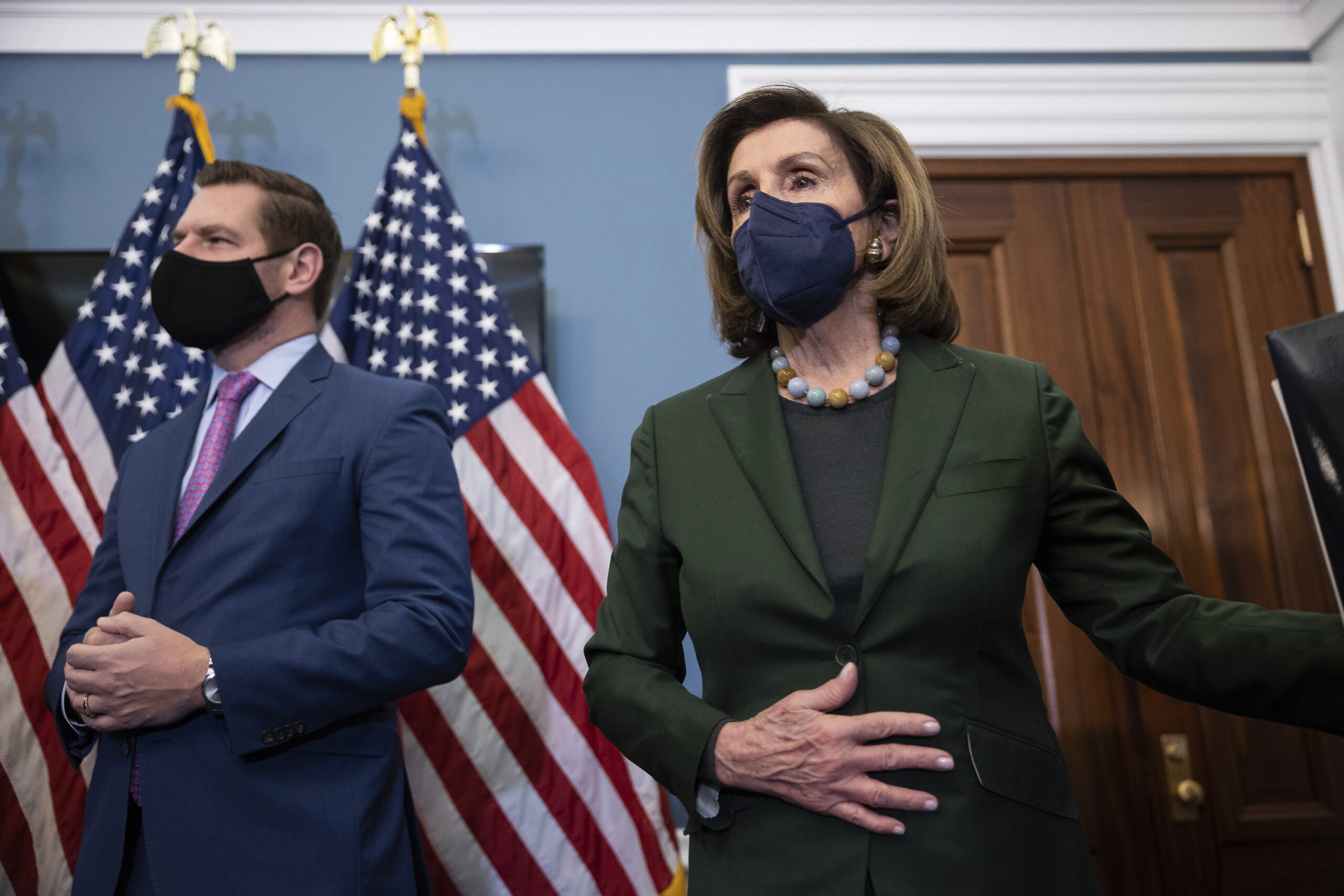
The former speaker said the sexual assault allegations “must be appropriately investigated with full transparency and accountability.”…
Read More

His support for a narrow budget reconciliation measure is a boost for Senate GOP leaders who want a tightly controlled process…
Read More
- RFK Jr. has turned corporate America’s name to mud, Blue Light News Poll finds
- 2028 Democrats say anyone can win. Voters aren’t so sure.
- Jeffries, Pelosi and other Democrats call on Eric Swalwell to end governor campaign
- Trump endorses ‘focused’ immigration enforcement funding bill

- These Republican-on-Republican disputes are keeping Congress frozen

- Trump’s proposed cuts to NASA are an insult to astronauts like the Artemis crew
- Artemis II mission splashes down, returning to Earth

- Former staffer accuses Rep. Eric Swalwell of sexual assault, reports say

- Markwayne Mullin isn’t interested in spectacle — and that’s dangerous
- Friday’s Mini-Report, 4.10.26

-

 Politics1 year ago
Former ‘Squad’ members launching ‘Bowman and Bush’ YouTube show
-

 The Dictatorship1 year ago
Luigi Mangione acknowledges public support in first official statement since arrest
-

 Politics1 year ago
Former Kentucky AG Daniel Cameron launches Senate bid
-

 The Dictatorship1 year ago
Pete Hegseth’s tenure at the Pentagon goes from bad to worse
-

 Politics1 year ago
Blue Light News’s Editorial Director Ryan Hutchins speaks at Blue Light News’s 2025 Governors Summit
-

 The Dictatorship7 months ago
Mike Johnson sums up the GOP’s arrogant position on military occupation with two words
-
Uncategorized1 year ago
Bob Good to step down as Freedom Caucus chair this week
-

 Politics12 months ago
Democrat challenging Joni Ernst: I want to ‘tear down’ party, ‘build it back up’