
Politics
2028 Democrats say anyone can win. Voters aren’t so sure.

NEW YORK — A fear of losing again is already shaping how Democrats think about 2028.
Chants of “run again!” reverberated through the packed room as Kamala Harris spoke Friday at the National Action Network convention, a gathering of Black voters, lawmakers and power brokers that saw drop-ins from a steady stream of potential presidential candidates. But several Black attendees openly questioned whether anyone other than a straight, white man can win the White House.
“The Democratic Party, they’re going to have to consider … who can win? Who can win, Black, white, who can win?” the Rev. Kim Williams, 63, a New Yorker and registered independent said in an interview.
“I don’t think [the country is] ready for another different type of person,” said Annette Wilcox, a 69-year old New Yorker.
It’s an open question the party is grappling with in the wake of Harris’ decisive 2024 loss to President Donald Trump. Conversations with a dozen people on the sidelines of the Rev. Al Sharpton’s gathering found some lingering concerns that America remains too bigoted — and that as a result, the desire to diversify the highest reaches of government is in tension with the desire to win.
In interviews, several of the prospective 2028 Democrats themselves argued that anyone can win. They poured into the midtown Manhattan ballroom over the week to build their relationships with Black voters for what became a barely-hidden shadow primary.
Sen. Ruben Gallego, a first-term Democrat who won statewide in Arizona despite Harris losing the state, told Blue Light News on the sidelines of the convention that the party shouldn’t let fear narrow who ultimately runs.
“If you got stuck into this idea of what an ideal character is … you could potentially miss some really great talent,” said Gallego, who leaned intohis identity as a Latino veteran in his 2024 campaign.
Maryland Gov. Wes Moore, another possible 2028 candidate, said that he doesn’t “know many people back in 2022 who thought that an African American who had never held political office in his life was gonna be the next governor of Maryland.”
“People want to know, does your message meet a moment,” he added.
On stage with Sharpton on Friday, Harris seemed to agree. She made her most explicit overture at running again for the presidency, telling the audience she was “thinking about it” — to loud cheers and applause. Her appearance at the convention energized an otherwise largely staid event.
But even Harris, the first Black and South Asian woman to become vice president, has tacitly acknowledged the limitations of the country.
In her latest book, she divulged that former Transportation Secretary Pete Buttigieg — another 2028 contender who also made a pit-stop at NAN — was her top vice presidential pick in 2024. But she didn’t select him because she didn’t believe the country was ready for both a woman of color and a gay man in the White House.
A spokesperson for Harris declined to comment.
Some women, from former first lady Michelle Obama to various convention attendees disappointed by Harris’ 2024 loss, have said the U.S. isn’t ready for a female president.
“I believe the current climate of this country is not ready for a Black woman as president,” Aaliyah Payton, 30, a middle school teacher in the Bronx, said while waiting to see Harris speak on the third day of the convention in a line that spanned far outside the convention room.
“If Kamala Harris is running as a Democrat, and there is another white man also running as a Democrat, she would have a tough time winning,” said 60-year-old Donna Carr, who lives in New Jersey. “It’s a man’s world.”
“I’m not going to lie, it may be too soon,” said 27-year-old New Yorker Justina Peña when asked if Harris should run again.
The same handwringing roiled the 2020 Democratic presidential primary, and voters ultimately selected Joe Biden — a more moderate straight white man — to block Trump from winning a second consecutive term.
The debate within the Democratic Party over what kind of candidate is electable played out again most recently in Texas, where the Democratic Senate primary was defined by tensions over race and concerns over which candidate could unify enough Democrats, independents and disillusioned Republicans to flip the red state. Voters chose seminarian James Talarico, a white man, over political firebrand Jasmine Crockett, a Black woman, in the end.
“We saw it with the race with Crockett, and I saw a woman say she wanted to vote for Crockett, but she knew she could not win against [a] white male Republican,” said Williams, the 63-year-old reverend.
Now, those conversations are already emerging for 2028 before a single Democrat has officially announced a bid for the White House. The question over 2028 ambitions hovered over Moore, Gallego, Harris, Buttigieg, Illinois Gov. JB Pritzker, Pennsylvania Gov. Josh Shapiro and California Rep. Ro Khanna this week — and while nobody said they officially are, nobody ruled it out. Kentucky Gov. Andy Beshear and Arizona Sen. Mark Kelly are slated to speak on Saturday.
Buttigieg has dismissed concerns over his viability, including in a direct response to Harris’ revelation of why she didn’t choose him as a running mate in 2024.
“My experience in politics has been that the way that you earn trust with voters is based mostly on what they think you’re going to do for their lives, not on categories,” Buttigieg told POLITICO in a September interview.“Politics is about the results we can get for people and not about these other things.”
Some of the Black voters at the conference similarly expressed frustration with the idea that candidates’ identities should be a consideration in the looming 2028 primary.
“My concern — biggest concern — is when we get into a crisis like this in this country, people want to go to the ‘center,’ which usually is right of center in my view. A lot of people get kind of left out,” said Wilcox, the 69-year-old New York voter.
“In my experience, or history I’ve had with the Democratic Party, I feel like when that happens, Black people get tossed to the side.”


Prospective presidential candidates are known to chew over pork chops on a stick at Iowa’s iconic State Fair. They gather in South Carolina at Rep. Jim Clyburn’s “World Famous Fish Fry.” And they’re all over New Hampshire … well, any chance they get.
New Mexico today is entering the convening conversation with chicharrón at the “Matanza.”
In the long tradition of major state gatherings that have become dead giveaways of politicians’ presidential ambitions, New Mexico is formally stepping into the political fray, with an inaugural “Fourth in the Nation Matanza Rally” hosted by Democratic Sen. Ben Ray Luján designed to introduce the 2028 crop to the state.
What exactly is a Matanza? It’s a “New Mexico election season staple,” Deb Haaland, who was Interior secretary in the Biden administration and is running for New Mexico governor, told Blue Light News.
“You dig a big hole in the ground, you build a fire, you put a pig in the coals, and it cooks overnight, and then you share this grand feast along with tortillas and chicharrón,” Haaland said.
Over 1,500 people, local and state leaders and New Mexico’s congressional delegation are gathering to eat and listen to mariachi and local bands at Albuquerque’s International Balloon Museum this afternoon, in part to rally voters to turn out on Nov. 3. Yet the presidential undertones are quite intentional in the new Democratic early nominating state.
“Matanzas typically in New Mexico have centered around family gatherings, weddings, big celebrations, community celebrations, bringing people together,” Luján told Blue Light News. It’ll be a “first taste of New Mexico” for 2028ers to introduce themselves to the state.
New Mexico’s entry into the early nominating lineup has set a course for a primary season where some of the Democratic Party’s most elusive voters will be front and center. Some 2028ers will be hearing from voters directly today — among them Sen. Chris Van Hollen (D-Md.). Van Hollen has admitted he’s testing the waters for a presidential bid and told Blue Light News “this is going to be part of that process.”
Also in the mix is Sen. Mark Kelly (D-Ariz.) — who wanted to be “neighborly” and show up for Luján — and said he’s “considering” a run but won’t make a decision until after the midterms.
“New Mexico is a lot like Arizona. We’ve got some shared issues and priorities,” Kelly told Blue Light News. “And I think, you know, the Southwest is growing in importance, more people are moving here.”
But Luján is offering free advice for visiting Democrats: “Understand that you need to get out and earn the trust back from so many families where we lost support: labor families, union families, Hispanic families.”
Latino voters make up the majority of voters statewide, and together with Nevada they’re poised to dominate the early primary calendar.
“I think that both the fact that Trump betrayed voters when it came to the economy, plus the fact that they did a bait and switch when it came to their immigration policies, has turned off a lot of Hispanic voters,” Van Hollen told Blue Light News. “But where Trump was right was recognizing people’s economic pain.”
Blue collar work and agriculture run deep in the fabric of the state. “The [border] lines moved on a lot of families,” as Lujan put it — making the “New Mexican” identity particularly potent.
“We’re the fifth-largest state in the country,” Haaland told Blue Light News. “We have three national labs. We’ve got veteran services here. … We’re also a border state, and so much commerce here in New Mexico happens on our border.”
And Haaland is also adamant about keeping Native Americans at the forefront of the 2028 conversation. “I want any presidential candidates to really know and understand why they need to think about tribes. Why they need to have a plan for Indian tribes when they’re working on their platforms,” she said.
If Haaland wins the governorship, she and Luján will be critical touchpoints for 2028ers. Luján, a former DCCC chair, said he’s already started reaching out to potential candidates. And Haaland, through her gubernatorial campaign, has shared the stage with several of them already.
Pete Buttigieg hit the Land of Enchantment last month, campaigning for Haaland and Vasquez in the heavily Latino town of Las Cruces. Sen. Cory Booker (D-N.J.) held a fundraiser in the state in August. Michigan’s Gretchen Whitmer and Illinois’ JB Pritzker have both swung through the state. And Gov. Michelle Lujan Grisham has been fielding calls from prospectives, including Rahm Emanuel and Kentucky Gov. Andy Beshear, who’s supporting Haaland as chair of the Democratic Governors Association.
But today marks the first official 2028 cattle call for the state. Complete with tribal leaders, local business owners and VIP donors, the first Matanza event will test the appetite for a more Latino-specific cultural touchstone that could round out the obligatory presidential candidate event rotation.
“What I hope that being fourth in the nation can create in New Mexico is a better understanding of what’s needed across the West, across the Rocky Mountains, the high desert,” Luján told Blue Light News.
As for the 2028ers? They “better learn how to eat chile,” Luján added. “Our red and our green, because it’s on everything — breakfast, lunch and dinner. Sometimes even dessert.”
Like this content? Consider signing up for Blue Light News’s Playbook newsletter.
President Donald Trump is escalating his crusade to exert control of America’s elections as his party barrels towards a potentially bruising midterm.
The Justice Department has already filed lawsuits in nearly every state to try and gain access to voter files. Trump revisited his longstanding bid to restrict mail voting, sparking a legal battle that reached the Supreme Court. He sought to make anti-terrorism funds for state and local governments contingent on how they administer elections. He has threatened to withhold federal election funding from states that refuse to change voter registration forms and sparred with Republican lawmakers over a bill to overhaul elections.
But with most of those efforts stalling, on Thursday, just 12 days before Election Day, the DOJ took things even further: In an extraordinary move, it asked a court to preemptively block Alaska’s Senate results if Republican Sen. Dan Sullivan loses, stunning current and former election officials in both parties.
“Boy, they are scraping the bottom of the barrel. It feels like a real desperation play to me, because it has got zero basis in the law,” said Ben Ginsberg, a veteran Republican election law expert who was counsel to George W. Bush’s 2000 and 2004 presidential campaigns.
At virtually every corner, courts have rebuffed Trump’s efforts, and legal experts expect the latest DOJ maneuver to have the same outcome. The requests for voter rolls were blocked repeatedly by members of Trump’s own party and struck down in court. The attempt to restrict mail voting was ultimately blocked by the Supreme Court. Federal judges blocked both the anti-terrorism and election funding efforts. The SAVE Act, which would require voters to provide proof of citizenship at the polls, has stalled in the Senate.
But Trump keeps pushing, telling reporters Friday that he had personally green-lit the Alaska lawsuit: “I’m the one that said ‘Do it.’”
The gambit is another sign that Trump is once again ramping up his efforts to exert greater control over how elections are administered — with officials bracing for what may come next.
“I think there is an attempt to lay a foundation to say, ‘If we had won these lawsuits, we would have won the election,’” Gabriel Sterling, a Republican and former senior Georgia elections official who sparred with Trump over his false claims of fraud in the state in 2020, said of the Alaska lawsuit. “So, for them, filing and losing for them is the same difference, tactically speaking, potentially.”
Trump has been claiming elections were being stolen from him since the 2016 primaries, and his wide-ranging legal and political attempts to overturn his 2020 election loss sparked a riot at the U.S. Capitol in January 2021, even as some in his party want him to move on.
“The federal government is his company, and he gets to call all the shots of his company, and that’s just never how it’s been done before,” said Stephen Richer, Maricopa County, Arizona’s former GOP chief election official.
Blue Light News reached out to the offices of every Republican statewide election official in America for a response to the DOJ’s action in Alaska. Four declined to comment, and the rest did not respond. Their silence shows just how powerful Trump remains in the party, and how few are willing to cross him just days before November’s midterms.
“The survival rate politically of people who oppose Donald Trump on this issue is not great if you’re Republican,” said Richer, who was ousted by a more conservative Republican in a 2024 primary after defending the county’s 2020 election results against a yearslong campaign from Trump and his allies to try to prove they were rigged.
Arizona Democratic Secretary of State Adrian Fontes railed against the DOJ’s lawsuit, accusing the department of “working as the president’s lawyers.”
“The Department of Justice is acting in a monstrously political way, and it’s purely inappropriate, and they lose a lot of credibility by putting their thumb on the scales,” Fontes said in an interview Friday afternoon. “This attempt in Alaska, if it comes to Arizona, will also fail.”
The Justice Department, in a statement posted on social media, said “claims that DOJ is trying to stop Alaska’s election are FALSE.” Instead, the DOJ argued it was “seeking to protect election integrity, consistent with the National Voter Registration Act (enacted by Congress) and ensure the will of Alaska voters is respected.”
Washington state Attorney General Nick Brown, a Democrat, described the legal filing in Alaska as “part of a concerted effort to control the election and to try to dictate the outcome in Donald Trump and the Republican Party’s favor.”
Brown said he worried the administration would contest the results of the midterms.
“That is not hypothetical,” Brown said. “This is what the president has done for years now, and he has the entire power of government, and most importantly, the Department of Justice around elections, acting at his request.”
Sterling predicted the effort would backfire on the GOP.
“By talking about stolen elections, by talking about cheating, they’re suppressing their own vote and they’re encouraging the votes of their opponents,” he said. “So tactically, I think it’s politically moronic.”
The DOJ lawsuit in Alaska comes less than two weeks before a midterm election cycle in which Republicans are bracing for losses across the map. And the Trump administration’s increasing interventions are raising questions about how far his administration intends to go in trying to assert federal authority over elections that by law are run by state and local officials.
A current Georgia Republican election official, granted anonymity to discuss internal deliberations around the Alaska lawsuit, said they are prepared to forcefully push back on any action from the federal government.
“Bring it on,” the official said. “I think there’s zero credible way for any entity, much less the DOJ, to say that the election results in Georgia are suspect.”
The lawsuit is the culmination of years of escalating tensions between the federal government and state election officials over election proceedings.
In February, a typically staid gathering of the nation’s top election officials turned fiery when Utah Lt. Gov. Deidre Henderson, a Republican and her state’s chief election official, confronted a senior White House aide over the DOJ’s voter roll push.
The DOJ “pretty much slandered all of us to publicly claim that secretaries of state are not doing our jobs and that the federal government has to do it for us. Not OK,” Henderson said to White House Deputy Director of Intergovernmental Affairs Jared Borg, as her colleagues and reporters looked on.
On Wednesday, Henderson’s office received a letter from the Justice Department informing her that election monitors will be sent to her state. Her office responded the next day by distributing instructions to poll workers noting that the DOJ observers “must not interfere with voting” and giving guidance in case “a situation arises involving law enforcement or legal demands.”
Henderson was unsparing in a recent interview with CBS News.
“In the past two elections that I oversaw as lieutenant governor the threats were all external,” she said. “But now we also have threats coming from within our own government.”
Lisa Kashinsky contributed to this report.
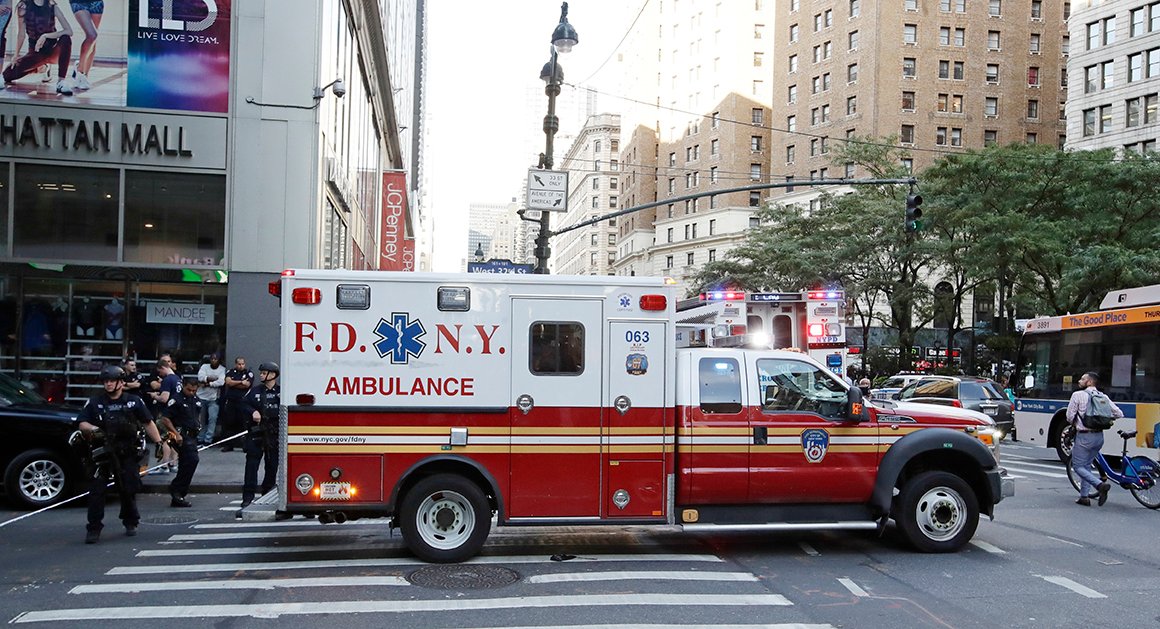
911 EMERGENCY: An ambulance in New York City now takes an average of 13 minutes to reach someone in life-threatening distress.
That response time has risen five years straight and is up 41.2% from a decade ago, a city comptroller’s report revealed earlier this month. According to this year’s Mayor’s Management Report, which came out in September, ambulance response times to life-threatening emergencies shot up by almost 16% between fiscal year 2025 and fiscal year 2026 — the sharpest increase this decade.
A core part of the issue is that calling 911 does not necessarily mean an ambulance will be immediately dispatched. Callers are put in dispatch queues. If a higher-priority call comes through, the ambulance might be rerouted. And all of this happens behind the scenes — which means those experiencing medical emergencies have no idea when help will actually arrive.
Council member Joann Ariola, chair of the Fire and Emergency Management Committee, proposed a bill in August that would require the city to send New Yorkers broad notifications when the emergency response system is overloaded.
Now, the Queens Republican is pushing for these notifications to be completely personalized.
“The idea is that I would be able to track my ambulance in real time, just like you’re able to do for your bus, or your train, or your rideshare car,” she told Playbook.
If patients know how far away help is, they can make an informed decision to forgo an ambulance and instead pursue other means of transportation to a hospital, she said. That would also alleviate pressure on the already overloaded EMS system and potentially get callers the care they need faster.
The idea has support from a council member across the political aisle.
“We get live texts about everything under the sun, but for some reason, in our current system, we don’t get alerts about this,” Democratic Council member Harvey Epstein said. “If I’m waiting for an ambulance because my kid broke their leg, and I learn that it’s going to be half an hour, it’s smarter for me to just hop in a cab anyway.”
Ariola said she met with top FDNY officials — including Commissioner Lillian Bonsignore, Chief of Department John Esposito and Chief of EMS Paul Miano — ahead of Tuesday’s hearing to discuss the idea. All of them, she said, appeared more receptive to specific text alerts than to the broad notification system proposed in her initial bill.
Amanda Farinacci, an FDNY spokesperson, said the department is “considering and exploring all options that will help us respond to emergency medical calls quickly and keep New Yorkers informed.”
“We are exploring all our options, this included,” she said, referring to the live text-update model.
Ariola said she’s submitted the new version of the bill and is waiting to hear back from the legislative affairs committee.
The solution proposed by she and Epstein would address the public-facing side of the problem, offering relief to callers in emergency situations.
The root cause of the issue, though, is retaining EMS employees — a challenge officials and union leaders say stems from low pay for a high-stress job.
“This is not fixing the broken system,” Ariola said. “We are in a state of emergency right now. It’s a systemic problem with EMS because they cannot retain their members, because it’s not a career.”
Entry-level pay for emergency medical technicians is less than that of sanitation workers, firefighters, correction officers and police officers. Since 2019, about 4,300 EMTs and paramedics have left their titles, many for better-paying jobs elsewhere in the department. Last fiscal year, 58% of departing EMTs became firefighters.
The union representing emergency medical workers is negotiating a contract that lapsed in 2022, and it’s seeking pay parity with firefighters. But the comptroller’s report found that parity alone would raise EMS salary-related expenses by $184 million a year, a 66% jump.
“The City can reverse this dangerous trend by ensuring members of EMS are treated as equals to members of fire operations, and by providing EMS personnel with pay and benefit parity comparable to their firefighter counterparts,” Local 3621 President Vincent Variale and Local 2507 President Michael Greco said in a joint statement. “These actions would not only treat our EMS workforce respectfully and properly; they would save the lives of New Yorkers in peril.”
Response times to life-threatening emergencies saw the sharpest year-to-year increase of the decade between the last two fiscal years, a timeframe that straddles the Mamdani administration and the administration of former Mayor Eric Adams.
“This is something that each mayor inherited, but the new administration, it is now absolutely their issue,” Ariola said. “I’m hoping this is the administration that finally solves the retention problem. And the only way to solve that problem is to pay EMTs their worth and also recognize them as uniformed workers.”
The mayor’s office declined to comment on Ariola’s new proposal and referred to a comment from the fire department.
“The Department is currently engaged in a challenging period of increasing response times. We know this is unacceptable and we are working tirelessly to reverse this trend,” Farinacci said. “We will continue to take steps to improve response times and keep New Yorkers safe, including improving coordination with hospitals, enhancing efficiency in high-volume areas, and increased operational visibility to help return units to service quickly.” — Molly Reinmann
FROM THE CAMPAIGN TRAIL
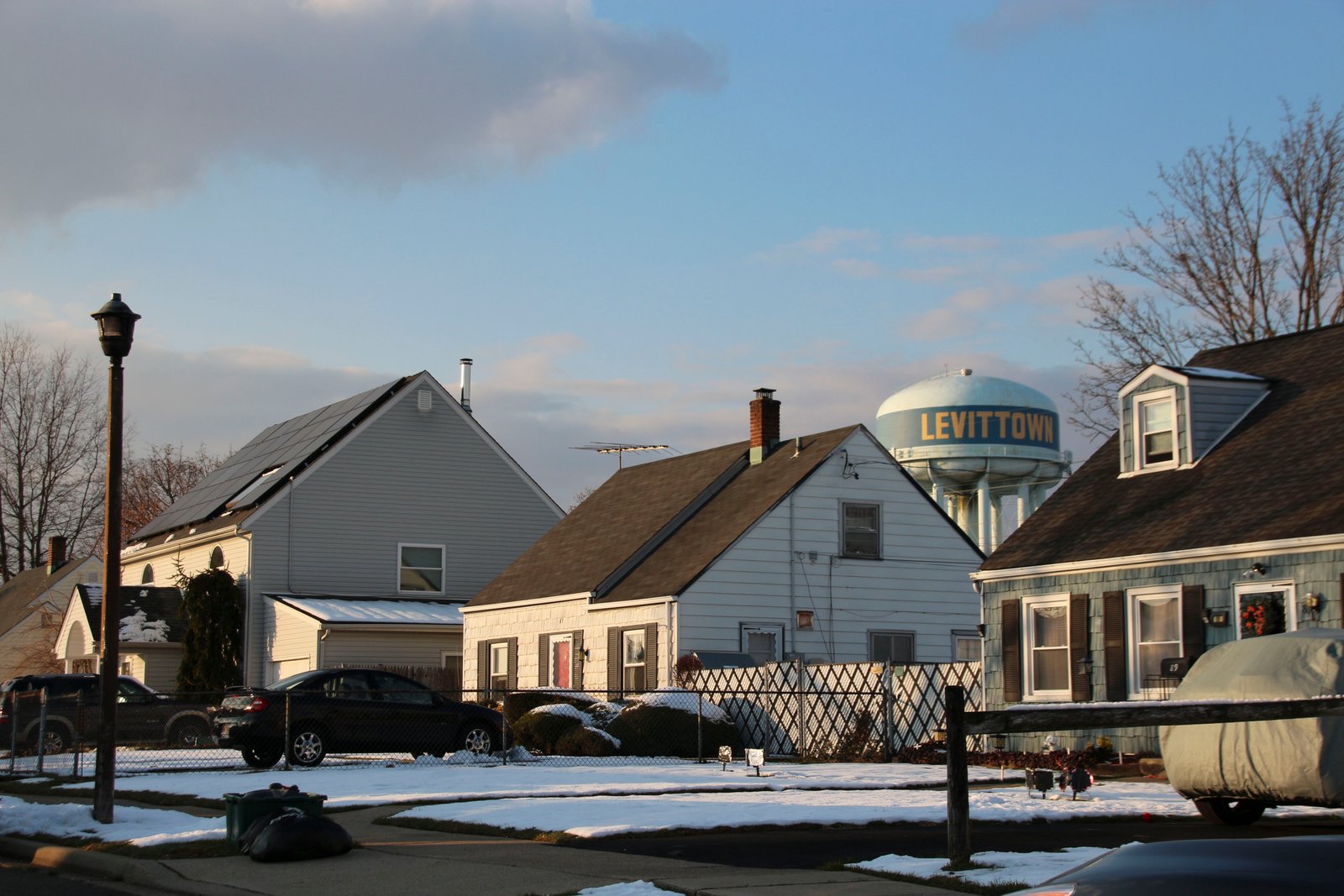
A SUBURBAN ALARM: Suburban voters across the country are turning against President Donald Trump, according to a poll that amounts to a major warning sign for the GOP this election season.
The results of the National Suburban Poll by the National Center for Suburban Studies at Hofstra University paint a bleak picture for Trump and his party.
“Numbers that are concerning Republicans throughout the country become even more so when they show up in suburbs, which for years have been the ‘swing’ voting bloc that determines national and many statewide elections,” said Larry Levy, the center’s dean. “When a party’s or candidate’s numbers are weak in the suburbs, as we’ve found in many instances for Republicans, the situation goes from concerning to alarming.”
The survey found 33% of suburban voters approve of the president’s job performance. His approval rating in swing suburban House seats isn’t much better: 35%.
Just over a quarter of suburban voters nationally — 26% — are satisfied with the direction of the country.
Suburban voters by a margin of 50% to 42% prefer Democrats over Republicans in the generic Congressional ballot question. The GOP, though, is in a statistical tie with Democrats in suburban swing seats. In those districts, Democrats lead Republicans 47% to 44%.
Taken together, the numbers highlight the challenge Republicans face this year, especially in deep blue New York, home to several swing House districts in the New York City suburbs.
The most competitive race is in the Hudson Valley, where GOP Rep. Mike Lawler is fending off a challenge from Democratic opponent Cait Conley.
The survey included 1,500 people nationwide and was conducted in late September. It oversampled suburban residents who live in swing House districts. — Nick Reisman
SARATOGA FRESH: To get an idea of how much national headwinds might apply to the New York State Senate, look to Saratoga County.
Plenty of indicators suggest two factors will heavily influence the outcome: Voters are angry at Republicans and willing to oppose well-tenured incumbents.
That could be a double-barreled problem for Sen. Jim Tedisco, who’s running in a district where Donald Trump lost by 8 points two years ago. The Republican is now the dean of the state Legislature by a large margin: Tedisco came to Albany in 1983, the first year of Mario Cuomo’s time as governor. Only four other members who might be in office next year served in 1999.
“Jim Tedisco’s been in office for over 40 years, almost as long as I’ve been alive,” said Sarah Rogerson, Tedisco’s Democratic challenger. “People are ready for some fresh voices.”
Even if current assumptions about the electorate’s mood prove true, Republicans remain optimistic they won’t apply to New York. The GOP believes 2026 will be a repeat of 2022, when a lack of enthusiasm for the top of the ticket meant a good year for Democrats nationwide bypassed the Empire State.
“If there’s going to be a blue wave across the country, it’s probably going to miss New York, and it’s largely because of how deeply unpopular Kathy Hochul is,” Senate Republican Campaign Committee Chair George Borrello said.
Nobody’s predicting Republicans will retake the majority in a chamber where Democrats had a 41-22 edge this year. The main question now is whether Democrats can pull off a two-thirds supermajority of 42 or more members, a feat accomplished in 2020 and 2022 but not 2024.
READ MORE in Blue Light News Pro from Bill Mahoney.
FROM CITY HALL
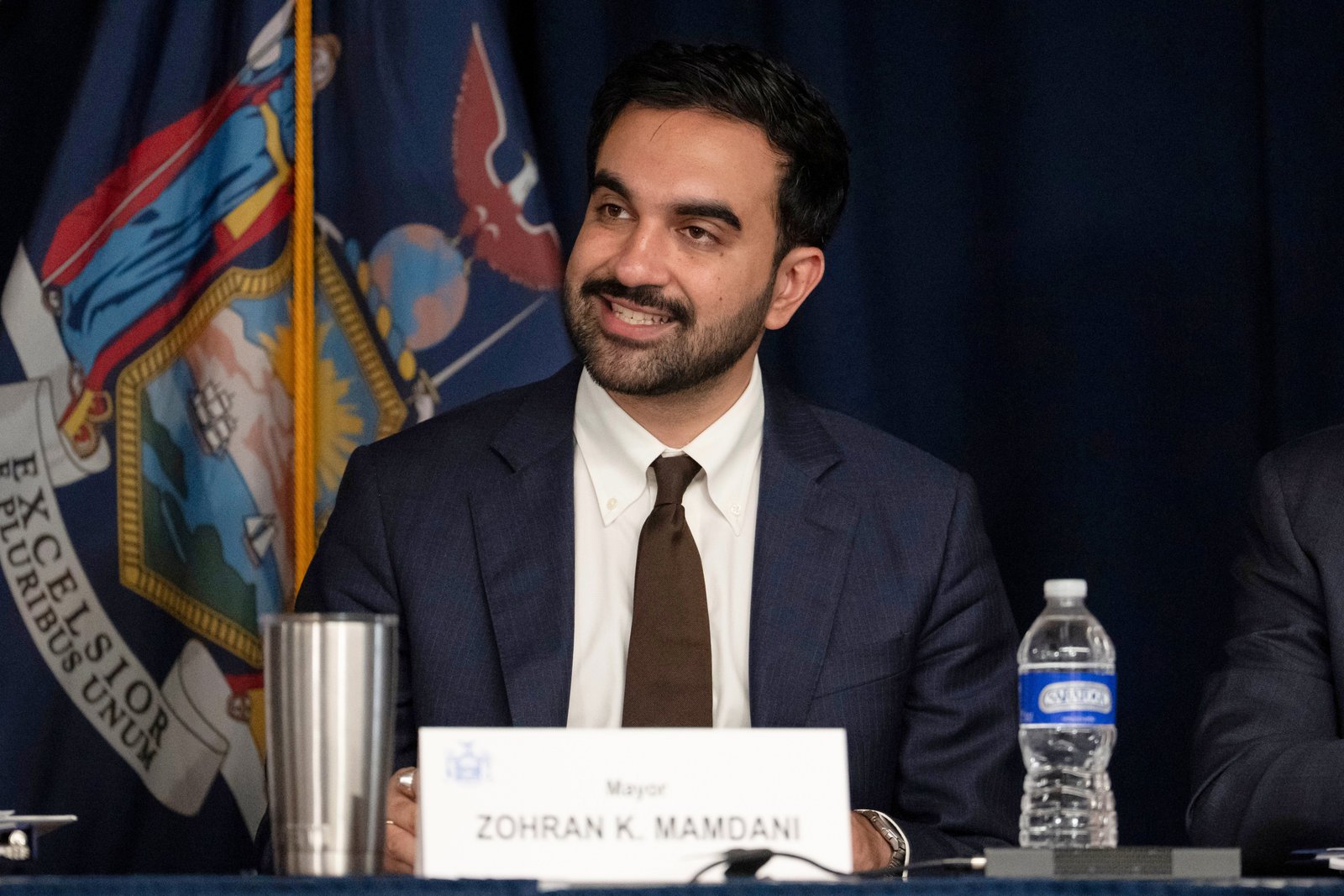
BILL SIGNING TIME: Mayor Zohran Mamdani will sign two bills passed by the City Council that come with significant transit and housing policy ramifications, his office confirmed today.
The first measure Mamdani plans to put his John Hancock on will abolish New York City’s horse carriage industry. The second will give nonprofit groups and local land trusts first dibs on buying distressed residential properties in their communities, with the idea that those regulations will protect affordable housing stock.
Mamdani had already voiced support for both pieces of legislation before the Council passed them yesterday. But his office hadn’t until today confirmed he would sign the bills, as opposed to letting them lapse into law.
Mamdani’s office did not immediately provide a date for when he plans to sign the bills.
The issue of signing bills came to the fore this week when the New York Post noted that Mamdani has only inked one bill since taking office. Ultimately, as long as the mayor doesn’t veto a bill, there’s no practical difference between whether he signs it or lets it lapse, as it becomes law regardless. — Chris Sommerfeldt
IN OTHER NEWS
— IN THE SCHOOLS: New York City is considering closing a Harlem high school due to underenrollment, the first in what could be a growing number of school mergers and closures amid public school enrollment declines. (Chalkbeat)
— HOCHUL: The governor’s vision for New York is largely shaped by her upbringing in a small Rust Belt city in western New York and her family’s slow climb up the socioeconomic ladder. (New York Times)
— CORNELL 7: Attorney General Letitia James is asking a court to dismiss a request to remove her from the investigation into the alleged sexual assault at Cornell University due to impartiality concerns. (Times Union)
Missed this morning’s New York Playbook? We forgive you. Read it here.
- The 2028 crop hits New Mexico for inaugural ‘Matanza’ rally
- Trump makes Alaska the latest frontier in his election power grab
- Spiking ambulance response times spur calls for real-time tracking

- Democrats are warning their party not to get too bullish on House gains
- Exit of RFK Jr. ally widens rift in GOP tent
- Meet Trump’s favorite House Republican candidate
- Democrats want Mullin in the hotseat in the next Congress
- John Barrasso to campaign with Ken Paxton
- Capitol agenda: Bennie Thompson warns about Dems’ late bet
- Poll: Trump wants the midterms to be about him. That could backfire.
-

 Politics2 years ago
Former ‘Squad’ members launching ‘Bowman and Bush’ YouTube show
-
Uncategorized2 years ago
Bob Good to step down as Freedom Caucus chair this week
-

 The Josh Fourrier Show2 years ago
DOOMSDAY: Trump won, now what?
-

 The Dictatorship2 years ago
Pete Hegseth’s tenure at the Pentagon goes from bad to worse
-

 Politics2 years ago
Former Kentucky AG Daniel Cameron launches Senate bid
-

 The Dictatorship2 years ago
Luigi Mangione acknowledges public support in first official statement since arrest
-
 Politics1 year ago
John Legend advises Trump to drop the ‘dictator s‑‑‑’ if he wants Nobel Peace Prize
-

 Politics2 years ago
Blue Light News’s Editorial Director Ryan Hutchins speaks at Blue Light News’s 2025 Governors Summit