
The Dictatorship
The many, many obstacles to hiring 10,000 ICE agents


The repercussions of the sprawling bill President Donald Trump signed into law last week will be felt for decades. Of immediate concern to many critics is approximately $170 billion the law gives to the Department of Homeland Securityincluding almost $30 billion to Immigration and Customs Enforcement, whose agents have been at the forefront of Trump’s aggressive mass deportation efforts.
While the original House version of the bill set a specific hiring target for ICE of at least 10,000 new agents, the final version signed into law simply gives ICE tens of billions of dollars for everything from an unspecified number of new officers to transporting deportees to IT upgrades. The White House is still saying it plans to hire 10,000 new officershowever, which would more than double the number of enforcement agents, and the “Big Beautiful Bill” gives him a lot of money to do so. But that may be harder than it looks.
In some ways ICE’s standards are already lower than other institutions, yet it still struggles to fill openings.
To begin with, ICE has historically struggled to fill open positions. When ICE tried to hire 10,000 more officers during the first Trump administration, a 2017 report by DHS’ inspector general found that a net increase of that size would require interviewing half a million people. The lift was even bigger for Customs and Border Protection, which would have needed to interview 750,000 to net just 5,000, or half as many.
Eight years later, it will most likely be even harder for ICE or other agencies to find new recruits. Since 2020, police departments at every level have struggled to recruit and retain officers; in fact, all public-sector agencies are finding it hard to hire people. And despite the surge in funding provided by the GOP megabill, the pay for ICE will most likely be fairly noncompetitive. The maximum base pay for federal law enforcement is $75,000 before regional cost-of-living adjustments. A current job posting for an “enforcement and removal operations” position posits a salary range of roughly $50,000 to $90,000. For comparison, the New York Police Department offers rookies a starting salary of just over $60,000, rising to over $125,000 in less than six years — and the department still can’t fill about 1,000 open positions.
Note, too, that ongoing protests against ICE are likely to make these logistical issues even bigger. People take jobs for both money and status. ICE already underpays compared with many (but not all) police departments; protests will serve only to further weaken the status of the job. Moreover, local police officers, unlike ICE agents, get to stay close to their homes and families and work for institutions that appear to be viewed more favorably than ICE. And these local departments still struggle to fill open positions.
ICE, of course, has several ways to address this logistical challenge — but all face logistical challenges of their own.
Perhaps the likeliest response to hiring problems will be for ICE to use the money to try to expand its 287(g) programwhich deputizes local law enforcement to enforce federal immigration laws. Such a move would not expand ICE’s actual headcount but simply reallocate how already-hired local police spend their time. That could alleviate ICE’s short-run logistical challenge, but it is also the option most vulnerable to local resistance. 287(g) laws require local governments to sign on, which means opponents can thwart them by targeting local leaders, not national ones. While it is true that about 300 local agencies have recently signed agreementsthat is a small fraction of the of 17,000 nationwide. And many states and localities already have either banned such agreements or limited the sorts of cooperation that’s possible, with more joining in.
The next most obvious move for ICE would be to lower hiring standards. This is obviously concerning, since that means the new hirees would be less competent and potentially more dangerous (think about who would be drawn to work for ICE right now, given its public profile). As CBP discovered after a similar hiring spree in the mid-2000s, this approach increases the risk of corruption and of hiring people looking to undermine an agency from within, including on behalf of drug cartels.
Note, also, that in some ways ICE’s standards are already lower than those of other institutions, yet it still struggles to fill openings. For example, ICE is exempted from a 2010 law mandating that CBP applicants pass polygraph tests — a law prompted by the problems caused by the previously mentioned hiring spree). It’s also not clear that current ICE officers would want to work alongside low-level recruits; the CBP union, for example, complained about the dangers of lowering hiring standards back in 2010.
Moreover, lowered standards are politically risky. People already don’t like ICE, and lower-quality recruits would raise the risk of violent overreactions that could hurt the agency’s reputation even more. Local police departments are already complainingpublicly, that ICE tactics are making their jobs harder.
It is also possible that ICE could turn to contractors to fill the gap. This would, unlike 287(g) programs, expand actual headcount — but only temporarily. Moreover, contractors appear to often cost perhaps as much as twice as much as federal direct hires, although the amount of money authorized by the bill makes this a less pressing issue. Relying on contractors would also introduce a real risk of overchargingwhich would burn through ICE’s budget more quickly, and if contractors get paid more than ICE agentsexpanding contracting would make it even harder to hire and retain permanent ICE agents.
A final concern is that perhaps ICE will try to recruit Proud Boys and other right-wing extremists. But that just raises the question of why these people haven’t already joined. ICE isn’t offering more, or at least much more, than it has over the years they’ve chosen not to join. One likely reason for this hesitancy is that many of them have safer, better-paying jobs. A quarter of convicted Jan. 6ers, for example, were business owners, and only about 5% were unemployed. It’s likely that many of these people would prefer to continue cheering ICE on from the sidelines.
The “big, beautiful bill” is obviously a boon to ICE. But the agency faces serious logistical challenges. Those challenges and the possible workarounds will both pose difficulties for those who favor the agency’s expansion and create opportunities for resistance by those who oppose it.

John Pfaff is a professor of law at the Fordham University School of Law. He is the author of “Locked In: The True Causes of Mass Incarceration and How to Achieve Real Reform.”


The Dictatorship
Monday’s Campaign Round-Up, 6.22.26: Why Trump backed both Republicans in a key S.C. race
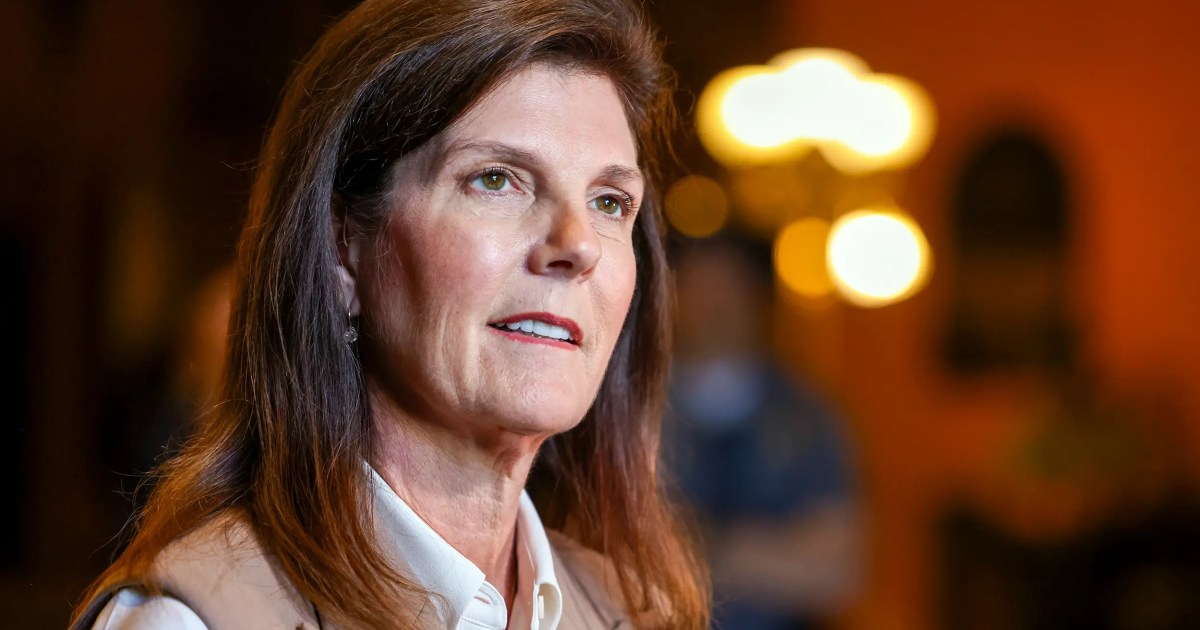
Today’s installment of campaign-related news items from across the country.
* In South Carolina’s gubernatorial raceDonald Trump endorsed Lt. Gov. Pam Evette last month. Last week, however, ahead of this week’s primary runoff election in the race, the president published an online item telling voters that “you can’t go wrong” with either Evette or state Attorney General Alan Wilson.
If this sounds at all familiar, it’s because Trump has done this before. Around this time two years ago, for example, he endorsed both Republicans running in a congressional primary in Arizona. And two years before that, he endorsed two leading contenders in a Senate primary in Missouri.
Only the president can say for sure why he ended up endorsing Evette and Wilson in the South Carolina race, though it’s worth emphasizing for context that GOP primary voters have already ignored his direction into two gubernatorial primaries this month, and it stands to reason that he hoped to avoid a third.
* We’re one day away from a variety of notable racesincluding but not limited to South Carolina’s gubernatorial race. There are also some congressional primaries in a handful of statesincluding Maryland, New York and Utah.
* In took a while, but the ballots have been tallied under Maine’s ranked-choice systemand we now know that Democrat Hannah Pingree, the former state House speaker, will face off against Republican Bobby Charles, who worked at the State Department during the Bush-Cheney era.
* As for Maine’s closely watched congressional racestate Auditor Matt Dunlap won the Democratic nomination in the battleground 2nd District, defeating state Sen. Joe Baldacci, who enjoyed the backing of the Democratic Congressional Campaign Committee. Dunlap will run in the fall against a familiar figure: former Republican Gov. Paul LePage, who had moved to Florida a few years ago, but who returned to run for Congress.
* In California’s congressional special electiontwo Democratic candidates — state Sen. Aisha Wahab and Melissa Hernandez, a Bay Area Rapid Transit director — have advanced to an Aug. 18 special general election. The winner will fill the vacancy left by disgraced former Rep. Eric Swalwell, who resigned in April.
* In a new commercial shared first with MS NOWDemocrat James Talarico has launched his campaign’s first multimillion-dollar ad buy in Texas’ gubernatorial race. In the 30-second spot, Talarico focuses on affordability and the cost of living. The state lawmaker will face scandal-plagued state Attorney General Ken Paxton in the fall.
* And in New Jersey, Republican Rep. Tom Kean Jr.who has been missing from Capitol Hill since early March, will reportedly return to work on June 30according to a statement from his spokesperson. Neither Kean nor his office have offered any public information about why he has been away.
Steve Benen is a producer for “The Rachel Maddow Show,” the editor of MaddowBlog and an MS NOW political contributor. He’s also the bestselling author of “Ministry of Truth: Democracy, Reality, and the Republicans’ War on the Recent Past.”
The Dictatorship
Trump tries dual endorsement in South Carolina as his pick for governor flounders in polls
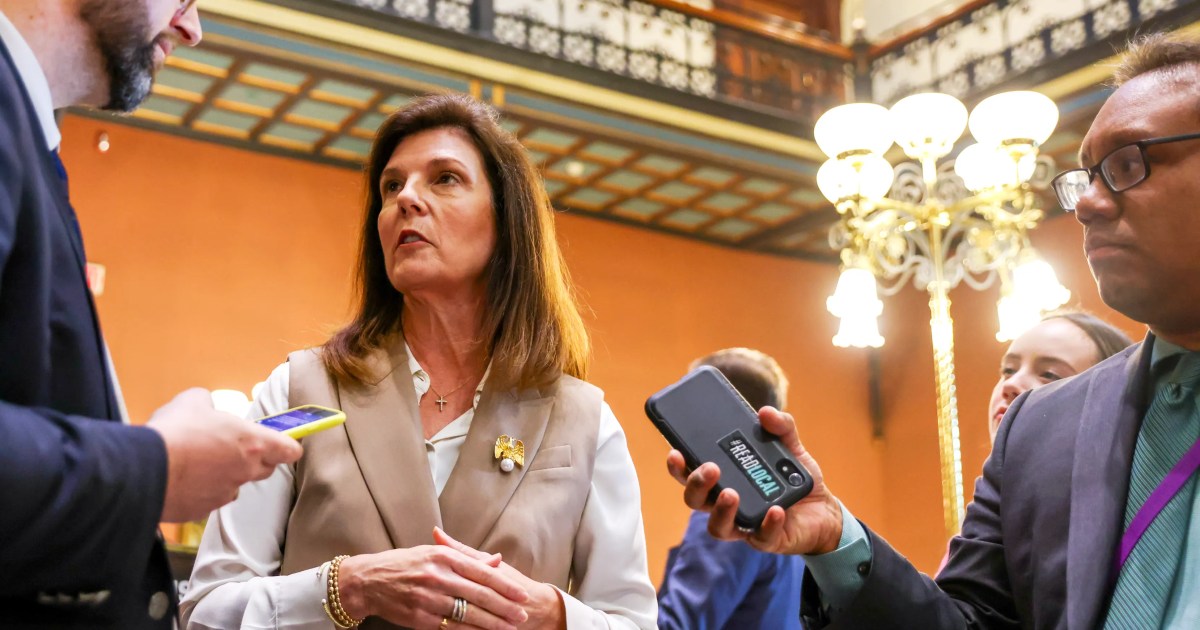
After President Donald Trump’s pick for governor in Iowa lost in the Republican primary earlier this month, the president argued that he “would have endorsed the other person” if he had “the proper information.”
Trump is taking no chances in the South Carolina gubernatorial primary. Over the weekend he rescinded his exclusive endorsement of Pamela Evette, the lieutenant governor, announcing instead that he would support both Evette and her runoff opponent, Alan Wilson, the state’s attorney general.
The move put Evette’s political future in jeopardy: Even before Trump’s dual endorsement, she trailed in limited public polling and was seen by political observers in South Carolina as a weak candidate with little to show besides the president’s coveted endorsement.
“Her chief distinction from Alan Wilson was that Trump endorsed her,” said Dr. Dubose Kapeluck, a professor of political science at the Citadel Military College of South Carolina.
Trump’s dual endorsement “was a kiss of death,” he told MS NOW.
Evette, who moved to South Carolina from Ohio to found a successful payroll and HR company in 2000, has been lieutenant governor since 2019, serving under Gov. Henry McMaster, who is term-limited.
In office, she has pursued meaningful but little-celebrated policies, like a key tort reform bill, according to Gil Gatch, a Republican member of the South Carolina state House and an Evette supporter.
But voters could be forgiven for knowing little about Evette besides the fact that Trump endorsed her, which he did just days before the June 9 primary. Visitors to her campaign website are greeted with a full-screen message labeling Evette as “Trump-endorsed.” The first line in her X bio states the same. Pro-Evette television ads are quick to tout the endorsement.
An accomplishment like tort reform, while noted on Evette’s website, “maybe could have been something that was highlighted more heavily,” Gatch told MS NOW.
The political makeup of South Carolina nearly guarantees the next governor will be whoever emerges on Tuesday between Evette and Wilson. They survived a crowded primary field on June 9, and nearly every challenger who fell short of the runoff publicly endorsed the attorney general.
“She’s just not a good candidate,” Josh Kimbrell, a state senator who failed to make the runoff and has since said he’d back Wilson, said of Evette.
“She kind of assumed this was a coronation, and that was never going to go over that well,” he added.
Even some pro-Trump voters were confused by the president’s initial endorsement of Evette, whom he called “a good friend, fighter, and WINNER” in a social media post in May.
“I have no clue why Trump would endorse Pamela Evette,” Leland Lemmons, a 30-year-old Trump supporter told MS NOW as he exited a polling site in the Greenville suburb of Easley on June 9.
“She’s served, you know, a decent time. I just haven’t seen much fruition of what she’s done in office,” he added.
In a post on Truth Social Friday announcing his dual endorsement, Trump wrote, “I can’t hurt one of them by only Endorsing the other, so, therefore, I am going to Endorse, for Governor of South Carolina, both Pam Evette and Alan Wilson!”
In a subsequent statement on X, Evette said, “I was proud to come in first as [Trump’s] endorsed candidate for Governor on June 9th. Looking forward to doing it again on June 23rd.”
After The Washington Post foreshadowed the dual endorsement last Tuesday, allies of Evette were quick to denounce the possibility.
“I would guess that’s fake news,” Suzanne Pucci, a member of Evette’s finance committee, told MS NOW of the chance Trump would also endorse Wilson. “She’s probably not real worried about it.”
Another close ally and supporter told MS NOW at the time the report was “a total, fabricated lie.”
“[Trump] is invested in Pamela Evette because she invested in him. He’s a loyal guy. That kind of stuff is important to him,” added the supporter, who spoke on condition of anonymity.
“With or without Trump, I think she is going to win,” they said.
On Thursday, a senior campaign aide, who spoke on condition of anonymity, brushed off the idea of a dual endorsement, telling MS NOW in a statement, “Pamela Evette has earned the complete and total endorsement of President Trump. She is the only Trump-endorsed candidate in this race and we look forward to delivering a big win for the president on Tuesday.”
Roughly 24 hours later, Trump retracted the exclusive endorsement.
Will McDuffie is a reporter for MS NOW.

As last week’s G7 summit in France got underway, a reporter asked Donald Trump whether his purported deal with Iran was final. “No, it’s not final,” the president replied. Later that day — during a visit to Versaillesof all places — he signed the framework anyway.
But moments after signing his name to the memorandum of understanding, Trump offered an unsubtle hint about what he was thinking at the time. Amid applause from those around him, the American president pointed down and then up while saying“Oil down, stocks up.”
In other words, Trump’s focus had nothing to do with natural security and everything to do with the economy. What’s more, the four-word phrase was part of a larger and underappreciated pattern. The Washington Post reported:
In the more than 100 days since President Donald Trump launched a war with Iran, he has offered a shifting list of reasons for why he started the conflict. But in explaining his push for peace, he named a priority much closer to home: protecting the stock market.
“I didn’t want to see economic catastrophe,” Trump told reporters gathered in the Alpine spa town of Évian-les-Bains, France, after the Group of Seven summit.
As the summit wrapped up, the Republican similarly said“I’ve studied presidents, some good, some bad, some great. Not too many are great and some really bad. … And the one president I did not want to be was the late, great Herbert Hoover. I didn’t want that and who knows what would have happened.”
He pushed the same point in an interview with Axios, which was released over the weekend.
“If I went further, the stock market would be much lower,” the president said. “Now think of this: I have one primary wish as president, in terms of people: I never want to be the late, great Herbert Hoover.”
The comments came days after Trump similarly argued“The alternative to this deal was a global recession. There are stupid people who want to see a global recession. They are just stupid people.”
Whether the president fully appreciates the implications of his own rhetoric, this string of comments doesn’t just shed light on his motivations for accepting a defeat, it also suggests he saw his failed policy in Iran as pushing the global economy toward a dangerous cliff.
In other words, based on Trump’s own comments, the war he started was poised to create an “economic catastrophe,” which he was desperate to avoid — and which led him to accept a framework that empowered Iran to get what it wanted in exchange for effectively no concessions at all.
Steve Benen is a producer for “The Rachel Maddow Show,” the editor of MaddowBlog and an MS NOW political contributor. He’s also the bestselling author of “Ministry of Truth: Democracy, Reality, and the Republicans’ War on the Recent Past.”
- Lasher, backed by Nadler, wins high-profile primary
- Cait Conley wins Democratic primary to face Rep. Mike Lawler
- Democratic socialist Valdez wins open Brooklyn-Queens primary
- Hoyer alum Adrian Boafo wins Maryland House primary with help of crypto, pro-Israel money
- Capitol agenda: Jeffries gets preview of his future headaches
- Senate Republicans say it’s time to give Trump a reality check
- Senate Republicans exclude Democrats’ food aid demand from farm bill

- Senate passes housing affordability bill
- Mitch McConnell will not vote this week

- Brad Lander trounces New York Rep. Dan Goldman in election upset
-

 Politics1 year ago
Former ‘Squad’ members launching ‘Bowman and Bush’ YouTube show
-

 The Dictatorship1 year ago
Luigi Mangione acknowledges public support in first official statement since arrest
-

 Politics1 year ago
Former Kentucky AG Daniel Cameron launches Senate bid
-
Uncategorized2 years ago
Bob Good to step down as Freedom Caucus chair this week
-

 The Josh Fourrier Show2 years ago
DOOMSDAY: Trump won, now what?
-

 The Dictatorship1 year ago
Pete Hegseth’s tenure at the Pentagon goes from bad to worse
-

 Politics1 year ago
Blue Light News’s Editorial Director Ryan Hutchins speaks at Blue Light News’s 2025 Governors Summit
-

 The Dictatorship10 months ago
Mike Johnson sums up the GOP’s arrogant position on military occupation with two words