
Politics
The lines Bill Ferguson won’t cross


When Wes Moore and Bill Ferguson stood together in a Baltimore bar on a sweltering Saturday afternoon in the summer of 2022, the two political figures projected a promising vision of power for Democrats in a blue-leaning state where they stood on the cusp of fully controlling government.
Moore was a former Rhodes Scholar and decorated combat veteran who was running for governor with Oprah Winfrey’s blessing but no experience in public office. Ferguson was a tactful consensus-builder who arrived in Annapolis with the moniker of “baby senator” before rising to become the chamber president a decade later.
“I’m a Baltimorean,” Moore told the campaign volunteers gathered in the Federal Hill neighborhood that Ferguson had represented since first being elected in 2010 at the age of 27. “Who’s making these decisions matters.”
Three years later, Maryland’s two top Democrats find themselves unable to agree on a big one. Moore has become a champion of redrawing his state’s U.S. congressional lines to generate an additional seat for his party in next year’s midterm elections. Ferguson, scarred by an earlier experience in which he helped deliver such an extreme map only to see it struck down by courts, is refusing to commit to even allowing a vote on a new redistricting measure.

The new rupture highlights a fault line emerging within both parties as Democrats and Republicans scour the national map for opportunities to improve their congressional positions via gerrymandering — between the short-term priorities of their respective national parties and the often longer-range yet parochial concerns of state legislative leaders.
For Democrats, the most immediate obstacle to further gains is Ferguson, whose defiance has made him a villain to party officials nationwide. House Minority Leader Hakeem Jeffries spoke with Ferguson in October ensuring he “understands the assignment,” as Jeffries put it. “We need the state of Maryland,” California Gov. Gavin Newsom said upon redrawing his state’s maps via passage of Proposition 50 to give his party five Democrat-leaning seats in the state. “Grow a pair” and stand up to President Donald Trump, a top Virginia lawmaker bluntly instructed Ferguson the next day.
The stand-off will likely come to a head in the coming weeks, as Moore faces an imminent choice: Call a special session and rely on Ferguson to deliver a majority for a gerrymandered map, or wait for the General Assembly to return in January for a regular session to allow more time for negotiations. Either way, the governor will have to convince 24 of the 34 Democratic senators to buck a respected leader whose control of campaign funds could help determine the fate of their reelection bids.
The view from outside Maryland may have Moore, a likely 2028 presidential contender, towering over Ferguson. But in Annapolis, many think it is the Senate president who has made the better case for how Democrats should move forward.
Ferguson “holds the cards” on redistricting, says former state Sen. Jill Carter, who served under both men. “Moore is very popular and charismatic, but Bill is very politically savvy.”
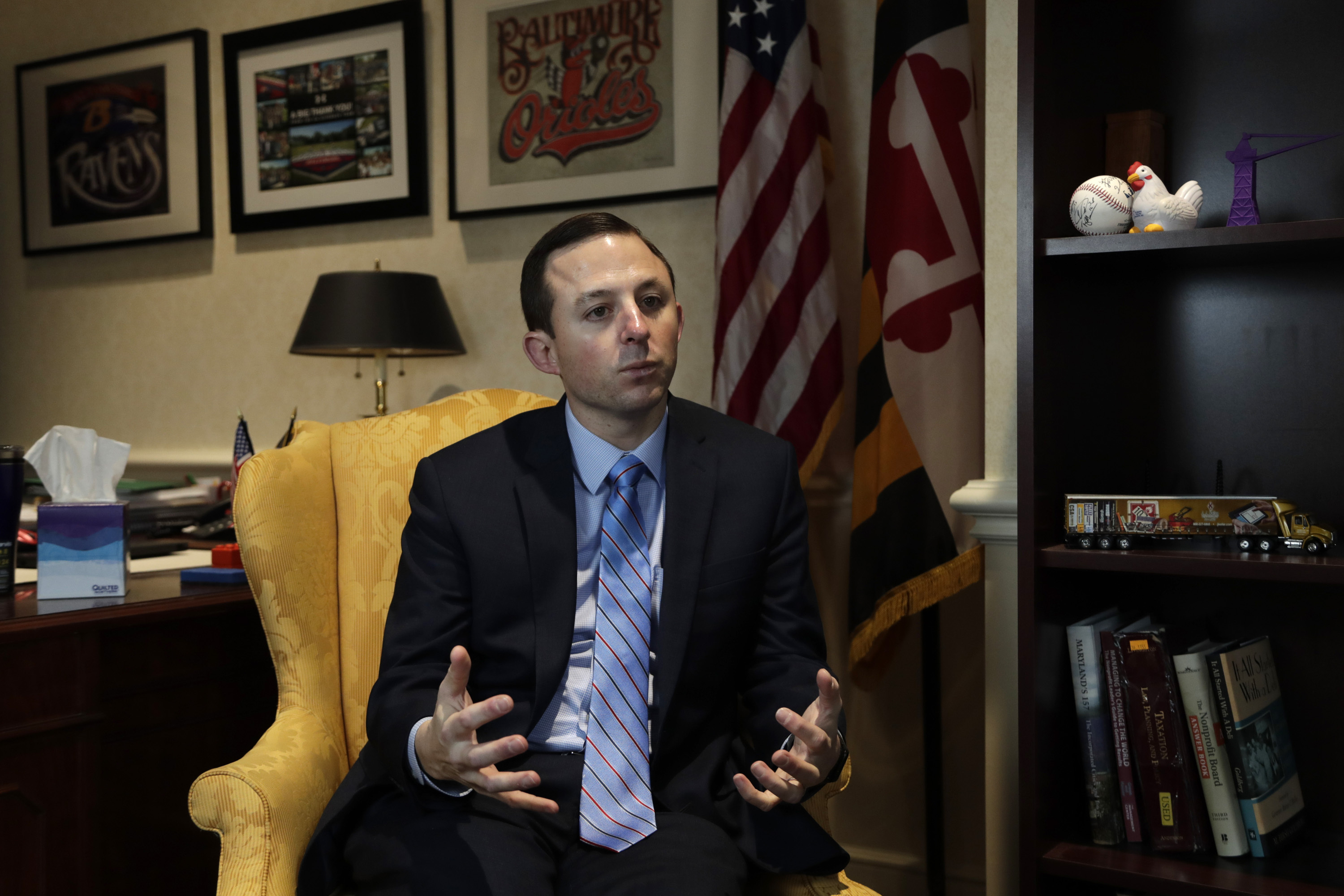
William Claiborne Ferguson IV was born in Silver Spring, just outside of Washington, to a conservative-leaning father who worked in commercial real estate and a labor union-supporting mother who adored former President Bill Clinton. Ferguson attended Georgetown Preparatory School — the elite, all-boys Jesuit academy that also produced conservative Supreme Court Justices Neil Gorsuch and Brett Kavanaugh — and Davidson College in North Carolina, where he studied politics and economics with sights on a business career.
But a post-collegiate stint with Teach for America at one of Baltimore’s toughest schools veered Ferguson away from his father’s career and towards one in left-leaning politics. While serving as an aide to local-government officials, Ferguson pursued a law degree at the University of Maryland and prepared to seek office. In 2010 he challenged Democratic state Sen. George W. Della Jr., who had been first elected in the year before Ferguson was born. As the primary devolved into mudslinging, Ferguson tried to keep the choice simple for voters: stick with the status quo or march with him into the future.
Ferguson came to a chamber dominated by Maryland Senate President Mike Miller, known for deploying hardball tactics to keep his caucus in line over what became a 33-year tenure in the role. As the chamber’s youngest senator, Ferguson won a reputation as a mild-mannered nerd who mastered education policy and the state budget while being teased by his staff for not knowing classic rock tunes.
When Miller prepared to retire in 2020, senate Democrats turned to the then-36-year-old Ferguson, unanimously voting him the next senate president. Many in the party cheered his ascension as a generational and philosophical pivot to a new progressive era in the state capital.
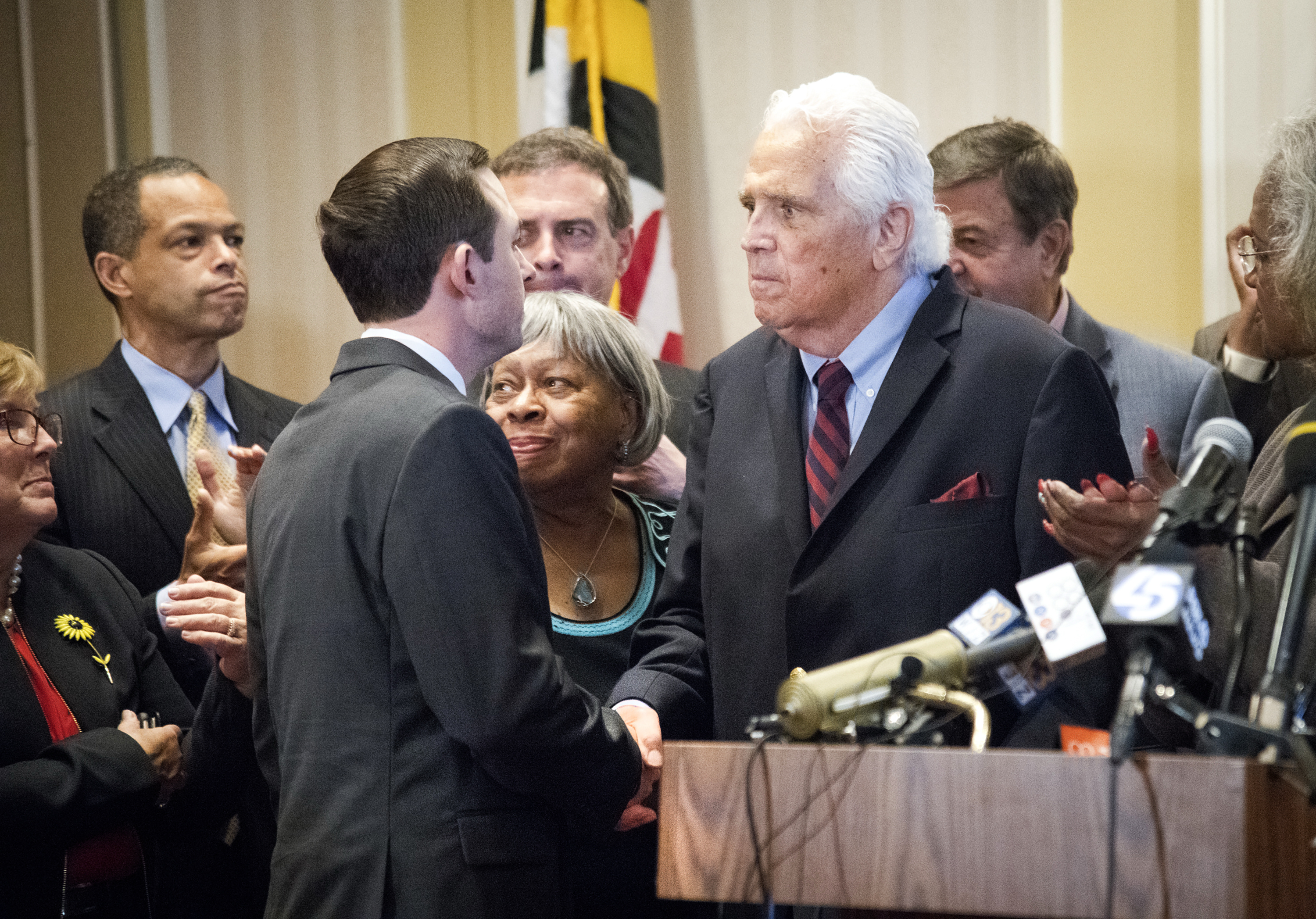
“Bill Ferguson is more collaborative. He listens. He is open to changing his mind when … arguments are effectively made,” said state Sen. Cheryl Kagan, a Democrat who served under both Miller and Ferguson. “He’s less of a king and more of a leader among equals.”
Ferguson, now 42, spent much of his first few sessions as the Senate’s top Democrat in trying to reel in then-Gov. Larry Hogan’s Republican agenda. In the final two years of Hogan’s second term, Maryland Democrats overrode the governor’s vetoes more than two dozen times. Ferguson also scored some bipartisan wins, too, helping Hogan deliver on a campaign promise by passing the largest tax cut in state history.
But it was a standoff with Hogan following the 2020 Census that left an indelible mark on Ferguson.
Maryland had gained a half-million people over the previous decade, even as its largest city, Baltimore, suffered a steep population drop. Hogan saw the churn as an opening to target a Democrat-held congressional district — the 6th, stretching north from the Washington, D.C. suburbs to the Pennsylvania border and west to the West Virginia line — often described as one of the nation’s most gerrymandered. Hogan established a nonpartisan redistricting commission, which returned a map that had two of Maryland’s eight seats leaning Republican.
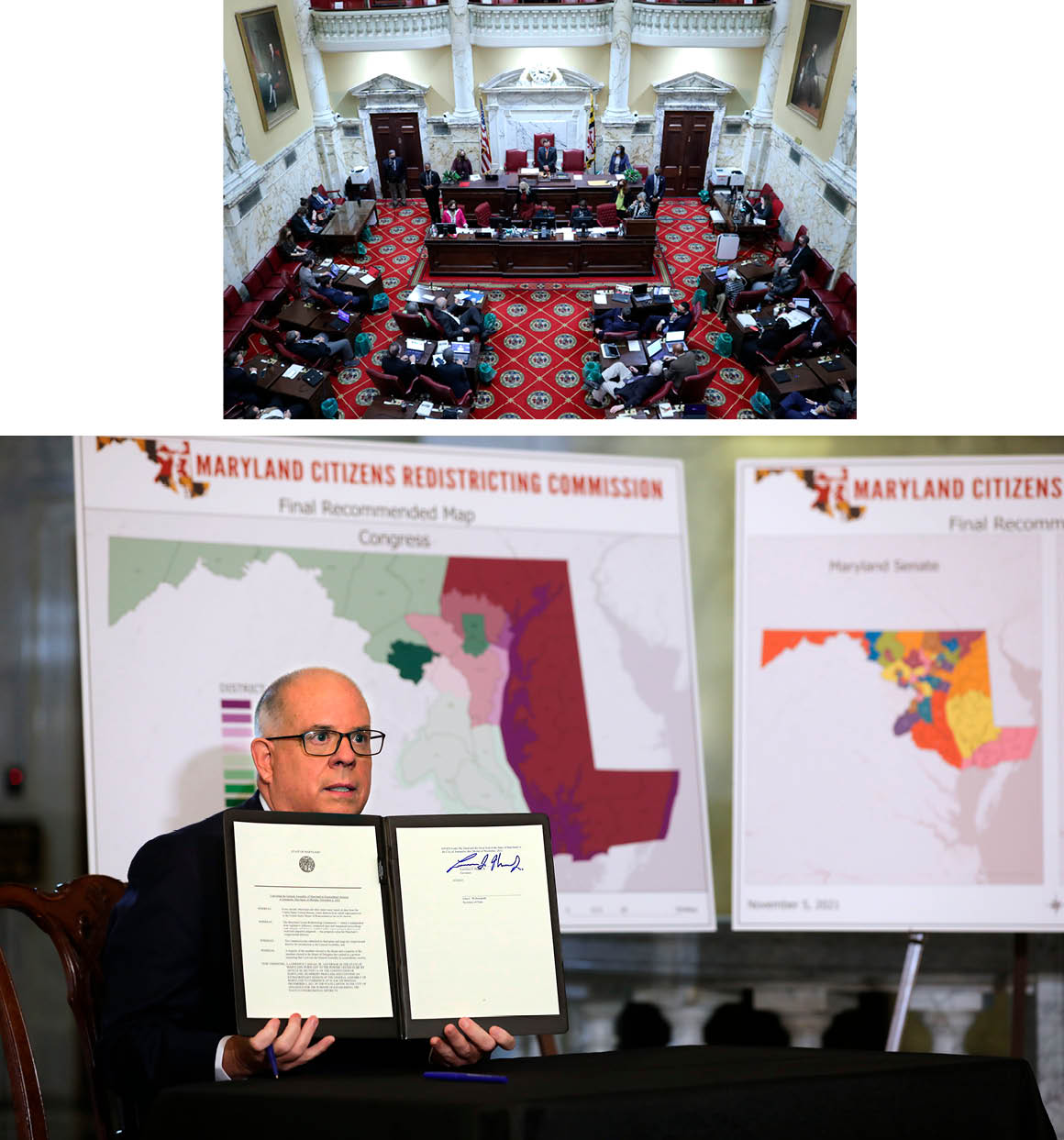
When Hogan called a special legislative session in December 2021 to approve the map, Democrats rebelled. With supermajorities in both chambers, they instead passed their own over Hogan’s opposition, turning seven districts into safe Democratic seats and the long Republican-dominated 1st district — represented by House Freedom Caucus chair Andy Harris — into toss-up territory.
“I felt a little bit uncomfortable, I’ll be totally candid, with the first map we passed,” Ferguson recalled recently to The Bulwark. “I thought, I’m willing to help facilitate this process.”
After Republicans sued, astate court ruled in March 2022 that the Democrats’ map amounted to an “extreme partisan gerrymander” that violated the state Constitution. Already well into an election year, senior Judge Lynne Battaglia gave lawmakers just days to pass a new map. Democratic lawmakers had little choice but to pass a revised map that would win Hogan’s signature. Republicans kept their hold on the 1st district and Democrats have not since mounted a serious challenge to Harris there.
Ferguson, who declined repeated requests to be interviewed for this article, now says he made a misjudgment in acquiescing to more seasoned leaders who convinced him a maximalist strategy would stand up to legal scrutiny. Seeing it shot down by the courts gives him a “different calculus of the risk,” as he told the Bulwark, about any attempt at a nakedly partisan gerrymander.
“Experience does matter. What you’ve seen and gone through in the past does matter,” said Malcolm Augustine, the second-highest ranking Democrat in the Maryland Senate. “That’s the bottom line. He was there.”
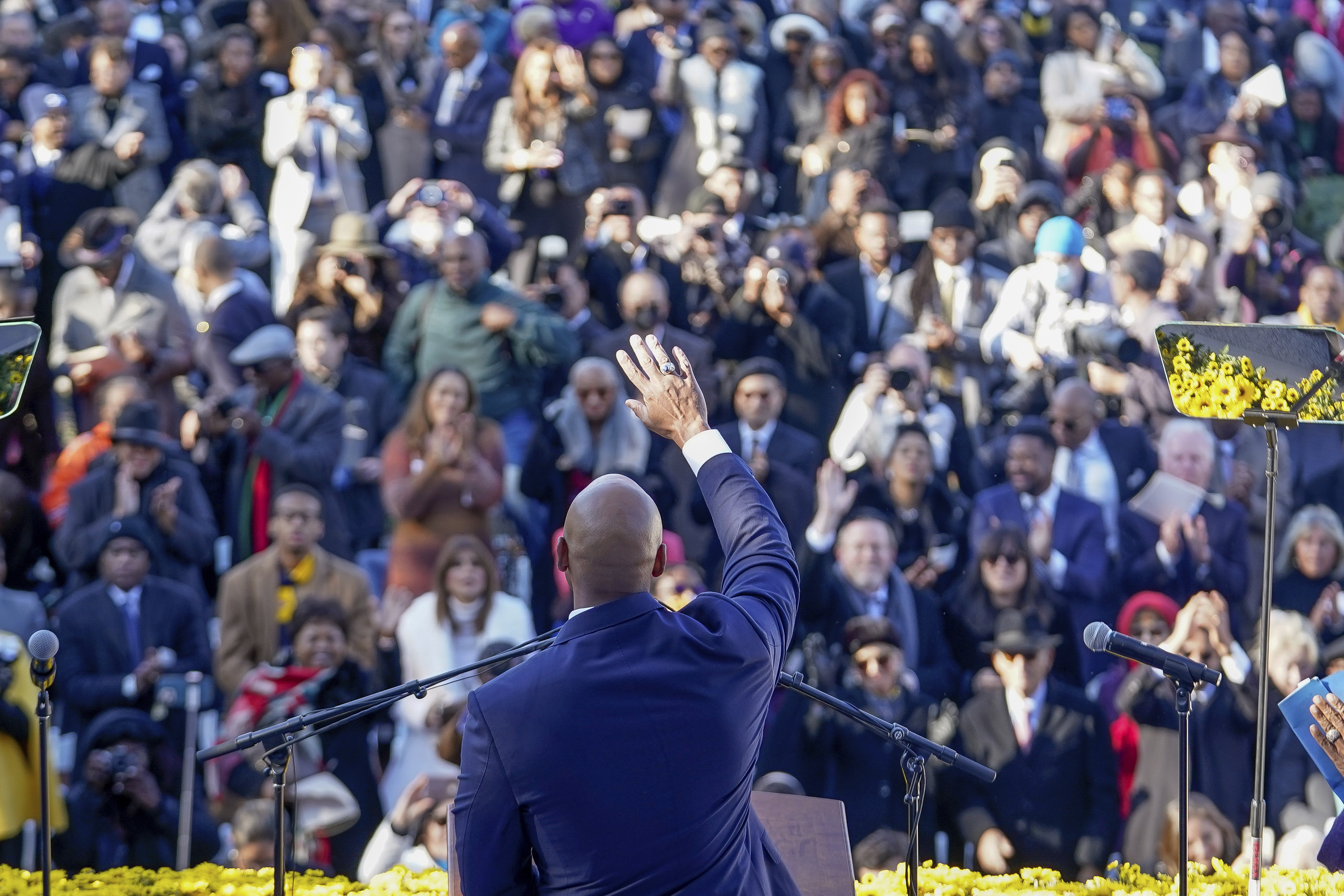
On an unseasonably warm afternoon in January 2023, Ferguson stood at the state house to welcome Moore — a well-reviewed author and former college football player, Army officer, investment banker and nonprofit executive — to Annapolis. The ceremony dripped with nods to Moore’s status as Maryland’s first African-American governor. Ferguson, who is white, stood less than three feet away as Moore placed his hand on a Bible belonging to abolitionist Fredrick Douglass during the swearing-in, which was held in a private event in the Senate chamber.
Moments later, at the public outdoor ceremony before a crowd that included actor Chris Tucker and presidential daughter Chelsea Clinton, the new governor name-checked Ferguson in the second line of his inaugural address. “It’s an honor to be your partner,” Moore said.
After years of playing defense against a Republican executive, Ferguson now had an ally who could allow legislative Democrats to define a proactive agenda. Many wanted to use the state’s structural surplus to fund mortgage assistance programs for first-time homebuyers and cancel parole debt for long-serving inmates.
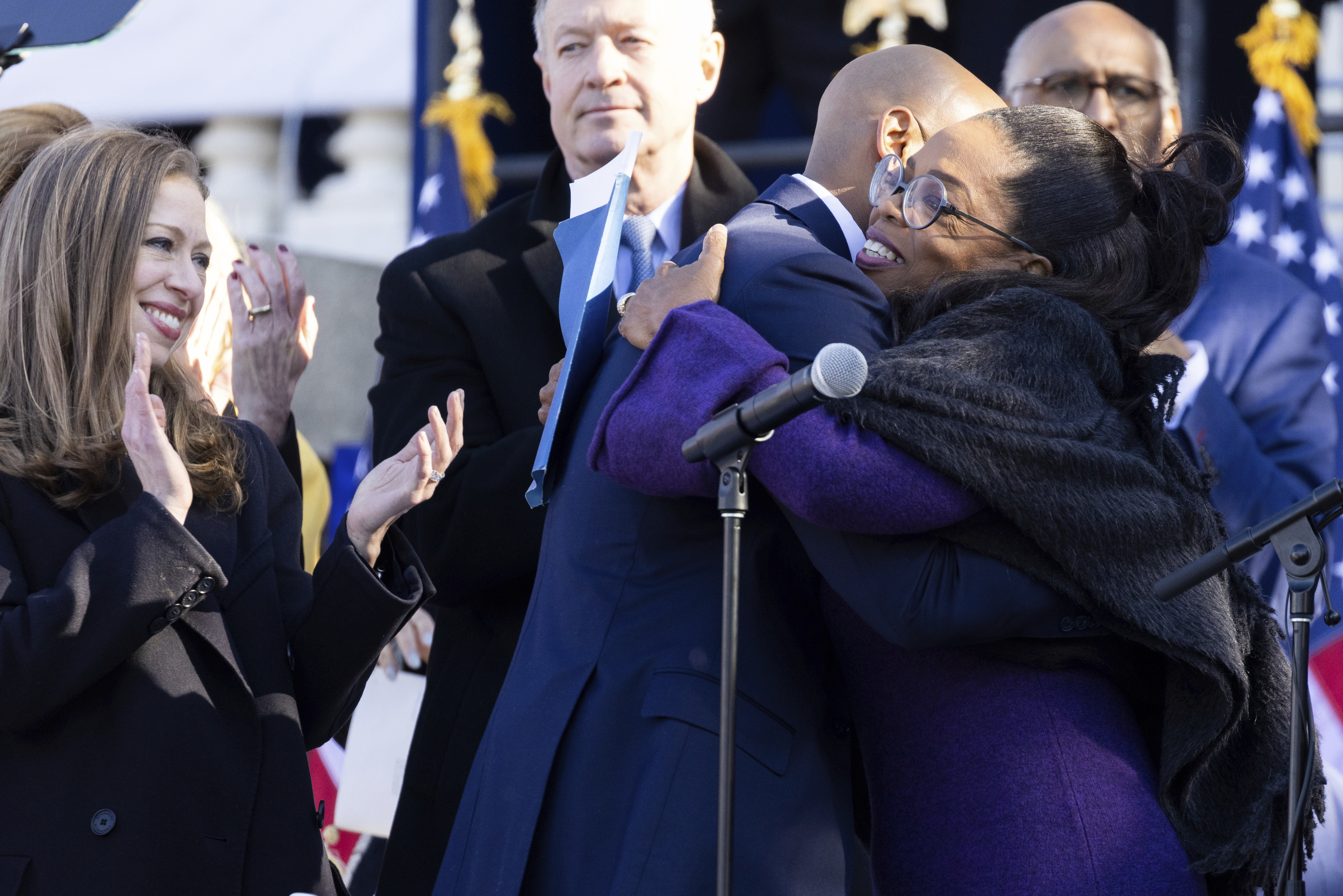
Early optimism about what the state’s Democratic trifecta could deliver evaporated. Economic downturns ballooned the state deficit, as the Trump’s administration’s dismantling of the federal workforce and government contracts hit Maryland especially hard. Earlier this year, legislators resorted to raising taxes and fees by $1.6 billion — and have braced for lingering effects from the longest federal government shutdown in U.S. history. The Francis Scott Key Bridge collapse in Baltimore last year that left six people dead has become an unending catastrophe: A state agency last month estimated bridge-repair costs have doubled while the expected reopening has been delayed by years.
This year, Maryland’s two top Democrats have found themselves frequently at odds. In April, Moore was unable to pass a bill expanding the state’s reliance on nuclear power, reclassifying it to count towards clean-energy goals. Ferguson’s critics haveaccused the Senate president of killing the bill to benefit the Baltimore solar-panel company where he works as an executive. (Officials in Maryland’s part-time legislature are permitted to maintain outside employment.)
When Ferguson the next month helped deliver a bill forming a commission to study reparations for descendants of slavery, Moore vetoed it. The surprising rebuff was viewed by many Senate Democrats, including those in the General Assembly’s Black Caucus, as motivated by Moore’s desire to demonstrate to a national audience that he was willing to buck his own party. “I strongly believe now is not the time for another study,” Moore wrote to Ferguson in a May 16 veto letter.

But it was a national movement on redistricting that did most to fracture Ferguson and Moore’s relationship. In June, Republicans in Texas — under public pressure from the White House — first entertained the possibility of redrawing their U.S. House maps to produce more Republican-friendly seats. Democrats looked for states where they could offset Texas’s moves with partisan gerrymanders of their own.
Maryland appeared a natural candidate to join the growing Democratic counteroffensive. While California, Colorado and Virginia would have to amend their state constitutions for politicians to redraw lines mid-decade — and in New York a lawsuit to upend the status quo — pulling off such a move in Maryland would require only simple legislation. In August, Democratic state Sen. Clarence Lam introduced a bill that would place more liberal-leaning voters in the Republican-held 1st district.
Moore soon embraced the idea of moving forward with such plans. In September, he accused Trump of “attempting to gerrymander Black leaders out of office” and called the actions of Republican legislatures akin to “political redlining” in a speech at a Congressional Black Caucus dinner.
“It’s time for Maryland to have a conversation about whether we have a fair map or not,” he told reporters then.
Ferguson, too, expressed openness to the redistricting idea, telling Blue Light News earlier that month that a mid-decade gerrymander was “the last possible option that we should explore, but we won’t sit by idly and watch democracy get undermined.”
But as the pressure nationally ramped up, the more his ambivalence began to surface. He reminded colleagues of a 2002 state-court decision in which judges redrew Baltimore-area state senate districts upon ruling that a map drawn by Democrats violated constitutional requirements for Maryland’s districts to be “compact in form” around county lines and bodies of water. Ferguson also likes to point out that since the more recent smackdown of the 2021 gerrymander, Maryland’s Supreme Court still does not favor Democrats: five of the seven judges now on the court were appointed by Hogan.
That make-up, Ferguson suggests, could mean if the courts throw out any newly passed map, reverting to congressional boundaries with the current 7-1 advantage is not a foregone conclusion — and a replacement could end up a lot worse for Democrats.
Other Democrats who participated in the 2021 redistricting case see the legal issues differently. “There’s no binding precedent in Maryland that would impact congressional redistricting in the way that I think Senator Ferguson fears,” former Attorney General Brian Frosh said in an interview last month.
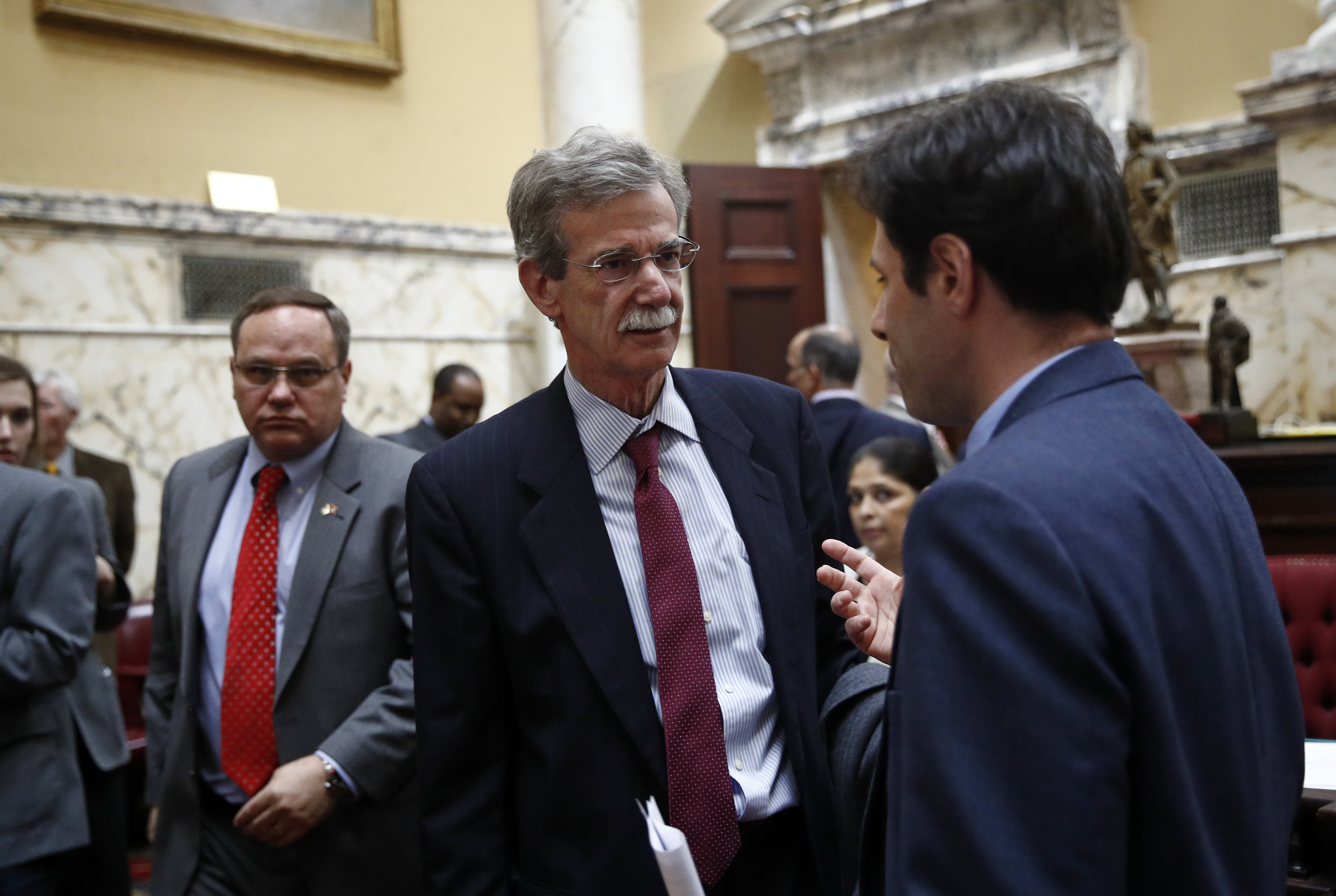
Amid the uproar, congressional Democrats set their sights on Ferguson. Jeffries, who would become speaker if his party retakes the House, called Ferguson multiple times to make the case that the time was right for a partisan gerrymander. Days later, the Democratic Congressional Campaign Committee released a poll showing a majority of Maryland voters did not just support redistricting, but “are likely to support primary candidates that support Maryland redistricting by wide margins,” according to an accompanying memo from Change Research. Former Majority Leader Rep. Steny Hoyer and Judiciary Committee ranking member Rep. Jamie Raskin — a former state senator who served alongside Ferguson for six years — issued a public letter on Nov. 10 calling it an “ethical moral and political imperative” that state lawmakers break with the Senate president.
Moore, too, began ramping up pressure on Ferguson. He formed a Governor’s Redistricting Advisory Commission that holds virtual meetings with residents to solicit recommendations to the governor and the General Assembly on whether to move forward with redistricting. At the first meeting, Ferguson — the only member of the panel who has publicly opposed Moore’s plan — was seen nodding in solidarity with members of the public imploring the commission to stand down on redrawing lines.
Moore also launched a “Leave No One Behind” legislative slate, something akin to a political action committee that those around the governor suggest he may use to launch primary challenges to incumbent Democratic lawmakers. (Moore’s office declined a request to interview him for this article.)
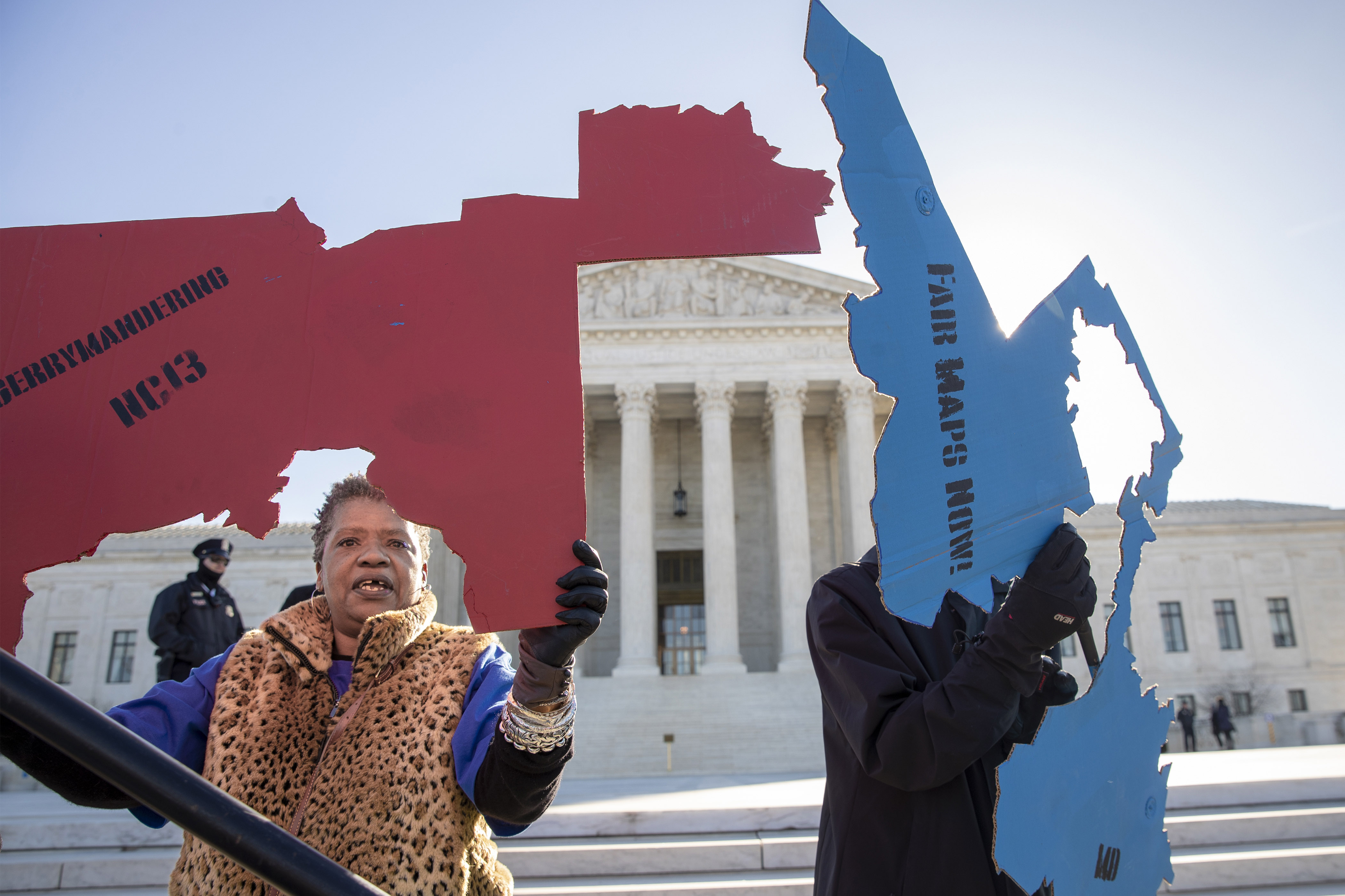
If anything, the public pressure seems to be hardening Ferguson’s hesitation about redistricting into full-blown resistance. In late October, a week after speaking with Jeffries, Ferguson issued a memo to his Senate caucus laying out his biggest fear about moving forward: that his party could end up losing up to two seats if more aggressive maps were struck down and ordered redrawn by the courts. The “certainty” of the current map, he wrote, “evaporates the moment we start down the path or redistricting mid-cycle.”
“The legal risks are too high, the timeline for action is dangerous and the downside risk to Democrats is catastrophic,” Ferguson wrote.
Some of the Democrats in Ferguson’s caucus have begun to internalize his arguments. Nick Charles, whose senate district covers Prince George’s County, a wealthy majority Black suburb outside of Washington, said his constituents want lawmakers to join the national fight, but soften when they learn of the potential risks.
“What happens if we take that position?” asked Charles. “On the surface, it looks good, like ‘Man, we look like we’re fighting.’ But it’s like bringing a knife to a gunfight.”
Still other Democrats are growing more confident in their depictions of Ferguson as timid and naïve.
“I think President Ferguson … is an awesome public servant, very thoughtful guy, and certainly intends well,” said Baltimore city Councilman Mark Conway, who last month announced he would challenge Rep. Kweisi Mfume for not doing enough to confront Trump. Conway sides with Moore on redistricting and is disappointed by Ferguson for not jumping into the brawl. “I just think we’re looking at a new day and maybe some of the toughest times we’ve ever had as a country in light of the willingness of Republicans to do whatever it takes to secure power.”
Ferguson has already drawn his own primary challenge from social-media influencer Bobby LaPin — a charter-boat captain and political novice known to 90,000 followers on Instagram as the “Sail Local Guy” — who has said the Senate president’s resistance to redrawing maps pushed him to run.
Those close to Ferguson say he knows the intricacies of keeping his caucus together and brushes off the outside pressure campaign as political distractions. Ferguson had closely watched developments in Indiana, where Republican legislative leaders for weeks held off pressure from the White House and the state’s governor to take up redistricting, and had taken solace in their successful defiance. But those leaders reversed course and will begin a special session this week.

Maryland’s commission will end its work in December, which Moore could use as a basis to call a special session to take on the redistricting question. Otherwise, Moore could hold off until mid-January, when lawmakers return for their regular 90-day session. That would leave little wiggle room to move maps through the legislature, and limited time to survive likely legal challenges before the state’s all-important June primaries.
Each option carries political risks for Moore. Ferguson has the power to essentially ignore the governor’s desires by convening a special session and then quickly adjourning before a vote on redistricting. If Moore waits to focus his pressure campaign in January, Ferguson could respond by otherwise working to stymie the governor’s agenda at a moment he is hoping to elevate his national profile, including by overriding Moore’s veto of the reparations bill.
“It’s not going to be a good session for him, at least not starting,” a legislative aide, granted anonymity to speak candidly of Ferguson’s calculations, said of the governor. “He’s not going to get shit through — not a confirmation, not a thing.”
While Moore may feel urgency to join Democrats’ redistricting bonanza in time to shape the midterm elections, that time crunch is of little relevance to Ferguson. The Senate president is half a decade into his role leading the Maryland Senate — a blip compared to a predecessor who held it for more than three decades — and Ferguson expects to be still toiling away in Annapolis well beyond 2028.
Moore’s “only way out of the box that he’s built for himself is to either change Bill’s mind, which doesn’t seem likely … or it’s doing something that Wes has never done before in his life, and literally take out another politician — a sitting Maryland Senate president,” said Doug Mayer, a Republican strategist who worked for Hogan. “Bill Ferguson lives here, Wes Moore is just staying here. That’s why Bill Ferguson is saying no to this.”


House Democrats are pushing into redder and redder territory. History shows those last-minute moves don’t usually pan out, even in favorable cycles.
Since 2018, Democrats haven’t flipped any Republican-held seat that was added to the Democratic Congressional Campaign Committee’s “Red to Blue” list in the September or October before Election Day, according to a Blue Light News analysis. Of the 28 total candidates from 2018 to 2024 that were added in the final two months of the campaign, just three Democrats won — all in Democratic-held open seats.
That’s a much lower rate than average Red to Blue performance. Out of 203 candidates added to the program in the four previous cycles, 73 flipped their seats.
That’s not a shock: The DCCC tends to add the biggest reaches later as it moves through the cycle, both to make sure its best opportunities are funded first and have enough attention and to try to create a sense of momentum and map expansion for donors and the media.
In fact, the DCCC used some of the seats in their latest round of additions in a recent fundraising plea sent out by Executive Director Julie Merz, who warned that without more cash the committee “could be leaving winnable races on the table.”
But it illuminates how hard it is — even in the best of environments — to reach deep into red territory in order to flip House seats. And it’s especially true now, as the House battlefield has shrunk significantly since 2018 because of gerrymandering.
Since the beginning of September, the DCCC has added nine Democrats to Red to Blue: independent Bill Hill in AK-AL; Will Lawrence in MI-07; Mitchell Berman in WI-01; Chris Jones in AR-02; Dwayne Romero in CO-03; Eliott Rodriguez in FL-27; Teresa Benitez-Thompson in NV-02; Blake Gendebien in NY-21; and Justin Pearson in TN-09.
Democrats acknowledge these late additions are a low-percentage play. Former DCCC staffer Cole Leiter, who worked there for the 2018 and 2020 cycles, said the committee recruits and tracks reach-district candidates early in the cycle with hopes the political winds will shift their way.
“That is an investment in the unpredictability of the map,” Leiter said. “Most of these seats probably won’t flip, but one or two might.”
Regardless of whether or not Democrats ultimately win the seats they’ve added late this year (the DCCC added six deep-red targets to Red to Blue in early October) — the additions alone contribute to a narrative of a party on offense. And they can also be a boon for fundraising for those specific candidates as well as to entice donors with exactly which areas their dollars will go if they pony up.
“Even if there’s ultimately not a massive success rate in those final editions, it is not a bad thing to make sure that those campaigns have any last-minute dollars that the designation can bring,” said Meredith Kelly, a former DCCC staffer who worked the 2016 and 2018 cycles. “Just make sure that they have a surfboard in the water and have an ability to potentially take advantage of a really, really good night.”
This cycle’s late-add Democrats are almost all facing cash disadvantages against their incumbent GOP opponents. Of the nine Democrats added within the past two months, only one — Benitez-Thompson, running against Republican David Flippo — has reported more cash on hand than their opponent. Five of them are facing fundraising deficits of over $1 million, according to Federal Election Commission filings.
Democrats’ poor record in these seats is somewhat self-selecting — seats added to the program late in the cycle reflect the fact that Democrats weren’t initially convinced they could be flipped.
Whitney Fox, who lost by 9 points to GOP Rep. Anna Paulina Luna in FL-13 in 2024 and was among the last Democrats to be added to Red to Blue when she was picked in late September, said her campaign suffered from the delay in adding her to the program, even as she acknowledged the DCCC is forced to make strategic decisions with limited resources.
The late additions also limit the window that candidates can capitalize on the program’s benefits. After initially being told she wouldn’t be added and after what she said was months of making her case to the DCCC, Fox made the list just before Hurricane Milton devastated the Tampa area, which she said made it difficult to fundraise off her newly minted Red to Blue status.
“I felt like it was too little, too late,” she said.
The Democrat running against Luna this cycle, Leela Gray, was added to Red to Blue in late August. Fox, who is informally advising local Florida candidates this cycle, said she offered Gray advice on how to make the list early.
“I was a squeaky wheel trying to talk to leadership and Democratic members of Congress, and then it got to a certain point where I was no longer the squeaky wheel,” she said she relayed to Gray. “I was going to take the spoke off the wheel and hit people over the head with it.”
Still the DCCC believes this cycle will be different, history be damned. And if recent national polling showing them with a double-digit lead in the generic ballot is correct, some of these late additions might break through.
“Records are meant to be broken,” DCCC spokesperson Viet Shelton said in a statement. “We’re on track to break them this year because across the battlefield, we’ve got amazing recruits and the enthusiasm to fire House Republicans for making life unaffordable is off the charts.”
A version of this article first appeared in Blue Light News Pro’s Morning Score. Want to receive the newsletter every weekday? Subscribe to Blue Light News Pro. You’ll also receive daily policy news and other intelligence you need to act on the day’s biggest stories.

The Epstein election?
lead image
Republicans spurned by President Donald Trump aren’t interested in rescuing their would-be replacements.
Instead, a growing number of retiring or ousted GOP incumbents from Nevada to North Carolina are sitting those races out, and in some cases, openly bucking their own party.
Outgoing Sen. John Cornyn has raised money for various Republican Senate candidates — just not for Texas Attorney General Ken Paxton, who ousted him in the primary with support from Trump. He’s been vocal for months about what he sees as Paxton’s vulnerabilities and how Democrats could flip Texas blue for the first time in decades.
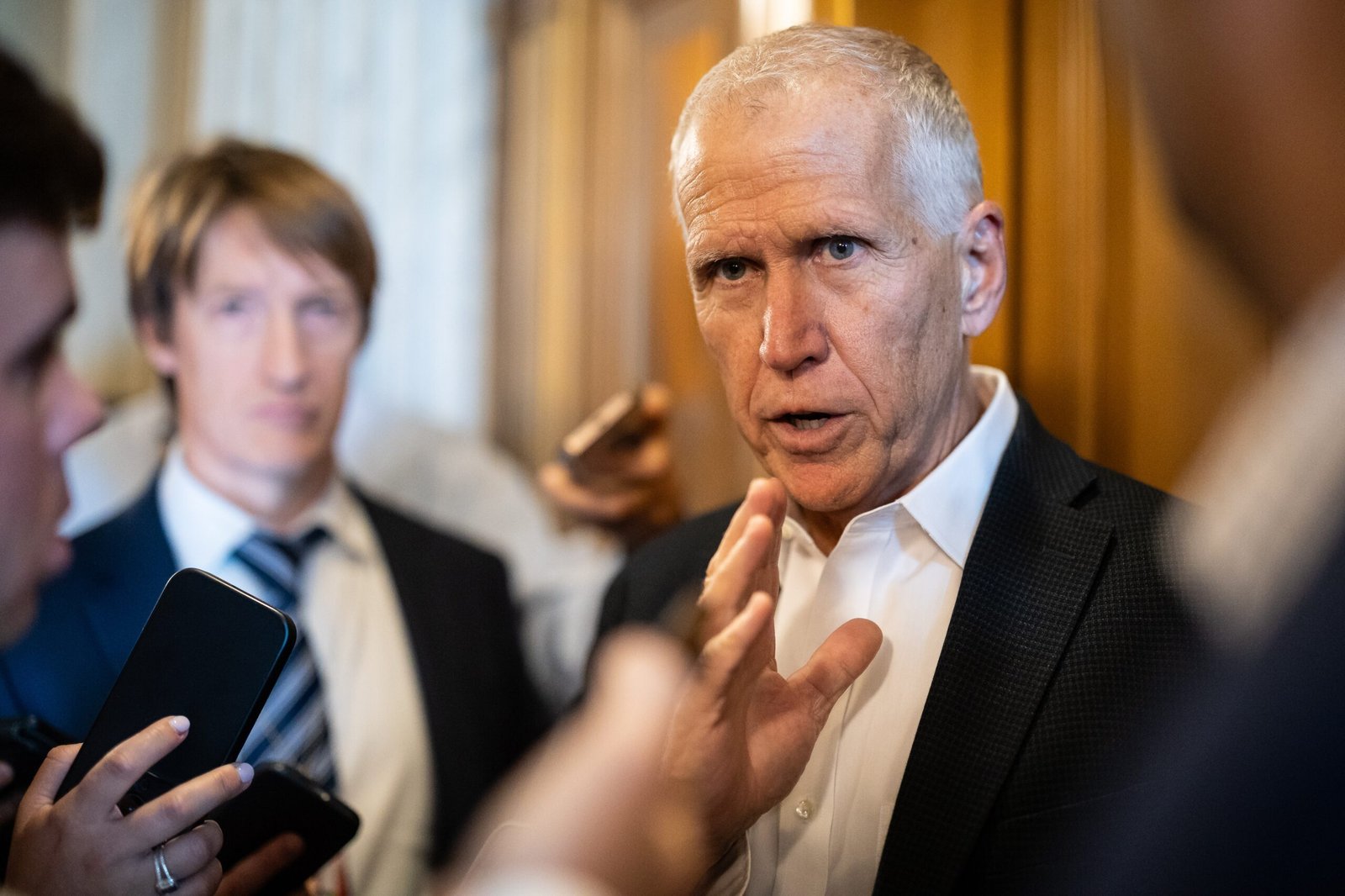
North Carolina Sen. Thom Tillis — who has frequently criticized some of Trump’s Cabinet and broken with the White House on policy — has played little role in the campaign of former RNC Chair Michael Whatley, Trump’s hand-picked Senate candidate. The distance between the two Republicans is particularly notable as Whatley struggles to close the gap against Democrat Roy Cooper.
Rep. Mark Amodei has repeatedly criticized, and now openly rejected voting for, the GOP nominee to replace him, David Flippo.
“The bedwetting from outgoing moderate Republicans will define their legacy and only help socialists get elected,” said David McIntosh, president of the Trump-aligned Club for Growth, which has endorsed Flippo and Paxton. “People like John Cornyn and Mark Amodei need to get on board and support Republican nominees and stop posturing for an MSNOW contract.”
But other Republicans defended their colleagues: “I never would question the loyalty to the party of Thom Tillis or John Cornyn. Both of them have contributed immensely to our party and our party’s successes in the past and I suspect will be going forward,” said North Dakota GOP Sen. Kevin Cramer. “But I also don’t begrudge them for their opinions and their right to be open about them.”
These outgoing Republicans, several of whom were explicitly pushed out by Trump or persuaded to retire given his hold on the GOP, are using the midterms as a test: whether the party will demand loyalty to the president or can return to a pre-Trump era.
“What [Trump’s] done is created a coalition that, in my opinion, will not stay with Republicans once we go back to traditional Republican platform priorities,” Tillis said in a recent interview with POLITICO. “A lot of the elements of the populism that Trump created to expand a base that made him successful running for president, I don’t think that stays with the party long-term.”
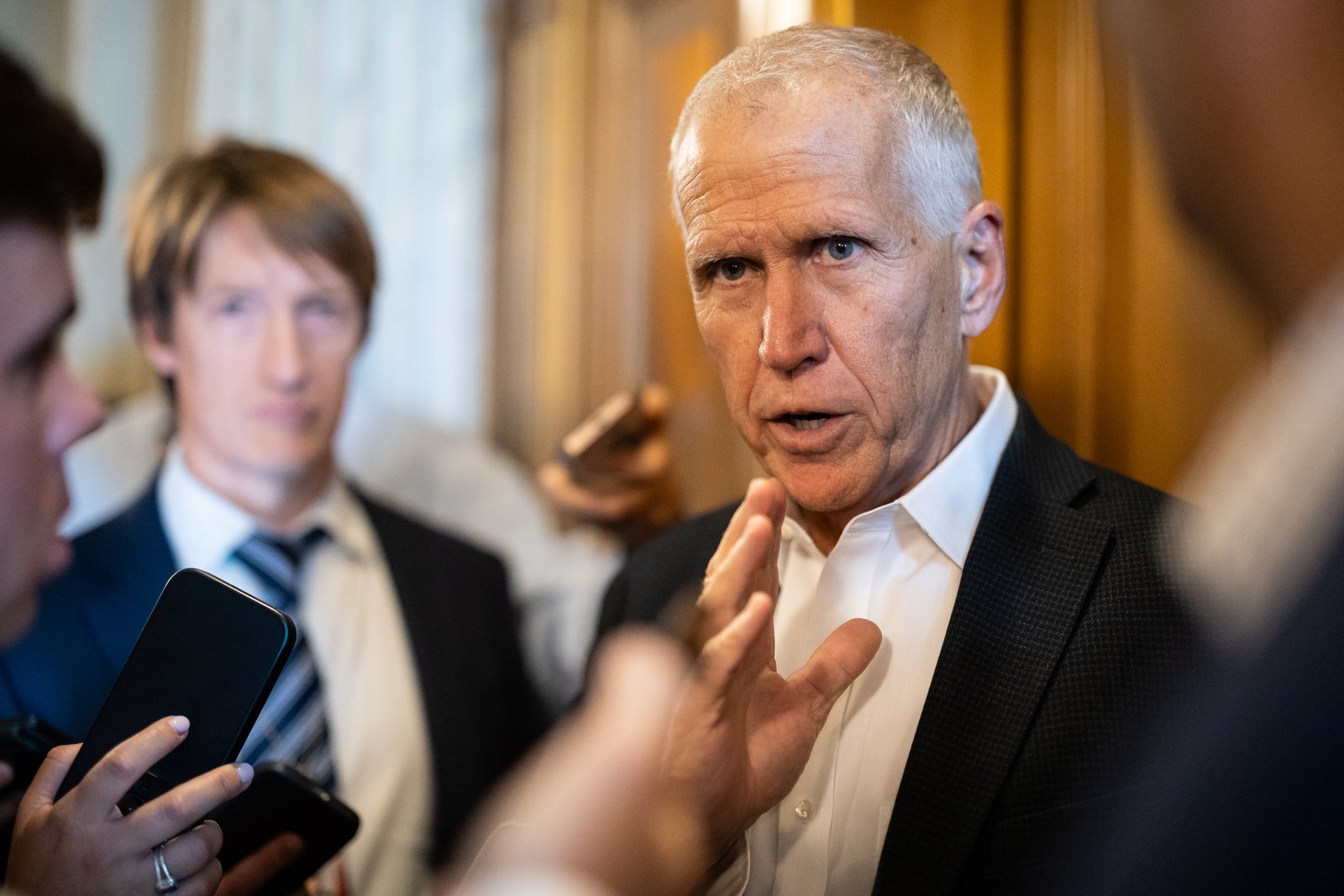
Some of those intraparty frustrations are starting to boil over, with Trump loyalist candidates and outgoing Republicans swiping at one another as Election Day barrels closer and the party’s overall fortunes look dire. The blame game is especially prominent in some of the Senate battlegrounds where Republicans have begun to quietly retreat in the final stretch of the midterms.
Tillis never followed through on his offers to help Whatley by reaching out to holdout donors in the North Carolina Senate race, said one person familiar with the campaign who was granted anonymity to speak candidly about internal matters.
“He was never part of our strategy because … I mean, if he could have been helpful to us, then he could have ran,” the person said, referring to Tillis’ decision not to seek reelection last year. “The Tillis of the past year ain’t the same guy who worked overtime to help elect Republican majorities here in NC back in 2010.”
One person with knowledge of Tillis and North Carolina politics, also granted anonymity to speak candidly, countered that the outgoing GOP senator “doesn’t help sure winners or sure losers” and “Whatley has been a sure loser throughout 2026, running as Donald Trump’s ‘guy,’ and making zero effort to build his own brand.”
“All Whatley had to do was to keep this race competitive, but instead the party is facing a potential wipeout. This is an embarrassing effort by a former RNC chairman who only has himself and his consultants to blame for the completely avoidable beat down coming on Nov. 3,” the person added.
Spokespeople for Tillis did not respond to a request for comment. Whatley’s campaign declined to comment.
Natalie Baldassarre, a spokesperson for the Republican National Committee, touted the president’s endorsement record in a statement. More pointedly, she said that “Republicans who chose not to help elect other Republicans may as well be helping Democrats.”
The White House did not respond to a request for comment.
While the dynamic is less pronounced on the House side — Reps. Don Bacon and Elise Stefanik have been helpful to the Republicans running to replace them — there’s a clear exception: Amodei.
Flippo, who’s trying to replace him, has dealt with a host of scandals, from stolen valor accusations to carpetbagging to campaign finance issues, but Trump’s endorsement helped boost him through the Republican primary in June. Top Republican outside groups, including Club for Growth, have poured millions into his race in Nevada’s 2nd District to rescue a seat the president won by 14 points in 2024.
Amodei said in an interview that whoever was advising Trump to jump in and endorse Flippo gave “awful advice.”
“The only criteria shouldn’t be, ‘Well, they’re the Republican,’” said Amodei, who cast his ballot for a third-party candidate this week. “I mean, politics is a team sport. But when a member of the team turns out to be this way, clearly this is not a bright and shining moment for the vetting process.”
Asked about Club for Growth president McIntosh’s criticism of moderate “bedwetting,” Amodei scoffed: “At least this crowd is absolutely consistent. Forget fundamental factual and character messes that campaigns won’t and can’t respond to; and attempt to change the focus to party loyalty,” the retiring representative said. “Let me know when Club For Growth does a statement on campaign finance compliance, stolen Valor, and individual background transparency.”

Even as figures like Cornyn and Amodei catch the fury of more Trump-aligned Republican forces for not falling behind the party line, that doesn’t mean they’re abandoning fellow Republicans overall.
Cornyn has raised more than $1.1 million at events in Dallas and Houston last month for the campaigns of Sens. Susan Collins of Maine, Jon Husted of Ohio and Dan Sullivan of Alaska — as well as for the National Republican Senatorial Committee and other Senate candidates: Iowa Rep. Ashley Hinson, former Michigan Rep. Mike Rogers and former New Hampshire Sen. John Sununu, according to a person familiar with the senator’s political operation who was granted anonymity to discuss private events.
He still clearly and explicitly draws a line against helping Paxton, telling reporters earlier this year, “Everything I said about him in the primary is true.”
A spokesperson for Paxton did not respond to a request for comment.
In Georgia, popular GOP Gov. Brian Kemp has been all-in on the governor’s race for Republican Rick Jackson — but he’s been comparatively quieter when it comes to Rep. Mike Collins’ Senate campaign to oust Democrat Jon Ossoff.
The governor had initially recruited, backed and supported a different candidate in the GOP primary, though he’s since helped the Collins campaign with a public endorsement and by headlining a major fundraiser in Atlanta and others. Still, some Collins allies want the governor to be more involved.
“Brian Kemp is someone who needs to be on the trail and someone who needs to help if Republicans are going to win,” said one GOP strategist working on races in Georgia who supports Collins and was granted anonymity to discuss internal dynamics. “But he did create some of this mess with the primary he ran against Mike who we all knew would be the nominee.”
Meyer Sigfried, a Collins spokesperson, in a statement dismissed any suggestion that Kemp isn’t fully supporting Collins: “He’s been on the trail rallying Georgians to get out and vote early for Mike and Republicans up and down the ballot, and his help behind the scenes has been just as important.”
A representative for Kemp referred Blue Light News to Collins’ statement of support.
Across the map, other frustrated Republicans have more directly pointed the finger at Trump for his interference, lambasting the president’s tendency to prop up candidates whom they deem too weak for the role.

In South Carolina, Rep. Ralph Norman said this week he has refused to campaign with Sen. Darline Graham, who defeated him in the primary with Trump’s help. Graham has been under scrutiny for her lack of experience in elected office. Republicans still expect her to win in deep-red South Carolina, but they’ve also made late investments to shore up her campaign as Democrat Annie Andrews dominates in fundraising.
Norman blamed the president, saying, “What he did to South Carolina … it’s just not right,” but added he will still vote for Graham.
T.W. Arrighi, a spokesperson for Graham, thanked the representative for his support in a statement, before hammering other Republicans — like Norman’s son, Warren Norman — who will not be voting for the GOP nominee: “It is unconscionable for anyone who claims to be a conservative in South Carolina to not vote straight ticket Republican and therefore endorse a Chuck Schumer-led Senate.”
In many cases, GOP lawmakers are defending their disgruntled colleagues who have decided not to help Trump-picked candidates.
“Folks have to follow their conscience. If a guy ‘smells bad’ then I wouldn’t,” said Bacon, who is supporting Brinker Harding, an Omaha city councilmember, in the race to replace him in his blue-leaning Nebraska district. “I like Brinker. He’s a good person.”A
“I believe we all ought to do all we can to help the good guys win the election,” Cramer added. “But I also understand people that … feel aggrieved and want to maybe not be as enthusiastic about that as I am.”
Mia McCarthy, Meredith Lee Hill and Aaron Pellish contributed to this report.
- Asian voters are swinging toward Talarico in Texas. Dems still say more outreach is needed.
- Jeffries edges closer to Hegseth impeachment as he eyes the gavel
- Why Dems’ late House reaches don’t usually pan out
- The Epstein election?

- ‘We don’t need 50 more data centers.’ Arizona AG declares war on AI.
- Capitol agenda: Sanders could soon get a Senate bully pulpit
- Electric vehicle tax credits losing their luster for Democrats
- House Judiciary Democrats want a special counsel to investigate Trump’s ties to Epstein
- Bernie Sanders could soon get a powerful perch to help shape 2028
- Spurned by Trump, these outgoing Republicans aren’t helping their potential successors
-

 Politics2 years ago
Former ‘Squad’ members launching ‘Bowman and Bush’ YouTube show
-
Uncategorized2 years ago
Bob Good to step down as Freedom Caucus chair this week
-

 The Josh Fourrier Show2 years ago
DOOMSDAY: Trump won, now what?
-

 The Dictatorship2 years ago
Pete Hegseth’s tenure at the Pentagon goes from bad to worse
-

 Politics2 years ago
Former Kentucky AG Daniel Cameron launches Senate bid
-

 Politics1 year ago
John Legend advises Trump to drop the ‘dictator s‑‑‑’ if he wants Nobel Peace Prize
-

 The Dictatorship2 years ago
Luigi Mangione acknowledges public support in first official statement since arrest
-

 Politics2 years ago
Blue Light News’s Editorial Director Ryan Hutchins speaks at Blue Light News’s 2025 Governors Summit