
The Dictatorship
The Latest: Shaky ceasefire between Israel and Iran appears to hold


Today’s live updates have ended. Read what you missed below and find more coverage at apnews.com.
A new U.S. intelligence report suggests that Iran’s nuclear program has been set back only a few months by U.S. strikes, according to two people familiar with the early assessment who were not authorized to address the report publicly and spoke on condition of anonymity.
The assessment contradicts U.S. President Donald Trump’s statements that Iran’s nuclear program was “completely and fully obliterated” after the strikes. According to the people, the report issued by the Defense Intelligence Agency on Monday found that although Iran’s nuclear sites sustained significant damageat least some of Iran’s highly enriched uranium was moved prior to the strikes and survived, and Iran’s centrifuges were largely left intact.
Trump’s special Middle East envoy, Steve Witkoff, said the U.S. airstrikes achieved their objectives and the White House called the assessment “flat-out wrong.”
What to know:
- Terms of the ceasefire still unknown: Trump claimed a ceasefire between Iran and Israel was “in effect” on Tuesday, and while both Iran and Israel have acknowledged the shaky ceasefire, no details have emerged about the terms of the deal or what concessions either side may have made.
- Trump lashes out: After Israel claimed that Iran launched missiles into its airspace after the truce was supposed to take effect, which Iran denied, Trump used an expletive to hammer home his frustration at both nations as he spoke to reporters at the White House. He said he was “not happy” with Israel, adding that the two countries have fought “for so long and so hard” that they do not know what to do.
- Casualties: Israel’s emergency services claimed that 28 people in Israel were killed during the 12-day war. The Washington-based group Human Rights Activists said at least 974 people in Iran have been killed.
- How we got here: Israel launched a surprise barrage of attacks on sites in Iran on June 13which officials said were necessary to head off an imminent threat that Iran would build nuclear bombs. The two nations volleyed strikes for several days. The U.S. military struck Iran’s nuclear sites June 22, dismissing assessments from Trump’s own intelligence agents that Iran was not building a nuclear weapon.
Trump envoy says US and Iran discussing return to negotiating table
Trump’s special Middle East envoy, Steve Witkoff, says the U.S. and Iran are engaged in both direct talks and through intermediaries about getting back to the table after Israeli and U.S. strikes against Iran’s nuclear facilities.
“The conversations are promising. We’re hopeful,” he said in an interview with Fox News.
“Now it’s time to sit down with the Iranians and get to a comprehensive peace deal.”
Witkoff did not provide details but said the weekend U.S. airstrikes achieved their objectives: eliminating Iran’s ability to convert any weapons-grade uranium it might have had or produce in the future into an actual weapon; and setting back Iran’s ability to enrich uranium to that point by years.
France urges Iran to reach deal on nuclear program this summer or face ‘snapback’ of UN sanctions
France’s U.N. ambassador called on Iran to resume full cooperation with the International Atomic Energy Agency agency and allow access for U.N. nuclear inspectors as soon as possible to its nuclear facilities to determine that its uranium stocks have not been moved.
Jerome Bonnafont also called on Tehran to return to negotiations on “a robust, verifiable and lasting diplomatic solution” that responds to international concerns that it is pursuing nuclear weapons.
He spoke at a Security Council meeting on its resolution endorsing the 2015 nuclear deal between Iran and six major powers to rein in its nuclear program that imposed wide-ranging sanctions on the Islamic Republic. The last sanctions, on Iran’s nuclear activities and transfers, expire on Oct. 18.
Bonnafont said France and its European partners Britain and Germany, who are still part of the nuclear deal – President Trump pulled the U.S. out in 2018 – are ready to use the 2015 resolution’s provision to “snapback” U.N. sanctions “if such an agreement were not to be found by the summer.”
He said an agreement with Iran needs to take account the nonproliferation of nuclear weapons, regional stability and European security interests.
Early US intelligence report suggests US strikes only set back Iran’s nuclear program by months
A new U.S. intelligence report found that Iran’s nuclear program has been set back only a few months after a U.S. strike, and was not “completely and fully obliterated” as President Trump has said, according to two people familiar with the early assessment.
The early intelligence report issued by the Defense Intelligence Agency on Monday contradicts statements from Trump and Israeli Prime Minister Benjamin Netanyahu about the status of Iran’s nuclear facilities. The people were not authorized to address the matter publicly and spoke on condition of anonymity.
According to the people, the report found that while the Saturday strikes at the Fordo, Natanz and Isfahan nuclear sites did significant damage, they were not totally destroyed.
The White House strongly pushed back on the assessment, calling it “flat-out wrong.”
“The leaking of this alleged assessment is a clear attempt to demean President Trump, and discredit the brave fighter pilots who conducted a perfectly executed mission to obliterate Iran’s nuclear program,” White House press secretary Karoline Leavitt said in a statement.
The CIA and the Office of the Director of National Intelligence declined to comment on the DIA assessment.
US urges Iran ‘to seize this opportunity for peace’ and stop violating UN resolutions
The acting U.S. ambassador to the United Nations pointed to Iran’s accelerated nuclear activities, including uranium enrichment to 60%, in violation of the 2015 nuclear deal it signed with six key powers which was endorsed by the Security Council. President Trump pulled the U.S. out of the deal known as the JCPOA in 2018.
Dorothy Shea told a Security Council meeting on compliance with the 2015 agreement that Iran also violated U.N. resolutions by providing weapons to Yemen’s Houthi rebels, Hezbollah militants in Lebanon, and by transferring hundreds of drones to Russia in 2022 to use in attacks against Ukraine.
“Iran’s failure to uphold its nonproliferation obligations has prolonged conflicts and perpetuated instability across the Middle East and beyond for many years,” she said.
Shea warned that “The United States will not turn a blind eye to Iran’s noncompliance and ongoing threat to regional stability.”
She said U.S. airstrikes June 21 on three Iranian nuclear facilities were aimed at mitigating Iran’s threat to Israel, the region and more broadly to international peace and security — and degraded its capacity to produce a nuclear weapon.
“In this critical moment,” Shea said, “we must all urge Iran to seize this opportunity for peace and prosperity – and abide by its international obligations.”
JUST IN: Early US intelligence report suggests US strikes only set back Iran’s nuclear program by a few months, AP sources say
European Union says lasting solution to Iran nuclear issue can only be through a negotiated deal
EU Ambassador Stavros Lambrinidis told the U.N. Security Council that following the Israel-Iran ceasefire “we urgently need to come back to a diplomatic solution.”
He said Iran’s nuclear program can only be addressed with “adequate involvement of the international community.”
Ensuring Iran doesn’t acquire or develop a nuclear weapon is “a key security priority” for the 27-nation EU, he stressed.
Lambrinidis said the U.N. nuclear watchdog, the International Atomic Energy Agency, must remain “the sole impartial and independent international organization to monitor and verify the implementation of Iran’s nuclear non-proliferation commitments.”
Israel-Iran ceasefire is opportunity ‘to avoid catastrophic escalation,’ UN political chief says
Rosemary DiCarlo told the U.N. Security Council that the ceasefire is also an opportunity to peacefully resolve the Iran nuclear issue.
She said, “Diplomacy, dialogue and verification remain the best option to ensure the exclusively peaceful nature of Iran’s nuclear program and to bring about concrete economic benefits to the people of Iran.”
DiCarlo spoke at a council meeting on the remaining U.N. sanctions on Iranian nuclear activities and transfers under the 2015 nuclear deal it signed with six key nations in 2015 that expire in October. U.S. President Donald Trump pulled the U.S. out of the deal in 2018.
Israel’s UN ambassador says diplomacy ‘will happen soon’ following the Israel-Iran ceasefire
Danny Danon told U.N. reporters that “We will have to speak and negotiate and make sure that we will not repeat and get to the situation where we were 12 days ago, where we had a major threat in the Middle East.”
While it’s still too early to assess all the strikes on Iran’s nuclear facilities, he said, “We know we were able to push back the program, we were able to remove the imminent threat that we had.”
As for calls for a ceasefire in the Israel-Hamas war in Gaza, Danon said Israel hopes to renew negotiations on the ceasefire proposal that U.S. Mideast envoy Steve Witkoff put on the table.
He also said he has no doubt that Israel’s ability to confront the threats it faced during the conflict will lead other countries to normalize relations with his country.
In response to a question, Danon said, “I think that president Trump deserves a Nobel Peace Prize.”
Israel to ease nationwide civil defense restrictions
Israel’s military announced Tuesday that it is easing nationwide civil defense restrictions, allowing most of the country to return to full activity starting at 8 p.m. local time.
The decision, made following a situational assessment and approved by Defense Minister Israel Katz, applies to all areas except communities near the Gaza border, which will continue to follow Southern Command guidelines, the military said.
Netanyahu says Israel brought Iran’s nuclear program ‘to ruin’

FILE – Israeli Prime Minister Benjamin Netanyahu speaks during a press conference in Jerusalem, May 21, 2025. (Ronen Zvulun/Pool Photo via AP, File)
FILE – Israeli Prime Minister Benjamin Netanyahu speaks during a press conference in Jerusalem, May 21, 2025. (Ronen Zvulun/Pool Photo via AP, File)
Israeli Prime Minister Benjamin Netanyahu said Tuesday that Israel’s war against Iran brought the country’s nuclear program “to ruin.”
Speaking in a televised statement, he listed Israel’s achievements in the war, including its attacks on top generals and nuclear scientists. He said Israel destroyed nuclear facilities in Natanz and Isfahan, along with the Arak heavy water reactor.
“For dozens of years, I promised you that Iran would not have nuclear weapons and indeed … we brought to ruin Iran’s nuclear program,” Netanyahu said.
JUST IN: Netanyahu says Israel brought Iran’s nuclear program ‘to ruin’
After US strikes on Iran, Trump told Netanyahu not to expect further American offensive military action, White House official says
After the U.S. carried out strikes on Iran, President Trump told Israeli Prime Minister Benjamin Netanyahu not to expect further American offensive military action, a senior White House official said.
Following Sunday’s bombardment on three key Iranian nuclear sites, Trump told Netanyahu that it was time to stop the war and return to diplomatic negotiations.
Trump’s position was that the U.S. had removed any imminent threat posed by Iran, according to the official, who spoke on the condition of anonymity because they were not authorized to comment publicly about the sensitive diplomatic talks.
The U.S. official said Netanyahu understood Trump’s stance that the U.S. had no desire to be further involved with the situation militarily.
JUST IN: After US strikes on Iran, Trump told Netanyahu not to expect further American offensive military action, AP source says
Secretary of State makes Iran-related phone calls with various foreign ministers
The State Department said Tuesday that Secretary of State Marco Rubio had spoken to Turkmenistan’s foreign minister, Rashid Meredov, about the conflict, mainly to impress the importance the U.S. places on allowing American citizens to leave neighboring Iran by land through his country.
Nearly 200 American citizens had been stuck at the Iranian-Turkmenistan border over the weekend waiting for permission to enter.
The State Department sent a diplomatic note to Turkmenistan appealing for assistance in the matter on Sunday and officials said Tuesday that the situation appeared to have been resolved.
“The United States expressed gratitude for Turkmenistan’s cooperation and looks forward to further partnership with Turkmenistan, including expanding economic and commercial ties,” the State Department said in a readout of Rubio’s call.
Rubio also spoke by phone about Iran with Italian Foreign Minister Antonio Tajani in part to review “next steps to promote a durable peace between Israel and Iran.”
Italy has hosted several rounds of now-stalled nuclear talks between the U.S. and Iran and has offered, along with the Vatican, to host more in the future. The readout of the Rubio-Tajani call provided no additional details.
UN chief urges Israel and Iran to respect the ceasefire and hopes it can be replicated in Gaza
Secretary-General Antonio Guterres welcomed U.S. President Trump’s announcement of a ceasefire and said the fighting must stop.
“The people of the two countries have already suffered too much,” he tweeted on X.
As for the war in Gaza, U.N. spokesman Stephane Dujarric said the United States, Qatar and Egypt have been able to achieve limited ceasefires between Israel and Hamas.
“It is high time that leaders on both sides find the political courage to put a stop to this carnage,” he said
Pakistan welcomes ceasefire between Iran and Israel, urges parties to uphold the agreement
The Ministry of Foreign Affairs also said in the Tuesday statement that Islamabad welcomes and supports efforts aimed at reviving dialogue and diplomacy in the region.
“Pakistan believes that lasting peace and stability can only be achieved through strict adherence to the purposes and principles of the United Nations Charter and by refraining from the use of force,” the ministry said.
The country has no diplomatic ties with Israel and has said it is ready to play a role in promoting peace in the Middle East.
The IAEA says additional impacts from US strikes on nuclear facilities in Iran may have caused localized contamination
The IAEA said it has identified additional impact points at the Fordo and Natanz nuclear sites, including possible localized contamination and chemical hazards.
“Regarding the additional strikes to Fordo that were reported early on Monday – after the U.S. bombing of the facility early on Sunday – the IAEA assesses that access roads close to the underground facility and one of its entrances were hit,” the statement read.
At Natanz, the IAEA said that it has identified “two impact holes from the U.S. strikes above the underground halls that had been used for enrichment as well as for storage.”
“Based on its knowledge of what these halls contained, the IAEA assesses that this strike may have caused localized contamination and chemical hazards,” it added.
UN nuclear watchdog chief stresses need for agency to resume work in Iran
International Atomic Energy Agency chief Rafael Grossi said that he wrote a letter to Iranian Foreign Minister Abbas Araghchi stressing the need for a resumption of the agency’s work in Iran and expressing readiness for a meeting.
“Resuming cooperation with the IAEA is key to a successful diplomatic agreement to finally resolve the dispute over Iran’s nuclear activities,” he said in the statement published by the agency.
The agency’s inspectors have “remained in Iran throughout the conflict and are ready to start working as soon as possible, going back to the country’s nuclear sites and verifying the inventories of nuclear material – including more than 400 kg of uranium enriched to 60% – which they last verified a few days before the Israeli air strikes began on 13 June,” the statement said.

International Atomic Energy Agency (IAEA) Director General, Rafael Grossi, attends an IAEA Board of Governors meeting in Vienna, Austria, Monday, June 23, 2025. (AP Photo/Michael Gruber)
International Atomic Energy Agency (IAEA) Director General, Rafael Grossi, attends an IAEA Board of Governors meeting in Vienna, Austria, Monday, June 23, 2025. (AP Photo/Michael Gruber)
Oil prices drop further
Oil prices are dropping further on hopes that Israel’s war with Iran will not damage the global flow of crude.
A barrel of benchmark U.S. crude has fallen 4.9% to $65.12. Brent crude, the international standard, has dropped 4.8% to $67.13.
Oil prices have dropped so much in the last two days that they’re below where they were before Israel attacked Iran nearly two weeks ago.
Iran is a major producer of crude, and it could try to block the Strait of Hormuz off its coast. That’s where 20% of the world’s daily oil needs pass through on ships.
UN calls Israeli attack on an Iranian prison a breach of international law
The United Nations human rights office has called Israel’s attack on Iran’s Evin prison a “grave” breach of international humanitarian law. It says the prison should not have been a target.
Israel on Monday attacked the prison, which is known for holding political activists. Israel said it attacked “regime targets and government repression bodies in the heart of Tehran.”
Iran says it has transferred all inmates out of the prison so workers can repair damage.
US official: Iran still has tactical capability to threaten US
A top U.S. military official says Iran still possesses “significant tactical capability” in spite of an American strike over the weekend on three of the country’s nuclear sites.
Vice Admiral Brad Cooper told lawmakers Tuesday that capability was demonstrated by a limited retaliatory missile strike by Iran a day earlier on a U.S. military base in Qatar.
In response to a question about whether Iran still poses a threat to U.S. troops and Americans around the world, he replied, “They do.”
Cooper, currently the deputy commander of the U.S. Central Command, made the remarks at a Senate Armed Services Committee hearing as the panel considers his nomination for the position of commander of Central Command.
US strikes on Iran add to global travel disruptions
The U.S. entry into Israel’s war with Iran caused travel disruptions to pile up globally this week, with flight cancellations continuing Tuesday.
Airports and skies throughout the region have been on edge since Israel began the deadly war on June 13. And in the days following the escalatory U.S. strikes, more and more carriers canceled flights, particularly in Qatar and the United Arab Emirates, which sit just across the Persian Gulf from Iran.
Qatar Airways said its flights were suspended because of Monday’s closure of air traffic in Qatar. Qatar Airways shared that it was working to restore operations after the country’s airspace reopened — but noted that disruptions may continue through Thursday.
Emirates suspended all flights to Iran and Iraq, including those serving Baghdad and Basra, through June 30.
Elsewhere, Singapore Airlines, British Airways and Dutch carrier KLM were among firms cancelling some flights to Middle Eastern airports.
China says it supports Iran in achieving real ceasefire

FILE – In this Aug. 30, 2020 file photo, Chinese Foreign Minister Wang Yi delivers a speech during a press conference at the Institute for International Relations in Paris. (AP Photo/Kamil Zihnioglu, File)
FILE – In this Aug. 30, 2020 file photo, Chinese Foreign Minister Wang Yi delivers a speech during a press conference at the Institute for International Relations in Paris. (AP Photo/Kamil Zihnioglu, File)
China supports Iran in safeguarding its sovereignty and security and “achieving a real ceasefire,” Chinese Foreign Minister Wang Yi said in a phone call Tuesday with his Iranian counterpart.
Wang repeated China’s earlier condemnation of the military strikes on nuclear facilities in Iran and thanked Tehran for its support in evacuating Chinese citizens in Iran, according to a readout of their conversation published on the Chinese Foreign Ministry’s website.
Iranian Foreign Minister Abbas Araghchi said that though Iran and Israel have agreed on a ceasefire, the situation remains unstable.
He said “real negotiations” can only begin once Israel halts its “aggression.”
Egypt and Iran agree to work on de-escalation in the region
Egypt’s Foreign Minister Badr Abdelatty attends a joint press conference with U.S. Secretary of State Antony Blinken in Tahrir Palace in Cairo, Egypt Wednesday, Sept. 18, 2024. (Evelyn Hockstein/Pool Photo via AP)
Egypt’s Foreign Minister Badr Abdelatty attends a joint press conference with U.S. Secretary of State Antony Blinken in Tahrir Palace in Cairo, Egypt Wednesday, Sept. 18, 2024. (Evelyn Hockstein/Pool Photo via AP)
Egypt’s foreign minister Badr Abdelatty has emphasized to his Iranian counterpart, Abbas Araghchi, the importance of honoring the sovereignty of Gulf and Arab states.
During the call on Tuesday, Araghchi confirmed that Iran respects the sovereignty and peace of Qatar and honors the friendly neighborhood policy, according to a statement released by Egypt’s foreign ministry.
Both foreign ministers agreed to work on de-escalation in the region.
Trump: China can continue to purchase oil from Iran
President Donald Trump has said in a social media post said that “China can now continue to purchase Oil from Iran,” suggesting that the ceasefire would prevent the disruption of Iranian oil production.
A 2024 re port by the U.S. Energy Information Administration contained estimates suggesting that roughly 80% to 90% of the oil exported by Iran went to China.
The Chinese economy could struggle to preserve its industrial production without the roughly 1.2 million barrels of oil and other fossil fuels provided by Iran.
About 100 French nationals arrive in Cyprus from Israel
About 100 French citizens have arrived in Cyprus on Tuesday aboard a French military aircraft that evacuated them from Israel.
The passengers, who flew from Tel Aviv, will catch flights from Cyprus back to France.

In this photo provided by the French Army, French nationals embark an A400M as they are evacuated from Tel Aviv’s Ben Gurion airport to Cyprus, Tuesday, June 24, 2025. (Etat-Major des Armées via AP)
In this photo provided by the French Army, French nationals embark an A400M as they are evacuated from Tel Aviv’s Ben Gurion airport to Cyprus, Tuesday, June 24, 2025. (Etat-Major des Armées via AP)
Jeremie Khiat said he arrived in Israel 15 days ago for a vacation when the missiles started flying at the start of the war between Israel and Iran on June 8.
He said “lots of buildings where destroyed” in the area where he was staying near the U.S. embassy in Tel Aviv.
“There was like a few attacks that were very scary, but everyone is doing great,” said Khiat.
Cyprus has become a key transit hub for people evacuated from Israel to be repatriated following the start of the war.
Russia says it is ready to help settle the conflict

Russian Foreign Minister Sergey Lavrov attends the talks between Russian President Vladimir Putin and Interim President of the Republic of Mali Assimi Goita at the Grand Kremlin Palace at the Kremlin in Moscow, Russia, Monday, June 23, 2025. (AP Photo/Pavel Bednyakov, Pool)
Russian Foreign Minister Sergey Lavrov attends the talks between Russian President Vladimir Putin and Interim President of the Republic of Mali Assimi Goita at the Grand Kremlin Palace at the Kremlin in Moscow, Russia, Monday, June 23, 2025. (AP Photo/Pavel Bednyakov, Pool)
Russian Foreign Minister Sergey Lavrov says Moscow is ready to help settle the conflict between Israel and Iran, but will not act as a mediator.
Lavrov spoke Tuesday in Moscow. He also asserted that there was no evidence Iran had been readying an attack on Israel before Israel attacked.
Analysts say Russia’s muted response to the U.S. attack on Iran nuclear sites, without any apparent military aid, is likely to disappoint Iran. It also reflects Russia’s diminished influence in the Middle East.
The Kremlin has bristled at suggestions it is abandoning or neglecting Iran. Kremlin spokesman Dmitry Peskov on Tuesday denied claims that Moscow had not given meaningful support.
India welcomes ceasefire
India has welcomed the role played by the U.S and Qatar in bringing about the ceasefire between Iran and Israel.
“There is no alternative to dialogue and diplomacy,” India’s foreign ministry said in a statement on Tuesday, expressing hope that all concerned parties will work towards sustained peace.
Israeli ambassador: Strikes have killed at least 14 Iranian scientists
Israeli ambassador to France Joshua Zarka speaks during a ceremony in remembrance of the 11 Israeli athletes killed during the 1972 Munich Olympic Games, at the 2024 Summer Olympics, Tuesday, Aug. 6, 2024, in Paris, France. (AP Photo/David Goldman)
Israeli ambassador to France Joshua Zarka speaks during a ceremony in remembrance of the 11 Israeli athletes killed during the 1972 Munich Olympic Games, at the 2024 Summer Olympics, Tuesday, Aug. 6, 2024, in Paris, France. (AP Photo/David Goldman)
In an interview with The Associated PressIsrael’s ambassador to France said Israeli strikes have killed at least 14 Iranian physicists and nuclear engineers who he alleged were “personally involved” in nuclear weapons development.
Ambassador Joshua Zarka said “the fact that the whole group disappeared is basically throwing back the program by a number of years.”
He said the strikes could deter other scientists from taking their place. “I do think that people that will be asked to be part of a future nuclear weapon program in Iran will think twice about it,” he said Monday.
On Tuesday, Iran state TV reported the death of another Iranian nuclear scientist, Mohammad Reza Sedighi Saber, in an Israeli strike.
Nuclear analysts say Iran has other scientists who can take their place.
China says it hopes a ceasefire can be realized soon
China has reacted to President Trump’s announcement of a ceasefire between Israel and Iran, saying it does not want to see “the spiral of escalations.”
China’s comments came in a foreign ministry briefing Tuesday. It said it hopes that “a ceasefire can be realized as soon as possible.”
China is Iran’s largest trading partner and only remaining oil customer. It had condemned the weekend U.S. strikes on Iran nuclear sites and called them a serious violation of international law that further inflamed tensions in the Middle East.
Iran calls Qatari Emir to express regret over attack on military base
Iran’s president has called the Qatari Emir and expressed his regret over the attack on a U.S. military base in Qatar, according to Qatari Prime Minister Mohammed bin Abdulrahman Al Thani.
The Emir told the Iranian president on Tuesday that Qatar is a friendly neighbor and and didn’t expect a move that violated the country’s sovereignty, Al Thani said.
“We welcome the announcement (of the ceasefire) despite the violations we saw today. We hope the ceasefire holds and we call parties to abide by the ceasefire reached,” he said.

FILE – Qatar’s Prime Minister Sheikh Mohammed Bin Abdulrahman Al Thani speaks at a joint press conference with the U.S. secretary of state in Doha, Qatar, June 12, 2024. (Ibraheem Al Omari/AP File)
FILE – Qatar’s Prime Minister Sheikh Mohammed Bin Abdulrahman Al Thani speaks at a joint press conference with the U.S. secretary of state in Doha, Qatar, June 12, 2024. (Ibraheem Al Omari/AP File)
Trump: Iran ‘should be able to rebuild and do a good job’
“You know, the Iranians are very good traders, very good businesspeople, and they got a lot of oil. They should be fine. They should be able to rebuild and do a good job,” Trump continued on Air Force One.
“They’re never going to have nuclear, but other than that they should do a great job,” he told reporters.
Trump says he doesn’t want regime change in Iran
President Donald Trump said he wasn’t seeking regime change in Iran, two days after first floating the idea.
“I don’t want it. I’d like to see everything calm down as quickly as possible,” Trump told reporters on Air Force One as he traveled to the NATO summit in The Hague, Netherlands. “Regime change takes chaos and ideally, we don’t want to see so much chaos, so we’ll see how it does.
Over the weekend, he mused on his social media account that “if the current Iranian Regime is unable to MAKE IRAN GREAT AGAIN, why wouldn’t there be a Regime change???”
Israel’s emergency services: 28 killed during 12 days of war with Iran

Israeli soldiers and rescue workers carry a body from a residential building destroyed by an Iranian missile strike that killed several people, in Beersheba, Israel, on Tuesday, June 24, 2025. (AP Photo/Bernat Armangue)
Israeli soldiers and rescue workers carry a body from a residential building destroyed by an Iranian missile strike that killed several people, in Beersheba, Israel, on Tuesday, June 24, 2025. (AP Photo/Bernat Armangue)
As a ceasefire between Iran and Israel took effect Tuesday, Israel’s emergency services released final figures from 12 days of fighting.
According to the data, 1,347 people in Israel were affected, including 28 killed, 17 seriously wounded, 29 moderately wounded, 872 lightly wounded and 401 treated for anxiety.
Netanyahu’s office says he held off on tougher strike after speaking to Trump
Netanyahu’s office says Israel struck an Iranian radar in response to the Iranian missile attack early Tuesday. But it says the Israeli leader held off tougher action after an appeal from President Donald Trump.
“Following President Trump’s conversation with Prime Minister Netanyahu, Israel refrained from additional attacks,” Netanyahu’s office says.
JUST IN: Israel’s Netanyahu says he held off tougher strike against Iran after speaking to President Donald Trump
JUST IN: Trump affirms he isn’t looking for regime change in Iran as tentative ceasefire takes hold
Iran TV says another nuclear scientist was killed in Israeli airstrike
A high-profile Iranian nuclear scientist was killed in an Israeli strike, Iran state TV said, making him the latest in a list of top atomic experts who are said to have been killed in Israeli attacks over the last 12 days.
Mohammad Reza Sedighi Saber, who the U.S. State Department had sanctioned last month, was killed at his father-in-law’s residence in an early Tuesday morning strike in northern Iran, according to the report.
It added that three projectiles had hit the residence, and an earlier round of strikes had killed his 17-year-old son on June 13.
The Council on Foreign Relations on Monday said that Israeli strikes had killed at least 10 nuclear scientists since the Israel-Iran war broke out. The U.S. State Department last month described Sedighi Saber as the head of Iran’s Organization of Defensive Innovation and Research’s Shahid Karimi Group, which works on explosives-related projects, adding that he was “linked to projects including research and testing applicable to the development of nuclear explosive devices.”
Trump ‘exceptionally firm and direct’ in call with Netanyahu
President Donald Trump has spoken to Israeli Prime Minster Benjamin Netanyahu from Air Force One as he made his way to the NATO summit at The Hague.
Trump did not mince words, according to a White House official familiar with the matter. The official, who was not authorized to comment publicly about the private leaders’ call, said Trump was “exceptionally firm and direct with Prime Minister Netanyahu about what needed to happen to sustain the ceasefire.”
The official added that Netanyahu understood the severity of situation and acknowledged Trump’s concerns.
Trump says ‘ceasefire is in effect’
President Donald Trump has said in a Truth Social post that Israeli fighter jets will “turn around” and won’t attack Iran, as he presses both sides to abide by a ceasefire.
The comments came shortly after he expressed deep frustration with both Israel and Iran as the truce appeared to falter.
“ISRAEL is not going to attack Iran. All planes will turn around and head home, while doing a friendly ‘Plane Wave’ to Iran. Nobody will be hurt, the Ceasefire is in effect!” Trump said in his post.
Egyptian president condemns Iran’s attack on US air base in Qatar
“Egypt completely rejects any violation of the sovereignty of the State of Qatar, following the recent Iranian attacks on the Al-Udeid base,” read a statement from the spokesperson for Egyptian President Abdel Fattah El-Sissi.
It also lauded the Qatari military’s capability and the efficiency of its air defense systems in repelling Iran’s attack.
Iran launched a limited missile attack Monday on the U.S. military base, retaliating for the American bombing of its nuclear sites.
Trump warns Israel to ‘bring your pilots home now’
President Donald Trump has expressed deep disappointment with both Israel and Iran over the truce he helped broker as validation for his strategic gamble of ordering U.S. airstrikes on Iranian nuclear sites.
“I’m not happy with them. I’m not happy with Iran either but I’m really unhappy with Israel going out this morning,” Trump said at the White House.
He used an expletive as he spoke to reporters.
“We basically have two countries that have been fighting so long and so hard that they don’t know what the f— they’re doing.”
The president took to his Truth Social platform to warn Israel to end its attacks.
“ISRAEL. DO NOT DROP THOSE BOMBS. IF YOU DO IT IS A MAJOR VIOLATION,” Trump posted. “BRING YOUR PILOTS HOME, NOW!”
Turkey urges all parties to fully observe ceasefire
Turkey has welcomed the ceasefire between Israel and Iran but also said it was closely monitoring statements indicating violations.
In a statement issued Tuesday, the Turkish Foreign Ministry urged all parties to fully observe the ceasefire the “critical period ahead,” saying the Middle East was in need of peace and stability.
The ministry also called for the resolution of the Palestinian issue which it described as being at the “root of many problems in the Middle East.”
Macron expresses concerns that Iran could continue work to enrich uranium
French President Emmanuel Macron has expressed concerns that the Israel-Iran war has increased the risk that Iranian leaders will continue work in secret to enrich uranium that can be used for nuclear weapons.
“This risk has, it’s true, increased with what has happened recently,” Macron said. He was asked if Iranian uranium-enrichment work could continue in secret after nearly two weeks of Israeli airstrikes and the dropping of giant bunker-busting bombs by U.S. stealth bombers on Iranian nuclear plants.
He repeated France’s desire for negotiations to address concerns about Iran’s nuclear and ballistic missile programs.
“Our shared objective is that Iran doesn’t equip itself with a nuclear weapon,” he said.
Trump: Israel and Iran violated ceasefire
President Donald Trump says both Israel and Iran violated ceasefire terms with attacks following an early Tuesday deadline to cease hostilities.
Trump made the comments to reporters at the White House before departing for the NATO summit at The Hague. He expressed disappointment about the continued attacks.
“They violated it but Israel violated it too,” Trump said. He added, ”I’m not happy with Israel.”
JUST IN: Trump says both Israel and Iran violated a ceasefire.
Qatar condemns Iranian attacks on US air base
“Attacking Qatar is unacceptable… we were surprised by the attack on the military base,” said Qatari Prime Minister and Foreign Affairs Minister Mohammed bin Abdulrahman Al Thani, referring to Monday’s attack on the Al idid on base.
The base is a sprawling desert facility in Qatar that serves as a major regional military hub for American forces.
He told reporters Tuesday that the Iranian attack had left a “scar” on his country’s relationship with Tehran.
Al Thani said Qatar will not resort to escalatory steps, but will rely on legal measures and diplomacy instead when responding to the attack. He added that Qatar intercepted all missiles except one that fell in a deserted area.
A gaping hole in the city of Beersheba after Iranian strike
In the Israeli city of Beersheba, where an Iranian missile hit the top floor of an apartment building and killed several people, a gaping hole overlooked the street where the side of an apartment building once stood.
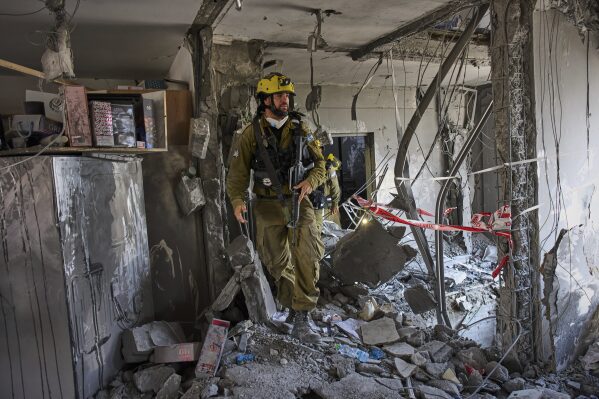
Israeli soldiers from the search and rescue unit work amid the rubble of residential buildings destroyed by an Iranian missile strike that killed several people, in Beersheba, Israel, on Tuesday, June 24, 2025. (AP Photo/Bernat Armangue)
Israeli soldiers from the search and rescue unit work amid the rubble of residential buildings destroyed by an Iranian missile strike that killed several people, in Beersheba, Israel, on Tuesday, June 24, 2025. (AP Photo/Bernat Armangue)
AP reporters got rare access into the building and saw clothes and kitchen utensils strewn among the smashed concrete, as first responders kept searching for survivors and bodies.
The responders say that the damage caused by Iran’s ballistic missiles was more extensive than attacks they’ve dealt with in the past. They also include bomblets — small explosive submunitions — which makes it more dangerous to search for people as quickly as the area has to first be cleared.
Israeli strike killed 7 Revolutionary Guard members Monday, Iran media reports
An Israeli strike Monday on Iran’s city of Karaj near Tehran killed seven members of Iran’s Revolutionary Guard, including two generals with the paramilitary force, the state-run IRNA news agency reported.
Iran claims Israeli strikes continued until 9am local
The central headquarters of Iran’s Revolutionary Guard has claimed that Israel conducted strikes in Iran until 9 a.m. local (0530GMT,) Iranian state television reported.
However, there were no reports of Israeli strikes in Iran after 4 a.m. local, around the time Iranian Foreign Minister Abbas Araghchi said Tehran would hold its fire if Israel did the same. The Guard offered no evidence to support their claim of the later Israeli attacks.
Under the ceasefire plan announced by President Donald Trump, Israel had until 1000GMT to conduct strikes.



RANDOLPH, Minn. (AP) — When Donald Trump promised new tariffs while running for president, Gene Stehly worried that trade disputes would jeopardize his international sales of corn, soybeans and wheat.
A little more than a year later, Stehly said his fears have become a reality, and Trump’s latest promise of federal assistance is insufficient to cover American farmers’ losses.
“Maybe this will all come out to be better at the end, but I can tell you right now, it certainly isn’t the case at the moment,” Stehly said.
Trump announced Monday that his Republican administration would distribute $12 billion in one-time payments to farmerswho have suffered from persistently low commodity prices, rising costs and declining sales after China cut off all agricultural purchases from America during the trade war.
While rural areas remain conservative bastions, farmers’ patience with Washington is wearing thin. Several of them described the government bailout, an echo of similar policies during Trump’s first term, as a welcome stopgap but one that will not solve the agricultural industry’s problems.
“It’s a bridge. It’s not the ultimate solution we’re looking for,” said Charlie Radman, a fourth-generation farmer who grows corn and soybeans on the land his family has owned near Randolph, Minnesota, since 1899. “What we really want to have is a little more certainty and not have to rely on these ad hoc payments.”
But farmers support for Trump remains steadfast.
Kansas sorghum farmer Garrett Love, who was at the White House when the aid was announced, said farmers know that securing fair trade deals is a “hard process,” and farmers “appreciate lowering tax burdens, lowering regulations, increasing freedom, and Trump has definitely done that.”
Farmers caught up in trade war
American soybean and sorghum farmers typically export at least half their crops. They were hit the hardest by Trump’s trade dispute with China, the world’s largest buyer of soybeans that has increasingly relied on harvests from Brazil and other South American nations.
Trump and his Cabinet have boasted about the deal he struck with Chinese President Xi Jinping in October. But Liu Pengyu, the spokesperson for the Chinese embassy, said this week that “agriculture trade cooperation between China and the United States is proceeding in an orderly manner” without giving specifics.
So far, China has bought only a little more than one-quarter of the 12 million metric tons of soybeans that U.S. officials said would be purchased before the end of February, raising doubts on whether Beijing would follow through on that pledge or commitments to buy 25 million metric tons annually in the next three years. China has not confirmed those numbers.
“In general, I don’t trust their motives and integrity of their promises,” said Bryant Kagay, who farms in northwest Missouri.
Even if China does buy the agreed amount of American soybeans, that would only bring U.S. farmers near to the amount they were selling every year before Trump took office.
That is a big part of why Minnesota farmer Glen Groth said he’d “like to see the administration focus more on opening up markets outside of China.” In addition to finding other international buyers, agriculture groups are pushing to expand domestic uses like biodiesel, ethanol, aviation fuel and animal feed.
Dan Keitzer, a soybean and corn farmer in southeast Iowa, said recent bumper crops and technological advancements that produce bigger harvests means that the industry needs more customers.
“I think most farmers would tell you that they don’t want to go to the mailbox and get a check from the government. That’s not why we farm,” he said. “We need more demand for our product.”
Aid is considered a Band-Aid
Trump has placated farmers with money before. During his first term, he provided $22 billion in 2019 to help cushion them from trade disputes with China. There was $46 billion in 2020, an expanded number that reflected financial challenges from the COVID-19 pandemic.
The $12 billion that he announced this week will not quell farmers’ fears about the future. They already are ordering supplies for next year’s crops and meeting with their bankers to discuss the loans they will need. But they’re trying to stay optimistic that crop prices will improve if they find more buyers. Farmers will find out exactly how much aid they can expect around Christmas.
The aid payments that are due to arrive by the end of February will be capped at $155,000 per farmer or entity, and only farms that make less than $900,000 in adjusted gross income will be eligible. During the first Trump administration, a number of large farms found ways around the payment limits and collected millions.
Farmers would like to see Trump aggressively tackle concerns about higher costs that are eating into their bottom line.
Trump signed an executive order over the weekend directing the Justice Department and Federal Trade Commission to investigate anti-competitive practices anywhere in the food supply chain, starting with the fertilizer, seed and equipment that farmers rely on and continuing to deal with meat packing companies and grocers who help determine what price consumers pay.
Tregg Cronin, who farms and ranches with his family in central South Dakota, said he’s grateful for the president’s acknowledgment that farmers are “caught in the middle” of the trade war.
But he said that any checks that farmers receive from the government will likely “get turned around and sent right out the door.”
___
Funk reported from Omaha, Neb. Associated Press writers Hannah Fingerhut in Des Moines, Iowa, Sarah Raza in Sioux Falls, S.D., and Didi Tang in Washington contributed to this report.
ByAri Bernick
It’s upsetting to have to advocate for respect in the workplace. It’s even more upsetting that the main offender is the president of the United States.
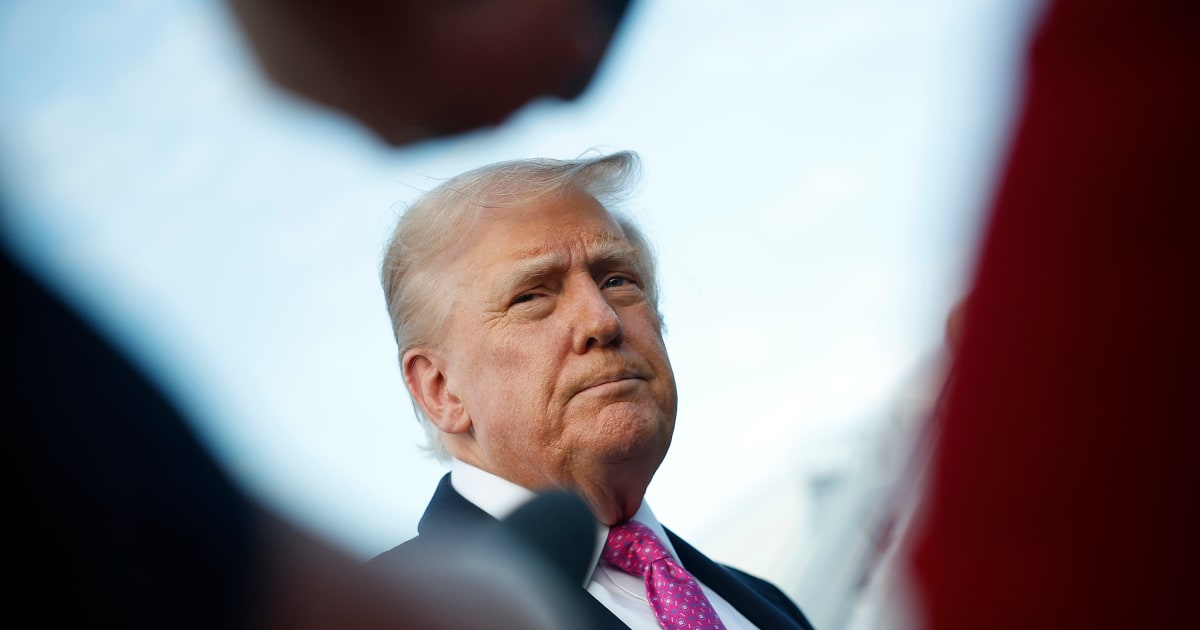
The most recent instance of the president directly attacking women in the media happened at the White House on Monday: “You are the most obnoxious reporter in the whole place,” the president said, berating ABC’s Rachel Scott, after she asked about video of the Sept. 2 strikes on alleged drug boats in the Caribbean. “Let me just tell you, you are an obnoxious, a terrible ― actually a terrible reporter, and it’s always the same thing with you.”
These public humiliations are outrageous.
Last week, the president diminished CNN’s Kaitlan Collins as “always Stupid and Nasty” in a social media post. Some of his other recent lows:
- Pointing at Bloomberg News’s Catherine Lucey and barking, “Quiet. Quiet, piggy.”
- Replying “Are you stupid? Are you a stupid person?” when Nancy Cordes of CBS asked about administration vetting of the National Guard shooting suspect.
- Calling Katie Rogers of The New York Times “a third rate reporter who is ugly, both inside and out.”

Remaining silent does a disservice to the women in the media who have come before me, those who stand alongside me and those who want to join the field in the future.
I might still be new to the industry, but I know female reporters deserve better.
It was not lost on me last month, seeing the attack on Rogers after a Times article about the president agingthat the president’s social media post did not scold or even mention the article’s male co-author.
Going after a female reporter’s looks and intelligence reminds me of things I learned in a media history class at Northwestern University: how women were excluded from newsrooms because people did not believe they had the intellectual capacity to be reporters, and how women used to be told to report on lifestyle and culture instead of “hard news” topics such as the economy. They were paid less, harassed more and were essentially told, “this isn’t for you.”
But journalism is for us.

These public humiliations are outrageous. And it’s frustrating to have spent four years studying how to ethically and accurately report only to see past injustices repeated and for the president to disrespect my chosen profession time and again.
But my larger concern is how this rhetoric could turn into action. In this administration, reporters have been turned away from the White House and Pentagon briefing rooms. What’s to stop the president from going even further?
I’m also worried about how the president’s rhetoric raises risks for me in my own work. For my job on the MS NOW social team, I spend a lot of time approaching people on the street for reactions to news stories. In October, for example, I interviewed several Chicagoans about how they felt about the National Guard deployments in their city. The president’s aggressive behavior gives a green light for people to bash me for simply asking questions.
Asking difficult questions is crucial to journalism. Answering them is a responsibility of holding public office.
Asking difficult questions is crucial to journalism. Answering them is a responsibility of holding public office.
I shouldn’t have to spell this out but: No one should be berated for doing their jobs competently.
I’m standing up for my peers because I’m grateful for the previous generations that made my career path possible; for the journalism professors who encouraged me to speak the truth, boldly; and for female coworkers, producers and managers whose professionalism has mentored me directly and indirectly.
While the number of women going into journalism has increased, a 2024 study from the Reuters Institute for the Study of Journalism found that the share of women in leadership positions in the field is still low. I worry that aspiring young journalists might feel reporting is not for them because of how the president treats women in the industry. I also worry that reporters might refrain from asking tough questions to avoid direct attacks from the commander-in-chief.
In 2015, when the president, then a candidate, made disparaging comments about Megyn Kelly after a Republican primary debate, the criticism that followed was widespread. More recently, some fellow reporters have denounced this disrespect of their colleagues and asked about the president’s behavior. Appallingly, the White House press secretary suggested everyone “should appreciate the frankness and the openness.”
Bullying wasn’t okay in a schoolyard, and it’s not okay coming from the Oval Office.

Ari Bernick
Ari Bernick is a production assistant on the MS NOW social team. She studied history and journalism at Northwestern University.
ByEarle J. Fisher
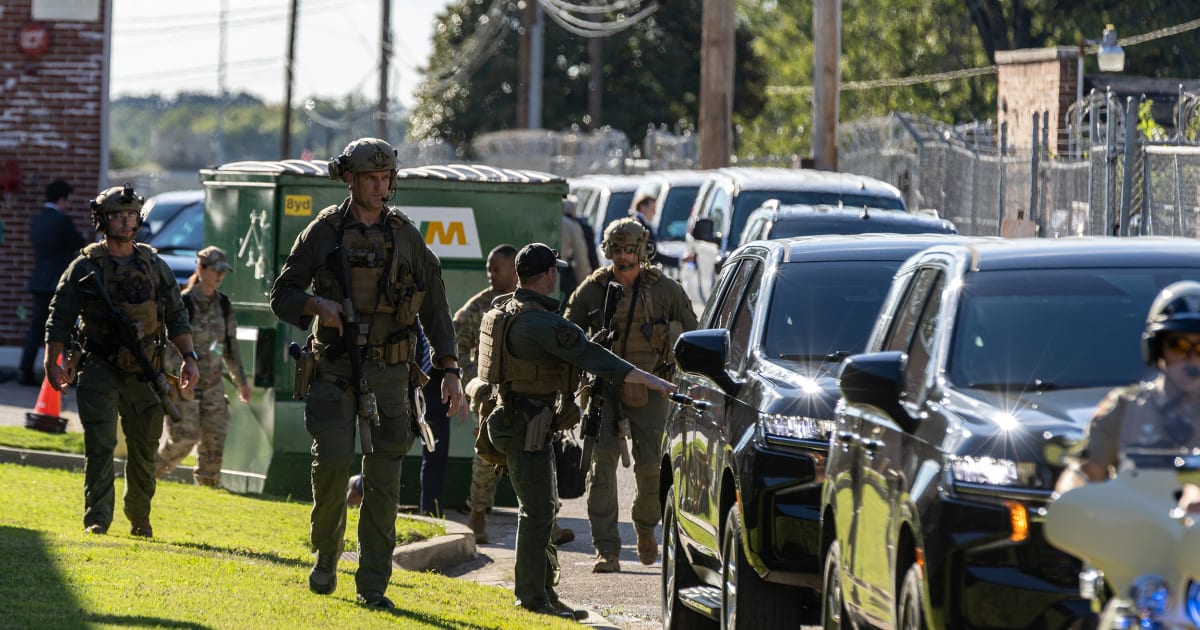
A year ago, the Department of Justice released a pattern and practice findings on the Memphis Police Department that documented systemic abuses and discriminatory enforcement that harmed Black residents. Twelve months later, instead of real reform or positive federal oversight, Memphis has been drawn into a national political performance. At the center is the Memphis Safe Task Forcea political creation of the Trump administration and a clear example of punitive populism, the latest expression of what Alec Karakatsanis names “Copaganda.”
The task force has initiated more than 35,000 traffic stops.
The task force has made more than 3,100 arrests since Oct. 1. Roughly 1,900 of them are for nonviolent offenses. During the same period, the task force has initiated more than 35,000 traffic stops. These numbers appear on a city dashboard that community members have criticized for lacking detail, yet local law enforcement and city/state officials are already being used as evidence of crime reduction. What the numbers actually show is the volume of enforcement, not the presence of genuine reform.
The Trump administration is presenting Memphis to the nation as a model of successful intervention by collapsing traffic stops, misdemeanors and immigration-related encounters into the broad category of crime control.
The Memphis Safe Task Force resembles earlier programs such as stop-and-frisk in New York, Blue CRUSH (Criminal Reduction Utilizing Statistical History) in Memphis and the “broken windows to the next level” policing approach that White House Deputy Chief of Staff for Policy Stephen Miller has celebrated. It creates aggressive encounters with marginalized people to create the illusion that such encounters promote safety.

As was the case in so many cities across the country, violent crime in Memphis was declining before the task force was created, reaching what some described as a 25-year low. Crime was also at or near record lows in Chicago and Washington, two other cities where Trump has sent in troops. Though Attorney General Pam Bondi claims to have “reversed the trend of crime” in Memphis, that reversal was already underway.
The immigration data is even more revealing. Nearly 40% of local arrests tied to the task force involve immigration activity. Nationally, Immigration and Customs Enforcement has arrested almost 75,000 people with no criminal record. It’s unknown what the numbers show in Memphis. As the Tennessee Lookout reported last week, “Task Force officials initially reported immigration arrest numbers but have since stopped providing that data.”
But, in general, the operation has allowed officials to claim a crime crackdown even when people targeted are not linked to violent offenses. Here in Memphis, local and state officials want the public to conflate law enforcement activity with safety and accept an increase in activity as a substitute for accountability. They want to redirect attention away from the deeper rot in the Memphis Police Department that the DOJ report exposed.
The public is repeatedly shown selected numbers by Attorney General Bondi’s office — and echoed by local agencies and officials — to reinforce a predetermined story that the task force has created quick, measurable improvements, that these gains justify the erosion of civil liberties and that Memphis is safer because more people have been stopped or detained.
But public safety cannot be measured by the number of people funneled through the criminal legal system. Arrests and traffic stops are not evidence of transformation. They are only evidence of encounters. They say nothing about community trust or the changes required to prevent violence.
This narrative also obscures what has happened since the DOJ released its findings. Rather than embracing federal oversight, the mayor and city administration dismissed the report as “meaningless” and even asked a federal court to disregard it. They then announced another task force to study MPD oversight. Ten months later, that group has not published a single policy or recommendation. The structural problems identified by the DOJ remain unaddressed. In the vacuum created by this refusal to pursue real reform, political actors have substituted a storyline suggesting the city has already turned a corner.
The danger is not only local. When national leaders hold up Memphis as a model without scrutinizing the data, they normalize a strategy that encourages the public to equate policing with safety. One year after the DOJ confirmed what many residents had been saying for decades, we deserve more than political theater.
Other cities with problematic law enforcement agencies deserve more, too: reforms guided by independent oversight, transparency that distinguishes perception from reality and a public safety strategy rooted in truth. Instead, we’ve been offered a spectacle. And the Trump administration is promoting Memphis as a success story even as the underlying issues that threaten our safety remain unresolved.
Earle J. Fisher
The Rev. Earle J. Fisher, Ph.D. is Senior Pastor of Abyssinian Baptist Church (Memphis), founder of #UPTheVote901 and author of “The Rev. Albert Cleage Jr., and the Black Prophetic Tradition: A Reintroduction of The Black Messiah”published by Lexington Books.
- Indiana GOP’s Trump rebuke could lead to temporary redistricting detente
- House GOP leaders race to release health care package Friday
- GOP health care chaos spills into battleground midterm races
- Bill Gates appears in newly released photos from Epstein estate
- Trump, Clinton, Gates included in Epstein photo trove
- Trump promises White House ballroom completion in ‘about a year and a half’

- Gingrich: ‘Republicans are in real trouble’ if economy doesn’t ‘recover’
- Meet the candidates running to be the next U.S. Senator from Texas: James Talarico

- Trump’s National Guard deployments get Congressional scrutiny

- Trump predicts Indiana Senate GOP leader will lose next primary over redistricting vote

-

 Politics10 months ago
Former ‘Squad’ members launching ‘Bowman and Bush’ YouTube show
-

 The Dictatorship10 months ago
Pete Hegseth’s tenure at the Pentagon goes from bad to worse
-
Uncategorized1 year ago
Bob Good to step down as Freedom Caucus chair this week
-

 Politics10 months ago
Blue Light News’s Editorial Director Ryan Hutchins speaks at Blue Light News’s 2025 Governors Summit
-

 The Dictatorship10 months ago
Luigi Mangione acknowledges public support in first official statement since arrest
-

 The Josh Fourrier Show1 year ago
DOOMSDAY: Trump won, now what?
-

 Politics8 months ago
Democrat challenging Joni Ernst: I want to ‘tear down’ party, ‘build it back up’
-

 Politics10 months ago
Former Kentucky AG Daniel Cameron launches Senate bid