
Politics
GOP health care chaos spills into battleground midterm races

Republicans’ failure to get on the same page on expiring Obamacare subsidies is creating significant rifts between GOP primary contenders and causing heartburn for some of the party’s most vulnerable incumbents heading into November’s midterms.
With just weeks left before Covid-era subsidies lapse, causing steep health insurance rate spikes for millions of people, Republicans are all over the spectrum about what to do — with many of the party’s top candidates ducking when asked about the thorny issue.
In Michigan, the subsidies have emerged as an early policy difference between President Donald Trump-backed Senate candidate Mike Rogers and his new challenger, former state GOP co-chair Bernadette Smith. Sen. Bill Cassidy’s (R-La.) proposal to replace the subsidies with federally funded health savings accounts is facing pushback from his primary opponents. In Georgia, a state with an especially high reliance on the Affordable Care Act, all three Republicans vying to take on Democratic Sen. Jon Ossoff have refused to commit to any specific health care proposal — a sign of just how reluctant Republicans are to take a firm position.
Out of the 24 candidates Blue Light News surveyed across key GOP Senate primaries and general election battlegrounds, 10 did not respond to repeated requests for comment on their health care policy preferences, while others gave vague answers.
But as some Republicans dodge, other lawmakers in tough races are practically begging their leadership to fix the issue, which Democrats are already making a key focus of the 2026 midterm elections.
“I know my people back home care tremendously about this,” swing district Rep. Brian Fitzpatrick (R-Pa.), who is leading an effort to go against his own party leaders and force a vote on the expiring credits, said in an interview. “I would assume that’s the case in every district in America.”
There are already warning signs of political pitfalls for Republicans.
Most Americans want Congress to extend the subsidies, polls from health policy think tank KFF and Morning Consult show. And they’re already feeling the strain: Fifty-two percent of respondents to The Blue Light News Poll in November reported that their health insurance premiums have risen over the past two to three years — and they’re equally as worried about being able to afford an unexpected health care bill. Nearly half of respondents who said health care is difficult to afford blamed the Trump administration for those struggles.
Health care is a flashpoint in the crowded primary Cassidy is facing back in Louisiana that was fueled in large part by his 2021 vote to impeach Trump. The former physician also chairs the Senate Health Committee and co-authored one of the GOP proposals to try to address the surging rates.
“I want people to have coverage,” Cassidy said after the failed vote on his proposal. “I spent my medical career in a hospital for the underinsured and the poor and the uninsured. My life’s work is: How do you get care to those who otherwise cannot afford it? I understand where people are. The Democratic plan does not.”
His bill failed to advance Thursday afternoon — while giving his primary opponents new fodder for attacks.
St. Tammany Parish Councilmember Kathy Seiden said before the vote that the senator’s proposed health savings accounts are “out of touch” and called for a “time-limited extension” of the subsidies, while Public Service Commissioner Eric Skrmetta described Cassidy’s bill as a “step in the right direction” but said he wants the funding to be “supercharged.”
Republicans more worried about the general election than primaries sound much different on this issue, however.
Sens. Susan Collins (R-Maine) and Dan Sullivan (R-Alaska), who are both facing potentially tough races, were among the four Republicans who crossed party lines to support Democrats’ three-year subsidy extension Thursday in the Senate. It failed, alongside Cassidy’s plan.
“My state’s hurting on this,” Sullivan said after both bills tanked.
Republicans have struggled ever since Obamacare’s 2010 passage to craft a functional, politically palatable alternative, even as health insurance rates have surged under the program. Now, Covid-era subsidies are set to expire, and they’re struggling once again to respond.
The nonpartisan Congressional Budget Office estimates 4 million fewer people would have health insurance by 2034 if the subsidies lapse. And premium payments would increase from an average of $888 this year to $1,904 next year if the subsidies expire, according to KFF.
Republican candidates vary widely in their suggestions for a policy fix.
In Michigan, where Republicans are looking to flip retiring Democratic Sen. Gary Peters’ seat, Rogers said “we can’t just put another bandaid” on a “broken health care system” and called for a “new system that works.” Smith advocated for a two-year subsidy extension while also working toward a new health care model.
In New Hampshire, where Republicans are chasing another retiring Democrat’s seat, former Sen. John E. Sununu called to modernize “outdated” regulations and give states more power over their Medicaid programs while ensuring lower-income people are “protected against price spikes.” His rival, former Sen. Scott Brown, said in a statement that “any meaningful solution is going to have to address the underlying cost drivers … and not just temporarily subsidize an unaffordable product.”
In Georgia, where Republicans have their best shot to unseat a Democratic incumbent, two of the three leading GOP candidates — Reps. Mike Collins and Buddy Carter — could soon run out of rope to avoid addressing the issue if a health plan hits the House floor. Derek Dooley, the former football coach backed by GOP Gov. Brian Kemp, said in a statement, “We should be focused on transparency, incentivizing doctors to deliver high-quality care, real market competition, and lowering healthcare costs for hardworking Americans—while making sure we put patients first.”
Democrats are yoking GOP candidates to the lapsing subsidies. Senate Democratic campaigns lambasted their GOP opponents for their votes Thursday, and Protect Our Care, a liberal health care advocacy group, signaled a deluge of attack ads to come.
“I’m worried about my colleagues,” Rep. Jeff Van Drew, a Republican who holds a safe red seat in blue New Jersey, said Wednesday at the Capitol. “Do I think this issue is worth a couple of points in an election? Yeah, I do.”
Erin Doherty contributed to this report.


Republican Ashley Hinson wants Iowans to know she’ll pick a fight with President Donald Trump. Democrat Josh Turek wants them to know he’ll work with him.
The rivals in Iowa’s closely contested Senate race each sought to establish their independence in separate interviews aired Sunday on ABC’s “This Week,” pitching themselves as willing to put their state ahead of their respective party loyalty.
Asked about her campaign pledge to be Trump’s “strongest ally” in the Senate, Hinson added a condition: “If it’s for Iowa.”
“I will be someone’s ally when they’re with me on the issues that are important to Iowa,” the Republican lawmaker said. “And if they’re wrong, I’m going to pick a fight with them, no matter who that is.”
The conflicting comments come in a state Trump won by 13 points in the 2024 presidential election, but where Democrats now see an opportunity to win their first Senate election since 2008. The president campaigned in Iowa this past week as high fuel costs and frustration with his tariffs complicate Republicans’ efforts to maintain the seat.
Republicans close to Hinson told POLITICO last month that she needed to put some distance between herself and Trump, warning that his tariff agenda and the Iran war were undermining her chances.
On Sunday, Hinson rejected Trump’s positive assessment of the economy. “Well, sure doesn’t feel like it right now,” she said, later criticizing the administration’s dealings with Moscow.
“I don’t think we should be making any deals with Russia,” she said, pointing to her vote for sanctions. Her campaign told POLITICO on Friday that she opposed sanctions relief for Russia while supporting Trump’s use of the Defense Production Act to bolster domestic energy production.
But there were limits to her criticism. While calling for the Iran war to end quickly, Hinson declined to oppose a potential new offensive after the midterms, saying she trusted Trump and the military to determine what needed to be done.
Turek, meanwhile, called himself a “proud moderate” and sidestepped a question about whether Democrats had moved too far left.
“I don’t think a lot about the party as a whole. I think about myself, and I think about Iowa,” the Democratic state representative said.
That pitch follows a primary victory aided by national Democratic support, including from Senate Minority Leader Chuck Schumer’s leadership PAC — which contributed the maximum to Turek’s campaign, though Schumer did not formally endorse. VoteVets spent more than $10 million advertising on Turek’s behalf. He’s also secured the formal endorsement of former President Barack Obama, who appeared in an ad alongside Turek as the two played basketball.
Asked what Trump had done right, Turek said Trump had done “a better job on the border than Biden, for sure.” He also cited agreement on keeping private equity out of housing and eliminating taxes on tips, overtime and Social Security, while arguing that Trump’s economic policies had concentrated wealth and power.
Also asked whether endorsements mattered, Turek offered a blunt assessment: “Probably not.”
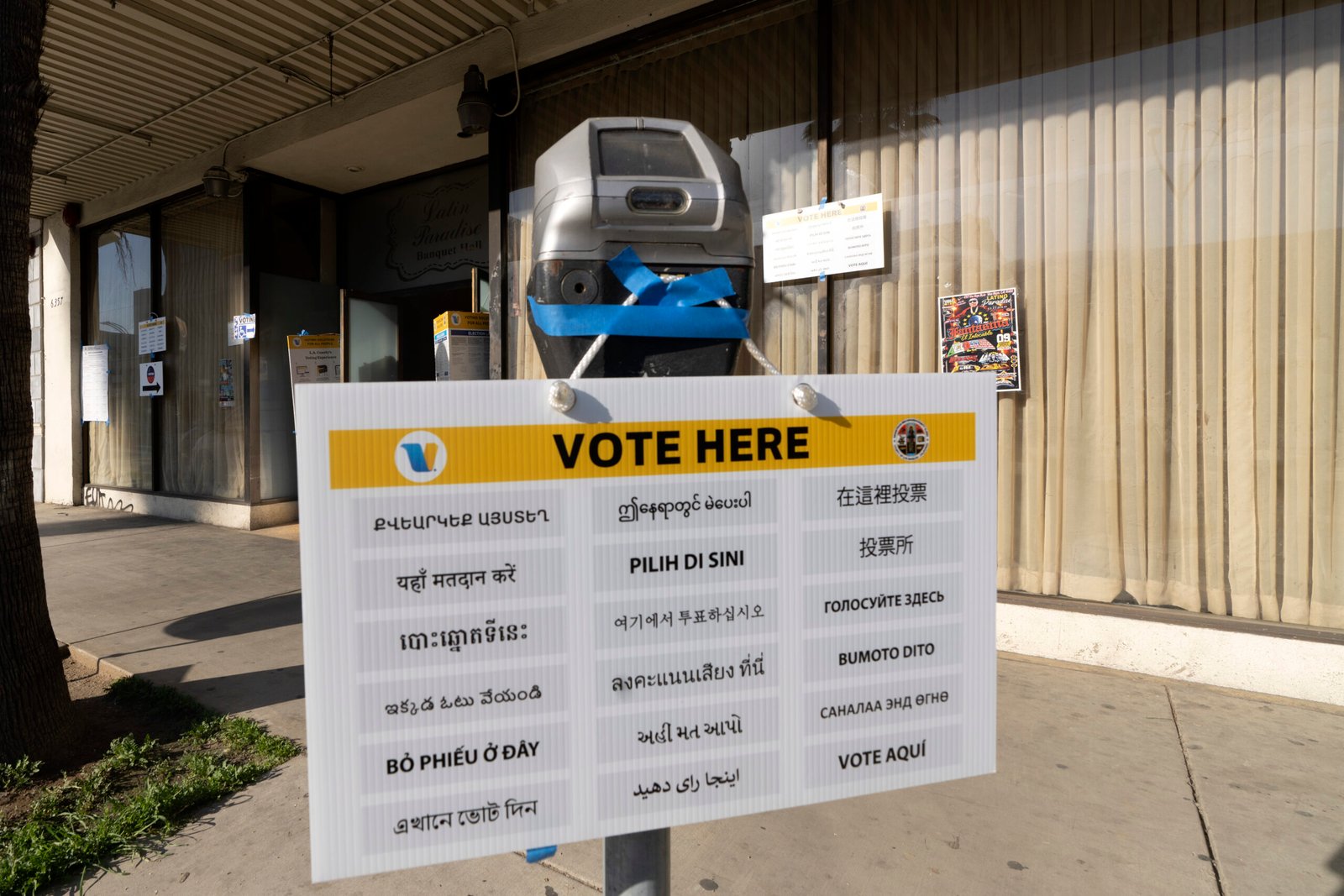
AI chatbots are feeding non-native English speakers inaccurate information about the election, community activists and researchers warn, creating a barrier for some voters ahead of the midterms.
The challenge — which leading AI companies say they’re working to address — is distinct from intentional disinformation campaigns that have plagued the internet for decades. Instead, some researchers and community leaders warn that voters prompting chatbots in non-English languages are unintentionally being fed inaccurate and ambiguous information — like whether they can vote by mail in their state — or overly literal translations that confuse electoral terms and lack context in various languages’ unique dialects.
But the end result, the activists said, could still be the same: Voters whose native language is not English are more vulnerable to incorrect information and excluded from the most reliable answers ahead of the midterms.
“Latino communities cannot afford to be left behind as artificial intelligence transforms how people work, learn, communicate and access information,” said Héctor Sánchez Barba, the president and CEO of Mi Familia Vota. “The history of the immigrant community and the Latino community has been one where we have been historically and structurally excluded from the best technology and access to information.”
This digital divide has arisen, the activists and researchers say, in large part because AI models are trained in English, and fail to capture the nuances of other languages. Experts and grassroots organizations say this discrepancy in accuracy unintentionally disenfranchises non-English speaking voters across the country, where more than 20% of Americans speak a language other than English at home.
National voter organizations that work in Latino and Asian American communities are grappling with how to bridge the gap and keep up with the rapidly developing technology to ensure that their communities don’t get left behind.
Mi Familia Vota, which oversees some of the largest Latino voter mobilization efforts in the country, has built its own AI assistant dubbed “Nubi,” which comes from la nube or cloud in Spanish, for Spanish speakers seeking information on voting, voter registration and citizenship. The model is trained on government and nonpartisan datasets — as well as community data collected over 30 years of canvassing, town halls and citizenship workshops, said Denise Cook, chief innovation officer of Mi Familia Vota.
She said it includes dialects of Mexican, Central American, South American and Caribbean Spanish, which have different words for election-related terminology. Polling place, for example, can be referred to as casilla, recinto or colegio electoral depending on the dialect, she said.
Christine Choi, director of strategic communications at APIAVote, a civic engagement group for Asian Americans and Pacific Islanders, added that if AI fails to capture cultural and political nuances, “you can alienate a whole community or turn them off if you use the wrong interpretation.”
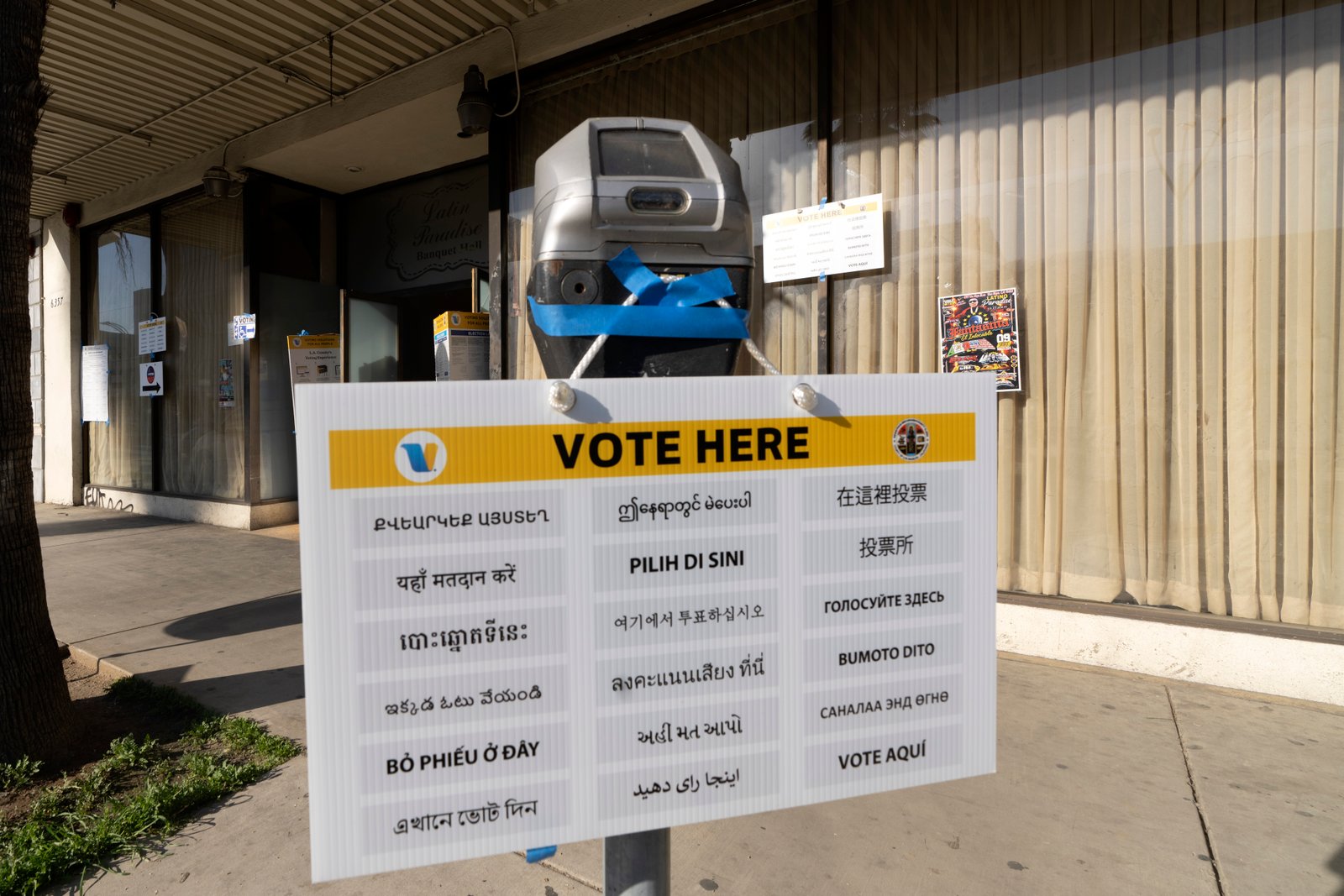
A study by the Institute of Strategic Dialogue released in September found that accuracy of AI chatbots declined 16% when prompted in Spanish about voter information. Spanish prompts were more likely to produce incomplete or ambiguous answers, omitting relevant details and relying on overly literal translations, said Valeria de la Fuente Suárez, the lead author of the ISD study.
“When voters are asking about registration deadlines or ID requirements, missing details can have real consequences,” she said. “Spanish-speaking voters deserve the same standards of clear, reliable and properly sourced information as English-speaking voters.”
The study tested six frontier models through their respective APIs, or application programming interfaces, which are available for other developers to use. OpenAI, Anthropic and Google said in separate statements that they were working to refine their models for non-English languages, but APIs are not appropriate representations of how consumers interact with the actual chatbot interfaces, because they often include other fail-safes like popups or banners linking to external sources of information on voting.
“Gemini is designed to respond with accurate and timely information and performed well in this analysis,” David Thompson, a spokesperson for Google, said in a statement. “However, this report accessed Gemini through our developer API, not the Gemini App, which has different protections and is how most people use our AI.”
Still, the leading AI companies say they are working to better provide election-related information to a wider swath of voters. To improve election information ahead of the midterms, OpenAI and Anthropic both said they are integrating information from Democracy Works, a nonprofit that collects official election information from the government, in its answers.
“OpenAI’s goal is to support people’s ability to participate freely in elections and make their own decisions with reliable information, transparency, and effective safeguards,” Nate Evans, a spokesperson for OpenAI, said in a statement.
Some groups like Asian Texans for Justice, a nonprofit that works to increase voter engagement in Asian American communities in the battleground state, have opted to steer clear of the technology ahead of the midterms.
“I do know that AI is being used more and more by AAPI communities, and we have made an organizational decision not to use AI for our in-language outreach due to inaccuracies,” said Nabila Mansoor, executive director of the organization.
Spanish, Chinese and Vietnamese are among the most widely spoken languages in the U.S. besides English, but there are more than 500 other languages and language groups spoken across the country, according to the U.S. Census Bureau. The vast majority are considered low-resource languages with limited digitized data to train AI models, including Arabic, which has 1.3 million speakers in the U.S., and Swahili, which has about 150,000 speakers.
And leading tech companies say they will try to address language-related access to AI systems more broadly.
The Gates Foundation announced in September a coalition of 60 companies including OpenAI, Anthropic and Google dedicated to improving AI tools for an estimated 3.4 billion people around the world who speak languages underrepresented in AI models over the next five years. The joint commitment said, “The barrier is no longer the technology, which will only continue to improve. It requires a decision — to treat the world’s languages as a shared foundation worth building, together, for everyone.”
Community organizers say that while they welcome industry efforts to improve, the changes need to happen as soon as possible so immigrant communities can be equipped with the most reliable information for not only the midterms but the presidential election in 2028.
“The way people get information has fundamentally changed and civic engagement has to change with it,” said Mi Familia Vota’s Barba.
SYDNEY — Former Prime Minister John Howard urged the Australian government to reverse its plans to sell defense land in prime locations at a rally Sunday characterized by multipartisan bonhomie on-stage — and angry calls for Prime Minister Anthony Albanese to resign off stage.
Howard told a crowd of a few thousand gathered in Sydney near the site of its Victoria Barracks that he would be the first to congratulate Albanese if he changed course on the land selloff.
Also present at the rally were members of the nationalist One Nation party. Orange shirt-clad members of the far-right party and others wearing blue Make Albo Go Away (MAGA) hats called instead for Albanese to resign or be sacked.
Decades of local opposition to higher density, often characterized by not-in-my-backyard politics, has left Sydney with one of the most expensive housing markets in the world. Most mainstream political parties have responded, now declaring themselves “YIMBY.” The defense land selloff is one exception to this pendulum reversal, uniting groups across the political spectrum.
Few things unite Australia like its Australia and New Zealand Army Corps legend, the belief that the values embodied by its armed forces, such as mateship, are central to its national character.
So the decision by the Albanese government to sell Department of Defense assets around the country, including prime harbor-front properties in Sydney, to raise 3 billion Australian dollars (in gross terms), or 1.8 billion (net), may seem like a strange one.
With calls to reduce the deficit and the need to find land for housing in Australia’s sprawling cities, the government thought it was on firm footing disposing of properties it says are surplus to requirements.
Deputy Prime Minister Richard Marles has argued his Department of Defense is not best placed to preserve the heritage value of the sites, and that money for their upkeep would be better spent on future fighting capability.
The selloff proposal has met fierce resistance across parties: from the conservative Liberal-National Coalition, the traditional opposition in Australia; right-wing nationalist One Nation; the left-wing Greens; and even members of Albanese’s own party, his Labor colleagues in the NSW state government.
The Albanese government has been urged by its opponents to spend less to lower inflation and prevent the need for further interest rate hikes. But many savings measures have been blocked: from its attempts to make the private health insurance rebate and veterans’ allied health entitlements less generous, to charging residents of aged care more for services.
Howard, a conservative Liberal, told the crowd he is “all in favor of governments spending less and taxing less” but that was not the issue at hand. “What is more important to the soul of a nation? [Than] its history, its heritage, and those that have gone before,” he said. “You don’t give that up for a few bob.”
Howard’s speech veered from his memories of seeing Australian cricket legend Don Bradman bat at the nearby Sydney Cricket Ground, to Victoria Barracks’ history as the departure point for soldiers bound for the 1885 Sudan War, to his description of the 28-degree Celsius day — 4.3 degrees above the historical late-October average — as “seasonably warm.”
Tony Abbott, another former Prime Minister and now the Liberal Party president tasked with combating the rise of One Nation, said it was “wonderful” to gather with Australians who respect its history and heritage. “And isn’t it wonderful to be at this protest, where the only flag on display is the Australian flag — and not the Palestinian one.”
Labor’s NSW parliamentary secretary for transport, Marjorie O’Neill, one of the protest organizers, was jeered by the One Nation-heavy crowd: first, for beginning the rally with an acknowledgment of country for Australia’s First Nations people and for 150 Aboriginal men who had signed up to serve the defense forces at Victoria Barracks; and then again for omitting mention of One Nation as she credited the multilateral coalition of Labor, Liberal and Greens against the sale.
Liberal senator Jess Collins, her co-organizer, added “I will acknowledge that we do have One Nation here too” — to loud cheers.
Independent MP Allegra Spender urged the crowd to join a convoy to Canberra being organized for Nov. 23 to protest the sale.
One Nation members approached ahead of the rally declined to comment, due to party rules forbidding speaking to the media.
Justin Bowra, a member of the Greens and local resident, told Blue Light News that “despite all the political colours, whether you’re orange, blue, red or green, we all agree on one thing: The wrong thing to do is sell off the land to the highest bidder for private development.”
“The right thing to do is let the community decide, let locals decide, and make those decisions with the benefit of all Australians in mind rather than turning them into a bunch of condos.”
The NSW Government, led by Labor’s Chris Minns, has also opposed the sale, but has no constitutional power to stop it, leaving the ball in Albanese and Marles’ court. Abbott told the rally that “people power” will prevail.
Former Army chief Lt. Gen. Ken Gillespie told the rally that with politically motivated violence on the rise in Australia, including the Bondi antisemitic terror attack of Dec. 14, 2025, it was important to retain the barracks, which is used for counter-terrorism exercises by the Special Air Service. “When police need military support in a crisis, minutes matter,” he said.
Marles angered many by previously dismissing those campaigning against the sale as “a few former generals who liked hanging out there.” The description appears particularly inapt now — a poor read on the practical difficulty of opposing so many political interests simultaneously, and an underestimation of the potent symbolism of the ANZAC legend.
- Iowa’s Senate rivals pitch independence from their parties
- AI has a language gap. That could be a problem for some voters.
- Australian defense land selloff runs into multiparty opposition
- Peltola postpones campaign stops after Saturday car crash
- The Trump administration moves to treat millions of mentally ill veterans with psychedelics
- The 2028 crop hits New Mexico for inaugural ‘Matanza’ rally
- Trump makes Alaska the latest frontier in his election power grab
- Spiking ambulance response times spur calls for real-time tracking

- Democrats are warning their party not to get too bullish on House gains
- Exit of RFK Jr. ally widens rift in GOP tent
-

 Politics2 years ago
Former ‘Squad’ members launching ‘Bowman and Bush’ YouTube show
-
Uncategorized2 years ago
Bob Good to step down as Freedom Caucus chair this week
-

 The Josh Fourrier Show2 years ago
DOOMSDAY: Trump won, now what?
-

 The Dictatorship2 years ago
Pete Hegseth’s tenure at the Pentagon goes from bad to worse
-

 Politics2 years ago
Former Kentucky AG Daniel Cameron launches Senate bid
-

 The Dictatorship2 years ago
Luigi Mangione acknowledges public support in first official statement since arrest
-

 Politics1 year ago
John Legend advises Trump to drop the ‘dictator s‑‑‑’ if he wants Nobel Peace Prize
-

 Politics2 years ago
Blue Light News’s Editorial Director Ryan Hutchins speaks at Blue Light News’s 2025 Governors Summit