
Politics
The Knicks are the (only) talk of the town


VERY SUPERSTITIOUS: For the first three quarters, it looked like the San Antonio Spurs were going to cream the Knicks in last night’s Game 4 of the NBA Finals.
But in an epic comeback, the Knicks overcame the Spurs’ 29-point lead — a new record in an NBA Finals game — and beat San Antonio 107-106, putting the hometown team just one win away from claiming its first championship in over five decades.
In New York political circles, there was an almost singular explanation for the unbelievable come-from-behind victory: The Trump curse had been lifted.
“THANK YOU TO THE PEOPLE WHO BLESSED MSG TODAY TO GET THE STANK VIBES OUT,” Rep. Alexandria Ocasio-Cortez wrote on X just before midnight. “YOUR SERVICE IS APPRECIATED.”
The progressive lawmaker’s all-caps missive was a reference to superstitious Knicks fans burning sage outside Madison Square Garden to cleanse it of what they saw as the bad juju President Donald Trump cast over the team by attending Monday’s Game 3 (which the Spurs won 115-111).
Queens Borough President Donovan Richards suggested Staten Island’s own Wu-Tang Clan — which performed last night’s halftime show at MSG — had a hand in rooting out the bad vibes. “Wu-Tang is for the children!!!” Richards wrote on X in response to a video of the rap group’s performance captioned: “Wu-Tang Clan have broken Donald Trump’s curse on the Knicks.”
No matter what brand of superstition is at play, it’s unmistakable that the Knicks’ playoff prowess has led New Yorkers to search for otherworldly explanations — and it seems to be the only thing local politicians can talk about.
In an Instagram video posted late last night, House Minority Leader Hakeem Jeffries suggested there was a more cerebral catalyst for the Knicks’ latest win.
“Wemby tried to taunt the Knicks when they were up by about 29, suggesting that he was in our heads,” Jeffries said in a video, referring to Spurs center Victor Wembanyama. “No. Actually Wemby, we were in your head.”
For his part, Mayor Zohran Mamdani turned to God for guidance about the Knicks.
“Knicks in five — inshallah, baby, let’s go,” he practically shouted on Hot 97 radio this morning, using the Arabic term for “God willing.”
Game 5 of the Finals is Saturday in San Antonio. If the Knicks win, they will claim the championship trophy for the first time since 1973.
Not everything has been peaches and cream in the Big Apple when it comes to the Knickerbockers, though.
An NYPD spokesperson said 56 Knicks fans were taken into custody last night after massive and destructive crowds converged near The Garden to “celebrate” the victory.
According to the spokesperson, 10 officers were injured in the rampage, including one who got hit in the head with a glass bottle as the crowds jumped on top of moving vehicles, tried to flip over a parked cab and set off fireworks.
“This demonstrates exactly why the NYPD has increased our presence in and around Madison Square Garden,” the police spokesperson said.
The chaos unfolded after Knicks owner James Dolan canceled last night’s ticketed watch party outside MSG because he was angry with Mamdani and NYPD Commissioner Jessica Tisch for blocking unauthorized pedestrian traffic in a large swath of Midtown around the arena due to security concerns. — Chris Sommerfeldt
From the Capitol

MESSAGE RECEIVED: Gov. Kathy Hochul responded today to White House border czar Tom Homan’s threat of an ICE surge into the Empire State.
“It’s not how we do things in New York,” Hochul said at an event in Queens. “Maybe Washington is a different breed there, and they think that intimidation and creating fear is a way to govern, and we’re just rejecting that here in the state of New York. That’s not who we are, never has been, never will be.”
Homan’s threats come after Hochul and state lawmakers sealed a deal on a package of measures meant to protect undocumented immigrants, following ICE’s deportation operation in Minneapolis. The bills would limit civil deportation warrants from being executed in sensitive locations and prevent law enforcement, including ICE agents, from wearing masks.
Homan blamed Hochul for the threatened surge after she signed legislation ending so-called 287(g) agreements that enable local law enforcement to share resources with federal authorities.
Hochul said such a surge would be “contrary” to what Trump previously told her. The governor also mentioned that Homan’s reasoning does not apply since only nine counties in New York previously participated in the 287(g) program — and none of those include any of New York City’s five counties.
“New York City, where we’re predicting he’ll send the agents to, has never had a 287(g) agreement. They’ve never been allowed to use the jails. Never been allowed to use local police enforcement,” the governor said. “It is irrational. It shows that they do not comprehend what is happening in the state of New York.” — Leah Clark
FROM THE CAMPAIGN TRAIL

TRIALS AND TRIBULATIONS: A federal judge found former New York City Comptroller Brad Lander not guilty of misdemeanor obstruction Thursday for blocking an elevator while protesting last year outside an immigrant holding area.
Lander was hit with the obstruction charge in September while demonstrating in support of detained immigrants at 26 Federal Plaza in Lower Manhattan. He was offered a deal to drop the charge but opted instead for a trial to draw attention to the federal government’s immigration policies.
Lander said he was there with state legislators to view the facility’s conditions, not to purposefully block an elevator — and that he would have moved if asked. In reading his findings, Judge Henry Ricardo described Lander’s testimony as consistent with video evidence, noting that his movements didn’t suggest he was purposefully trying to block the elevator and that Lander appeared “tired and a bit resigned.”
“No offense to Mr. Lander,” the judge said.
Lander — who entered the courtroom in good spirits and holding a Knicks hat — told reporters after the verdict: “I didn’t feel tired.”
“I felt an urgency to show up that day and try to fight what ICE is doing,” he said.
After a month’s delay, Lander finally had his first day in court Wednesday — less than two weeks before the primary election — bringing immigration even more to the forefront in the waning days of his campaign against Democratic Rep. Dan Goldman.
Goldman, who often highlights his oversight visits at immigrant detention centers and his “triage center” to support detainees near 26 Federal Plaza, has repeatedly criticized Lander for his approach to immigration. On Wednesday, he referred to Lander’s case as “performative” and “self-promoting.” At a debate last week, Goldman chided him for the rhetorical refrain that he puts his “body on the line” for immigrants and for fundraising off of it.
“While Brad never did get the information he sought from ICE, I have all of that information from my weekly oversight visits and would be happy to brief him,” Goldman said in a statement.
Read more from Madison Fernandez in Blue Light News.
POLL POSITION: The race between Rep. Adriano Espaillat and primary challenger Darializa Avila Chevalier is close in the final stretch of the campaign, according to a pro-Avila Chevalier poll.
The survey, conducted by Data for Progress for Justice Democrats, the progressive group that recruited the challenger, found Avila Chevalier with 39 percent of support compared to Espaillat’s 35 percent. Twenty-two percent of respondents were undecided.
The poll was conducted among 319 likely Democratic primary voters from June 3 to 9, after Mamdani endorsed Avila Chevalier — and as pro-Espaillat entities bombarded the airwaves with negative attacks against her. It has a margin of error of plus-or-minus 5 percentage points.
The survey also shows that 86 percent of respondents in the district either have a very favorable or somewhat favorable view of the mayor. Avila Chevalier is leaning heavily into Mamdani’s endorsement.
There’s no public polling in the race, though it’s evident Espaillat’s allies are anticipating a tight battle, considering the millions of dollars being poured into the race on his behalf in the homestretch. — Madison Fernandez
FROM CITY HALL

2029 VISION: Most political players in New York are focused on this month’s primary elections — but Mamdani is already looking well beyond them.
In a text message blast this afternoon, the mayor asked supporters to donate “any amount” they can to his 2029 reelection campaign, telling them he needs to start fundraising now because the opposition will “be better funded, better organized and ready to spend earlier than before.”
“Their fundraising is constant and prolific,” he wrote in the text obtained by Playbook. “In closed-door meetings, wealthy donors and insider operatives consider how to influence our politics year-round. That’s how our opponents secured the resources to spend $83 million against our movement last year … That’s why we’re making investments in our movement starting right now.”
Mamdani’s missive did not identify the individuals behind the opposition he described.
But a group called NYC Common Sense, spearheaded by former independent mayoral candidate Jim Walden and political consultant Phil Singer, launched last month with a stated goal of fighting his agenda with ads, policy papers and lawsuits. The group, whose formation was first reported by The New York Times, has already raised $1 million from as-of-yet unidentified donors.
Mamdani’s pivot to 2029 fundraising indicates he’s taking the nascent opposition to his democratic socialist project seriously. Trip Yang, a longtime Democratic strategist, acknowledged it’s relatively early to fundraise for 2029. Still, he said it’s a smart move.
“A strong early fundraising number is important to show the reelection is well-positioned,” Yang said.
Read more from Chris Sommerfeldt in Blue Light News.
STILL LOADING: City Council Speaker Julie Menin exuded confidence today over the newly introduced protest buffer zone bill around education facilities, which has the backing of 35 council members, a veto-proof super majority.
“I did speak with the mayor about the bill. We had a brief conversation about it,” Menin said at a press conference. “I think the new bill really addresses some concerns that we had heard.”
Menin said the revised measure would still achieve the original proposal’s goals but more narrowly defines which types of locations are included. Universities, which were flash points for some of the country’s most heated demonstrations, have been excluded from the new bill.
The original measure was vetoed by Mamdani in April after he raised concerns about its broad definition of educational facilities and the potential impacts on protests tied to ICE, fossil fuel divestment and Palestinian rights.
He allowed a similar bill to become law in April while voicing opposition to both buffer-zone bills’ framing of “all protest as a security concern.”
A spokesperson for the mayor said the administration is still “reviewing the new version of the legislation.” — Gelila Negesse
IN OTHER NEWS
— BAIT AND SWITCH: A year after New York City banned broker fees, renters say the charges never really left. (Gothamist)
— COURT-ORDERED VISITS: New York will begin to require judges to make recurring visits to prisons after years of a long-neglected oversight rule not being met. (The City Reporter)
— STRAPPED FOR CASH: The Mamdani administration is considering invoking a fiscal exception to delay required payments to nonprofits, citing cash constraints. (NBC New York)
Missed this morning’s New York Playbook? We forgive you. Read it here.


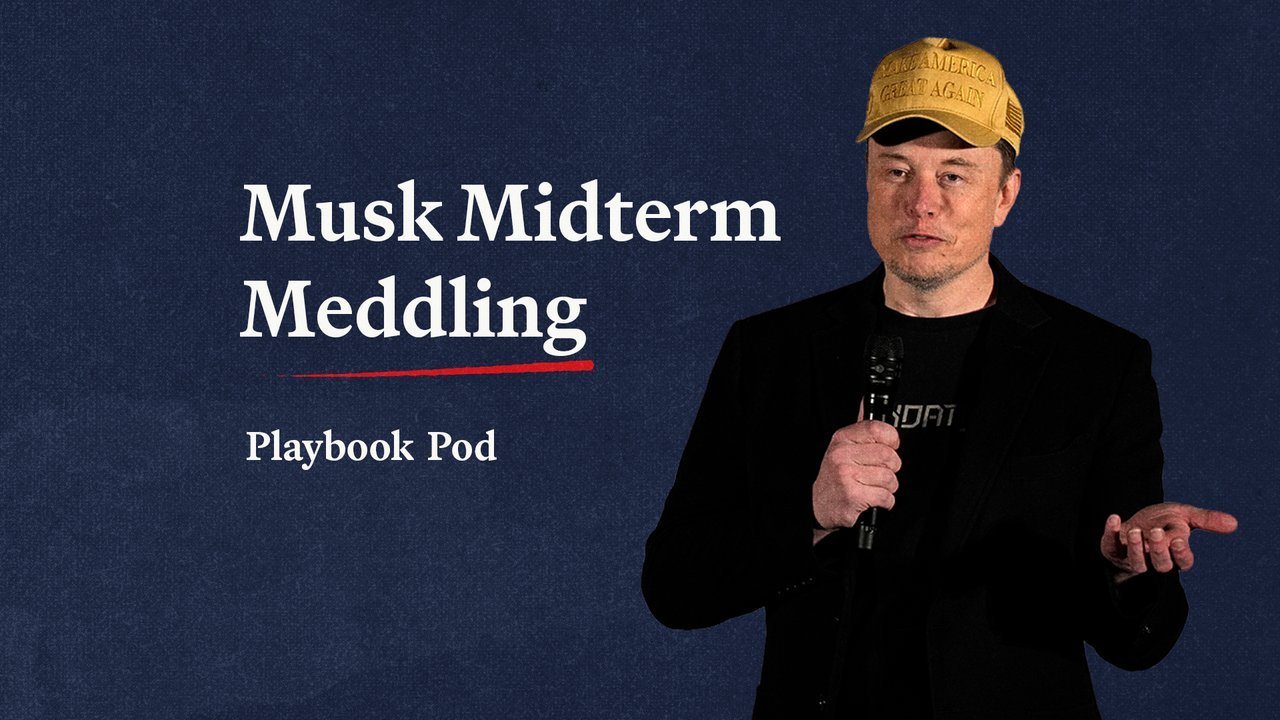
Democrats’ Musk-ask questions
lead image
CHICAGO — JB Pritzker is pouring tens of millions of dollars of his own money into boosting Black and Hispanic candidates this cycle. That could help him win over critical voters in 2028.
The billionaire Illinois governor — who’s also considered a potential presidential contender — is investing at least $38 million in battleground races, according to a person familiar with the governor’s political strategy granted anonymity to discuss details.
Much of that spending has gone to candidates of color, some of whom haven’t drawn much other investment from national Democrats. Pritzker is also investing in races in all six early states on the Democratic presidential nominating calendar, which was rearranged earlier this year to give prize spots to five states with significant Black or Hispanic communities: South Carolina, Nevada, New Mexico, Virginia and Michigan.
Asked by Blue Light News about how his midterms spending could lay the groundwork for a presidential campaign, Pritzker said he’s “focused on winning in 2026.”
But some of those receiving major infusions from Pritzker say it should earn him a serious look in 2028.
“Governor Pritzker is playing a very important role” in the party, said Rep. Shomari Figures, a Black Democrat facing an uphill fight in Alabama who has gotten an assist from Pritzker’s newly-formed super PAC, Ready for the Fight. “He actually cares and is… willing to invest in districts where minority candidates have a good shot if they have the right type of support. I think that’s an important element of any leadership.”
Pritzker said Ready for the Fight’s strategy focuses on GOP-leaning districts that would normally be “out of sight for Democrats” but have become competitive in a favorable midterm environment.
Figures is fighting for reelection in a district Republicans redrew to make it harder for a Democrat to win by decreasing the Black population, after the Supreme Court gutted the Voting Rights Act this past spring.
When that court decision came down, Figures said Pritzker was one of the first people to call him to offer help.
“The fact that he reached out and engaged us through that lens with that level of knowledge about what was happening in Alabama meant a lot to us,” Figures said.
Pritzker is spending $1.6 million for Figures, $1.9 million to boost Tennessee state Rep. Justin Pearson, another Black candidate running in a newly gerrymandered district that includes part of Memphis, and has put $1.3 million behind Arkansas Democrat Chris Jones in his race against Rep. French Hill (R-Ark.) in Little Rock, making him the largest Democratic spender besides the Democratic Congressional Campaign Committee in all three districts.
Pritzker is also the largest individual donor to Texas Democrat Gina Hinojosa’s gubernatorial campaign, personally contributing $200,000 before committing another $1 million earlier this month. The latter donation came with a matching contribution from the Democratic Governors Association. Hispanic officials and lawmakers have been ramping up the pressure on the group’s chair, fellow 2028 hopeful Kentucky Gov. Andy Beshear, to invest more in Texas.
Pritzker called Hinojosa an “outstanding person.”
“The opportunity for her to win and for Democrats to win as a result of her winning is tremendous,” Pritzker told Blue Light News at a Thursday press conference. “From my perspective, we all ought to be helping somebody like that to overcome the odds.”
And while he declined to criticize national Democrats’ strategic decisions not to spend for some candidates in tough races facing a deluge of GOP outside money, he made clear he was looking to make up for that lack of funding.
“If I were running in one of those districts, and I’m not getting dollars that I see going to other districts, I would feel frustrated,” Pritzker said. “There’s only so much you can do when you’re being outspent three to one or four to one nationally, and so I’m trying to do my best to fill in some of that wherever I can.”
Pritzker is not the only potential 2028er looking to woo politically powerful Black and Hispanic communities, and his day job and his own reelection bid keeps him away from the national trail — unlike some of the other senators and governors who’ve been criss-crossing the country for months. But what he lacks in time, he makes up for in money.
His spending strategy is catching the attention of senior Black Democratic leaders.
“People tend to take notice of the people who take notice of them,” said South Carolina Rep. Jim Clyburn.
Clyburn said he takes Pritzker “seriously” as a potential presidential candidate, but cautioned that Black voters and organizers in his home state, where Pritzker recently addressed the state NAACP’s annual convention, likely won’t be swayed by campaign contributions alone.
“We are going to take measure of candidates, not based upon how deep their pockets are, but we’re going to take measure of how deep their commitments are to those things deemed important in the African American community,” he said.
Still, the donations are helping the billionaire longtime Democratic donor and two-term governor forge new allies in key communities that could provide a boost come primary season.
“I appreciate Governor Pritzker’s willingness to invest in places others have written off,” said Jones, who also thanked the DCCC for recently adding him to their list of targeted races. “Convincing people a race is worth investing in has often been an insurmountable barrier for Black candidates.”
Pritzker’s PAC spent $2.8 million for New Mexico Democratic Rep. Gabe Vasquez and the governor made a $400,000 personal contribution into a super PAC backing Nevada gubernatorial candidate Aaron Ford, a Black candidate running in a heavily Hispanic early-voting state.
But his biggest investment of the cycle was to boost Illinois Lieutenant Governor Julianna Stratton, who he picked as his 2018 running mate when she was a little-known state representative, then invested $10 million to help her win her U.S. Senate primary this spring.
The move created some tensions: Pritzker’s endorsement of Stratton helped lift her 2026 Senate campaign significantly over two other candidates — including Rep. Robin Kelly (D-Ill.), another Black woman who has had a strained relationship with Pritzker over the years. That frustrated several members of the Congressional Black Caucus, though he’s sought to mend fences since. Clyburn, who endorsed and campaigned for Kelly, said that race won’t “dictate future relationships when it comes to putting our party in the best position to win the elections in 2028.”
And ultimately, Stratton’s ascendance is a significant step in his outreach to Black voters nationally. He will be credited with helping send just the sixth Black woman ever to the U.S. Senate after her likely victory in November. She could be a key 2028 surrogate should he run for president.
“He really does have a platform to raise awareness of critical races that people might not otherwise pay attention to,” Stratton said. “I’m really grateful for that.”
Democrats are salivating over, and Republicans are bracing for, a potentially massive blue wave. One GOP pollster is urging everyone to calm down.
Patrick Ruffini, a founding partner at Echelon Insights, has been loudly throwing cold water on Democrats’ hopes of sweeping the red state Senate seats that have become battlegrounds in a worsening national environment for Republicans.
“The polls are, I think, intentionally inflating the size of the battleground,” Ruffini told Blue Light News.
Democrats are pushing to flip Senate seats in Iowa, Texas, Ohio and Alaska — all states that President Donald Trump won by at least 11 points in 2024 — with dreams of going even deeper into the map Kansas, South Carolina and even Mississippi. Sensing a potential disaster, Republicans have significantly curtailed their investments in North Carolina and Georgia to direct resources elsewhere.
Ruffini, who isn’t polling for candidates or party committees in any federal races, said he’s skeptical of Democrats flipping some of those seats, particularly in the Midwest, and gives the GOP a coin flip’s chance at keeping control of the Senate.
If a blue wave were to come, he said it would defy the ingrained partisanship in deep-red states that has mirrored growing political polarization around the country.
“I think it would be somewhat of a historic shift if that were to happen,” he said.
Here’s more from Blue Light News’s chat with Ruffini, edited for length and clarity. A more condensed version of this interview ran in Blue Light News’s Morning Score campaign newsletter.
You’ve been pretty publicly skeptical of polling that indicates a big tsunami for Democrats in November. Why is that?
I think we can read the environment right, but the map wrong.
The pretty large shift towards Democrats that we’re seeing on the generic ballot and in a lot of individual races, I’m not saying that’s not going to materialize. What I am more skeptical of is… the ability of any major party in this polarized era that we’re in to rack up significant gains in states that went double digits for the other side.
I’m not ruling out — I think there will be some [examples]. I think Alaska is one where it’s both an idiosyncratic state, and [Democratic nominee Mary] Peltola has shown some specific candidate-centered strength. Nor would it shock me if [Democrat] James Talarico wins, despite the history in Texas. That would not surprise me, just given the candidate quality disparity, particularly on the Ken Paxton side.
Where I get more skeptical is when you move into the Midwest, where there has historically been pretty large polling errors [overstating Democrats’ chances] in states like Iowa, Ohio. And I think you can extend that to the Democratic enthusiasm around Kansas.
Is your skepticism coming more from the quality of the individual polls that you’re seeing that are showing massive Democratic surges in the Midwest, or is it the history of these states that you’re betting will ultimately win out?
I think fundamentals are going to play an important role, particularly in states where there was a solid Trump advantage. We’re not talking about a state like North Carolina or Georgia that’s only for Trump narrowly, where Democrats, at least in the Senate races, are clearly favored.
Historically the presumption is that states tend to converge on their base partisanship in the closing days of an election, but especially that’s been the pattern in the Midwest.
Specifically as it relates to the polls this year, I think any pollster you would talk to, including myself, is experiencing significant non-response bias favoring Democrats.
When you’re seeing high-propensity Democrats [responding to polls] at twice the rate of high-propensity Republicans, when we know that the turnout on both sides would be roughly evenly paired, that’s a warning sign for polling in this cycle.
It seems like there’s some GOP internal polling saying that Republicans are worried about these states, because they are moving money around to triage certain races. I’m curious if you feel like they’re wrong to be making those decisions?
Absolutely not. They’re not wrong. You do have to take the polls somewhat seriously in the sense of, if you do get a poll that’s within the margin of error, I think you’re duty-bound to spend money in those places and not to ignore what could be a potential signal.
I think that control of the Senate comes down to Texas, so they’re right to be spending money there. If you just look at the amount of money being spent in Texas versus Kansas, obviously it’s a much, much bigger state, and you need to spend much more money.
But it’s not something along the lines of ‘the battleground has shifted. It’s a foregone conclusion. Democrats are going to win the Senate,’ and then the battleground entirely shifts to a state like Kansas or to Iowa, right? I don’t think we’re seeing that.
It sounds like the issue you have is how the broader public is interpreting these polls rather than the polls themselves?
The polls are, I think, intentionally inflating the size of the battleground. And to some extent it’s happening both ways. The polls showing a margin-of- error race in Minnesota is possible, right? I’m not as concerned about a polling error in Minnesota as I am in Kansas.
But because of the number of Democratic internals and because of the incentive of Democratic internals to show close races across the battleground, what you generally tend to see is more of an inflated sense of how big the battleground actually is. A lot of these races just break a certain way.
We’ve reported that Republicans are privately conceding that the House is lost. Is that your reading of the data too?
That’s the best reading of the data. That said, if there’s a three-point polling error or something, then I think it gets very, very tight and anything can happen. But I think that’s the most likely outcome.
What is your prediction for the number of Senate seats Republicans will have?
My prediction for both the probability and the seat count is 50-50. There’s a 50-50 chance Republicans hold the Senate. I think if they do, it’s with 50 seats, probably. But obviously, that can tilt very easily.
Which of these states do you think are going to flip for Democrats?
Alaska is clearly favored. I mean, I don’t know if it’s clearly favored, but I think it’s at least still Democrat. I think Texas is going to be very, very close. I just think the partisanship of the state is — people forget it’s a little bit more Republican than it was back in 2018. I think Republicans are probably being underestimated in Ohio because of the past Midwestern polling error.
At the same time, I would say it’s still uphill in Maine and Michigan to some degree. I think Susan Collins has really been the lone bright spot, at least in terms of the conventional wisdom, the narrative in the Senate for Republicans. I think she has a fighting chance, but I think Republicans are still probably under a 50% chance in both Michigan and Maine, just due to the nature of their partisan lean.
If at the end of all of this it is a real blue wave in the Senate, what will have happened to have made you wrong?
If that happens, we will have seen a level of depolarization in the electorate that we haven’t seen since around 2012. You really have to go back in history for a state like Kansas to flip.That would be pretty unique historically, where it’s a flip where you have an incumbent losing.
That’s the kind of thing that used to happen in Senate races a lot, and then things, starting with Trump, got a lot more polarized. So what that would mean is, maybe this is the start of a new political era. But I think it would be somewhat of a historic shift if that were to happen.
- Democrats’ Musk-ask questions
- DCCC launches ads against Mike Turner in red Ohio district
- Capitol agenda: Dem gavels are coming for Elon Musk
- Pritzker’s big spending for Black and Hispanic candidates is drawing notice
- The ‘Congress addict’ serving as Trump’s fixer on Capitol Hill
- Elon Musk is in Democrats’ oversight crosshairs
- GOP lawmakers scramble to spare Ukraine from Trump
- Medicaid cuts haunt Republicans in battleground states
- GOP-linked PAC spends over $1M to boost third-party socialist in Ohio Senate race
- ‘A warning sign for polling’: Why one GOP pollster thinks a blue wave may fall short
-

 Politics2 years ago
Former ‘Squad’ members launching ‘Bowman and Bush’ YouTube show
-
Uncategorized2 years ago
Bob Good to step down as Freedom Caucus chair this week
-

 The Josh Fourrier Show2 years ago
DOOMSDAY: Trump won, now what?
-

 The Dictatorship2 years ago
Pete Hegseth’s tenure at the Pentagon goes from bad to worse
-

 Politics2 years ago
Former Kentucky AG Daniel Cameron launches Senate bid
-

 The Dictatorship2 years ago
Luigi Mangione acknowledges public support in first official statement since arrest
-

 Politics2 years ago
Blue Light News’s Editorial Director Ryan Hutchins speaks at Blue Light News’s 2025 Governors Summit
-

 Politics1 year ago
John Legend advises Trump to drop the ‘dictator s‑‑‑’ if he wants Nobel Peace Prize