
Politics
‘A warning sign for polling’: Why one GOP pollster thinks a blue wave may fall short

Democrats are salivating over, and Republicans are bracing for, a potentially massive blue wave. One GOP pollster is urging everyone to calm down.
Patrick Ruffini, a founding partner at Echelon Insights, has been loudly throwing cold water on Democrats’ hopes of sweeping the red state Senate seats that have become battlegrounds in a worsening national environment for Republicans.
“The polls are, I think, intentionally inflating the size of the battleground,” Ruffini told Blue Light News.
Democrats are pushing to flip Senate seats in Iowa, Texas, Ohio and Alaska — all states that President Donald Trump won by at least 11 points in 2024 — with dreams of going even deeper into the map Kansas, South Carolina and even Mississippi. Sensing a potential disaster, Republicans have significantly curtailed their investments in North Carolina and Georgia to direct resources elsewhere.
Ruffini, who isn’t polling for candidates or party committees in any federal races, said he’s skeptical of Democrats flipping some of those seats, particularly in the Midwest, and gives the GOP a coin flip’s chance at keeping control of the Senate.
If a blue wave were to come, he said it would defy the ingrained partisanship in deep-red states that has mirrored growing political polarization around the country.
“I think it would be somewhat of a historic shift if that were to happen,” he said.
Here’s more from Blue Light News’s chat with Ruffini, edited for length and clarity. A more condensed version of this interview ran in Blue Light News’s Morning Score campaign newsletter.
You’ve been pretty publicly skeptical of polling that indicates a big tsunami for Democrats in November. Why is that?
I think we can read the environment right, but the map wrong.
The pretty large shift towards Democrats that we’re seeing on the generic ballot and in a lot of individual races, I’m not saying that’s not going to materialize. What I am more skeptical of is… the ability of any major party in this polarized era that we’re in to rack up significant gains in states that went double digits for the other side.
I’m not ruling out — I think there will be some [examples]. I think Alaska is one where it’s both an idiosyncratic state, and [Democratic nominee Mary] Peltola has shown some specific candidate-centered strength. Nor would it shock me if [Democrat] James Talarico wins, despite the history in Texas. That would not surprise me, just given the candidate quality disparity, particularly on the Ken Paxton side.
Where I get more skeptical is when you move into the Midwest, where there has historically been pretty large polling errors [overstating Democrats’ chances] in states like Iowa, Ohio. And I think you can extend that to the Democratic enthusiasm around Kansas.
Is your skepticism coming more from the quality of the individual polls that you’re seeing that are showing massive Democratic surges in the Midwest, or is it the history of these states that you’re betting will ultimately win out?
I think fundamentals are going to play an important role, particularly in states where there was a solid Trump advantage. We’re not talking about a state like North Carolina or Georgia that’s only for Trump narrowly, where Democrats, at least in the Senate races, are clearly favored.
Historically the presumption is that states tend to converge on their base partisanship in the closing days of an election, but especially that’s been the pattern in the Midwest.
Specifically as it relates to the polls this year, I think any pollster you would talk to, including myself, is experiencing significant non-response bias favoring Democrats.
When you’re seeing high-propensity Democrats [responding to polls] at twice the rate of high-propensity Republicans, when we know that the turnout on both sides would be roughly evenly paired, that’s a warning sign for polling in this cycle.
It seems like there’s some GOP internal polling saying that Republicans are worried about these states, because they are moving money around to triage certain races. I’m curious if you feel like they’re wrong to be making those decisions?
Absolutely not. They’re not wrong. You do have to take the polls somewhat seriously in the sense of, if you do get a poll that’s within the margin of error, I think you’re duty-bound to spend money in those places and not to ignore what could be a potential signal.
I think that control of the Senate comes down to Texas, so they’re right to be spending money there. If you just look at the amount of money being spent in Texas versus Kansas, obviously it’s a much, much bigger state, and you need to spend much more money.
But it’s not something along the lines of ‘the battleground has shifted. It’s a foregone conclusion. Democrats are going to win the Senate,’ and then the battleground entirely shifts to a state like Kansas or to Iowa, right? I don’t think we’re seeing that.
It sounds like the issue you have is how the broader public is interpreting these polls rather than the polls themselves?
The polls are, I think, intentionally inflating the size of the battleground. And to some extent it’s happening both ways. The polls showing a margin-of- error race in Minnesota is possible, right? I’m not as concerned about a polling error in Minnesota as I am in Kansas.
But because of the number of Democratic internals and because of the incentive of Democratic internals to show close races across the battleground, what you generally tend to see is more of an inflated sense of how big the battleground actually is. A lot of these races just break a certain way.
We’ve reported that Republicans are privately conceding that the House is lost. Is that your reading of the data too?
That’s the best reading of the data. That said, if there’s a three-point polling error or something, then I think it gets very, very tight and anything can happen. But I think that’s the most likely outcome.
What is your prediction for the number of Senate seats Republicans will have?
My prediction for both the probability and the seat count is 50-50. There’s a 50-50 chance Republicans hold the Senate. I think if they do, it’s with 50 seats, probably. But obviously, that can tilt very easily.
Which of these states do you think are going to flip for Democrats?
Alaska is clearly favored. I mean, I don’t know if it’s clearly favored, but I think it’s at least still Democrat. I think Texas is going to be very, very close. I just think the partisanship of the state is — people forget it’s a little bit more Republican than it was back in 2018. I think Republicans are probably being underestimated in Ohio because of the past Midwestern polling error.
At the same time, I would say it’s still uphill in Maine and Michigan to some degree. I think Susan Collins has really been the lone bright spot, at least in terms of the conventional wisdom, the narrative in the Senate for Republicans. I think she has a fighting chance, but I think Republicans are still probably under a 50% chance in both Michigan and Maine, just due to the nature of their partisan lean.
If at the end of all of this it is a real blue wave in the Senate, what will have happened to have made you wrong?
If that happens, we will have seen a level of depolarization in the electorate that we haven’t seen since around 2012. You really have to go back in history for a state like Kansas to flip.That would be pretty unique historically, where it’s a flip where you have an incumbent losing.
That’s the kind of thing that used to happen in Senate races a lot, and then things, starting with Trump, got a lot more polarized. So what that would mean is, maybe this is the start of a new political era. But I think it would be somewhat of a historic shift if that were to happen.


Ohio returns as a bellwether
lead image
The money spigot is sputtering in Georgia’s Senate race amid growing expectations that Democratic Sen. Jon Ossoff will win reelection.
The Senate Leadership Fund, Republicans’ top Senate super PAC, did not spend on broadcast television in the state last week — the first week they were off air in the race, according to tracking firm AdImpact. Neither did Democrats’ Senate Majority PAC.
Senate Majority PAC will also be dark again this week, the Chuck Schumer-aligned group shared first with Blue Light News. It was not immediately clear whether SLF would follow suit. The group declined to comment on their future spending plans in the state.
The spending slowdown underscores how dramatically Georgia’s place on the Senate map has shifted, as Ossoff maintains wide margins over Republican Rep. Mike Collins in public polling and fundraising. Georgia was expected to be one of the cycle’s most expensive and preeminent battlegrounds — now some of the biggest outside spenders are pulling back and turning their attention to more competitive races in redder territory.
The two major Senate super PACs have closely mirrored each other’s spending decisions in recent weeks, with neither fully retreating from the state. They still both technically have future ad reservations booked past this week, but those are not binding, leaving both sides with the flexibility to redirect money as they assess the Senate map. And with two weeks until Election Day and early voting already underway in Georgia, it’s unclear whether either will spend any more in the state.
“National Republicans are abandoning Mike Collins as he continues to show Georgians why he’s unelectable and unfit for office. We are committed to seeing Jon Ossoff through to victory as we come to the final days of this campaign,” SMP spokesperson Lauren French said in a statement.
Collins’ campaign, in a statement, said they were “grateful to every group that’s standing with Rep. Collins and welcome their continued support.”
“With early voting underway, he’s working every day to earn the vote of every Georgian, because Jon Ossoff is a radical leftist who wants to raise their taxes and make their families less safe. Rep. Collins will keep making that case until Ossoff is held accountable on Election Day,” Collins spokesperson Meyer Siegfried said in a statement.
Ossoff’s campaign didn’t respond to a request for comment.
SMP had pledged in the spring to spend $20 million on television for the race, but as of Friday had only spent or reserved $11.5 million, per AdImpact. SLF had announced an initial $44 million investment, but has so far only spent or reserved roughly $20 million.
No Going Back PAC, which is affiliated with President Donald Trump’s MAGA Inc. super PAC, has also dramatically scaled back its own spending on the race over the last two weeks, according to AdImpact.
Republican operatives are still monitoring Georgia’s governor’s race, where recent public polling shows GOP nominee Rick Jackson slightly ahead of Democratic nominee Keisha Lance Bottoms. Republicans believe Jackson’s strength could keep the Senate race closer than currently expected.
But they have grown increasingly pessimistic about their prospects of flipping Georgia’s Senate seat, as Collins trails Ossoff in the polls and the overall environment for the GOP continues to grow more difficult. SLF’s decision to go dark last week — so close to the election — raises questions about how much more the group will ultimately invest in the state.
“Every dollar Schumer spends in Georgia is one not spent on offense in red states. Republicans’ financial advantage doesn’t just show up in more ads, it keeps Dems on defense,” a person familiar with SLF’s spending plans told Blue Light News.
Ossoff also holds a massive fundraising advantage over Collins, who had just over $1 million cash on hand as of Oct. 1, giving Ossoff a major financial cushion in the final stretch even before the major Senate super PACs pulled back their spending.
The GOP has been triaging races across the map: SLF shifted money out of North Carolina, another perennial battleground, while moving resources toward defending GOP-held seats in states like Kansas and South Carolina, where the Senate contests have become increasingly competitive.
Still, even as the money going into Georgia has continued to slow, Trump appears to be prioritizing the longtime battleground.
At a rally in Dalton on Friday, he urged voters to “pretend” he’s on the ballot, while praising Collins and the state’s GOP governor’s nominee, Rick Jackson.
Meredith Lee Hill and Andrew Howard contributed.
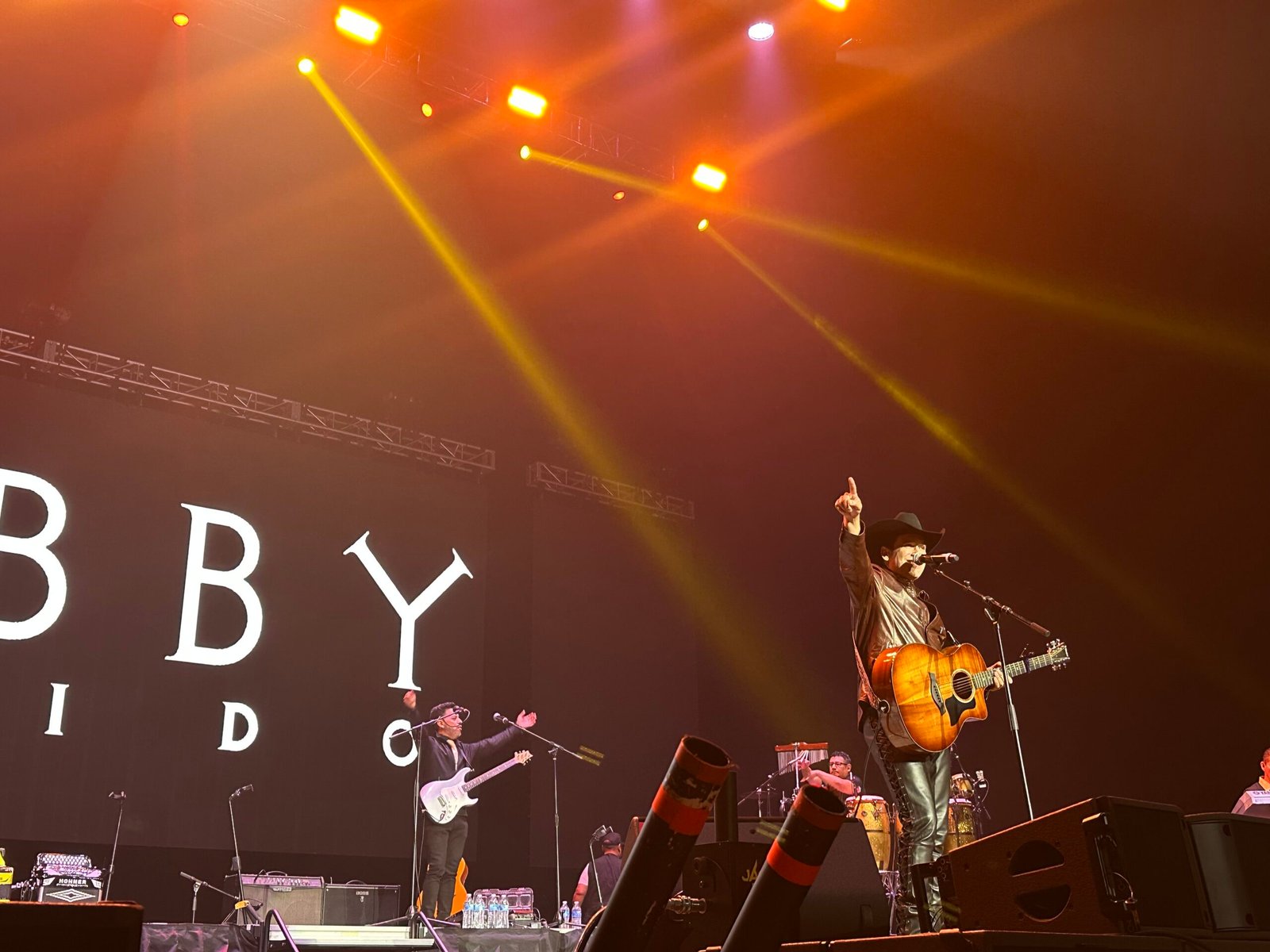
EDINBURG, Texas — A man walks out to a packed arena filled with fervent fans. Nostalgic music blasts out over the speakers as the audience of the spectacle sways and sing along. Firehouse-red campaign hats litter the heads of the devotees jammed in tight to see the show.
But this isn’t a MAGA rally, and that’s not Donald Trump hitting the stage.
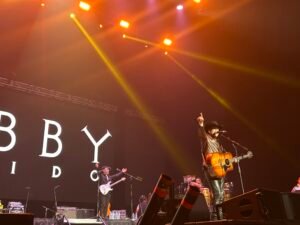
On stage is Bobby Pulido, the Tejano star turned Democratic House candidate clad in head-to-toe leather and a black cowboy hat. The occasion? “La Ultima Desvelada,” what he said will be his final concert in Edinburg on Saturday night.
Pulido is trying to flip a district that has steadily, over the past decade, slipped from the grasp of the Democratic Party and became the ultimate swing test for the country’s most culturally conservative Latino voters.
If Pulido wins in Texas’ 15th District against incumbent GOP Rep. Monica De La Cruz, the Democratic Party stands to gain much more than just a seat that could make a House majority. As the party looks to rebuild with Latinos and lay the groundwork for 2028, the Tejano crooner could become a strong messenger to one of Democrats’ weakest voting blocs.
“Mexican-American men haven’t really felt like they have a home,” in either party, Pulido told Blue Light News in an interview. “It almost feels like the Latino man wants to be that provider, and he can’t fulfill that right now.”
Like many Democrats this cycle, Pulido has dialed in on affordability and an aggressive economic messaging slamming Trump’s tariffs, the war with Iran and the growing stream of big corporate money in political campaigns.
But unlike his fellow Democrats, Pulido echoes a social conservatism that has defined the region. He’s “chapado a la antigua,” he told reporters Friday — a Spanish saying for old-school or traditional.
“Those traditions of how [Latino men] were raised are going away, and I think there’s a lot of frustration,” Pulido told Blue Light News. “They want somebody to talk to them in the language of, ‘Let me go out there and work, right? So I can provide for my family.’”
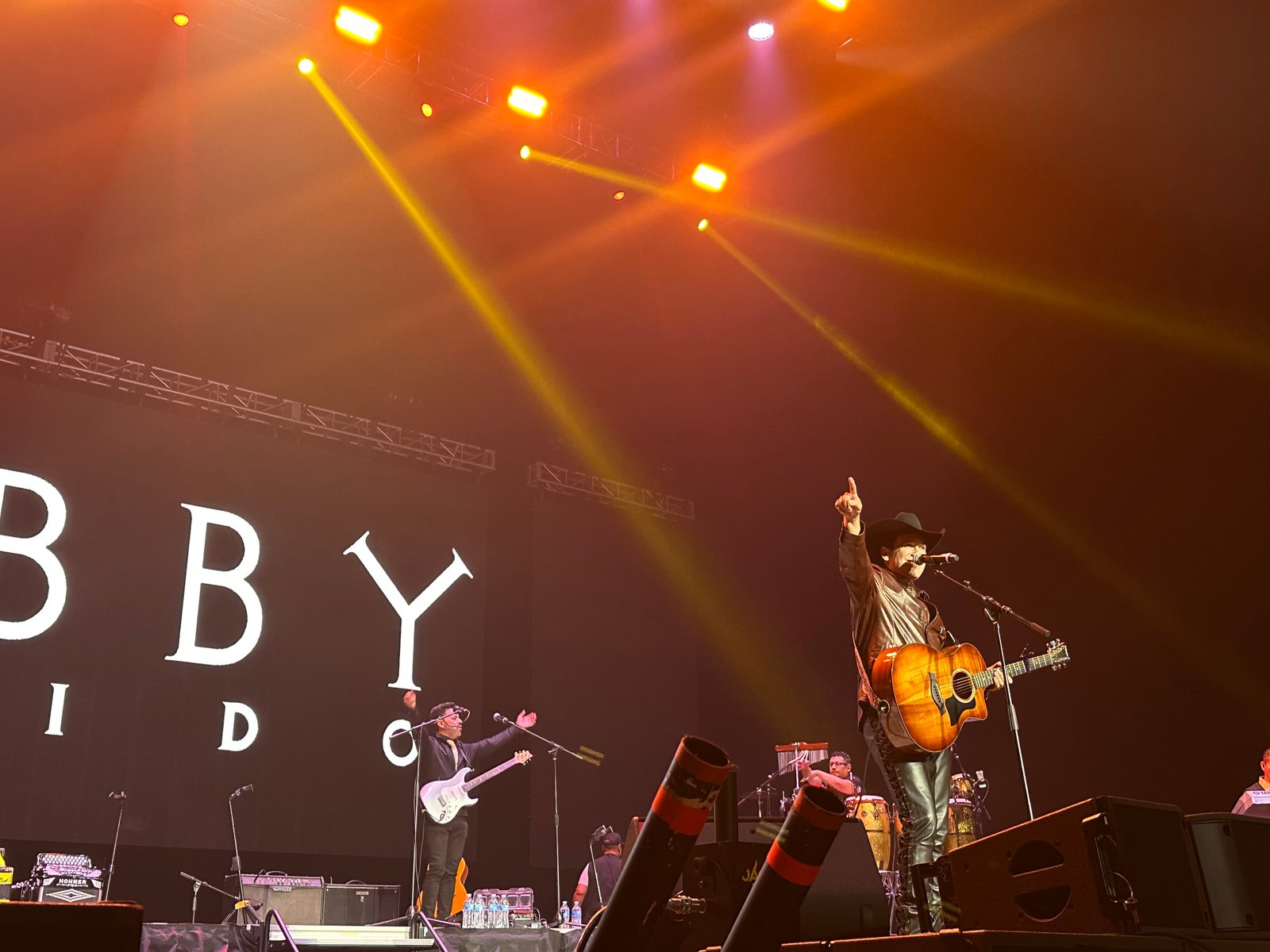
Pulido has tapped into a level of political fervor and cultural star power for which the Democratic Party has been starved. Trump won the district by a staggering 18 points in 2024 — and it was redrawn by Republicans last year. But Pulido’s near-universal name ID as an Edinburg native and music star, combined with historic headwinds buffeting, put the south Texas district on the map as one of the biggest toss-ups this cycle.
With just over two weeks to go, Pulido is in a dead heat against De La Cruz. He’s leaving behind three decades as a musician, multiple Latin Grammys and packed arenas for a shot at representing his hometown in the halls of Congress.
The 956 region knows Pulido and his family to an extent that very few would-be members of Congress could boast. They know his father, Roberto Pulido, also a famous Tejano singer who joined his son onstage. They know his uncle, a former county judge. But beyond that, with billions of streams to his name, Pulido’s 90s hits became a ubiquitous sound for the RGV. And only in the RGV would his supporters trot up to the arena on horseback, coming off the nearby expressway.
That fame, and his deep district ties, made Pulido one of the party’s most prized recruits this cycle. He’s one of the DCCC’s top candidates, with a campaign staffed in part by blue dog organizations like The Bench while also boasting the same Latino consultants as Sen. Ruben Gallego’s (D-Ariz.) 2024 Senate campaign.
And Democrats see the potential for the kind of surrogate Pulido could become on the 2028 campaign trail. Many of the party’s biggest Latino voices — and attention grabbers — are further on the left.
“What we haven’t had is someone like Bobby Pulido, who’s going to come from the moderate wing of the party, that is going to be a rock star,” Gallego told Blue Light News.
Should Pulido head to D.C. next year, he’d be joining alongside a crop of fresh progressive Democrats who have ridden the wave of democratic socialism in blue enclaves — most notably New York’s Darializa Avila Chevalier and Claire Valdez.
“We’re not going to agree on everything,” Pulido conceded. But with Texas primed to get even more electoral votes in future presidential cycles, the party’s direction has to “resonate inside the middle of the heartland,” he said.
But it’s not only electoral numbers: the early Democratic nominating calendar is heavily Latino, with both New Mexico and Nevada in the lineup. Mexican-American men could help tip the scales in either state.
Pulido knows if he pulls off the win, potential 2028 hopefuls will come flocking, asking him how to win over the Rio Grande Valley. Could he see himself backing 2028 presidential candidates if he wins? They’ll have to convince Pulido first.
“I will hold any type of endorsement or anything very close to my chest, and I will definitely make sure that I get behind somebody that has a policy that resonates with Hispanics,” Pulido said.

Since Pulido released his hit single “Desvelado” in the mid-90s to today, his hometown of Edinburg and its sister cities across the area transformed from a once-reliable blue working class district to a part of the country deeply wary of the Democratic establishment. Latino voters have embraced the economic populism of Trump and other GOP candidates who touted their more conservative values. In 2022, De La Cruz clinched the district for Republicans.
By 2024, Democrats lacked an economic message or answers for what many in the area decried as wide-open borders, Pulido told reporters on the sidelines of his rally in Mercedes on Friday.
That’s made the stakes for his races all the bigger, with the RGV becoming the ultimate bellwether.
“Bobby’s politics are different from the way that we have branded ourselves nationally as a party, but I think that’s a good thing,” said Melissa Morales of Somos PAC, which has poured millions into Pulido’s race.
But Pulido’s campaign has been marred by scandal. He’s taken heat for crude social media posts about women and gay people. Frankie Caballero, one of his former bandmates, was convicted as a child sex offender. Pulido insisted he was not aware of Caballero’s history while he was in the band as a contractor, having not done a background check. Caballero was convicted in 2014, but later returned to performing with Pulido.
De La Cruz’s campaign has made Pulido’s ties to Caballero a staple of attacks. “Bobby Pulido had his uncle drop a child rape charge against a friend so he could play in his band. Then he bailed this pedophile out of jail, brought him to a middle school, and looked the other way while he molested children in South Texas. Latinas are choosing Monica De La Cruz, a working mom fighting for their families, over a corrupt scumbag celebrity who will make life more expensive and already put a predator back on the streets because he likes his accordion,” James Shook, De La Cruz’s campaign manager, said in a statement.
Pulido was defensive over his past, but apologized for his social media posts in an interview with Blue Light News. He has given varied responses on what he knew about why Caballero went to prison. “I apologize for everything that I’ve ever joked about that offended anybody,” Pulido told Blue Light News in August. “But I can’t continue to revisit every single one.”
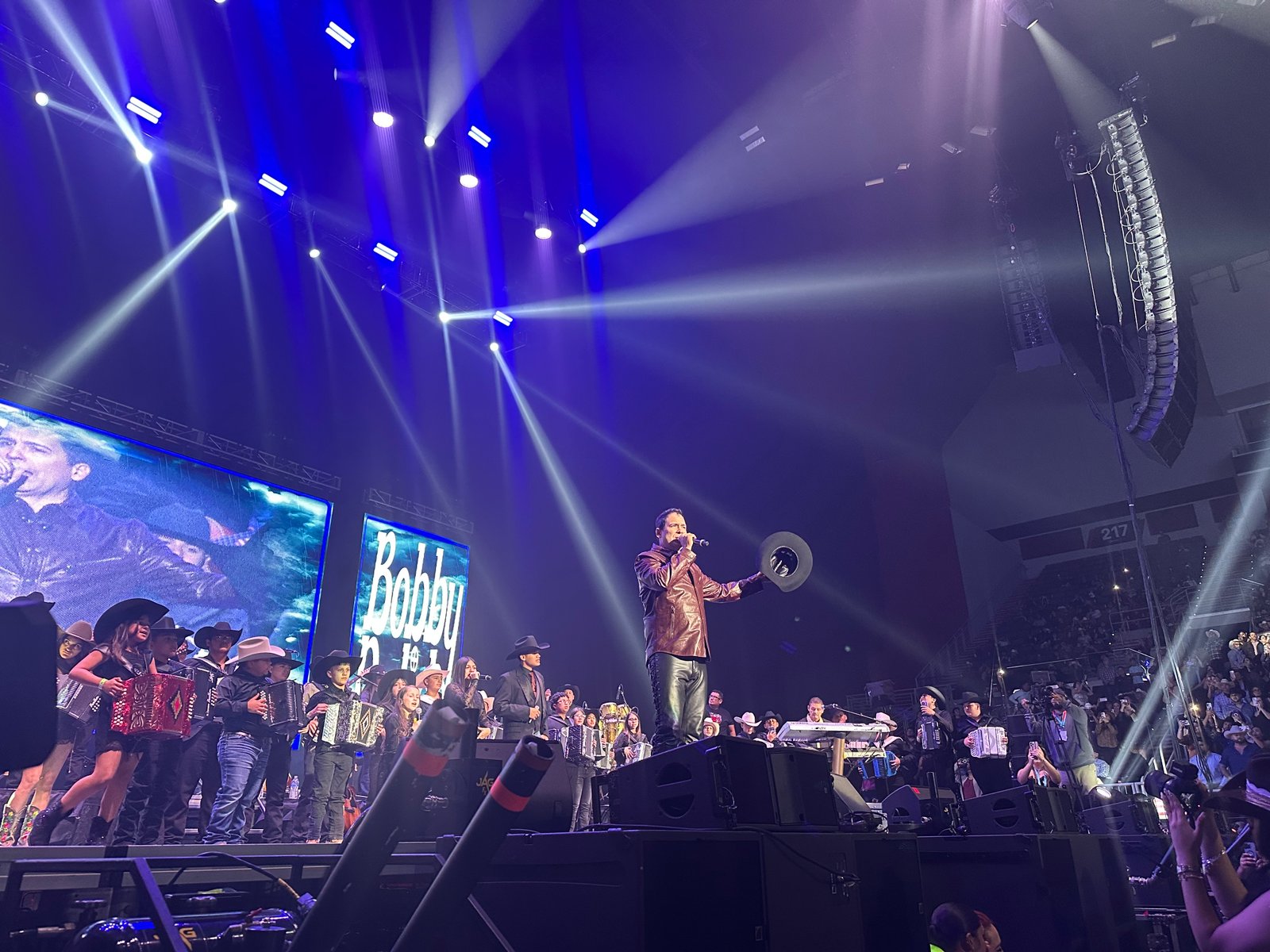
With hundreds flocking to Bert Ogden Arena to witness his final show, Pulido’s popularity has hardly dimmed because of it. Multiple voters in attendance who spoke with Blue Light News said they had heard the allegations about Pulido and his accordionist, but none said that it was affecting their vote.
“It’s unfortunate, but I’m not gonna hold it against Bobby,” said Joe Barrera, a musician from the Pharr-San Juan-Alamo area. Barrera, an independent, added that he’s still undecided between voting for Pulido or De La Cruz — but said he feels “it’s time for a change.”
The economy and immigration dominated the reasons why voters in the crowd pledged their support for the singer. The cost of living has gotten “re pe caro” — super expensive — Frank Trevino, a Democrat from Edinburg, told Blue Light News. He and fellow Edinburg voter Felix Sandoval said they knew Pulido’s mother and remembered Bobby as a kid. “We need to support him, God help him,” Sandoval said.
Pulido’s final show Saturday was the talk of Edinburg, from the hallways of the nearby inns to the post-concert stop at Whataburger. Clocking in at nearly two hours, it served as a greatest hits replay for the last 30 years of his life — and a trip down memory lane for many of the voters who grew up with him. “Of course I’m emotional, but I’m leaving with no regrets,” Pulido said from the stage. Pulido is simultaneously up for yet another Latin Grammy recognition this year.
And for his status as a longtime entertainer, Pulido is not a fan of the comparisons to Trump, who in his words, is “full of shit.” Yet it’s also something his campaign has been (perhaps ironically) leaning into, with “Make Quinceñeras Great Again” hats nodding to what’s become his signature campaign move.
With early voting kicking off on Monday, Pulido sharpened his closing pitch: He’s not for Democrats or Republicans — he’s for his district.
“I want to give something back to the place that’s given me so much,” Pulido said. “And if you give me the honor of representing you in Congress, I give you my word that I’ll never forget where I came from.”
- ‘A warning sign for polling’: Why one GOP pollster thinks a blue wave may fall short
- Capitol agenda: AI experts to school Congress wanted
- Ohio returns as a bellwether
- Inside the quiet money pullback — for both parties — in Georgia’s Senate race
- Wanted: Tech experts to help Congress regulate AI
- Wright defends Trump’s Russian diesel deal as ‘carrot’ for peace
- Democrats’ Tejano star sings to swing South Texas
- Warnock wants Democrats to focus on the South. He’s starting in Mississippi.
- Retiring GOP congressmember will ‘absolutely not’ vote for successor in at-risk seat
- Sullivan walks the line with Trump in Alaska Senate race
-

 Politics2 years ago
Former ‘Squad’ members launching ‘Bowman and Bush’ YouTube show
-
Uncategorized2 years ago
Bob Good to step down as Freedom Caucus chair this week
-

 The Josh Fourrier Show2 years ago
DOOMSDAY: Trump won, now what?
-

 The Dictatorship2 years ago
Pete Hegseth’s tenure at the Pentagon goes from bad to worse
-

 Politics2 years ago
Former Kentucky AG Daniel Cameron launches Senate bid
-

 The Dictatorship2 years ago
Luigi Mangione acknowledges public support in first official statement since arrest
-

 Politics2 years ago
Blue Light News’s Editorial Director Ryan Hutchins speaks at Blue Light News’s 2025 Governors Summit
-

 The Dictatorship1 year ago
Mike Johnson sums up the GOP’s arrogant position on military occupation with two words