The Dictatorship
The fate of Trump’s ‘big beautiful bill’ now rests with one Texas Republican
UPDATE (May 16, 2025, 12:45 p.m. ET):The House Budget Committee failed to advance the GOP’s mega-bill on Friday morning after five Republican hardliners voted against it for not cutting spending fast enough.
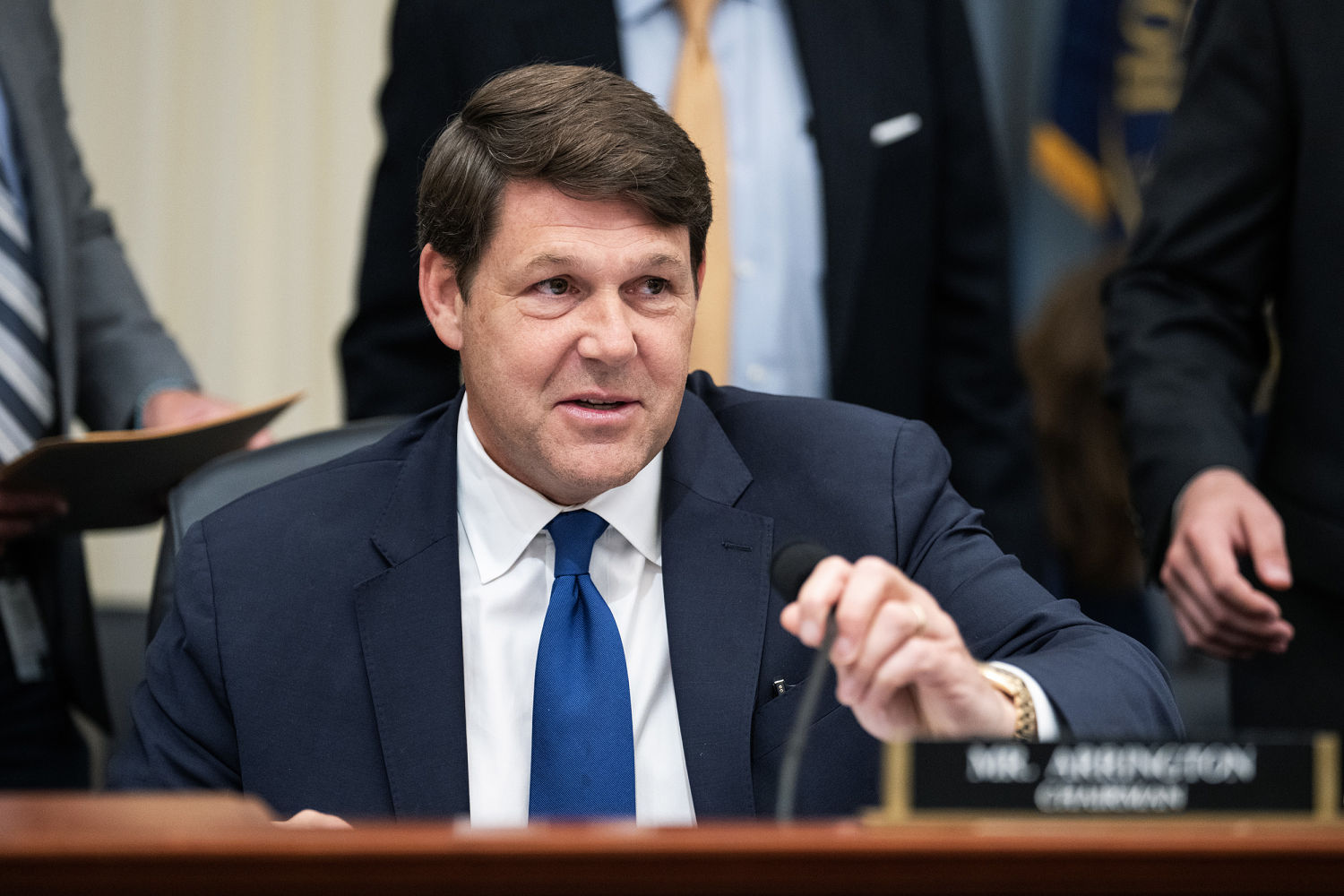
Friday is going to be a tough day for House Budget Committee Chair Jodey Arrington, R-Texas. For the past few weeks, his fellow committee chairs have been passing along the various components that will form the legislative backbone to President Donald Trump’s agenda and extend the 2017 tax cuts due to expire next year. It’s up to Arrington’s committee to pull those assorted pieces together into one coherent bill that will be able to pass the House — and the odds aren’t exactly stacked in his favor.
All the House committees have filled in the blanks now, passing their final works on to Arrington to assemble.
Arrington’s first attempt at passing a budget framework to fit Trump’s demand for “one big, beautiful bill” hit a roadblock in February when the Senate balked at the deep spending cuts it required. It took another two months of work before the two chambers settled on a joint budget reconciliation bill that would let them move forward on a party-line basis, freezing Democrats out of the process. The framework that passed provided instructions to the relevant congressional committees on how much they should spend and cut from the programs under their purview, leaving the details to the chairs to work out.
All the House committees have filled in the blanks now, passing their final works on to Arrington to assemble. While the bills in question may have passed each panel, the sum will prove to be more challenging than its parts. Namely because, as I’ve noted beforethere are different factions within the House GOP with different priorities for the final bill, some of which are diametrically opposed to each other.
The most vocal wing are the blue state Republicans who want a bigger deduction for state and local taxesknown as SALT, included in the Ways and Means Committee’s section of the package. Five of them have dug in their heels, calling the increased $30,000 cap included in the bill a nonstarter. As a reminder, if all members are present, it will only take four Republicans voting against the bill to tank it, given united Democratic opposition.
Less cohesive are the GOP members concerned about the House Energy and Commerce Committee’s proposed cuts. More than a dozen House Republicans want to keep the clean energy credits that the bill nixes, which have been a boon in many of their districts. There are similar concerns about the Agriculture Committee’s plans to shift costs for the Supplemental Nutrition Assistance Program (SNAP) to the stateswhich could see either massive holes blown in state budgets or hundreds of thousands removed from the program.
Most of those issues could be resolved were it not for the group with the most leverage: the House Freedom Caucus. Many of the far-right group’s members think the committees included too much budget gimmickry and not enough tangible spending cuts. They’re particularly irate that the changes to Medicaid included in the Energy and Commerce bill don’t go far enough to reduce spending on the program, despite it already potentially kicking millions of people off their health care.
Most of those issues could be resolved were it not for the group with the most leverage: the House Freedom Caucus.
Speaker Mike Johnson, R-La., huddled with many of the concerned members in hopes of tamping down a potential revolt on the House floor. But as Politico reported Thursday afternoonthere might not even be enough votes to get the bill through the Budget Committee. Reps. Chip Roy of Texas and Roy Norman of South Carolina said they won’t vote for the current bill as it doesn’t make the draconian cuts they deem necessary to earn their support. Both are Freedom Caucus members and also sit on the House Rules Committee — the next hurdle that would have to be overcome before the full House could vote.
And that’s just the problems with getting it through the House. There are already rumbles of concern coming from the Senate over the scope of the spending cuts their counterparts are making across the Capitol. Once the GOP senators have made their changes, who knows how much more wrangling will need to be done to get the bill over the line.
For Arrington, though, his chief concern is getting through Friday with a bill to hand off to the Rules Committee. Johnson still wants to get the full package passed before Memorial Day. There’s no firm Plan B in place for what happens if the big, beautiful bill as it stands fails to garner enough support by then. That doesn’t leave Arrington much time at all to solve this vexing a puzzle, one where one misplaced piece could cause the whole thing to collapse entirely.
Hayes Brown is a writer and editor for BLN Daily, where he helps frame the news of the day for readers. He was previously at BuzzFeed News and holds a degree in international relations from Michigan State University.
The Dictatorship
Israeli strikes pound Iran and Lebanon as USA warns attacks will intensify…
Today’s live updates have ended. Follow more live coverage on the Iran war.
Major developments we’re following:
- Israeli warplanes pounded Beirut and Tehran on Friday as Iran launched another wave of retaliatory strikes against Israel and Gulf countries that host U.S. forces.
- Russia has provided Iran with information that could help Tehran strike American warships, aircraft and other assets in the region, according to two officials familiar with U.S. intelligence on the matter. It’s the first indication that Moscow has sought to get involved in the war.
- U.S. President Donald Trump appeared to rule out negotiations with Iran in a social media post calling for its “unconditional surrender.” White House press secretary Karoline Leavitt later added that “unconditional surrender” could come even if Iran isn’t in a position to say so for itself. Trump told media outlets on Thursday that he wants to be involved in picking Iran’s next leader.
- Evidence suggests the deadly blast at an Iranian elementary school was likely a U.S. airstrike. The Feb. 28 strike produced the highest reported civilian death toll since the war began, prompting staunch criticism from the United Nations and human rights monitors. The U.S. has not accepted responsibility but said it was investigating the matter.
- The death toll continues to rise. At least 1,230 people in Iran, more than 200 in Lebanon and around a dozen in Israel have been killed, according to officials in those countries. Six U.S. troops have been killed.
▶ The conflict in the Middle East is deeply complex. With all the fast-moving developments, it can be hard to understand. See the war in maps, graphics and images from the AP.
Saudi Arabia intercepts 2 ballistic missiles
The country’s Defense Ministry says the intercepted missiles were targeting Prince Sultan Air Base outside of Riyadh.
Saudi Arabia intercepts more drones
More drones attacked Saudi Arabia early Saturday, the country’s Defense Ministry said.
The ministry said it intercepted four drones attacking the country’s massive Shaybah oil field, located deep in the sands of the Empty Quarter desert. It was the second attack within hours.
Earlier, the ministry said it intercepted a drone attack targeting an area around the capital, Riyadh.
Interception over Dubai
Authorities there say there was an interception over the city-state in the United Arab Emirates.
People heard several blasts in the morning. Later the government’s Dubai Media Office said there was “a minor incident resulting from the fall of debris after an interception has been successfully contained.”
Flights heading to Dubai International Airport — which is the world’s busiest for international travel and has been trying to restart service — circled a distance away just before the interception.
Qatar analyst calls Iran attacks on Gulf Arabs a ‘miscalculation of historic proportions’
Writing for the Qatar-funded news network Al Jazeera, Sultan al-Khulaifi of the Center for Conflict and Humanitarian Studies said Gulf Arab states “watched with dread” as the U.S. and Israel launched the war with Iran and they had “invested enormous diplomatic capital in preventing precisely this moment.”
“That Iran’s response has been to turn its missiles on these same neighbors is not only a strategic miscalculation of historic proportions, but is also a profound moral and legal failure that risks poisoning relations for generations to come,” he wrote.
He also argued that “the strategic logic Iran is operating on — that attacking Gulf states will pressure Washington to end the war — is not only flawed in practice, it actively serves Israeli interests.”
“By spreading the conflict to the Gulf, Tehran is doing precisely what Israel could not do alone: steering the war away from the Israeli-Iranian axis and transforming it into a confrontation between Iran and its Arab neighbors.”
Saudi and Pakistani defense officials meet in Riyadh
The defense minister of Saudi Arabia and Pakistan’s army chief met Saturday to discuss “ways to stop these attacks” from Iran, the state-run Saudi Press Agency reported.
“During the meeting, they discussed Iranian attacks on the kingdom within the framework of the Joint Strategic Defense Agreement between the two brotherly countries, and ways to stop these attacks, which do not serve the security and stability of the region,” the agency said.
There was no immediate word from Pakistan, a neighbor of Iran that so far has not been drawn into the spreading war.
In September, after Israel attacked Hamas officials in Qatar, Saudi Arabia and nuclear-armed Pakistan signed a mutual defense pact that defines any attack on either nation as an attack on both. Pakistan’s defense minister later said his nation’s nuclear program “will be made available” to Saudi Arabia if needed under the pact.
Shortly after being told they could leave shelters, Israelis warned to take cover again
Less than five minutes after giving the all clear on the second missile launch identified as from Iran, the military said another salvo was targeting the country. It was the third time that happened overnight.
More sirens in Bahrain
They sounded for a second time Saturday morning in the island kingdom.
Drones target Saudi Arabia
The country faced repeated drone attacks early Saturday targeting the area around its capital, Riyadh, and a major oil field.
The Saudi Defense Ministry said it intercepted all the drones it detected coming into the kingdom so far.
Coming under particular attack was Saudi Arabia’s massive Shaybah oil field, located deep in the sands of the Empty Quarter desert. It produces 1 million barrels of oil a day, according to the state-run oil giant Saudi Aramco, which refers to the field as “most remote treasure on Earth.”
Iranian attacks increasingly have targeted oil infrastructure across the Gulf Arab states and disrupted ship transits through the Strait of Hormuz, the narrow mouth of the Persian Gulf through which 20% of all oil and natural gas traded passes.
Hezbollah reports clashes with Israeli forces in eastern Lebanon
The group said early Saturday that its fighters clashed with an Israeli force that landed on the along the border with Syria.
Israel did not acknowledge the fighting, and its military did not respond to requests for comment.
The Iranian-backed militant group said the clashes late Friday happened in a cemetery on the edge of the town of Nabi Chit.
Hezbollah said Israeli miliary launched massive airstrikes to secure the withdrawal of its forces amid the clashes.
The Lebanese health ministry said at least three people were killed, and 16 others were wounded in the strikes.
Israel’s military says Iran launched missiles targeting it
The announcement came early Saturday. It was the second overnight launch identified by officials.
3 killed in Israeli strikes in eastern Lebanon
At least three died and 16 others were wounded in Israeli strikes near a mountain town in eastern Lebanon, the country’s heath ministry said early Saturday.
US approves new $151 million arms sale to Israel as Iran war continues
The State Department announced late Friday that it approved the sale of 12,000 1,000-pound bombs to Israel. It also said Secretary of State Marco Rubio determined there was an emergency need for the munitions and waived the normal congressional review process.
The notice to Congress informing it that lawmakers would be bypassed in the consideration of the sa le did not say where Israel intends to use the bombs.
“The proposed sale will improve Israel’s capability to meet current and future threats, strengthen its homeland defense, and serve as a deterrent to regional threats,” it said.
Trump to pay ‘Highest Respect’ on Saturday for dignified transfer of 6 US soldiers killed in action
On his Truth Social platform Friday night, the president said he and first lady Melania Trump would travel to Delaware the following day “to pay our Highest Respect to our Great Warriors, who are returning home for the last time.”
The White House had said previously that Trump would attend the dignified transfer of the six U.S. soldiers killed during the conflict in the Middle East.
The ritual is a transfer of remains of troops killed during their military service and is one of the most solemn acts for any president.
Saudi Arabia says it destroyed four drones
The Defense Ministry said Saturday that the drones were in the kingdom’s vast Empty Quarter desert and headed toward its Shaybah oil field.
Air Canada flights canceled
The carrier canceled Toronto-Tel Aviv flights until May 2 and Toronto-Dubai flights until at least March 28 due to the military conflict in the Middle East.
India reportedly allows Iranian navy ship to dock there
A third Iranian naval vessel in the Indian Ocean reportedly is docked in India after a U.S. submarine sank one and another went to Sri Lanka.
The Press Trust of India, citing unnamed “government sources,” said the IRIS Lavan has been docked in Kochi since March 4. It said the ship “developed urgent technical issues and was granted emergency docking approval” March 1, after the start of the war.
The Lavan’s 183 crew members are “being accommodated at Indian naval facilities on humanitarian grounds,” PTI reported.
The Lavan is a 2,500-ton Hengam-class landing ship.
The U.S. sank the Iranian warship IRIS Dena off Sri Lanka’s coast Wednesday. The IRIS Bushehr sought assistance from Sri Lanka, and its more than 200 sailors were being brought to that island nation.
Reported clashes between gunmen and an Israeli force that landed on mountains in eastern Lebanon
Lebanon’s state-run National News Agency said local gunmen tried to repel the force on the edge of the town of Nabi Chit. NNA also said Israeli warplanes were flying over the area.
Hezbollah’s Al-Manar TV reported that Israeli forces tried to land three times in Nabi Chit and the third attempt occurred after midnight Friday. It was said to have been met inside the town by Hezbollah and local fighters who clashed with it.
There was no immediate word on casualties.
The Israeli military did not immediately respond to an AP request for confirmation.
Nabi Chit is a stronghold of the Hezbollah militant group.
Hours earlier the Israeli military issued a warning to people in Nabi Chit and several nearby villages to evacuate. It was followed by a series of airstrikes.
Saudi Arabia intercepts ballistic missile targeting air base
The country’s Ministry of Defense said early Saturday that it intercepted and destroyed the missile.
It was launched toward Prince Sultan Air Base, a major military installation in eastern Riyadh.
AP video shows explosions in Tehran
Large plumes of smoke were seen billowing over the western part of the Iranian capital very early Saturday morning.
Pentagon chief responds to reports Russia is aiding Iran
Defense Secretary Pete Hegseth said in an interview with CBS’ “60 Minutes” that the U.S. is “tracking everything” and factoring it into battle plans, when asked about reports that U.S. intelligence shows Russia is providing Iran with information that could help it strike American assets in the Middle East.
“The American people can rest assured their commander-in-chief is well aware of who’s talking to who,” Hegseth said. “And anything that shouldn’t be happening, whether it’s in public or back-channeled, is being confronted and confronted strongly.”
Hegseth also downplayed the possibility that Russia’s assistance could be putting Americans in harms way.
“We’re putting the other guys in danger, and that’s our job. So we’re not concerned about that,” he said. “But the only ones that need to be worried right now are Iranians that think they’re gonna live.”
Air raid sirens in Bahrain
They sounded across the country early Saturday as an Iranian attack targeted the island kingdom. People were urged to seek shelter.
Saudi Arabia intercepts drones headed for an oil field
Saudi Arabia’s Ministry of Defense said four drones were intercepted and destroyed over the Empty Quarter desert while heading toward the Shaybah oil field.
Trump says US military doing ‘phenomenally’ in Iran
Following a White House event with conference commissioners and other leaders in the collegiate sports space, the president knocked down reporters’ efforts to ask him questions about the war and his decision to oust Kristi Noem as Homeland Security secretary.
But after a reporter’s follow-up query as to why he opted to hold such an event amid other pressing issues, Trump acknowledged that “it doesn’t sound very important compared to what’s happening in Iran and other places, but it is very important to me.”
He said that on a scale of one to 10, he would rank U.S. military actions as “a 12 to 15.” Trump also said: “We had a choice … and we did something about it.”
Trump opened several White House events this week by recapping U.S. actions in Iran but did not do so Friday.
Drones hit Basra oil sites, including US contractor facilities
At least two drones struck energy infrastructure and facilities of U.S. contractors in Iraq’s southern Basra province Friday evening, according to two security officials who spoke on the condition of anonymity as they were not authorized to speak with the press.
The officials added that unmanned aerial vehicles targeted a compound housing foreign oil company offices and warehouses, triggering fires at facilities linked to U.S. energy services firms.
The attack comes amid a spate of drone and missile incidents across Iraq and the region, including strikes on oil fields and the cargo section of the Basra International Airport.
It was not immediately clear if there were any casualties.
Trump says he’s getting defense contractors to ramp up production of high-end weapons
Facing questions about whether the Iran war is depleting certain U.S. stockpiles, the president said top defense manufacturers “have agreed to quadruple Production” of “exquisite” weapons.
The term often is used to describe more unique, expensive or technically complex weapons, like hypersonic missiles or long-range air interceptors, broadly understood to be held in lower numbers than more traditional munitions.
In his social media post, Trump didn’t offer details about which specific weapons would see a rise in production. He also said he has stepped up orders of more basic munitions, “which we are using, as an example, in Iran, and recently used in Venezuela.”
Gen. Dan Caine, chairman of the Joint Chiefs of Staff, told reporters this week that the military had “sufficient precision munitions for the task at hand.” But he also said the military was shifting from using long-range rockets to less sophisticated bombs with shorter ranges.
Israeli military says it has begun a “broad-scale” wave of strikes in Tehran
The report came minutes after the Israeli military said it was working to intercept missiles launched from Iran toward Israel very early on Saturday morning.
Many thunder-like booms rumbled over Jerusalem just past midnight local time.
Scott Bessent warns of big night of bombing in Iran
The U.S. Treasury secretary told FOX Business host Larry Kudlow that Friday night would be the United States’ “biggest bombing campaign” in Iran. U.S. and Israeli officials have said this week that attacks on Iran would increase.
Earlier this week Trump told BLN the “big wave is yet to come.” Additionally, Defense Secretary Pete Hegseth said Thursday that firepower over Tehran would “surge dramatically” through “more bomber pulses more frequently.”
AP video shows Iran is firing cluster munitions toward Israel, munitions expert says
A video taken by AP shows what appear to be Iranian ballistic missiles flying over the occupied West Bank and dropping smaller bomblets, which are found inside the missile. (Produced by Elaine Carroll)
The video from Thursday night showed what appear to be Iranian ballistic missiles flying over the occupied West Bank and dropping smaller bomblets.
An independent weapons expert said they were cluster munitions. N.R. Jenzen-Jones, director of Armament Research Services, reviewed the video and said that, based on the number of visible objects seen, submunitions were released from an Iranian ballistic missile that was fitted with a cargo warhead.
Israel says Iran has fired cluster munitions toward the country and its police and on Friday published a public service announcement in which a bomb disposal technician warned about the dangers of cluster bombs.
Israel has used cluster munitions in previous wars in Lebanon, as have other countries such as Russia and Syria. According to AP reporting, the US last used them in 2003 in Iraq but continues to keep them in its arsenal and has not joined a convention banning their use.
Proponents of a ban say they kill indiscriminately and endanger civilians long after their use.
Very early on Saturday morning, Israel’s military said it was working to intercept a new salvo of missiles launched from Iran toward Israel
Iranians sleep at airport near Turkish border
At a small airport in Turkey’s eastern Van province, about 20 passengers, mostly Iranians, lay on rows of chairs waiting to fly to Istanbul the next morning.
Mehregan, a 26 year old who studies in China, was visiting her family in Ahvaz for winter holidays when the war started. Because Iran’s airspace remains closed, she drove more than 15 hours across Iran to fly out from Turkey.
At the Turkish border, “they let me go easily because I have a visa from China,” she said.
She was spending the night in the airport waiting for the first flight to Istanbul, from where she will fly back to China.
She asked not to be identified by her full name out of fears that speaking to the media could cause problems with authorities.
US to send anti-drone system to the Mideast after successful use in Ukraine, officials say
The system, developed by an American company, will soon will head to the Middle East to help defend against Iranian drones.
It fires drones against drones and has shown success in fighting those used by Russia in its war against Ukraine. The system was deployed to Romania and Poland last year.
While the U.S. has used Patriot and THAAD missile systems to take down Iranian missiles, a U.S. defense official says there are limited effective U.S. anti-drone defenses now in the Middle East.
Another U.S. official called the U.S. response to countering Iran’s Shahed drones “disappointing.”
Both spoke on condition of anonymity to discuss sensitive military matters.
JUST IN: US anti-drone system tested in Ukraine will head to Mideast to boost US defenses against Iran’s drones, officials say
More than 100,000 displaced by Israel-Hezbollah conflict
Lebanon’s Disaster Risk Management Unit said 110,162 people have been internally displaced following Israeli evacuation warnings for areas in southern and eastern Lebanon and across Beirut’s southern suburbs, a densely populated district on the outskirts of the capital that is home to hundreds of thousands.
The unit, which operates under the prime minister’s office, said 512 shelters are open nationwide.
The Lebanese government has said it opened additional shelters in the north and east as well as a large football stadium near Beirut to accommodate the surge of displaced people.
More than 200 people in Lebanon have been killed in Israeli strikes so far, according to the Lebanese Health Ministry.
2 Ghanaian soldiers wounded by missile attacks in Lebanon
They were wounded by two separate attacks in the afternoon. The Ghanaian Armed Forces said in a statement that they were stable.
The government protested “the unfortunate incident,” it said.
The missiles struck the Ghanaian Battalion Headquarters, part of the United Nations Interim Force. The attack also destroyed the officers’ mess.
No country was named as being behind the launches.
Scott Bessent says Treasury may remove additional sanctions on Russian oil
The Treasury secretary said his agency “may un-sanction other Russian oil” in order to boost the global supply as the U.S. continues its attacks on Iran.
“There are hundreds and millions of sanctioned barrels of sanction crude on the water,” Bessent told FOX Business host Larry Kudlow, Friday afternoon. “And in essence, by un-sanctioning them, Treasury can create supply.”
“We’re going to keep a cadence of announcing measures to bring relief to the market during this conflict,” Bessent said.
Amnesty says Israel’s evacuation warnings to Lebanon are terrifying civilians and ‘fueling humanitarian suffering’
Kristine Beckerle, the rights group’s deputy regional director for the Middle East and North Africa, called the warnings overly broad and vague. In the day since the military issued a mass evacuation order for Beirut’s southern suburbs, it has carried out airstrikes, some without warning, she said.
“Issuing mass evacuation orders does not grant the Israeli military the right to treat these areas as open-fire zones, nor does it absolve Israel of its obligations under international humanitarian law to protect civilians,” Beckerle said.
Earlier in the day, a U.N. official said testimonies from tens of thousands of Lebanese displaced reflect fear and anxiety. The U.N. says it has delivered over 65,000 relief items to 22,000 displaced people in government shelters, from bedding to jerry cans, over the last four days.
Iran’s UN Ambassador accuses US and Israel of war crimes and crimes against humanity
Amir Saeid Iravani charged that they are deliberately targeting civilians and civilian infrastructure across the country, including densely populated residential areas.
“These acts constitute clear war crimes and crimes against humanity,” Iravani told reporters.
He said Iran does not seek war or escalation but reiterated that Tehran will take all necessary measures to defend itself, its territory and its independence.
Iravani also said Iran does not accept Trump’s statement that he should play a role in choosing the country’s new supreme leader and it “constitutes a clear violation of the principle of noninterference in the internal affairs of states and enshrined in the Charter of the United Nations.”
Azerbaijan’s security agency says it thwarted planned attacks prepared by Iran’s Revolutionary Guard
The State Security Service of Azerbaijan said Iranian agents and their local accomplices were planning to blow up the Baku-Tbilisi-Ceyhan pipeline, which carries the country’s crude to global markets, and launch attacks at the Israeli Embassy in Baku, a synagogue and a leader of the country’s Jewish community, according to a report by the state television.
It said the attacks were aimed at sowing panic and denting the Caspian Sea nation’s international image.
The agency said the suspects brought explosives into the country and hid them in secret caches. It said four Azerbaijani citizens were charged with involvement in the plot and given 6 ½-year prison sentences. Three others were arrested.
On Thursday, Iranian drone attacks on Azerbaijan wounded four civilians and damaged an airport building.
Amnesty says Israel’s evacuation warnings to Lebanon are terrifying civilians
In a release, Kristine Beckerle, the rights group’s deputy regional director for the Middle East and North Africa, called the Israeli warnings overly broad and vague. In the day since the military issued a mass evacuati on order for Beirut’s southern suburbs, it has carried out airstrikes, some without warning, she said.
“Issuing mass evacuation orders does not grant the Israeli military the right to treat these areas as open-fire zones, nor does it absolve Israel of its obligations under international humanitarian law to protect civilians,” said Beckerle.
Earlier in the day, Ayaki Ito, a director at the UN human rights office more, said testimonies from tens of thousands of Lebanese displaced reflect fear and anxiety. The office said it’s delivered over 65,000 relief items to 22,000 displaced people in government shelters, from bedding to jerry cans, over the last four days.
3 UN peacekeepers were wounded in southern Lebanon
Three U.N. peacekeepers were wounded after heavy firing struck a base of the United Nations Interim Force in Lebanon (UNIFIL), in the village of Al-Qawzah on Friday evening, the mission said in a statement.
UNIFIL said the peacekeepers were inside their base when the attack occurred. One of the injured was transferred to a hospital in Beirut for treatment, while the two others were being treated at a UNIFIL medical facility, the statement said. A fire that broke out at the base was later extinguished, the statement added.
UNIFIL said it would investigate the circumstances surrounding the incident, adding that it was “unacceptable that peacekeepers performing Security Council-mandated tasks are targeted.”
It was not immediately clear who carried out the firing.
An Associated Press report last month cited an internal military document describing a surge in incidents involving Israeli forces near U.N. peacekeepers in southern Lebanon, including drone-dropped grenades and gunfire near their positions.
Vladimir Putin speaks to his Iranian counterpart, expresses condolences
The Russian president had a call Friday with Iranian President Masoud Pezeshkian. He expressed condolences over the killing of Supreme Leader Ayatollah Ali Khamenei and “numerous civilian casualties resulting from the U.S. and Israel’s armed aggression.”
In the call, the first reported by the Kremlin since the start of the war, Putin “reaffirmed Russia’s principled stance in favor of an immediate cessation of hostilities, the rejection of force as a method to solve any issues surrounding Iran or arising in the Middle East, and a swift return to the path of diplomatic resolution,” according to the Kremlin’s readout.
It said Pezeshkian “expressed gratitude for Russia’s solidarity with the Iranian people as they defend their sovereignty and the independence of their country” and offered a “detailed update on the developments during the latest active phase of the conflict.”
Qatar announces partial resumption of air navigation despite recent drone strikes
Qatar announced Friday evening that it would partially resume flights with limited operational capacity as the conflict in the region widens.
Qatar Civil Aviation Authority said on the social platform X that a limited number of flights will resume through designated contingency routes, including for passenger evacuation and air cargo.
Airspaces have closed, cruise ships and tankers have been unable to pass through the Strait of Hormuz, and major airlines have canceled flights as the war widened.
Qatar’s defense ministry said the country faced “waves of attacks” from dawn until evening, involving 10 drones. Nine of them were intercepted, while one fell in an uninhabited area.
Israeli army says it will not evacuate its citizens from villages along Lebanese border
An officer spoke to journalists along the border with Lebanon to the backdrop of consistent booms from missiles being intercepted and alerts warning that drones were incoming. The officer spoke on condition of anonymity as per the army’s regulations.
He said Israel has deployed troops to protect some 200 Israeli families living on the border and the army is placing soldiers between civilians and Hezbollah to protect them.
Northern Israel is receiving missiles from both Iran and Hezbollah. Atop a lookout of Israel’s northern villages that are adjacent to Lebanese ones, the officer briefed journalists as they sought shelter between alerts.
Nearly a week of internet shutdown in Iran
Cloudflare, an internet infrastructure company, said via the social platform X that the Iran-wide internet shutdown entered its 7th day, with its radar monitor showing internet traffic data at less than 1% of its prewar levels. It comes as Israeli-U.S. strikes pummel the country, terrifying civilians.
Human Rights Watch condemned the shutdown, calling it a violation of human rights and urging Iranian authorities to end it. It said the shutdown could “conceal large-scale atrocities, contribute to the spread of mis- and disinformation, and unlawfully restrict access to information.” It could also heighten the risk of civilian harm by hampering access to life-saving information, food distribution, shelter and medical care and services.
“Internet shutdowns can also contribute to severe psychological harm on people during the conflict as they are unable to contact their loved ones,” said Tomiwa Ilori, senior technology and human rights researcher at Human Rights Watch.
More information on Israel’s ground operation in southern Lebanon
An Israeli military official told AP that Israeli soldiers have taken up around five to seven new positions in southern Lebanon, some of which are dynamic, expanding beyond the five strategic locations held since a U.S.-brokered ceasefire halted a round of fighting in late 2024.
Israel’s military said it was sending additional troops into southern Lebanon after the Iran war began but did not give specifics on how exactly it was expanding its presence.
The official, who spoke on the condition of anonymity in line with military protocol, characterized the operation as a limited expansion of Israel’s ceasefire presence along the five points. He said there were around five to seven — but under a dozen — contingents of troops who were setting up defensive blocking positions and ambushes for Hezbollah and roaming the border area. He maintained that the soldiers were meters, not miles, into Lebanese territory.
He said so far the ground forces has killed about a dozen Hezbollah militants but did not provide evidence for the claim. He said none were senior-level operatives.
Hotel attacked in northern Iraq
A drone attack targeted the Rotana Arjaan hotel in Irbil, the capital of northern Iraq’s semi-autonomous Kurdish region, local media reported.
Associated Press journalists in the area heard explosions Friday and saw smoke rising. There was no immediate report of casualties or damages.
Irbil Gov. Omid Khoshnaw told the Rudaw TV network that “the attack was successfully thwarted” and the drone crashed.
The U.S. Embassy in Baghdad earlier Friday had warned that militias “may seek to target hotels frequented by foreigners in the Iraqi Kurdistan Region.”
The Kurdish region’s counterterrorism unit said in a statement that U.S.-led coalition forces intercepted and shot down four explosive-laden drones, one of which landed near a hotel. It said no casualties were reported.
The Kurdish region of Iraq, which hosts U.S. bases and bases of Iranian Kurdish dissident groups, has been attacked by missiles and drones dozens of times since the war in Iran began. Most have been intercepted.
World’s largest aircraft carrier moves in
The USS Gerald R. Ford has moved from the Mediterranean Sea to the Red Sea, transiting the Suez Canal on Thursday, according to images posted to a Pentagon website.
The aircraft carrier was ordered to the region from the Caribbean Sea in mid-February and had been operating in the eastern Mediterranean for the opening days of the war with Iran. At least one of the destroyers accompanying the carrier also transited the canal, according to the images posted online.
UN Humanitarian Chief fears Iran war and spillover will divert desperately needed aid from other conflicts
Staggering amounts of money are funding a war “spent on destruction while politicians continue to boast about cutting aid budgets for those in greatest need,”
Undersecretary-General Tom Fletcher said. This leaves less attention and funding for help in conflicts and crises in Gaza, Ukraine, Sudan, South Sudan and Congo.
“As conflicts spread, the international system pulls further apart and more resources flow towards weapons rather than the funding, the political will, the diplomatic energy, needed for saving lives,” Fletcher told U.N. reporters Friday. “Humanitarian action is always harder in times of war but this, of course, is when it is needed most.”
“We need calmer heads to prevail,” Fletcher said.
US attack on Iranian warship did not violate international law, experts say
A U.S. submarine’s deadly attack on an Iranian warship does not appear to have violated international or American military law, though it’s not yet cle ar whether the sub took sufficient measures to rescue nearly three dozen survivors, legal experts said.
Legal questions are swirling about the underpinnings for the entire U.S.-Israeli military operation against Iran as well as the aftermath of the torpedo attack on the IRIS Dena in the Indian Ocean, the experts said.
Eighty-seven people died and 32 Iranian sailors were rescued after the sub torpedoed the Dena in international waters near Sri Lanka.
While the attacks on Iran overall are “a clear violation of the UN charter,” the Dena was “a clear military target,” said Marko Milanovic, professor of international law at the University of Reading in Britain. “Targeting a military vessel is not a war crime,” Milanovic said.
Evidence suggests the deadly blast at an Iranian school was likely a US airstrike
Satellite images, expert analysis and information released by the U.S. and Israeli militaries suggest that the Feb 28 explosion that killed scores of Iranian students at a school was likely caused by U.S. airstrikes.
Several factors point to a U.S. strike:
- The launching of an assessment of the incident by the U.S. military. According to the Pentagon’s instructions on processes for mitigating civilian harm, an assessment is launched after a group of investigators make an initial determination that the U.S. military may bear culpability.
- The school’s location next to a base of the Revolutionary Guard in Hormozgan Province and close to a barracks for its naval brigade. The U.S. military has focused on naval targets and acknowledged strikes in the province, including one in the vicinity of the school. The U.S. is operating warships in the Arabian Sea, including the USS Abraham Lincoln aircraft carrier, within range of the school.
- Israel has focused on areas of Iran closer to Israel and hasn’t reported conducting any strikes south of Isfahan, 800 kilometers (500 miles) away.
- Experts say the tight pattern of the damage visible on the satellite photos is consistent with a targeted airstrike.
Iran has blamed Israel and the United States for the blast. Neither country has accepted responsibility.
The Dictatorship
Criticism of media coverage of US casualties has long history
Remarks by Defense Secretary Pete Hegseth that the American press emphasizes U.S. casualties in the Iran war because it “wants to make the president look bad” are a reminder of something that has endured across many decades and conflicts: the tension and trepidation about news that reminds Americans of the human cost of war.
During his Pentagon briefing on the war on Wednesday, Hegseth bashed “fake news” while addressing the six U.S. Army reservists killed in an Iranian attack on an operations center in Kuwait.
“When a few drones get through or tragic things happen, it’s front-page news,” Hegseth said. “I get it. The press only wants to make the president look bad. But try for once to report the reality. The terms of this war will be set by us at every step.”
White House press secretary Karoline Leavittwhen questioned about the remark by BLN’s Kaitlan Collins at her own news conference later, doubled down. “You take every single thing this administration says and try to use it to make the president look bad,” Leavitt said. “That’s an objective fact.”
Memories of night after night of graphic images beamed into homes through a then-recent invention — television — were hard to shake for those who lived through the Vietnam War in the 1960s. Many believed the cumulative impact of seeing that suffering night after night turned Americans from supporters to skeptics.
Such vivid, intimate scenes of military action by Americans haven’t been seen to that extent since, a legacy still in place with the war that President Donald Trump and Hegseth are waging right now on behalf of the United States.
“For many presidents, the lesson seemed to be: Don’t allow the realities of war into people’s living rooms if you can help it,” said Timothy Naftali, senior research scholar at Columbia University’s School of International and Public Affairs.
Coverage of war — and access to it — have changed
Today, the images the public sees of warfare can resemble a video game — explosions seen lighting up the sky from afar — with the pain much more private.
Generations ago during World War II, journalists were embedded with the military, and many became household names — reporters Ernie Pyle and Walter Cronkite, photographers Robert Capa and Margaret Bourke-White. Those were the days before television, however.
Vietnam was arguably the most accessible American war for reporters. Journalists stationed in the country sent back a steady stream of death and destruction.
Cronkite, by then a CBS-TV anchorman of the most popular evening news program in the U.S., reported from Vietnam in 1968 and concluded the only rational way out was a negotiated peace. “If I’ve lost Cronkite,” President Lyndon Johnson said, “I’ve lost Middle America.”
During the Gulf War in 1991, President George H.W. Bush was angered by split-screen television images that showed the coffins of U.S. service members being returned to the United States while he, apparently unaware of the timing, was joking with reporters about another subject at the White House. The Pentagon banned coverage of these ceremonies, saying it was to protect the privacy of family members of the dead, although critics said it was to avoid showing pictures of coffins.
That ban, with a few exceptions, stayed in place until it was lifted by President Barack Obama in 2009.
Reporters who approached the battlefield in wars fought by the U.S. military in the 2000s were likely to have their movements restricted, if they were allowed at all. Jessica Donati, a reporter for The Wall Street Journal and Reuters who covered the war in Afghanistan, wrote for the Modern War Institute in 2021 that “it’s easier these days for journalists in Afghanistan to embed with the Taliban than with the U.S. military.”
Reporting on casualties predates Trump’s presidency
The nature of this war — fought thousands of miles from the American homeland and not yet on the ground in Iran — has limited the number of American casualties and thus made them more newsworthy. Several journalists have pointed out that reporting about military casualties predates Trump’s presidency. Hegseth’s statement “is a warped way of looking at the world,” said BLN’s Jake Tapper. “Ahistorical.”
“The news media covers fallen service members because they have made the ultimate sacrifice for their country,” he said. “It’s a tribute. It’s an honor.”
There has been relatively little coverage from the ground in Iran. A BLN team led by Frederik Pleitgen on Thursday became the first journalists from a U.S.-based television network to enter the country, and he spent the day racing across the country to Tehran.
Dan Lamothe, military affairs reporter for The Washington Post, posted on social media that Hegseth’s comments won’t stop him from continuing to cover the casualties of war — as has been done under presidents of both major political parties.
“These efforts haven’t always been perfect,” Lamothe wrote. “But they’ve highlighted sacrifices by American servicemembers and their families, and shortcomings that sometimes allowed these deaths to happen. We’ll continue to do so. It’s too important to stop.”
When Robert H. Reid was a top editor at Stars and Stripes between 2014 and 2025, he found that the newspaper’s audience, primarily service members, wanted more than raw numbers when Americans were killed in military action. They wanted to know details about the lives of the people who served — where they grew up, who they left behind, what their passions were, he said.
In 10 or 20 years, many of these people will be forgotten by all but those who loved them. But for what they gave for their country, they deserve recognition for their lives, said Reid, an Associated Press international correspondent for most of his career.
“The public needs to know that war is not a video game,” Naftali said. “It affects people.”
___
This story has been corrected to show Obama lifted the Pentagon ban in 2009, not 2019.
___
David Bauder writes about the media for the AP. Follow him at http://x.com/dbauder and https://bsky.app/profile/dbauder.bsky.social.
The Dictatorship
Trump calls on Iran to surrender and rules out talks as Israel bombs Lebanon
DUBAI, United Arab Emirates (AP) — Explosions sent up clouds of dark smoke in the Iranian capital city early Saturday, and Tehran retaliated by firing missiles at Israel as the United States warned of a forthcoming bombing campaign that officials said would be the most intense yet in the weeklong conflict.
There was no foreseeable end to the fighting. U.S. President Donald Trump’s administration approved a new $151 million arms sale to Israel after Trump said he would not negotiate with Iran without its “unconditional surrender.” Iran’s U.N. ambassador said the country would “take all necessary measures” to defend itself.
Associated Press video showed explosions flashing and smoke rising over western Tehran as Israel said it had begun a broad wave of strikes. Also early Saturday, loud booms sounded in Jerusalem and incoming missiles from Iran had people heading to bomb shelters across Israel.
There were no immediate reports of casualties by Israel’s emergency services.
In a sign of the widening nature of the conflict, sirens sounded early Saturday in Bahrain as Iranian attacks targeted the island kingdom. And Saudi Arabia said it destroyed drones headed toward its vast Shaybah oil field and shot down a ballistic missile launched toward Prince Sultan Air Base, which hosts U.S. forces.
The U.S. and Israel have battered Iran with strikes, targeting its military capabilities, leadership and nuclear program. The stated goals and timelines for the war have repeatedly shiftedas the U.S. has at times suggested it seeks to topple Iran’s government or elevate new leadership from within.
Meanwhile, Russia has provided Iran with information that could help Tehran strike the U.S. military, according to two officials familiar with U.S. intelligence on the matter. Russian President Vladimir Putin had a call Friday with Iranian President Masoud Pezeshkian, expressing his condolences over the killing of Iranian Supreme Leader Ayatollah Ali Khameneithe Kremlin said.
In other developments, evidence emerged suggesting that an explosion that killed scores of Iranian students at a school was likely caused by U.S. airstrikes that also hit an adjacent compound associated with the regime’s Revolutionary Guard.
Qatar’s energy minister, Saad al-Kaabi, warned in an interview with the Financial Times that the war could “bring down the economies of the world,” predicting a widespread shutdown of Gulf energy exports that could send oil to $150 a barrel.
AP AUDIO: Trump rules out talks absent Iran’s ‘unconditional surrender’ as Israel strikes Lebanon
AP correspondent Ben Thomas reports President Trump is weighing in on Iran’s political future as the U.S. military continues pounding its forces.
The price for a barrel of benchmark U.S. crude rose above $90 on Friday for the first time in more than two years.
Russia is providing information to Iran, officials say
Russia has provided Iran with information that could help Tehran strike American warships, aircraft and other assets in the region, according to two officials familiar with U.S. intelligence on the matter.
The people, who were not authorized to comment publicly and spoke on the condition of anonymity, cautioned that the U.S. intelligence has not uncovered that Russia is directing Iran on what to do with the information.
Still, it’s the first indication that Moscow has sought to get involved in the war.
Trump says US will help rebuild Iran once it has ‘ACCEPTABLE’ leaders
In a social media post Friday, Trump said “There will be no deal with Iran except UNCONDITIONAL SURRENDER!” After a surrender, “and the selection of a GREAT & ACCEPTABLE Leader(s),” he wrote, the U.S. and its allies will help rebuild Iran, making it “economically bigger, better, and stronger than ever before.”
Those comments were likely to raise further questions about the endgame of the war. The fighting has killed at least 1,230 people in Iran, more than 200 in Lebanon and around a dozen in Israel, according to officials in those countries. Six U.S. troops have been killed.
Iranian President Masoud Pezeshkian wrote on social media that “some countries” had begun mediation efforts, without elaborating.
Trump has also told media outlets that he should be involved in choosing a replacement for Khameneiwho was killed in the opening strikes of the war. Trump spoke dismissively of Khamenei’s son, Mojtaba Khamenei — a front-runner to replace his father — calling him “a lightweight.”
Iran’s U.N. ambassador, Amir Saeid Iravani, condemned Trump’s statement and said Iran “does not accept and will never allow any foreign power to interfere in its internal affairs.”
Iranian state television reported Friday that a leadership council had started discussing how to convene the country’s Assembly of Experts, which will select the new supreme leader.
U.S. official warns that ‘biggest bombing’ is coming
U.S. Treasury Secretary Scott Bessent said in a television interview that the “biggest bombing campaign” of the war was still to come.
Israel has said that over the past week it has heavily bombed an extensive underground bunker that Iranian leaders had planned to use during the hostilities.
New information surfaced suggesting that a deadly Feb. 28 explosion at a school in the Iranian city of Minab, some 1,100 kilometers (680 miles) southeast of Tehran, was likely caused by U.S. airstrikes. The information included satellite images, expert analysis, a U.S. official and public information released by U.S. and Israeli military forces.
Iranian state media has said more than 165 people were killed in the blast, most of them of children.
Iran has blamed Israel and the U.S. for the explosion. Neither country has accepted responsibility, though Defense Secretary Pete Hegseth has said the U.S. is investigating.
Fighting with Israeli troops reported in eastern Lebanon
The Iranian-backed militant group Hezbollah said its fighters clashed with an Israeli force that landed late Friday in the mountains of eastern Lebanon. The Lebanese Health Ministry said at least three people were killed.
Israel did not acknowledge the fighting, and its military did not immediately respond to requests for comment.
Israel has carried out waves of airstrikes on the southern suburbs of Beirut, where Hezbollah has a large presence but which is also home to hundreds of thousands of civilians.
Lebanon’s Health Ministry said at least 217 people have been killed by Israeli strikes since Monday and 798 wounded.
Roads in the Lebanese capital were choked with evacuating traffic as smoke rose over the city’s southern districts. Two hospitals evacuated patients and staff.
“What can we do? We prayed here under the tree. During the night, we slept in the car because there is no place to stay,” Jihan Shehadeh, one of the tens of thousands of displaced, said.
___
Metz reported from Ramallah, West Bank, Rising from Bangkok and Abou AlJoud from Beirut. Associated Press journalists around the world contributed.
-
The Dictatorship1 year agoLuigi Mangione acknowledges public support in first official statement since arrest
-
Politics1 year agoFormer ‘Squad’ members launching ‘Bowman and Bush’ YouTube show
-
Politics1 year agoBlue Light News’s Editorial Director Ryan Hutchins speaks at Blue Light News’s 2025 Governors Summit
-
The Dictatorship6 months agoMike Johnson sums up the GOP’s arrogant position on military occupation with two words
-
Politics1 year agoFormer Kentucky AG Daniel Cameron launches Senate bid
-
The Dictatorship1 year agoPete Hegseth’s tenure at the Pentagon goes from bad to worse
-
Uncategorized1 year ago
Bob Good to step down as Freedom Caucus chair this week
-

Politics11 months agoDemocrat challenging Joni Ernst: I want to ‘tear down’ party, ‘build it back up’